
Start here
What’s This About
Trousers fit when the waistband stays where you put it, the seat and thigh are smooth without pulling, and the hem ends where you want it on the shoes you actually wear.
Judge a pair on what you can see and feel while you have them on, such as:
whether the waistband stays where you put it, with the belt or braces the trousers are meant to use
whether you can pinch fabric and lift it away from the leg at the thigh, the knee and the hem
whether the seat lies smooth when you stand still, with no pulling across the back
where the top of the waistband sits on your body, and whether you can sit down and cross your legs in it
how the hem meets the shoe, from no break to a full break, with the shoes you will wear them with
and many more!
The first two sections explain those checks. The six after them apply the same checks to six common builds, as starting points rather than rules.
Key Points
01The rise is built into the trousers. Gentleman’s Gazette describes changing it as difficult work that means taking the waistband off and replacing the zip, so settle the rise in the shop rather than afterwards.
02The waist is usually the easier part. The same source gives two to three inches at the centre back seam as the usual allowance, which is a norm rather than a guarantee, so buy for the seat and thigh and ask what these particular trousers carry.
03Tapering the leg is, in that source’s words, one of the easiest alterations, and one UK tailoring firm’s published list, read in September 2026, prices it at the same rate as a simple hem.
04How the hem meets the shoe is a preference, not a standard. Decide it with the shoes on your feet, because shoes differ in height at the instep and the heel and take up different amounts of the length.
05A body-shape label is a shorthand for proportion. It suggests where to start looking; the fit is settled by the trousers on your body, not by the label.
Want to learn more? Continue reading the full article below ↓
Finding trousers that fit takes more than knowing your waist size.
Knowing your body shape, and how different silhouettes sit on you, is a useful place to start narrowing a rail down.
It is not a prerequisite for buying trousers that fit.
Whatever your build, three terms describe how a pair of trousers is cut and worn:
- Rise (distance from crotch to the waistband)
- Break (how the fabric meets the shoe)
- Leg line (how wide the leg is, and whether it narrows)
This guide explains those three words first, gives you five checks you can make in a changing room, and then applies them to six common builds.
There are no precise rules to follow here, because there are none to give: two men with the same measurements can want different results from the same trousers.
What follows is what to look at, and what each choice does.
Rise, Break and Leg Line, in Plain Words
Three words do most of the work in a trouser description, and a shop assistant will use all three without explaining any of them.
Rise is the distance from the top of the waistband down to the crotch seam.
Together with the cut and your proportions, it affects where the waistband can sit.
Longer-rise trousers may reach higher on the body, but a rise label does not guarantee one landmark for every wearer.
Compare the actual waistband position and seated comfort; a higher waistline is an optional proportion choice, not a guaranteed lengthening effect.
The rise cannot be faked.
Pulling a low-rise pair upwards to imitate a higher one drags the crotch seam with it and pulls across the seat, which is uncomfortable and looks it.
Choose the rise you want when you buy.
Break is what the hem does when it meets the shoe.
With no break the front line has no fold; the hem may graze the shoe, depending on the convention and the shoe.
An ankle crop is a separate length choice.
A slight break makes a soft fold, and a full break makes a deeper one.
Multiple stacked folds or pooling are not requirements for a full break.
None of the three is correct; they are choices, and the shoes change the answer, so take the shoes with you.
Leg line covers the width from the thigh down and how it changes.
A straight leg keeps roughly the same width from knee to hem.
A taper narrows towards the hem.
A wide or full leg keeps width all the way down, usually with pleats at the waistband giving the extra cloth somewhere to go.
Pleats are one way of putting room across the front of the hip and thigh, and they let the cloth fall rather than pull when you sit down.
They are not the only way: a flat-front trouser can also be cut generously through the seat and thigh.
Five Checks Before You Buy
Do these standing in front of a mirror, in the shoes you will wear.
The six sections that follow use six of the seven body-shape names The VOU uses.
The diamond build has no section of its own; the oval section says which of its checks carry across to the overlapping diamond description, and our body shapes guide explains all seven, including how to compare your own measurements and what those comparisons cannot settle.
1. Let go of the waistband.
See whether it stays where you put it.
One that slides is worth looking into.
A belt or a pair of braces holding it there is not evidence of a fault on its own: many trousers are cut with belt loops and meant to take a belt, and braces carry the trousers from the shoulders by design.
If the waistband does need moving, how far it can move depends on the seam allowance inside that pair, so ask rather than assume.
Check everything below before you decide either way.
2. Pinch the cloth.
At the thigh, at the knee and at the hem, you should be able to take a fold of fabric between finger and thumb and lift it away from your leg.
Nothing to pinch means the cloth is sitting against you rather than skimming, which is a comfort and appearance judgement for you to make rather than a prediction about how the trousers will wear.
3. Look at the seat, and get behind yourself to do it.
The back of a pair of trousers is the part you never see and the part that gives a fit away, so use a three-way mirror or a phone camera.
Look for pulling or unwanted folds under the seat, which can reflect the cut, the room available in that pair or the way you stand.
Stand naturally, move and sit, then ask a tailor what is causing a persistent problem and whether this pair can be altered.
Posture is worth knowing about here.
Writing on Put This On, Derek Guy quotes the bespoke tailor Ryan Devens, who points out that a man who stands with his hips forward and his knees locked gets fabric bunching under the seat, while one who stands with his hips pushed back gets tightness there instead.
The same trousers on the same body can show either.
If the seat looks wrong, stand naturally and look again before you condemn the trousers.
4. Sit down.
Sit, cross your legs and stand up again.
Your legs get wider when you sit, so a pair that is only just comfortable standing will be uncomfortable at a desk or a dinner.
This is also where a short rise announces itself.
5. Look at the hem last.
Leave it until everything else is right, because the hem is set against the rest of the fit rather than the other way round.
Decide how much break you want at the shoe.
Shoes differ in height at the instep and the heel, so a length set over one pair can sit differently over another, and a length that looks right standing still can ride up as you walk.
Walk in them before you decide.
Medium Rise Tapered Trousers for Trapezoid Shape
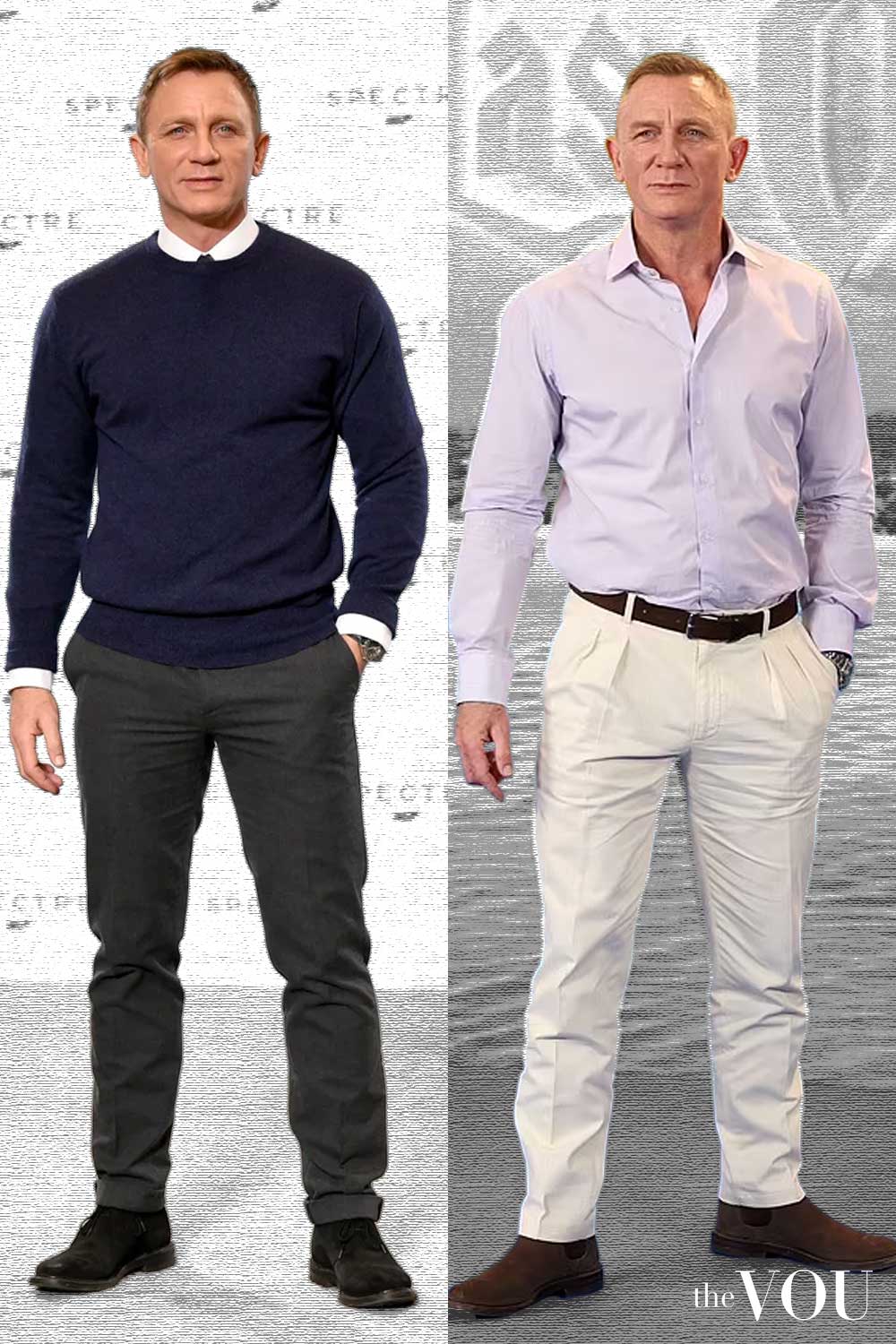
If your shoulders are a little broader than your hips, a mid rise is a neutral starting point: it neither raises nor lowers the waistline much.
Check where this pair’s waistband actually sits on you, because rise labels vary between makers.
A moderate taper from thigh to hem follows that line without adding cloth you have to manage.
Check the seat and thigh first: if both are smooth and you can still pinch fabric at the knee, ask a tailor whether this pair can be tapered below the knee, and what that work will cost.
Ready-to-wear sizing suits some builds more readily than others, and which ones depends on the maker’s block rather than on the label you give your proportions.
If a particular cut does not work on you, that is information about the cut.
Slim-Straight Cut Trousers for Rectangle Shape
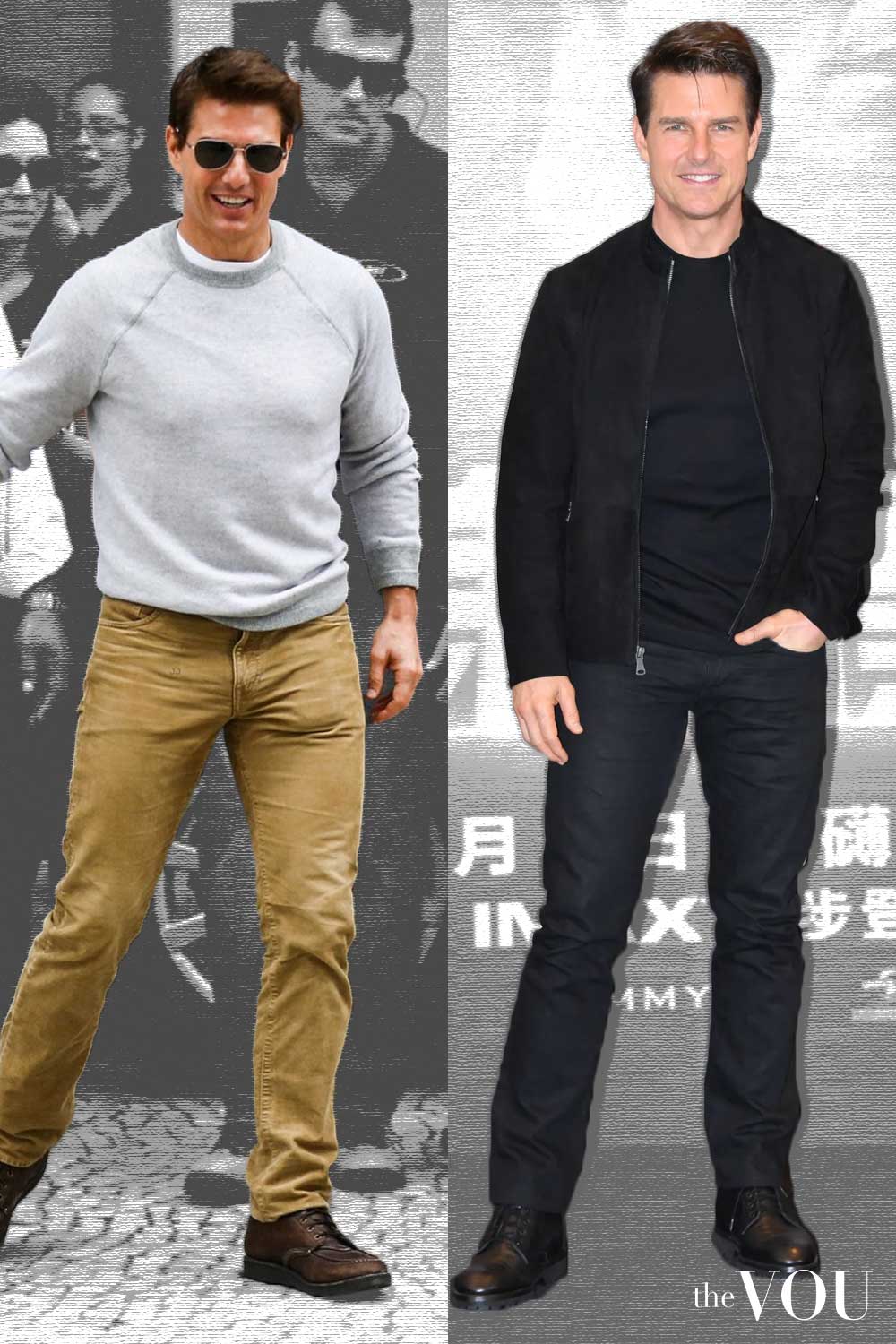
If your shoulders and hips are of similar width, you can add a little shape through the cut or keep the line straight; both are normal choices.
A slight taper through the leg gives a straight outline some direction, and a mid to longer rise keeps the waistline higher than a low rise on the hips, if you prefer that.
Some roominess through the thigh that narrows towards the hem does the same job in a softer way, and is more comfortable to sit in.
Either is a preference; neither corrects anything.
Classic Straight Leg Trousers for Triangle Shape
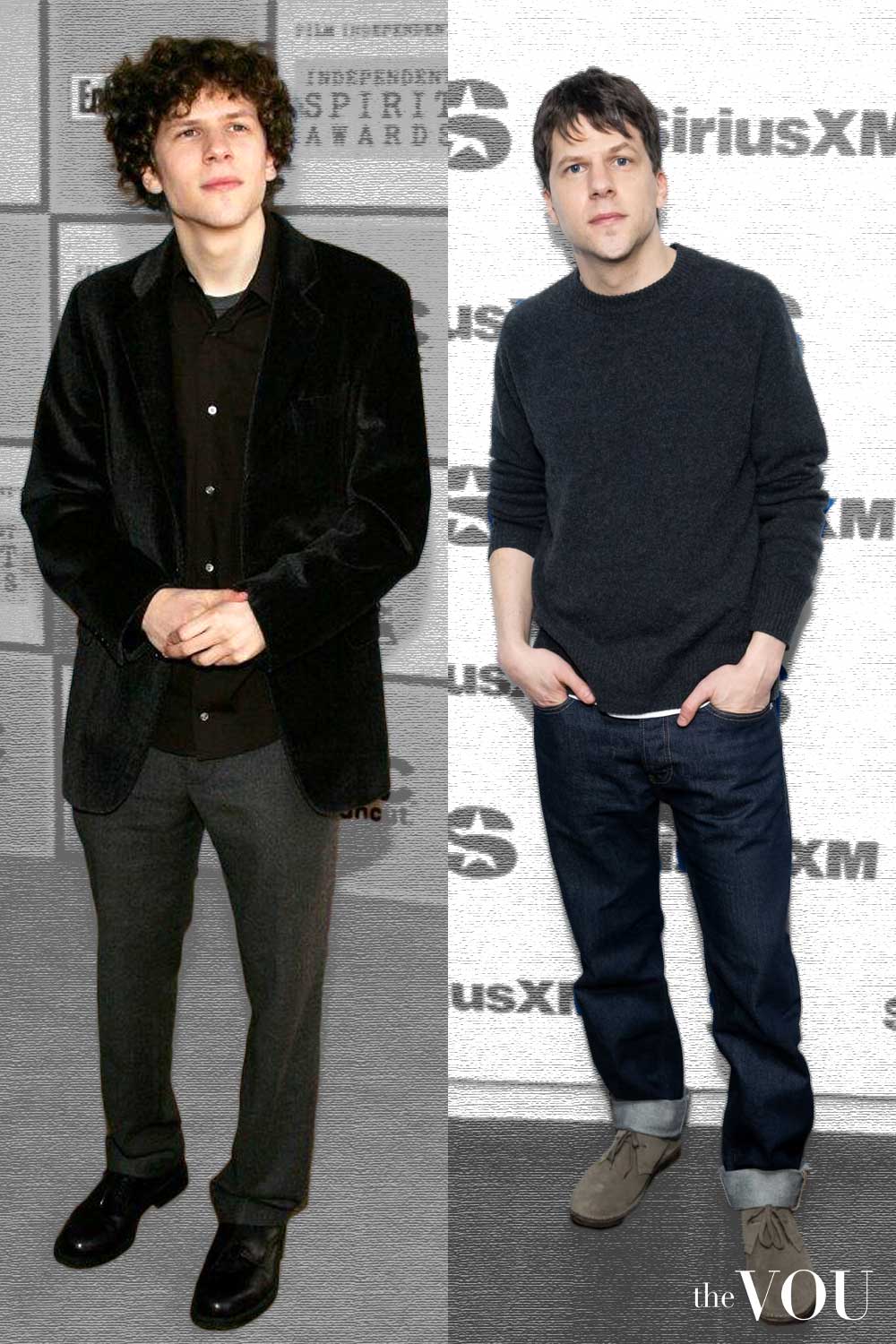
If your shoulders are narrower than your hips and seat, the usual aim is trousers that give the hip and thigh room without gripping them.
Whether you also want to balance the outline is up to you.
A waistband that sits above the widest part of the hip, rather than across it, usually gives a smoother line from waist to hip; check where this pair’s waistband actually sits.
A straight leg that skims rather than clings is the useful shape here, and the check that matters is the pinch test at the thigh: if there is nothing to lift, the trousers are reporting the width rather than skimming it.
Buying for the thigh and having the waist taken in is the normal way round.
Athletic Fit Tapered Trousers for Inverted Triangle Shape

If your shoulders and chest are clearly wider than your hips, trousers with some presence through the leg give the lower half more weight if you want a more even outline, and room through the seat and thigh keeps them comfortable.
Whether you want that balance at all is up to you.
What retailers label an athletic cut is usually a pattern with extra room through the seat and thigh and a narrower hem.
It is worth knowing about if standard sizing leaves you tight across the seat and thigh while the waist fits, which is a fit problem in front of you rather than something your shoulders predict.
That combination is also the easier one to work with afterwards.
Taking a waist in and tapering a leg are removals, and removing cloth is generally simpler than finding more of it: letting out depends on how much seam allowance the maker left inside that particular pair, and a large reduction can pull the pockets and the balance of the trousers out of place.
So if you have to choose, the pair that is comfortable through the seat and thigh gives a tailor more to work with than the pair that fits at the waist and grips below it.
Ask what the trousers will take before you buy on that assumption.
Regular Fit Trousers with Comfort Waist for Oval Shape
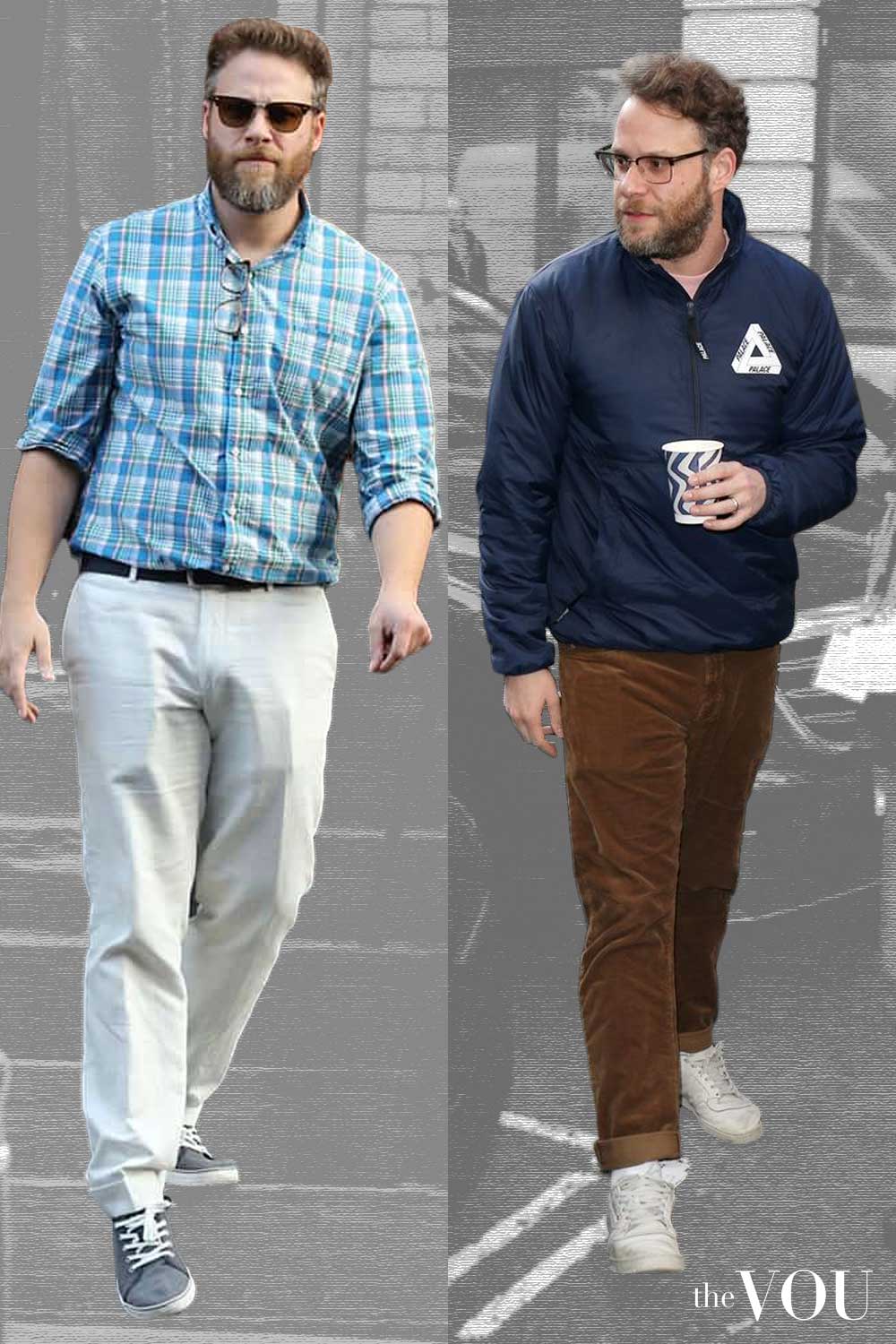
If the middle is the part of you that decides how trousers sit, the pair worth looking for is the one that stays comfortable through a day of sitting and standing and keeps a clean line while it does it.
You do not need your waist to be the largest of your three measurements for this to be your section: a fuller abdomen below a natural waist that measures smaller than your chest raises exactly the same questions about the waistband and the rise.
A longer rise is worth trying if you want the waistband to sit higher.
Whether it holds its place comfortably through the day is something to test on yourself, standing and seated, in the pair in front of you.
Look for a waistband that is comfortable when you sit, not only when you stand.
Some ready-to-wear trousers offer this as a named feature, variously described as a comfort or flex waistband, usually meaning hidden elastic or side adjusters.
Pleats are worth trying for the same reason: they put extra cloth across the front of the hip and thigh.
The same comfort, rise and movement checks are useful for the overlapping diamond description, which our body shapes guide uses for an outline whose middle stands out more distinctly between a comparatively narrower upper and lower torso; the individual garment still decides the fit.
High-Rise Trousers for Hourglass Shape
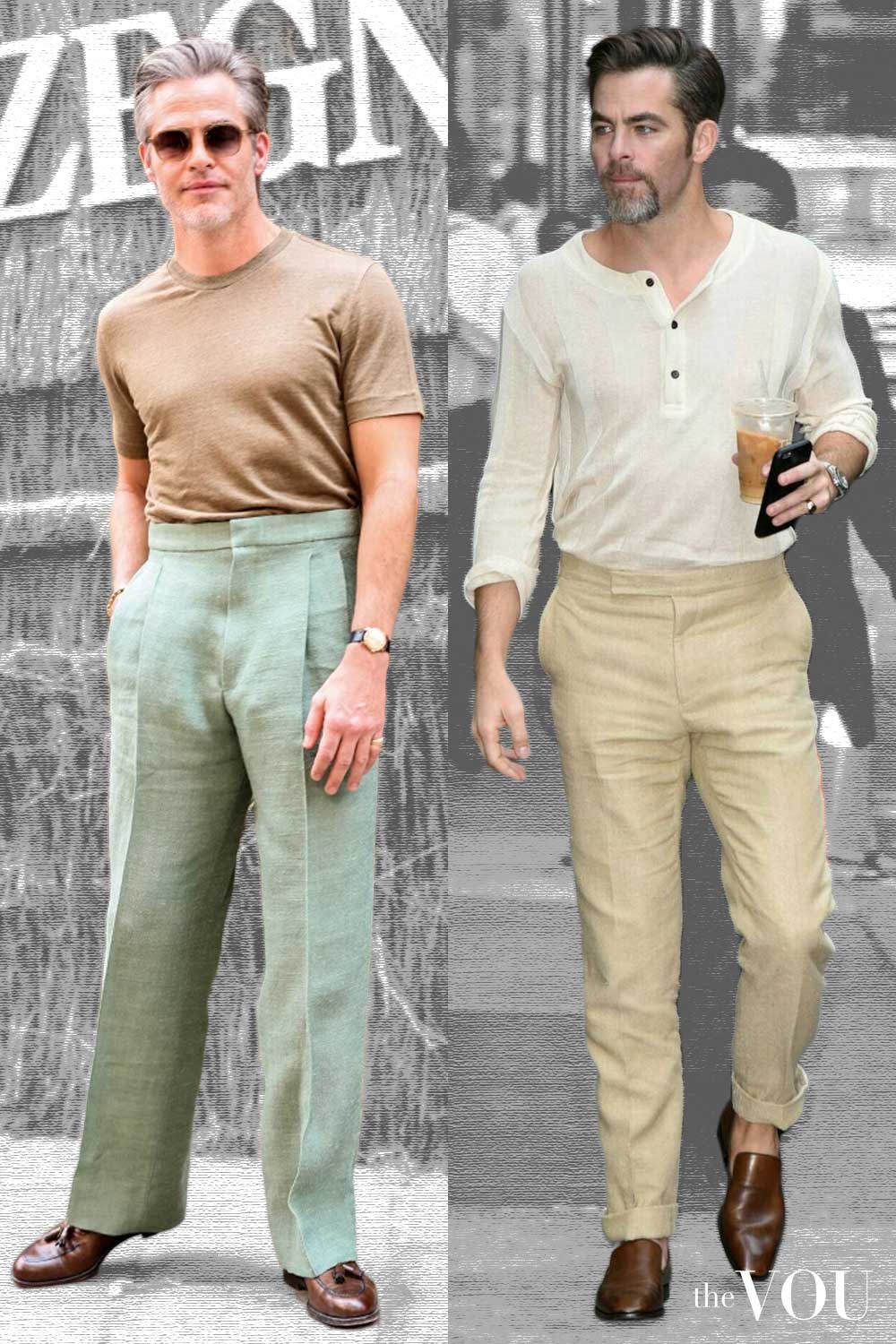
If your shoulders and hips are close in width with a clearly narrower waist, the question is how much of that shape you want the trousers to show.
There is no correct answer, and both directions are covered below.
A longer rise can put the waistband at or near the narrowest part of you, which is the whole of the reasoning; check where this pair’s waistband actually sits.
A slight taper keeps the line clean below it.
If you would rather not draw a line at the waist at all, a straight leg with a mid rise is the quieter option; that is a preference about how much shape you want to show, and not a fit problem to solve.
Cloth and Alterations
Wool is the usual cloth for tailored trousers because it takes a pressed crease and tends to recover its shape after wear, and long-established suiting mills such as Vitale Barberis Canonico and Loro Piana are among the names you will see on a cloth label.
How any particular cloth behaves depends on its weight, weave and finish as much as on the fibre, so compare cloths rather than assuming.
Cloth affects how trousers hang; it does not fix a cut that is wrong for you.
Budget for alterations on any ready-to-wear pair.
As a guide to the order of magnitude, A Hand Tailored Suit’s adjustment list, which the firm labels 2026, charges the same modest amount for a hem, a waist adjustment and a taper, inside its own fitting service.
Ask your tailor what the work costs and how long it takes; both vary by provider and by place.
Well-fitting trousers look unremarkable, which is the point.
Persistent strain or unwanted folds are reasons to investigate the fit: consider the cut, your usual posture and how the trousers feel when you move, because the appearance alone does not identify the alteration.
What a House Model Name Actually Tells You
Tailoring houses give their cuts names, and the name is a shorthand for a set of pattern decisions: how long the rise is, how much room sits in the seat and thigh, whether there are pleats, how much the leg narrows.
Tom Ford’s Atticus is a useful example, because the name appears on the brand’s own site and at several retailers, who describe Atticus trousers as pleated, in slim-fit and straight-leg versions.
Other houses use trouser model names in the same way, and an old name can outlive the cut it described.
A name like that is worth knowing when you are comparing two pairs in the same shop, and worth nothing at all as a rule about your body.
One caution.
A model name belongs to a season and a maker, so a cut sold under one name this year may not exist, or may not be cut the same way, next year: read the current description rather than an old article, including this one.
It is also worth separating a house’s bespoke work from what it sells ready to wear, because many firms do both.
Anderson & Sheppard describes its bespoke house style as the English drape, cut with drape through the chest, soft shoulders with minimal padding and a high armhole, and its Haberdashery sells ready-to-wear trousers in numbered styles that range across flat fronts and pleats and different rises.
That range is a reminder that the front and the cut are separate choices: room through the seat and thigh comes from how the pattern is cut, and a flat-front trouser can be cut generously.
Where to Go Next
If you want to work out your own proportions before you shop, our guide to the seven body shapes explains what each label describes, how to compare your own chest, waist and hips, and what those comparisons cannot settle, and there is a separate trouser guide for the triangle or pear build if that is where you land.
For the same checks applied to jackets, shirts and coats, and for what a tailor can and cannot change afterwards, read our men’s fitting guide.
Our explainers on fashion silhouettes, garments, clothing, outfits and fashion accessories cover the vocabulary, and our personal style guide and styling by occasion, location, season and time of day deal with what to wear where.
If you are curious about the marketing around expensive labels, we also cover heritage luxury brands and logo-heavy luxury brands and how to wear them.
Colour is a separate question from fit, and our seasonal colour analysis guide covers it.
Optional Quizzes and Services
None of the advice above needs any of these.
If you would rather answer questions than measure yourself, The VOU runs quizzes for body shape, seasonal colour and fashion style.
The VOU also sells paid styling services: you can read what an image consultant does and how to choose one first, then see our stylists, our styling services or contact us if you want that kind of help.