
Start here
What’s This About
A True/Warm Spring wardrobe keeps the clothes your week needs and adds clear, warm colours such as coral, turquoise, golden yellow and camel where they sit near your face.
This guide shows how to build and combine the wardrobe, such as:
a colour shortlist for suits, shirts, knits, outerwear, shoes and accessories
tailoring and shirt combinations for work
casual tops, layers and warm-weather outfits
footwear chosen for the occasion first
repeatable outfits for work, weekends and events
and many more!
Let the dress code and the clothes you own lead, and use the palette to choose between options.
Key Points
01Start from the outfits you wear most and fill specific gaps rather than buying a whole palette.
02Navy, beige, camel and brown make an easy base for coral, turquoise and golden yellow accents.
03Follow the dress code for shoes: dark brown or black Oxfords stay correct for formal wear, with cognac as an option where the code allows.
04Black tie still needs a black or midnight dinner suit, whatever your palette.
Build a True/Warm Spring wardrobe around the clothes your week requires, then use clearer warm colours where you want them.
Navy tailoring, beige trousers, a pale shirt and brown shoes can support coral, turquoise or yellow without making every garment a statement.
This illustrated companion helps you choose and combine garments.
The True/Warm Spring palette guide covers the palette itself and comparisons with neighbouring seasons.
The illustrations show clothing ideas, not verified seasonal assessments of the people depicted or exact products to buy.
Screen colours are approximate.
Start with your week and the clothes you own
Choose the outfit you most often need: a suit for work, a shirt and trousers for a less formal office, or casual layers.
Lay out a complete version, including shoes, before deciding what is missing.
A new coral tie is of little use if the only suit you can wear it with no longer fits.
- Keep the trousers, footwear and outerwear that already serve your routine.
- Try a pale shirt or a coloured top with those garments. Compare the outfit with the jacket on and off.
- Repeat a useful neutral or accent in another outfit before buying more colours.
- Buy for a specific gap: a shirt that works with two jackets, for example, rather than an unused shade on a palette card.
In The VOU’s twelve-season convention, True and Warm Spring refer to the same warm, relatively clear palette.
That direction can guide your choices without excluding dark denim, black shoes, white shirts or a softer colour you enjoy.
Colours to look for, garment by garment
When you do fill a gap, these colours from the True/Warm Spring palette are useful starting points; compare the actual cloth beside your face and keep what you already wear well.
Scroll horizontally to see all columns →
| Garment | Colours to compare | Notes |
|---|---|---|
| Suits | Navy, golden brown, camel | Keep navy or charcoal where work requires it; golden brown and camel suit relaxed offices and daytime events |
| Blazers | Warm olive, clear terracotta, golden tan | Useful for business casual and weekends |
| Trousers | Warm khaki, beige, golden tan, warm brown | Dark denim and navy stay useful |
| Shirts | Ivory, pale blue, golden yellow, coral, warm turquoise | Keep a plain white shirt where the dress code requires it |
| Polos and knits | Apple green, coral, golden yellow, peach, aqua | A periwinkle casual shirt is another weekend option |
| Outerwear | Camel trench, cognac or camel overcoat, warm olive | Choose weight for the weather |
| Shoes | Dark brown or black Oxfords for formal wear; cognac, golden tan suede loafers, cream trainers | Follow the dress code first; cognac is a palette-friendly option where it allows |
| Accessories | Coral, golden yellow or turquoise ties; ivory pocket squares; cognac belts | A steel watch you already own still works; warm metals are optional |
For the palette itself and how to check whether it suits you, see the True/Warm Spring palette guide; for shoes, the Oxford shoes guide covers styles and formality.
Keep useful tailoring, then vary the shirt or tie
A navy suit is a practical starting point when your work requires it.
Keep the required depth of navy and choose the shirt and accessories within the office’s rules.
If you can choose between shirts, compare a white with a warmer ivory beside the actual jacket; neither needs replacing solely because of a palette label.
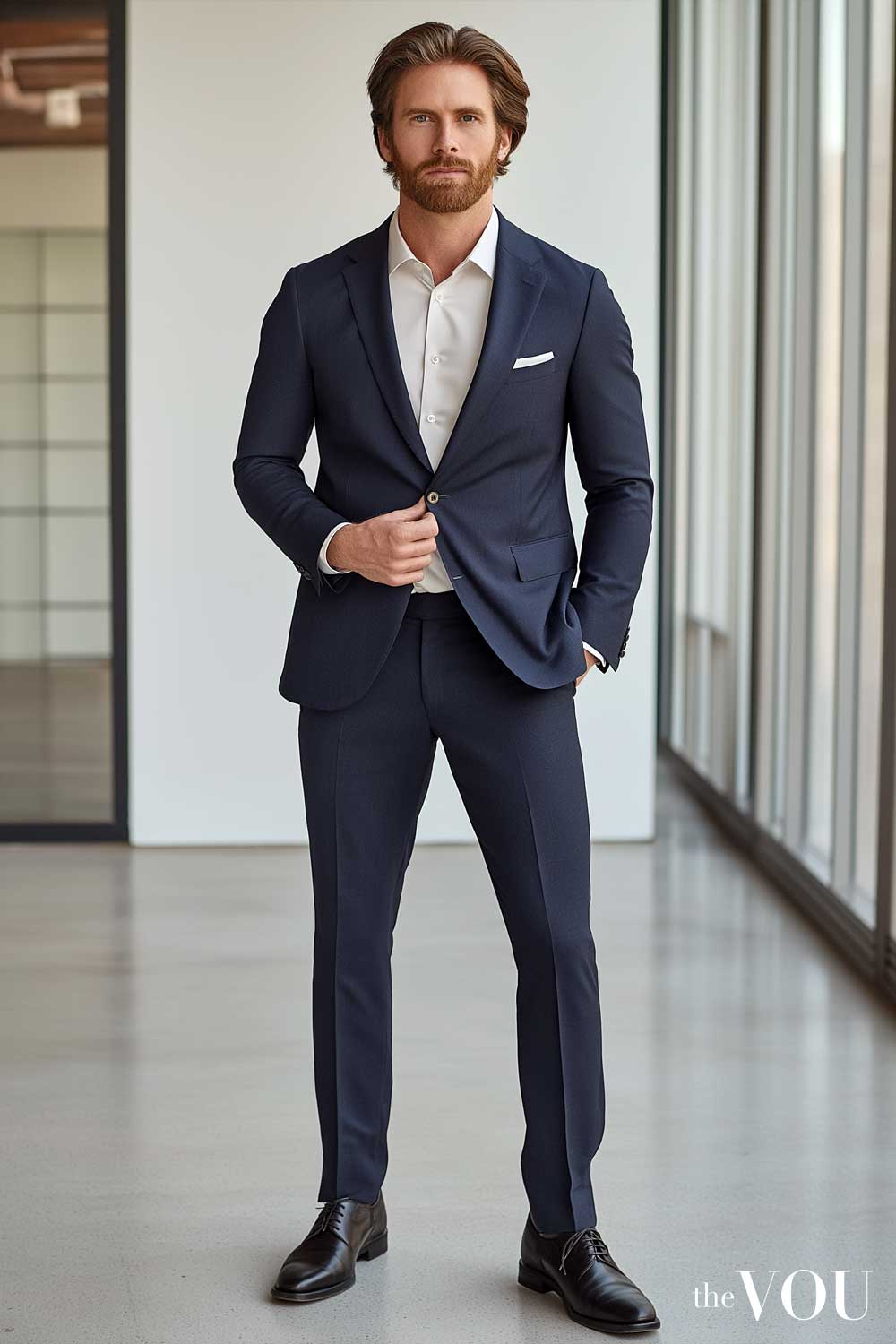
A complete work version: navy suit, ivory shirt, coral tie, navy socks and black Oxfords.
The small coral area introduces a clearer warm colour while the suit and shoes stay conventional.
If a tie is unnecessary, the pictured open collar shows a simpler version.
Golden-brown tailoring gives you another option where the setting allows more colour.
It does not replace a required navy or charcoal suit.
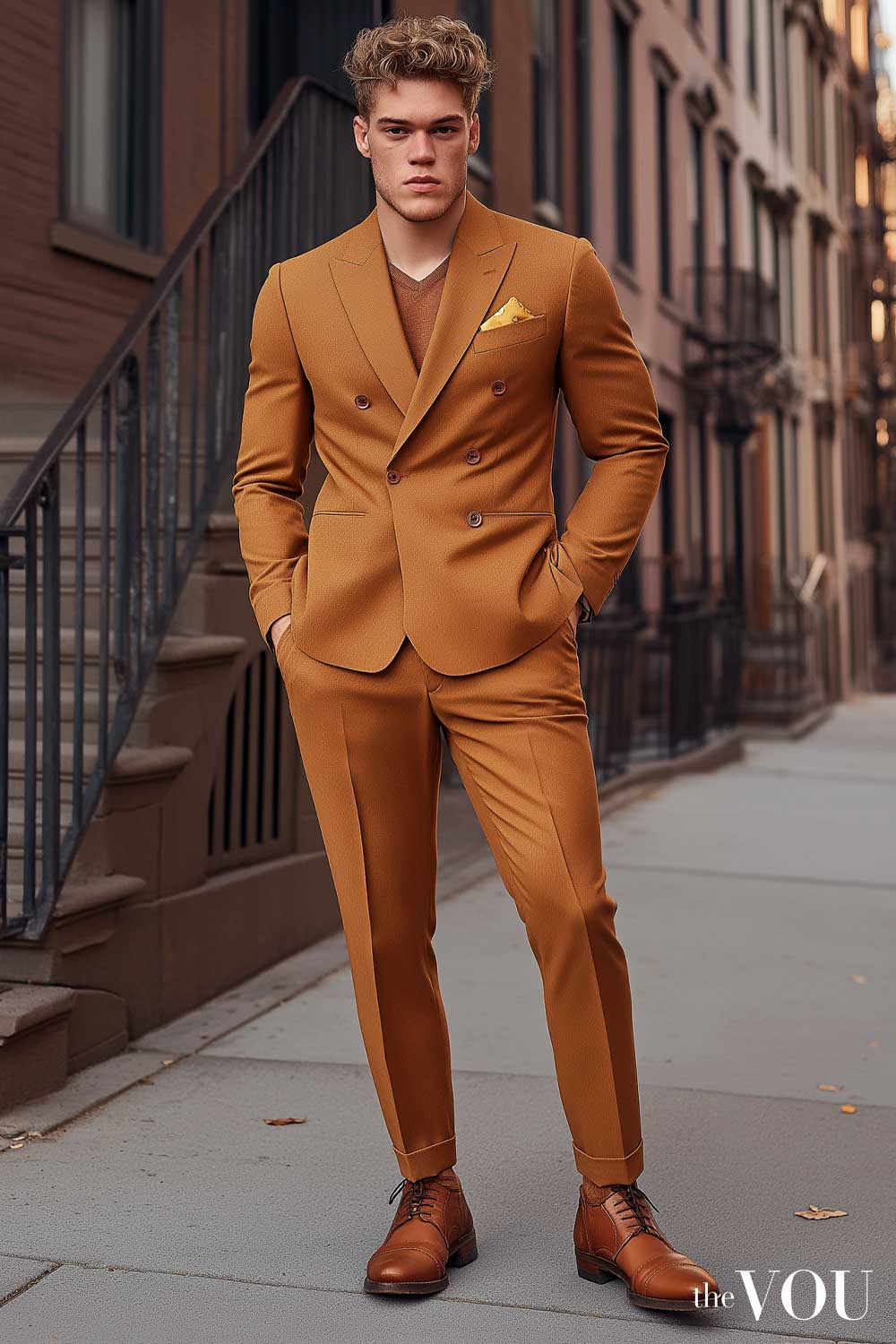
For a relaxed dinner, try a golden-brown suit with a cream crew-neck, brown socks and brown loafers.
The cream gives the neckline a lighter area than the brown top shown.
A suit with a knit is still an outfit for an occasion that permits it, not a substitute for formal evening dress.
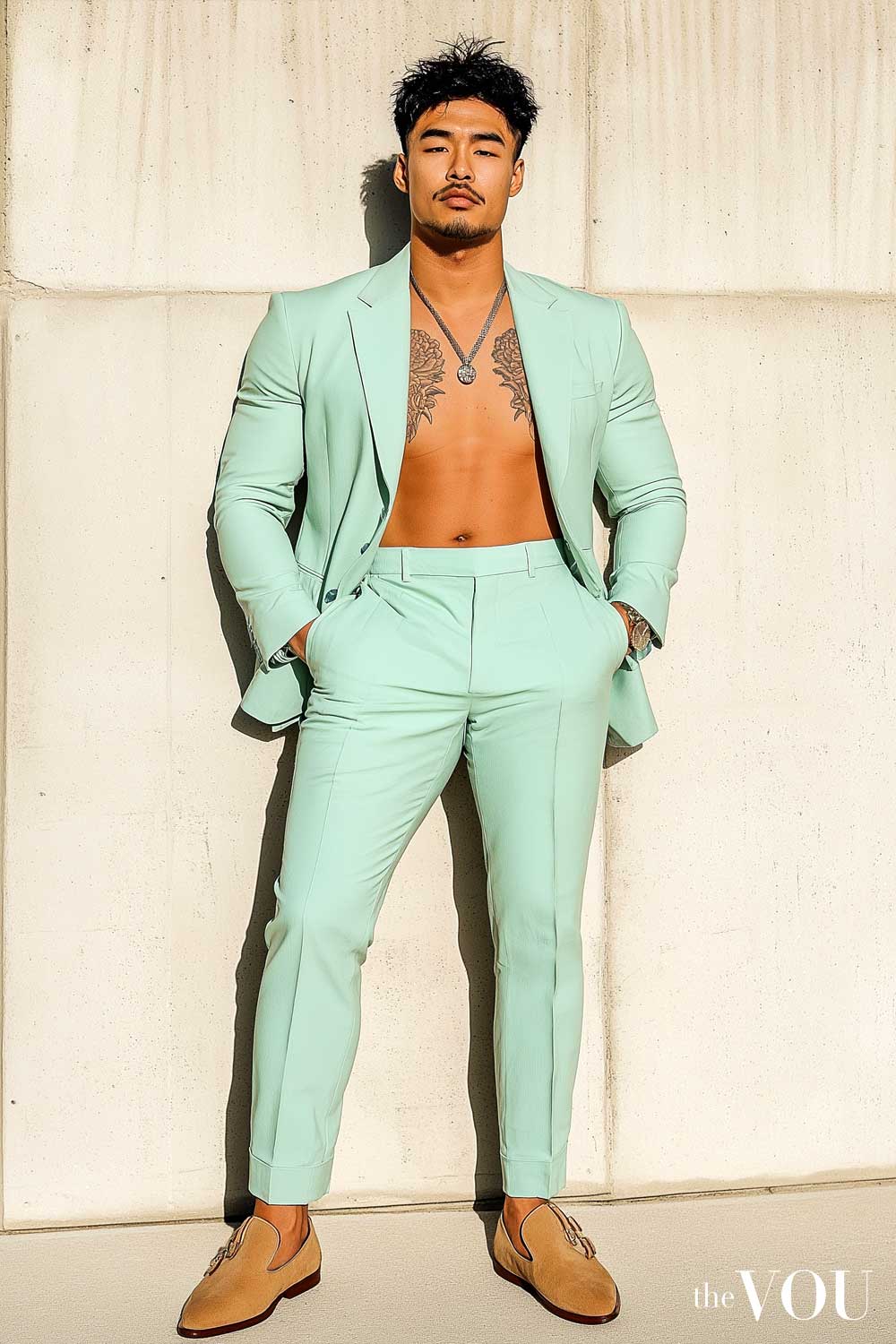
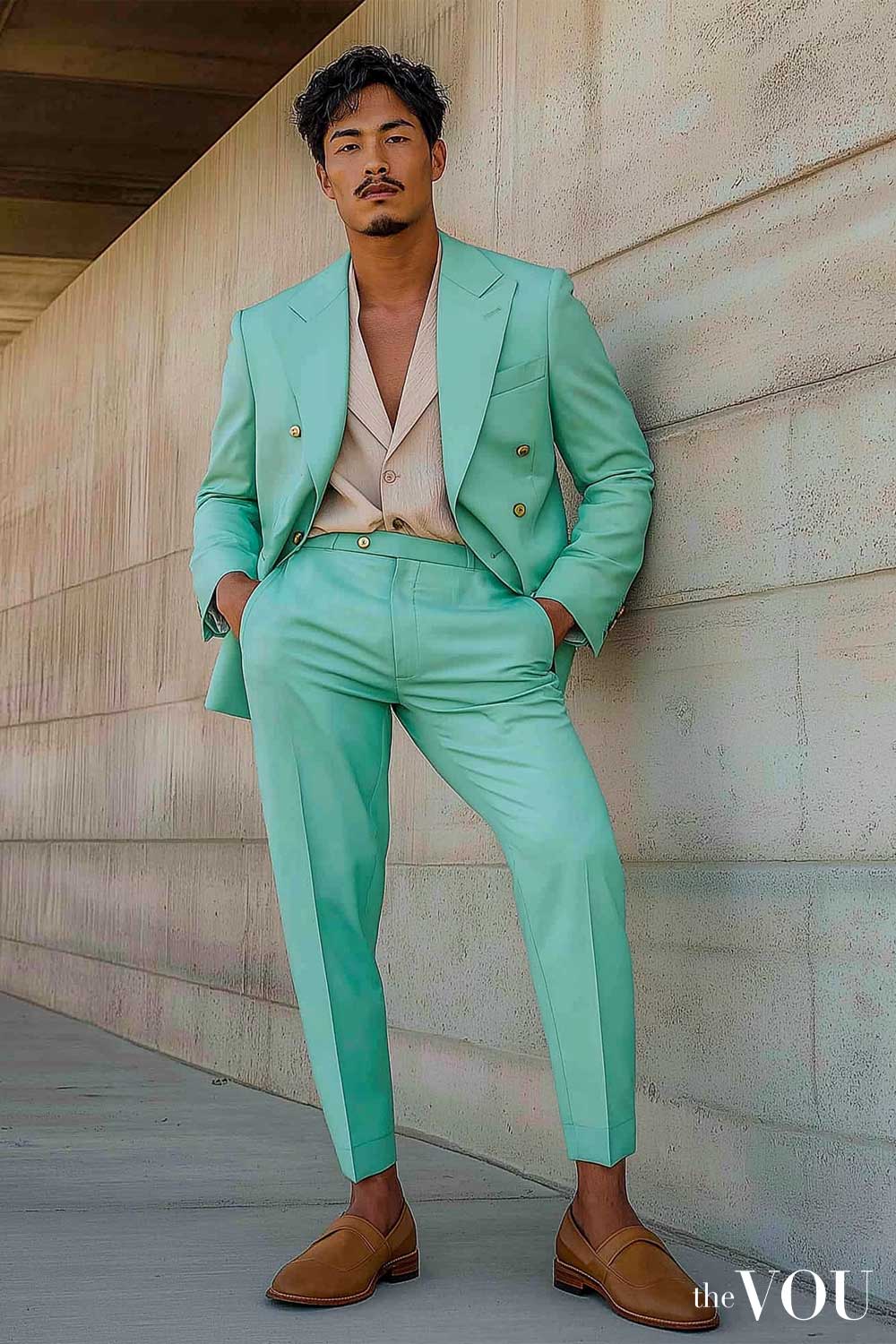
Turquoise tailoring, as in the two suits above, is an option where the setting welcomes colour; a wardrobe does not need one, and the same colour works more easily in a tie, polo or knit.
Choose shirts by their place in the outfit
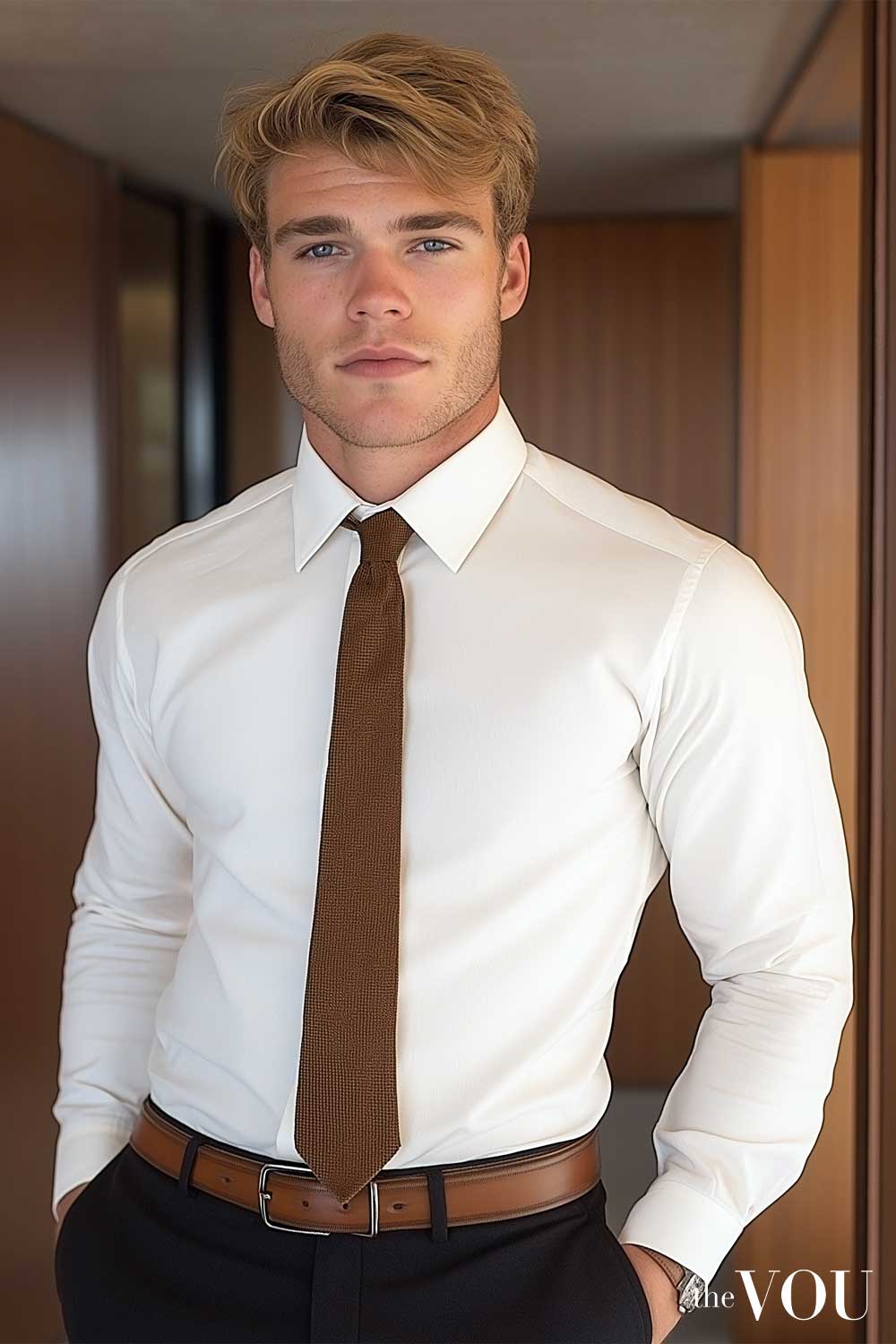
Pale blue, ivory and salmon-pink shirts give you different ways to use familiar tailoring.
A shirt need not be a vivid colour for the whole outfit to have a warm accent.
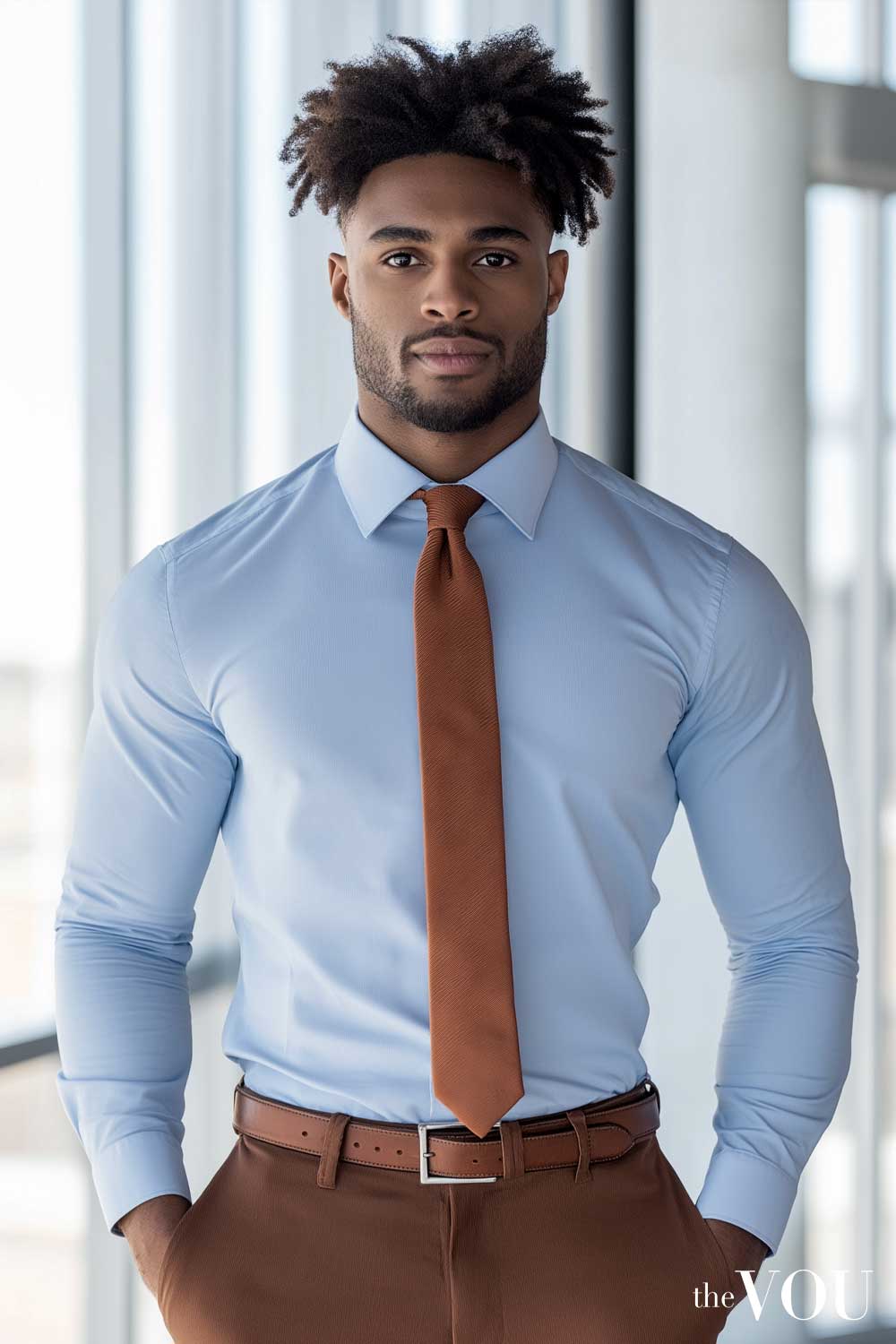
The blue-shirt look pairs a rust-brown tie with brown trousers.
To use the same idea with navy tailoring, keep the blue shirt and make the tie the warm accent.
Choose the tie’s intensity by comparing the actual cloth, not by assuming every colour called rust belongs to the same palette.
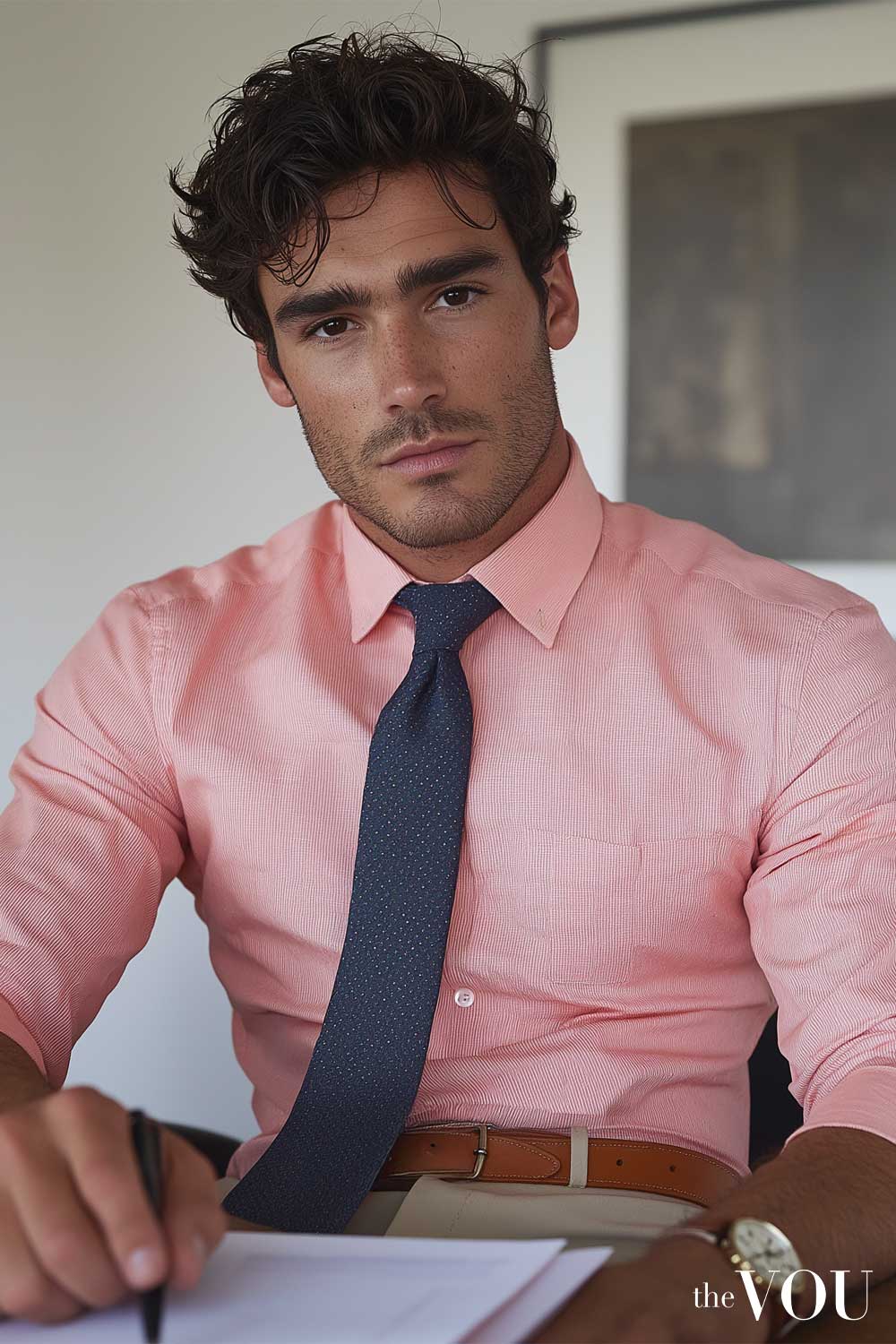
The salmon-pink shirt and darker navy tie make a stronger break between light and dark than the blue-and-brown arrangement.
Try each with your own jacket.
Pattern scale is a matter of the effect you want and the occasion; a seasonal label does not prescribe the size of the dots or checks.
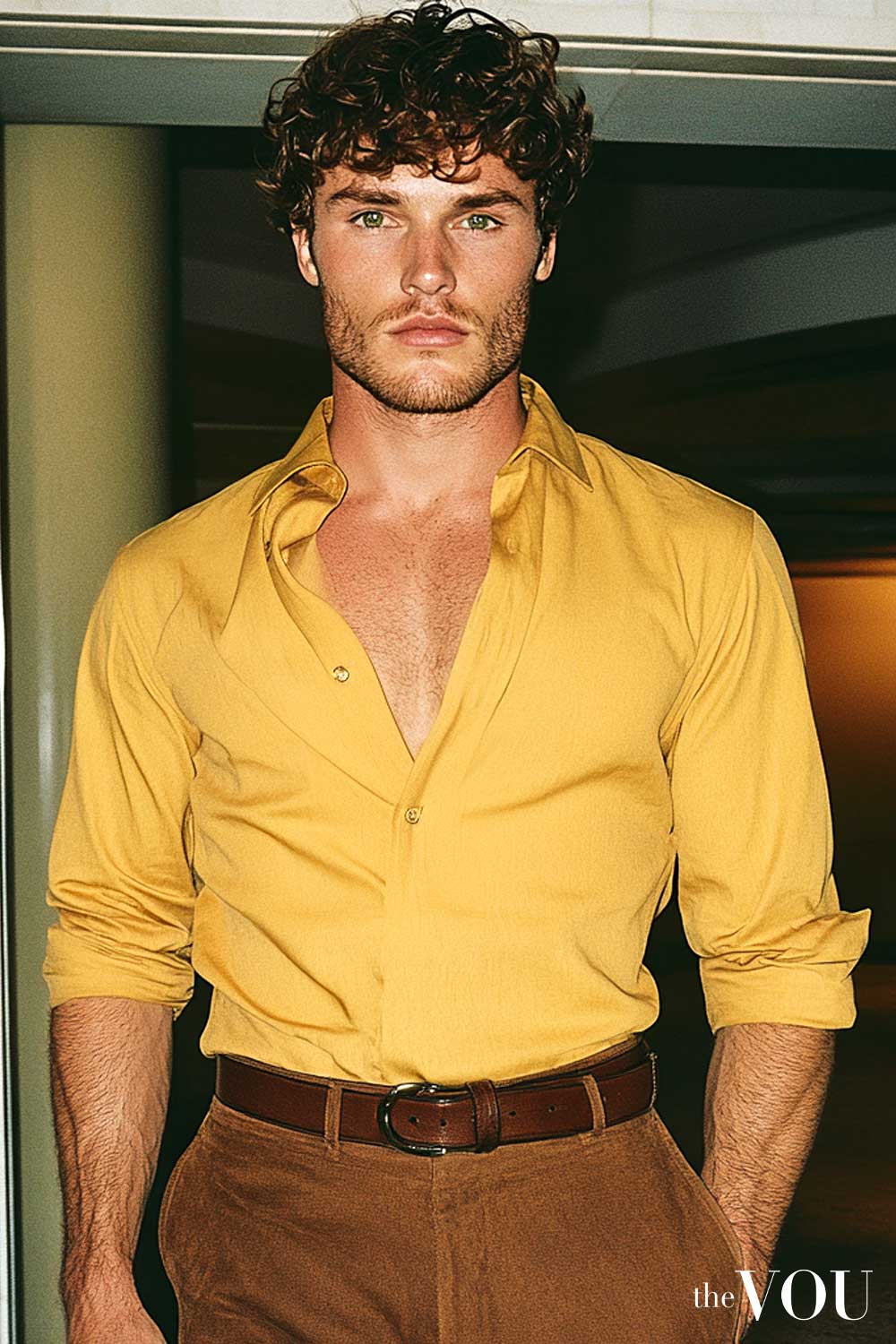
A golden-yellow shirt, as shown, works with brown or navy trousers for smart casual days; compare it with a paler yellow beside your face if the strong shade feels too much.
Use one coloured top with a neutral base
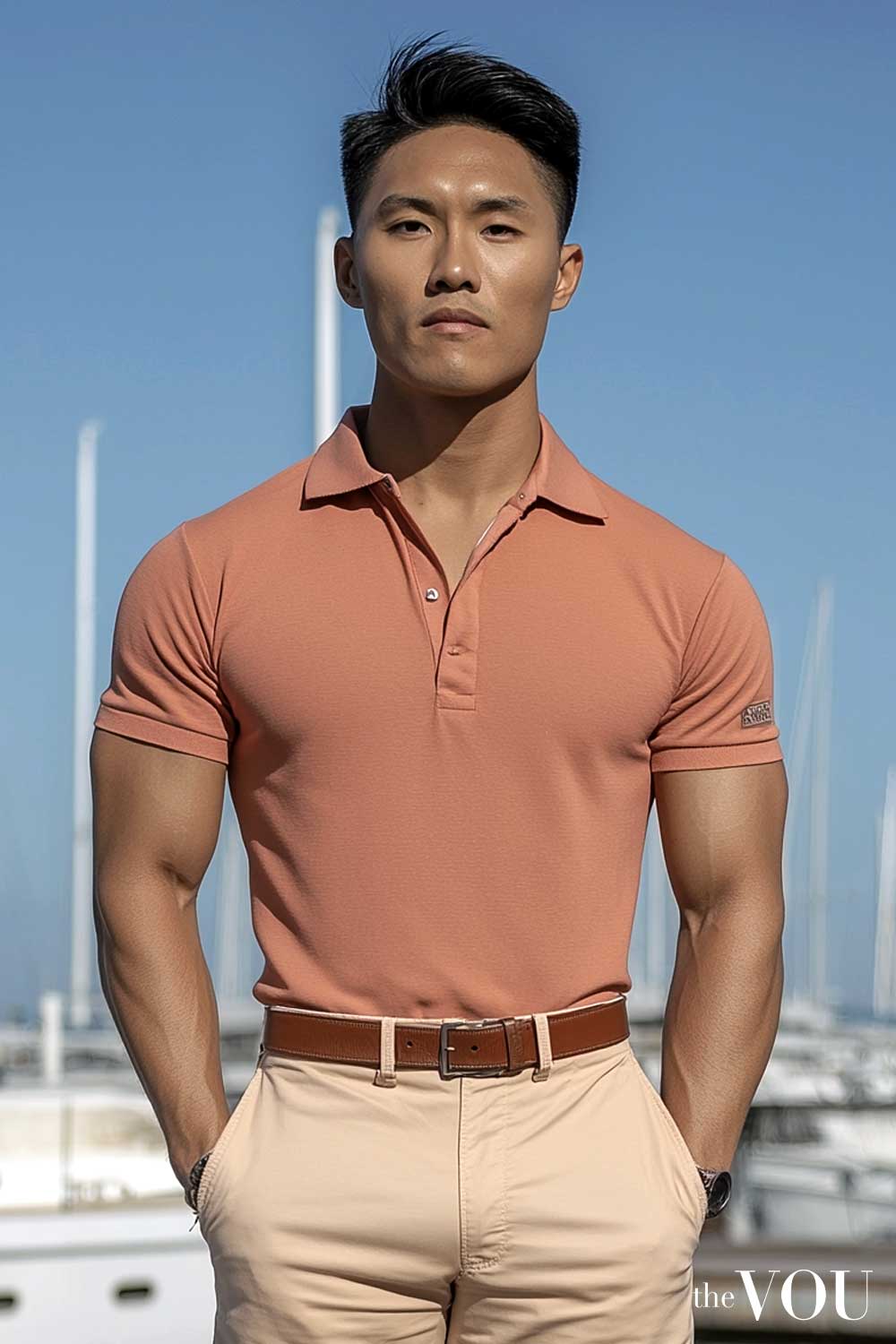
The coral polo sits on a beige-and-brown base that you can reuse with other tops, as the aqua polo outfit further down shows.
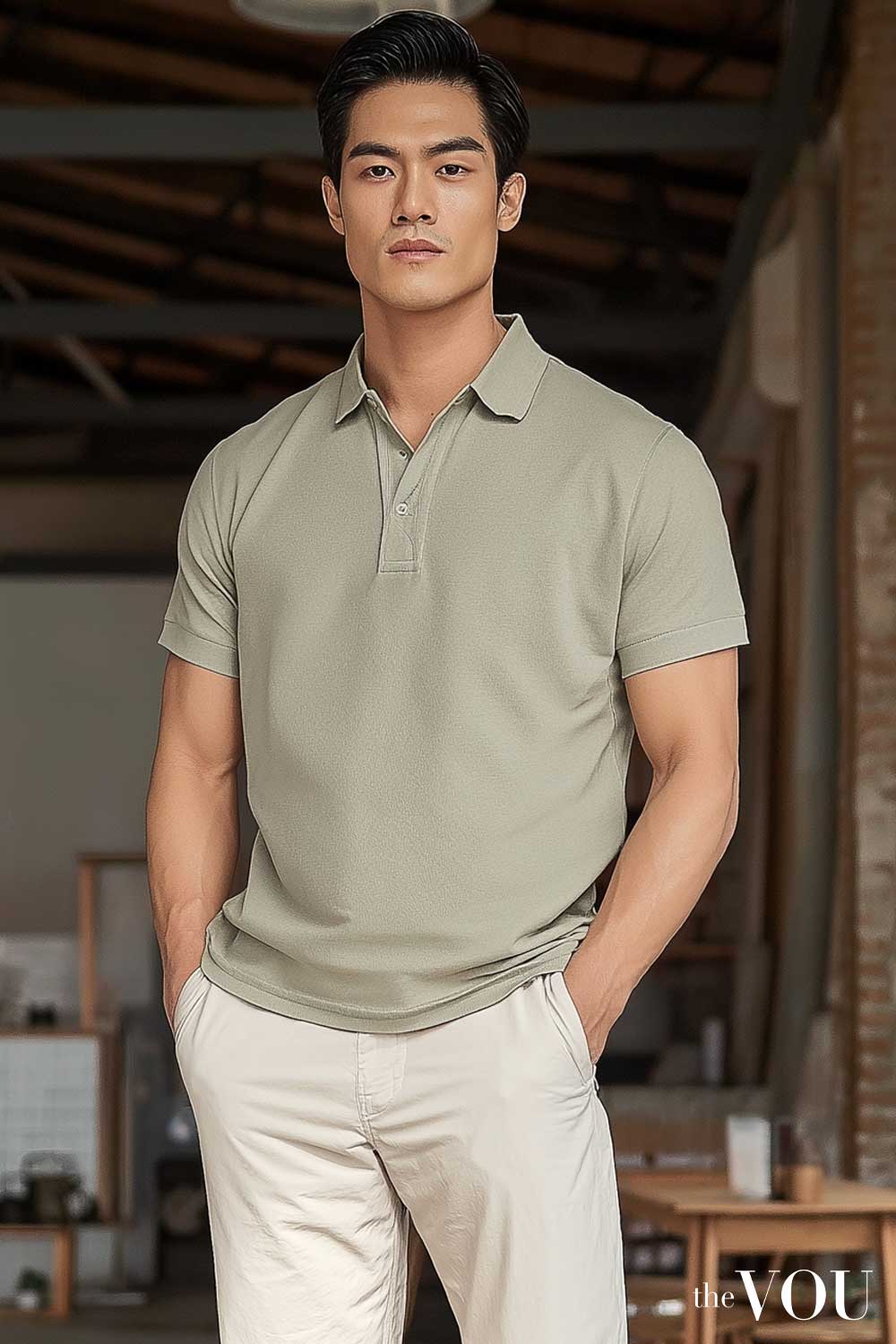
The sage polo is visibly softer than a clear grass green.
Keep it if you like the result; this picture shows a quieter alternative, not the palette’s brightest green.
With cream trousers and brown loafers, it makes another simple casual combination.
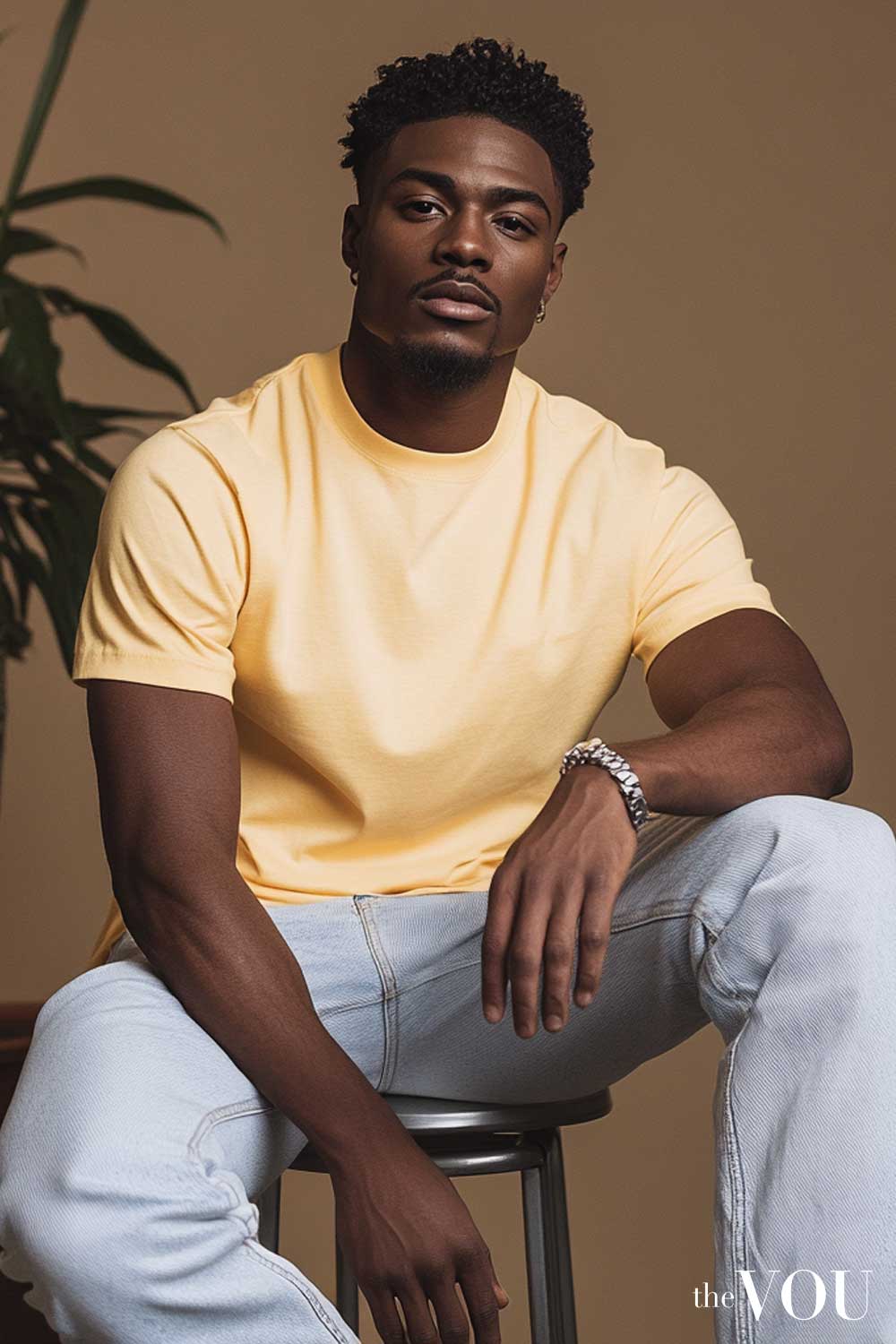
To finish the pale-yellow T-shirt look, add white trainers to the light-wash jeans.
The visible silver-toned watch can stay.
Your existing watch or wedding ring does not have to match a preferred metal from a palette guide.
Add knit layers over trousers you own
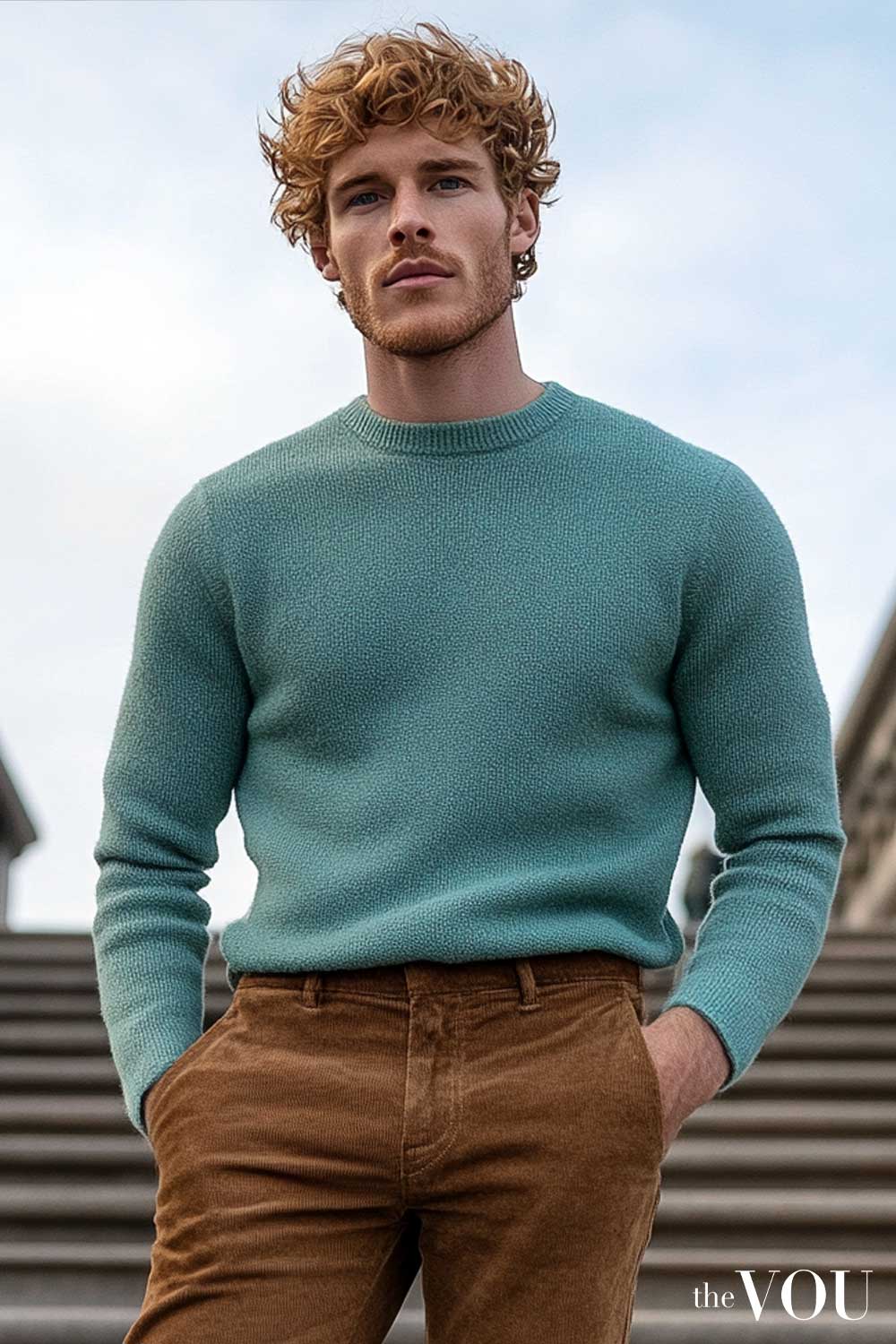
A blue-green knit, as shown, sits on brown cord trousers; the camel cardigan below is a warmer layer, shown with dark trousers.

A camel cardigan over an off-white T-shirt can use the dark trousers you already own.
Finish with brown loafers for a casual indoor day or suitable boots when going out.
The open cardigan shows a light centre; buttoning it changes how much of the T-shirt is visible.
Repeat a neutral base for casual days
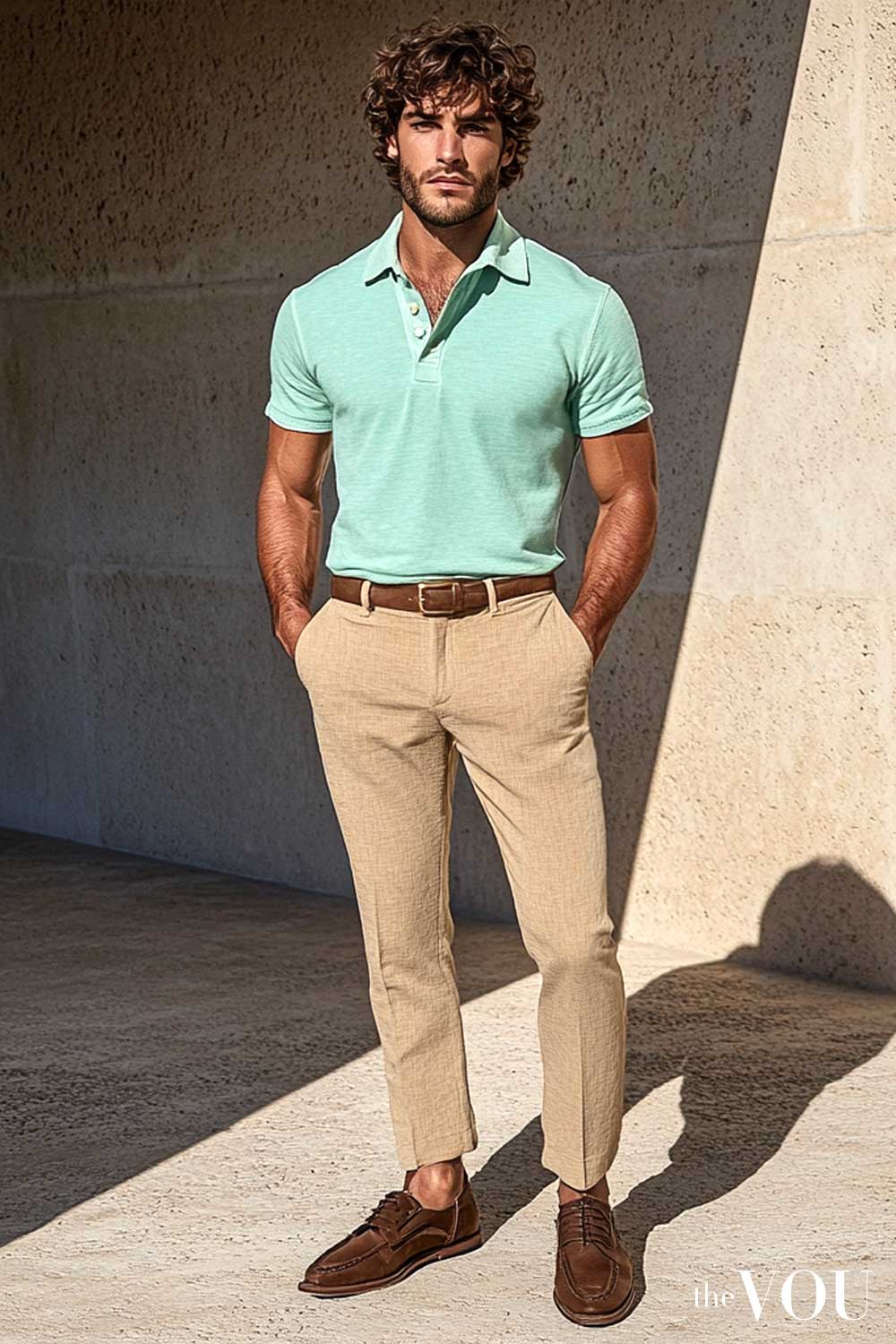
For a casual lunch: aqua polo, beige chinos, brown belt, brown socks and brown lace-up shoes.
Aqua supplies the main colour; the trousers and shoes are garments you can also use with a coral polo, ivory shirt or yellow T-shirt.
Choose a polo with room to move.
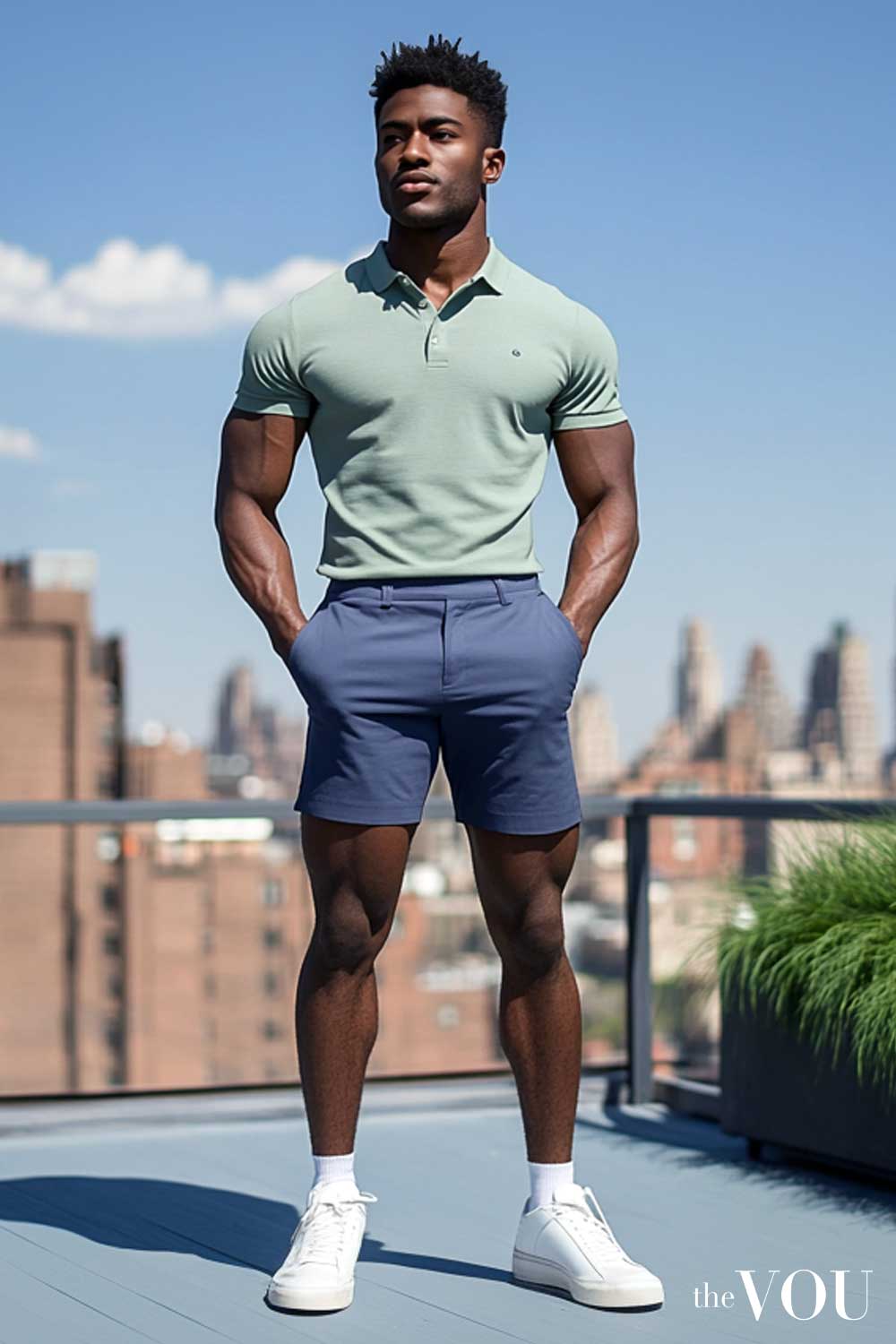
The soft green polo, blue shorts and white trainers show a relaxed combination with colours of different intensities.
A brighter green polo would change the effect; it is a choice to compare, not an upgrade everyone needs.
Add a jacket or coat
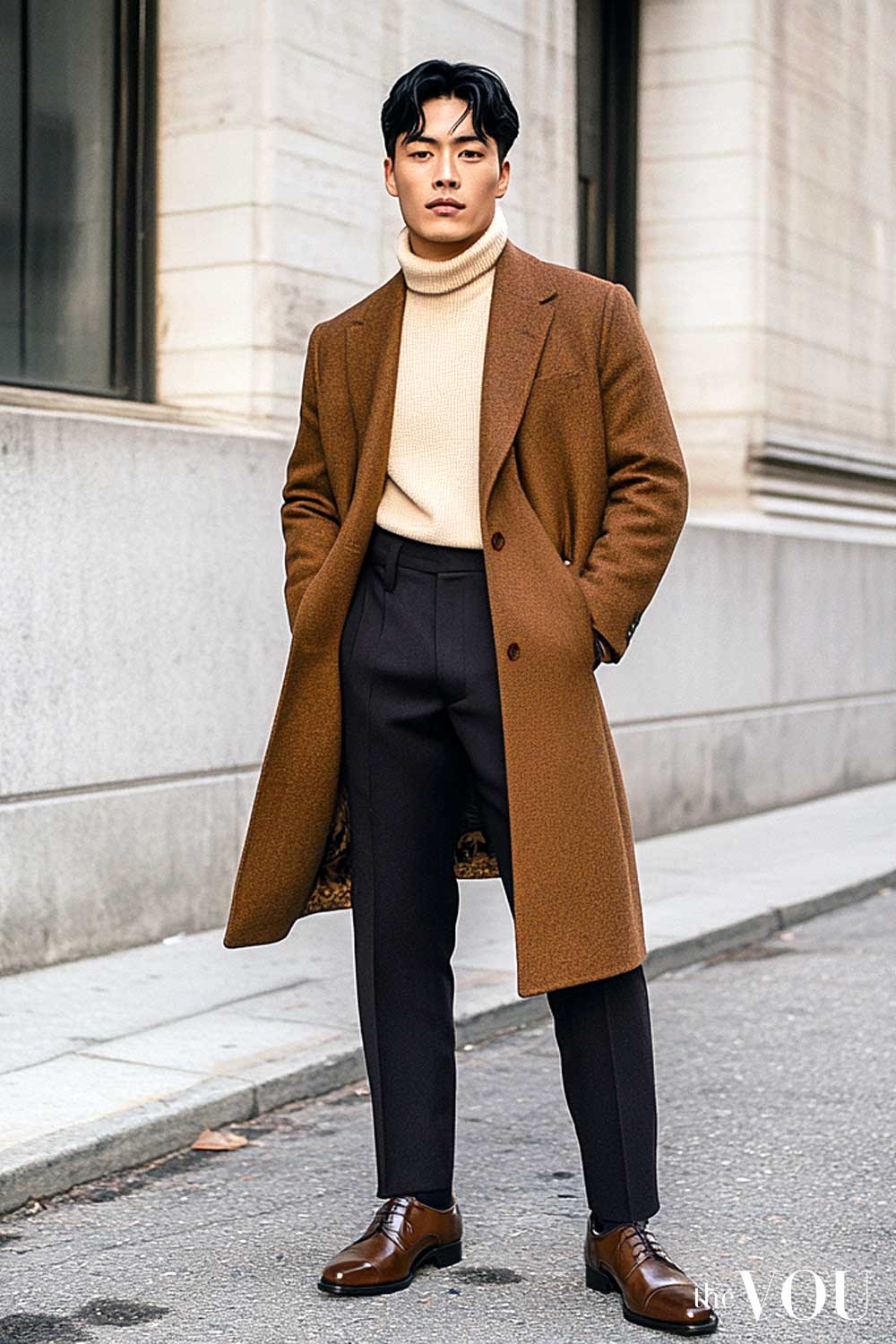
The camel-brown coat, cream rollneck, dark trousers and brown shoes show how a light neckline can sit within a darker winter outfit.
Choose coat size and cloth weight for the layers and weather it must handle.
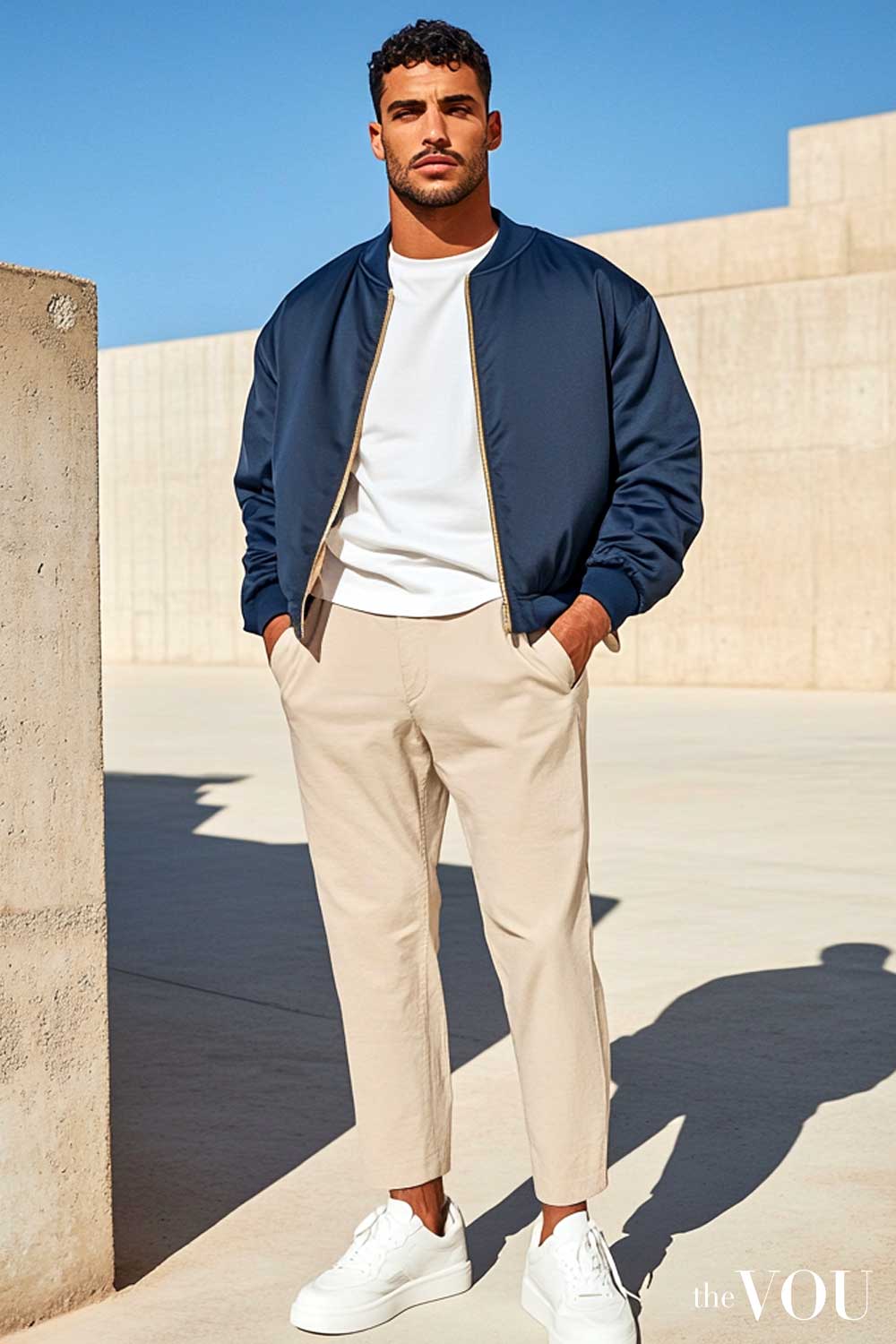
The navy bomber, white T-shirt, beige trousers and white trainers form a complete casual outfit.
The white repeats at the collar and feet.
If you want more colour, substitute a coral T-shirt while keeping the jacket, trousers and shoes.
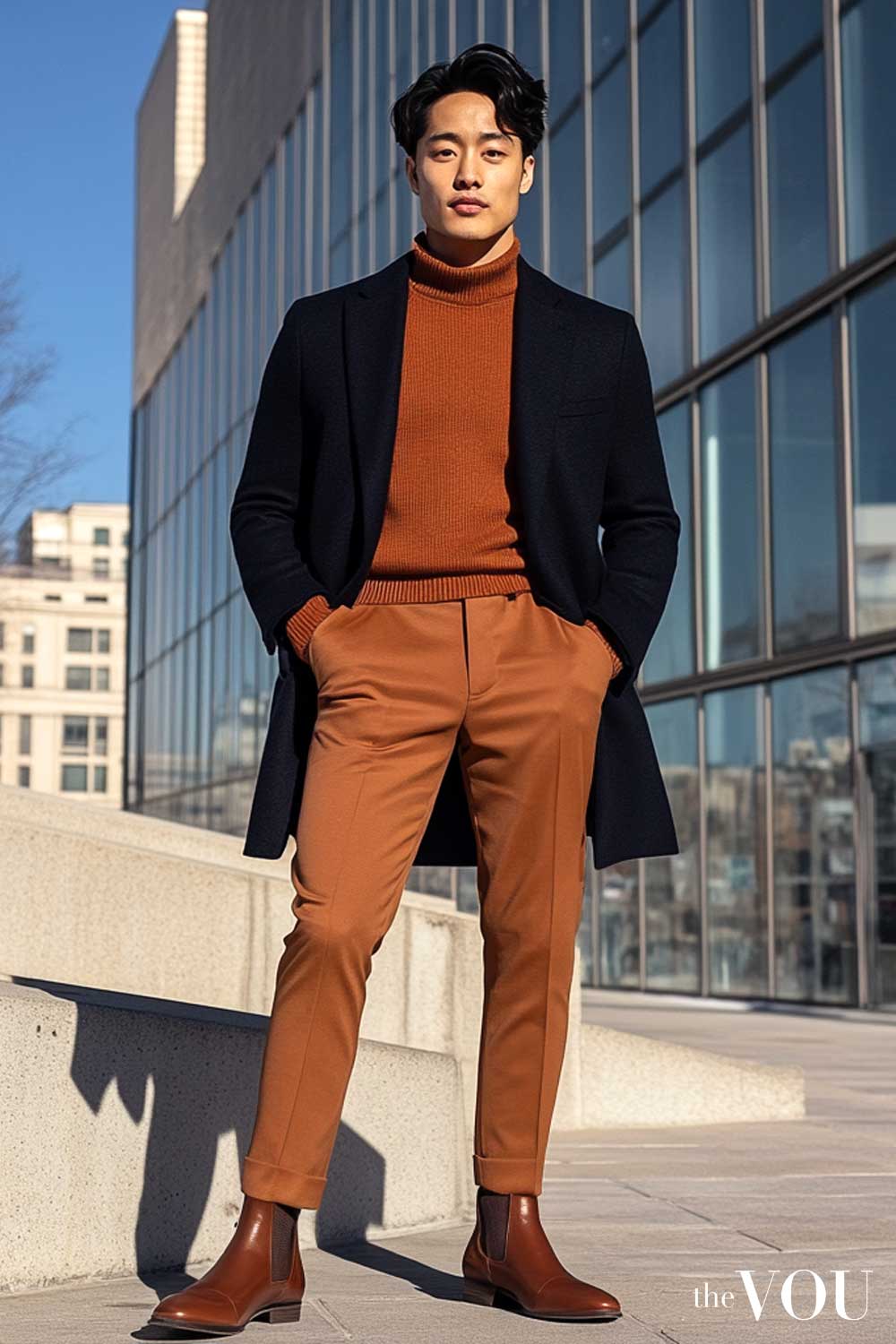
The long dark coat frames an orange-brown rollneck and trousers.
The knit’s earthy colour makes this a flexible alternative to a clearer Spring colour.
To make a quieter version, keep the coat and boots, use navy trousers, and try a clearer coral or cream knit.
Choose footwear for the occasion, then consider colour
Brown shoes offer a straightforward connection with beige, camel and navy.
Black shoes remain useful when they suit your outfit or are required.
A palette does not make a brown shoe more appropriate for every formal event.
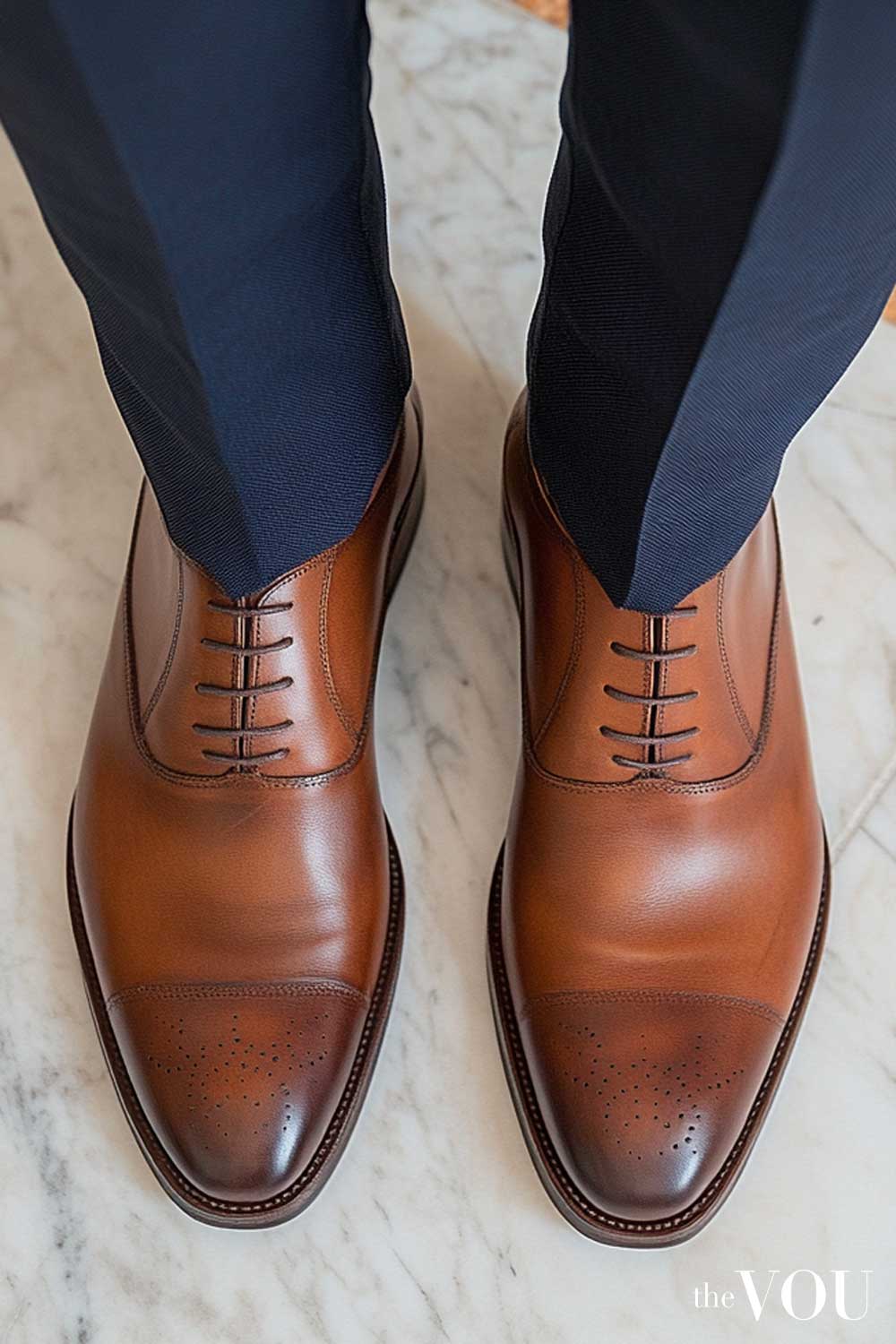
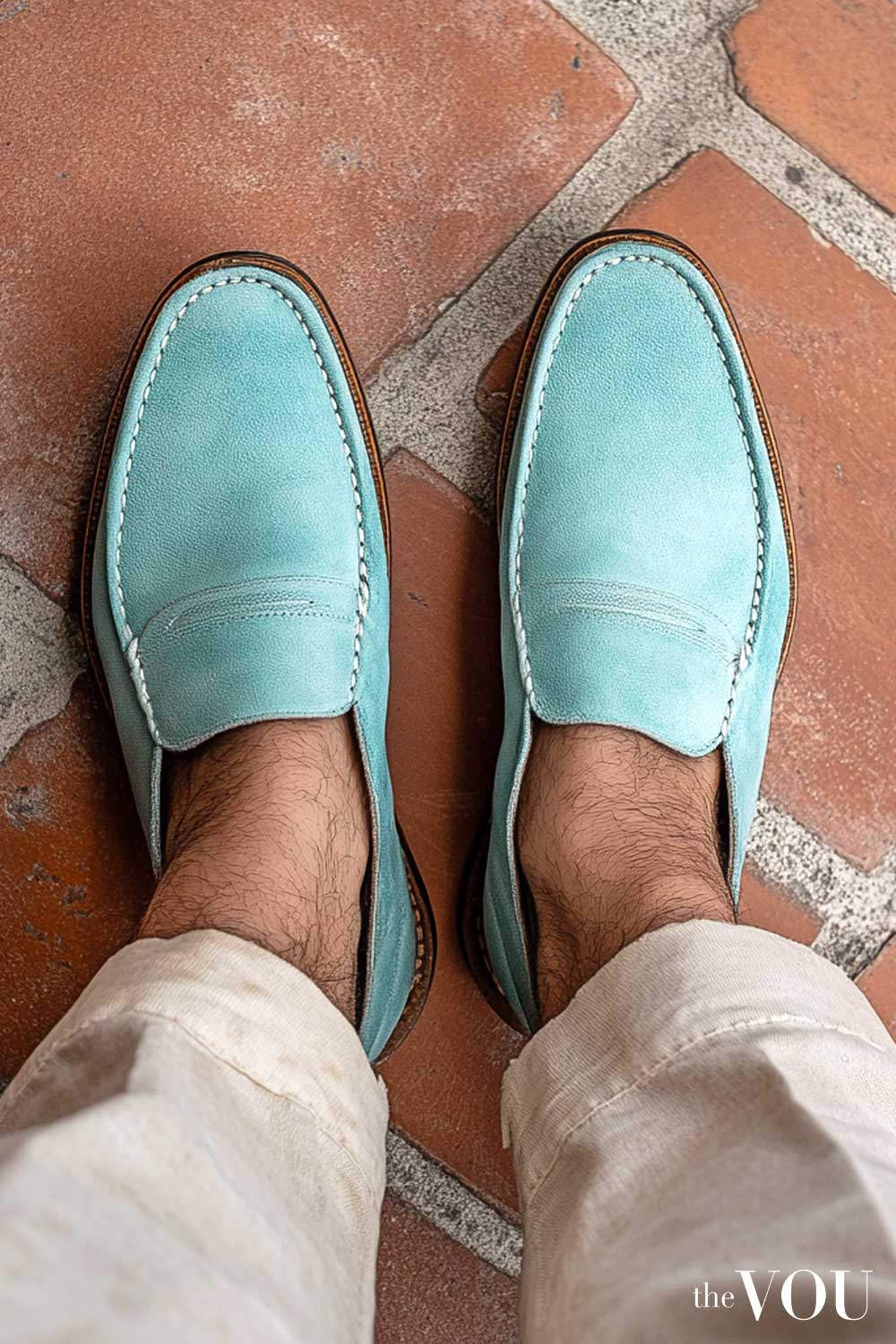
For casual dressing, colour at the feet is optional.
You can try aqua loafers with cream trousers and an ivory polo without changing the rest of the wardrobe.
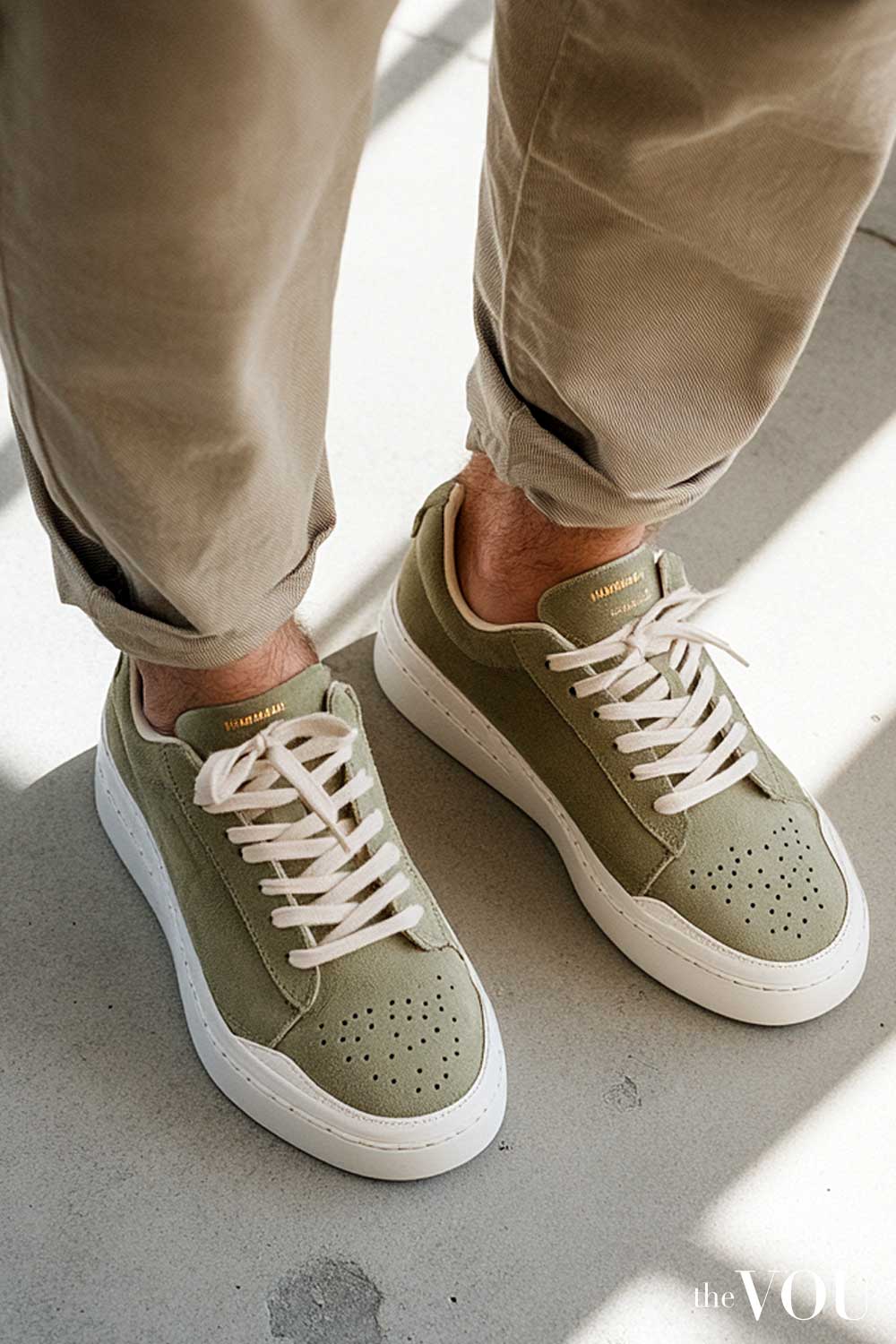
The muted green trainers are a softer choice than bright green.
Pair them with beige chinos and a white T-shirt for a relaxed day.
Keep your existing white or brown pair if those already do the job; assess comfort and practical use before adding another shoe colour.
Let a small accessory introduce the colour
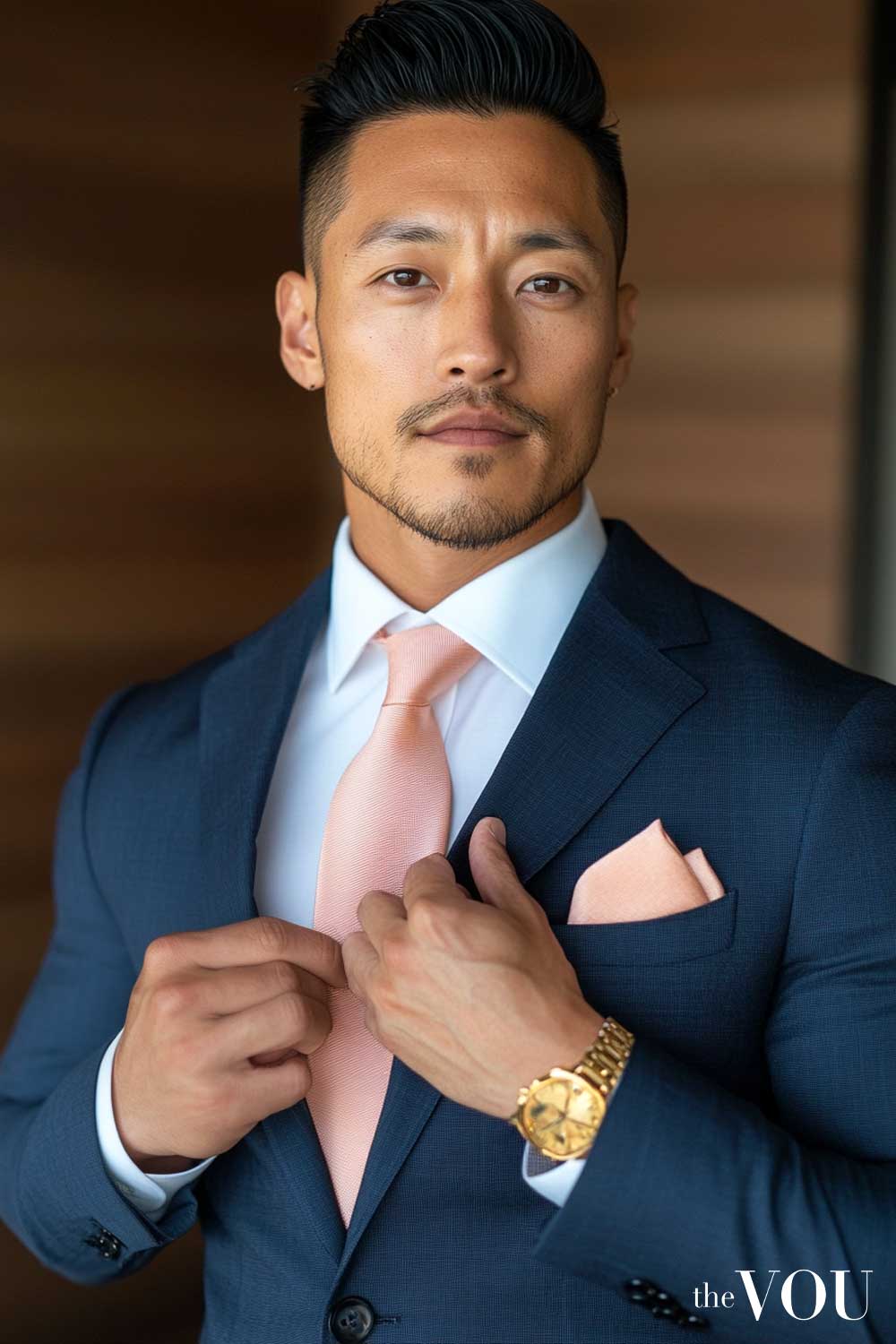
A peach-pink tie brings warmth to the pictured navy jacket and pale blue shirt.
The pocket square repeats it, but an ivory square or no square is another option.
You do not need a matching set.
For your own outfit, try a coral tie with a navy suit and pale shirt, or a turquoise scarf with a camel coat.
The same accent can look more conspicuous when shiny or when it occupies a larger area, so compare the whole arrangement.
Adapt the clothes for warm weather
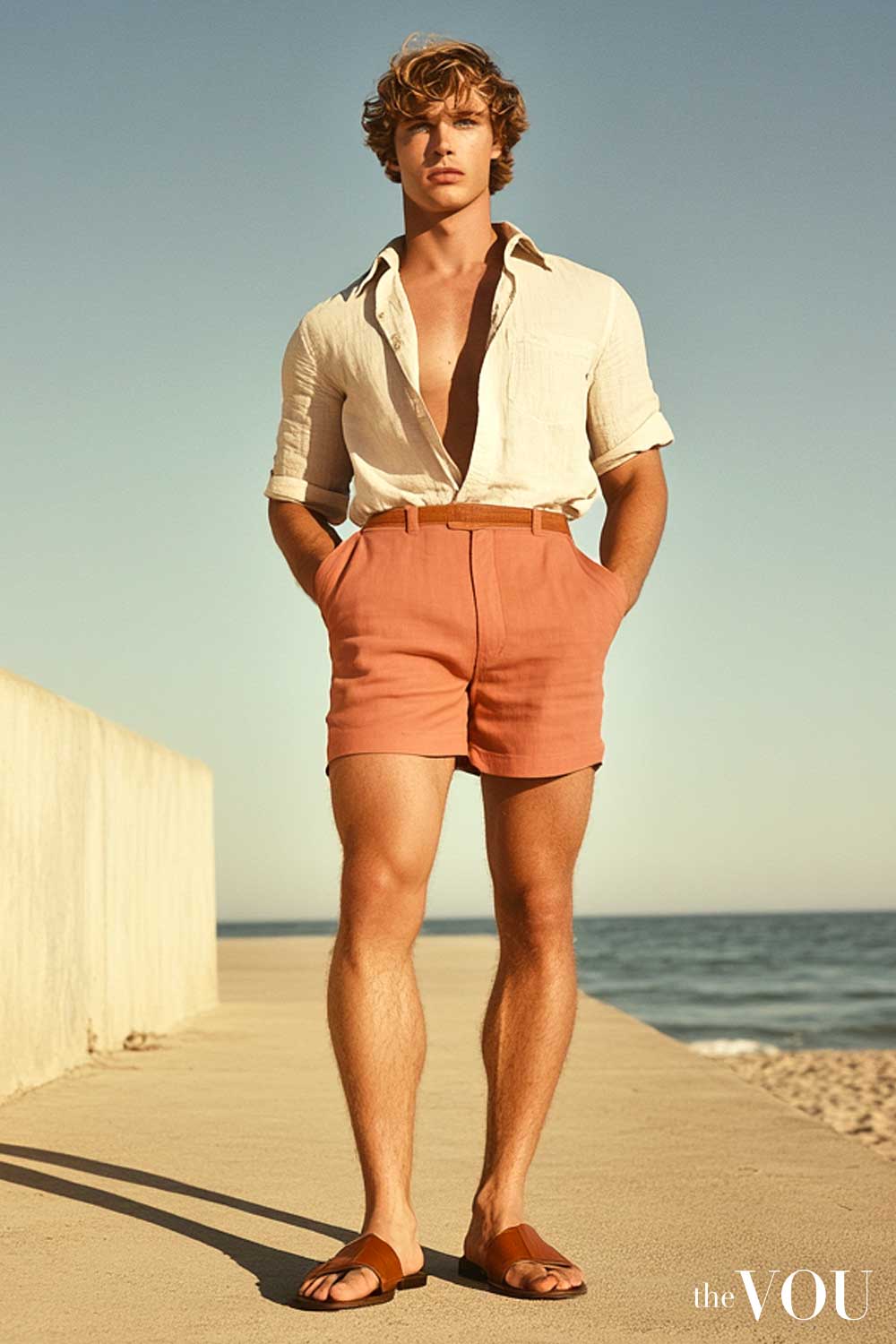
The coral-orange shorts, pale shirt and brown sandals are a holiday outfit for a setting that permits them.
The picture does not establish the shorts’ fibre or whether they are designed for swimming.
For beachwear, choose actual swim shorts suited to that use; for lunch away from the beach, dress for the venue.
Spring is the palette name, not a restriction to spring weather.
Use the same colour ideas in lighter or heavier clothes as conditions require.
A coral polo can become a coral knit, and a light shirt can sit beneath the coat you already own.
Turn the examples into a small working wardrobe
Before expanding the wardrobe, try these combinations from a few recurring garments:
Scroll horizontally to see all columns →
| Situation | Complete outfit | What changes |
|---|---|---|
| Work requiring a suit | Navy suit, ivory shirt, coral tie, navy socks, black Oxfords | One small warm accent at the collar |
| Casual lunch | Aqua polo, beige chinos, brown belt and socks, brown lace-up shoes | A larger coloured area without extra accessories |
| Cooler weekend | Ivory T-shirt, camel cardigan, dark jeans, brown socks and boots | Texture and layering within familiar neutrals |
| Business casual | Warm khaki trousers, apple green polo, warm olive blazer, golden tan suede loafers, woven coral belt | A coloured top under a neutral layer |
| Daytime wedding or smart event | Camel suit, warm white shirt, clear turquoise tie, cognac or dark brown Oxfords | Palette colours in tailoring where the event allows |
For an evening event marked black tie, wear a black or midnight dinner suit with a black bow tie and black shoes; the palette then matters only in small details.
Change a colour only when it makes the outfit more useful to you.
Check movement, pockets, shoes and the layers you will actually wear.
If one garment repeatedly has no partner, solve that specific gap before buying another statement garment.
The capsule wardrobe method develops that process; the smart-casual guide helps distinguish the occasions.