
Start here
What’s This About:
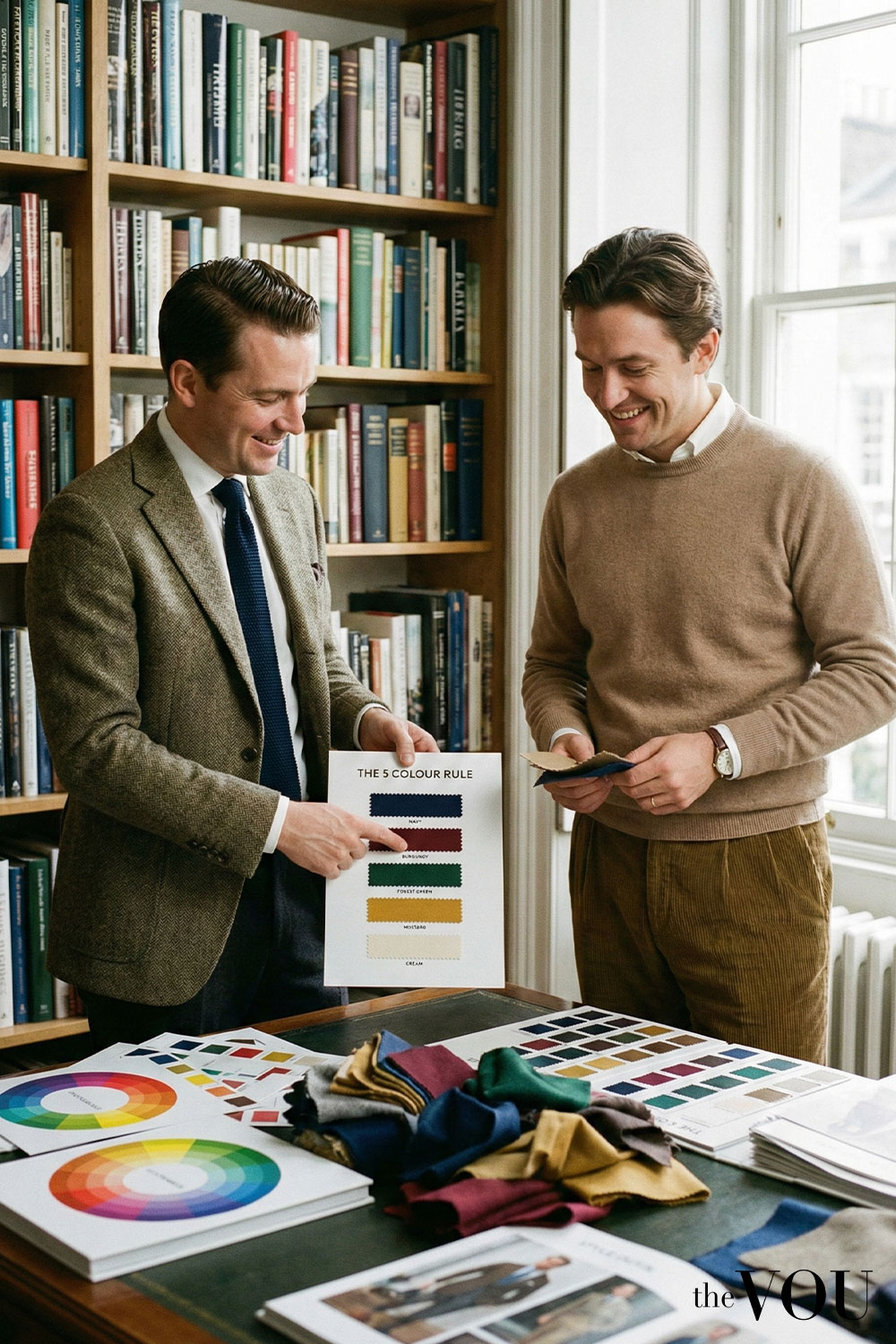
The five-colour rule is a wardrobe-planning shortlist of a few colours, such as three bases and two accents, that connect the clothes you wear often; the shortlist is not a limit on your whole wardrobe.
This guide shows how to build and test a flexible five-colour shortlist, such as:
– giving each colour a different job
– auditing a normal week of clothes
– selecting colours from existing combinations
– testing complete outfits
– using personal colouring to inform the shortlist
– deciding when to add another colour
and many more!
Keep the shortlist as a planning tool and hold on to the clothes that already earn their place.
Key Points:
01The rule does not mean wearing five colours at once, owning five garments or discarding clothes in a sixth colour.
02Choose base colours from garments you already wear constantly, such as brown boots and olive trousers, instead of starting from a colour a list calls essential.
03Test accents in complete outfits; an accent such as burgundy can cover a large area as a jumper, not only appear as a tie.
04Count conspicuous shoes, bags and belts in your planning, and add a new colour only when the colour solves a real need or gives you a combination you want to wear.
The five-colour rule is a way to plan a small wardrobe palette: choose a few colours that connect the clothes you wear often.
One workable version uses three base colours and two accents.
Five is a manageable shortlist, not a limit on your whole wardrobe or a guarantee that every garment will combine.
This is a wardrobe-planning exercise.
It does not mean wearing five colours at once, owning five garments or throwing away clothes in a sixth colour.
Give the five colours different jobs
Scroll horizontally to see all columns →
| Role | Example | Purpose |
|---|---|---|
| Dark base | Navy | Connect trousers, a jacket or knitwear |
| Second base | Mid-grey | Offer an alternative trouser or layer colour |
| Light base | Off-white | Provide a lighter shirt or T-shirt |
| Regular accent | Muted blue | Add colour in garments worn frequently |
| Optional second accent | Burgundy | Offer a different shirt, knit or accessory choice |
The shortlist refers to usable shades, so navy and muted mid-blue can fill different jobs even though both are blue.
These roles are flexible.
Your fifth colour can be another neutral, and your favourite vivid colour can be worn frequently.
You do not need a special “statement” hue reserved for making an impression.
1. Audit a normal week
Start with the clothes you actually wear, including shoes and coats.
List the settings you dress for: work, travel, exercise, weekends and occasional events.
A week of casual work calls for a different balance from a week of suits.
Separate colour problems from practical ones.
A jacket that pulls across the back needs a fit decision; changing your palette will not repair it.
Keep useful uniforms, sportswear and formal clothes even when their colours fall outside the everyday five.
2. Select colours with existing combinations
Choose the bases from garments that already earn their place.
If your brown boots and olive trousers are used constantly, include their colours instead of starting from black because a list calls it essential.
Compare the exact fabrics: grey, brown and navy each cover many shades.
Then select an accent that works with at least two outfits you would wear.
That is a practical check, not a universal buying threshold.
Try a shirt or knit against the trousers and jacket together, not only beside an isolated swatch.
3. Test complete outfits
Relaxed office: navy jacket, off-white shirt, grey trousers, burgundy tie if appropriate, grey socks and black loafers.
Navy and grey make the larger areas; the light shirt separates them and burgundy supplies the accent.
Black footwear adds a sixth wardrobe colour.
Keeping useful shoes is more sensible than forcing this example into an artificial five-colour total.
Casual day: muted-blue overshirt, off-white T-shirt, navy chinos and off-white trainers.
The blue garments share a hue direction but differ in depth, while the tee and shoes repeat the light colour.
Remove the overshirt when the weather requires; the base still works.
Cool-weather weekend: burgundy jumper, grey trousers, navy coat, grey socks and black boots you already own.
Burgundy covers more area here than the office tie.
An accent colour does not have to remain a small accessory in every outfit.
If you want a strict five-colour travel capsule, count the footwear colour among the five.
For example, navy, grey, off-white, black and burgundy can cover a navy jacket, grey trousers, black shoes, off-white tees and a burgundy knit.
Check the clothes and occasions, not just the arithmetic.
How personal colouring can inform the shortlist
Compare shades near your face without deciding the entire wardrobe from a warm or cool label.
You may prefer a softened navy shirt but still need dark navy trousers, or enjoy ivory knitwear while keeping a white formal shirt.
Lightness, intensity and the contrast between garments matter separately.
A cool-leaning palette does not make bright white mandatory; a warmer direction does not exclude every blue.
If your observations are unclear, retain the useful outfit combinations and keep the question open.
Patterns, leather and small details
A checked shirt can bring colours outside the shortlist.
Decide whether they introduce a welcome variation or make it difficult to combine with your clothes.
You can repeat one check colour in the trousers without matching every thread.
Count a conspicuous shoe, bag or belt colour in your planning.
Small metal details need not dictate your five, but a large bright buckle is still visible.
The exercise works best when it describes the clothes honestly.
When should you add another colour?
Add one when it solves a real need or gives you a combination you want to wear.
Before buying, name the outfit, check the fit and care requirements, and consider the total cost.
There is no need to phase out useful clothes just because they sit outside your initial selection.
For a more individual process, see how to build a personal wardrobe palette.
For colour counting within one outfit, use the three-colour guide.
Related guides on The VOU:
What is the 3 Colour Rule for Clothes?
How to Use Your Colour Palette?
Old Money Dress Code Unspoken Rules and Styling Tips for Men
Styling Principles Every Successful Man Must Master
“5 Outfit Rule” Principles for Men and Unique Styling Tips
Mandy Meyer’s focus at The VOU is men’s body-shape styling, garment fit and outfit proportions. Her coverage addresses the practical questions behind a wardrobe choice: how a jacket sits across the shoulders, how trousers fall and how different cuts change the silhouette a wearer wants to create.
Her subject areas include the triangle, inverted triangle, rectangle, oval, trapezoid, hourglass and diamond labels used in body-shape styling. These provide starting references for comparing visible proportions; they do not capture every body or prescribe one correct way to dress. The focus connects those observations with garment shape, construction, length and the relationship between the upper and lower parts of an outfit.
Mandy’s editorial coverage combines visual comparisons with fit checks for comfort and movement. Readers can consider whether a cut gives them the room they need, where clothing pulls or gathers and which changes might support their preferred look. The aim is to make menswear choices more understandable while keeping personal preferences and the wearer’s own styling goals central.