
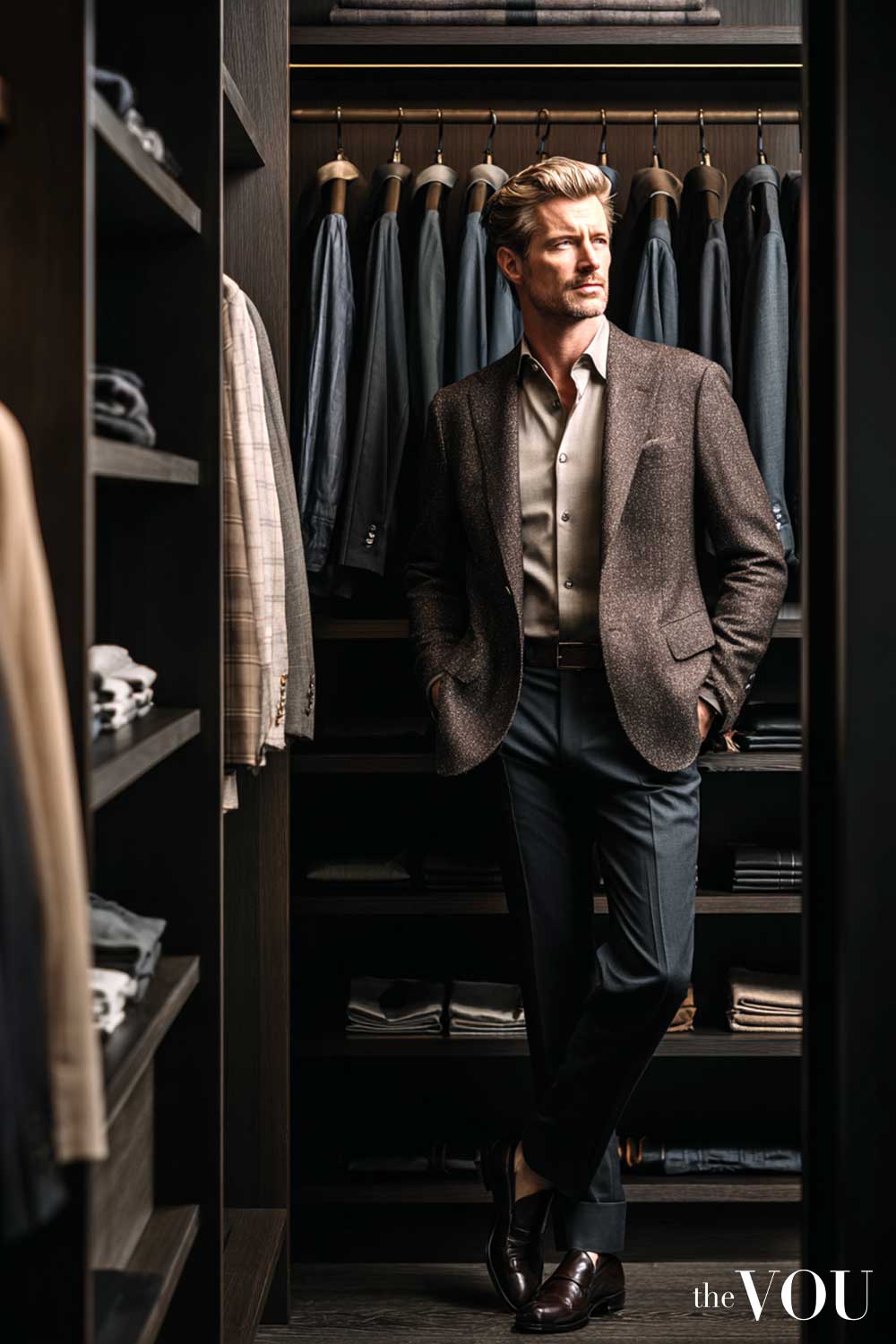
The query “What is the 5 outfit rule?” points towards an ambiguous term within style discussions.
No single, universally codified principle exists under this exact name. Instead, the term likely refers to one of two distinct concepts often presented in lists of five:
- Sets of five core principles for dressing well or coordinating outfits effectively.
- A guideline suggesting new wardrobe acquisitions should offer five-way versatility.
This analysis will clarify both interpretations, providing a structured understanding of the foundational ideas commonly associated with the number five in wardrobe strategy.
1. Five Core Principles of Dressing Well
Several sources reference sets of five key rules or guidelines for achieving a polished appearance or coordinating clothing effectively.
While the specific rules may vary slightly between stylists, they converge on several core tenets essential for any man aiming to elevate his personal style. Synthesising these perspectives, we can identify five overarching principles:
1. Impeccable Fit
Proper fit forms the bedrock of a sophisticated appearance. Garments should complement your physique, neither constricting movement nor obscuring your silhouette with excess fabric.
Tailoring is often essential to achieve this precise calibration, particularly for structured items like suits and jackets. An excellent fit enhances presence and communicates attention to detail.
2. High-Quality Foundational Garments
A high-performance wardrobe relies on a core of well-made, timeless staples. Focus investment on classic garments crafted from superior materials, think quality cotton shirts, durable denim, fine wool knitwear, and Goodyear-welted shoes.
These pieces offer longevity and form a versatile foundation for numerous outfits, embodying the “fewer but better” philosophy.
3. Master Coordination (Colour, Formality, Texture)
Effective outfits demonstrate harmony between components. Learn to coordinate colours using principles of complementarity rather than exact matching for a more dynamic look.
Ensure leathers (belt, shoes, watch strap) and metals (buckle, watch case, jewellery) are congruent.
Crucially, maintain a consistent level of formality across all items; pairing a formal jacket with casual shorts, for instance, creates dissonance.
4. Ensure Versatility
Select garments that can fulfil multiple roles within your lifestyle. Foundational pieces should transition seamlessly between different settings and pair effectively with various other items in your wardrobe.
Versatility maximises the return on investment for each piece and simplifies outfit creation.
5. Maintain Appearance (Garment Care & Grooming)
Investment in quality clothing necessitates proper maintenance. Adhere to care labels, utilise appropriate hangers and shoe trees, and address repairs promptly.
Equally important is personal grooming, a sharp haircut, tidy facial hair, and attention to skin and nails complete the polished presentation that well-chosen clothes initiate.
2. The “Five-Way Versatility” Guideline
A second interpretation, sometimes referred to as the “5 outfit rule,” functions as a purchasing guideline, particularly relevant for building minimalist or capsule wardrobes.
This principle dictates that before acquiring a new item, you should be able to envisage at least five distinct outfits incorporating it, using pieces already present in your existing wardrobe.
This serves as a rigorous test of an item’s potential versatility and integration capabilities. If a prospective purchase fails this test, it may represent a poor investment, an item likely to be worn infrequently or only in a single configuration.
Adhering to this guideline encourages more thoughtful acquisitions, focusing on pieces that significantly enhance the combinatorial possibilities of your wardrobe, thereby maximising utility and value.
Conclusion, Frameworks for Elevated Style
While a singular, formally defined “5 outfit rule” remains elusive, the concepts associated with it highlight essential truths in effective wardrobe management.
Mastering a set of foundational principles (focusing on fit, quality, coordination, versatility, and maintenance) provides the bedrock for elevated style.
Furthermore, evaluating potential purchases through the lens of five-way versatility ensures a curated, high-performing wardrobe where each component justifies its inclusion.
These ideas function not as rigid constraints but as valuable frameworks for cultivating a sophisticated and impactful personal appearance.
Frequently Asked Questions (FAQs)
Q1: What are the most crucial rules for dressing well?
While lists vary, core principles consistently include: achieving a perfect fit (often through tailoring), investing in quality over quantity, understanding colour and formality coordination, prioritising versatile garments, and maintaining both your clothes and personal grooming.
Q2: How can I make my wardrobe more versatile?
Focus on acquiring high-quality staples in neutral colours (such as navy, grey, white, beige, and black) that can be easily mixed and matched. Before buying a new item, consciously plan several outfits incorporating it with pieces you already own. Consider items that can be dressed up or down, such as a navy blazer, dark-wash jeans, or minimalist leather trainers.
Q3: Should leathers and metals always match exactly?
Exact matching provides the safest and most traditional approach, particularly for formal wear (e.g., black shoes paired with a black belt). However, complementary tones can work well, especially in more casual contexts (e.g., dark brown shoes with a mid-brown belt). The key is to avoid stark contrasts (like black leather with light tan leather). Consistent metal tones (e.g., all silver or all gold/brass) create a more cohesive look, but exceptions can be made for items with sentimental value, like wedding rings.
Mandy Meyer’s focus at The VOU is men’s body-shape styling, garment fit and outfit proportions. Her coverage addresses the practical questions behind a wardrobe choice: how a jacket sits across the shoulders, how trousers fall and how different cuts change the silhouette a wearer wants to create.
Her subject areas include the triangle, inverted triangle, rectangle, oval, trapezoid, hourglass and diamond labels used in body-shape styling. These provide starting references for comparing visible proportions; they do not capture every body or prescribe one correct way to dress. The focus connects those observations with garment shape, construction, length and the relationship between the upper and lower parts of an outfit.
Mandy’s editorial coverage combines visual comparisons with fit checks for comfort and movement. Readers can consider whether a cut gives them the room they need, where clothing pulls or gathers and which changes might support their preferred look. The aim is to make menswear choices more understandable while keeping personal preferences and the wearer’s own styling goals central.
Aidan Russell’s focus at The VOU is men’s face-shape styling, facial proportions and the way accessories frame the face. His coverage addresses a common starting question: how do you choose glasses, hats or necklines when standard face-shape advice does not quite describe your features?
His subject areas include comparing visible face length and width, recognising mixed features and understanding how frame size, brim shape and neckline placement change an overall look. Rather than making a shape label the final decision, this coverage connects proportions with the effect a reader wants, whether that means adding definition, softening an outline or drawing attention to particular features.
Aidan’s editorial focus also links facial styling with the rest of a man’s wardrobe. The aim is to make comparisons easier when trying on accessories or planning an outfit, while allowing for comfort, fit and personal preference. Readers looking for a starting point in face-shape styling can use this coverage to identify options worth trying, without being confined to one prescribed look.