
Start here
What’s This About
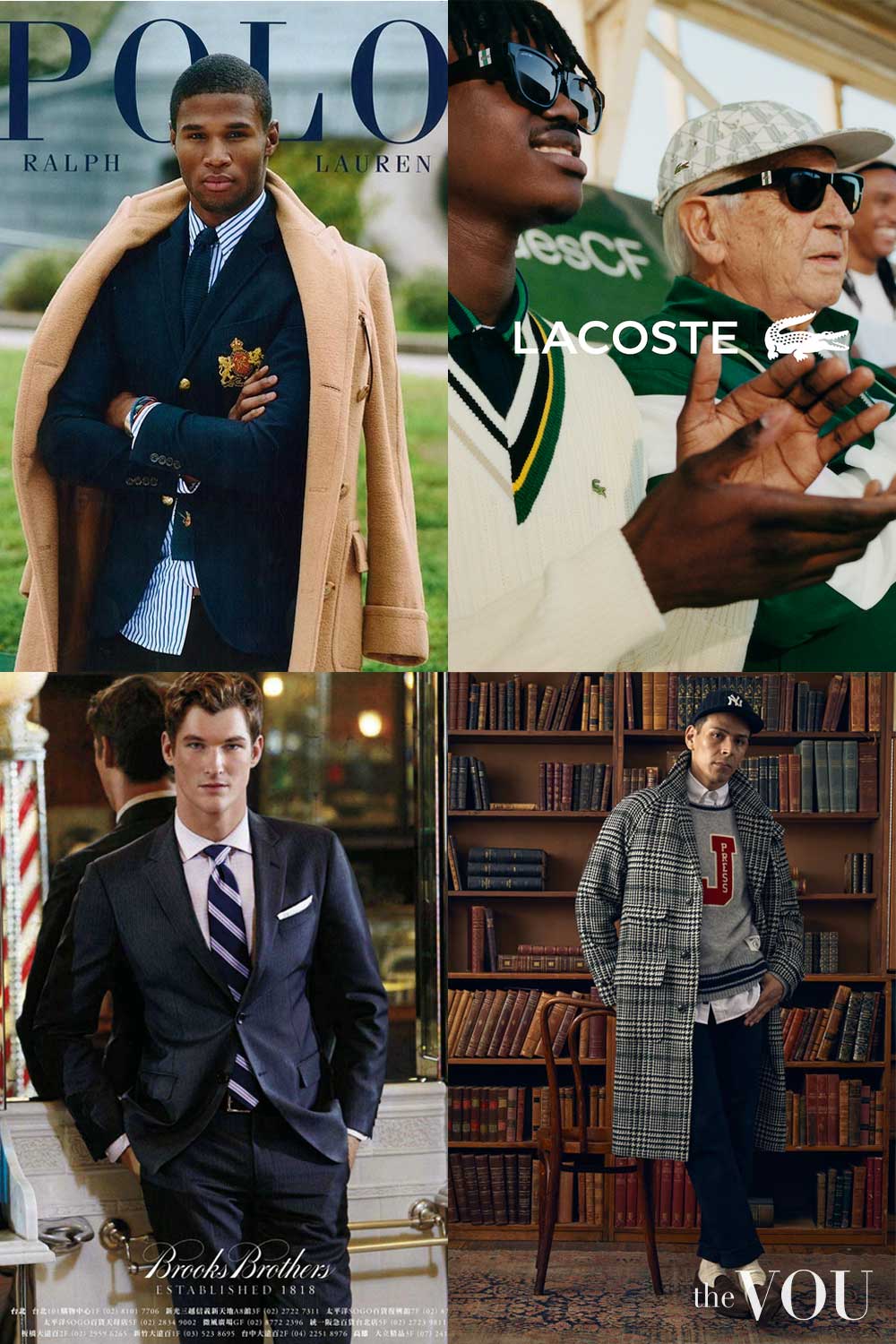
Preppy clothing brands fall into two groups: classic labels that make the traditional blazer, Oxford shirt and loafers, and newer labels that update the cut, colour or fabric.
This guide names twenty labels and the garments each is known for, such as:
Brooks Brothers and J. Press for Oxford shirts, blazers and Shetland sweaters
L.L.Bean, Sperry and G.H. Bass for boots, boat shoes and penny loafers
Barbour for waxed cotton jackets
Rowing Blazers for rugby shirts and blazers
Bonobos and J.Crew for chinos in several cuts
and many more!
Choose the garment and the fit first, then the label.
Key Points
01Brands are examples only; a well-fitting equivalent at any price, new or second-hand, works.
02Dates are taken from brand histories and trade press.
03Fit and your chosen cut matter more than the logo.
04Preppy describes clothes, not anyone’s background or wealth.
Preppy clothing comes in two broad moods: classic preppy, built on the navy blazer, Oxford cloth button-down shirt, repp tie and penny loafers, and modern preppy, which keeps those garments but changes the cut, the fabric or the mix.
This guide names ten labels long associated with the classic look and ten newer labels with a modern take, with the garments each is known for and a few facts from the brands’ own histories or dated press.
The labels are examples, not a required shopping list, and a well-fitting equivalent from any maker at any price, new or second-hand, does the same job.
If you want an Old Money look, the same brands often appear there too; the label describes clothes, not anyone’s background or wealth.
Traditional Preppy Style
Classic preppy dressing grew out of American school and university campuses in the first half of the 20th century.
Its core garments are the navy blazer, the Oxford cloth button-down shirt, the repp tie, chinos and penny loafers.
The look is smart but relaxed: tailored jackets worn with casual trousers, sweaters over shirts, and leather or canvas shoes rather than formal dress shoes.
For the garment-by-garment version, see our preppy style guide for men.
Modern Preppy Style
Modern preppy, sometimes called neo-prep, keeps the classic garments and updates the cut, fabric or styling.
That might mean an unstructured blazer with dark selvedge denim, or a rugby shirt with tapered tailored joggers and plain leather trainers.
It can also mean a vintage-style college sweatshirt with chinos and leather trainers, or a slim Oxford shirt under a bomber jacket.
Knowing both versions simply gives you more outfit options, from a traditional office to a weekend at home.
Preppy Clothing Brands for a Classic Look
These labels make the traditional preppy garments, whatever year they were founded.
1. Brooks Brothers
Brooks Brothers opened in New York on 7 April 1818, according to the brand, and is one of the labels most closely tied to classic American preppy dressing.
The company introduced its button-down collar shirt in the United States in 1900, after John E. Brooks noticed buttoned-down collars on English polo players.
Its Oxford button-down shirts and navy blazers are the garments most readers look for, and the brand dates its Golden Fleece emblem to 1851.
2. J. Press
J. Press was founded in 1902 in New Haven, Connecticut, beside Yale, and is a long-standing name in Ivy League style.
Its Shaggy Dog sweater is a brushed Shetland wool crew neck that the company says it still makes in Scotland.
The brand describes its main jacket as a three-roll-two, undarted, natural-shoulder model with a hook vent, the sack cut that defines the Ivy jacket.
3. Ralph Lauren
Ralph Lauren started in 1967 with a line of ties sold under the name Polo, and introduced the Polo shirt in 1972, according to the brand’s own timeline.
The polo shirt with the polo-player logo is still the garment most people link with the label, alongside its tweed sports jackets, cable-knit sweaters and chinos.
The brand sells several lines at different prices; our guide to how Polo Ralph Lauren and Ralph Lauren differ explains them, and the label is also covered in our American preppy style guide.
4. Lacoste
Lacoste dates its cotton pique tennis shirt with the crocodile logo to 1933.
The pique polo is the garment that brings Lacoste into a preppy wardrobe, worn with chinos or shorts and canvas or leather trainers.
The brand’s tennis-inspired knitwear and lightweight jackets fit the sporty side of the look.
5. Vineyard Vines
Vineyard Vines is a newer label making classic-style clothes: brothers Shep and Ian Murray founded it in 1998, starting with neckties sold on Martha’s Vineyard, according to trade press marking its 20th anniversary.
The brand is known for its whale logo, printed ties, polo shirts and bright, patterned summer clothes.
Its colourful approach suits the relaxed, New England summer side of preppy dressing.
6. L.L.Bean
L.L.Bean’s company history dates the Maine Hunting Shoe, the rubber-bottomed, leather-topped boot now known as the Bean Boot, to 1911.
The Bean Boot is a practical preppy choice for rain and slush, worn with chinos, corduroys or jeans.
The canvas Boat and Tote bag launched in 1944 as an ice carrier, and the brand says it is still made in Maine.
7. Sperry
Paul Sperry created the Top-Sider boat shoe in 1935, with a siped rubber sole designed to grip a wet deck.
The leather boat shoe is the brand’s best-known shoe and a summer preppy staple, usually worn without visible socks with chinos or shorts.
Our guide to what makes Sperry shoes distinctive covers the range in more detail.
8. Barbour
Barbour was founded in 1894 in South Shields, in the North East of England, when John Barbour began supplying oilskins to sailors and fishermen.
Its waxed cotton jackets are a preppy outerwear staple on both sides of the Atlantic, especially the Bedale, introduced in 1980 as an equestrian jacket, and the Beaufort, added in 1983 for country pursuits.
Our guide to the most classic Barbour jacket compares the models.
9. G.H. Bass Weejuns
G.H. Bass introduced its Weejuns loafers in 1936, and the name comes from “Norwegian”, after the Norwegian moccasin that inspired the shoe.
The Weejun penny loafer works with chinos and an Oxford shirt and with a blazer and grey trousers.
For fit and styling, see our penny loafers style guide.
10. GANT
The GANT label launched in 1949 from a New Haven, Connecticut, shirtmaking business, and its head office is now in Stockholm.
Its Oxford shirts often carry Ivy details such as a locker loop and a box pleat on the back, and a button at the back of the collar.
Its cable-knit sweaters and rugby shirts suit the collegiate side of the look.
Preppy Clothing Brands for a Modern Look
These labels take the same garments in a newer direction, with different cuts, fabrics, colours or collaborations.
1. Rowing Blazers
Rowing Blazers was founded in New York in 2017 by Jack Carlson, a former US national team coxswain.
The brand is best known for heavyweight rugby shirts, pique polos and blazers.
Its collaborations include Barbour, J.Crew and Sperry, so classic labels and their newer interpretations often meet in one garment.
2. Bonobos
Bonobos launched in 2007 with chinos cut with a more tailored thigh and a curved waistband.
Chinos and button-down shirts in a wide range of fits and colours are still its main preppy offer.
Ownership has changed several times, most recently in 2024, so check current fit charts rather than relying on older reviews.
3. J.Crew
J.Crew offers a contemporary version of the preppy basics, with chinos, Oxford shirts, Fair Isle and cable-knit sweaters and denim jackets.
The label works well for building a first preppy wardrobe because most of the core garments come in several cuts.
It has also collaborated with heritage and newer labels, including Rowing Blazers.
4. Todd Snyder
Todd Snyder launched his New York label in 2011, and American Eagle Outfitters bought it in 2015.
The brand mixes tailoring with casual sportswear, so a preppy outfit might pair a soft blazer with a sweatshirt or chinos with trainers.
Its collaborations have included Champion, L.L.Bean and J. Press, which bring sports and heritage references into modern preppy outfits.
5. Southern Tide
Southern Tide was founded in 2006, and its first product was the Skipjack polo shirt.
The brand focuses on polo shirts, shorts and casual clothes for warm weather, often in bright colours.
It sits within Southern preppy style, the warm-climate branch of the look.
6. Peter Millar
Peter Millar was founded in 2001 in Raleigh, North Carolina, and makes performance golf clothing alongside sportswear and tailored clothing.
Its performance golf polo shirts bring sportswear fabrics to a classic preppy shape.
They suit men who want a polo shirt that works on the course and at lunch afterwards.
7. Faherty
Faherty was founded in 2013 by twin brothers Mike and Alex Faherty with their family.
The brand gives preppy clothes a relaxed, coastal feel, with soft shirts, polos and shorts.
It says it uses organic and recycled fabrics and holds B Corporation certification.
8. johnnie-O
johnnie-O was founded in 2005 in Santa Monica, California, by John O’Donnell, and describes its style as a blend of East Coast classics and West Coast casual.
Its Tweener Button is a hidden button and placket between the second and third buttons of its button-up shirts, so the collar can be worn open without the shirt falling too low.
Its polo shirts and button-up shirts suit the relaxed, warm-weather side of preppy dressing.
9. Kiel James Patrick
Kiel James Patrick was launched in 2008 by Kiel James Patrick and Sarah Vickers in Rhode Island.
The brand is best known for nautical rope and leather bracelets, alongside nautical-themed clothing.
It built much of its audience through lifestyle photography on Instagram.
10. Jack Wills
Jack Wills is a British label, owned by Frasers Group since 2019.
Its hoodies, sweatshirts, polo shirts and rugby shirts give a casual, collegiate take on preppy basics.
Trade press reported in February 2025 that the brand had cut its UK shops from 32 to 24 in the year to April 2024.
How to Choose Between Preppy Brands
Start with the garment you need, then look at which labels make it in a cut you like.
Fit comes first: a blazer should sit cleanly on your shoulders, and an Oxford shirt should button without pulling across the chest.
Cut is a separate choice: slim, straight and relaxed chinos are all preppy, so choose the leg shape you are comfortable in.
Price does not decide quality, so compare cloth, stitching and fit rather than the label.
Second-hand and vintage shops often carry blazers, Oxford shirts and Shetland sweaters from these labels.
For details on the shirt itself, see our Oxford cloth button-down guide, and for complete looks, our preppy outfit ideas.
Conclusion
Classic labels such as Brooks Brothers, J. Press and L.L.Bean make the traditional preppy garments, while newer labels such as Rowing Blazers, Bonobos and Faherty change the cut, colour or fabric.
Mixing the two is common: a classic navy blazer and Oxford shirt with modern chinos and plain trainers covers office days and weekends.
Choose the garment and the fit first, and treat every label here as an example rather than a requirement.
If you are not sure which style suits what you like wearing, take the fashion style quiz.
Mandy Meyer’s focus at The VOU is men’s body-shape styling, garment fit and outfit proportions. Her coverage addresses the practical questions behind a wardrobe choice: how a jacket sits across the shoulders, how trousers fall and how different cuts change the silhouette a wearer wants to create.
Her subject areas include the triangle, inverted triangle, rectangle, oval, trapezoid, hourglass and diamond labels used in body-shape styling. These provide starting references for comparing visible proportions; they do not capture every body or prescribe one correct way to dress. The focus connects those observations with garment shape, construction, length and the relationship between the upper and lower parts of an outfit.
Mandy’s editorial coverage combines visual comparisons with fit checks for comfort and movement. Readers can consider whether a cut gives them the room they need, where clothing pulls or gathers and which changes might support their preferred look. The aim is to make menswear choices more understandable while keeping personal preferences and the wearer’s own styling goals central.