
Start here
What’s This About
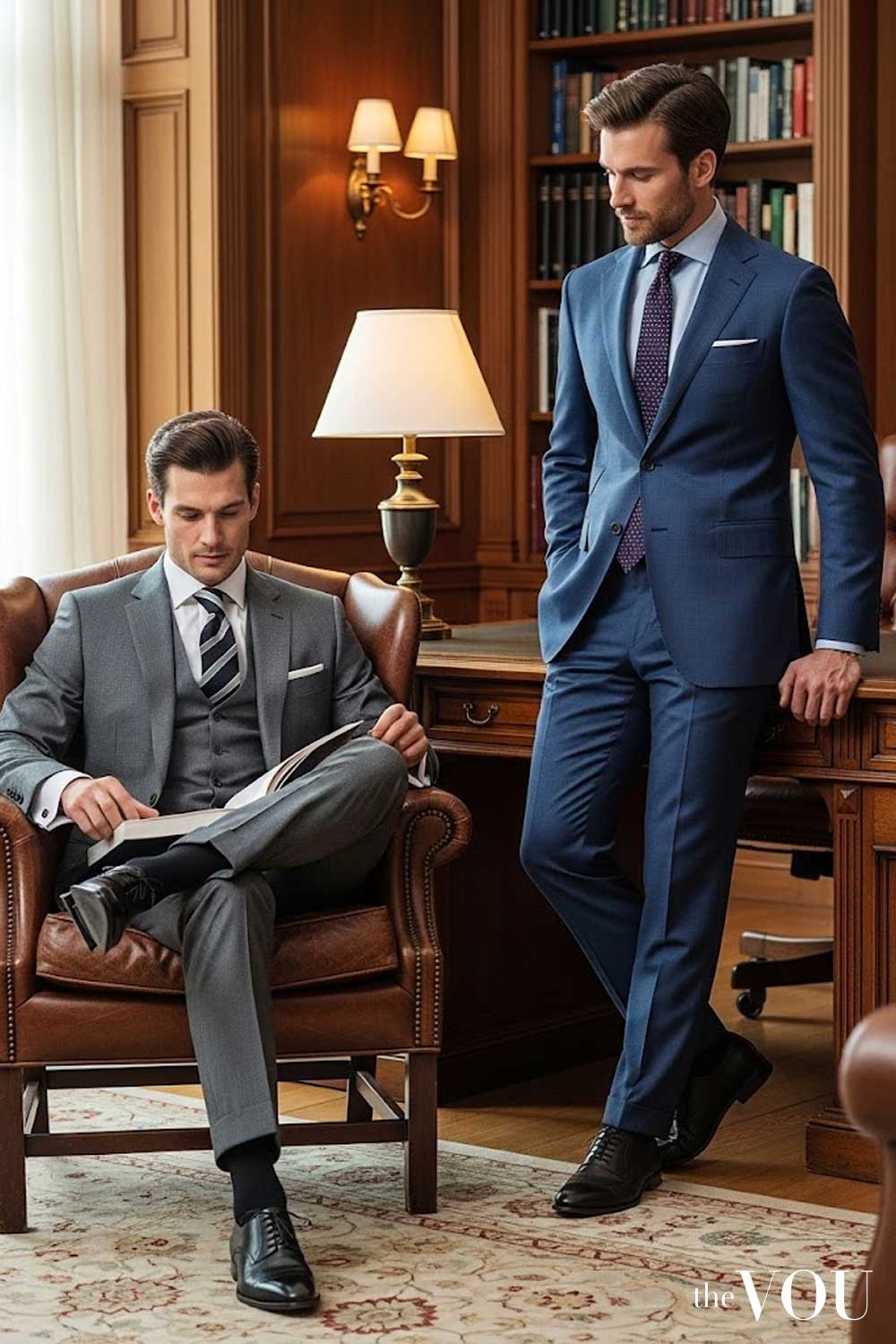
Business professional is a conservative workplace dress code built around a suit, a collared shirt and usually a tie, and the exact standard is set by your employer or the event that asks for it.
This guide explains how to meet the request in practice, such as:
what the label usually means and how it overlaps with “business formal”
suits, shirts, ties, shoes, socks, belts and outerwear for the code
grooming and garment care that keep the outfit looking cared for
when the code is commonly requested, and why your own policy decides
common mistakes to avoid
how to meet the code on a budget
and many more!
Read your employer’s policy or the invitation first, then use this guide to put the outfit together.
Key Points
01“Business professional” and “business formal” are used differently by different employers and careers sites, so check what your own policy or invitation describes.
02A navy or charcoal suit, a white or light-blue shirt, a quiet tie and polished leather shoes meet most business-professional requests.
03Fit and condition matter more than price; existing, second-hand and altered garments can all meet the code.
04Religious dress, disability-related needs and safety requirements can change what a dress code asks of you, so raise them with your employer.
Business professional is one of the more conservative everyday dress codes in offices that still ask for suits, sitting below evening codes such as black tie and white tie and alongside other forms of formal attire.
Its purpose is practical: to look tidy, consistent and appropriate for the people and setting you are working with.
This guide covers the usual garments, the conventions behind them, the occasions where the code is commonly requested and the mistakes that are easy to avoid.
It also shows where the code is flexible, so you can meet it with clothes that fit your budget and your working day.
What Is Business Professional Dress Code for Men?
Business professional usually means a suit, a collared shirt and a tie, worn with leather dress shoes, and it is less formal than evening codes such as black tie or white tie.
The label is not used consistently: some recruiters describe “business formal” as the matching-suit standard and “business professional” as a slightly broader code that allows tailored separates, while other guides treat the two names as one code.
When a policy or invitation uses either phrase without detail, a conservative suit and tie is the safe interpretation, and you can ask HR or the organiser if you need certainty.

Many firms in law, banking and government have traditionally asked for suits, but practice now varies between employers, offices and roles, so the sector alone does not tell you the code.
The code is also commonly requested for formal client meetings, presentations and some job interviews, especially where the interviewer has said to dress formally.
The overall effect you are aiming for is neat, consistent and unobtrusive.
Building a Business Professional Wardrobe
A business-professional wardrobe is built around a small number of well-kept garments, starting with the suit.
Navy and charcoal grey are the conventional first choices because they combine easily with white and blue shirts and with most ties.
Black suits are also acceptable for business professional, although many people find navy and charcoal easier to vary from day to day.
Wool and wool-blend cloths are the usual choice because they hold their shape and press well; check the weight and weave for the climate you work in.
Plain cloth, a subtle pinstripe or a chalk stripe all suit the code.
Fit matters more than price: the jacket should close without pulling, the shoulders should sit comfortably and you should be able to sit and reach without strain.
A tailor can advise which alterations are practical on a suit you already own or buy second-hand.
Two-piece suits (jacket and trousers) and three-piece suits (with a matching waistcoat) are both appropriate; a waistcoat is optional.
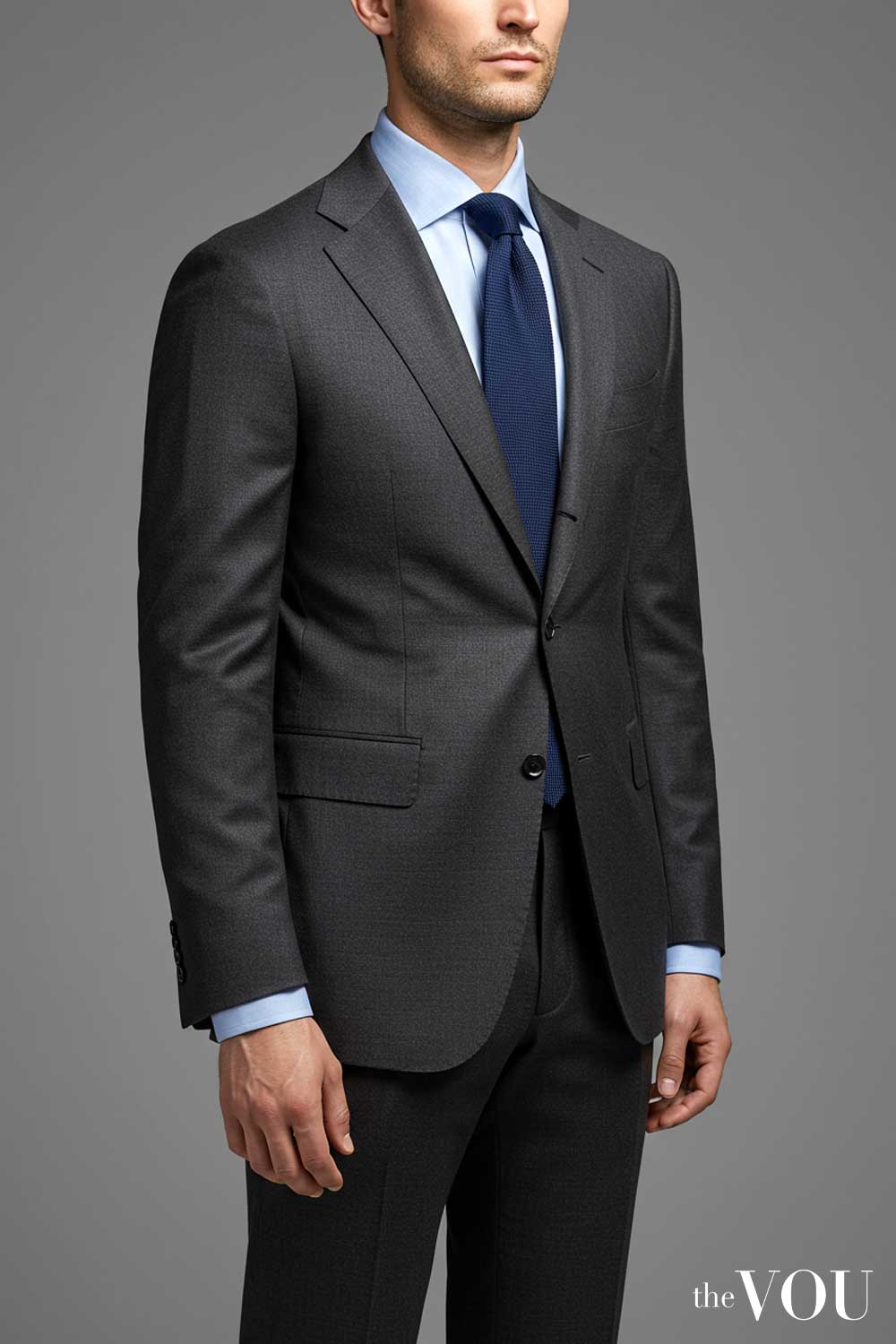
Shirts are usually long-sleeved with a collar firm enough to take a tie comfortably.
Cotton is the most common fabric, and white and light blue are the conventional colours to own first.
Fine stripes or a discreet check are generally acceptable; white is the most conservative option when you are unsure.
Check that the collar fastens without pinching and that the shoulders and body allow you to move.
A tie is normally expected with business professional unless your employer says otherwise.
Silk is the traditional tie fabric, and wool, knitted silk or good polyester ties also meet the code if they look neat.
Plain colours, repp stripes, pin dots and small geometric patterns are all suitable.
Choose a knot that suits your collar, such as a four-in-hand or a half Windsor, using our guide to the main tie knots.
By convention the tip of the tie reaches roughly the waistband or belt buckle.
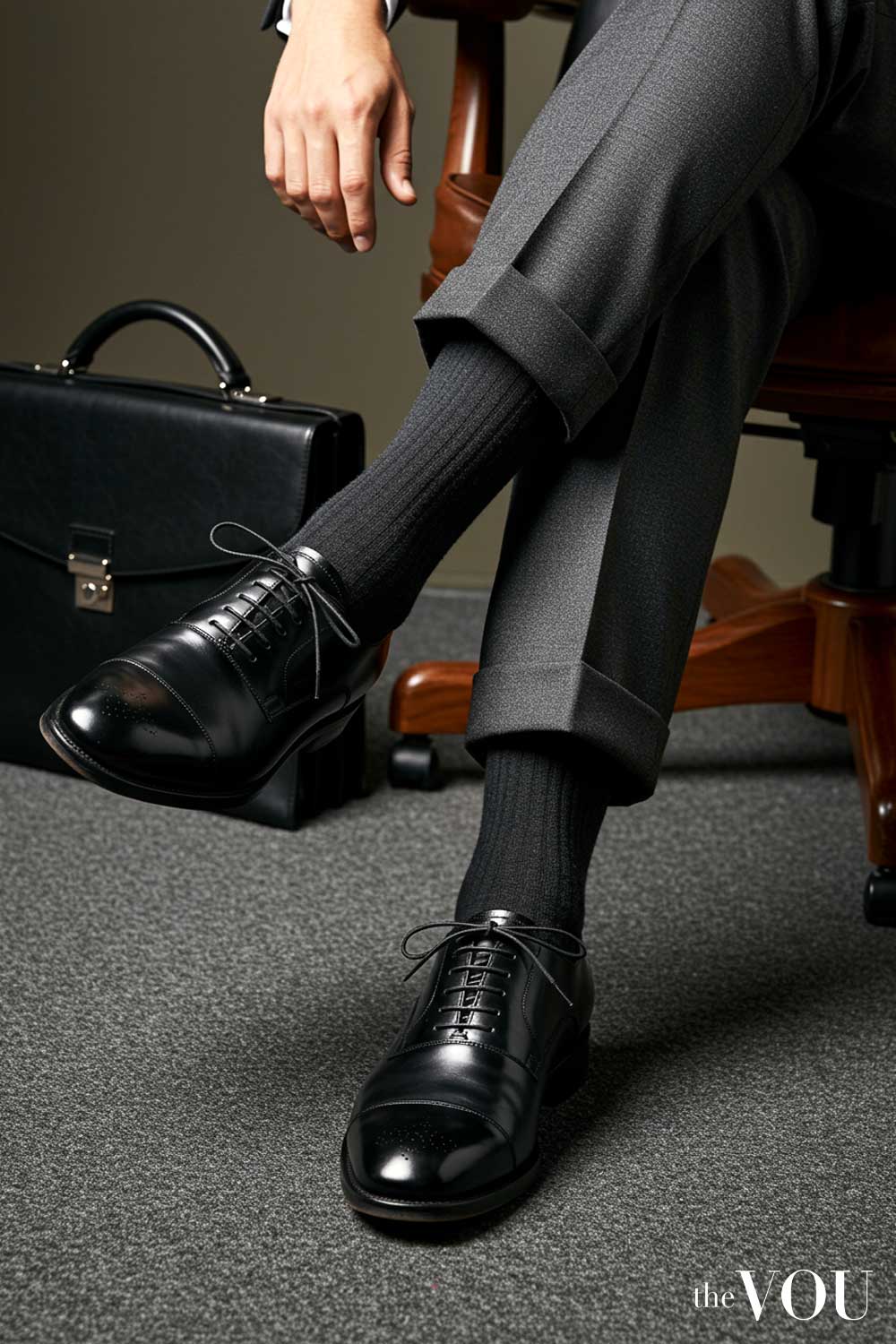
Shoes are normally leather dress shoes.
Oxfords, with closed lacing, are conventionally the more formal choice, and plain leather Derbies, with open lacing, are also widely accepted.
Black is the most conventional colour; dark brown and oxblood are common alternatives where the office is less strict.
Keep shoes clean and polished, and repair worn heels before they look neglected.
Dark socks are the conservative convention, usually matching the trousers or a shade darker, and over-the-calf length stops skin showing when you sit.
A plain leather belt in a colour that sits comfortably with your shoes, with a simple buckle, completes the outfit; braces are an alternative if your trousers have buttons for them.
For cooler weather, a dark overcoat such as a wool Chesterfield, or a conservative trench coat, fits over a suit; make sure the sleeves are long enough to cover the jacket cuffs.
Accessories are optional and should not distract.
A pocket square in silk or linen, folded simply, can add polish.
Cufflinks are needed only with double-cuff (French cuff) shirts.
A tie bar, if you wear one, is conventionally placed between the third and fourth shirt buttons.
A watch is a personal choice rather than a requirement.
Carry documents in a tidy briefcase or work bag that protects them in bad weather.
Key Principles of Business Professional Attire
A few principles hold the code together.
Comfortable, correct fit does more for a suit than a famous label, and simple alterations are often cheaper than replacing a garment.
Clothes should be clean, pressed and in good repair, so check for stains, loose buttons and worn cuffs before important days.
Follow each garment’s care label when cleaning, because cloths and constructions differ.
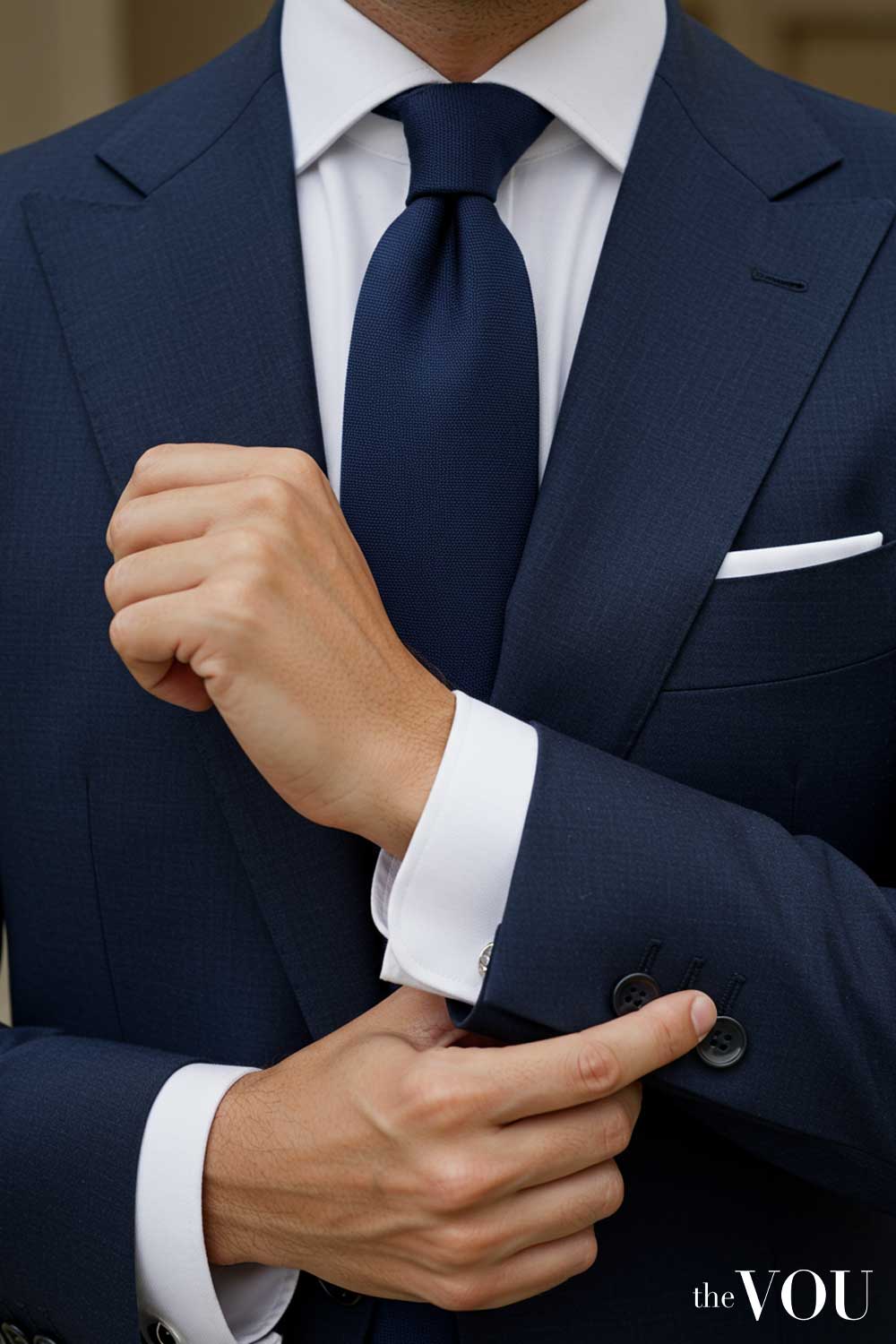
Quiet colours and patterns suit the code best; save loud colours and novelty prints for less formal settings.
Small details show care: a neat tie knot, fastened buttons and shoes that are clean and in good repair.
Most employers also expect tidy grooming: hair tidy in whatever style you wear, facial hair maintained if you have it, and nails clean.
If you wear fragrance, keep it light, especially in shared offices and meeting rooms.
When Is Business Professional Attire Required?
Your employer’s policy, a client’s or host’s instructions, or an event invitation decides when business professional is required.
Some employers in law, banking, finance and government still ask for it every day, while others in the same sectors have moved to business casual for most days.
Formal client meetings and presentations often call for it, but a client’s own instructions can ask for less, and your office code does not override what the host has requested.

It is also a reasonable choice for business events, conferences and dinners when no other dress code is given.
For interviews, many careers advisers suggest dressing one level more formally than the employer’s everyday code, and asking the person who invited you is the quickest way to check.
If you are unsure and cannot ask, business professional is rarely out of place in a conservative setting, and you can remove the tie if everyone else is more casual.
When the Code Meets Your Own Needs
A dress code should work for the people who follow it, so raise practical needs with your employer or the organiser.
In the UK, Government Equalities Office guidance says dress codes for men and women need not be identical but should set equivalent standards, should allow flexibility for religious symbols that do not interfere with work, and should be adjusted where a disability puts someone at a disadvantage.
In the US, Title VII of the Civil Rights Act, as explained in Equal Employment Opportunity Commission guidance, requires employers to accommodate sincerely held religious dress and grooming practices unless doing so would cause undue hardship.
Health and safety requirements, such as protective footwear on a site visit, take priority over the suit convention.
If heat, a medical condition or sensory sensitivity makes a tie or a stiff collar difficult, ask whether an adjustment is possible rather than assuming the convention must be followed exactly.
Dressing the Code on a Budget
You do not need a large or expensive wardrobe to meet business professional.
One well-fitting navy or charcoal suit, two or three shirts you can rotate between washes, two ties and one pair of polished leather shoes are enough to start for many people.
Second-hand and charity shops can be good sources of suits and overcoats, and a tailor can shorten sleeves or adjust a waist for much less than the cost of a new suit.
Add a second suit or more shirts when your working week and laundry routine show you need them.
Common Mistakes to Avoid with Business Professional Dress Code
A few mistakes undermine an otherwise correct outfit.
A suit that is too large or too tight looks uncomfortable and restricts movement.
Casual shoes, or dress shoes that are scuffed and unpolished, stand out against a suit.
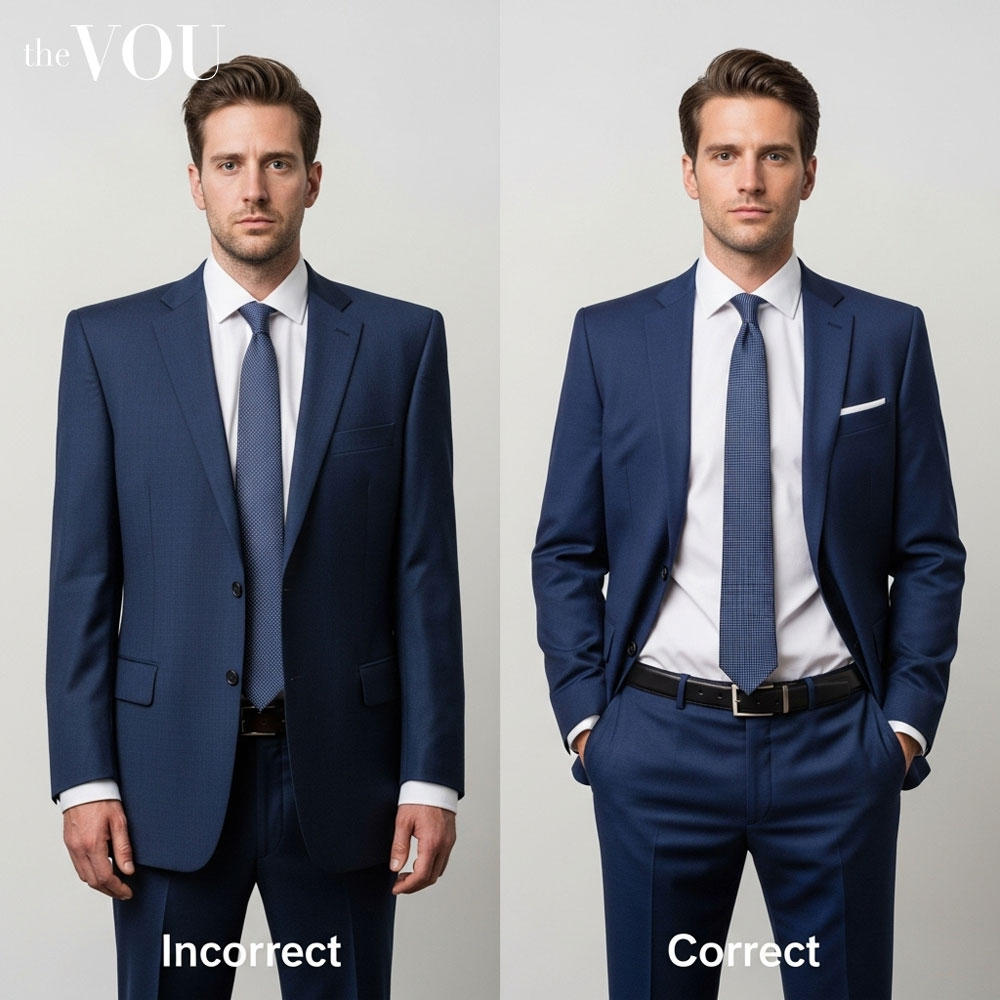
A tie that is much too short or too long, or a very flamboyant knot or pattern, draws attention away from you.
Creased shirts, stained clothing and garments in poor repair suggest the outfit was an afterthought.
A belt that clashes strongly with the shoes, such as a black belt with tan shoes, can look unplanned, although matching leathers exactly is a convention rather than a rule.
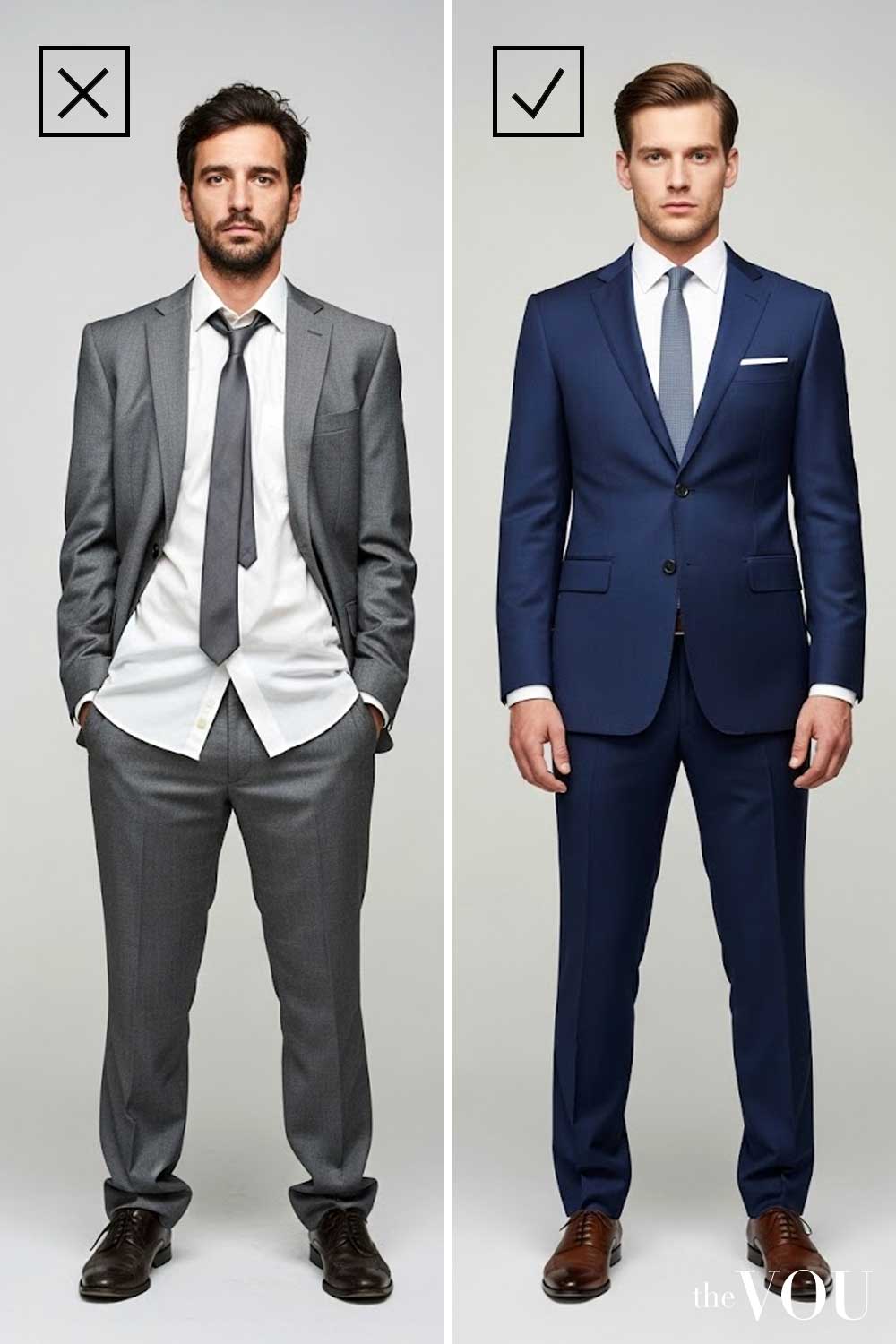
Unbutton your single-breasted suit jacket when you sit down so it does not pull, and fasten it again when you stand.
Too many accessories, or accessories that are very casual or flashy, can distract.
Neglected grooming can undo the effort put into the clothes.
Questions About Business Professional Attire
Q. Is business professional the same as business formal?
Sometimes; some employers and recruiters use the two names for the same suit-and-tie code, while others treat business formal as stricter.
Check the policy or ask HR when the difference matters.
Q. Can I wear a black suit for business professional?
Yes, a black suit meets the code, although navy and charcoal are the more common first choices because they vary more easily with shirts and ties.
Q. Do I have to wear a tie?
A tie is usually expected with business professional, but your employer’s policy decides, and some employers agree adjustments for comfort, health or religious reasons.
More Help from The VOU
Once you know the code, you can refine how you wear it.
Explore our styling quizzes for men if you want to compare cuts and colours you might prefer.
Our men’s styling guides cover suits, shirts, shoes and other workplace clothing in more detail.
Our styling services for men are paid consultations; the shop page lists what each one includes.