

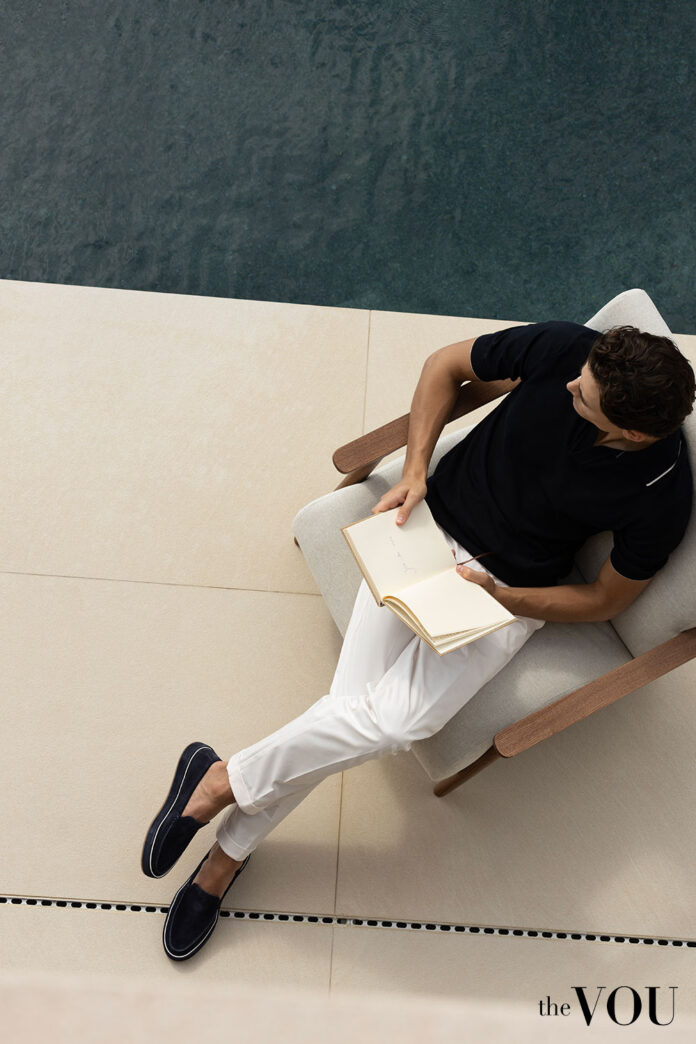
There is something to be said for a brand that doesn’t announce itself, one that accumulates recognition not through assertion but through a kind of quiet, inevitable presence, the way light changes a room without asking permission.
Aurélien is this kind of fashion maison, a name that has been circulating among those who know, finding its way into conversations from Amsterdam to London and into the world’s most respected luxury retailers, including Harrods and Selfridges.
It is a label carried not on the back of aggressive marketing but on the strength of what it actually makes: garments that understand the body, materials that age beautifully, and a design philosophy rooted in the belief that true luxury should earn its place in daily life rather than exist only for special occasions.
Clothing, here, is intended to support not just how a man looks, but how he lives, moves and enjoys his day.
Progressive Design Meets Sartorial Authority
Founded with a Mediterranean sensibility that privileges warmth over formality and comfort over contrivance, Aurélien is positioned within what we might call the new geography of luxury menswear, a landscape where progressive design meets established sartorial authority, and where Italian craftsmanship provides the technical foundation for a modern vision.
Aurélien occupies that delicate territory between the overly casual and the unnecessarily formal, creating what amounts to a contemporary uniform for men who move fluidly between worlds; urban and coastal, professional and leisurely, structured and spontaneous, without needing to change who they are or how they dress.
There is an ease to this approach, a quiet optimism, a sense that style should follow life rather than dictate it.
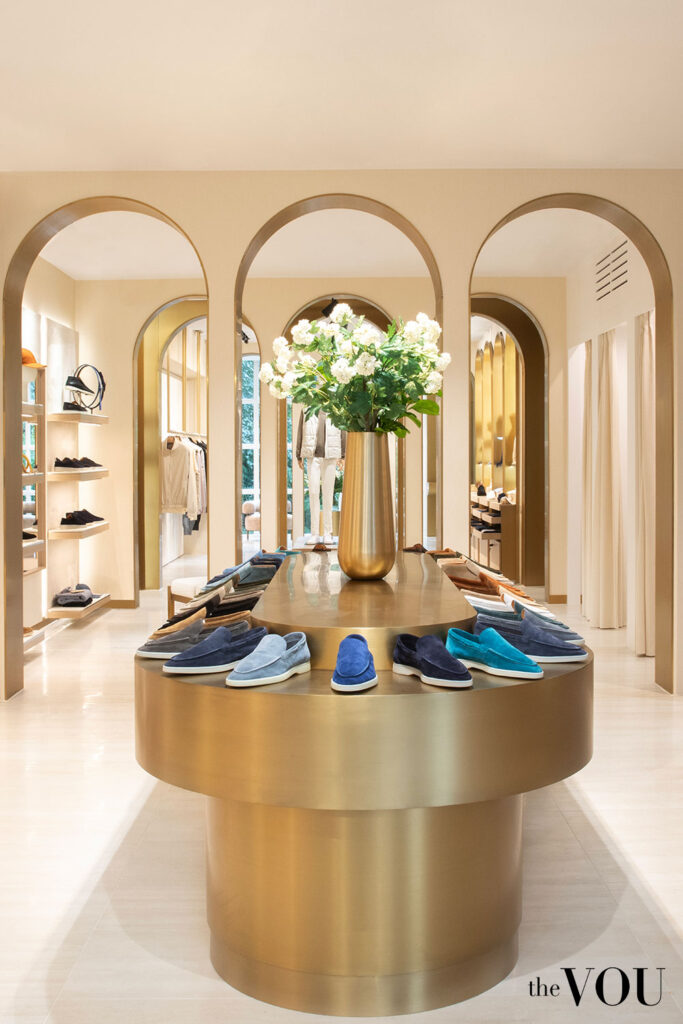
The brand’s flagship store reflects this philosophy; designed with rounded arches and brushed brass, it feels less like a traditional boutique and more like a private club, where membership is defined by taste and understanding rather than status.
It is a space that rewards slowness, inviting visitors to touch, to consider weight and drape, to engage with materials before engaging with price. The experience feels unhurried and human, guided by the simple pleasure of spending time with well-made things.
Amsterdam, often overshadowed by London, Paris and Milan in fashion conversations, has quietly cultivated a retail ecosystem that values curation over volume, where multi-brand concept stores have long championed quality and discretion over trend cycles.
As such, Aurélien’s presence here makes sense, as a name that belongs to this tradition of considered menswear, of brands that build slowly and last.
Amongst the Savile Row Tailors
London, of course, is another matter entirely. Mayfair and Marylebone neighbourhoods, with their Georgian townhouses and centuries of sartorial pedigree, represent establishment and historical weight, making the brand’s decision to open a flagship in London in early 2026 not a sign of ambition but readiness.
Aurélien has earned its place among Savile Row tailors and Jermyn Street shirtmakers, among names like Brunello Cucinelli and Bottega Veneta, by positioning itself adjacent to these traditions, fluent in their styling codes yet free to interpret them on its own terms.

London menswear, particularly in this moment, is experiencing what we might call a productive tension between its tailoring heritage and the contemporary demand for ease, for garments that don’t sacrifice comfort in service of propriety.
Aurélien, with its relaxed silhouettes and Mediterranean colour palette, arrives at precisely the right moment to contribute to this conversation.
But what makes Aurélien compelling is not its retail strategy or its geographic positioning but the clothes themselves, and more specifically, the way they’re made.
Italian Craftsmanship
In an era where “Italian craftsmanship” has become something of a marketing cliché, Aurélien’s partnerships with specialist ateliers across Italy feel quietly radical in their specificity.

These are not vague invocations of heritage but real collaborations with real aterliers and the kind where master artisans still pass techniques from one generation to the next, where the construction of a jacket involves dozens of hands and many hours, where the difference between good suede and exceptional suede is something you feel before you see.
Craft, here, is not treated as nostalgia but as a practical tool; a means of achieving comfort, longevity and ease rather than ornament or excess. The result is clothing that feels serious in its making but relaxed in how it is worn.
The maison’s signature Softey® suede is a case in point. Made from French calf and refined through an exclusive Italian tanning process, it is finished with a controlled oil treatment that enhances depth, sheen and performance while maintaining a supple, structured hand.
This is the kind of material innovation that happens when designers actually understand what happens in ateliers, when they’re present for the development process rather than simply sourcing from catalogues.
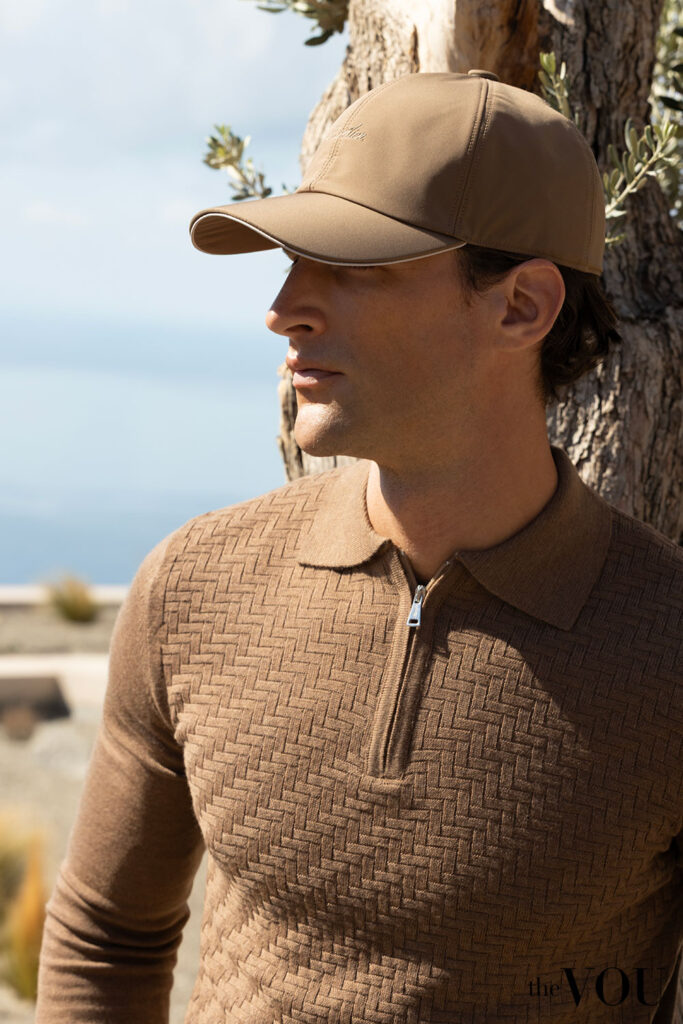
The fabrics Aurélien favours tell their own story: pure cashmere that weighs almost nothing but insulates like armour, natural linen that wrinkles in exactly the right way (and yes, there is a right way), supple grain leather that darkens and softens with wear, Cashwool® that performs across seasons.
These are materials that reward investment, that become more themselves over time rather than less.
In a fashion landscape increasingly dominated by synthetic performance fabrics and planned obsolescence, there’s something almost defiant about Aurélien’s commitment to natural materials, to the idea that clothing should improve with age, that patina is a feature rather than a flaw.
Old Money Colour Palette
The colour palette, with soft neutrals, sun-warmed earth tones, coastal blues, reads like a love letter to the Mediterranean, but it functions as something more practical: a built-in wardrobe architecture where everything speaks to everything else, where you can dress in the dark and still look considered.
This is not minimalism in the ascetic sense but in the mathematical sense, the minimum necessary elements to create maximum possibility but the kind of thoughtfulness that contemporary menswear increasingly demands, as men become more sophisticated about what they’re buying and why, as the conversation shifts from “What’s new?” to “What lasts?”
Aurélien’s presence in the world’s most respected luxury retailers such as Harrods, Selfridges, Printemps, Nordstrom, Bongénie, functions less as distribution strategy and more as validation, a signal that the maison has been vetted by institutions that have been vetting luxury for generations.
These placements matter not because they sell volume but because they sell context, because they position Aurélien in conversation with brands that have already proven their staying power.
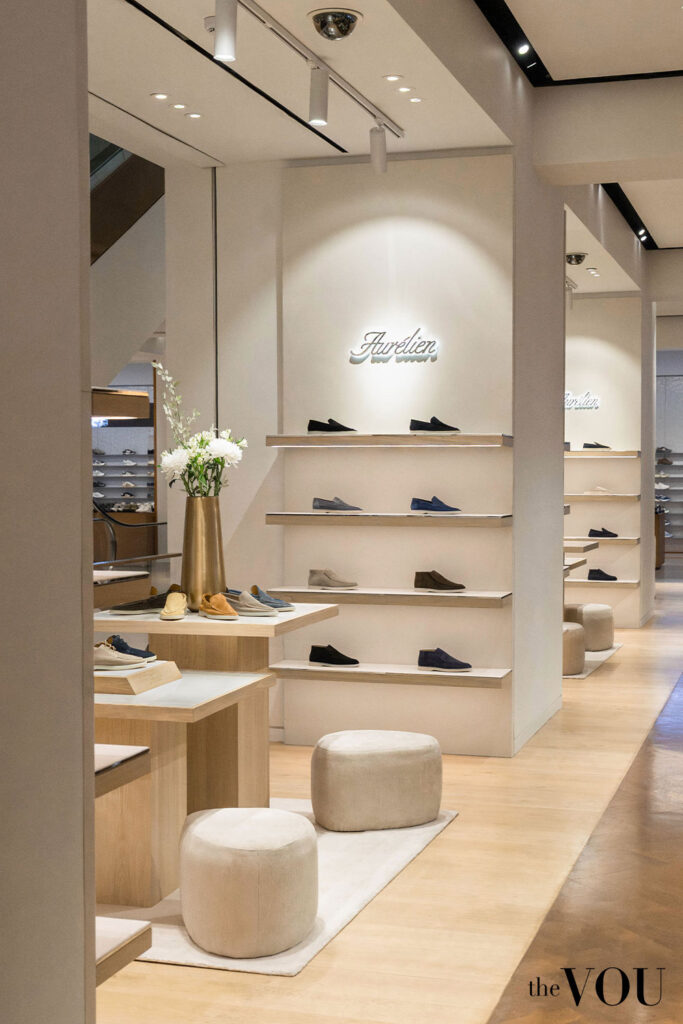
The pop-ups at Selfridges, both the recent one and the upcoming June 2026 iteration, serve as proof of concept; temporary installations that allow the brand to test and refine its message, to understand what resonates before committing to permanence.
What’s particularly interesting about Aurélien’s trajectory is its refusal to rush. In an industry that rewards speed and scale, the maison has opted for something more measured, more sustainable in both the environmental and the philosophical sense.
The growth from one flagship to two, from select retail partnerships to broader recognition, feels organic rather than forced.
Presence is Earned
This is not a brand trying to be everywhere at once but rather a brand that understands that presence is earned, that credibility accumulates slowly, that the men who will truly appreciate what Aurélien makes are not looking for the next big thing but for the thing they’ll still be wearing in a decade.
As we move deeper into 2026, and as the conversation around men’s fashion continues to evolve from logo-heavy streetwear towards what’s been termed “quiet luxury” or “stealth wealth,”
Aurélien finds itself positioned at the centre of something larger; a movement towards quality over quantity, towards pieces that whisper rather than shout, towards a kind of confidence that doesn’t require external validation. This is not trend but temperament.
And for men who understand the difference between being fashionable and having style, between buying clothes and building a wardrobe, Aurélien offers something increasingly rare: clothing that doesn’t demand attention but receives it, garments that feel as good as they look, and a vision of menswear that prioritises the long term over the immediate and the essential over the excessive.
In the end, Aurélien represents not simply a brand, but an approach: to dressing, to quality and to the belief that luxury should be felt in everyday moments. It believes in fabric and fit and the intelligence of the men who wear it. Aurélien trusts its audience to recognise excellence without needing it explained.
In a fashion landscape that too often mistakes volume for value, that feels worth celebrating.
After years of managing hundreds of fashion brands from London's office of a global retailer, Mandy has ventured into freelancing. Connected with several fashion retailers and media platforms in the US, Australia, and the UK, Mandy uses her expertise to consult for emerging fashion brands create top-notch content as an editorial strategist for several online publications.
A passionate advocate for inclusivity and diversity, Aidan is the driving force behind The VOU as its Editorial Manager. With a unique blend of editorial acumen and project management prowess, Aidan's insightful articles have graced the pages of The Verge, WWD, Forbes, and WTVOX, reflecting his deep interest in the dynamic intersection of styling with grooming for men and beyond.