
Start here
What’s This About
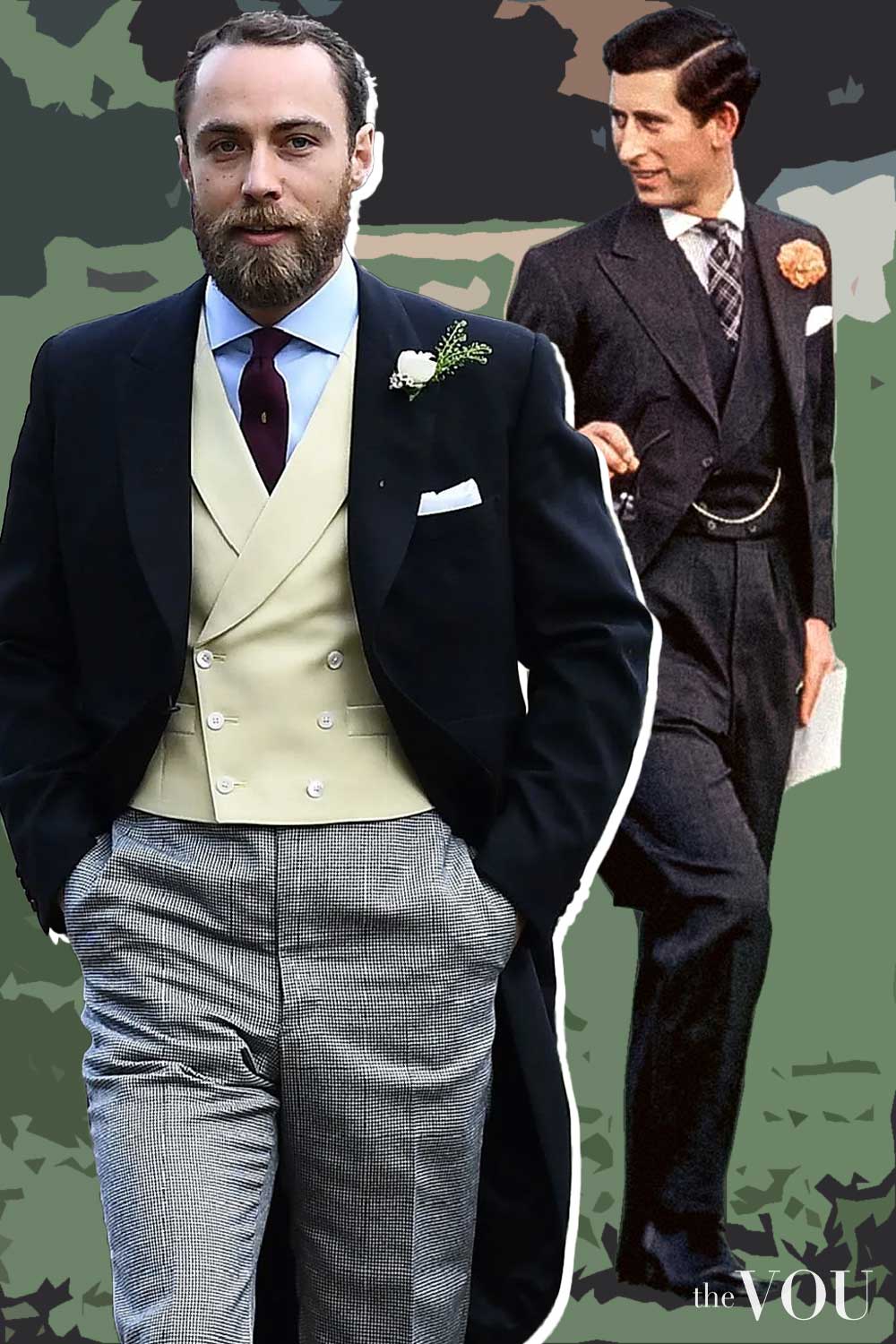
A morning suit is formal daytime dress built around a tailed morning coat, worn with a waistcoat, striped or matching trousers, a shirt and tie, mainly at weddings, races and ceremonies before 6 pm.
This guide explains when and how to wear one, such as:
the difference between morning dress and a morning suit
the morning coat, trousers, waistcoat, shirt and neckwear
shoes, top hats, gloves and other accessories
how morning dress compares with tails, a dinner jacket and a stroller
what to wear to a daytime wedding, Royal Ascot or a royal garden party
and many more!
Always follow the dress code your host or venue sets, as some events have strict written rules.
Key Points
01Morning dress is the most formal daytime dress code and is worn before 6 pm; it is not worn to events that start in the evening.
02Traditional morning dress has a black or grey morning coat with contrasting striped trousers, while a morning suit uses the same cloth and colour for every garment and is slightly less formal.
03The waistcoat, tie and shirt are where personal choices show, within the event’s rules.
04Some events publish exact rules, such as Royal Ascot’s Royal Enclosure, which requires black, grey or navy morning dress with a waistcoat, a tie and a top hat, and does not permit bow ties or cravats.
Morning dress is the daytime counterpart of white tie and is still worn at formal weddings, race meetings such as Royal Ascot, some royal and civic occasions and certain church services.
The word “morning” refers to daytime in general rather than the early hours.
Morning Dress and Morning Suits
According to the overview of morning dress, the outfit consists of a morning coat, a waistcoat and formal trousers, worn with either a turndown collar and tie or a wing collar and a cravat, with black Oxford shoes and an optional top hat.
The same source describes a morning suit as the version in which the coat, waistcoat and trousers are all in the same colour and cloth, often grey, which is slightly less formal than traditional morning dress with contrasting trousers.
In everyday speech, many people use “morning suit” for both.
The Morning Coat
The morning coat is the defining garment.
Single-breasted, usually fastening with one button
Peak lapels
Front edges that curve back from the waist into tails at the back
Tails that reach around the back of the knee
A waist seam that shapes the coat
A centre back vent that splits the skirt into two tails, with two buttons at the back of the waist
Black is the most formal colour, and dark grey is a common, slightly softer alternative; both are usually made in worsted wool, sometimes with a herringbone or barathea texture.
The coat should fit cleanly across the shoulders, button comfortably at the waist and let a little shirt cuff show at the sleeve.
The Trousers
Traditional morning trousers are in a grey and black striped cloth, often called cashmere stripe, although the cloth is usually wool rather than cashmere; with a morning suit, the trousers match the coat.
They sit at the natural waist so the waistcoat covers the waistband, are held up by braces rather than a belt, and have no turn-ups.
A single slight break over the shoe is the usual length.
The Waistcoat
The waistcoat covers the trouser waistband and is where colour can come in.
Buff, dove grey and pale blue are traditional colours
Pale pastels are often chosen to coordinate with a wedding
Single-breasted styles are most common, and double-breasted styles are also traditional
Wool, linen or silk are all used; linen suits summer events
With a single-breasted waistcoat, the bottom button is traditionally left undone; check the specific dress code if you are attending an event such as Royal Ascot, which publishes its own rules.
Shirt and Neckwear
A white shirt with double cuffs is the most formal choice, and pale blue or a subtle stripe is common at weddings.
A turndown collar, often a cutaway or spread, suits a tie, while a wing collar is worn with a cravat (also called a formal ascot).
A silk tie in grey, silver or a pale colour is the most common neckwear today; a cravat is a traditional alternative at some weddings but is not permitted in Royal Ascot’s Royal Enclosure.
Choose neckwear that complements rather than matches your waistcoat, and if you need help with knots, see our guide to how to tie a tie.
Shoes
Black Oxfords are the standard choice, in plain-toe, cap-toe or wholecut styles; see our dress shoes styling guide.
Some events require black shoes, so avoid brown or heavily brogued shoes unless you are sure they are welcome.
Accessories
Top hat: black or grey, often required at the most formal events and optional at most weddings
Gloves: grey or cream, carried or worn outdoors and removed for handshakes and meals
Pocket square: white linen in a straight or simple puff fold
Boutonniere: a single flower in the left lapel buttonhole, often matched to a wedding
Cufflinks: plain gold, silver or mother-of-pearl
Braces: needed to hold the trousers at the natural waist
Watch: a pocket watch is traditional; a slim dress watch is also fine
Morning Dress Compared With Other Formal Wear
Scroll horizontally to see all columns →
| Outfit | Time of day | Key features |
|---|---|---|
| Morning dress | Daytime, before 6 pm | Tailed morning coat with curved front, waistcoat, striped or matching trousers, tie or cravat |
| White tie (evening tails) | Evening | Black tailcoat cut straight across the front, white waistcoat, white bow tie; see our white tie guide |
| Black tie (dinner jacket) | Evening | Black or midnight blue dinner jacket, black bow tie; see our black tie guide |
| Stroller (black lounge suit) | Daytime | Black lounge jacket without tails, worn with striped trousers and a waistcoat; less formal than morning dress |
How to Dress in Morning Dress
Shirt: put on the shirt and fasten the cuffs
Trousers: attach the braces and adjust them so the trousers sit at your natural waist
Neckwear: tie your tie or cravat
Waistcoat: check that it covers the trouser waistband
Coat: put on the morning coat and fasten the button
Outfit Ideas by Occasion
Daytime Wedding
A black or grey morning coat, grey striped trousers, a dove grey or pale blue waistcoat, a white shirt with a silver or pastel silk tie, black Oxfords and a white pocket square; the wedding party may coordinate waistcoats and ties, so ask the couple first.
Royal Ascot, Royal Enclosure
The 2026 dress code requires black, grey or navy morning dress with a waistcoat and tie, a black or grey top hat without coloured ribbon, black shoes and socks that cover the ankle; bow ties and cravats are not permitted, so check the current rules before each meeting.
Royal Garden Party
The Buckingham Palace garden party guidance allows a morning coat, a lounge suit or uniform (without medals), so morning dress is welcome but not required.
Civic or Church Ceremony
For a formal daytime ceremony, a black morning coat with striped trousers, a pale grey waistcoat, a white shirt and a silver tie is a safe choice; follow any instructions sent with the invitation.
Dos and Don’ts
Scroll horizontally to see all columns →
| Do | Don’t |
|---|---|
| Check the event’s written dress code | Wear morning dress to an event that starts in the evening |
| Wear braces so the trousers sit at the waist | Let shirt show between the waistcoat and trousers |
| Keep shoes black and polished | Wear brown or casual shoes at formal events |
| Remove your hat indoors and your gloves for handshakes and meals | Add novelty accessories at formal events |
| Have the coat and trousers altered for a clean fit, or hire early | Leave hiring to the last minute before a busy race or wedding season |
If a daytime wedding continues into the evening, guests usually stay in morning dress unless the hosts ask them to change.
Mandy Meyer’s focus at The VOU is men’s body-shape styling, garment fit and outfit proportions. Her coverage addresses the practical questions behind a wardrobe choice: how a jacket sits across the shoulders, how trousers fall and how different cuts change the silhouette a wearer wants to create.
Her subject areas include the triangle, inverted triangle, rectangle, oval, trapezoid, hourglass and diamond labels used in body-shape styling. These provide starting references for comparing visible proportions; they do not capture every body or prescribe one correct way to dress. The focus connects those observations with garment shape, construction, length and the relationship between the upper and lower parts of an outfit.
Mandy’s editorial coverage combines visual comparisons with fit checks for comfort and movement. Readers can consider whether a cut gives them the room they need, where clothing pulls or gathers and which changes might support their preferred look. The aim is to make menswear choices more understandable while keeping personal preferences and the wearer’s own styling goals central.