
Start here
What’s This About
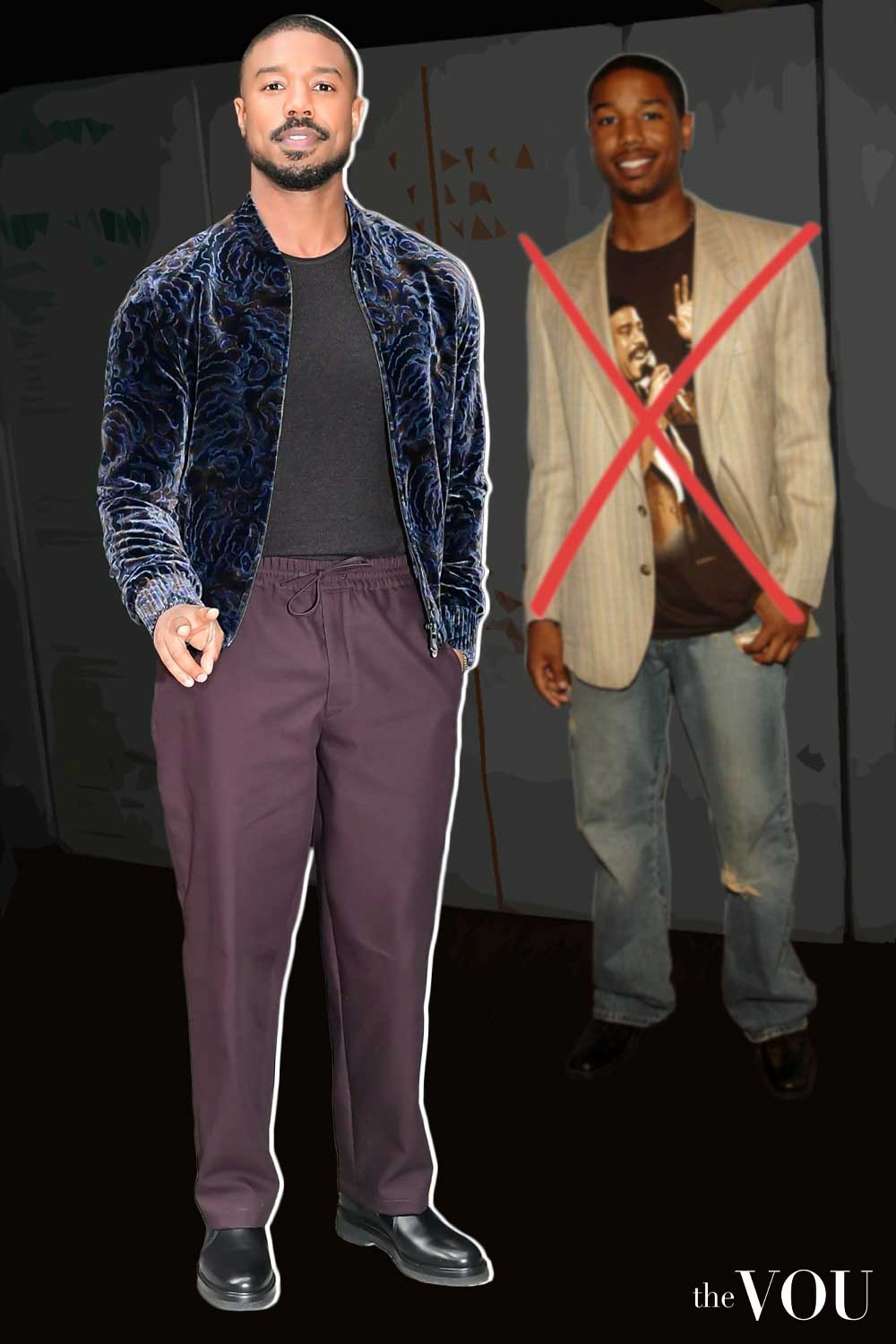
If your shoulders and upper torso look noticeably broader than your hips, your trousers, necklines, jackets and layers can make that contrast look more or less pronounced.
This guide explains garment choices you can compare in a mirror, such as:
jackets bought to fit the shoulders, then taken in at the waist
straight or bootcut trousers and heavier trouser cloths
V-necks, narrower collars and softer jacket shoulders
tonal outfits, longer coats and shoes with more substance
and many more!
Each suggestion is an option with a reason, not a rule, so keep the choices that suit your aim.
Key Points
01Fit comes first: choose jackets and shirts that fit your shoulders and chest, because a tailor can usually take in a waist far more easily than change a shoulder.
02A straight or bootcut leg can give the lower half more width; a narrow leg remains a valid choice if you are happy for the shoulders to stand out.
03Softer jacket shoulders, V-necks and quieter accessories near the chest are meant to keep attention off shoulder width, so compare them with your usual choices in a mirror.
04Inverted Triangle describes an outline only; it says nothing about fitness or muscle, and it is not a problem to correct.
Understanding how to dress for an inverted triangle body shape lets you decide how far to balance broad shoulders against narrower hips, or how much of that taper to show.
In this guide, Inverted Triangle describes an outline in which the shoulders and upper torso look noticeably broader than the hips.
Inverted Triangle is one of seven body shape descriptions we use: Triangle, Inverted Triangle, Rectangle, Trapezoid and Hourglass follow familiar styling usage; Oval and Diamond are described in The VOU’s own words.
The description says nothing about fitness or muscle, and it overlaps with Trapezoid, which we use for a gentler shoulder-to-hip taper.
Most suggestions below are for readers who want a more even outline between shoulders and hips.
If you like the contrast, a fitted jacket and a narrower trouser will show the taper instead, and that is an equally valid choice.
This guide gives practical garment and outfit suggestions with the reason for each, so you can compare them in a mirror and keep what works for you.
Start With Fit
Before choosing a cut, check that each garment fits: a jacket or shirt should fasten without pulling across the chest, sit cleanly at the shoulder and reach the right length at the sleeve.
With broader shoulders and a narrower waist, a jacket that fits the shoulders can be loose around the middle.
Tailors commonly take in a jacket’s waist, while changing shoulder width is a complex and expensive alteration that many makers advise against, so choose jackets by the shoulder and chest first.
Trousers work the same way: fit the seat and thighs first, then decide on leg width, and check where the waistband sits when you stand and when you sit, because rise labels vary between makers.
Use Trousers to Add Volume to the Lower Body
If you want a more even outline, trousers are one of the most direct tools, because they set the width of the lower half against the width of your shoulders.
Straight-leg or bootcut trousers carry more cloth below the knee than a tapered leg, which can make the lower half look a little broader.
A pair of dark wash bootcut jeans, for instance, is one way to try this while keeping a polished appearance.
Trousers in textured cloths or subtle patterns, such as houndstooth or tweed, are another option for drawing more attention to the lower half.
A very narrow or skinny leg tends to make the contrast with broad shoulders more noticeable.
If you like that contrast, or prefer a narrow trouser for other reasons, a gentle taper is a reasonable middle ground, and there is no need to give up a cut you enjoy wearing.
Examples to Compare
Straight-Leg Trousers: Tom Ford Straight-Leg Wool Trousers
Textured Trousers: Brunello Cucinelli Houndstooth Wool-Blend Trousers
Bootcut Jeans: any dark wash bootcut that fits your seat and thighs
Tailor Your Jackets to Highlight the Waistline
A jacket shaped at the waist follows the taper from chest to waist rather than hanging straight from the shoulders.
Tailored jackets with waist suppression do this, and a jacket bought to fit your shoulders can often be taken in at the waist by a tailor.
A single-breasted navy blazer with a subtle nipped-in waist, for example, shows the taper while staying versatile enough for most outfits.
A leather belt in a classic colour like brown or black can also mark the waist; whether it adds anything depends on the trousers and jacket you wear with it.
Examples to Compare
Tailored Jackets: Zegna Single-Breasted Wool Blazer
Belts: Hermès H-Buckle Leather Belt
Select V-Necklines to Balance Broad Shoulders
If you want to play down the width of your chest, necklines are a simple place to start.
A V-neck T-shirt or jumper, or a narrower shirt collar, is meant to draw the eye down the centre rather than across the shoulders.
A burgundy V-neck merino jumper, for example, is an easy way to try this.
A crew neck is equally fine if you are happy for the shoulders to show; compare both in a mirror.
If the more even outline is your aim, very wide collars and bold horizontal designs across the chest work against it.
Examples to Compare
Jumpers: Loro Piana Merino Wool V-Neck Sweater
T-Shirts: Sunspel Classic V-Neck Cotton T-Shirt
Wear Well-Fitted Shirts and Soft-Shoulder Jackets
A shirt bought to fit broad shoulders and a broad chest can billow at the waist.
A slim or tailored fit, or a tailor taking in the side seams, removes that extra cloth so the shirt follows your outline.
A very loose or oversized top adds cloth around the upper body, which some men like as a relaxed look and others find makes the shoulders look even broader.
A slim-fit dress shirt in light blue, for example, can follow your outline without pulling at the buttons, provided it fastens comfortably across the chest.
For jackets, a soft or lightly padded shoulder adds little extra width at the shoulder line, which suits a more even outline better than a heavily padded one.
Examples to Compare
Shirts: Turnbull & Asser Slim-Fit Cotton Dress Shirt
Soft-Shoulder Jackets: Canali Soft-Shoulder Linen Blazer
Use Layers to Soften the Upper Body
Layering is another way to change how the upper body reads.
Lightweight layers like cardigans, casual waistcoats or a trench coat can soften the line of the shoulders and add depth to an outfit.
A longer coat in one colour, such as a classic beige trench, gives a continuous line from shoulder to knee, which some men find makes the outline look less top-heavy.
Coats differ in how much structure they carry at the shoulder, so try one on over the layers you intend to wear and compare in a mirror.
Examples to Compare
Trench Coats: Burberry Kensington Heritage Trench Coat in cotton gabardine
Cardigans: John Smedley Merino Wool Cardigan
Choose Heavyweight Fabrics for Trousers
Cloth also changes how an outfit looks.
Heavier, textured cloths like corduroy or wool flannel give trousers more body, which can add a little visual weight to the lower half.
Lighter cloths such as cotton or linen for shirts and jackets keep less bulk on the upper body, which suits a more even outline; in cold weather, choose what keeps you warm and use the trouser cloth for balance instead.
Examples to Compare
Heavyweight Trousers: Kiton corduroy trousers
Opt for Shoes That Add Visual Weight
Footwear finishes the lower half of an outfit.
Shoes with a bit of visual weight, such as brogues, derbies, loafers or Chelsea boots, are good options if you want a more even outline.
These styles look more substantial at the foot while keeping a classic appearance.
Very sleek, minimal shoes look lighter at the foot, so if the more even outline is your aim, compare them with a slightly sturdier shoe in a mirror before deciding.
Examples to Compare
Derbies: Church’s Shannon Polished Binder Derby
Chelsea Boots: Edward Green Newmarket Suede Chelsea Boots
Try Monochrome Dressing for a Continuous Line
Monochrome or tonal dressing avoids a strong colour break between top and trousers, which is meant to let the outfit read as one continuous line.
Dressing in shades of the same colour family means a contrasting jumper does not sit as a separate block across the shoulders.
Whether you prefer that look to a contrast between top and trousers is a matter of taste, so try both.
Examples to Compare
Monochrome Knitwear: Brunello Cucinelli Cashmere Crewneck Sweater
Tailored Trousers: straight-leg wool trousers in the same colour family as the jumper
Choose Minimal Accessories for the Upper Body
If you would rather not draw more attention to the upper body, keep accessories there understated.
A subtle silk pocket square in a muted colour, for instance, adds a touch of refinement without dominating the outfit.
Chunky scarves, very wide neckties or heavily embellished lapels add bulk or detail across the chest, so save them for outfits where you are happy for the upper body to stand out.
Examples to Compare
Pocket Squares: Drake’s Polka-Dot Silk Pocket Square
Ties: Charvet Silk Twill Tie
Inverted Triangle Body Shape Choices at a Glance
These are summaries of the choices above for a more even outline between shoulders and hips.
They are options, not rules, and each one depends on the garment, the fit and your own preference:
Worth trying
Fit jackets and shirts to your shoulders and chest first, then have the waist taken in if needed.
Try V-necks and narrower collars, straight-leg or bootcut trousers, and tailored jackets shaped at the waist.
Textured trouser cloths and sturdier shoes are other ways to give the lower half more presence; patterned trousers, including stripes, are worth comparing in a mirror rather than assuming a set effect.
Use with your aim in mind
Wide lapels, bulky roll necks, skinny jeans, baggy tops, bold patterns across the chest, several upper-body accessories at once and heavily padded jacket shoulders can add width or attention to the upper body.
If you like the shoulders to stand out, they can still work; if the more even outline is your aim, choose them sparingly.
Conclusion
Dressing for an inverted triangle body shape is an opportunity to refine your personal style and build a wardrobe that fits your shoulders and chest properly.
Start with fit, decide whether you want a more even outline or a clear taper, and then choose trousers, jackets, necklines and shoes that support that decision.
Remember, style is a personal journey.
Use these principles to build a wardrobe that reflects confidence, elegance, and timeless appeal.
Style Like a True Gentleman
Before we say goodbye, fit does most of the work, whether or not you ever work with image consultants.
Professional styling starts with getting the fit right and choosing clothes that suit the occasion; knowing your body shape and seasonal colour palette can make the choosing quicker.
Our guides also cover styling by occasion, location, season and time of day, garments, footwear, accessories and heritage fashion brands.
Take our three quizzes, then book a consultation if you would like personal help:
1. Find Your Body Shape
Different garments suit different silhouettes.
To compare your outline with the seven body shape descriptions, take our body shape quiz for men.
2. Find Your Seasonal Colours
The garments in your outfits come in many colours.
To see which seasonal colour palette may suit you, take our seasonal colour quiz for men.
3. Find Your Fashion Style
To explore your personal fashion style, take our fashion style quiz for men; it suggests styles, outfit ideas and brands to explore.
Book a Consultation with The VOU
For personal help, you can book paid consultations with our image consultants and fashion stylists.
Our styling services for men page lists the paid consultations.
Wearing luxury brands is not enough on its own; how your clothes fit and suit the occasion matters more, and our personal style guide covers the rest.
For more on labels, see our guide to logo-heavy luxury brands and how to wear them.
Contact us if you would like to book a consultation.