
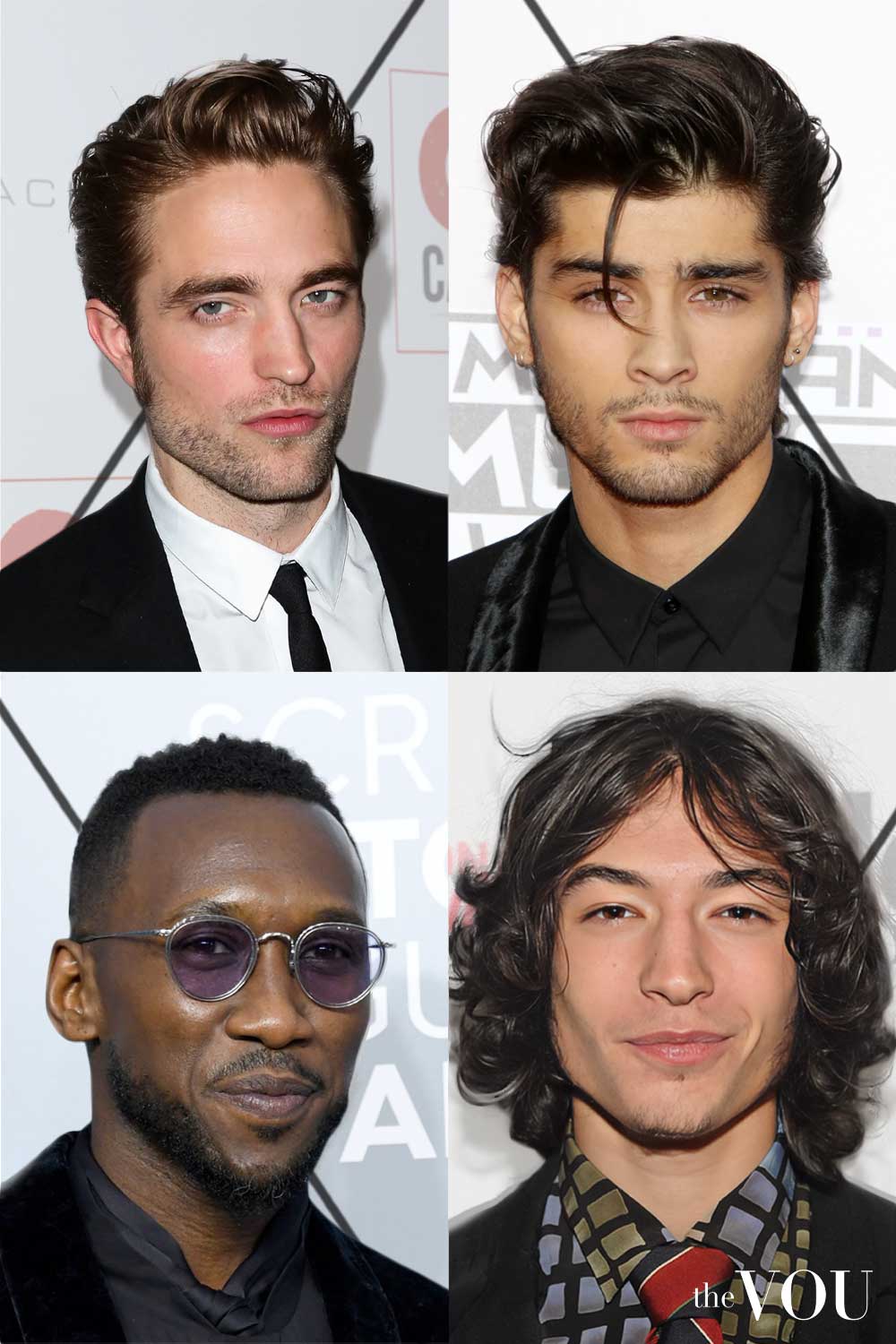
Start here
What’s This About
With prominent cheekbones and a narrower forehead and chin, you can add width at the temples, add height, cover part of the forehead or keep a close cut that shows the cheekbones; your face’s overall length and your hair decide which suits you.
This guide covers the choices that shape the result, such as:
Whether crown height suits a face that is already long
How a fringe changes how much forehead shows
What the curly and wavy entries need from your natural texture
Where a mullet’s extra length actually shows
Pairing facial hair with your actual growth
and many more!
We also cover daily styling, barber upkeep and what to tell your barber.
Key Points
01Cheekbone width and overall face length are separate observations; crown height suits some diamond outlines and lengthens others more than you may want.
02Close cuts such as the buzz cut and short taper fade show the cheekbones as they are, which is a valid choice rather than a mistake.
03The curly and wavy entries depend on curl or wave you already have; styling products define texture but do not create it.
04No beard automatically suits a haircut; match facial hair to your growth coverage and the look you want, or stay clean-shaven.
Men with diamond face shapes possess unique facial features that are both striking and versatile, marked by prominent cheekbones, a narrow forehead, and a pointed chin.
These characteristics lend themselves to various hairstyles; which one suits you depends on whether you want to soften, echo or simply show those features, and on what your hair can do.
If you are not sure this description fits, the face shape analysis quiz can offer a starting suggestion, though you can also work from what you see in the mirror: cheekbones that are the widest part of the face, with a narrower forehead and chin.
If your features look mixed, for example with forehead and cheekbones of similar width, read more about all types of face shapes here and compare neighbouring descriptions such as heart or oval, then choose from these 10 hairstyles, each suited to a different effect.
Match This List to Your Actual Hair
Diamond faces vary in how long they are and how sharply the cheekbones stand out, so check these points alongside the ten styles below.
Texture and density: the pompadour and textured quiff need enough density at the crown to hold height; fine hair usually needs a volumising mousse and round brush, while dense or coarse hair often needs some weight removed so the top does not look bulky next to the narrower forehead and chin.
Curl pattern and growth direction: the curly top fade and medium-length waves depend on curl or wave you already have. A curl-defining product sharpens an existing pattern but does not create curl in straight hair, so if your hair is straight, the textured quiff, side part or slicked-back entries will be easier to reproduce, or ask your barber for a textured cut that adds movement without relying on curl. Point out any cowlick near the crown before a fade is cut around it.
Hairline: the slicked-back and angular fringe styles change how much forehead is visible; if your hairline is uneven or receding, say so, since it affects how these styles sit at the front.
Upkeep: daily styling and barber upkeep are different commitments. The pompadour and textured quiff usually need blow-drying and product most mornings; the short taper fade and buzz cut need almost no daily styling, but their close sides and neckline lose their sharp edge as they grow, so they need more frequent barber visits.
Two routes: several of these cuts add height or temple width to change how the face reads; others, like the short taper fade and buzz cut, simply show the cheekbones as they are. If your face is already long, extra crown height lengthens it further, so temple width or a fringe may suit that aim better than a tall top. Both routes are valid; the choice is whether you want to change the apparent proportions or work with them.
Brief your barber: describe your hair’s density, curl pattern and how it grows at the crown and hairline, and say whether you want more height or a closer cut that shows the cheekbones. Bring a photo if you have one and ask what would need to change for it to work with your own hair.
Mirror check: once the cut is dry and styled, look straight on to see whether volume sits at the crown, at the temples or beside the cheekbones, and whether that is where you wanted it. Then check your profile, where a pompadour’s height and a mullet’s back length are most visible.
1. Textured Quiff
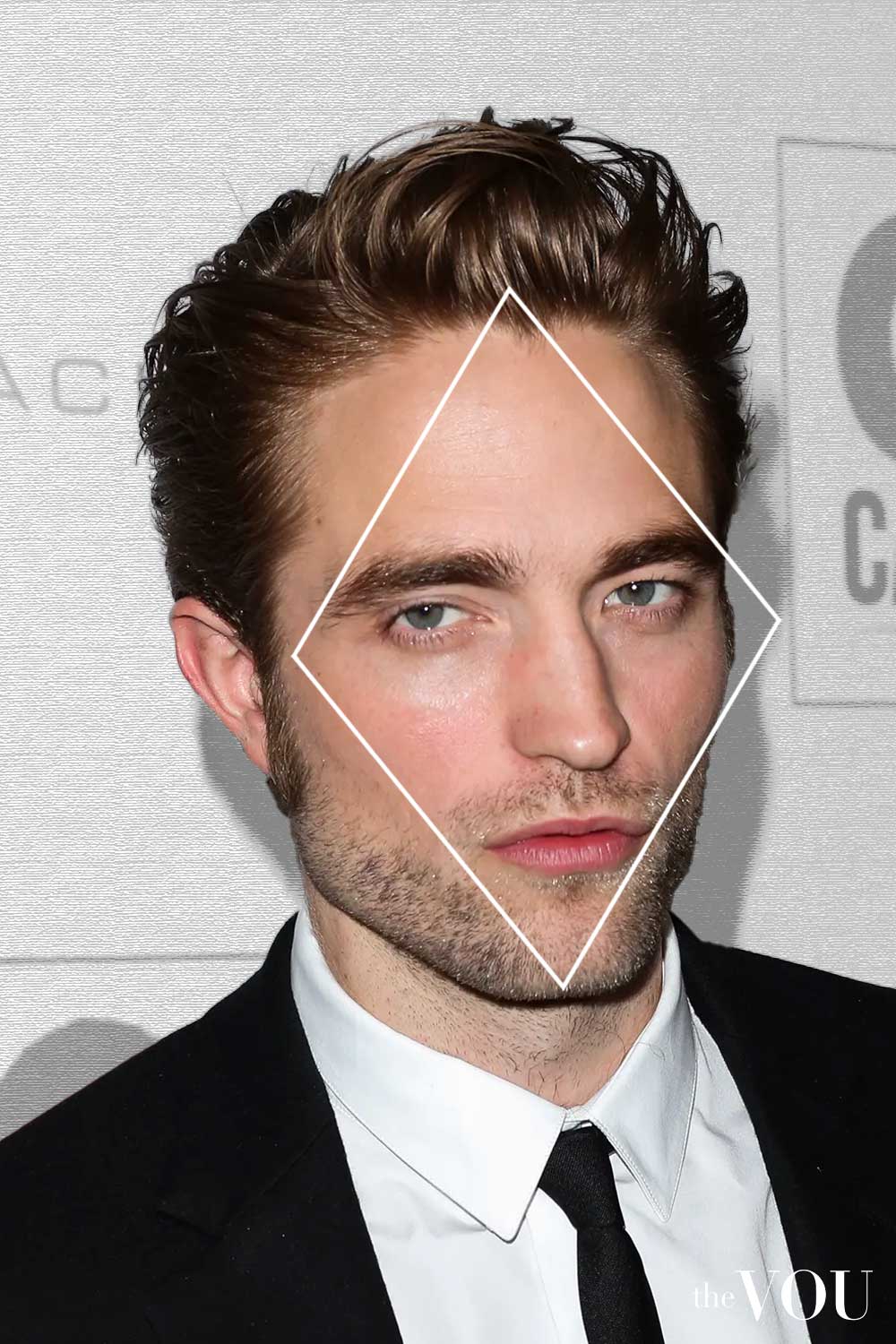
The textured quiff hairstyle is a classic choice that adds height and volume to the top, making it an option for diamond outlines that are not already long.
The textured quiff shifts attention to the crown.
Why it works: Added height and a narrower forehead are two separate observations, so if your face is already long, more height may not be what you want; the textured finish softens the crown’s outline regardless. For added flair, a side quiff introduces asymmetry, which is a styling choice for the cheekbones rather than a correction of them.
Facial hair: Medium stubble adds definition along the jawline, where your growth covers it.
2. Side Part with Waves
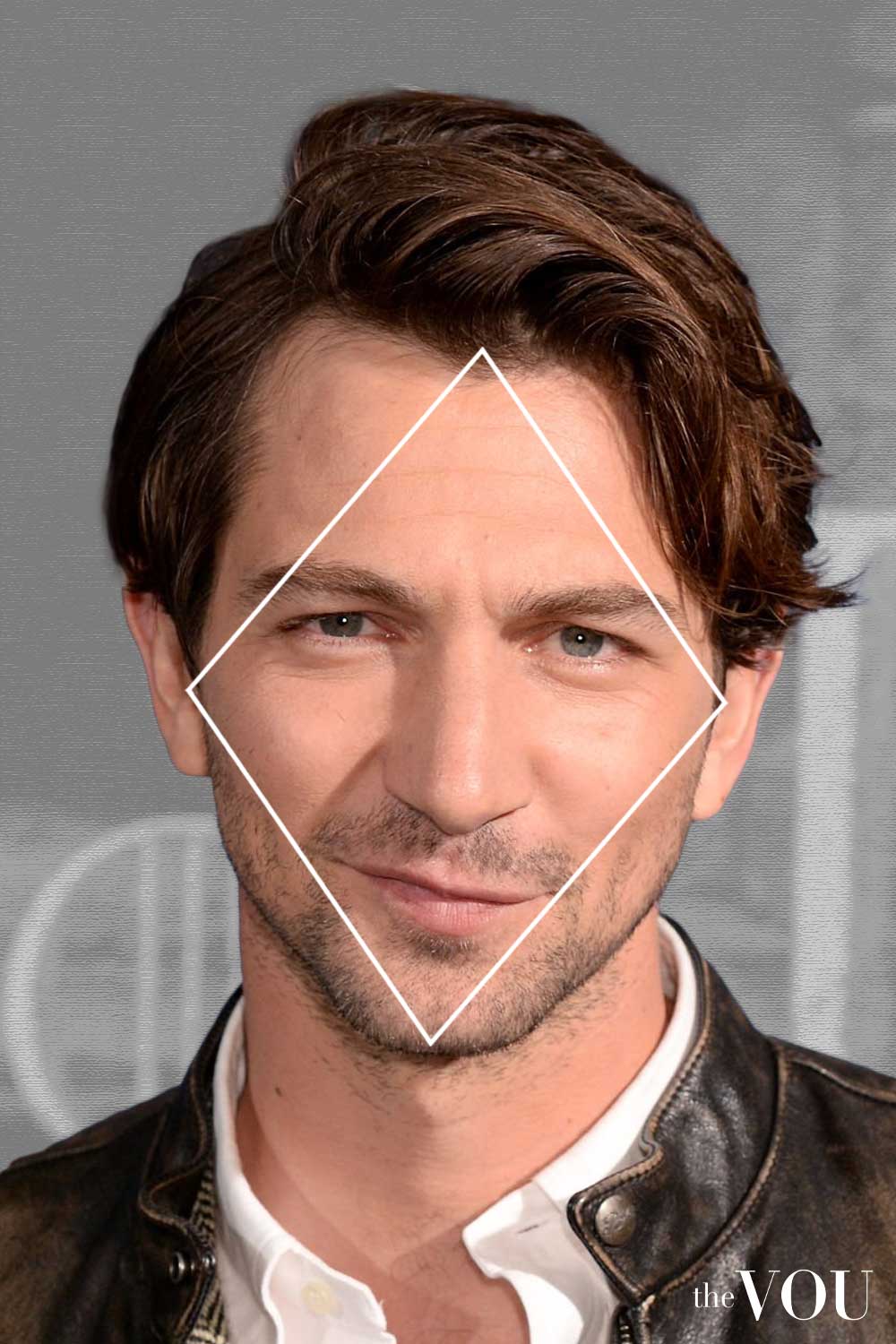
The side part with waves is a timeless look that frames the face elegantly, emphasising cheekbones.
The side part with waves hairstyle is particularly flattering for men with medium to long hair.
Why it works: The waves soften the angular features while the side part directs attention away from the chin. Enhance the waves using a diffuser attachment on your hairdryer if your hair is naturally wavy or curly.
Facial hair: A light beard or goatee can harmonise the overall look by adding structure to the lower face.
3. Slicked Back
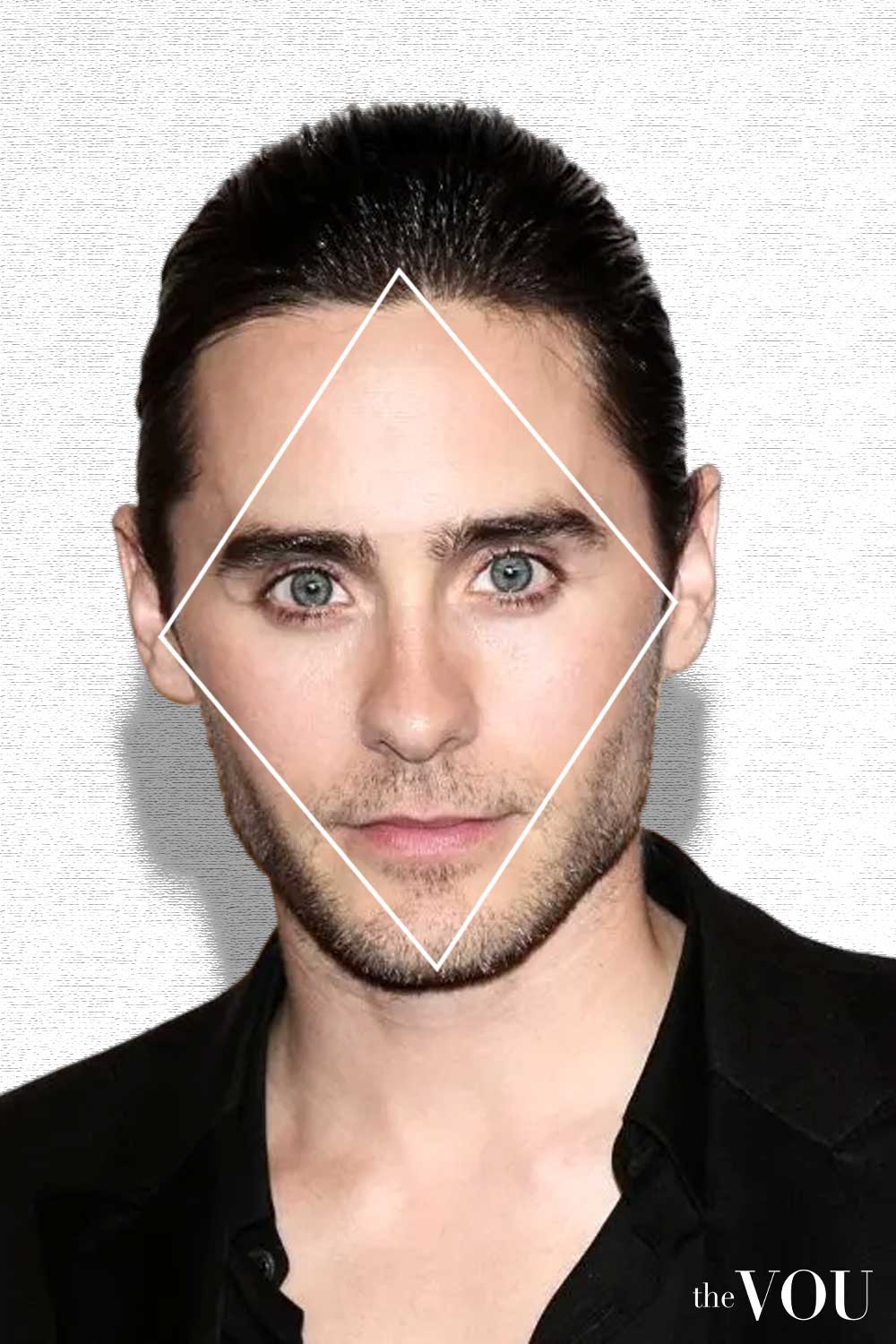
For men seeking a sleek and professional style, the slicked-back look is a go-to option. The slicked back hairstyle provides a polished finish and draws hair away from the face, which shows the full forehead and hairline.
Why it works: The smooth top keeps the outline close to the head, so the cheekbones stay the widest point, which suits a look that shows them rather than softens them, with a sharp, modern appearance. If you want a less formal version, try a looser slick-back with a textured finish.
Facial hair: Pair this style with a neatly trimmed beard to define the jawline.
4. Pompadour
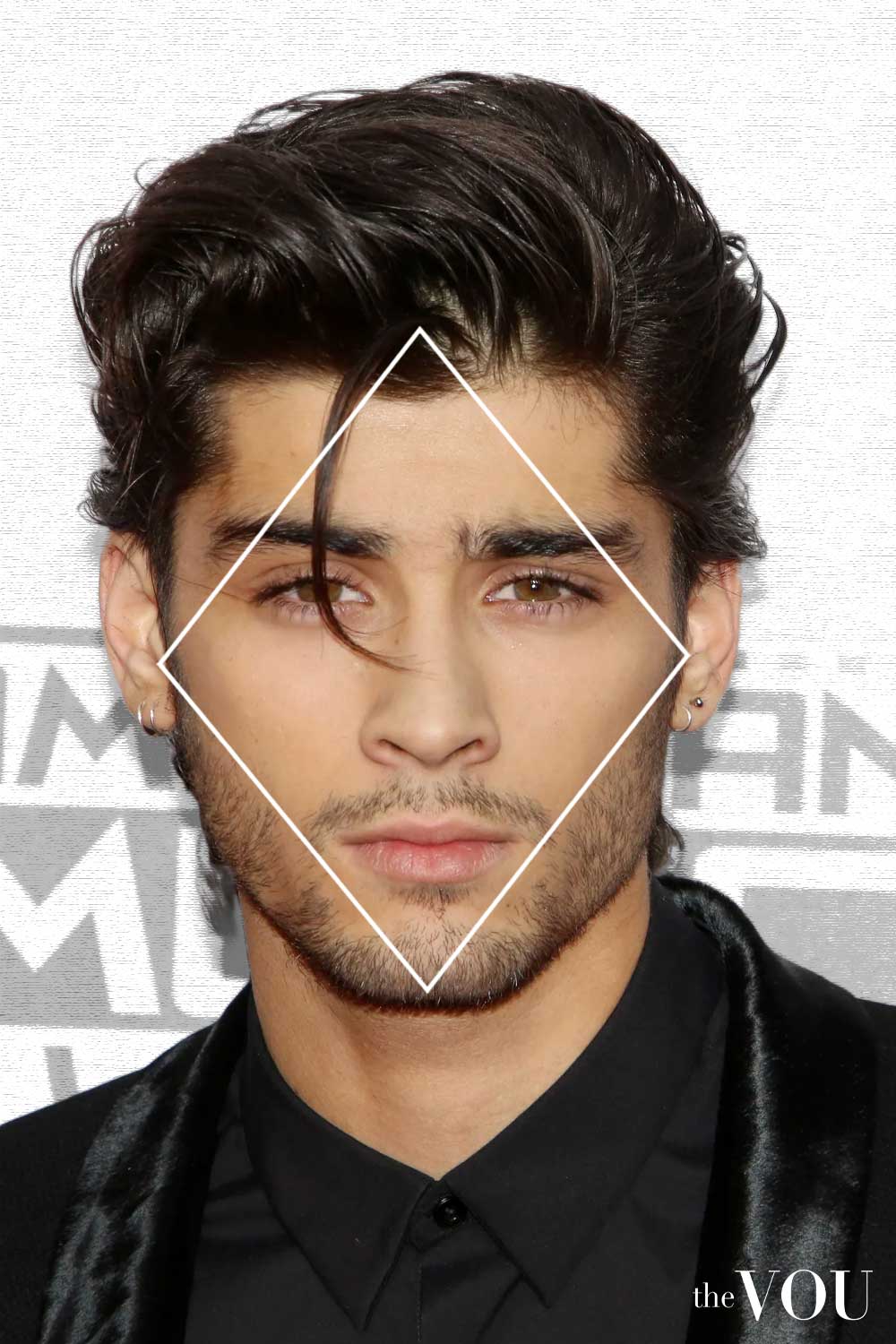
The pompadour haircut, with its signature height and volume, suits diamond outlines that are not already long, since the height adds length at the top.
The bold design lengthens the face visually and draws attention to the top; if your face already reads long, a lower top with some width at the temples may suit you better.
Why it works: The voluminous top adds height and draws attention upward; it widens the temples only if the sides are left with some length, which some people like beside prominent cheekbones.
Apply a volumising mousse to damp hair and blow-dry upwards with a round brush for lift or use strong-hold pomade to sculpt the pomp into place.
Facial hair: A medium-length beard can add depth to the lower face, complementing the pompadour’s height.
5. Curly Top Fade
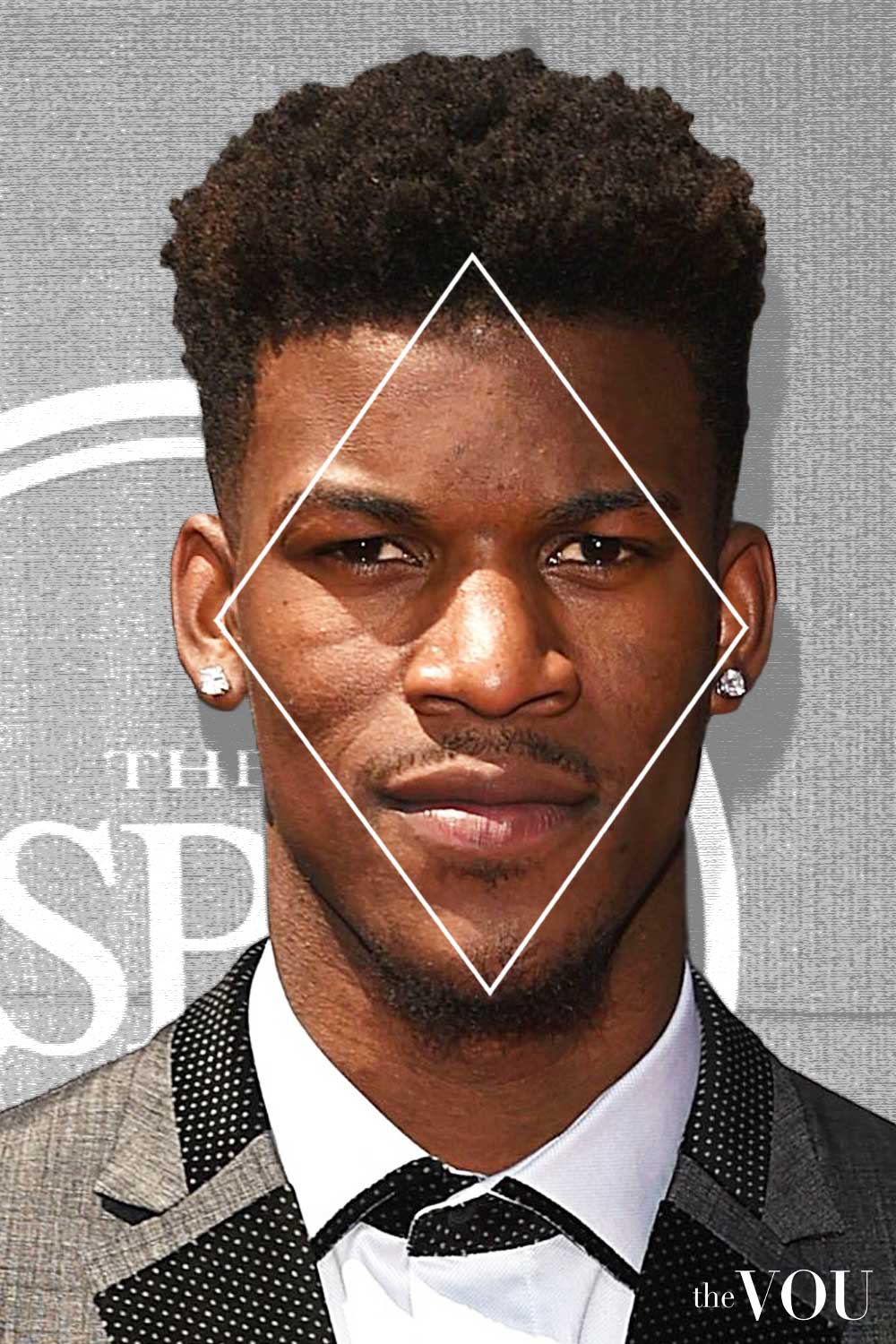
The curly top fade celebrates natural texture while maintaining a clean-cut appearance.
It suits men with natural curl who want volume on top with close sides.
Why it works: The close sides contrast with the curls on top, so the emphasis sits at the crown. The fade is a graduated transition on the sides and back; it keeps the cheekbones fully visible rather than hiding them, and on a long face, keep the curls on top lower and fuller towards the edges of the top rather than tall.
Ensure the fade is precise and even, and use a curl-defining cream to enhance and maintain natural curls on top.
Facial hair: Stubble or a short beard adds texture around the chin, where your growth allows.
6. Angular Fringe
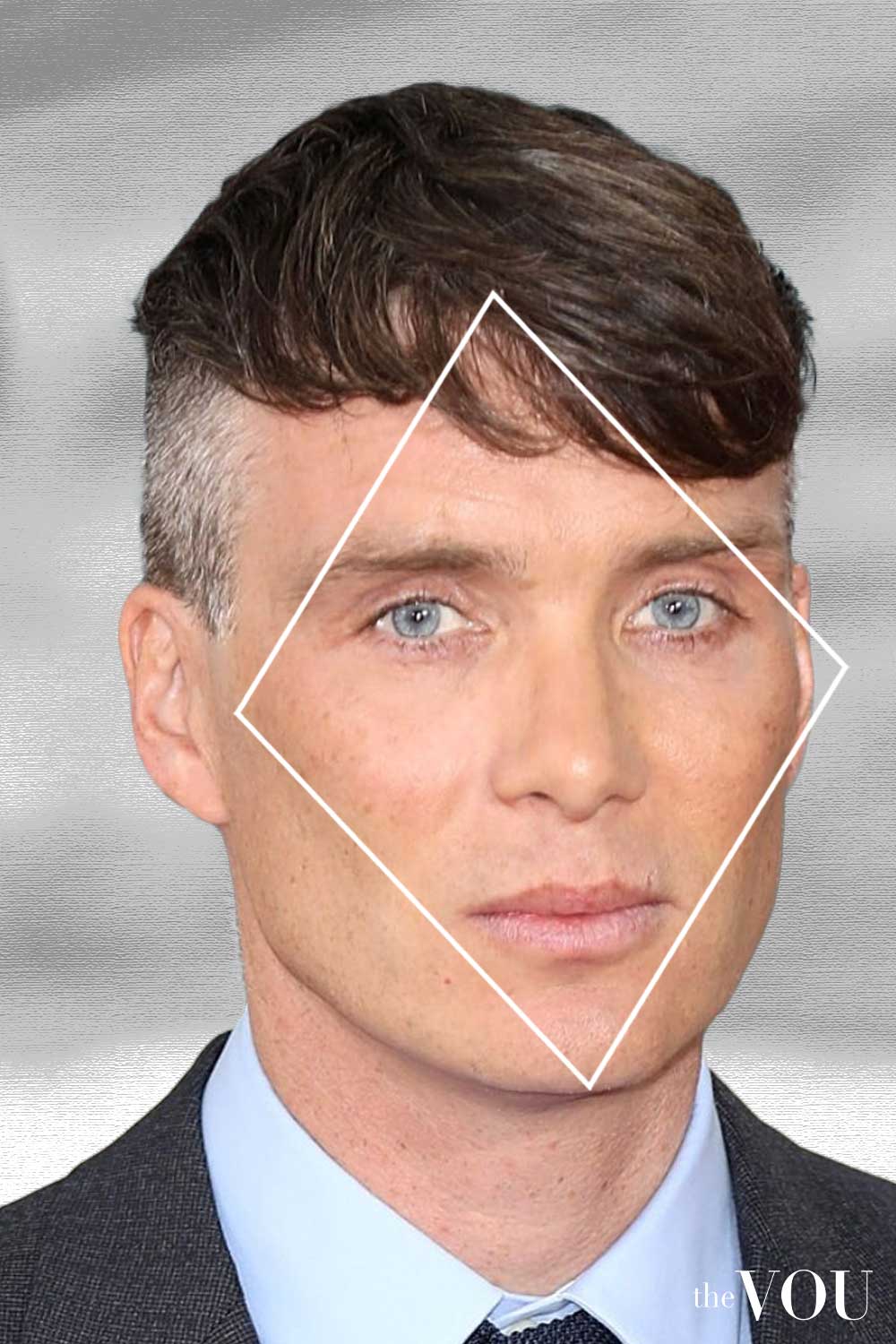
For those looking to soften their look, the angular fringe is a stylish option. This haircut brings focus to the eyes and covers part of the forehead with hair, which changes how much of it is visible rather than changing its actual width.
Why it works: The angular fringe introduces asymmetry, creating visual interest and works best when slightly messy, adding to its charm.
Facial hair: Men with diamond-shaped faces who want to frame the lower face can pair the angular fringe with a subtle beard, provided their growth covers the jaw evenly; a clean-shaven face works just as well.
7. Medium-Length Waves
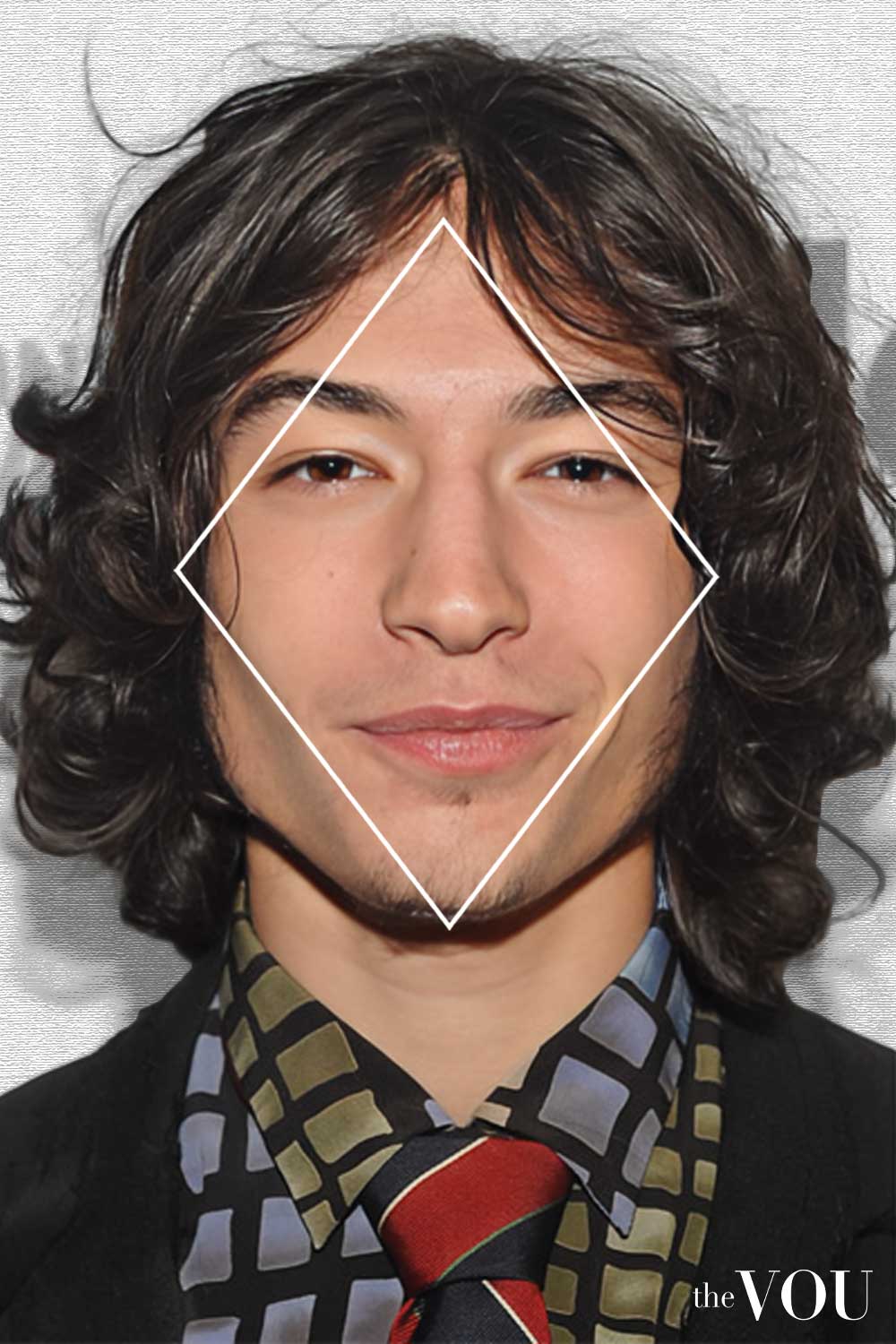
Medium-length waves add natural movement and volume, making them an option for men whose hair already has some wave.
Layers help distribute the weight, softening sharp features.
Why it works: Waves introduce soft curves around the cheekbones, which some people prefer as a contrast to angular features. Use sea salt spray to add extra texture and definition to the wave you have.
Facial hair: A light stubble complements this relaxed hairstyle beautifully.
8. Short Taper Fade
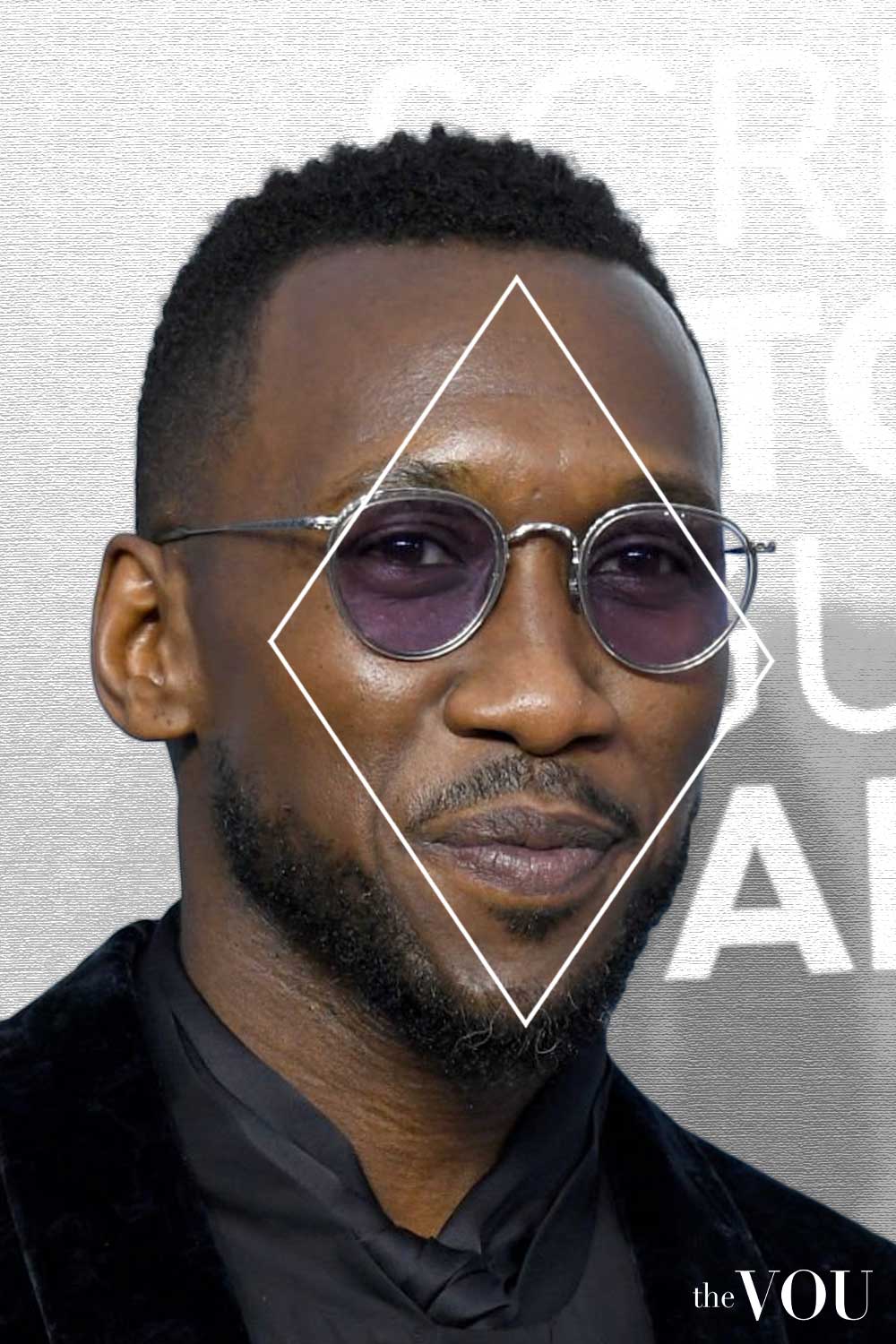
The short taper fade is a versatile style that keeps the sides neat while leaving some length on top for styling.
It’s a great way to highlight cheekbones.
Why it works: The clean lines of the fade add structure, complementing the natural angles of the face.
Facial hair: A clean-shaven look highlights the haircut’s precision.
9. Modern Mullet
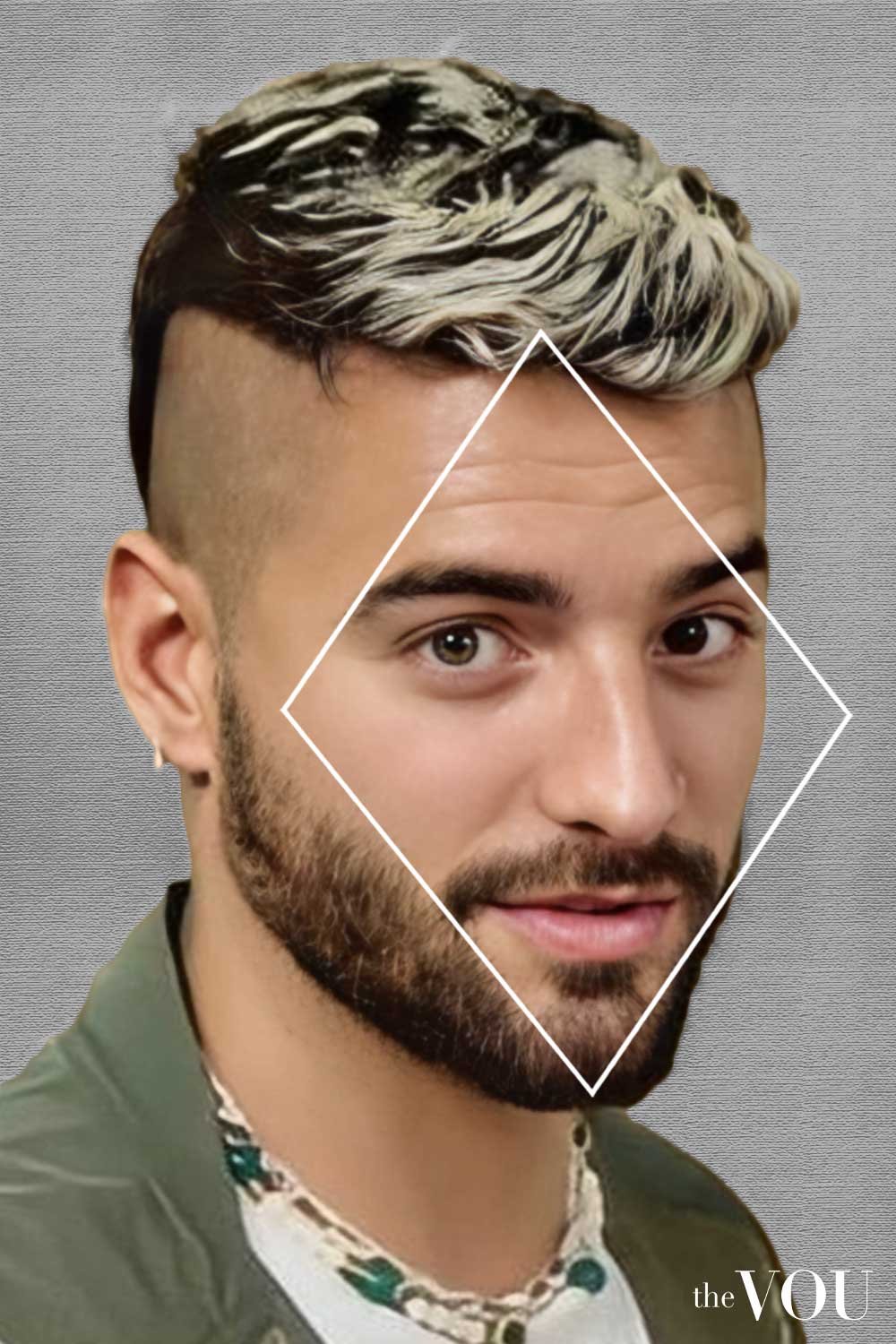
The modern mullet reimagines a retro favourite with a contemporary twist, adding volume at the back while maintaining structure.
Why it works: Most of a mullet’s extra length sits at the back and the nape, so it is seen mainly in profile and from behind; from the front it adds little at chin level unless the length is left fuller around the neck and behind the ears. Check the look in profile as well as face-on.
Facial hair: A clean-shaven face lets this bold haircut shine.
10. Buzz Cut
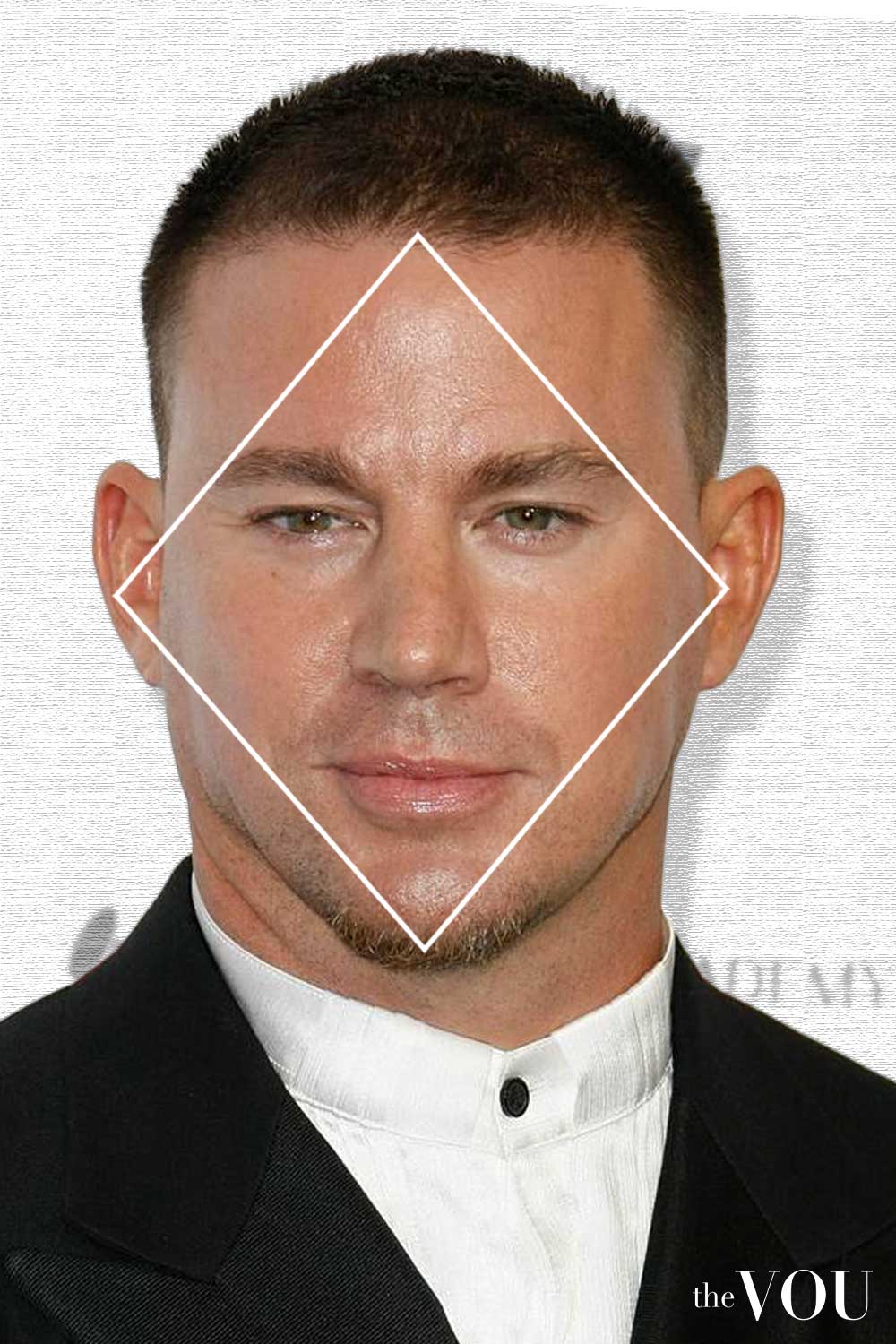
The buzz cut is a bold and low-maintenance option that highlights the cheekbones and the outline of a diamond face.
This minimalist style creates a sleek, polished appearance that puts the focus on your features rather than your hair.
Why it works: Its clean, uniform length enhances the angular features of a diamond face shape, keeping the overall look sharp and clean.
Facial hair: A stubble or a well-groomed beard can complement the buzz cut, adding definition to the lower part of the face for a cohesive style.
Conclusion
Diamond face shapes offer a unique canvas for a variety of hairstyles.
From voluminous pompadours to edgy fades and minimalist cuts, each style can enhance your features in a distinct way.
Whether you’re looking for a polished or casual look, these top 10 hairstyles provide plenty of inspiration to elevate your style.
A face shape quiz can offer a starting description if you are unsure, but it is optional; take a photograph of the style you like to your barber and ask how it would adapt to your hair and features.
Choosing a haircut and beard style that suit your features and your routine makes them easier to wear well every day.
Take the First Step With The VOU’s Styling Quizzes
Start your style journey with our resources. First, take our Face Shape Quiz for a starting point on your face shape and initial styling guidance.
Then, check your colours with our Seasonal Colour Analysis Quiz.
Check your body shape with our Body Shape Quiz, and your personal style with our Fashion Style Quiz.
Styling Consultations
Before you go, a note on where this guide fits in a wider styling plan.
Face shape is one input among several. At The VOU, we look at it alongside your colouring, body shape and personal style.
Our Professional Face Shape Analysis package is a paid consultation; its product page lists what it includes.
Our Complete Image Transformation Package combines the face shape, seasonal colour, body shape and fashion style analyses.
If you would like personal help, you can book a paid consultation.
Our styling services for men are paid consultations; the shop page lists what each one includes.
Mandy Meyer’s focus at The VOU is men’s body-shape styling, garment fit and outfit proportions. Her coverage addresses the practical questions behind a wardrobe choice: how a jacket sits across the shoulders, how trousers fall and how different cuts change the silhouette a wearer wants to create.
Her subject areas include the triangle, inverted triangle, rectangle, oval, trapezoid, hourglass and diamond labels used in body-shape styling. These provide starting references for comparing visible proportions; they do not capture every body or prescribe one correct way to dress. The focus connects those observations with garment shape, construction, length and the relationship between the upper and lower parts of an outfit.
Mandy’s editorial coverage combines visual comparisons with fit checks for comfort and movement. Readers can consider whether a cut gives them the room they need, where clothing pulls or gathers and which changes might support their preferred look. The aim is to make menswear choices more understandable while keeping personal preferences and the wearer’s own styling goals central.