
Start here
What’s This About
An aesthetic is the recognisable set of colours, patterns, materials, shapes and garments that makes a look identifiable, and this guide explains how to read one and use it in your own outfits.
It covers the practical side of the idea, such as:
how an aesthetic differs from a fashion style and a subculture
the visual vocabulary of pattern, motif, colour, material and silhouette
examples from art, architecture, world textiles and fashion designers
a simple method for borrowing an aesthetic in men’s outfits
and many more!
Most people mix several aesthetics, and that is normal.
Key Points
01An aesthetic is a set of visual choices; a fashion style is a whole way of dressing; a subculture is a group of people whose dress is one expression of shared values.
02Many aesthetic names you see online, such as Dark Academia or Y2K, were coined in the 2010s and 2020s and borrow from much older art, design and dress.
03Patterns and motifs often come from specific cultures, so name the tradition when you know it rather than lumping different peoples together.
04To use an aesthetic, pick its two or three strongest signals, such as a colour range, a cloth and one key garment, and build the rest of the outfit simply.
What is Aesthetic?
An aesthetic is a recognisable set of visual and physical choices, such as patterns, motifs, colours, prints, shapes, silhouettes and materials, that together create a distinctive look.
Aesthetics matter in many disciplines, such as fashion, art, architecture, digital design and music, and they are often linked with particular communities and subcultures.
Online, the word is also used as a noun for a named look, such as Dark Academia or Y2K, and many of those names were coined in the 2010s and 2020s.
It helps to keep three ideas apart: an aesthetic is a set of visual choices; a fashion style is a whole way of dressing that combines those choices; and a subculture is a group of people whose dress is one expression of shared values.

Aesthetic Origins
The term ‘aesthetic’ originates from the Greek word ‘aisthētikós,’ which translates as one’s perception or sensory experience.
The term aesthetic can be used to describe any visual patterns, motifs, colours, and materials such as houndstooth, paisley, Fleur-de-lis, Argyle, plaid, hexagonal tiles, cashmere, Kente cloth patterns, Kanji calligraphy, etc.

Patterns and motifs can be more than decoration: many carry meaning within the culture that made them, which is why it is worth knowing where a motif comes from before you wear it.
Key Features of an Aesthetic
Patterns, motifs, shapes, silhouettes, colours, materials, and prints are all aesthetic choices.
Aesthetics are everywhere: in clothes, paintings, and architecture, and each discipline adds layers to how we see and interpret them.
Literary movements like Romanticism or Post-Modernism have their aesthetics comprised of recurring themes, patterns, motifs, and ways of expression.
Later Bohemian dress borrowed Romantic ideals of freedom and nature through natural fibres, floral patterns, flowing shapes and earthy colours.

Impressionism, Surrealism, and Abstract Expressionism each have unique aesthetics, be it the fleeting effects of light and colour in Impressionism or the emotional rawness in Abstract Expressionism.
Surrealist ideas appear in the work of Salvador Dalí and in designer Elsa Schiaparelli’s collaborations with him, such as a shoe-shaped hat and a dress printed with a lobster.
The diagonal lattice of Versailles parquet flooring reflects the period’s love of intricate, repeated pattern.
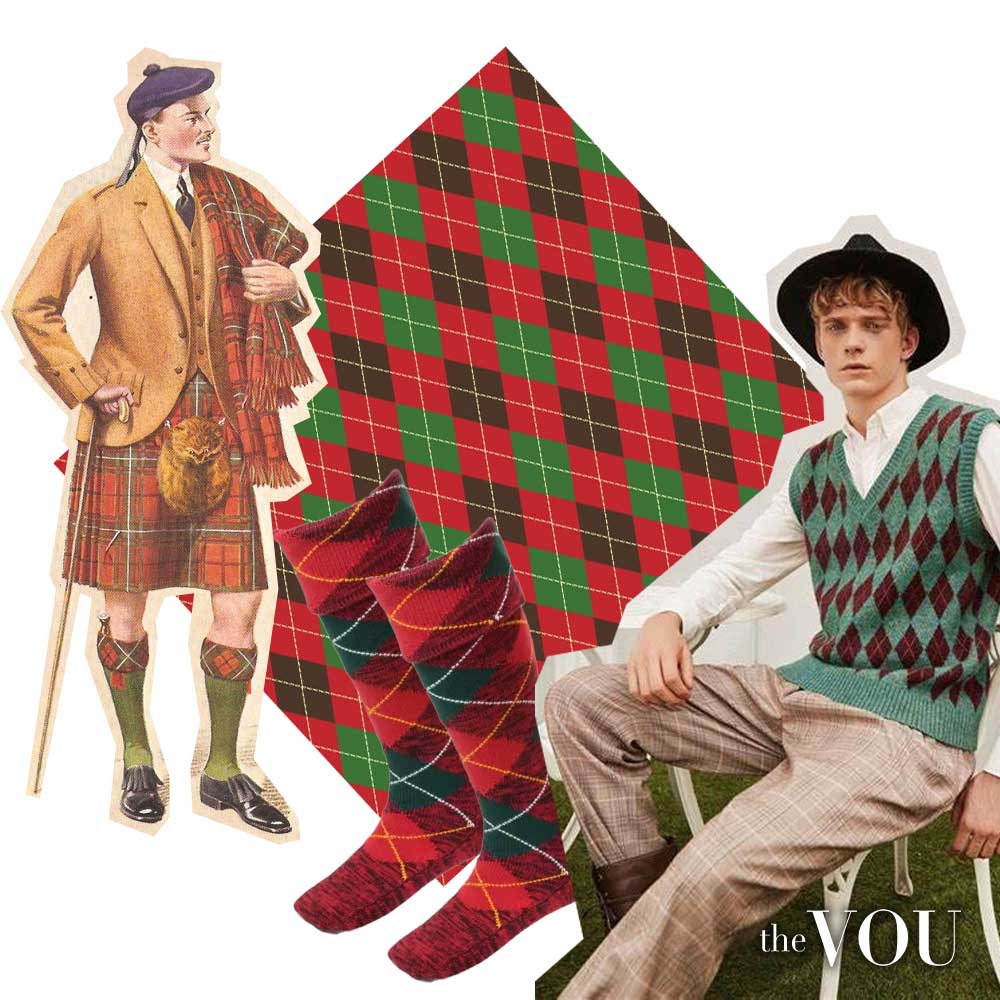
The Argyle pattern, rooted in Scottish heritage, is a familiar signal of Preppy fashion often found in jumpers and socks.
The Fleur-de-lis motif, historically associated with French royalty, appears in modern art, fashion, and architecture to evoke elegance and sophistication.
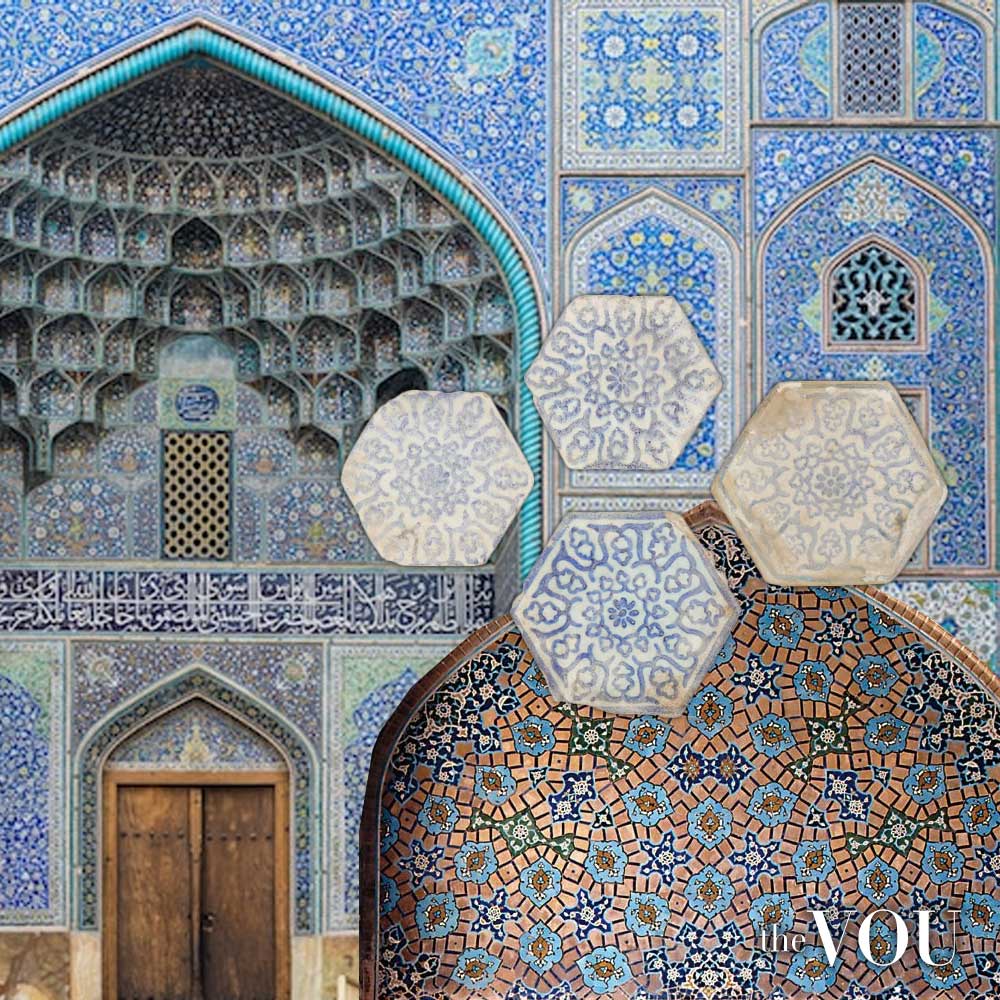
The geometric tilework of Islamic architecture, such as at the Alhambra in Granada, builds complex star and polygon patterns from repeated, interlocking shapes.
The extensive use of glass in Mies van der Rohe’s Farnsworth House exemplifies the modernist ideal of transparency and minimalism.
Cashmere, named after the Kashmir region, is a fine goat hair associated with softness and luxury, hence its use in high-end jumpers and scarves.
The Role of Aesthetics in Fashion
In fashion, styles such as Preppy or Bohemian combine many aesthetic choices, and those choices often point back to the people and places the style came from.
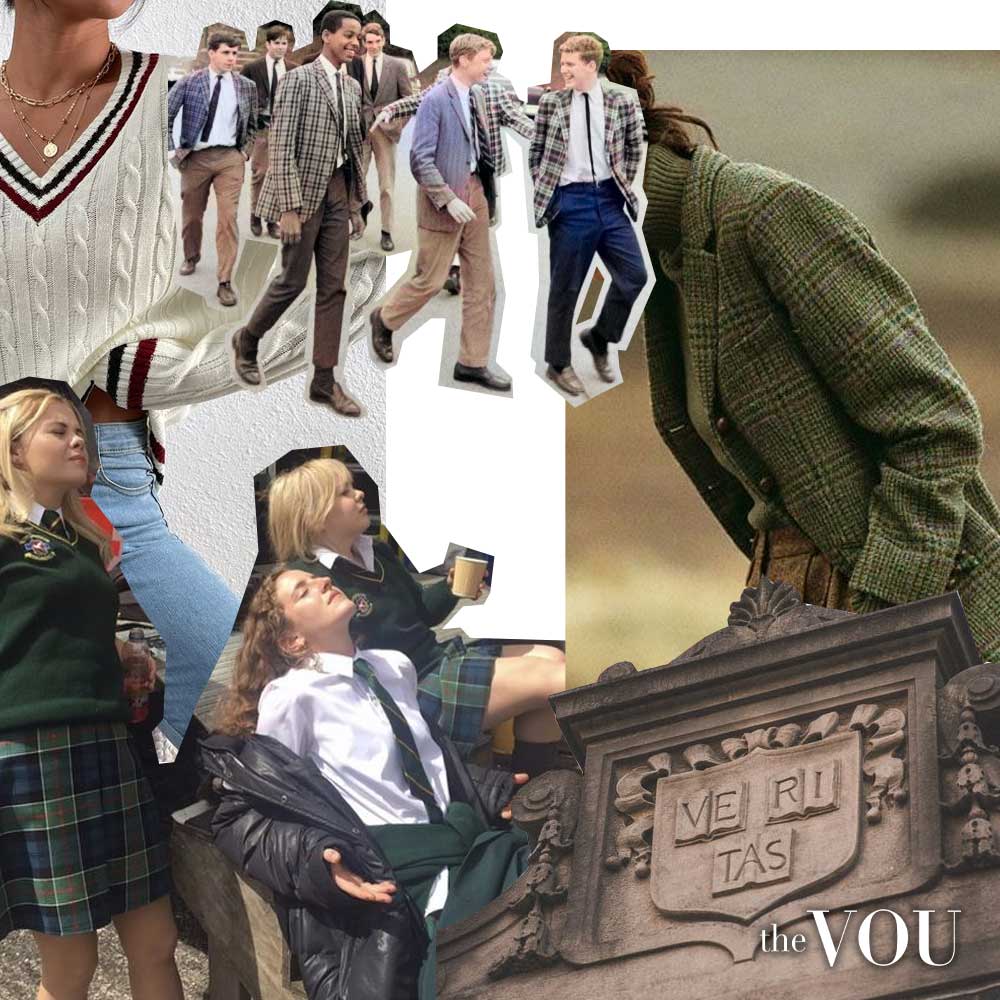
For example, the Preppy style grew out of American Ivy League campus dress, which borrowed British patterns such as argyle and tartan, cloths such as wool and tweed, and colours such as navy, cream and green.
Likewise, Bohemian dress signals an artistic, unconventional life.
The look is built on cotton and linen, paisley (a teardrop motif from Persian and Kashmiri textiles), and florals associated with the 1960s Flower Power movement.
So whether you’re looking at the casual-chic French Riviera style with clothes in nautical stripes and from natural materials like linen or the dark garments and silver jewellery of Goth dress, each style is built from aesthetic choices that carry their own associations.
Aesthetics in Fashion Design
There’s no fashion design without aesthetic choices.
The fashion design journey starts with conceptualising a garment or accessory rooted in aesthetic principles.
The selection of materials, patterns, and motifs is not just functional; above everything, it serves as a medium to communicate an aesthetic heritage and the designer’s vision.
From sketch to runway, those choices show up in the cut, cloth, colour and finish of the clothes, footwear and accessories.
The Prevalent Fashion Aesthetic of Each Century
Gothic (12th-16th Centuries)
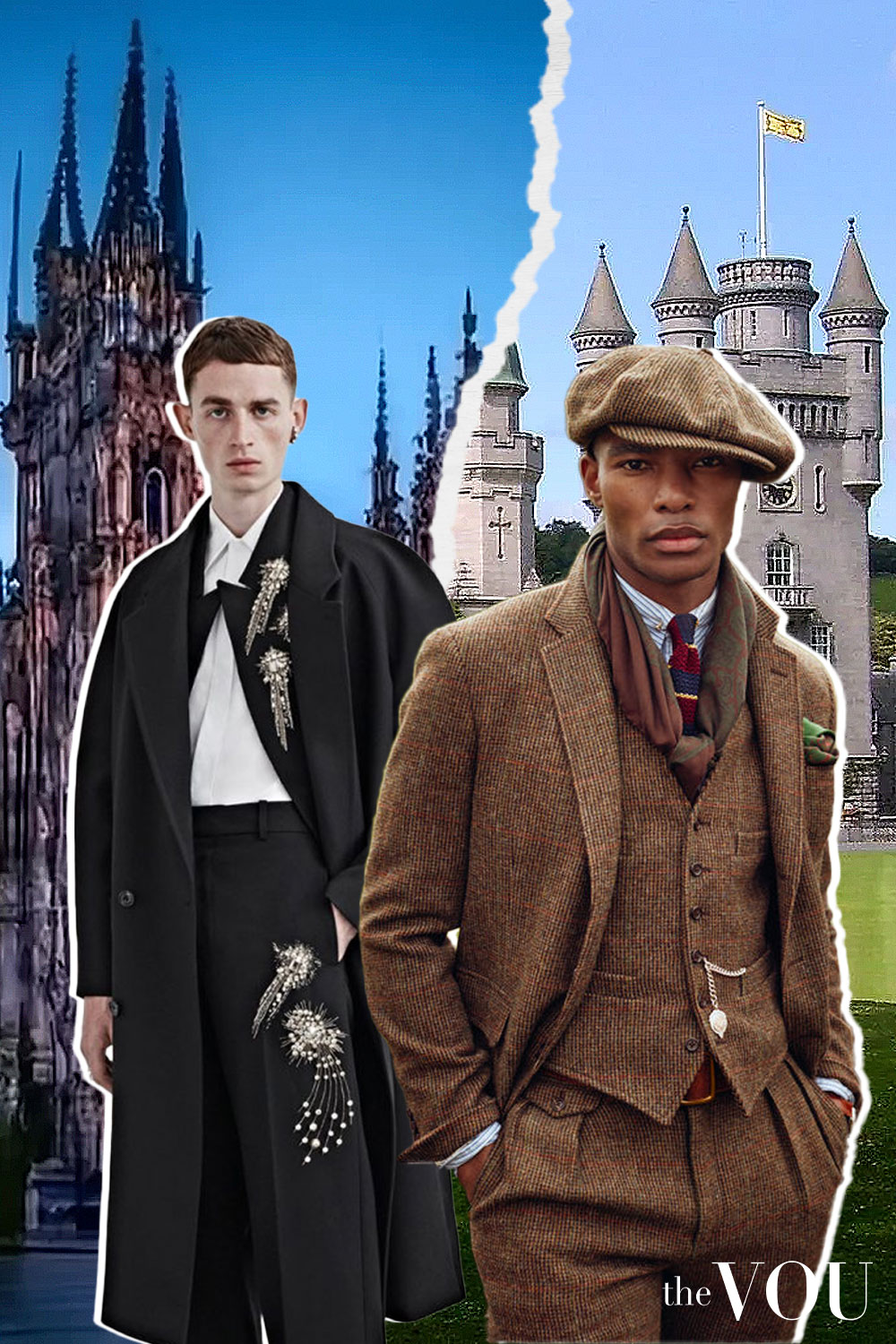
Gothic architecture, which emerged in the 12th century, is known for pointed arches, ribbed vaults, religious stone carving and lace-like tracery, which later Goth dressers borrowed as a visual reference.
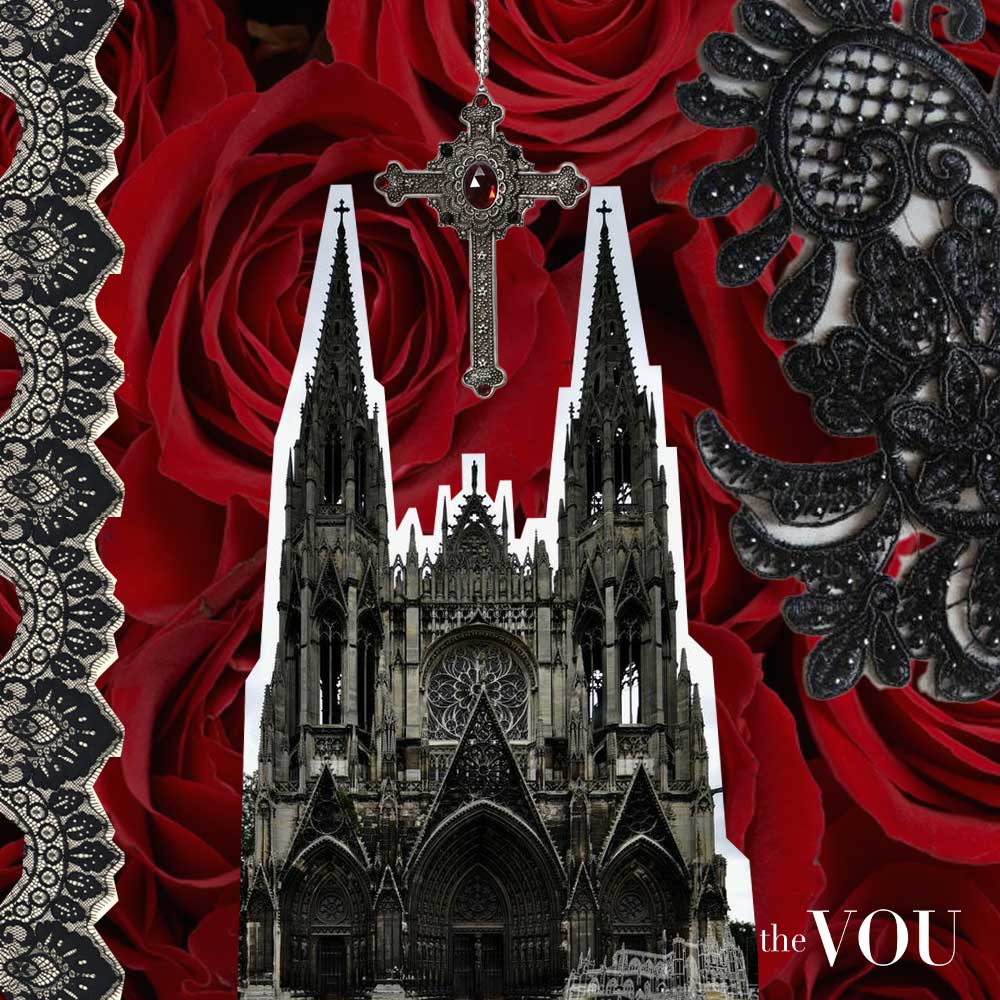
The Goth subculture itself grew out of punk and post-punk music in the late 1970s and early 1980s, but its dressers often echo Gothic and Gothic Revival design in pointed shapes, black velvet, lace and embroidery.
Many modern fashion aesthetic movements such as Dark Academia are also inspired by the Gothic aesthetic.
Baroque (17th-18th Centuries)
Baroque art, architecture and music shared a taste for ornate pattern, gold and dramatic contrast.
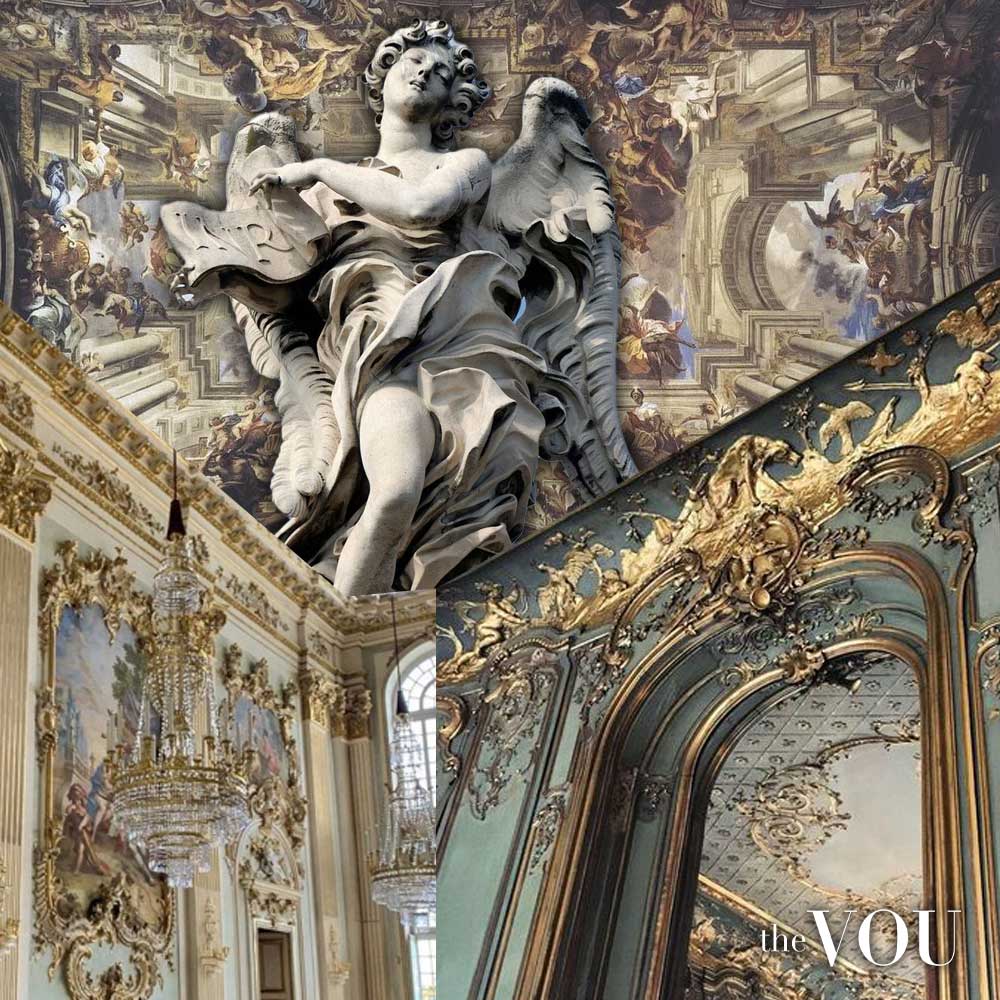
The Baroque aesthetic is linked to creating the religious atmosphere of 17th and 18th-century Europe.
Art Deco (20th Century)
Flourishing in the 1920s and 1930s, Art Deco architecture is known for geometric patterns, zigzags, streamlined forms, chrome and glass materials, and sunbursts and chevron motifs.
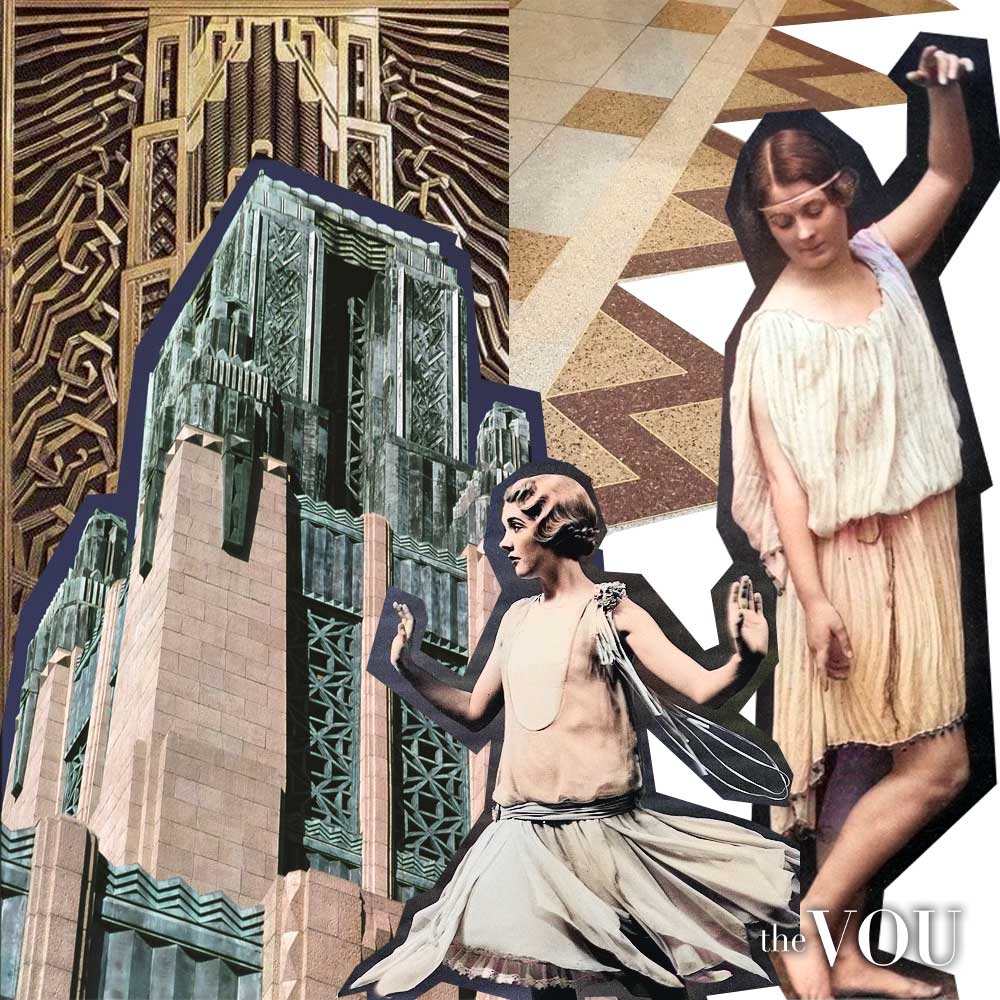
The women’s ‘Flapper’ look of the 1920s shared Art Deco’s geometric patterns and angular shapes, seen in beaded dresses and accessories.
Brutalist (Mid 20th Century)
In reaction to the ornate styles of the past, the mid-century Brutalist architectural aesthetic employs raw and unadorned use of concrete and glass to communicate a utilitarian philosophy.
Geometric shapes and a lack of decoration are at the core of this style, and fashion writers sometimes cite it as a reference for stark, minimal clothing.
Fashion Aesthetics Across Cultures
Patterns, motifs, colours, shapes and materials vary across cultures and subcultures, from Harajuku street dress in Japan to Goth in the UK and Preppy in the United States.
The lists below are broad examples, not single traditions: each region contains many distinct peoples, so name the specific source when you wear a motif.
African
- Patterns and Motifs: Kente cloth, Asante gold weights, Yoruba beadwork, Ndebele wall paintings
- Garments: dashikis
- Colours: Burnt umber, ochre yellow, and cobalt blue
- Materials: Cowrie shells, indigo-dyed cotton
- Origin: several distinct traditions, including Asante kente from Ghana, Yoruba beadwork from Nigeria and Benin, and Ndebele painting from southern Africa
Japanese
- Patterns and Motifs: Cherry blossom prints, kanji calligraphy, ukiyo-e woodblock prints, furisode kimono shapes, the torii gates of Shinto shrines
- Colours: “Sakura” pink, “Sumi” black
- Materials: Washi paper, tatami mats
- Origin: many periods; ukiyo-e prints date from the Edo period (1603 to 1868)
Indian
- Patterns and Motifs: Kashmiri paisley, peacock feather designs, lehengas with gold zari work, Thanjavur (Tanjore) paintings, Taj Mahal marble inlay
- Colours: “Rani” pink, emerald green
- Materials: Zari embroidery, silk saris
- Origin: several traditions, including Mughal court art in the north and Thanjavur painting in the south
Nordic
- Patterns and Motifs: Herringbone and pine tree patterns, Nordic knitwear motifs, the curving forms of Alvar Aalto’s glass vases
- Colours: “svart” (black) and “hvit” (white)
- Materials: Norwegian wool, Finnish birch wood
- Origin: 20th-century Nordic modernism, in Scandinavia and Finland
Latin American
- Patterns and Motifs: Incan geometric patterns, “Sarape” stripes, Huichol yarn paintings, Oaxacan baroque motifs
- Colours: Turquoise blue, ‘Copa’ red
- Materials: Alpaca wool, agave fibres
- Origin: several distinct traditions, including Andean (Quechua and Aymara) weaving and Mexican Huichol and Oaxacan craft
Fashion Designers and Unique Aesthetics
Alexander McQueen
McQueen was known for blending dark, Gothic romanticism with historical British references, including tartan.
Skull motifs, feathers, butterflies and ornate brocade sat alongside silk, velvet and distressed leather to create contrast.
Christian Dior
Christian Dior’s women’s New Look of 1947 reacted against wartime austerity with full skirts and nipped waists that recalled 19th-century silhouettes.
Floral motifs were applied to layers of luxurious fabrics like silk and taffeta in soft pinks and whites to accentuate femininity and detailed handmade beading.
Vivienne Westwood
Vivienne Westwood’s London shop with Malcolm McLaren dressed many early punks in the 1970s, and her later collections drew heavily on historical British and Scottish dress.
Distressed and deconstructed tartan plaids in bright reds and yellows were combined with provocative graphic prints and accessorised with chains and safety pins.
Coco Chanel
Chanel’s early designs for women borrowed from sailors’ and sports clothing and used jersey, then an unusual fashion fabric.
Tweed, and later quilting, became house signatures, usually in simple palettes of black, beige and white.
Issey Miyake
Miyake’s work is often linked with the Japanese idea of “ma” (space between) and with folding, as in origami.
His permanent pleating creates three-dimensional shapes that stand away from the body, and his Pleats Please line is known for bright, saturated colour as well as neutrals.
Yves Saint Laurent
Saint Laurent drew on safari and military clothing, Russian folk dress, Moroccan colour and pattern, and paintings by artists such as Piet Mondrian and Vincent van Gogh.
His 1965 Mondrian dresses turned the painter’s grids into colour-blocked jersey, and his 1976 Russian collection used velvet, silk and gold in rich jewel colours.
His best-known safari jacket and Le Smoking tuxedo were women’s designs borrowed from menswear; for men, the takeaway is a belted safari jacket or a sharply cut dinner suit.
Key Takeaways
An aesthetic is a set of visual choices: colours, patterns, motifs, materials, shapes and the garments that carry them.
It is different from a fashion style, which is a whole way of dressing, and from a subculture, which is a group of people.
Naming where a motif comes from, and separating modern online labels from the older movements they borrow from, makes you a better-informed dresser.
You do not have to belong to one aesthetic; most men borrow from two or three.
How to Use an Aesthetic in Men’s Outfits
Start by naming the two or three strongest signals of the aesthetic you like: usually a colour range, a cloth or pattern, and one key garment.
For Dark Academia, that might be deep browns and greens, tweed, and a tailored jacket; for Riviera style, navy and white, linen, and a Breton top.
Build the rest of the outfit from plain, well-fitting basics, so the signals stand out instead of competing.
Check the occasion: an aesthetic is a mood, so dress codes for work, weddings or formal events still come first.
As a hypothetical example, a man drawn to both Dark Academia and minimal dressing could wear a charcoal roll-neck, grey flannel trousers and brown loafers, adding a tweed jacket when he wants the academic note.
If you are not sure where your preferences sit, the Fashion Aesthetic Quiz is a quick way to compare them.
The VOU Men's Styling Newsletter
Gain access to weekly insights on expert men's styling, professional advice on how to improve your status and social image with clever styling tips, and excellent discounts from our designer partner brands.
Take the First Step With The VOU’s Styling Quizzes
Start with our quizzes: take our Face Shape Quiz to check your face shape and get initial styling suggestions.
Then take our Seasonal Colour Analysis Quiz to find your seasonal colours.
Our Body Shape Quiz suggests garment styles to try, and our Fashion Style Quiz helps you explore your personal style.
Transform Your Image with The VOU’s Professional Guidance
If you would like personal help with your whole look after the quizzes, The VOU offers paid styling services.
Our Professional Face Shape Analysis package is a paid consultation; the product page lists what it includes.
Our Complete Image Transformation Package combines the face shape, seasonal colour, body shape and fashion style analyses.
Further Reading
Barnard, Malcolm. “Fashion as Communication.” Routledge, 1996.
Bourdieu, Pierre. “Distinction: A Social Critique of the Judgement of Taste.” Harvard University Press, 1984.
Geczy, Adam, and Vicki Karaminas. “Critical Fashion Practice: From Westwood to Van Beirendonck.” Bloomsbury, 2017.
Hebdige, Dick. “Subculture: The Meaning of Style.” Methuen, 1979.
Kawamura, Yuniya. “Fashion-ology: An Introduction to Fashion Studies.” Bloomsbury, 2018.
Mandy Meyer’s focus at The VOU is men’s body-shape styling, garment fit and outfit proportions. Her coverage addresses the practical questions behind a wardrobe choice: how a jacket sits across the shoulders, how trousers fall and how different cuts change the silhouette a wearer wants to create.
Her subject areas include the triangle, inverted triangle, rectangle, oval, trapezoid, hourglass and diamond labels used in body-shape styling. These provide starting references for comparing visible proportions; they do not capture every body or prescribe one correct way to dress. The focus connects those observations with garment shape, construction, length and the relationship between the upper and lower parts of an outfit.
Mandy’s editorial coverage combines visual comparisons with fit checks for comfort and movement. Readers can consider whether a cut gives them the room they need, where clothing pulls or gathers and which changes might support their preferred look. The aim is to make menswear choices more understandable while keeping personal preferences and the wearer’s own styling goals central.