Start here
What’s This About
This page uses fifteen archive photo sets as outfit references for wearing Bright Spring colours with clothes you already own.
It separates what each photograph shows from our suggestions, such as
where to put one coloured garment in an otherwise neutral outfit
how to scale a bold suit down to a knit, shirt or tie
when the dress code matters more than the palette
and many more!
Each placement is The VOU’s own styling assessment; the clothes are the lesson.
Key Points
01A photograph cannot establish anyone’s seasonal palette, including yours.
02Several pictured outfits are neutral or lean away from the palette; that is normal for real wardrobes.
03Change one coloured garment at a time and compare it with your usual version in similar light.
04Fit, comfort and the occasion decide whether an adaptation is useful.
A vivid polo, coloured trousers or a bright tie can change the emphasis of clothes you already wear. These archive references show different places to put colour, with practical adaptations for work and the weekend.
The VOU places each man shown here in Bright/Clear Spring; these placements are The VOU’s own styling assessments. Names follow The VOU’s archive captions. Sharing someone’s skin, hair, eyes or ancestry does not establish your own palette.
The palette direction
Brightness leads Bright/Clear Spring in The VOU’s twelve-season convention, with a warm lean. Clear blues, turquoise, coral and brighter yellow offer directions to try. Bright means vivid colour here; it is different from a light garment or a strong contrast between light and dark.
The Bright/Clear Spring guide covers identification and neighbouring comparisons. Below, the description records the visible clothes; the adaptation is our new outfit suggestion. Where a detail is cropped out, we do not treat it as photographed.
The remaining photographs are shorter references. Each description records the visible clothes; the note after it is our suggestion, not a photographed detail. Six looks are worked through in detail; the shorter references sit between them in page order.
1. Damian Lewis. Choose where the vivid colour goes

What the reference shows. The right-hand look puts a clear blue polo between a dark jacket and dark jeans. In the left-hand look, yellow trousers carry the colour below a black jacket and top. Both show that the coloured garment need not occupy the whole outfit.
Try this adaptation. For a weekend, try a clear turquoise polo, navy chinos, white trainers and navy socks. Add your existing dark jacket when needed. The coloured polo sits near the face while the other garments remain familiar. If you prefer colour below the waist, try yellow chinos with a navy polo and brown loafers instead; neither placement is a body-shape requirement.
2. John Boyega. Reduce a large colour statement
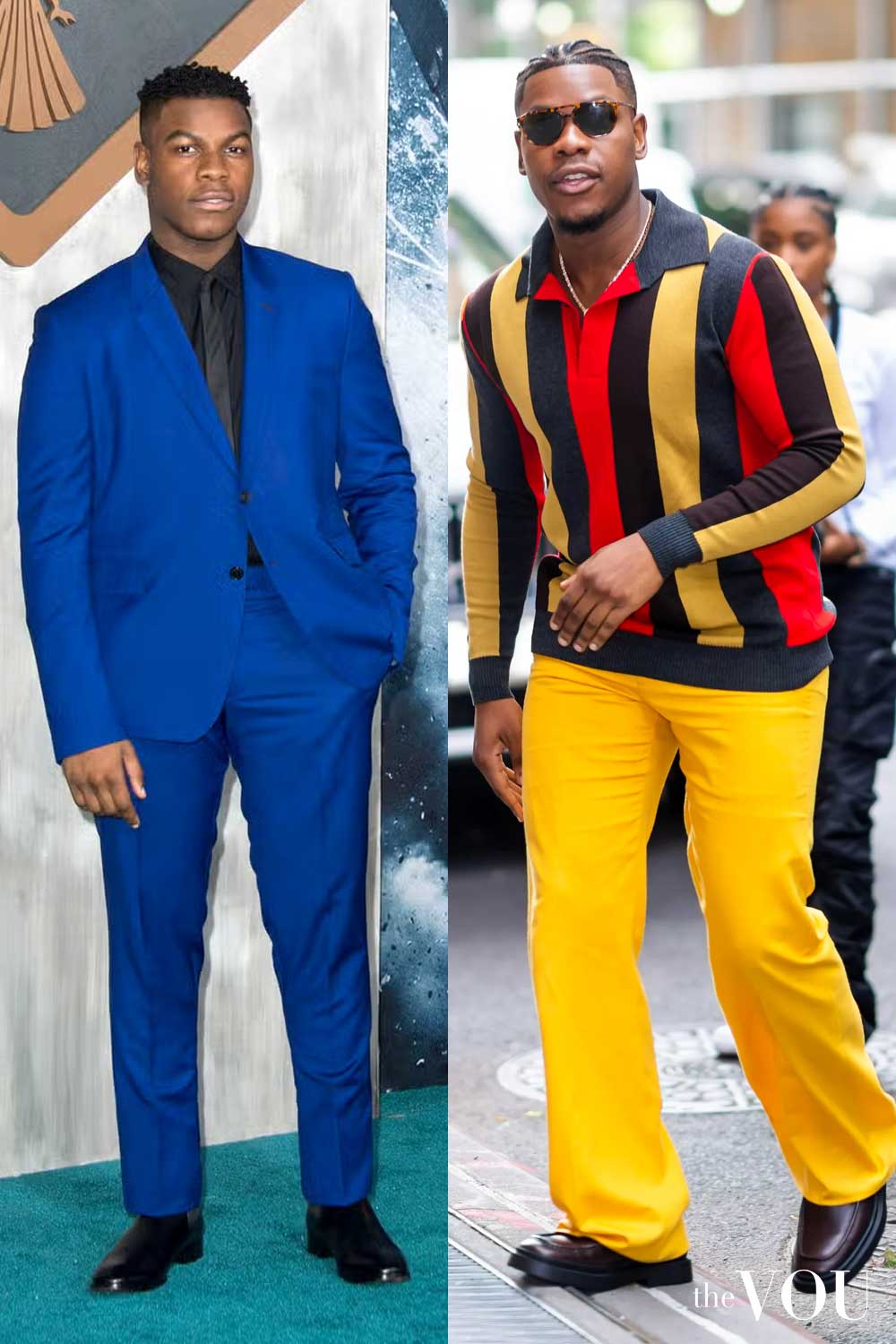
What the reference shows. The vivid blue suit on the left is framed by a black shirt, tie and shoes. The right-hand outfit combines a striped red, yellow and dark top with yellow trousers. The first repeats one strong colour; the second uses several. Neither proves that a wearer belongs to a palette.
Try this adaptation. For a restaurant that permits relaxed tailoring, take the blue-suit idea into a clear blue jacket, white crew-neck, navy trousers, navy socks and black loafers. The smaller blue area asks less of the outfit than a full vivid suit. For a conservative office, keep the navy suit and white shirt and use the clear blue only in a tie.
3. Zac Efron. Keep a neutral outfit in the rotation

What the reference shows. The paired photographs show grey layers on the left and a cream suit with a pale top and burgundy shoes on the right. These are largely neutral outfits. A Bright Spring inspiration page does not need to relabel them as vivid or claim that every successful outfit must be saturated.
Try this adaptation. For a smart-casual day, wear a cream knit, light grey trousers, a grey jacket, grey socks and burgundy loafers. If you want a clear warm accent, add a coral scarf outdoors or choose a coral knit instead. Those additions are suggestions, not photographed details. Keep the neutral version if that is the one you enjoy.
Henry Lau, in brief

A camel jacket over a white shirt is a calm warm base; add one clear accent, such as a turquoise or coral tie, if you want more colour.
Robert Pattinson, in brief

The burgundy jacket and the lilac shirt each carry the colour in one garment; a clear coral or turquoise shirt under a brown suit uses the same idea with warmer, brighter colour.
Shameik Moore, in brief

Both outfits keep one colour from collar to trousers; for most events, try one coloured jacket with neutral trousers instead.
Alfonso Herrera, in brief

The right-hand outfit shows a warm colour worn head to toe with white at the collar and on the shoes.
Omar Metwally, in brief

These are neutral outfits; a clear blue or coral tie is an easy way to add Bright Spring colour to the navy suit.
Jackson Wang, in brief

Pale blue and white together give a fresh summer outfit; a clearer blue jacket would make it brighter.
Ben Barnes, in brief

The right-hand outfit puts the strongest colour in the trousers; you can try red or coral chinos with a navy polo for the same effect.
4. Algee Smith. Choose one of two competing colour areas

What the reference shows. The right-hand outfit puts a bright lime-yellow coat over a strong pink knit and trousers, finishing with black shoes. The left-hand outfit uses a darker green jacket and dark clothes. The difference is the amount and intensity of colour, not a demonstrated change in the person’s season.
Try this adaptation. Try a clear coral crew-neck, navy trousers, navy socks and black loafers for a casual dinner. A light beige coat keeps the larger outer layer quiet. If you want to experiment with a lemon jacket, keep the knit and trousers navy first, then compare with the coral knit. You can stop at one coloured garment; there is no requirement to reproduce the whole pink-and-yellow arrangement.
5. Ludi Lin. Translate bright tailoring into a smaller purchase

What the reference shows. The right-hand image shows turquoise tailoring over a pale crew-neck; its crop does not show the shoes. The left-hand outfit uses beige three-piece tailoring, a white collar and brown lace-up shoes. The pair offers two different sizes of colour statement.
Try this adaptation. For an informal evening, combine a turquoise knit with beige trousers, a navy jacket, brown socks and brown loafers. This uses the turquoise in a top you can also wear without tailoring. Where a suit is required, choose the suit for the event and use a turquoise tie only if the code allows it. The proposed knit and shoes are our adaptation, not identified garments from the cropped picture.
Omid Abtahi, in brief

The blue suit with a white shirt is a straightforward office outfit; a clear blue tie instead of black adds colour near the face.
Tawfeek Barhom, in brief

Both outfits rely on black, white and brown; a clear turquoise or coral short-sleeved shirt would bring Bright Spring colour to the summer version.
6. Diego Boneta. Compare a tie with a coloured jacket

What the reference shows. On the left, a mustard-looking tie is a small accent within a grey checked suit and white shirt. On the right, the blue zip jacket is the largest coloured area, above pale trousers and loafers. The photographed yellow and blue are not calibrated palette references.
Try this adaptation. For work, try a navy suit, white shirt, clear golden-yellow tie, navy socks and black Oxfords. For the weekend, move the colour into a clear blue casual jacket over a white T-shirt, with beige chinos, beige socks and brown loafers. Start with one version that fits your day; a luxury label is not needed to use the colour placement.
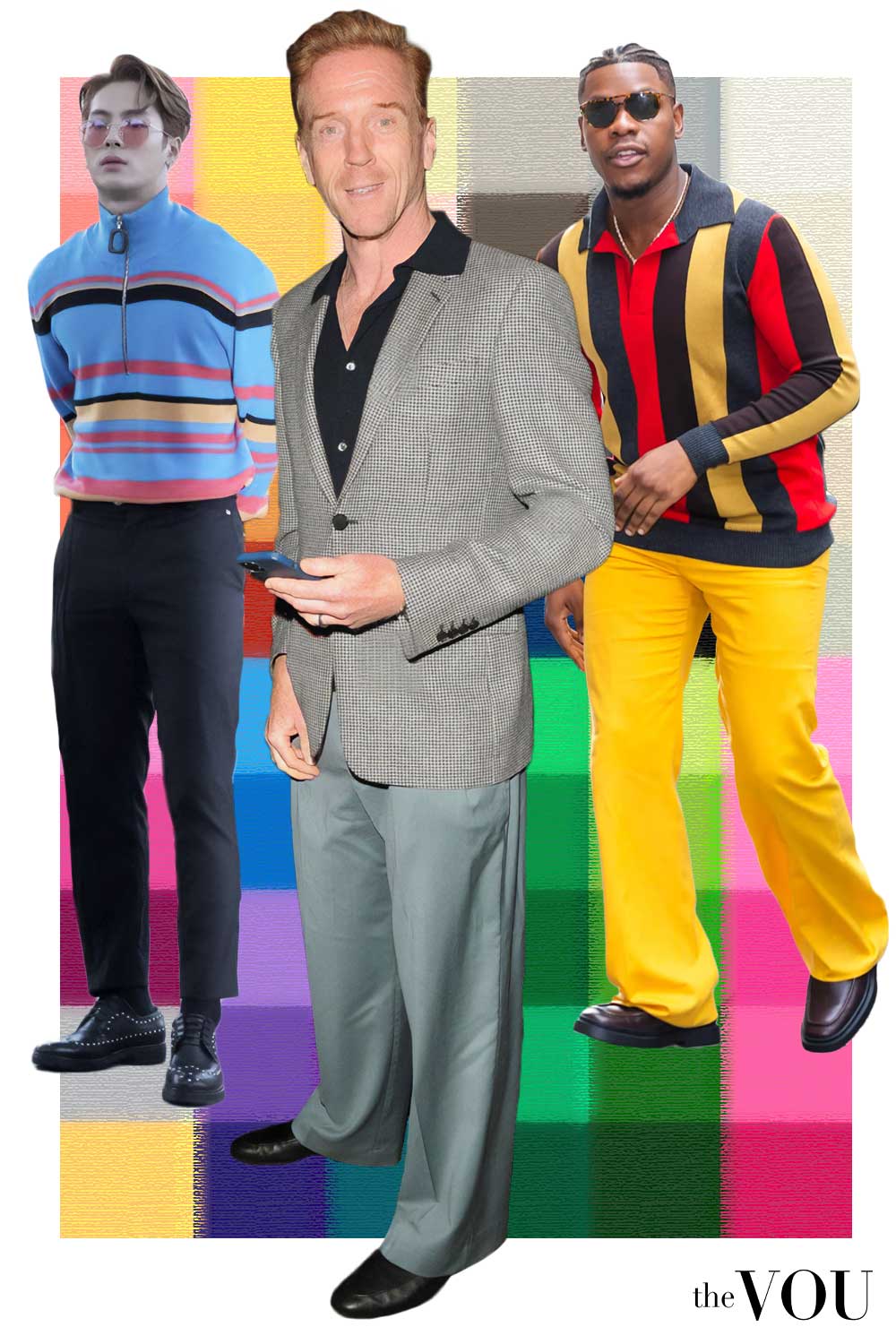
The title collage

Choose one change to try
Start with a complete outfit you already wear, including footwear. Change one coloured garment, then compare it with your usual version in similar light. Keep the observation and your preference separate, since “this shirt is more noticeable” and “I enjoy the effect” can both be true.
There is no need to copy a celebrity’s physique, grooming or designer labels. Fit, comfort and the occasion decide whether an adaptation is useful. Use required formal clothing when an invitation calls for it, even if black or bright white is not your everyday preference.
If you are investigating a season rather than choosing an outfit, use the Bright/Clear Spring comparisons. A photograph taken in different lighting, with unknown processing or styling, cannot resolve that question for you.
Photograph notes
The images come from The VOU’s existing archive. Captions attribute the names used there and describe the visible clothes; they do not identify the photographer, event, garment maker or a personal colour consultation. Suggested outfits are adaptations rather than exact product matches.
Related guides on The VOU
Rectangle Body Shape Explained
Inverted Triangle Body Shape Explained
Styling Beyond Seasonal Colours
Before you go, here is a simple way to put this guide into practice, and when to ask an image consultant for help.
Professional styling starts with knowing your body shape and seasonal colour palette, which help you choose clothes that fit well, in colours that suit your skin, eyes and hair.
Our guides also cover styling by occasion, location, season and time of day, garments, footwear, accessories, heritage fashion brands and old-money style.
Take our three quizzes to find your body shape, seasonal colour palette and fashion style, then book a consultation if you want personal help.
1. Find Your Body Shape
Different garments flatter different physiques, so knowing your body shape is the first step in dressing like a confident man; take our body shape quiz for men.
Once you know your unique body shape, take the second quiz to discover your unique colour palette.
2. Find Your Seasonal Colours
Remember, fashion comes in various colours, but not every hue complements your natural colour.
Take our seasonal colour quiz for men to find the colours that suit you.
3. Find Your Fashion Style
By now, you should already know your body shape and unique colour palette; the next step is to discover your personal fashion style.
To find it, take our fashion style quiz for men; it includes a suggested style, outfit ideas, relevant fashion brands, and much more.
Personal Help from The VOU
For personal help, you can book a consultation with our image consultants and fashion stylists.
Our styling services for men are paid consultations; the shop page lists what each one includes.
Owning luxury clothes is not enough on its own; knowing your body shape and colour palette first makes styling by occasion, location, season and time of day easier.
Contact us to book a consultation once you have taken the three quizzes.