
Start here
What’s This About
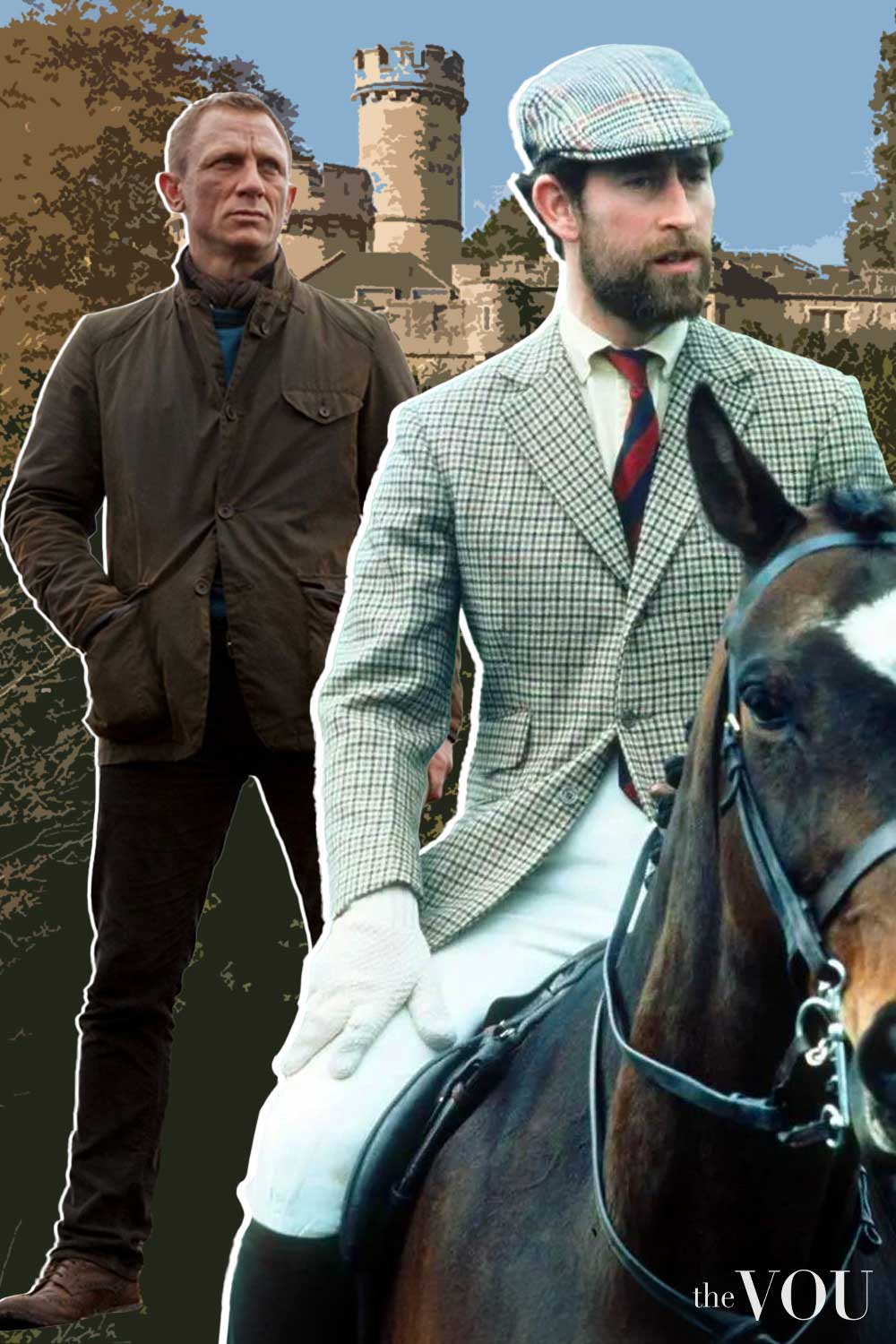
British countryside style is practical outdoor clothing in earthy colours: tweed jackets, check shirts, cord or moleskin trousers, knitwear, waxed jackets, brogues and wellingtons.
This guide explains the clothes, their history and how to wear them, such as:
Where the look came from, from Victorian shooting tweeds to post-war wellingtons
What makes a tweed, waxed or Norfolk jacket different
Tattersall shirts, cord, moleskin and plus fours
How to mix colours and patterns without clashing
Four seasonal outfits for the country or town
and many more!
The clothes earn their place by coping with British weather, so choose them for how they work as well as how they look.
Key Points
01Most garments in the look were designed for a job, such as warmth, rain or mud, so practicality comes first.
02Harris Tweed is legally defined: handwoven in the Outer Hebrides from wool dyed and spun there.
03The Aran jumper comes from Ireland and Fair Isle knitting from Shetland, so not every country knit is English.
04Mix patterns by varying their size and repeating one shared colour.
British countryside style is the way of dressing that grew out of walking, shooting, fishing and riding in the British countryside: tweed jackets, check shirts, cord or moleskin trousers, knitwear, waxed jackets, brogues and wellington boots.
This guide explains where the clothes came from, what each garment does, how to combine colours and patterns, and how to wear the look in each season, in the country or in town.
What is British countryside style?
British countryside style is practical clothing for wet, muddy and changeable weather, worn in earthy colours and hard-wearing cloth.
Most of its garments were designed for a job: a tweed jacket for warmth outdoors, a waxed jacket for rain, wellingtons for mud and a flat cap for wind.
Today many people wear the same clothes simply because they like them, whether or not they shoot, fish or ride.
It overlaps with Sloane Ranger style, which brought country clothes such as waxed jackets and knitwear into town wear; countryside style keeps the focus on what works outdoors.
Where the style came from
The clothes developed on nineteenth-century country estates, where shooting, hunting and fishing parties needed outfits that could cope with British weather.
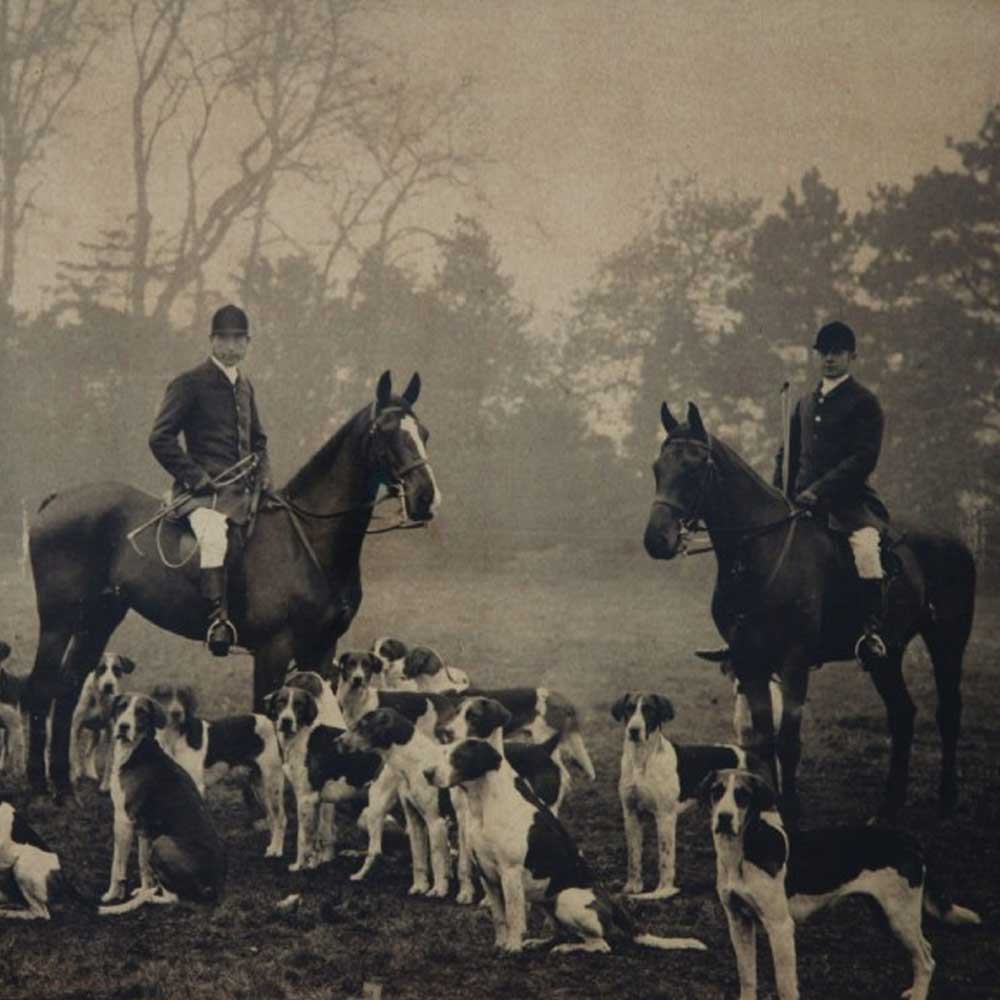
Tweed, a hard-wearing woollen cloth associated with Scotland, became the standard cloth for these outdoor sports.
Some Scottish estates had their own patterned tweeds, known as estate tweeds, for the people who worked on them.
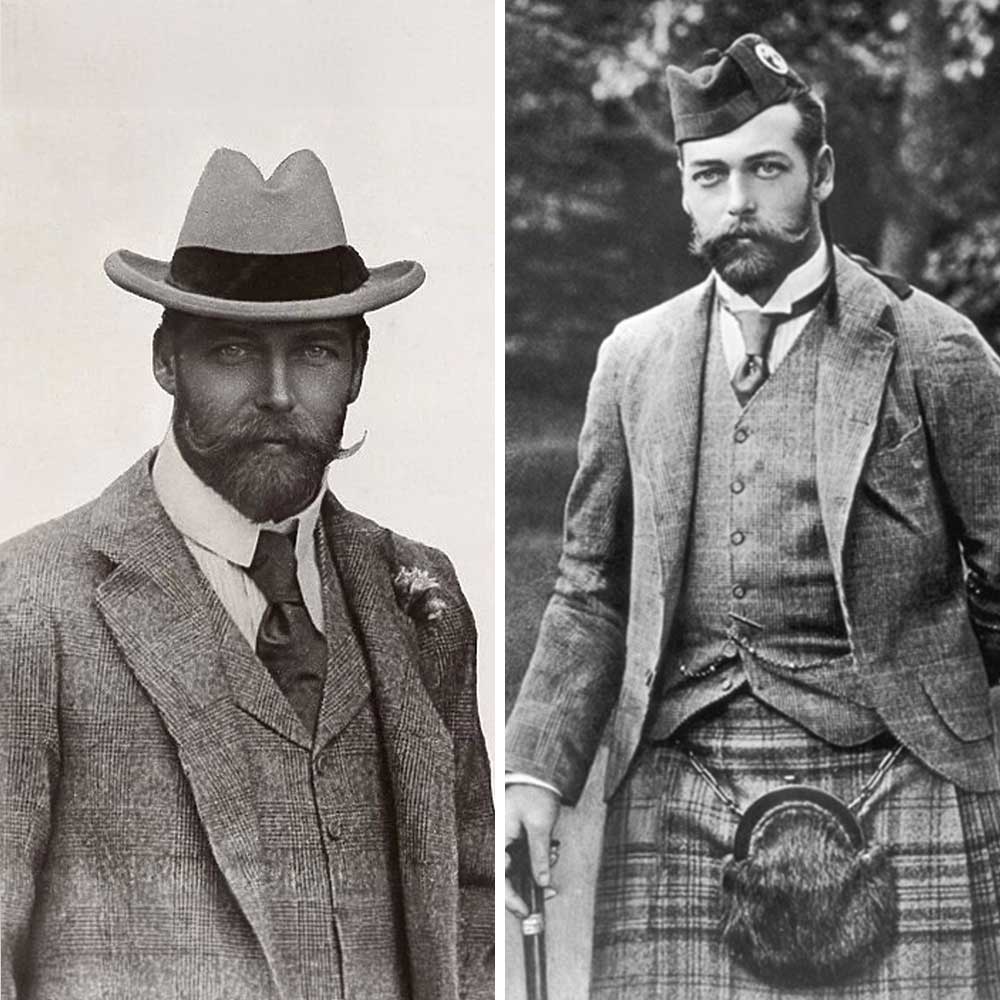
Its earthy colours hide mud and blend with fields and moorland, which is one reason brown, green and russet still dominate the look.
Scroll horizontally to see all columns →
| Era | Influences | Garments |
|---|---|---|
| Early nineteenth century | Fox hunting and riding | Riding coats, buckskin breeches |
| Victorian | Shooting on country estates | Tweed suits, Norfolk jacket (1860s) |
| Interwar | Golf and country weekends | Plus fours, Fair Isle knitwear |
| Post-war | Practical rainwear for everyone | Waxed jackets, green Hunter wellington boots (1955) |
Early nineteenth century
Fox hunting brought riding coats and pale buckskin breeches into country dress.
In town, Beau Brummell, the Regency dandy, made plain, well-cut coats and clean linen fashionable, a habit of restraint that country dressing shares.
Victorian
Tweed became the usual cloth for shooting and walking.
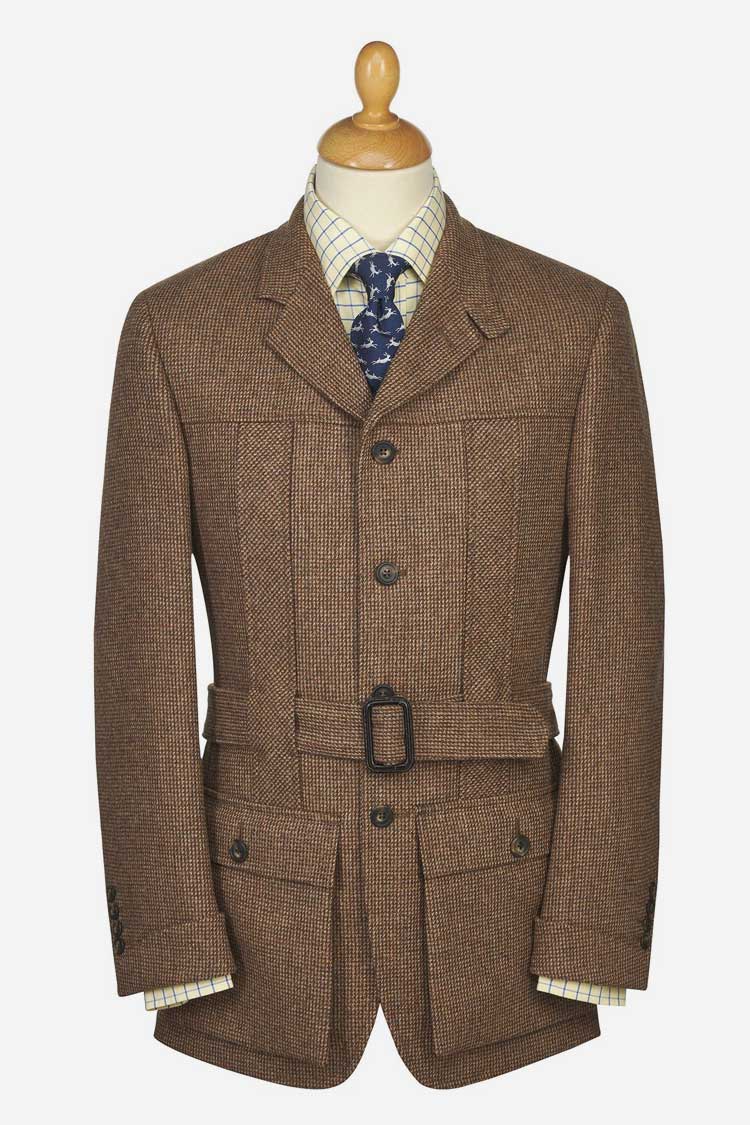
The Norfolk jacket appeared in the 1860s: a tweed jacket with pleats down the front and back and a belt at the waist, so the wearer could swing a gun freely.
Prince Albert is traditionally credited with designing the Balmoral tartan for the royal estate in Scotland around 1853, although the exact date and designer are uncertain.
Interwar
Plus fours, loose breeches cut about four inches longer than knickerbockers so they fold over below the knee, became popular for golf and shooting.
The Prince of Wales, later Edward VIII and then Duke of Windsor, helped make both plus fours and Fair Isle knitwear fashionable, and he was known for mixing bold checks and textures.
Post-war
Waxed cotton jackets and rubber wellington boots made the look practical and affordable for far more people.
Hunter traces its history to the North British Rubber Company, set up in Edinburgh in 1856, which made trench boots for the War Office in the First World War and launched its green Original boot in 1955.
Today the look mixes garments from all of these periods.
British countryside wardrobe essentials
Scroll horizontally to see all columns →
| Category | Garment | Typical cloth |
|---|---|---|
| Outerwear | Tweed jacket, waxed cotton jacket, gilet | Tweed, waxed cotton, quilted nylon or wool |
| Shirts | Tattersall check shirt, Oxford button-down shirt | Brushed cotton, Oxford cloth |
| Trousers | Cord trousers, moleskin trousers, plus fours | Corduroy, moleskin, tweed, cavalry twill |
| Knitwear | Cable-knit jumper, Fair Isle jumper or vest | Shetland wool, lambswool, merino |
| Footwear | Brogue boots, wellington boots | Leather with rubber soles, rubber |
| Accessories | Tweed flat cap, tie, pocket square | Donegal tweed, wool, silk |
Outerwear: the tweed jacket
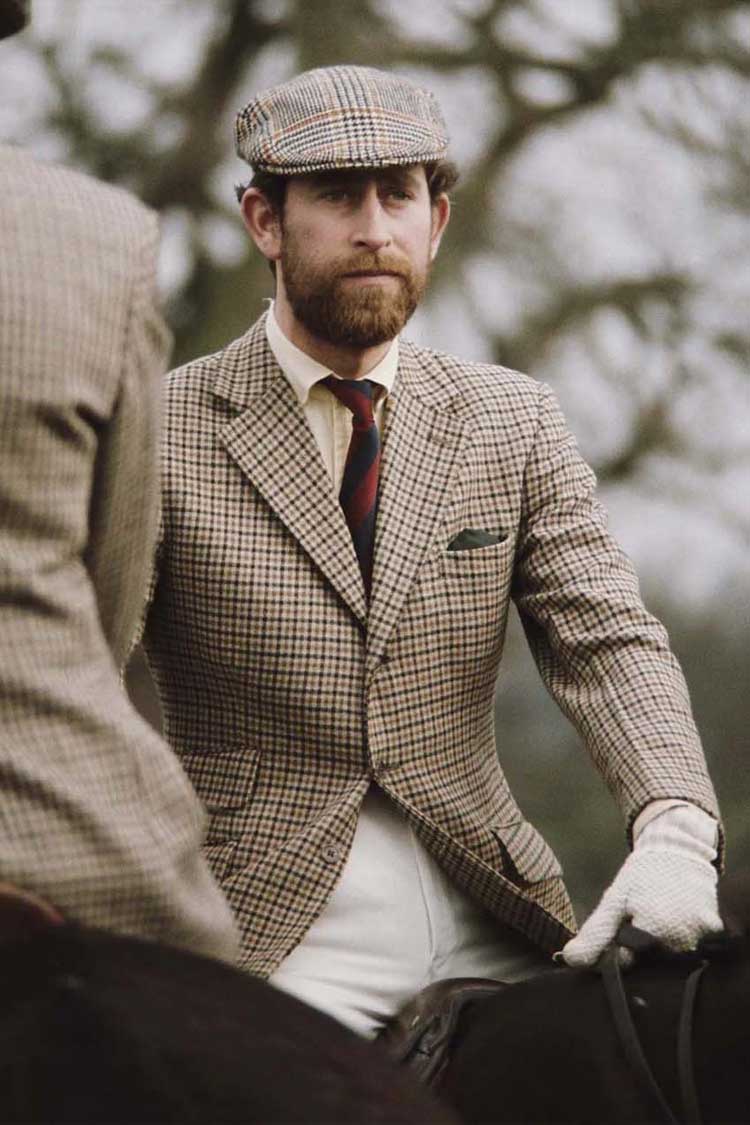
The tweed jacket is the garment most people picture first.
Tweed is closely linked with the Scottish Highlands and islands, and its dense wool keeps out wind and light rain.
Harris Tweed is a legally defined cloth: under the Harris Tweed Act 1993 it has to be handwoven by islanders at their homes in the Outer Hebrides from pure virgin wool dyed and spun there.
A typical country tweed jacket has a three-button front, notched lapels and flap pockets, and it should leave room to lift your arms.
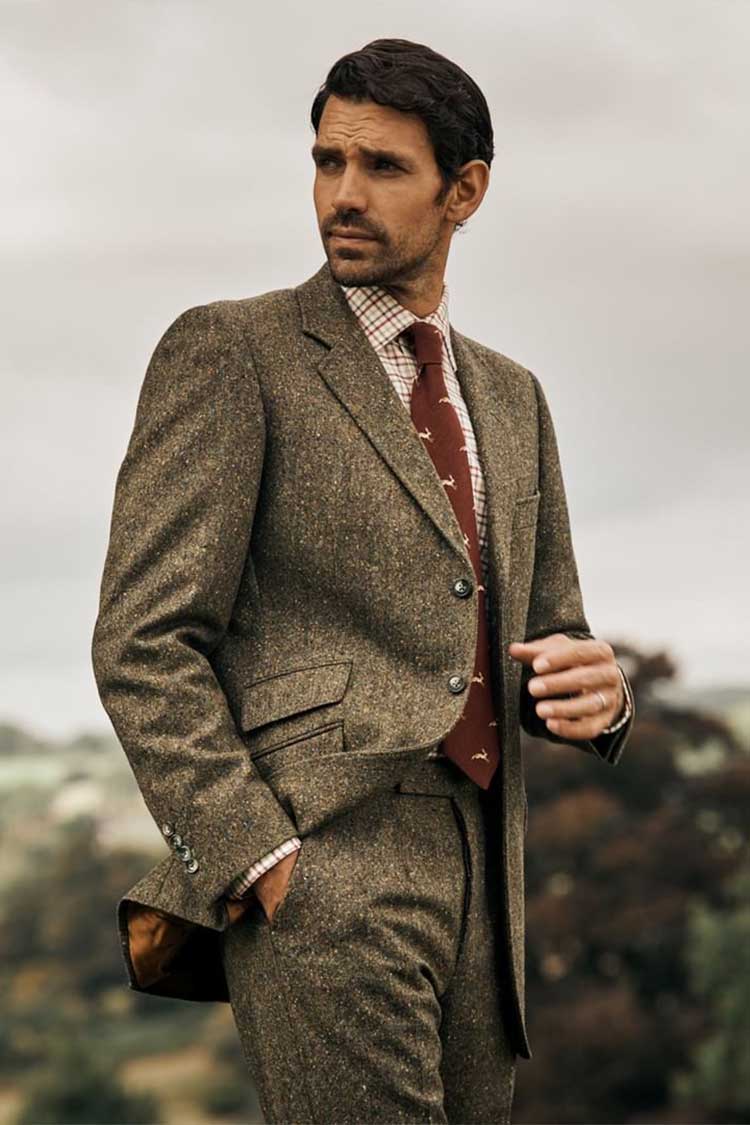
The Norfolk jacket is a belted variation with box pleats that give extra movement for shooting.
Tweed colours follow the landscape: moss green, heather, brown and grey, often with a fine overcheck in a contrasting colour.
Outerwear: the waxed jacket
For rain, most people wear a waxed cotton jacket over the tweed or instead of it.
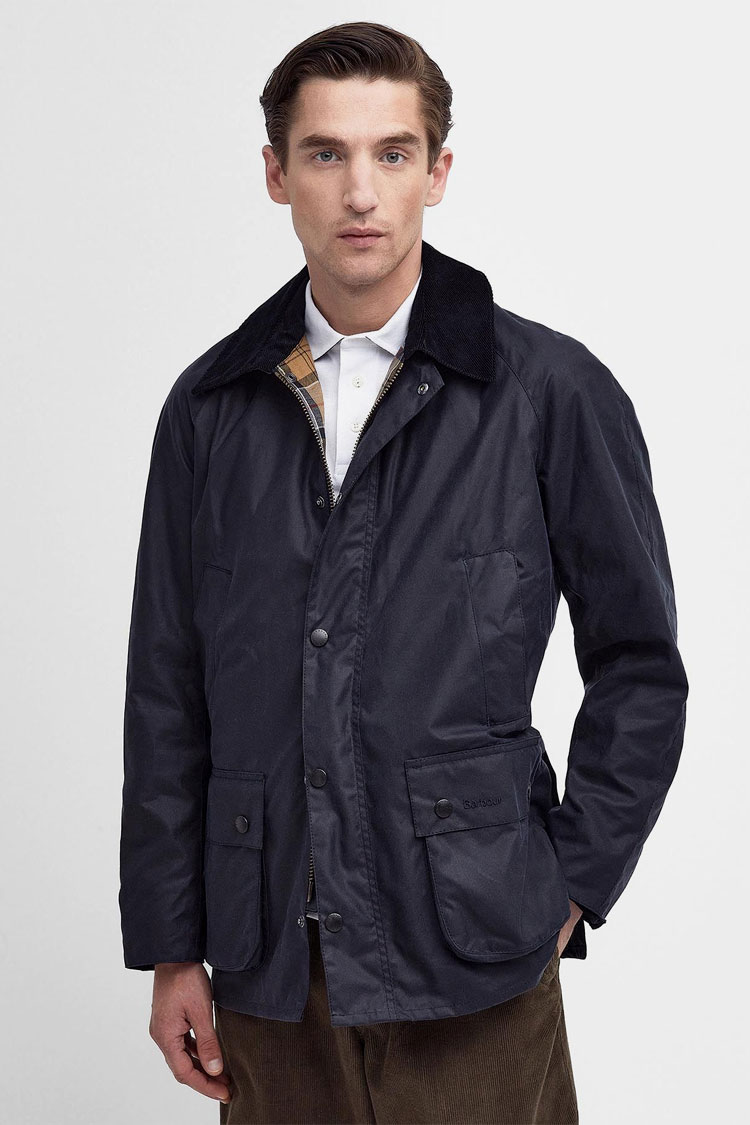
The wax finish helps the cotton shed water, and the jacket can be re-waxed when it starts to let rain through.
Barbour’s Beaufort, designed in 1983, is a well-known example with a cord collar, large front pockets and a full-width rear pocket originally meant for game.
A quilted gilet or a modern waterproof shell is a practical alternative on wet or active days.
Shirts: tattersall checks and Oxford cloth
The tattersall shirt has thin lines in two or three colours crossing at even intervals to form small squares on a pale ground.
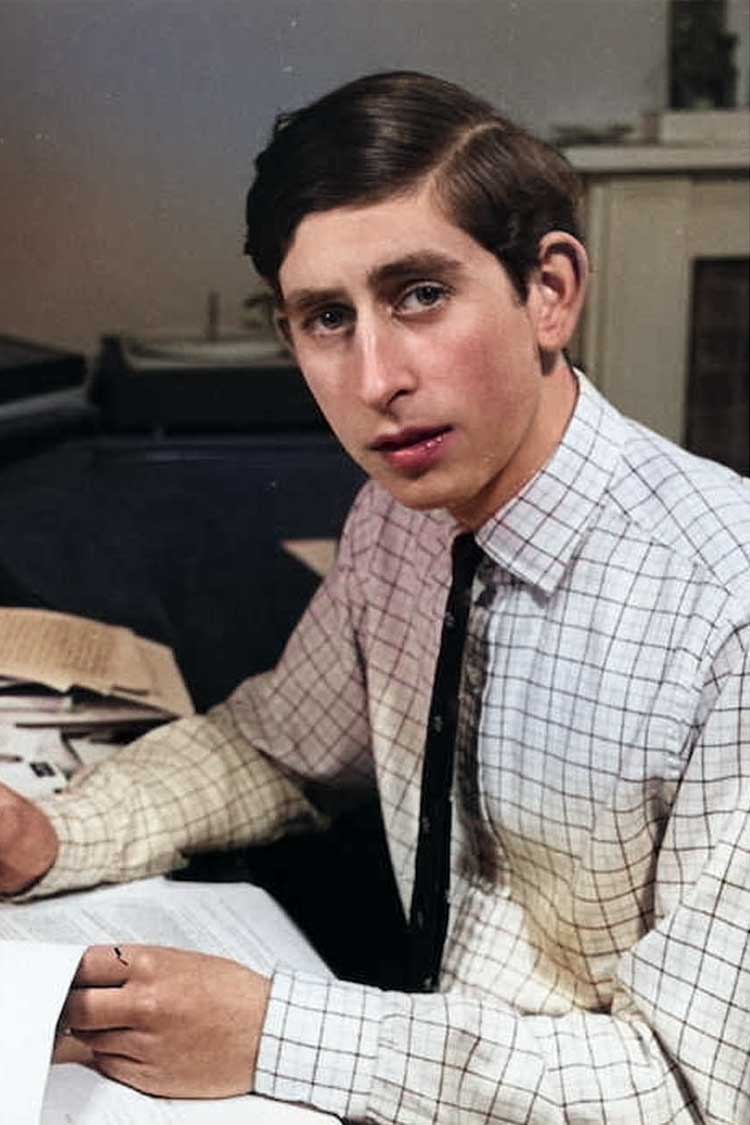
The pattern takes its name from Tattersall’s horse market in London, started in 1766, where blankets in this check were sold for horses.
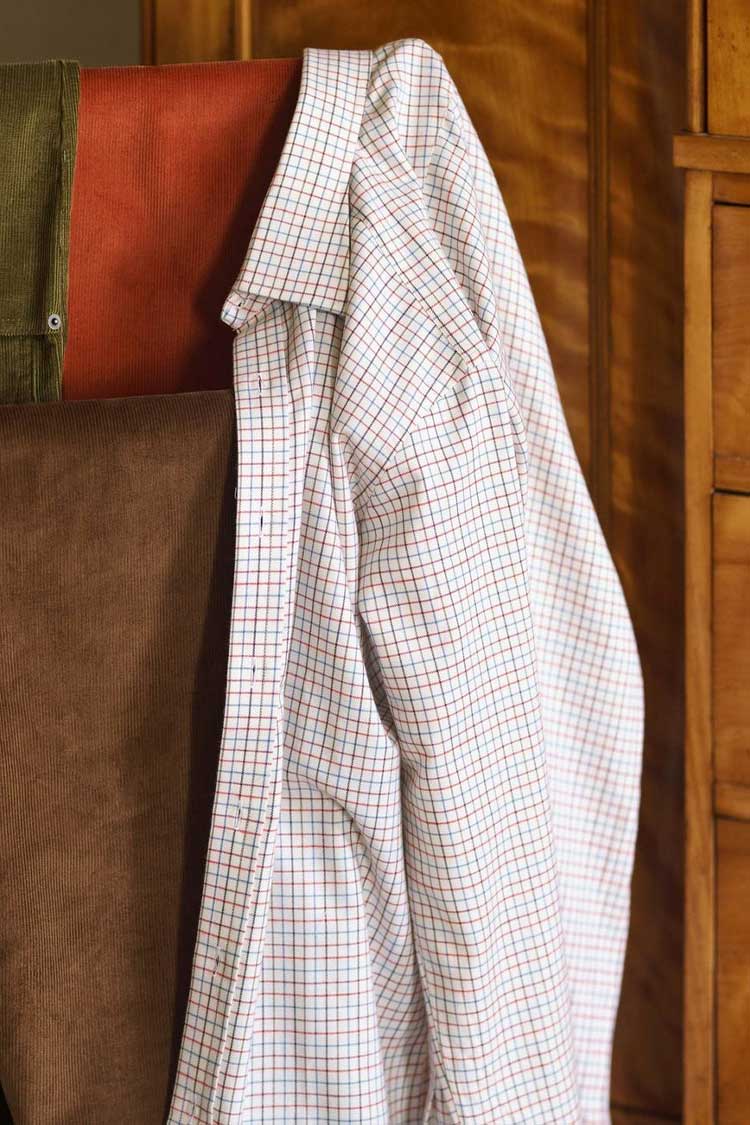
Country versions are often in brushed cotton for warmth, on a white, cream or pale yellow ground with checks in green, red or blue.
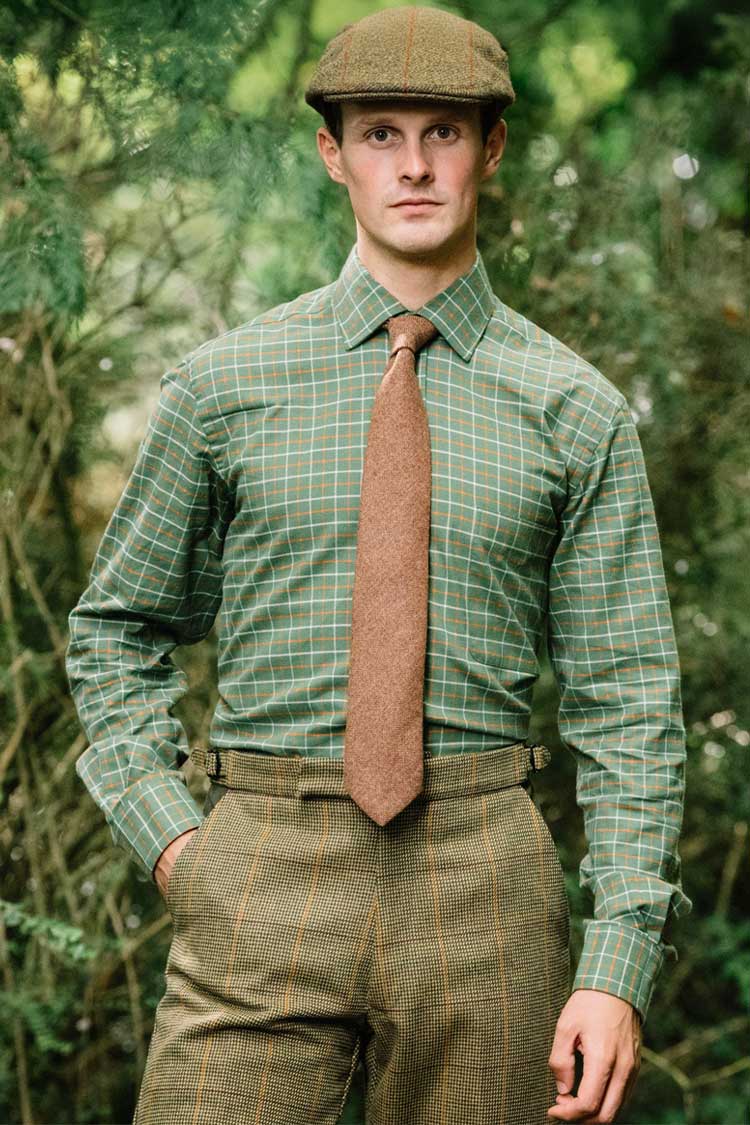
For a smarter look, an Oxford button-down shirt in white or pale blue works well under tweed.
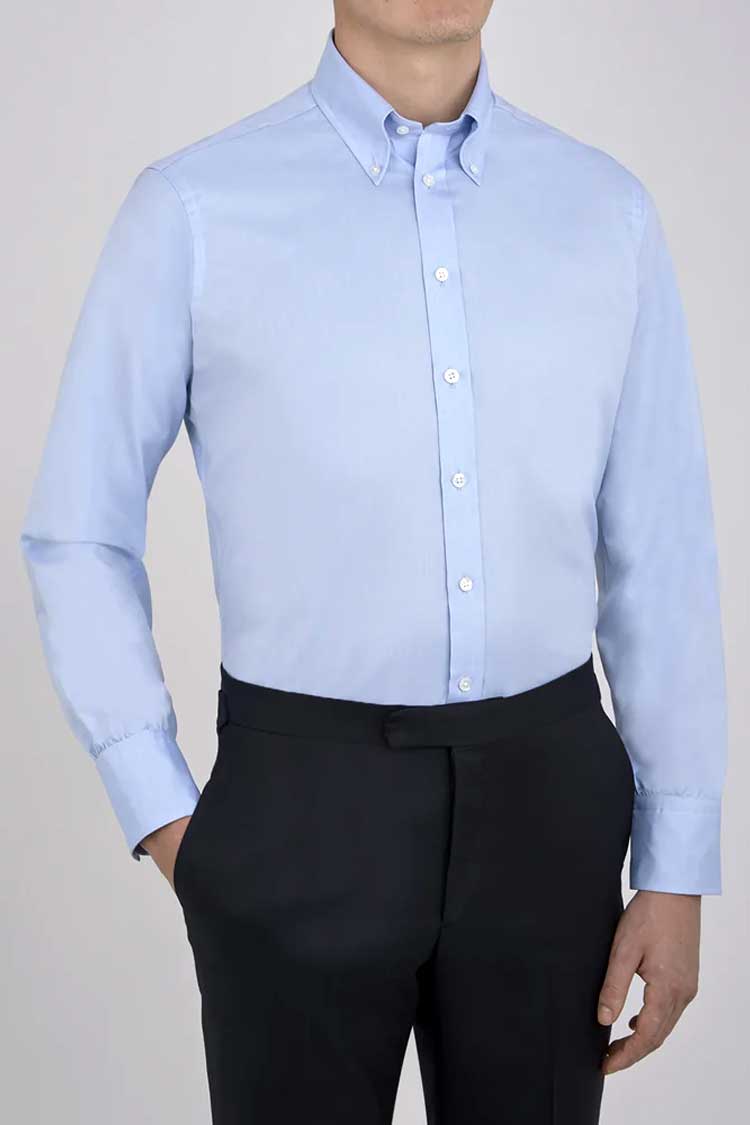
Its buttoned collar points stay in place in the wind, and it can be worn with or without a tie.
Trousers: cord, moleskin and plus fours
Cord trousers have a ridged surface called the wale, which ranges from fine needlecord to broad jumbo cord.
Medium and wide wales are the most hard-wearing choice for outdoor use, and they come in tan, olive, brown and brighter shades such as mustard or burgundy.
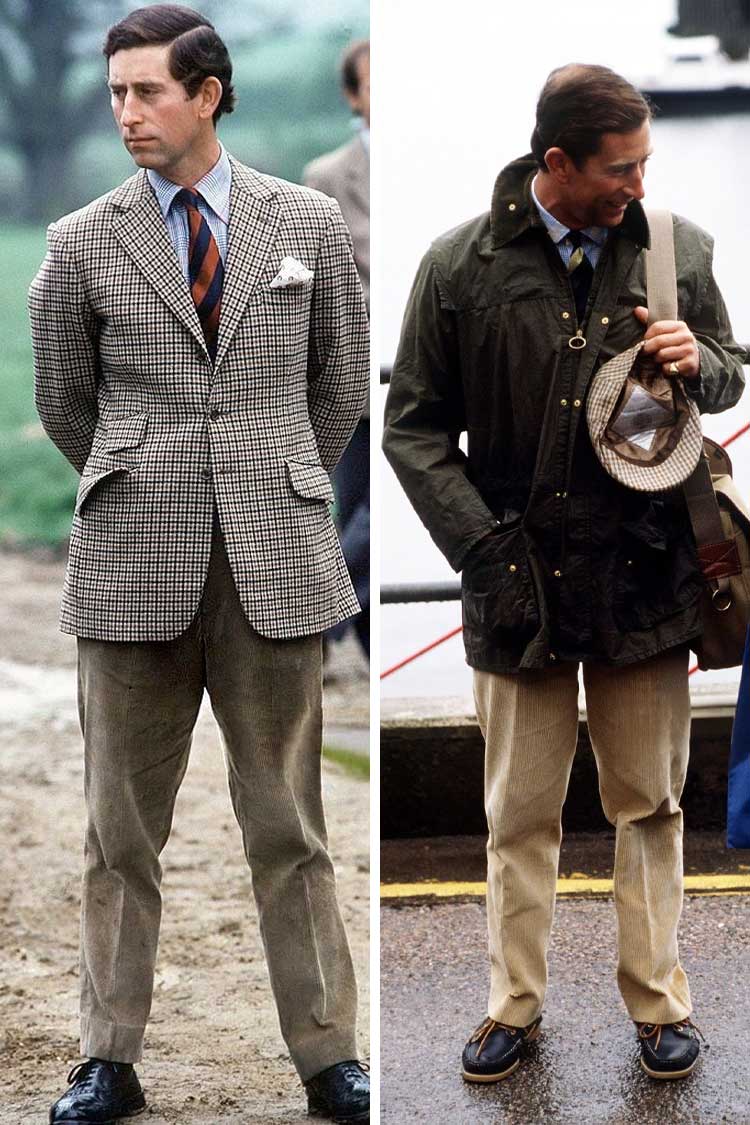
Moleskin is not animal skin but a densely woven cotton with a brushed, suede-like surface that blocks wind well.
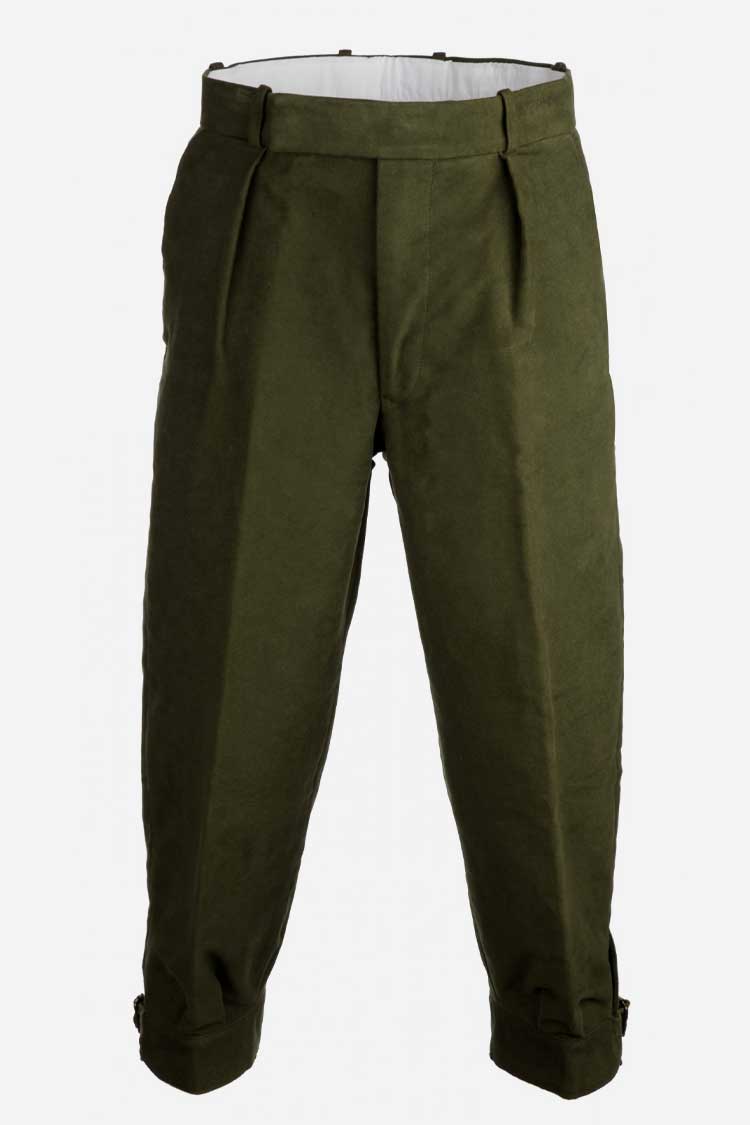
Plus fours and shorter breeks fasten below the knee and are worn with long wool socks, which keeps the hem out of mud and wet grass when shooting or walking.
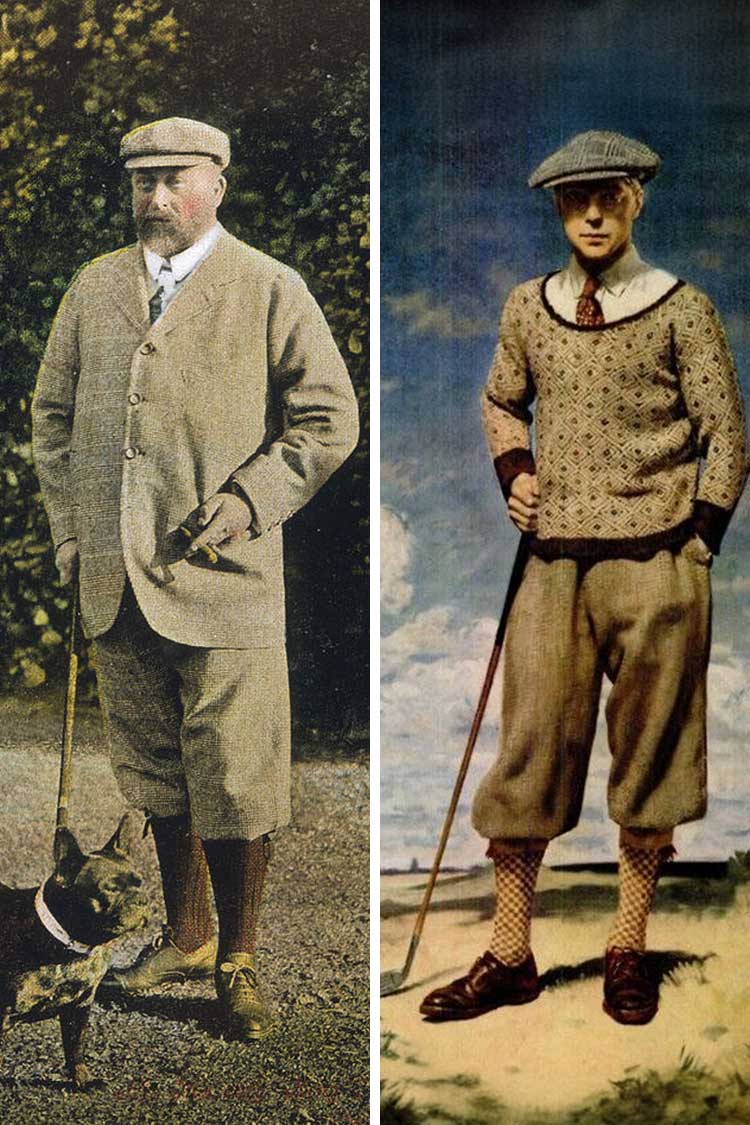
They are usually made in tweed and worn with knee-length socks in plain, cable or argyle knits.
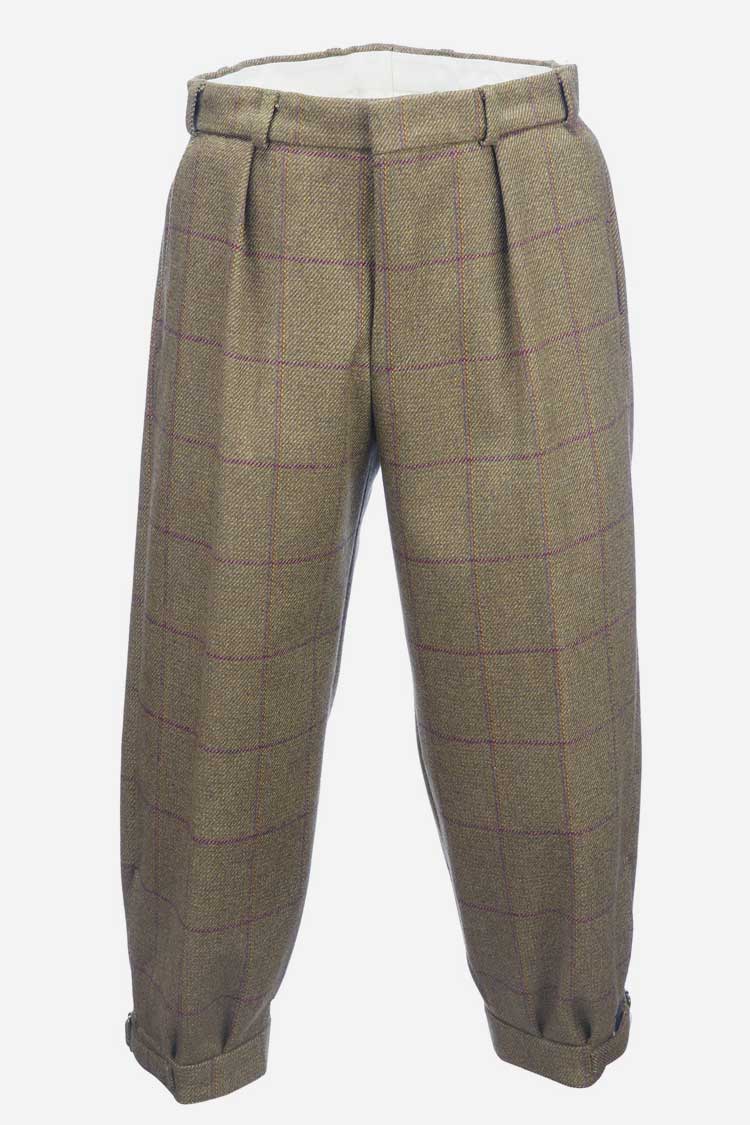
Cord and moleskin suit everyday country wear, while plus fours and breeks are mostly worn for shooting days.
Knitwear: cable knits and Fair Isle
Cable-knit jumpers have twisted, rope-like patterns.
The heavy cream fisherman’s jumper known as the Aran is named after the Aran Islands off the west coast of Ireland, so it is an Irish garment that many British country wardrobes have adopted.
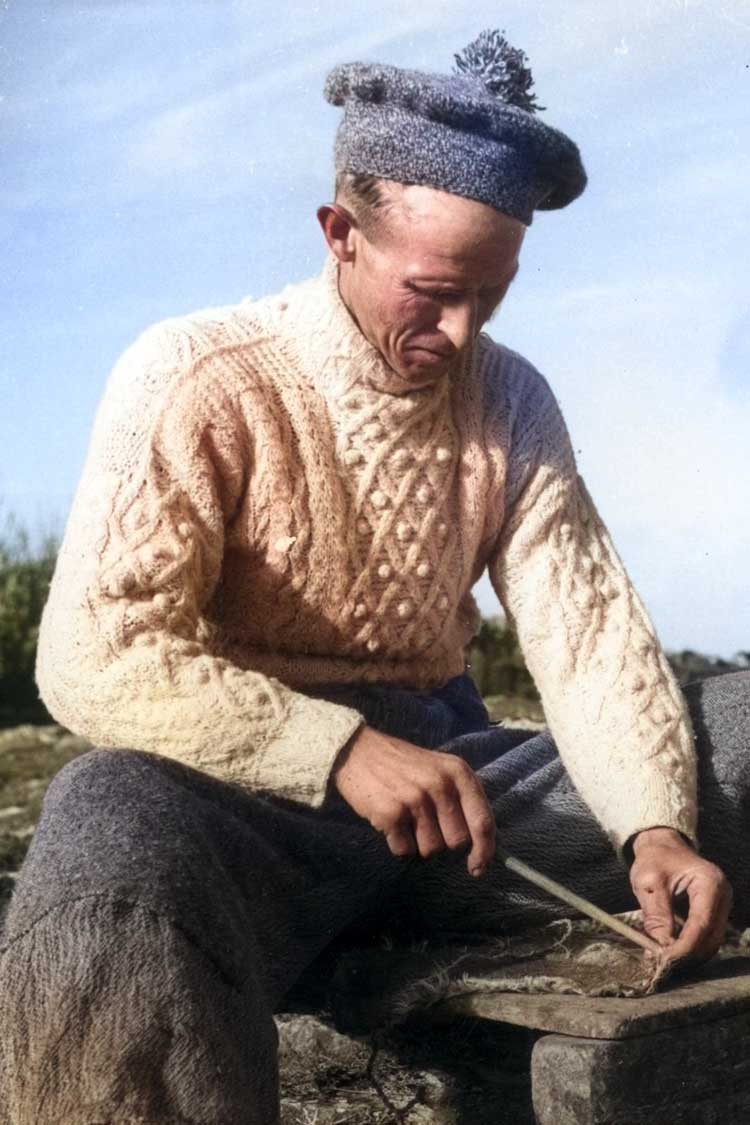
Lighter cable knits in Shetland wool, lambswool or merino come in cream, navy, purple, green and many other colours.
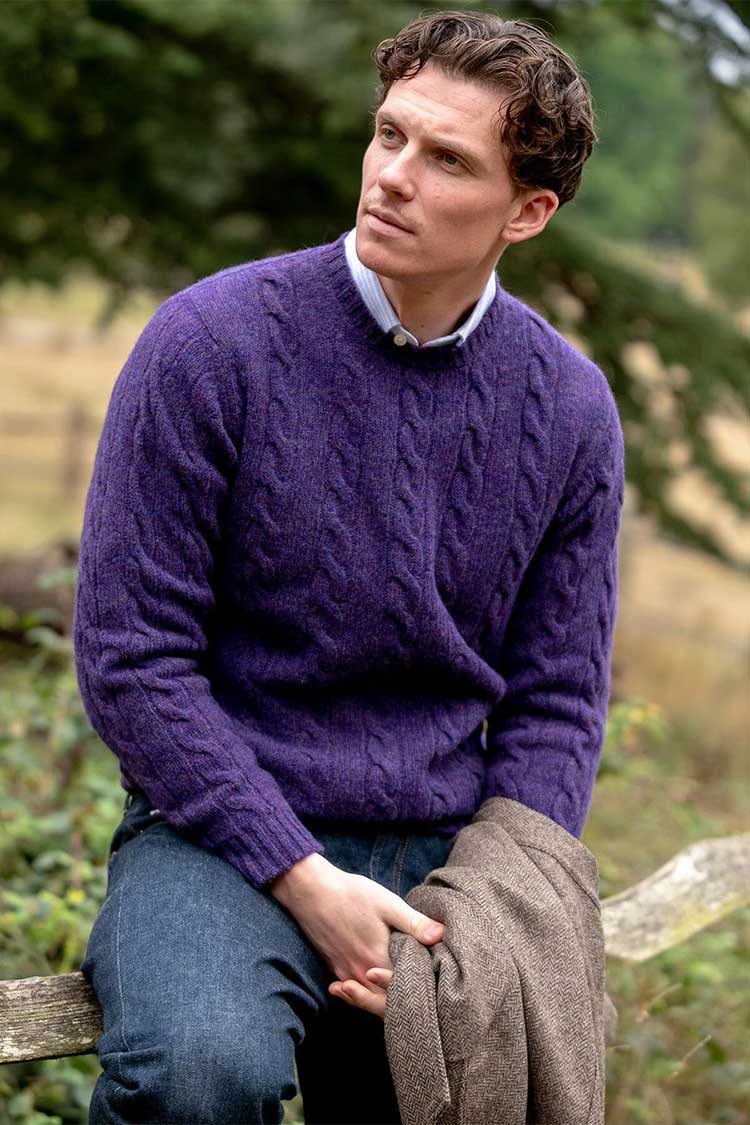
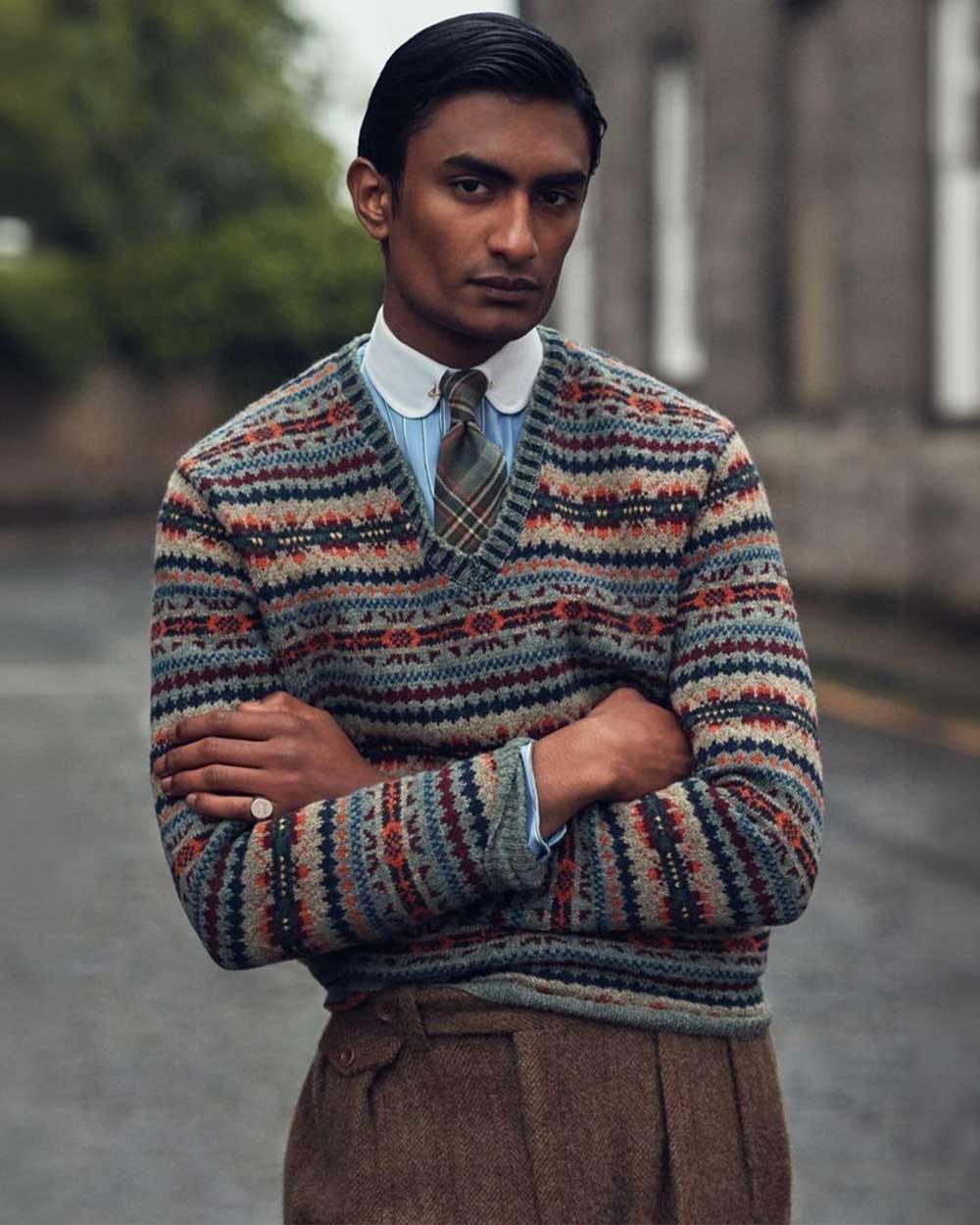
Fair Isle knitting, with bands of small multicoloured patterns, comes from Fair Isle in the Shetland Islands.
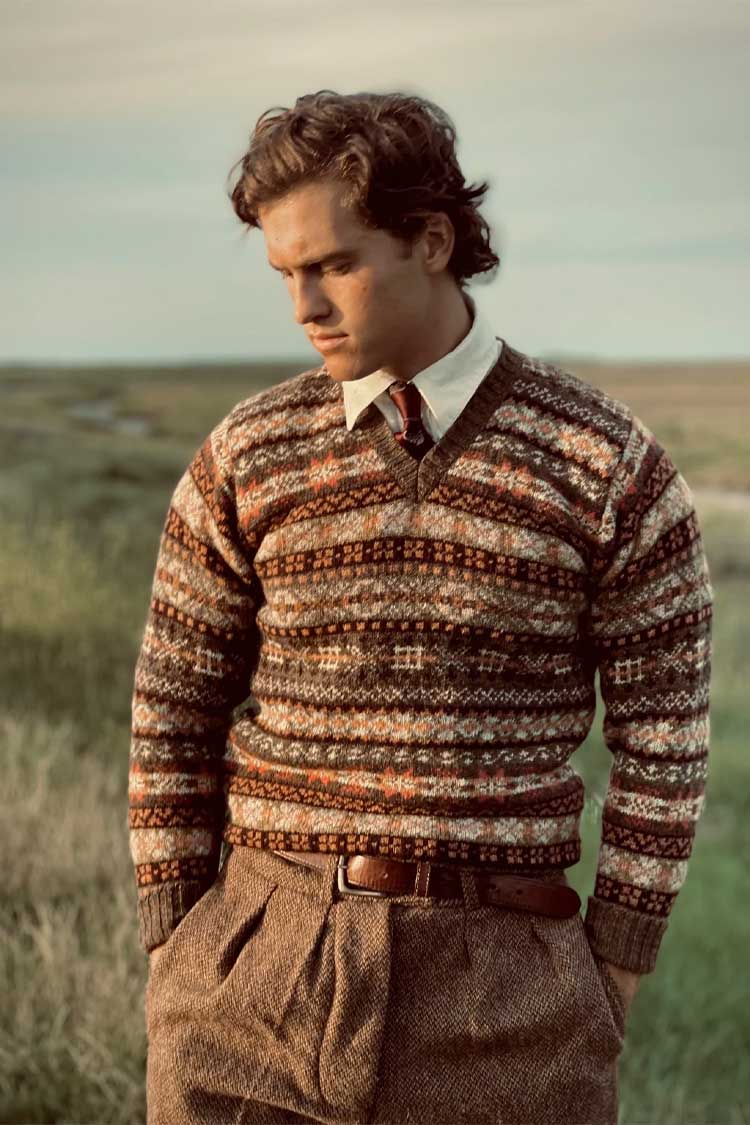
A Fair Isle jumper or sleeveless vest over a shirt and tie adds colour to an outfit of plain tweed and cord.
Footwear: brogues and wellingtons
Brogues are leather shoes or boots decorated with perforations, often with a wingtip toe cap.
The commonly told story is that the holes once let water drain out of shoes worn on boggy ground in Scotland and Ireland; today they are decorative.
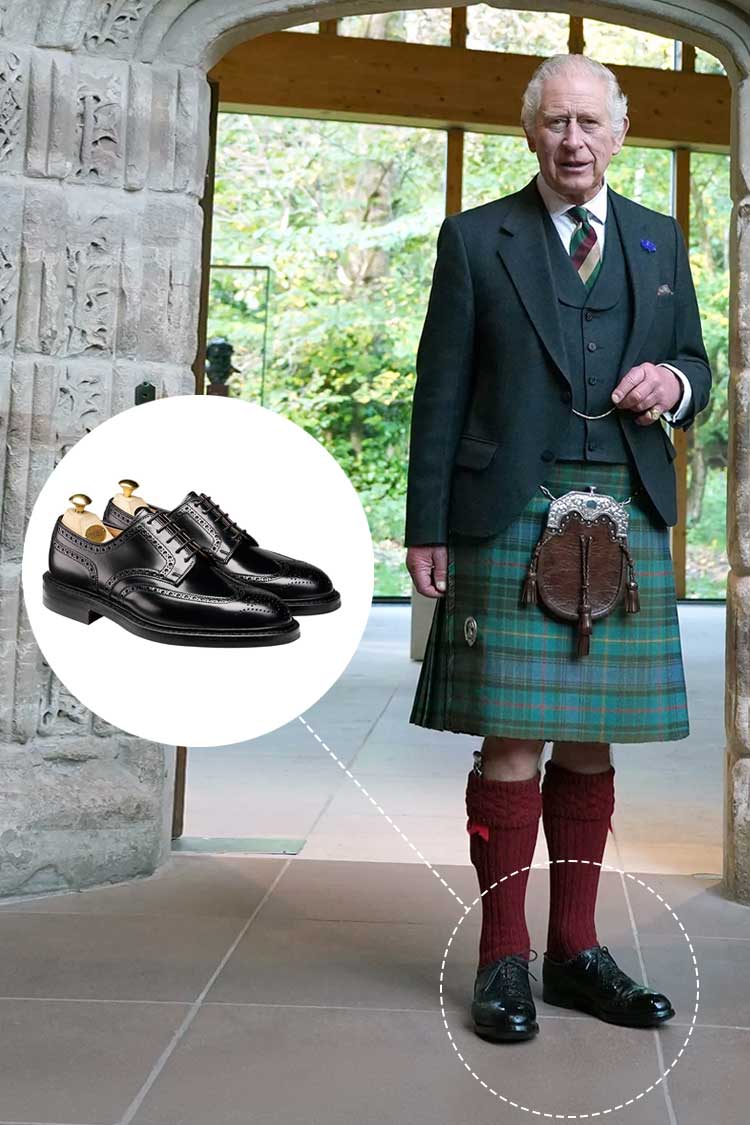
For country use, brown brogue boots or shoes with a rubber sole, such as Dainite or Commando, grip better on wet ground than leather soles.
Wellington boots take their name from the 1st Duke of Wellington and are the practical choice for mud and standing water.
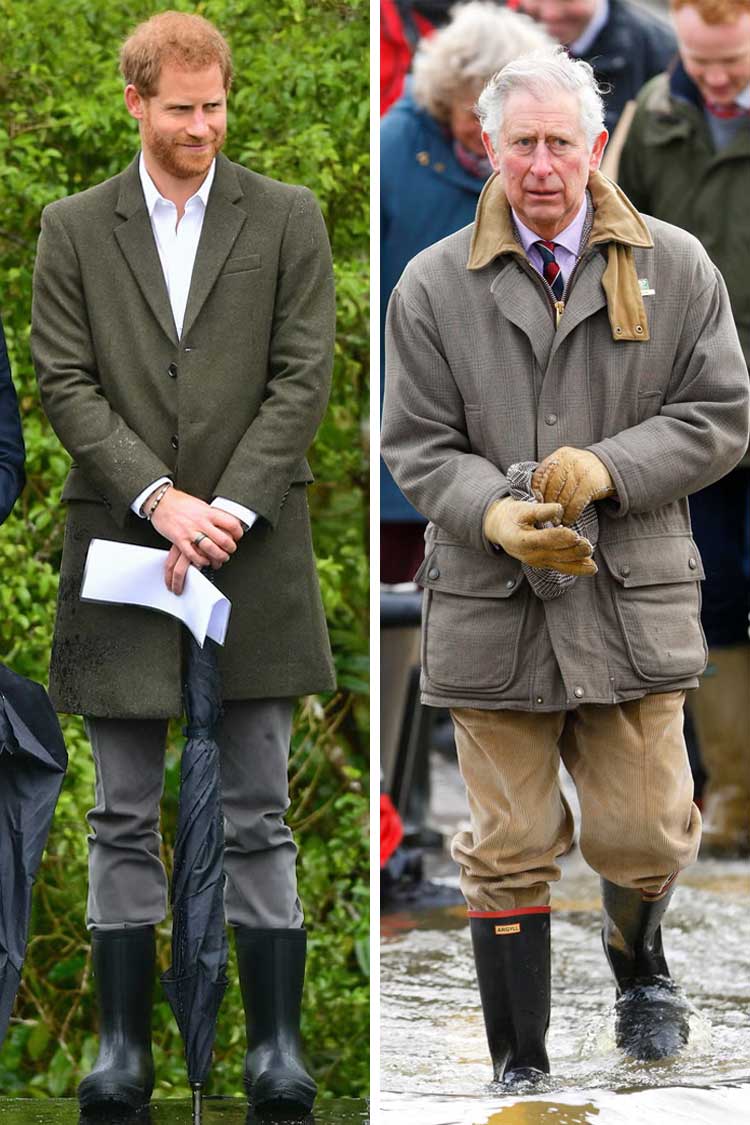
Neoprene-lined versions are warmer in winter, and the tall green rubber boot remains the classic country colour.
Accessories
The usual hat is a tweed flat cap, with a single-panel crown and a short brim; a cap with an eight-panel crown and a button on top is usually called a baker boy or newsboy cap.
Donegal tweed, from County Donegal in Ireland, has small coloured flecks that suit both.
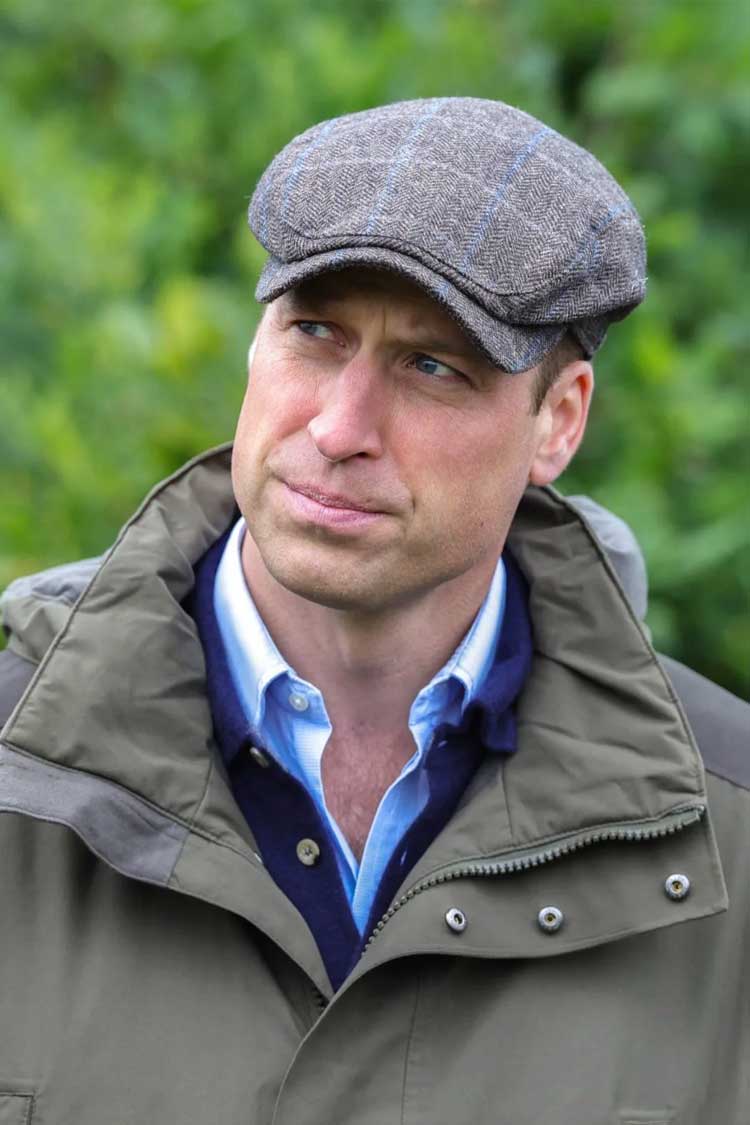
With a tweed jacket, a wool or silk tie in a muted paisley or a small pattern looks at home, and a wool challis tie in tartan adds a Scottish note.
A silk or wool pocket square finishes the jacket.
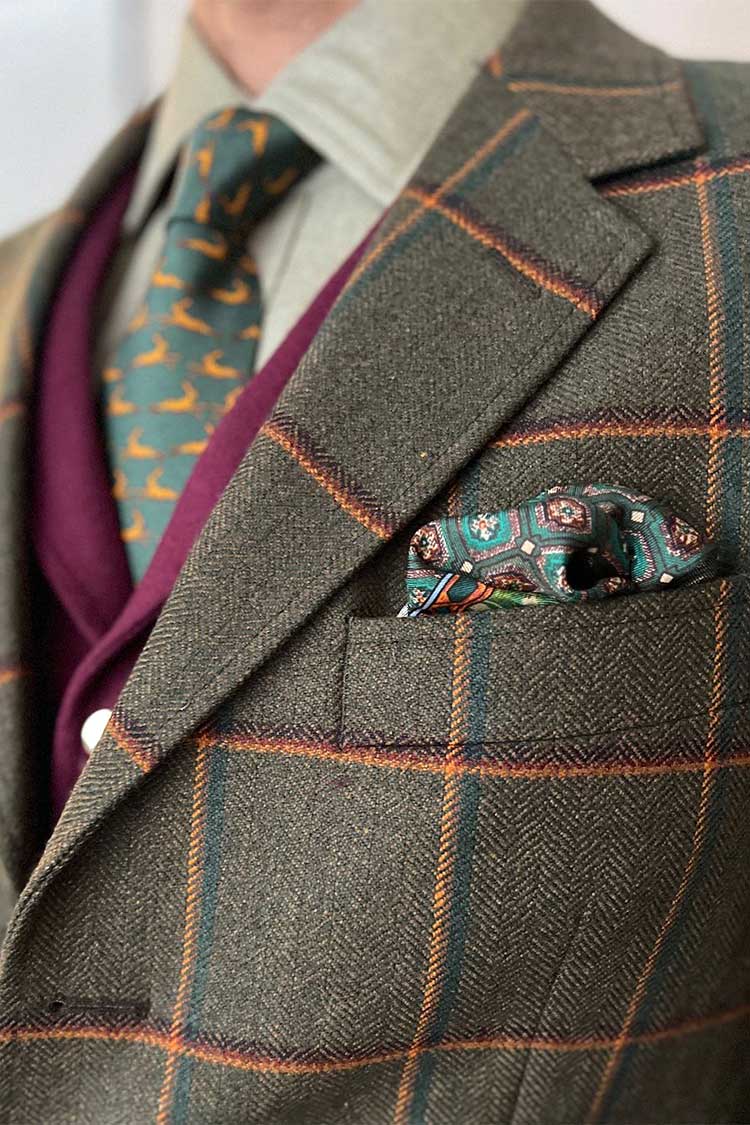
Choose a pocket square that shares a colour with the tie rather than matching it exactly.
Colours and patterns
Scroll horizontally to see all columns →
| Colours | Patterns | Mixing suggestions |
|---|---|---|
| Earth tones: browns, greens, russets | Herringbone, glen check | Vary the scale of each pattern |
| Muted shades: heather, slate blue | Tattersall, houndstooth | Repeat one colour across patterns |
| Accents: burgundy, mustard | Argyle, Fair Isle | Use a plain garment between two patterns |
Colours
The palette comes from the landscape: browns and greens form the base, with russet and rust for autumn.
Muted shades such as heather purple and slate blue soften the browns.
Burgundy in a tie or pocket square, or mustard in knitwear, adds a small accent.
Patterns
Herringbone is a woven V-shaped pattern common in tweed.
Glen check combines small and large checks, and a version with a coloured overcheck is known as the Prince of Wales check.
Tattersall appears mainly on shirts, houndstooth on jackets and coats, and argyle and Fair Isle on knitwear and socks.
Seasons
In spring and summer, lighter colours such as sage, sky blue and tan work well, in lighter cloth such as cotton and linen.
In autumn and winter, deeper forest green, burgundy and brown in heavier tweed, cord and knitwear give warmth.
To mix patterns, vary their size, keep one shared colour and let a plain garment sit between two busy ones.
British countryside outfit ideas by season
Spring
Wear: a lightweight sage green tweed jacket with a subtle blue overcheck, a sky-blue Oxford button-down shirt, stone cotton drill trousers, tobacco suede brogue boots with olive wool socks, a brown leather belt and a muted yellow wool tie.
Add a herringbone flat cap and a paisley pocket square in blue and green, and keep a waxed jacket handy for showers.
Summer
Wear: a cream linen single-breasted jacket, a pale pink cotton shirt, light grey tropical wool or cotton trousers and tan suede loafers.
Add a gold knitted silk tie, a sky-blue linen pocket square and a Panama hat for sun at a summer show or garden party.
Autumn
Wear: a russet tweed jacket with an orange and green overcheck, a cream tattersall shirt with a rust and green check, a mustard lambswool sweater vest, dark olive moleskin trousers and chestnut brogue boots with green wool socks.
Add a burgundy tie, a wool pocket square and an olive waxed cotton cap for wind and drizzle.
Winter
Wear: a heavy charcoal tweed jacket with a blue and red overcheck over a cream Aran or cable-knit jumper, a red and black brushed cotton check shirt, navy cavalry twill trousers and green wellington boots with Fair Isle wool socks showing at the top.
Add a dark green wool or cashmere scarf, a matching tweed flat cap and brown leather gloves.
On wet days, put a waxed jacket or waterproof shell over the tweed.
British countryside styling suggestions
Scroll horizontally to see all columns →
| Do | Don’t |
|---|---|
| Choose hard-wearing cloth such as tweed, cord, moleskin and waxed cotton | Assume every modern fabric looks out of place; a plain waterproof shell is practical on wet days |
| Mix patterns of different sizes with a shared colour | Wear the same pattern on several garments at once |
| Check fabric, stitching and fit before you buy | Judge quality by price or label alone |
| Follow the dress code for shoots, country weddings and hunt balls | Underdress for a formal country occasion |
| Layer a shirt, knit, jacket and outer layer for changing weather | Choose a smart outfit that cannot cope with rain or mud |
Suggestions in detail
Choose hard-wearing cloth. Tweed, waxed cotton, cord and moleskin look right and cope with outdoor use.
Bright neon colours tend to look out of place, but a plain waterproof jacket or a fleece is a sensible addition on a wet walk.
Mix patterns with a plan. Combine a tweed jacket, a tattersall shirt and a paisley tie by making each pattern a different size and letting one colour run through all three.
Buy for wear, not for a label. A well-made tweed jacket or a pair of rubber-soled brogue boots can last for many years if you look after it; check the cloth, stitching and fit rather than the price tag.
Second-hand and vintage shops are a good source of tweed and knitwear.
Follow the event’s dress code. Shooting days, country weddings and hunt balls each set their own expectations, so ask the host what is usual.
Layer for the weather. British weather changes quickly, so a shirt, a knit or gilet, a jacket and a waterproof outer layer let you add or remove warmth through the day.
British countryside clothing makers
These makers are long associated with the look; the dates come from their own histories or reference sources, and many other makers sell similar clothes.
Barbour
Barbour was founded in 1894 by John Barbour in South Shields, in north-east England, and is known for waxed cotton jackets such as the Beaufort and the Bedale.
It has held royal warrants since 1974.
Hunter
Hunter’s history goes back to the North British Rubber Company, founded in Edinburgh in 1856, and its green Original boot dates from 1955.
Cordings
Cordings was founded in 1839 by John Charles Cording, originally selling outdoor and waterproof clothing, and has a shop on Piccadilly in London.
The musician Eric Clapton took a stake in the business in 2003.
Crockett & Jones
Crockett & Jones was founded in Northampton in 1879 and makes Goodyear-welted shoes and boots, including country brogue boots.
Other makers
Holland Cooper, William Crabtree and E.J. Churchill are other British labels that sell tweed jackets, knitwear and shooting clothes, and garments from William Crabtree and E.J. Churchill appear in the photographs above.
Country houses and the look
Large country estates are where much of this clothing was worn, and their events still show it in use.
Balmoral
Balmoral, the royal residence in Aberdeenshire, gave its name to the Balmoral tartan, and its Highland setting is closely linked with tweed and Highland dress.
Chatsworth
Chatsworth in Derbyshire has hosted horse trials, where many visitors wear the equestrian-inspired clothes covered in our outfit guide, such as tweed, cord and riding boots.
Highclere Castle
Highclere Castle in Hampshire was the main filming location for the television series Downton Abbey, whose costumes show early twentieth-century country tweeds and shooting clothes.
Holkham
Holkham in Norfolk is a large coastal estate whose country events attract visitors dressed for outdoor sport and walking.
Wearing British countryside style today
British countryside style lasts because the clothes do a job: they keep you warm and dry, and they hide mud.
Start with one tweed jacket, a check shirt and a pair of cord trousers, then add a waxed jacket and boots that suit your weather.
In town, wear one or two country garments, such as a tweed jacket with jeans or a waxed jacket over a suit, so the outfit does not look like a costume.
Layer for the weather, mix patterns with a shared colour and choose clothes that will last.
Next steps with The VOU
If you would like help applying this style to your own wardrobe, start with our three quizzes, then book a consultation if you want personal help.
1. Check your body shape
Our guide to dressing for your body shape explains how proportions and silhouettes affect the way clothes look on you.
To check your body shape, take the body shape quiz for men.
2. Find your seasonal colours
Our seasonal colour analysis guide explains how colour seasons are used to choose shades for the outfits you put together.
To find your seasonal colours, take the seasonal colour quiz for men.
3. Take the fashion style quiz
Take the fashion style quiz for men to see which personal fashion styles match your taste, with outfit ideas for each.
None of the quizzes is needed to wear the outfits in this guide.
Book a consultation for personal help
For personal help, you can book a consultation with The VOU’s image consultants and fashion stylists.
Our articles explain what an image consultant does and how to choose an image consultant.
Our styling services for men are paid consultations; the shop page lists what each one includes.
Our guide to styling by occasion, location, season and time of day covers which garments, footwear and accessories to combine.
A label alone does not make an outfit work, as our articles on luxury brands favoured by ultra-high-net-worth buyers and how logo-heavy luxury designs come across discuss.
You can see our styling services for men or contact us with any questions.
Mandy Meyer’s focus at The VOU is men’s body-shape styling, garment fit and outfit proportions. Her coverage addresses the practical questions behind a wardrobe choice: how a jacket sits across the shoulders, how trousers fall and how different cuts change the silhouette a wearer wants to create.
Her subject areas include the triangle, inverted triangle, rectangle, oval, trapezoid, hourglass and diamond labels used in body-shape styling. These provide starting references for comparing visible proportions; they do not capture every body or prescribe one correct way to dress. The focus connects those observations with garment shape, construction, length and the relationship between the upper and lower parts of an outfit.
Mandy’s editorial coverage combines visual comparisons with fit checks for comfort and movement. Readers can consider whether a cut gives them the room they need, where clothing pulls or gathers and which changes might support their preferred look. The aim is to make menswear choices more understandable while keeping personal preferences and the wearer’s own styling goals central.