
Start here
What’s This About
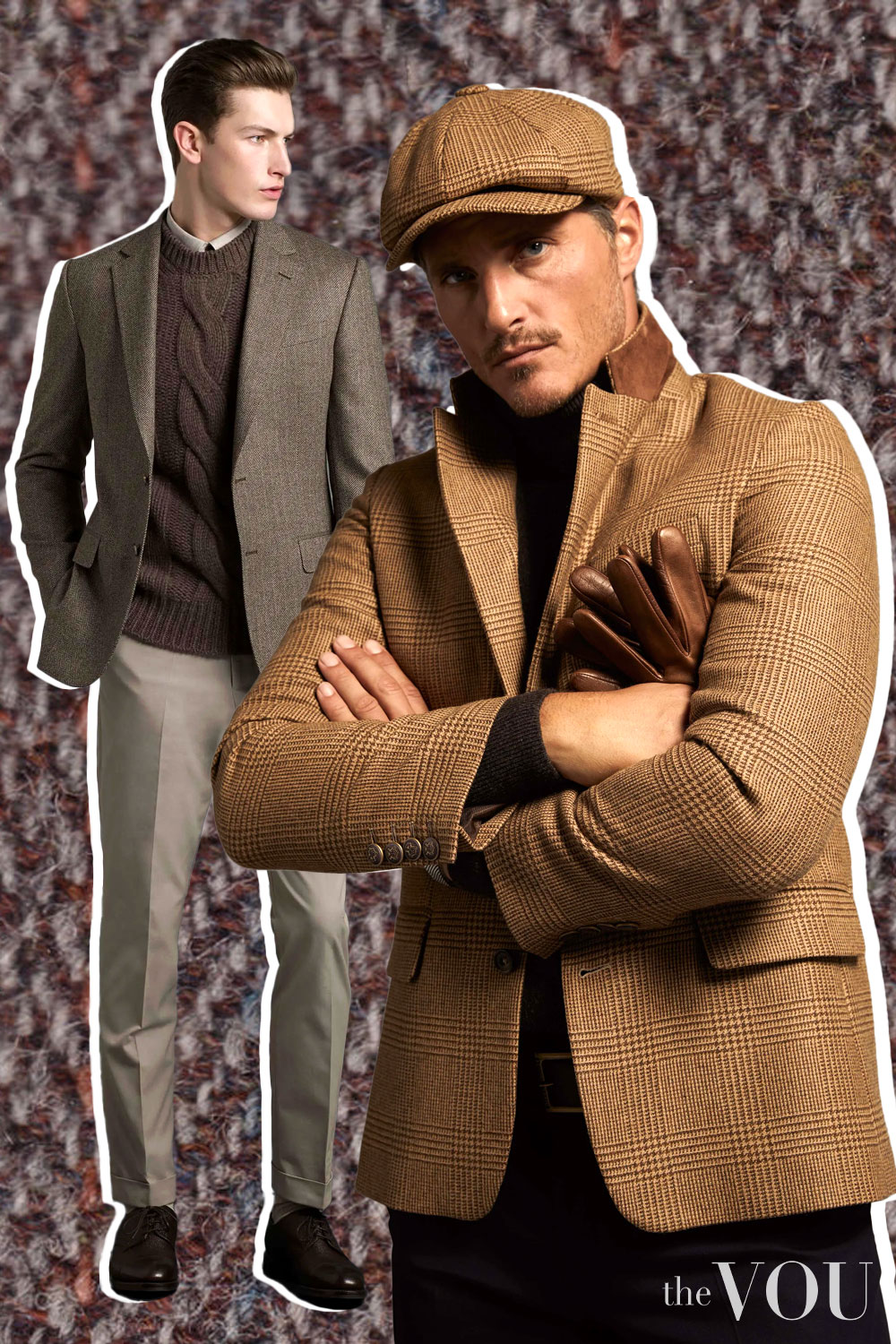
A tweed blazer is a tailored jacket in tweed, a textured woollen cloth, worn with odd trousers for autumn and winter from the office to the weekend.
This guide explains what tweed is and how to choose and wear a tweed jacket, such as:
Where tweed comes from, and what Harris Tweed means
How a tweed blazer compares with a sports coat and a suit jacket
Fit checks, colours and patterns such as herringbone and houndstooth
Outfits for the office, after work, weekends and country weddings
Which accessories suit a heavy, textured jacket
and many more!
Choose one tweed jacket that goes with the trousers you already own before you think about a second.
Key Points
01Most menswear writers class a tweed jacket as a sports coat, so the two names often describe the same jacket.
02A tweed jacket suits business casual offices, smart casual events and country weddings, but not black tie or lounge suit dress codes.
03Brown, green and grey herringbone are the easiest tweeds to pair with everyday trousers.
04Fit the shoulders first, and leave room for a jumper underneath if you plan to layer.
A tweed blazer is a tailored jacket made from tweed, a rough, textured woollen cloth, and worn with trousers that do not match it.
Tweed is warm and hard-wearing, so a tweed jacket is most useful in autumn and winter, and it can be dressed up with a shirt and tie or down with jeans and a jumper.
This guide explains what tweed is, how a tweed jacket differs from similar jackets, and how to choose and wear one.
What is a tweed blazer?
Tweed jackets are a familiar garment in traditional British menswear, and they are worn far beyond Britain today.
Tweed is woven from wool, usually in a twill weave, and its flecked look comes from mixing wools of different colours before they are spun.
Common tweed patterns include herringbone, houndstooth, checks and plain flecked weaves.
Strictly, a blazer is a plainer, dressier jacket, often navy, and most menswear writers class a tweed jacket as a sports coat, so “tweed blazer”, “tweed jacket” and “tweed sports coat” are used for the same garment.
Where tweed comes from
Tweed developed in Scotland and Ireland as a durable cloth for outdoor wear in cold, wet weather.
The name is often said to come from a London merchant misreading “tweel”, the Scots word for twill, as the River Tweed in the 1830s, but the Dictionary of the Scots Language notes that this story has no documentary evidence.
In the 19th and early 20th centuries tweed became the usual cloth for country and sporting clothes, such as shooting, walking and golf, including among the British aristocracy.
Harris Tweed is a protected name: under the Harris Tweed Act 1993 it must be handwoven by islanders at their homes in the Outer Hebrides, from pure virgin wool dyed and spun there, and finished there.
Why men wear tweed jackets
Tweed’s texture and pattern give an outfit more interest than a smooth, plain cloth, which suits the quiet, understated look many men prefer.
The cloth is warm and resists light rain and wear, so a good tweed jacket can be worn for many seasons.
Tweed jackets have had a place in men’s wardrobes for well over a century and change little from year to year, which makes them easy to keep wearing.
A tweed jacket can be worn with a tie and smart wool trousers (see our formal attire guide) or with jeans and a roll-neck, which is why it appears in many lists of classic wardrobe staples.
Tweed blazer vs sports coat vs suit jacket
Our guide to the differences between blazers, suit jackets and sports coats covers the three jackets in detail.
Scroll horizontally to see all columns →
| Jacket | Cloth | Worn with | Formality |
|---|---|---|---|
| Tweed jacket | Textured woollen tweed, often patterned | Odd trousers such as flannel, corduroy, moleskin, chinos or jeans | Casual to business casual; country weddings |
| Sports coat (other cloths) | Often textured or patterned, such as tweed, corduroy, linen or cotton | Odd trousers | Casual to business casual |
| Blazer | Usually plain navy or a solid colour, such as hopsack or serge | Odd trousers such as grey wool trousers or chinos | Smart casual to business casual |
| Suit jacket | Usually smooth worsted wool | Matching trousers | Business and formal day wear |
Tweed jackets range from structured, with padded shoulders, to soft and unstructured, so the construction depends on the maker rather than the cloth.
Tweed is warmer and heavier than most suit cloths, so it suits autumn and winter, while lighter tweeds and blends can work in spring.
For semi-formal and lounge suit dress codes, wear a suit rather than a tweed jacket with odd trousers.
Choosing a tweed blazer
Fit
The shoulder seam should end at the edge of your own shoulder, without overhanging or pinching.
The jacket should follow your chest and waist without pulling when fastened, and leave room for a shirt or a fine jumper underneath if you plan to layer.
The jacket should usually cover your seat, and the sleeves should end near the wrist bone so a little shirt cuff shows.
Colours
Brown, olive, green and tan are the traditional tweed colours, and they pair easily with navy, grey, cream and brown trousers (see our guide to Old Money colours).
Grey and blue tweeds look a little more urban and suit offices and cities.
Burgundy and deep green tweeds stand out more, so pair them with plain shirts and trousers.
Patterns
Herringbone is a zigzag weave that reads as plain from a distance, so it is the easiest tweed to wear with other patterns.
Checks and plaids are bolder, so keep the shirt, tie and trousers plainer.
Houndstooth is a small broken check that adds pattern without being as bold as a large check.
Tweed blazer outfits by occasion
These outfits are starting points; swap any garment for one you own in a similar colour and formality.
At the office
A tweed jacket suits business casual offices, and grey or blue tweeds look the most businesslike.
Wear: a grey herringbone tweed jacket, a white or light blue shirt, a silk or wool tie, charcoal wool trousers and dark brown leather Oxfords or brogues.
After work
Take off the tie and add a pocket square for drinks or dinner.
Wear: a brown tweed jacket, a light blue Oxford shirt with the collar open, dark chinos or dark jeans, and brown suede Chelsea boots or loafers.
At the weekend
Wear: a brown or green tweed jacket with dark jeans, a cream or grey wool roll-neck, and brown suede loafers or desert boots.
Country weddings and smart events
A tweed jacket is a common choice for an informal country wedding or a smart daytime event, if the invitation does not ask for a suit.
Wear: a brown or green tweed jacket, a white shirt, a silk or wool tie, cream or grey flannel trousers and dark brown leather brogues or monk-strap shoes.
In cold weather, add a thin cashmere or merino V-neck jumper under the jacket.
Tweed does not suit black tie or other evening formal dress codes.
Accessories for a tweed blazer
Pocket squares in wool, linen or silk suit tweed, and a plain white linen square is the easiest choice.
Wool, knitted and textured silk ties suit tweed better than shiny silk ties.
A wool or cashmere scarf adds warmth, and a flat cap or felt hat suits country outings.
A watch on a leather strap suits tweed, and a pocket watch adds a vintage note if you like that look.
Modern tweed jackets
Many current tweed jackets are cut slightly shorter and softer than traditional country jackets, and they pair well with slim trousers and jeans.
Larger checks and brighter colours give tweed a more contemporary look.
Blends with cashmere, silk or cotton make some tweeds lighter and softer, which helps in milder weather.
Building a small tweed collection
If you buy more than one tweed jacket, choose different colours and patterns so they suit different outfits.
Navy or blue tweed
Wear it with a white shirt and grey trousers for the office, or with a light blue shirt and dark jeans at the weekend.
Brown tweed
Wear it with a cream jumper and navy chinos for a smart casual outfit, or with a checked shirt and dark jeans for a relaxed one.
Grey tweed
Wear it with a black roll-neck and charcoal trousers for a tonal look, or with a pale blue shirt and beige chinos for a lighter one.
Checked tweed
Keep the rest of the outfit plain, such as a white shirt with navy trousers, or a plain T-shirt with dark jeans.
Tweed blazer dos and don’ts
Scroll horizontally to see all columns →
| Do | Don’t |
|---|---|
| Fit the shoulders first and leave room for a jumper. | Wear tweed with graphic T-shirts or heavily distressed jeans if you want a smart look. |
| Mix textures, such as a cotton shirt, a wool tie and a merino jumper. | Wear more than one or two bold accessories at once. |
| Keep bold checks for jackets worn with plain shirts and trousers. | Wear a tweed jacket where an invitation asks for a suit or black tie. |
| Choose lighter tweeds and blends for milder weather. | Expect a heavy tweed to be comfortable indoors in warm offices. |
Conclusion
A tweed jacket is a warm, hard-wearing jacket that works from the office to the weekend in autumn and winter.
Choose the colour and pattern that suit your existing trousers, fit the shoulders first, and dress it up or down with the shirt, tie and shoes.
Mandy Meyer’s focus at The VOU is men’s body-shape styling, garment fit and outfit proportions. Her coverage addresses the practical questions behind a wardrobe choice: how a jacket sits across the shoulders, how trousers fall and how different cuts change the silhouette a wearer wants to create.
Her subject areas include the triangle, inverted triangle, rectangle, oval, trapezoid, hourglass and diamond labels used in body-shape styling. These provide starting references for comparing visible proportions; they do not capture every body or prescribe one correct way to dress. The focus connects those observations with garment shape, construction, length and the relationship between the upper and lower parts of an outfit.
Mandy’s editorial coverage combines visual comparisons with fit checks for comfort and movement. Readers can consider whether a cut gives them the room they need, where clothing pulls or gathers and which changes might support their preferred look. The aim is to make menswear choices more understandable while keeping personal preferences and the wearer’s own styling goals central.