
Start here
What’s This About
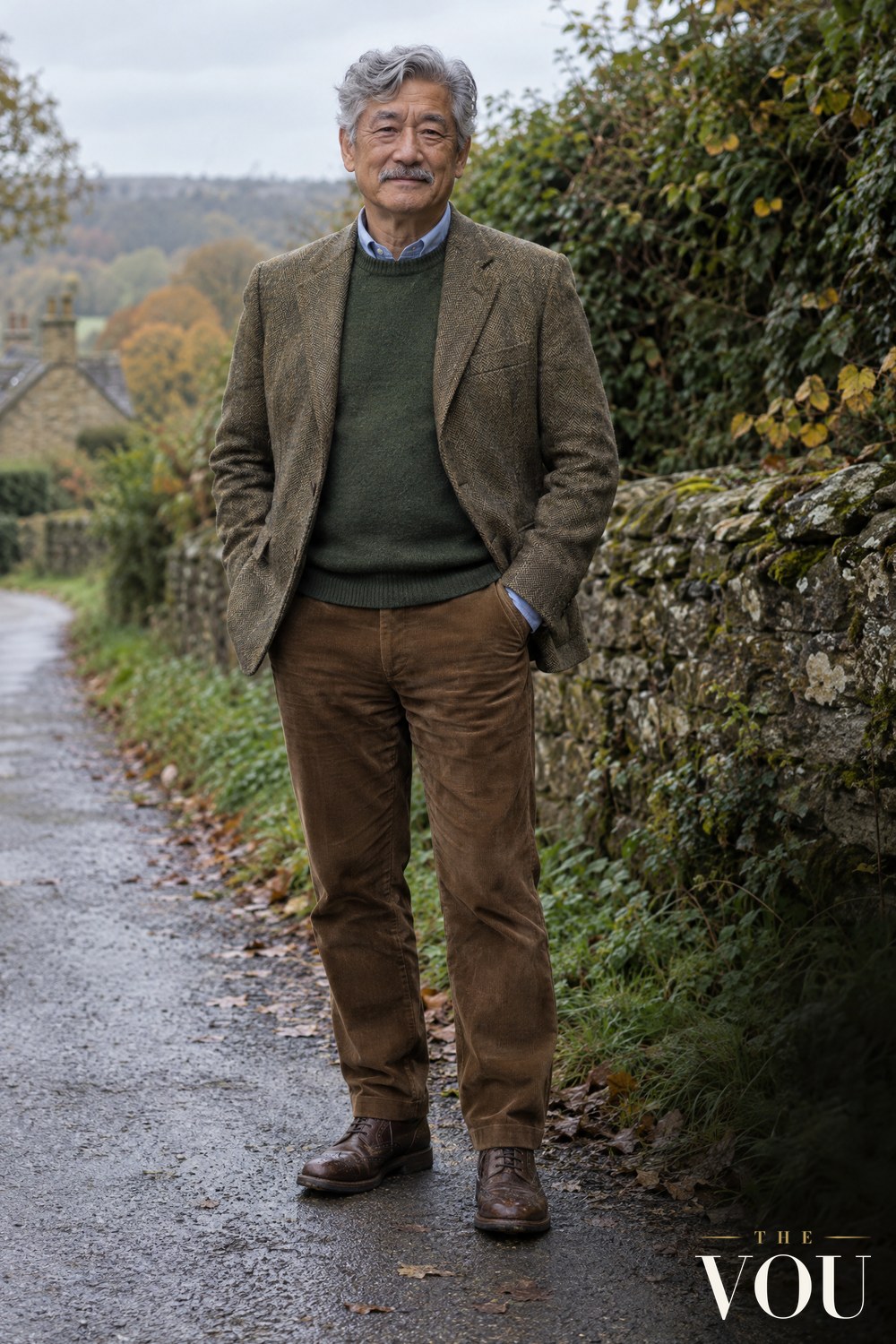
This guide shows you how to borrow the best of British country clothing for town and weekends, without dressing as if you were off to a shoot.
The style grew up around shooting, riding and work on country estates. Its clothes are easy to picture: a tweed jacket, a check shirt, a wool jumper, corduroy trousers, a waxed cotton jacket and brown boots.
Most of these clothes were first made for work or sport outdoors. Some, like the tweed jacket and the waxed jacket, are also worn in town. Others, like breeks and shooting socks, still belong to a shooting day. The guide shows which is which, then puts them together in four complete outfits.
Key Points
01The clothes began as working and sporting kit, made to cope with weather, mud and long days outside.
02Country clothes moved into town long ago.
03Much of the cloth is Scottish, so the style is British rather than only English.
04Borrow the clothes that work in ordinary life, and keep the sporting extras for sporting days.
05If an invitation names a dress code, follow it.
Made for weather, mud and sport
The clothes began as working and sporting kit, made to cope with weather, mud and long days outside. The Field, a magazine about country sports, says shooting clothes should be “practical, smart, comfortable and cause as little alarm to the wildlife as possible”. Many of those clothes did not stay in the field. Following each one from its first job to the places men later wore it shows what to keep, what to adapt and what to leave for a sporting day.
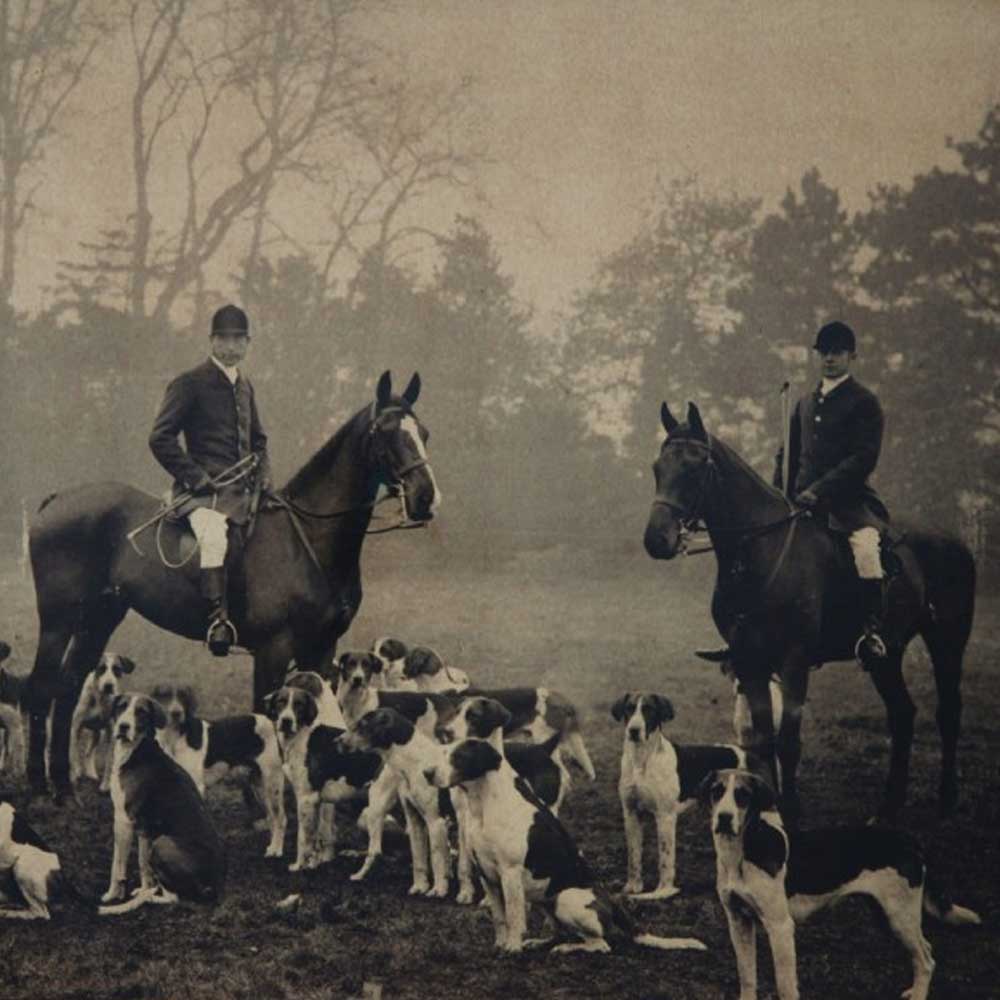
The look is often called English country style. Much of the cloth is Scottish, so the style is British rather than only English. It is not a badge of class, and it is not hiking gear. Nor is it the same as town tailoring, the Sloane Ranger look of the 1980s or the online Old Money label.
The tweed jacket: from the moor to the city
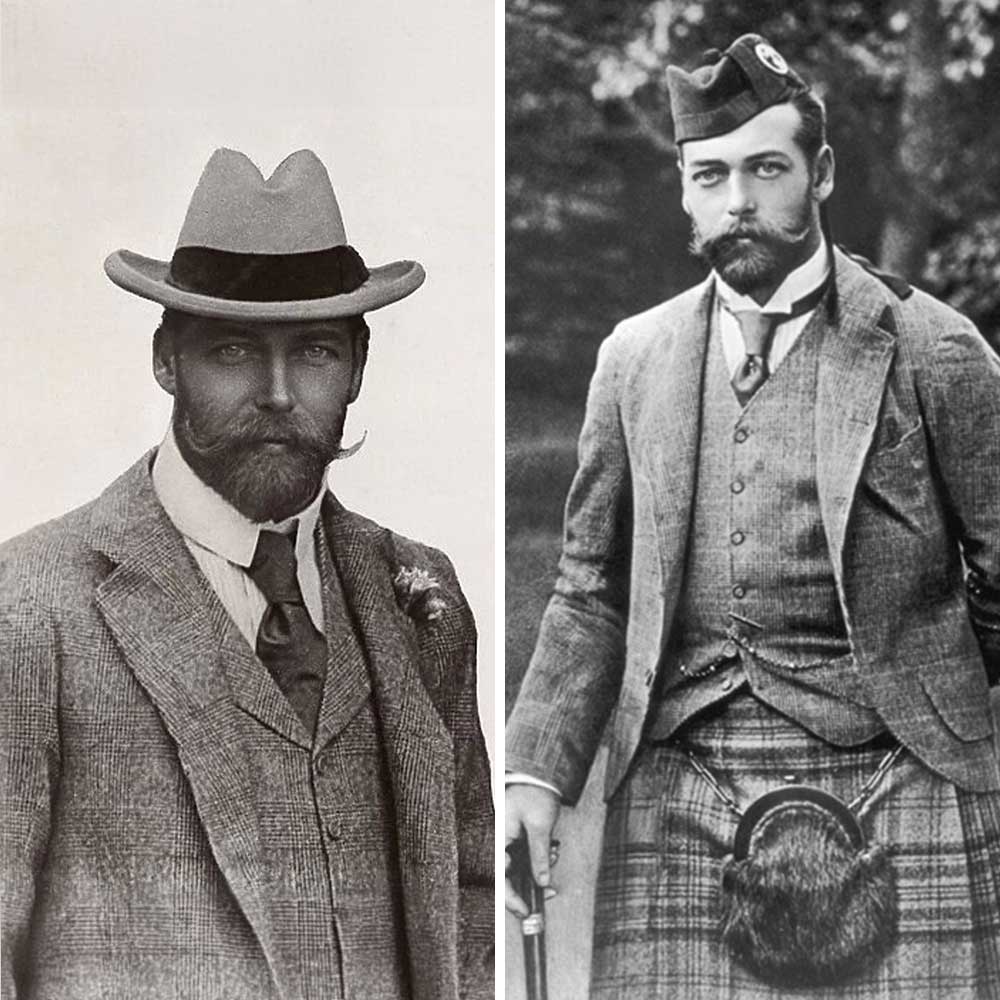
Start with the tweed jacket. The Dictionaries of the Scots Language describes tweed as a strong twilled woollen cloth, usually woven from yarn of two or more colours, with a roughish texture. A jacket in a quiet tweed is the easiest country piece to wear in town.
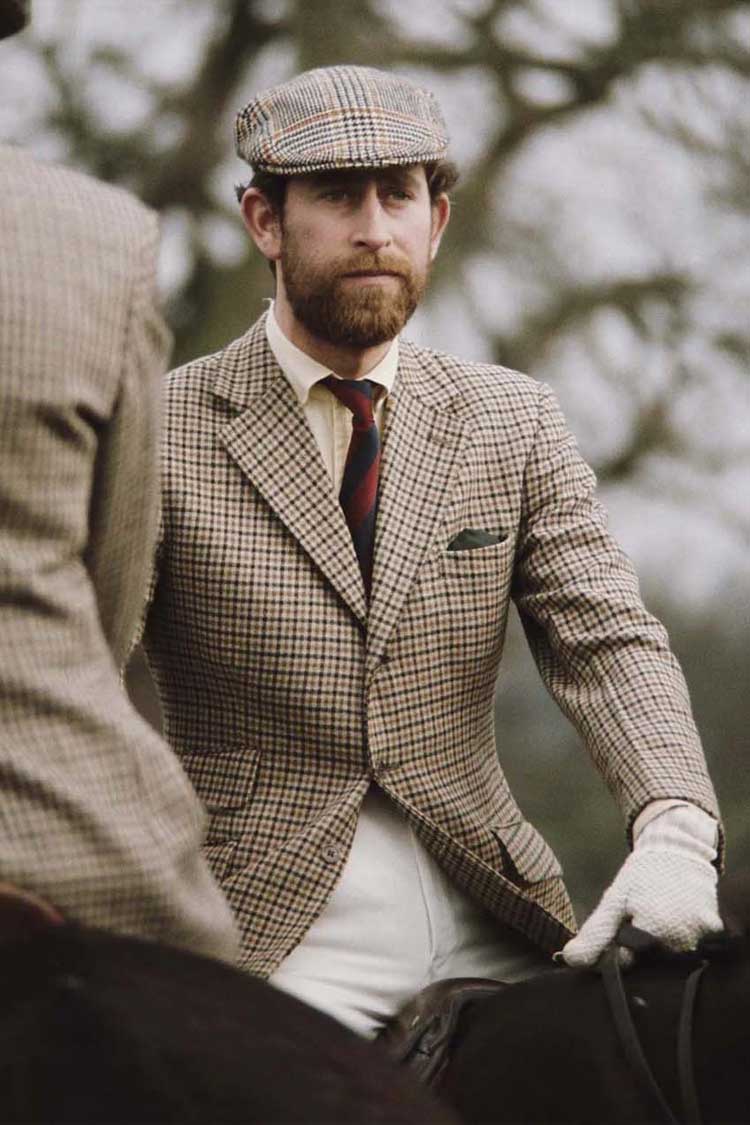
The Norfolk jacket shows how tweed got there. It is a belted tweed jacket with box pleats. The Victoria and Albert Museum (V&A) in London says it was adapted for shooting in the 1860s and at first kept strictly for country wear. As sport and leisure grew in the 1870s and 1880s, the V&A says, the jacket became acceptable for any outdoor exercise. The museum quotes the trade magazine Tailor and Cutter, which in April 1888 called it “especially suited for bicycling, business, fishing, pleasuring, and the moorland”. Cyclists and golfers wore Norfolk jackets with knickerbockers, loose knee breeches gathered at or just below the knee. By the 1890s, the museum says, smart young men wore Norfolk jackets even in the city.
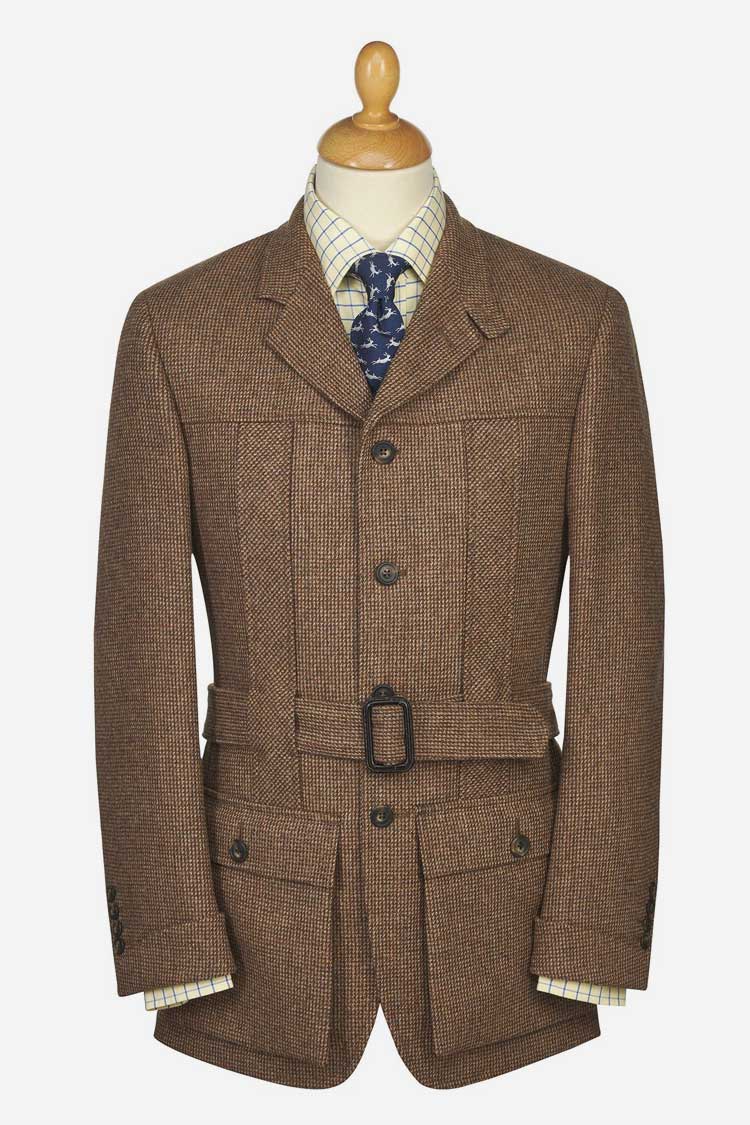
Country clothes moved into town long ago. Cordings, a London outfitter, has traded from 19 Piccadilly since 1877 and says it has long dressed men for “both town and country”. In March 1939, a Bettmann picture caption described a three-button, single-breasted country lounge suit in nubby wool tweed. The caption placed the suit midway between a business suit and active sports clothes.
For town, aim for that middle ground rather than the full sporting suit: a tweed jacket in a quiet check or herringbone, cut with room for a jumper underneath, worn with an Oxford shirt and cords or flannel trousers. A full Norfolk, belted and pleated, is the bolder choice. Gentleman’s Gazette advises: “Unless you want the attention, a Norfolk is only appropriate in the country”. That is one writer’s view, not a historical rule.
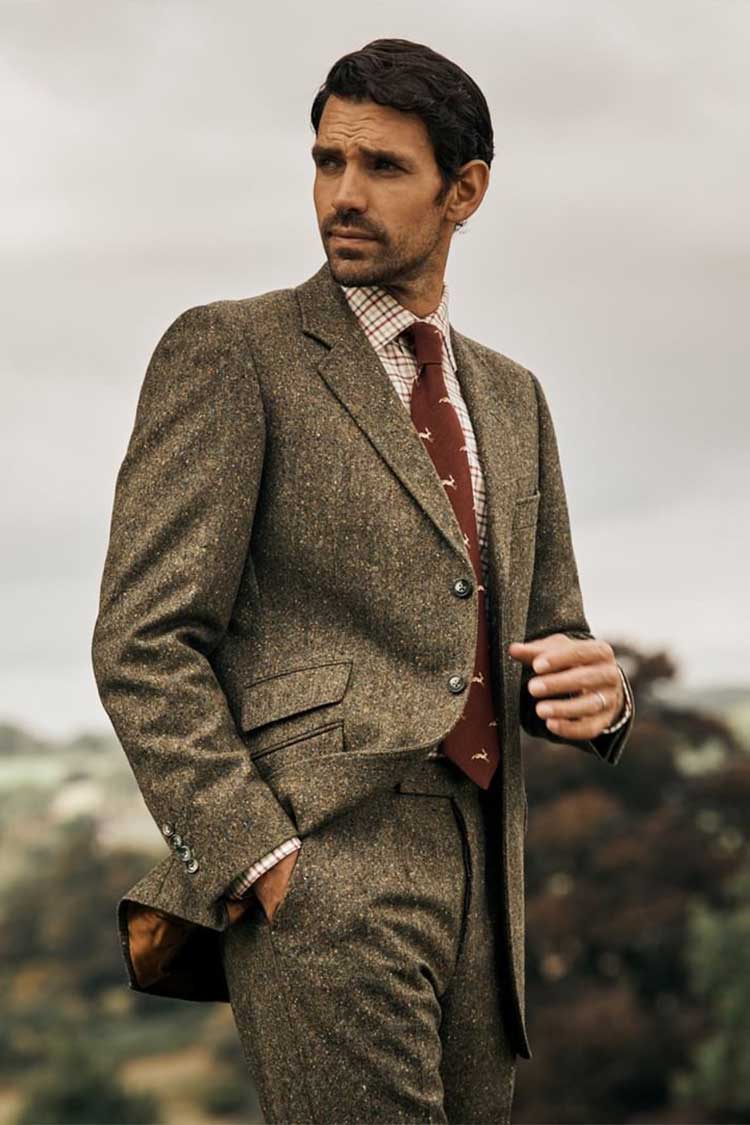
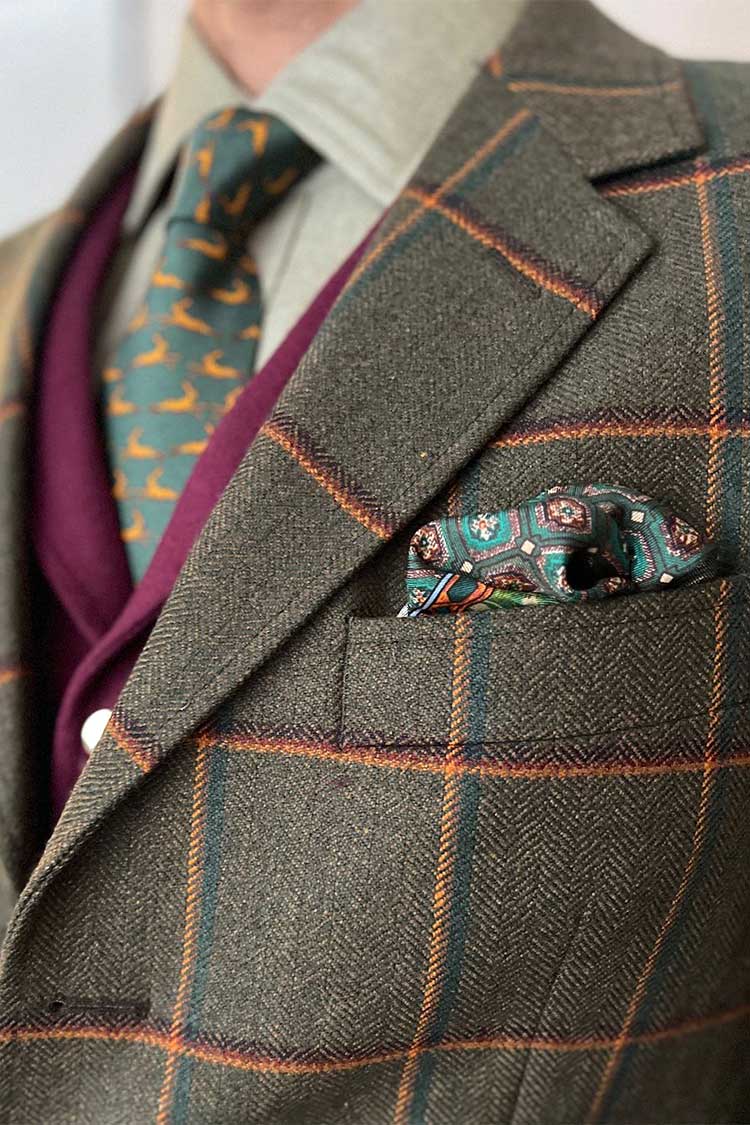
The checks have country roots too. The menswear site Permanent Style explains that families renting Scottish estates created their own tweeds as uniforms for their staff. One estate pattern travelled much further. The Glen Urquhart check, sometimes known as the glen check, began as a local cloth and became the official tweed of the Balmacaan Estate. The Scottish textile maker Johnstons of Elgin calls Edward VII an early champion of the glen check while he was Prince of Wales, the title he held until he became King in 1901. A glen check or a herringbone makes a quiet first tweed jacket.
If you buy Harris Tweed, you are buying a cloth defined by law. Harris Tweed comes from the Outer Hebrides, in Scotland. Until the middle of the 19th century, the Harris Tweed Authority says, the islanders used their cloth at home or sold it at local markets. In the 1840s, Lady Dunmore, the widow of the landowner of Harris, marketed the cloth to wealthy friends further afield. An Act of Parliament made the definition law in 1993. The Act says Harris Tweed must be handwoven by the islanders at their homes in the Outer Hebrides, finished there, and made from “pure virgin wool” dyed and spun there.
A buyer can check two things. The first is the Orb, the Harris Tweed trademark, registered to protect the cloth’s name from imitations as it grew popular. The Authority, which took over from the Harris Tweed Association under the Act, says the mark guarantees that the cloth was made as the Act requires. The second is in the cloth itself. The Authority says the wool is dyed before it is spun, and different colours are blended to recipes, so one yarn can hold several colours chosen to reach the right shade. Look closely and you may see them.
Shirts and knitwear: from horse blankets to the golf course
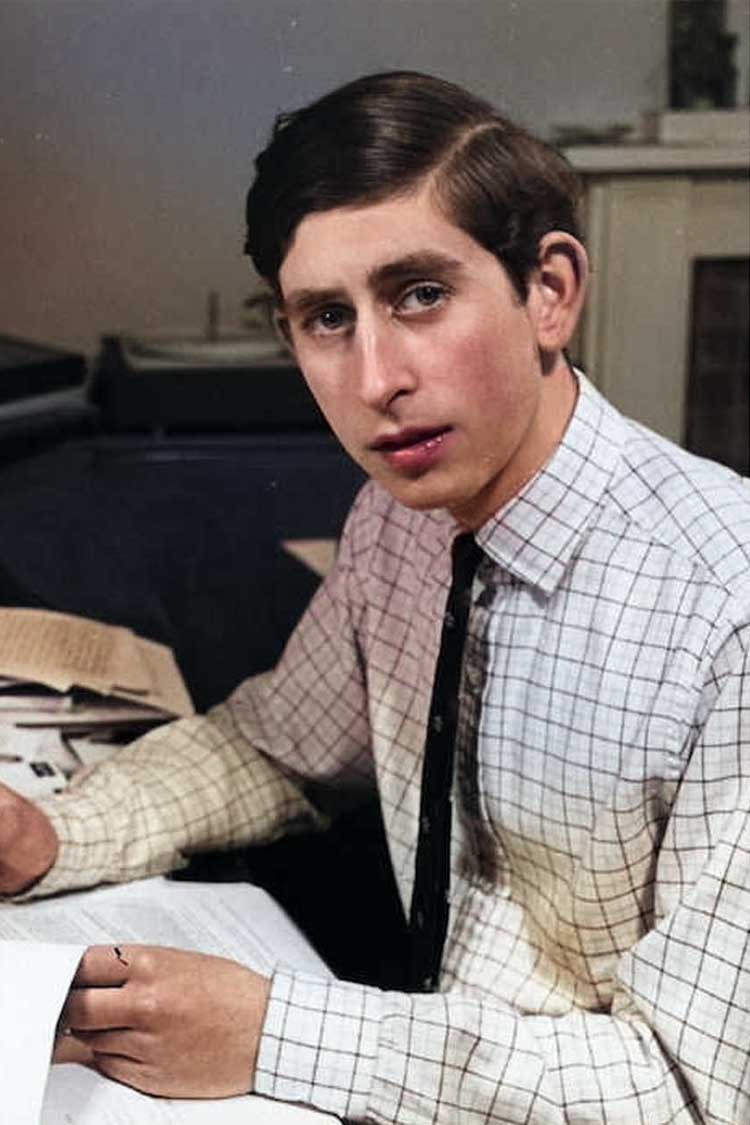
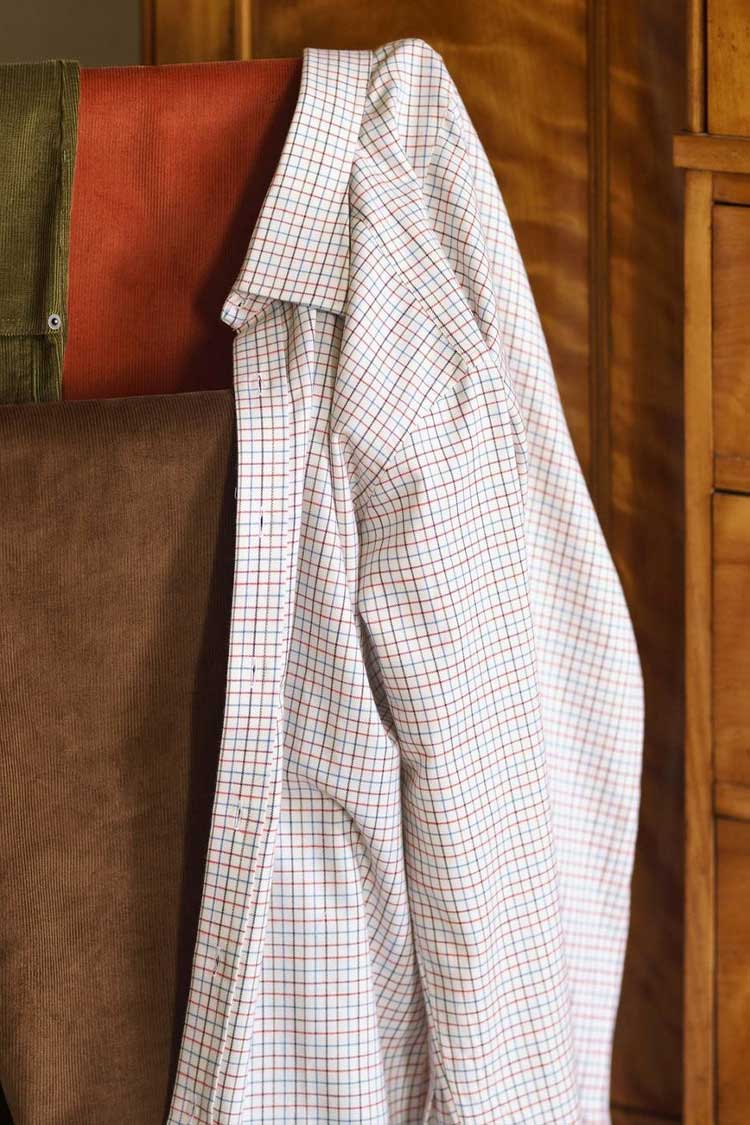
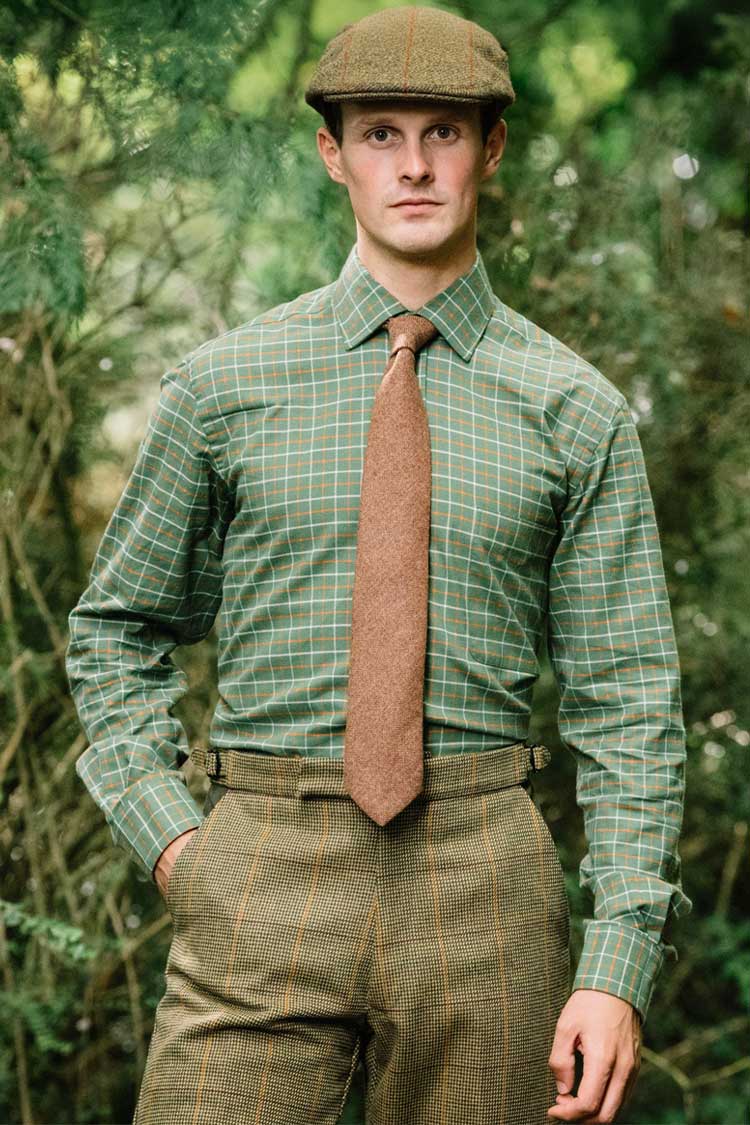
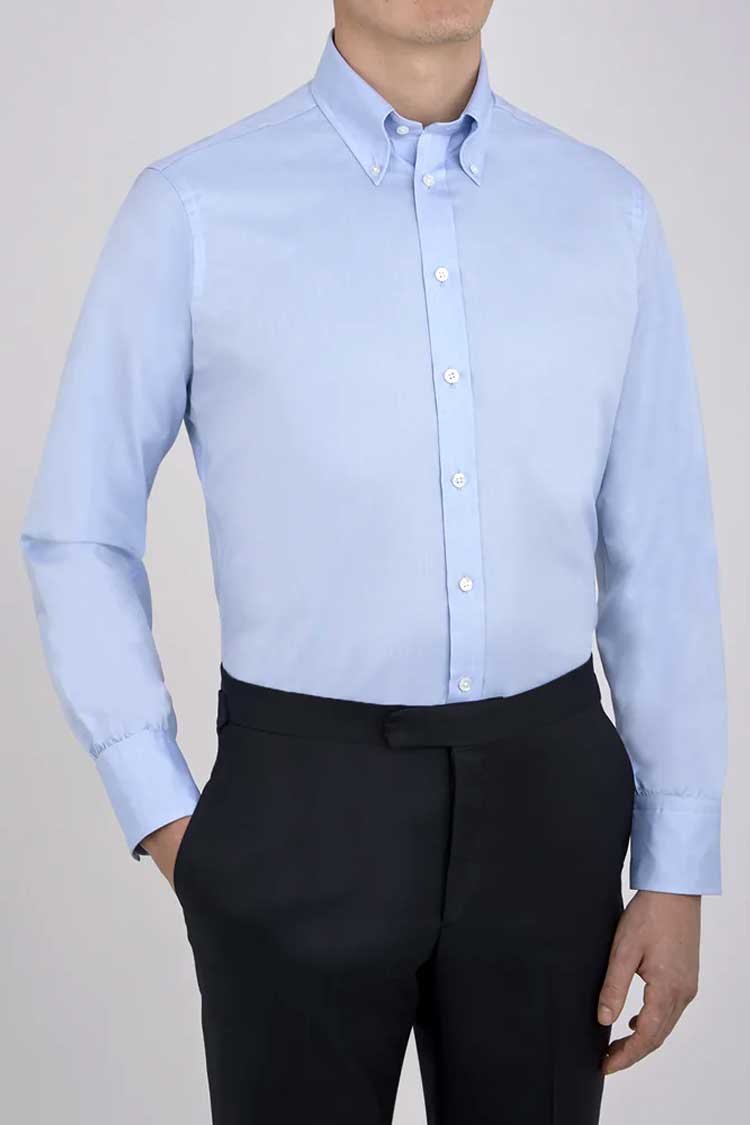
The Tattersall check, a simple pattern of lines in two or three colours, came from the horse world. Cordings says the check “started life as lowly horse blankets” for horses sold at Richard Tattersall’s auction house near Hyde Park. By the late 19th century, the firm says, the Tattersall had become “the natural shirt to partner tweed suits”. Wear one under tweed on country days; in town, a plain Oxford shirt is quieter.
In the 1920s, golf helped to spread two kinds of country clothing: plus-fours and patterned knitwear. Plus-fours take their name from four extra inches of cloth, which Dictionary.com says were added to ordinary knickerbockers to make them looser. The Fashion History Timeline of the Fashion Institute of Technology (FIT) in New York says plus-fours still fastened around the knee, so the extra cloth hung loosely over the fastening. FIT says plus-fours, often worn with a jumper, were popular for golf.
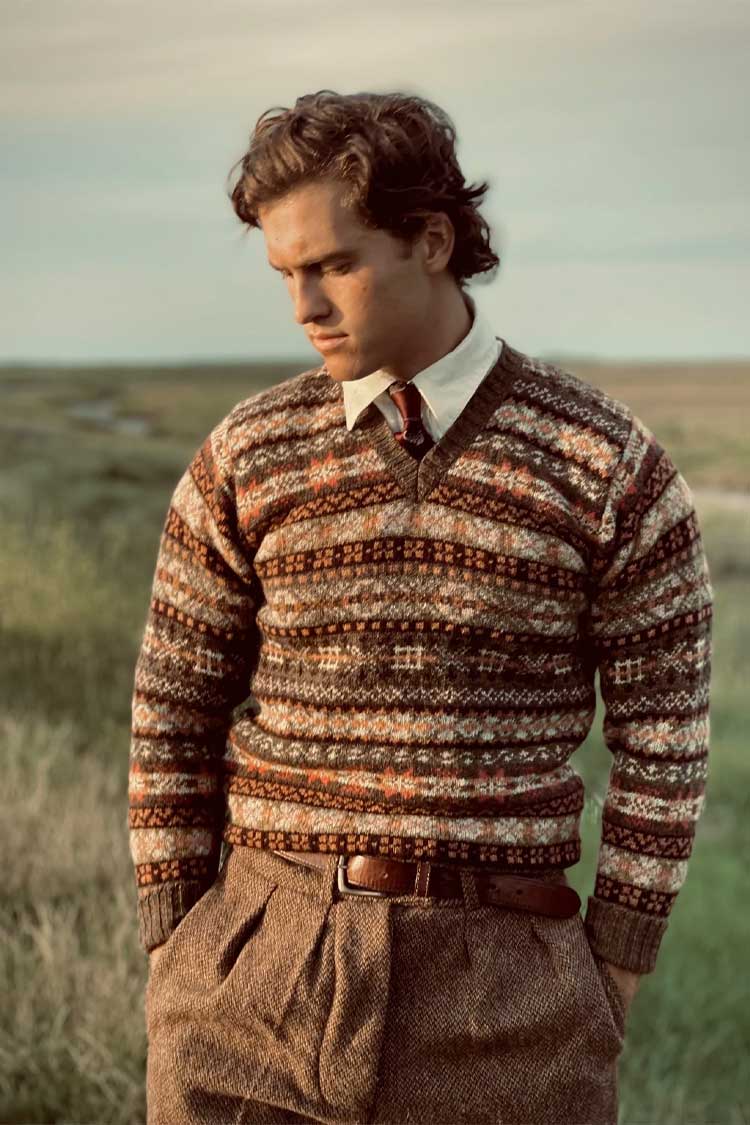
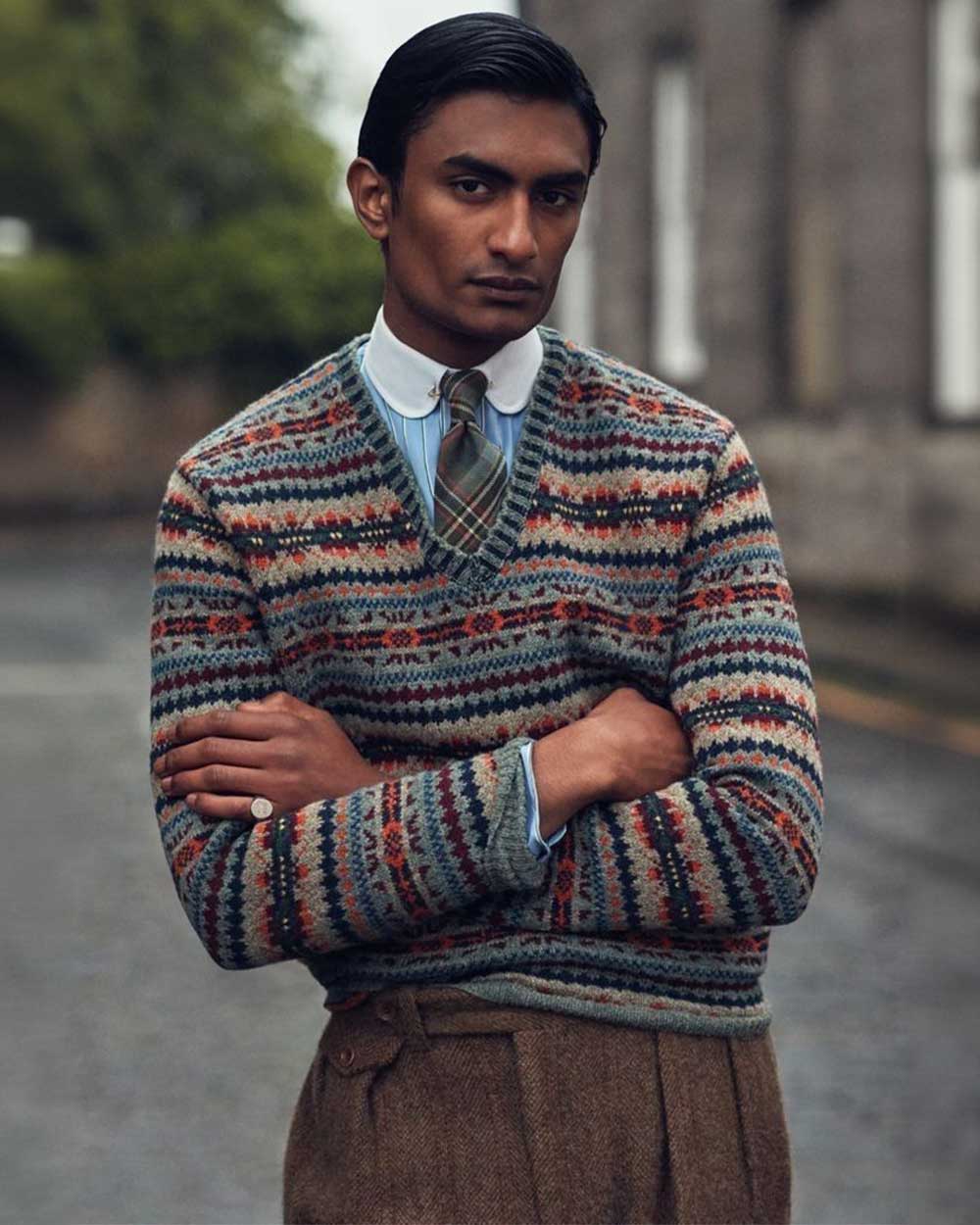
Plus-fours and Fair Isle knitwear were both worn by a second Edward, Prince of Wales. He was the grandson of Edward VII, held the same title until he became King Edward VIII in 1936, and was made Duke of Windsor in 1937. FIT says this Prince of Wales was a big fan of plus-fours and wore them with argyle jumpers and socks. The V&A says he made the Fair Isle jumper popular when he wore one for golf in 1921.
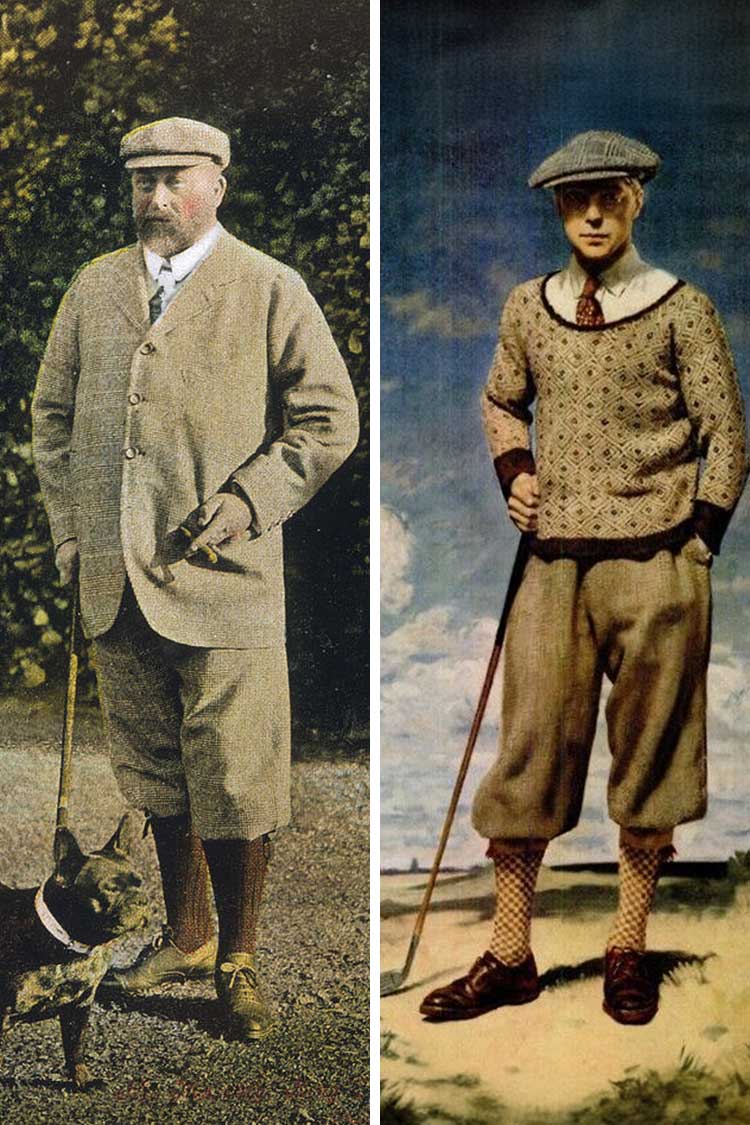
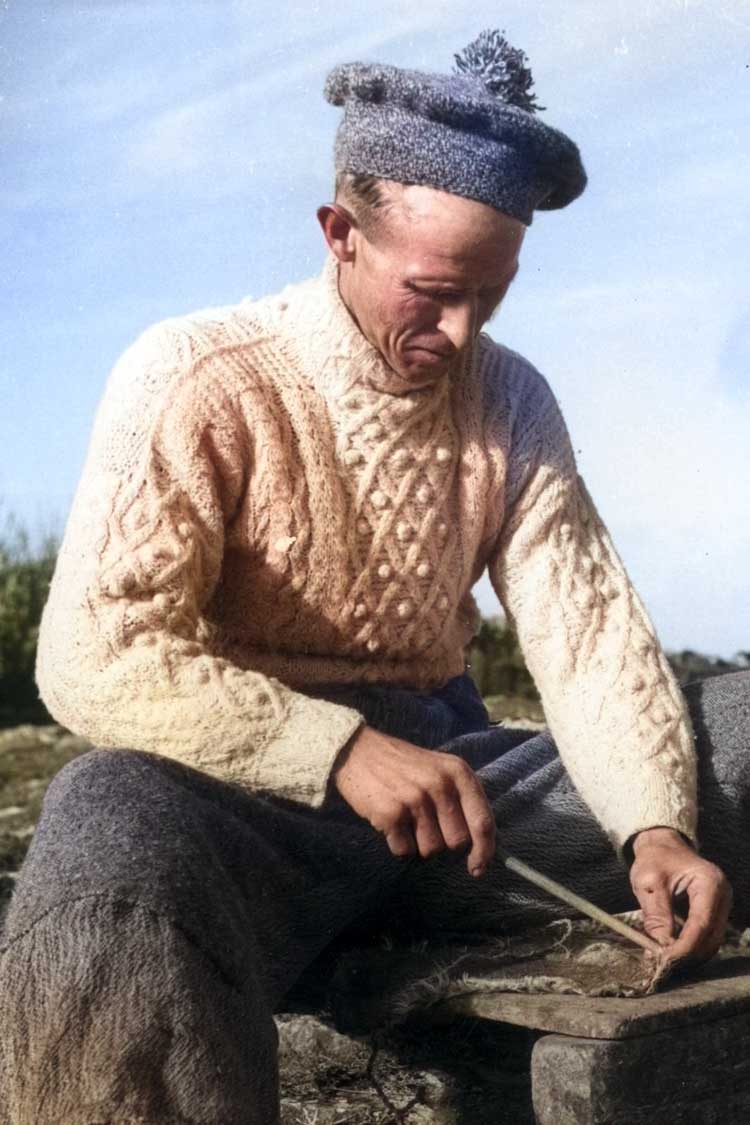
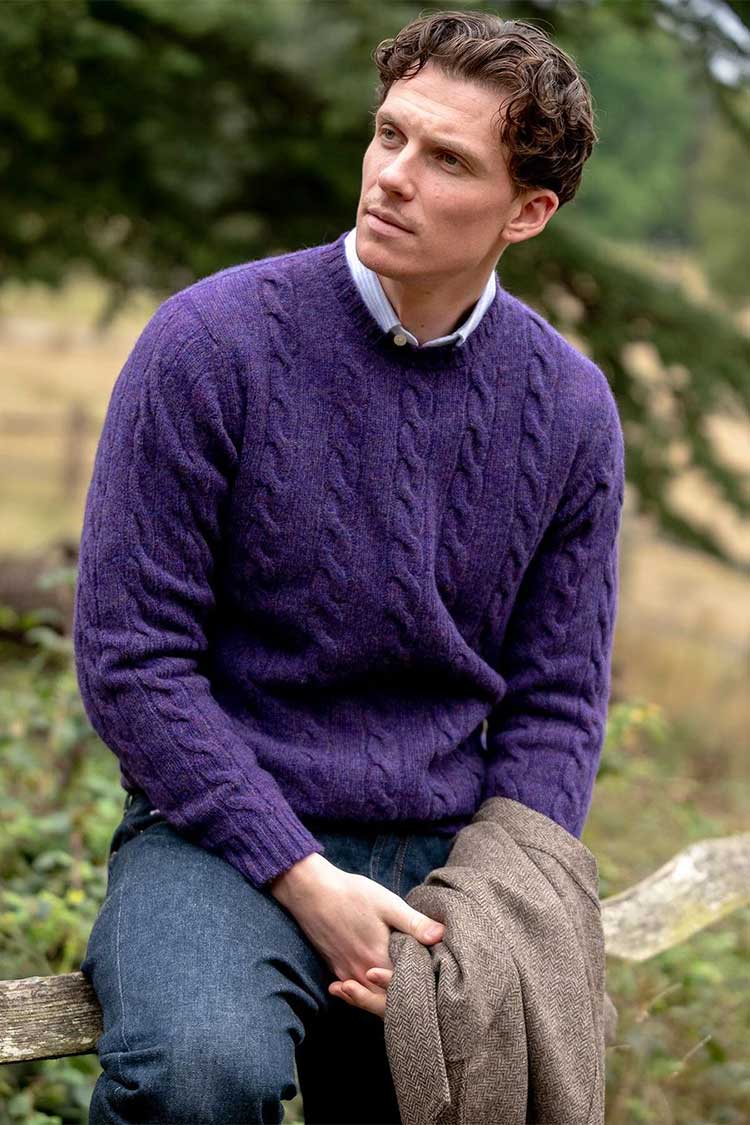
Of the two, the knitwear is the easier to borrow. Keep plus-fours for the golf course or a shooting day. A lambswool or Shetland crew-neck works in town and in the country, and a Fair Isle is the bolder choice.
Coats and boots: from the saddle and the sea
The covert coat, a tailored overcoat, comes from riding. Cordings still adds four rows of stitching around the cuffs and hem, a feature from that riding past. It is the coat to borrow for a day at the races.
Barbour, the waxed-jacket maker, began at sea. Barbour’s own history says John Barbour, a Scotsman, started in South Shields, in the North East of England, in 1894, supplying oilskins to sailors, fishermen and mariners. The two waxed jackets the firm calls iconic were made for the land. Margaret Barbour, then the firm’s chairman, designed the Bedale in 1980 as a light, thornproof jacket for riding. The Beaufort followed in 1983, designed, Barbour says, “for country pursuits”. The men’s magazine Gentleman’s Journal describes the Beaufort’s olive waxed cotton, brown corduroy collar and tartan lining.
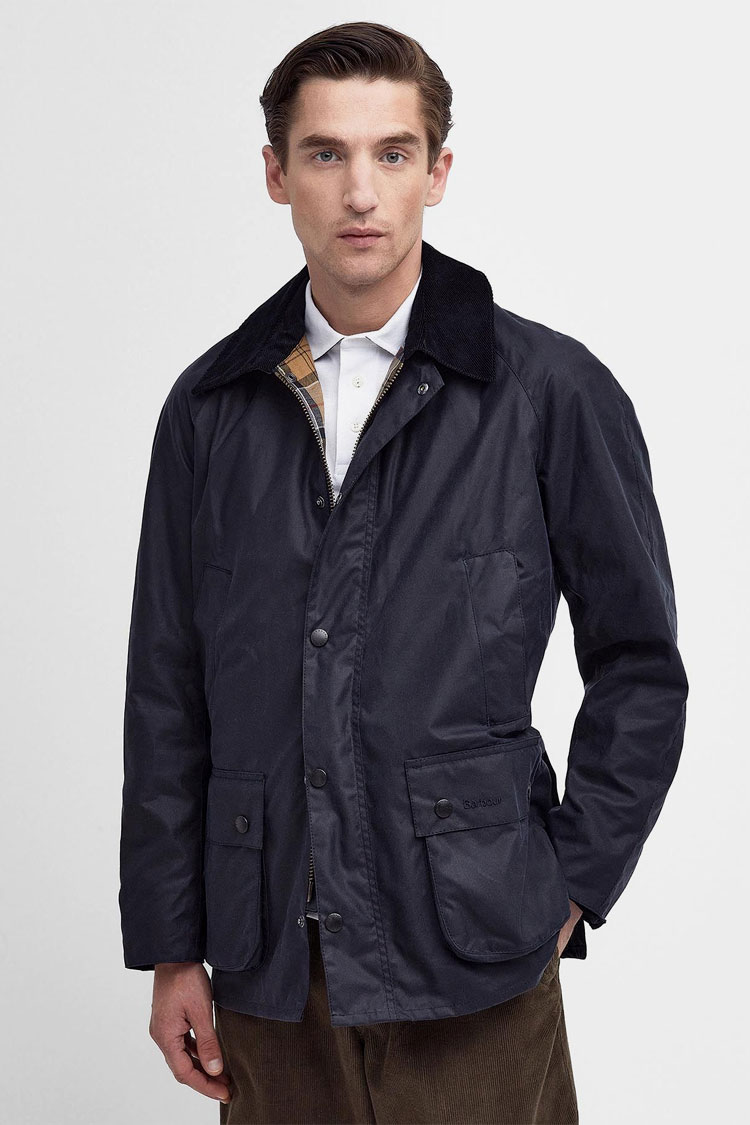
The waxed jacket has since moved into town. Barbour says its Beaufort is now worn in both town and country, and that its full-length rear pocket is used for newspapers or small groceries. In 2019, the menswear retailer MR PORTER said the waxed jacket “has made notable inroads into urban centres”. Of all the country coats, it is the easiest to borrow: wear it over a jumper and cords at the weekend, or over town clothes on a wet day. Our guide to the classic Barbour jacket compares the main models.
The wellington boot also began on horseback. English Heritage says British Army officers of the 1790s wore knee-high leather boots called Hessians. Arthur Wellesley, then Viscount Wellington, asked his shoemaker, George Hoby of St James’s Street, to change them. Hoby removed the tassel and cut the boots lower, which made them more comfortable for riding. The rubber version came later. English Heritage says that in 1916, millions of pairs were commissioned as winter kit for ordinary soldiers, and that after the war, soldiers took them home to farms, gardens and allotments across the country. Brogues, too, have a history as country footwear, as the magazine Country Life notes.
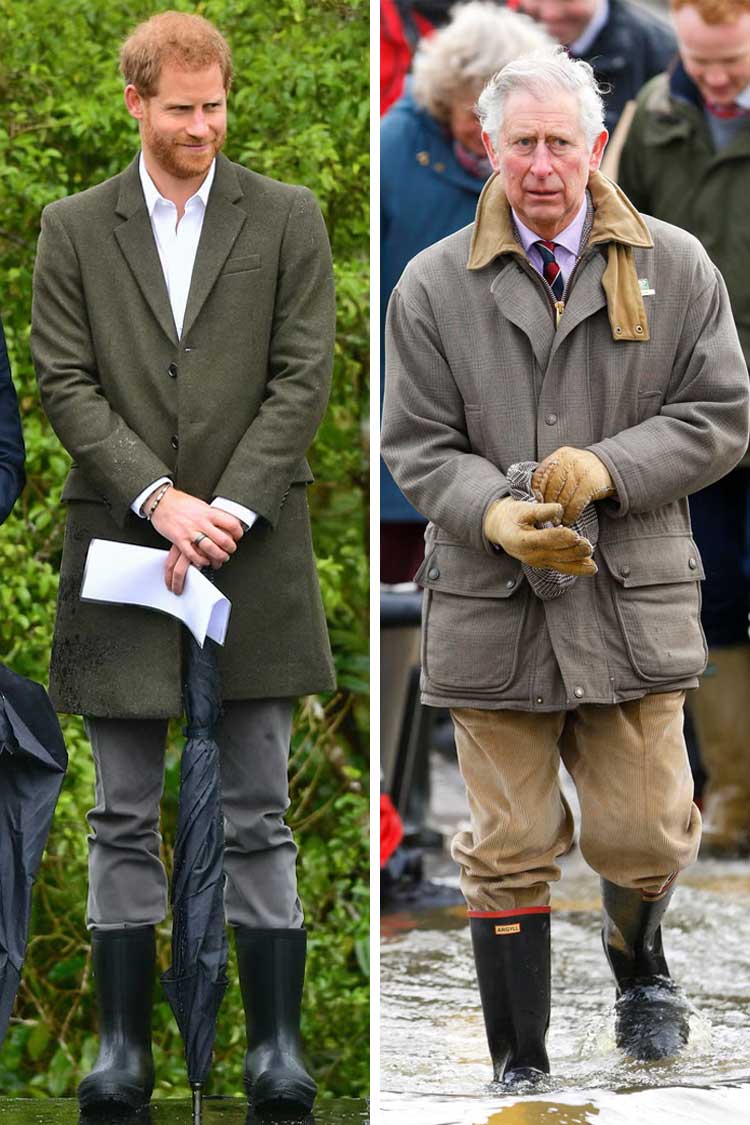
For most days, brown leather brogue boots are the pair to borrow, with wellingtons for wet ground. A second MR PORTER article, from 2018, recalls an old rule: “Never wear brown in town”. Treat that rule as history, not as a ban. For the rubber kind, see our guide to styling Hunter boots.
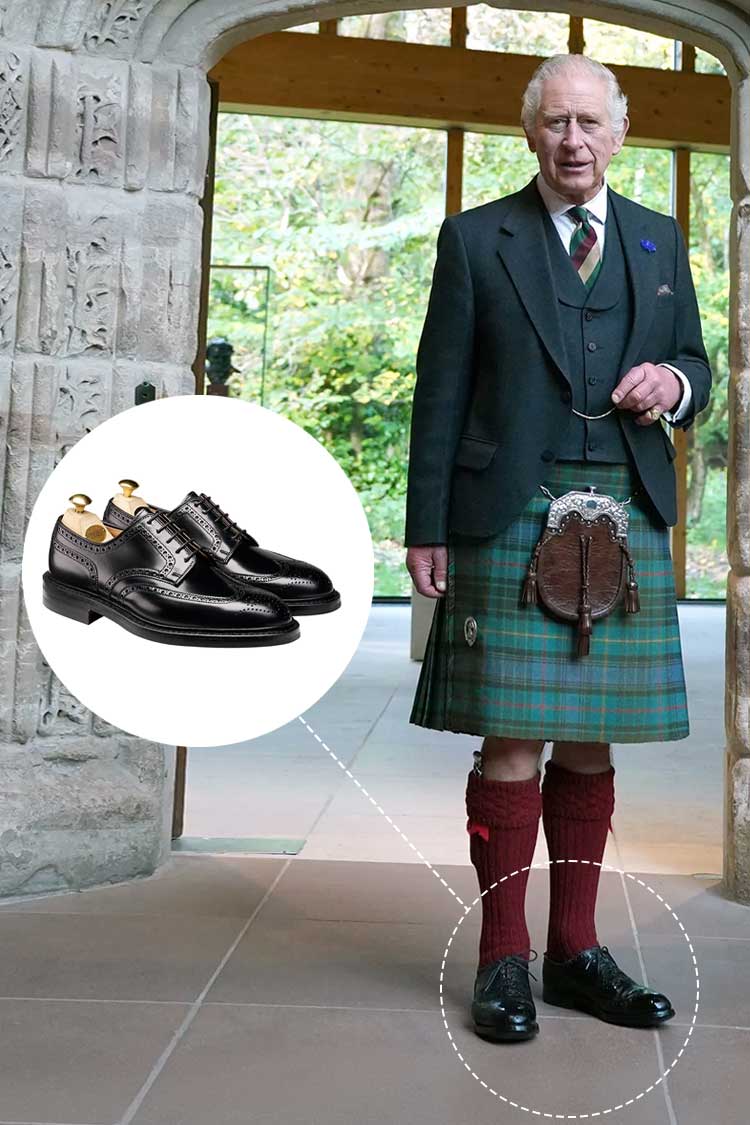
What to leave for the sport: a formal shooting day
One occasion still asks for the full outfit: a formal shoot. The Field says many guns, as the people who shoot are called, wear breeks in tweed, moleskin or corduroy, with shooting socks. Breeks is a Scots form of the word breeches, and shooting breeks fasten below the knee with a buckle, a strap or elastic. Above them go a tweed jacket, gilet or waistcoat, a Tattersall check shirt and a tie that is not too bright. The magazine adds that this is not the day for a crisp white shirt. The Field also suggests muted tweed layers, sturdy waterproof boots and earthy colours that match the countryside. On walked-up shoots, gaiters protect your lower legs from brambles, ticks and bad weather.
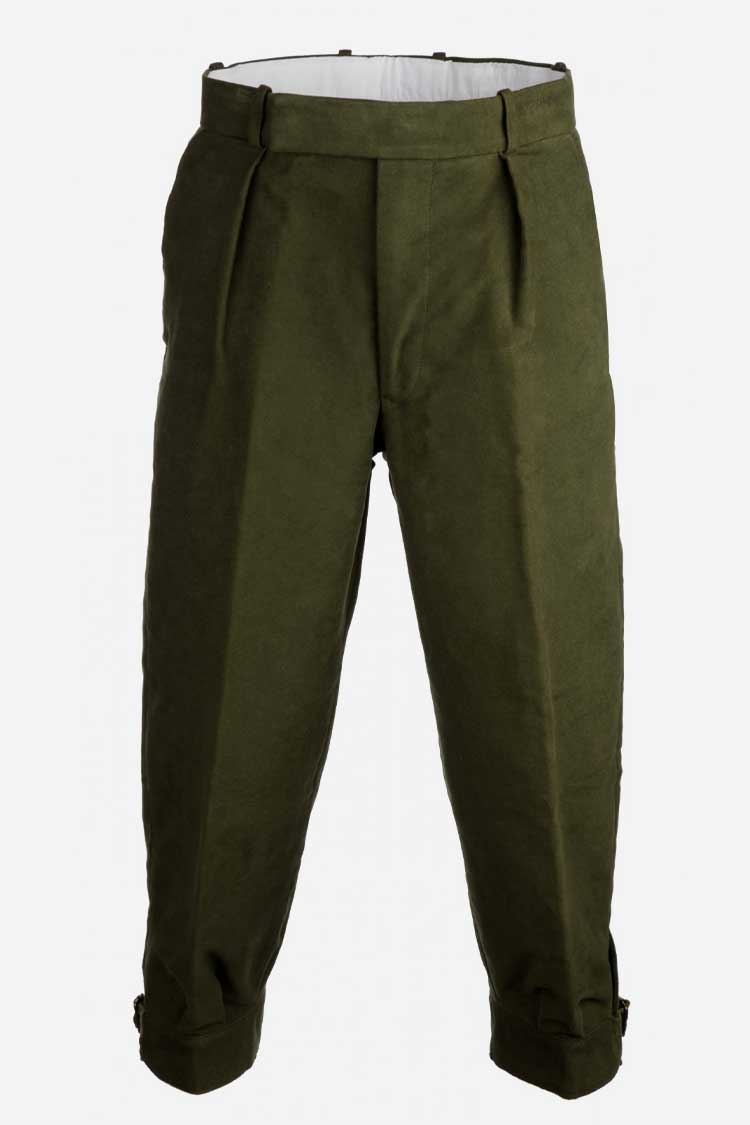
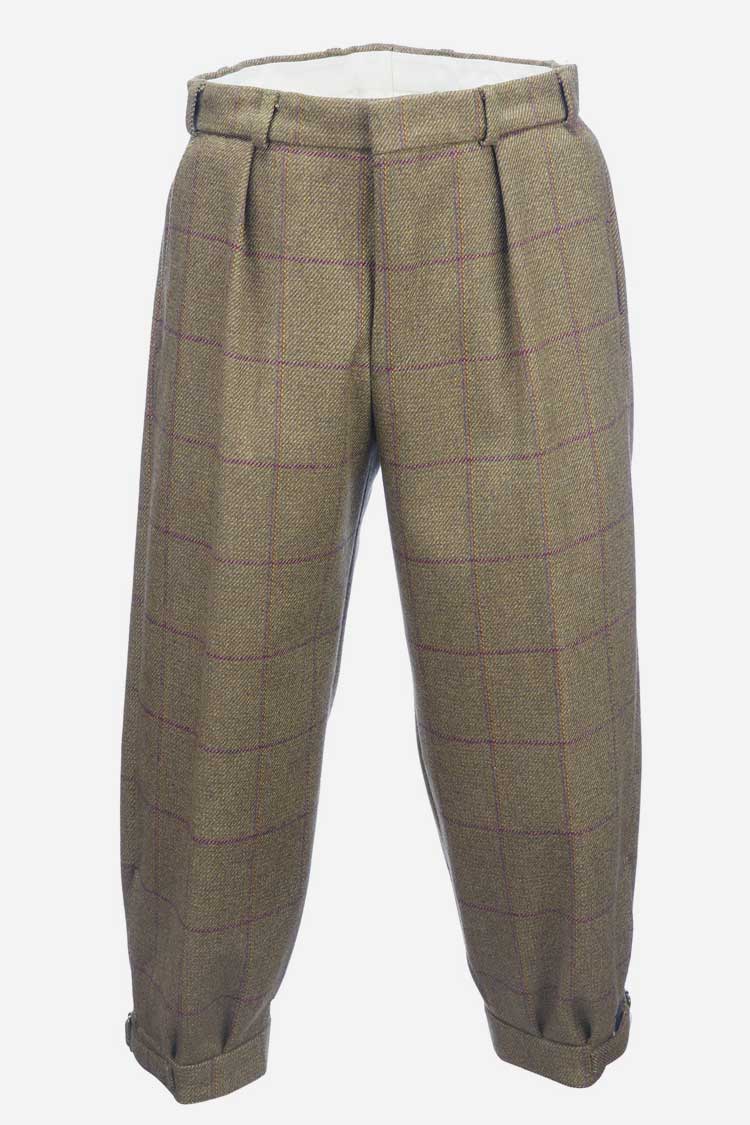
One detail matters for newcomers. Sam Adams told the shooting magazine ShootingUK that a shooting sock should always be worn over the breeks, even when the breeks have a buckle, and another contributor, Lucy Brice, says this stops the knee from showing.
In 2017, ShootingUK reported that some guns were loosening the full tweed outfit, and Jamie Osborne described many wearing a shirt, a tie and breeks, with something waterproof. The advice runs both ways: do not dress down too far, and do not overdo it. Writing in The Field in 2020, Robert Gibbons put one rule plainly: “I do not think jeans and trainers are acceptable”. ShootingUK’s guide to formal days warns: “Never, under any circumstances, be seen to be trying too hard”. Its list of mistakes includes jumpers with embroidered pheasants and tweed so loud that the neighbours complain.
Breeks, shooting socks and gaiters belong to days like this, which is why the town and weekend outfits below leave them out.
Borrowed, again and again
Country clothes have come back into fashion more than once. Treat these revivals as dated examples, not as rules for today.
In the 1980s, the borrowed piece was the waxed jacket. Country Life links the Barbour’s Sloane image to the Official Sloane Ranger Handbook. In 2018, MR PORTER wrote that the legacy of the so-called country casuals had stayed with us. Our guide to Sloane Ranger style tells that story in full.
By July 2020, as lockdown eased, a romantic country look called cottagecore was being described in menswear. Andrew Groves, a professor of fashion design at the University of Westminster, said: “As we emerge from lockdown, men are embracing cottagecore as a means to convey a more romanticised ideal of masculinity”. Groves added that some of the original 1990s ravers were wearing cords, knitwear and country smocks. Cottagecore borrowed country clothes for a dreamy picture of rural life, not for a day’s sport.
In March 2025, Country Life reported that high fashion was bringing Sloane and country style back. The magazine’s examples include Celine’s spring and summer 2025 menswear, photographed at Holkham Hall in Norfolk. Country Life also reported that Cordings saw a run on a blue shawl-collar cardigan worn by Theo James’s character in the television series The Gentlemen.
These examples show country clothes being worn in new settings. For your own wardrobe, start with a few pieces that suit your day.
Putting it together
Borrow the clothes that work in ordinary life, and keep the sporting extras for sporting days. The eight wardrobe categories below bring together the clothes worth borrowing.
- A tweed jacket in a quiet check or herringbone, with room for a jumper underneath.
- A waxed cotton jacket for rain and wind, in town or out of it.
- Shirts: a Tattersall check for country days and a plain Oxford for town.
- Knitwear: a lambswool or Shetland crew-neck, with a Fair Isle as the bolder choice.
- Trousers in corduroy or moleskin.
- Brown leather brogue boots, with wellingtons for wet ground.
- Wool socks in country colours, long enough to wear over breeks on a shooting day.
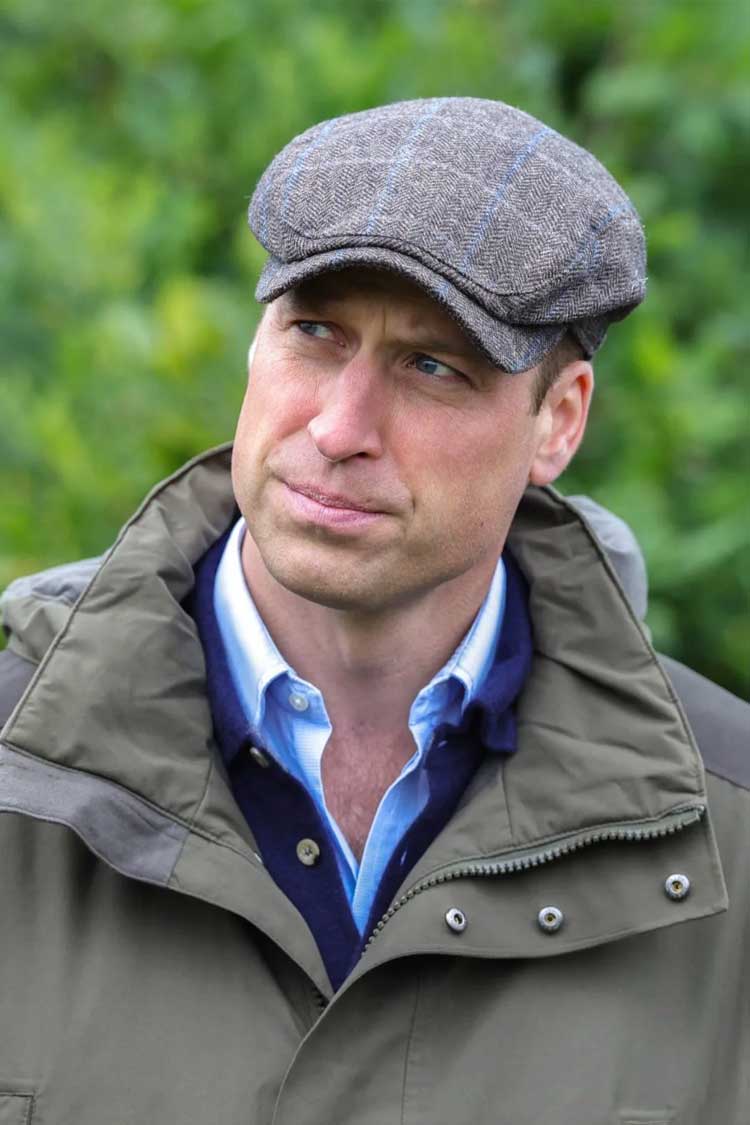
- Headwear if you like it: a tweed cap.
Four outfits
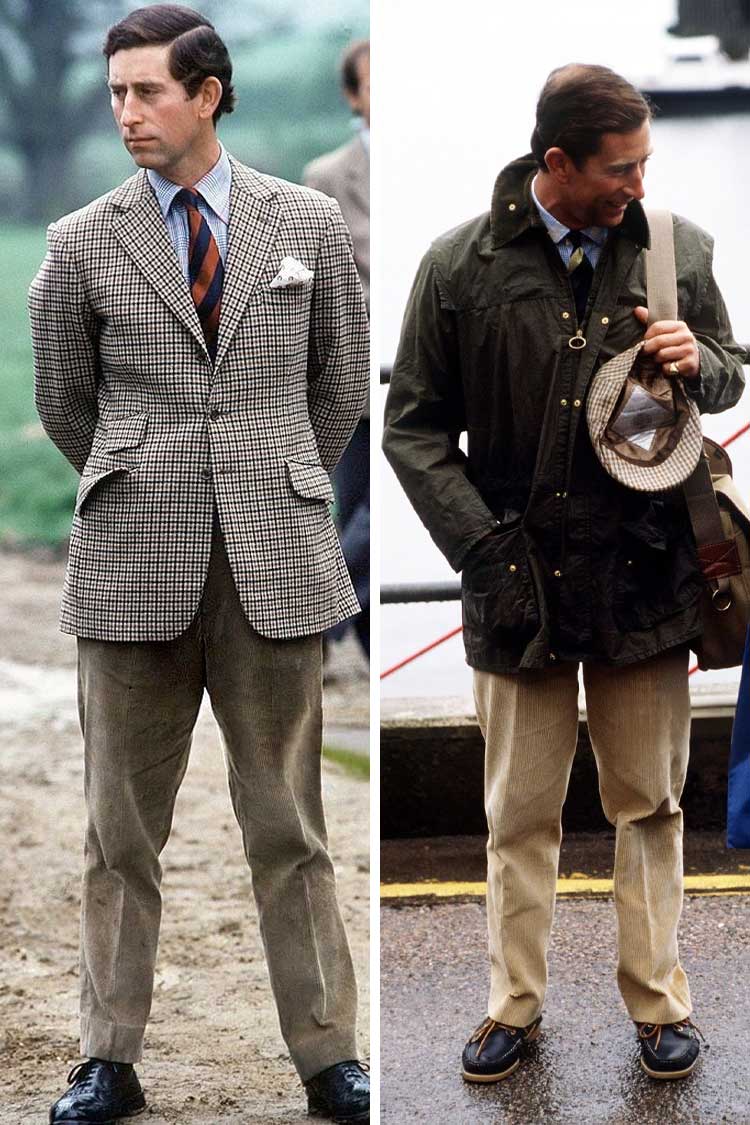
- A country weekend walk: the waxed jacket, a crew-neck, a check shirt, cords, wool socks and brogue boots. Swap in wellingtons if the ground is wet.
- Country cloth in town: the tweed jacket, an Oxford shirt, a knitted tie, cords or flannel trousers, dark socks and brown brogues.
- A day at Cheltenham or a country race meeting: a covert coat over a tweed jacket, a Tattersall shirt, a plain tie, cord trousers, wool socks and brown boots. The combination is The VOU’s advice, drawing on a maker’s racegoing guide, so check the meeting’s own dress code first. The maker, Cordings, says “the covert coat is the style most famously associated with Cheltenham”. On a milder day, a lambswool jumper can take the place of the tweed jacket.
- A guest at a formal shoot: follow your host’s dress code. The Field describes a tweed jacket or waistcoat with breeks in tweed, moleskin or corduroy. The magazine’s list goes on with a Tattersall shirt, a tie that is not too bright, shooting socks, sturdy boots and a tweed cap. Clothes are only one part of the day, so listen to your host’s safety briefing too.
If an invitation names a dress code, follow it. These colours are examples, not rules for you. To find the shades that suit you, take our seasonal colour quiz, and for fit, try our body shape quiz.
Common mistakes
- Wearing the whole wardrobe at once: a cap, a waxed jacket, breeks and gaiters together look like costume in town.
- Bringing loud novelty clothes to a formal shoot, where quiet, earthy colours suit the day.
- Treating old rules as law: brown shoes in town are fine today.
- Ignoring the code: a shoot, a race meeting and a country wedding can each ask for something different.
Start from your own wardrobe
You may own part of the style already. Navy or green knitwear, cords and brown boots all fit in. Add a tweed jacket next, and our tweed blazer guide helps you choose one.
Going further on The VOU
For tartan and kilts, read our guide to Scottish Highland style. To find the styles that suit you best, take our fashion style quiz. If you want a stylist’s view, our Professional Fashion Style Analysis for Men names your top three styles, based on a form you fill in. The analysis also gives three outfit ideas for each style, in a PDF booklet within a week.