
Start here
What’s This About
These are 11 classic men’s haircuts, from the Ivy League and side part to the buzz cut, each explained so you can judge whether it suits your hair and routine.
Each cut is covered from several angles, such as
What the cut looks like and how it differs from its neighbours
Face-shape options, framed by the effect you want
Which hair types it suits and what it asks of them
Trim intervals, styling steps and products
and many more!
Use it to shortlist two or three cuts to discuss with your barber.
Key Points
01A classic cut gives a neat, considered look; it does not change how wealthy or successful other people think you are.
02The face-shape notes are options, such as adding height or showing the jaw, not rules.
03The shortest cuts need the barber most often, while the slick back, pompadour and quiff need the most daily styling.
04Trim intervals are worked examples; your growth rate and how crisp you want the edges decide them.
Classic men’s haircuts are the ones that have stayed in use for decades rather than following one season’s trend, and most of them work from the office to the weekend.
This guide covers 11 classic men’s haircut styles, with notes on face shape, hair type, maintenance and styling for each.
The face-shape notes under each cut describe options, such as adding height, keeping width at the sides or showing the jaw, that you can choose by the effect you want; none is compulsory, and mixed or uncertain observations are normal. Your hair’s density, texture and growth pattern matter as much as your outline, so check any cut in a mirror from the front and the side once it is dry.
The trim intervals given are worked examples to take to a barber; your growth rate and how crisp you want the edges decide the real figure. The named people are well-known wearers of each cut, not a claim about any one photograph.
1. The Ivy League for Academic Charm
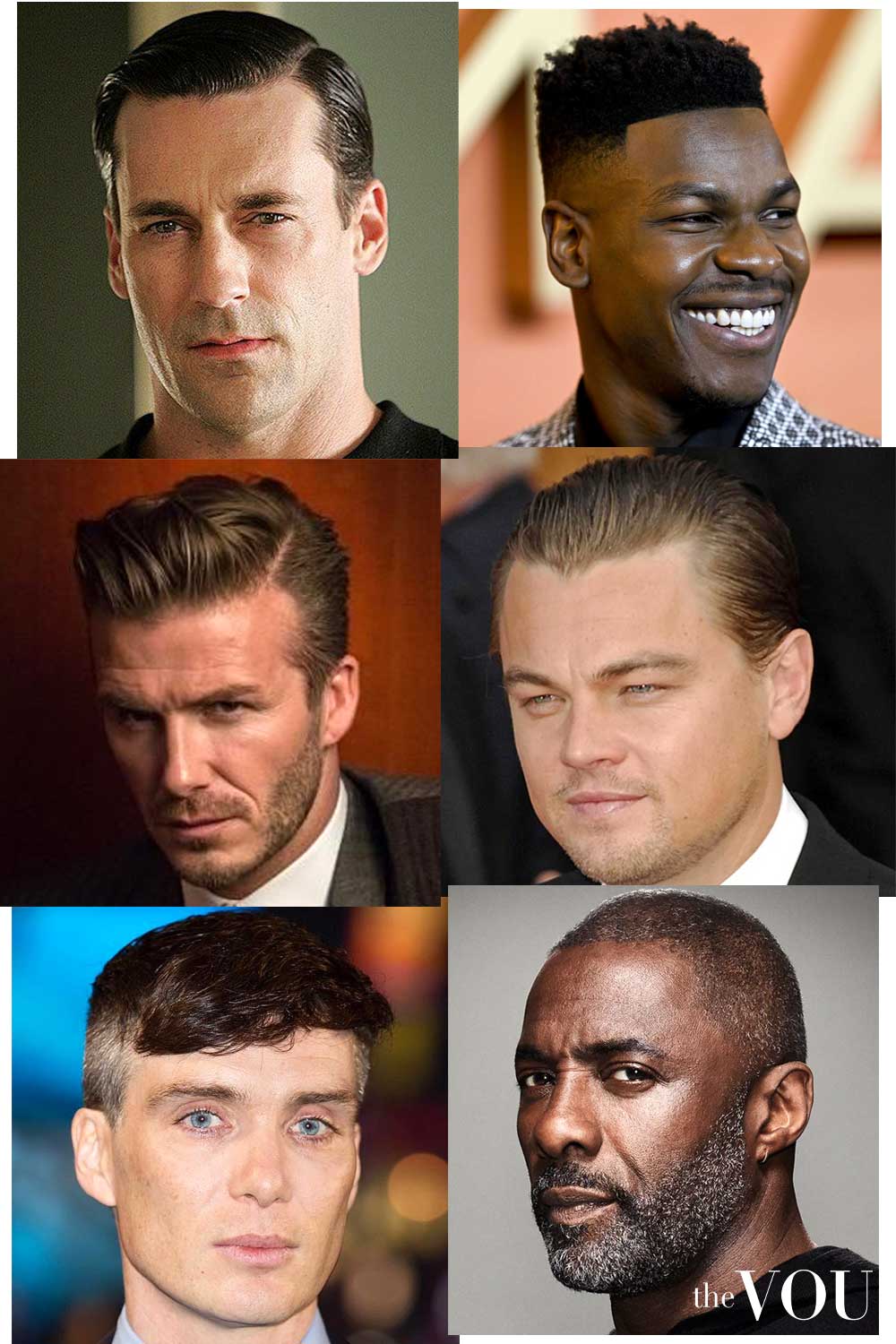
The Ivy League haircut epitomises academic charm, characterised by its short, neat appearance with a slightly longer top that can be parted or brushed.
This refined style bridges the gap between the crew cut and the side part, offering a polished look.
Face Shape Suitability
On an oval face, the Ivy League’s moderate proportions leave the outline much as it is.
For square faces, the short sides accentuate strong jawlines, while the slightly longer top softens the overall appearance.
If you want a round face to look longer, style the top with added height and keep the sides very short.
With a heart-shaped face, some length on top that falls across the forehead draws less attention to a wider forehead, if that is the effect you want.
Men with diamond-shaped faces can use the style’s versatility to add visible width and framing around the forehead; a haircut alone cannot add width at the chin, so a beard is the tool for that.
Hair Type Considerations
Straight hair showcases the Ivy League’s clean lines and neat appearance most effectively.
Wavy hair can add an interesting texture to the longer top, creating a more dynamic version of the classic style.
Thick hair may require thinning on top to achieve the desired neat appearance and to prevent excessive bulk.
Fine hair benefits from the shorter length, which can create the illusion of fuller, denser hair.
Curly hair requires precise cutting techniques to manage volume and preserve the style’s characteristic neatness.
Maintenance Requirements
A trim about every 2 to 3 weeks keeps the Ivy League’s shape crisp.
Daily styling is minimal to moderate, usually a small amount of product and basic combing or brushing.
Weekly deep cleansing helps prevent product buildup, particularly important due to the style’s short length.
Dandruff can be more noticeable in shorter styles; if you have it, an anti-dandruff shampoo is the usual first step.
Styling Tips
Start with clean, towel-dried hair, applying a small amount of water-based pomade or styling cream to damp strands.
Use a fine-toothed comb to create a neat side part or brush the hair forward for a more textured look.
For a classic Ivy League appearance, comb the top section to one side, allowing it to lay flat against the head.
To add volume, use a blow dryer on low heat, directing the airflow upwards at the roots while combing.
Apply a small amount of matte finish product to hold the style in place without adding excessive shine.
For a more formal look, use a high-shine pomade and comb the hair neatly into place.
Historical Context
The Ivy League cut originated in the 1930s at prestigious Northeastern American universities, embodying a clean-cut, scholarly image.
It gained widespread popularity in the 1950s and 1960s, becoming closely linked with preppy style.
The style has undergone various revivals, consistently representing a timeless and refined approach to men’s grooming.
Modern Variations
The Textured Ivy League incorporates more movement on top, using styling products to create a slightly dishevelled look.
The High and Tight Ivy League features an even shorter cut on the sides, creating a more dramatic contrast with the top.
The Ivy League Fade combines the classic top with a modern fade on the sides, offering a contemporary twist.
Professional vs Casual Adaptability
In professional settings, maintain a crisp part and smooth styling for a polished, boardroom-ready appearance.
For casual occasions, introduce a slight texture to the top by gently smoothing it with your fingers and a matte product for a more relaxed interpretation.
The Ivy League’s versatility allows for easy transition between formal and informal looks through subtle styling adjustments.
Grooming Tools
Invest in a high-quality pair of hair scissors for touch-ups between barber visits, particularly for managing the longer top section.
A selection of combs, including both wide-tooth and fine-tooth varieties, enables precise styling.
Consider purchasing a small, travel-sized styling product for midday touch-ups, maintaining the style’s neat appearance throughout the day.
Common Mistakes
Avoid cutting the top too short, which can result in a crew cut rather than the characteristic Ivy League style.
Refrain from using excessive product, which can make the short hair appear greasy or weighed down.
When styling, ensure the part is straight and well-defined to maintain the cut’s classic, precise appearance.
Celebrity Examples
Actor Matt Damon frequently sports variations of the Ivy League cut, showcasing its suitability for film roles and formal events.
Former President John F Kennedy maintained an Ivy League cut throughout his presidency, illustrating the style’s association with leadership and professionalism.
These examples show how the cut works in very different settings.
2. The Classic Taper for Subtle Refinement
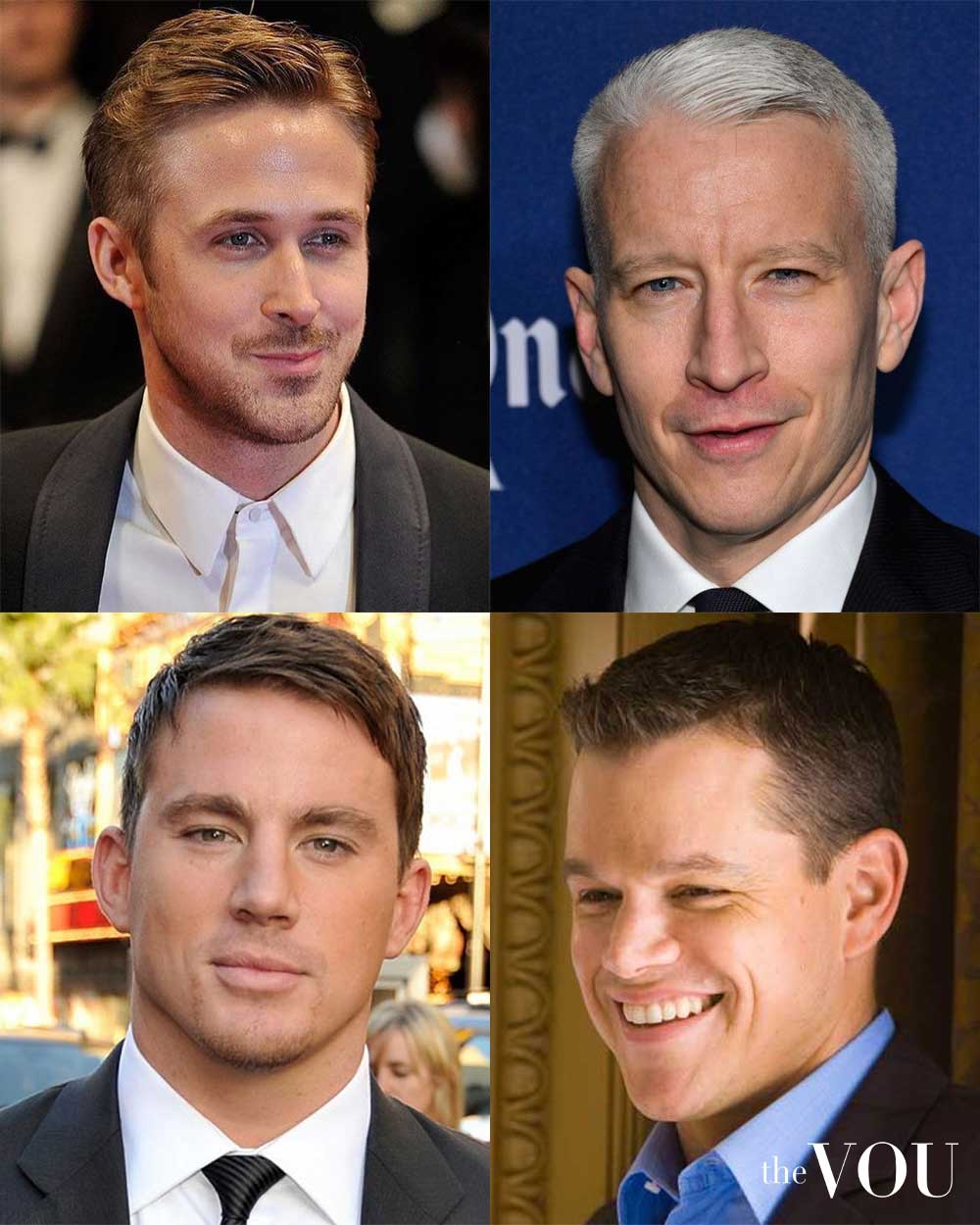
The Classic Taper embodies subtle sophistication, characterised by hair on the sides and back that gets gradually shorter towards the ears and the nape, while the top keeps more length.
This timeless style offers a clean, polished appearance that seamlessly blends traditional barbering techniques with modern grooming sensibilities.
Face Shape Suitability
On an oval face, the Classic Taper’s moderate proportions leave the outline much as it is.
For square faces, a slightly longer top with a gradual taper softens strong jawlines while keeping a clean outline.
If you want a round face to look more angular, choose higher contrast between the longer top and closely tapered sides.
With a diamond-shaped face, some fullness at the temples reduces the contrast with wider cheekbones, if you want that.
Men with longer faces can opt for a lower-contrast taper to avoid exaggerating facial length.
Hair Type Considerations
Straight hair showcases the precision of the Classic Taper most effectively, highlighting the smooth graduation of length.
Wavy hair adds natural texture to the style, creating an interesting interplay between the longer top and tapered sides.
Thick hair benefits from internal layering techniques to remove bulk and enhance the taper’s clean lines.
Fine hair can appear to gain density through strategic cutting and styling techniques.
Curly hair requires careful tapering to manage volume and maintain a neat silhouette.
Maintenance Requirements
A trim about every 3 to 4 weeks keeps the taper’s graduation and shape.
Daily styling typically involves minimal effort, often requiring only a small amount of product and basic combing.
Weekly deep cleansing helps prevent product buildup, particularly in shorter areas where accumulation is more noticeable.
Occasional use of a clarifying shampoo helps maintain the health and responsiveness of both the hair and scalp.
Styling Tips
Begin with clean, towel-dried hair, applying a small amount of lightweight styling cream or lotion to damp strands.
Use a comb to create a neat side part or sweep the hair back, depending on personal preference and hair length.
For added control, use a blow dryer on a low heat setting and guide the hair into place with fingers or a brush.
Once dry, apply a dime-sized amount of pomade or styling wax, working it through the hair from roots to tips.
Use a fine-toothed comb to refine the part and smooth any flyaways, particularly along the tapered sides.
Finish with a light mist of flexible hold hairspray to maintain the style throughout the day without stiffness.
Historical Context
The Classic Taper has roots in military grooming standards, prized for its neat, low-maintenance appearance.
It gained civilian popularity in the 1950s and 1960s as a neat, practical everyday cut.
The style has endured through various fashion cycles, consistently representing timeless elegance in men’s grooming.
Modern Variations
The Textured Taper incorporates more layering on top for a contemporary, slightly dishevelled appearance.
The High Contrast Taper features a more dramatic difference between the longer top and closely cropped sides.
The Taper Fade combines the classic taper with a modern fade technique, offering a sleek, updated look.
Professional vs Casual Adaptability
In professional settings, maintain a crisp part and smooth styling for a polished, boardroom-ready appearance.
For casual occasions, introduce a slight texture to the top using fingers and a matte product for a relaxed yet neat look.
The Classic Taper’s versatility allows for easy adaptation to various dress codes through subtle styling adjustments.
Grooming Tools
A set of hair clippers with multiple guard lengths helps with at-home maintenance between barber visits.
A selection of combs, including both wide-tooth and fine-tooth varieties, enables versatile styling options.
Consider purchasing a small, handheld mirror to check the precision of the taper at the back of the head.
Common Mistakes
Avoid creating too sharp a contrast between the top and sides, which can result in an unbalanced appearance.
Refrain from over-applying products, which can weigh down the hair and diminish the taper’s clean lines.
When maintaining at home, be cautious not to cut the taper too high, as this can be difficult to correct without professional intervention.
Celebrity Examples
Actor Ryan Reynolds frequently sports a well-executed Classic Taper, demonstrating its suitability for both red-carpet events and casual appearances.
Football player David Beckham has showcased various iterations of the Classic Taper throughout his career, highlighting its enduring appeal in sports and celebrity culture.
Singer John Legend often opts for a precisely tapered style, illustrating how the cut complements a range of formal and informal ensembles.
3. The Textured Cut with Fringe for Casual Style
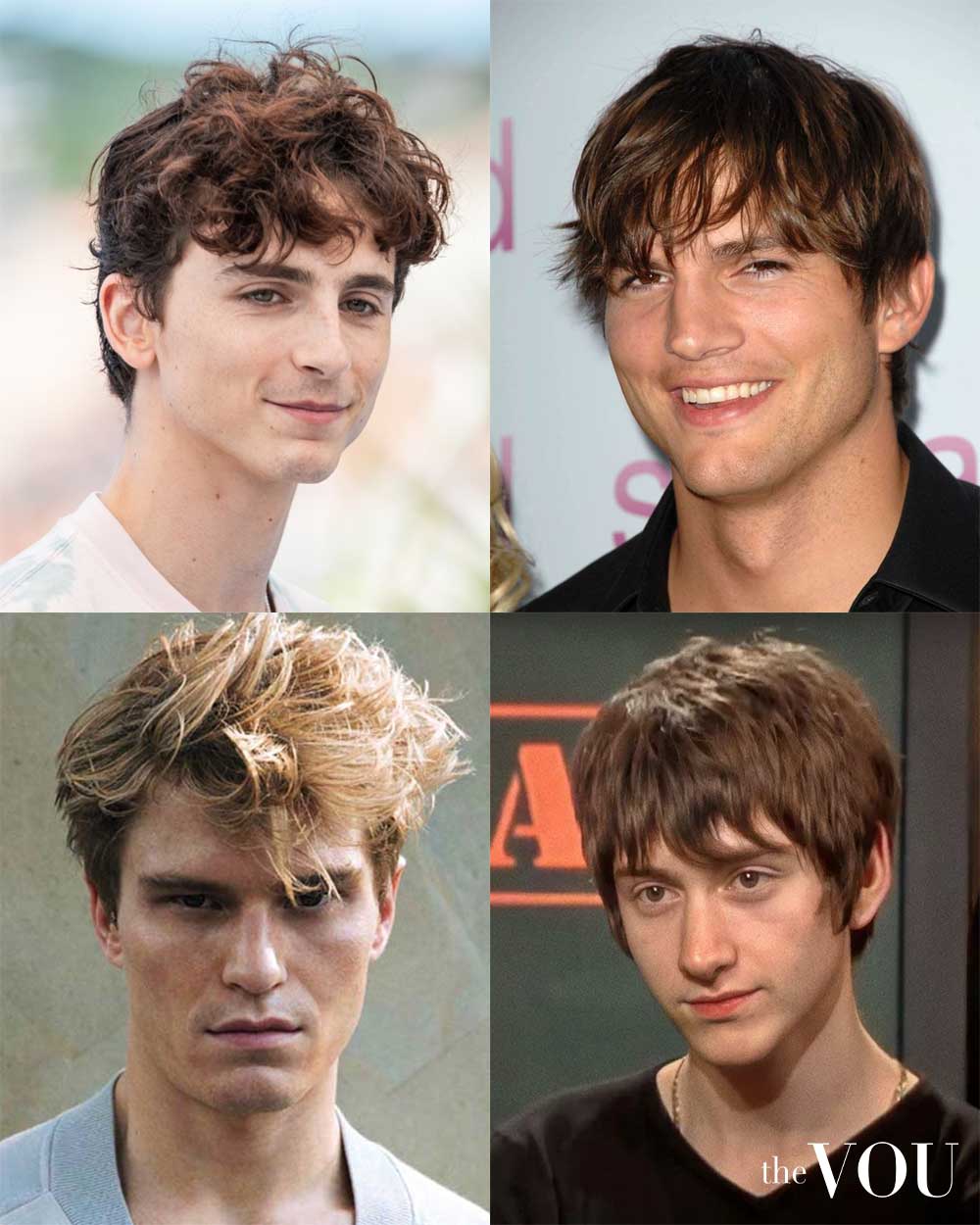
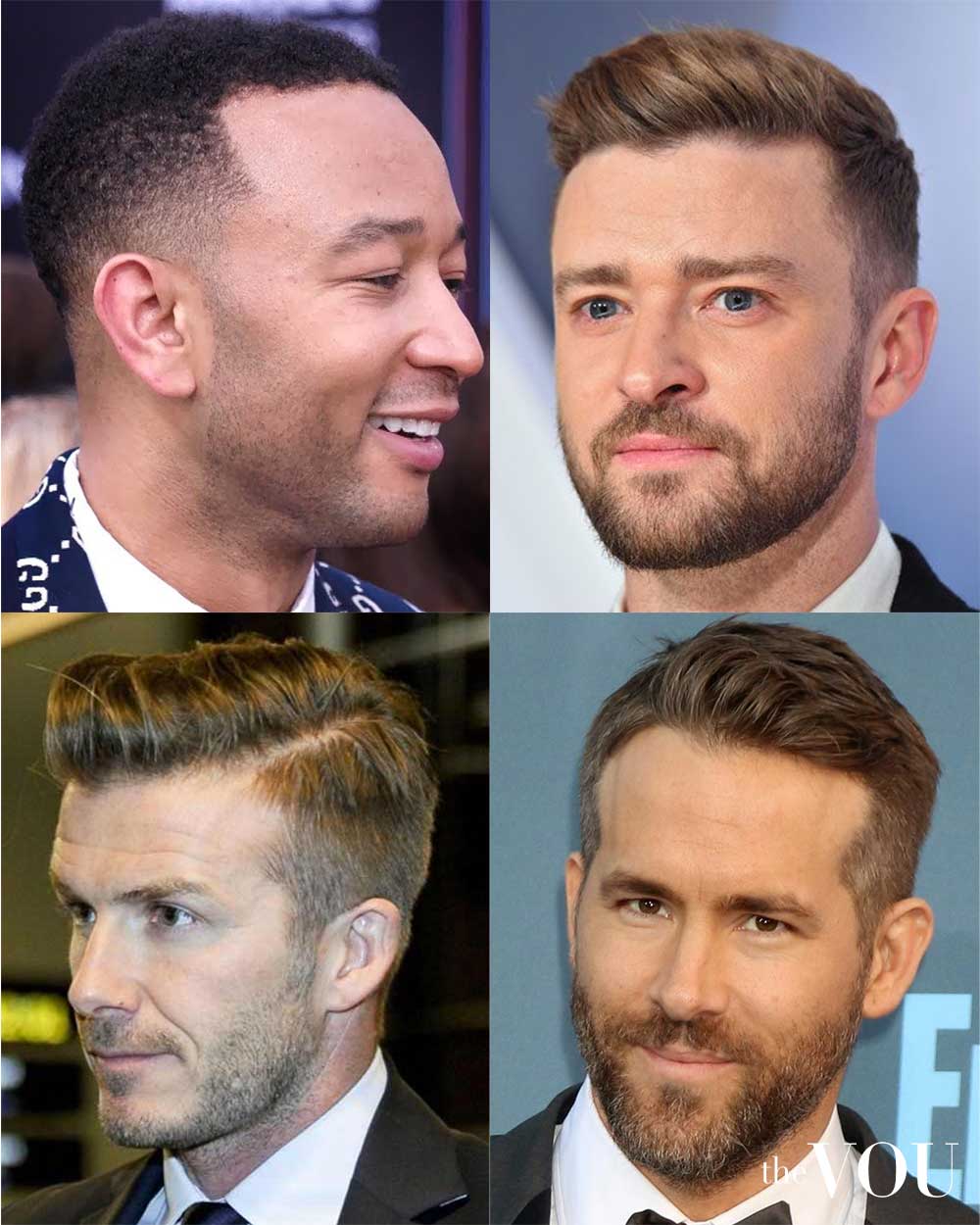
The Textured Cut with Fringe epitomises effortless style, characterised by its deliberately tousled appearance and face-framing front section.
This contemporary style blends casual charm with structured sophistication, offering a versatile look that suits both professional environments and relaxed settings.
Face Shape Suitability
On an oval face, the fringe simply shortens the forehead a little; there is no outline to correct.
On a square face, a softer, choppier fringe softens the overall outline, if you want the jaw to look less angular.
If you want a round face to look longer, a slightly longer, side-swept fringe adds a diagonal line and some length.
With a heart-shaped face, a textured fringe covers part of a wider forehead, if you want less attention there.
Men with longer faces can opt for a straighter, heavier fringe to visually shorten their face and create width.
Hair Type Considerations
Straight hair provides an excellent canvas for this style, allowing for precise texturising and a clean line in the fringe.
Wavy hair naturally enhances the textured finish, requiring less styling product to achieve the desired tousled effect.
Those with thick hair benefit from internal layering techniques to remove bulk and enhance movement in the style.
Fine hair can gain the appearance of volume through strategic cutting and the use of texturising products.
Curly hair may require additional fringe management techniques, such as careful thinning or straightening methods.
Maintenance Requirements
A trim about every 4 to 6 weeks keeps the shape and stops the fringe getting unmanageable.
Daily styling involves using texturising products and potentially heat tools to achieve the desired tousled effect.
Weekly deep conditioning treatments help maintain hair health, mainly when heat styling is frequently used.
Occasional use of a clarifying shampoo helps prevent product buildup, ensuring the hair remains responsive to styling.
Styling Tips
Begin with freshly washed, towel-dried hair, applying a small amount of sea salt spray or texturising cream from roots to ends.
Use a blow dryer with a diffuser attachment on a low heat setting, scrunching the hair to enhance natural texture.
Once dry, work a pea-sized amount of matte styling paste or clay through the hair, focusing on creating a separated, defined look.
Style the fringe by gently pulling sections forward and manipulating them with fingers for a naturally messy look.
For added hold and separation, lightly mist the styled hair with a dry texturising spray, focusing on the roots for volume.
Historical Context
The Textured Cut with Fringe emerged in the late 1990s and early 2000s, influenced by the grunge and indie music scenes.
It gained mainstream popularity in the mid-2000s as a more stylised alternative to the clean-cut looks of previous decades.
The style has evolved to incorporate classic barbering techniques, resulting in a more refined, versatile look.
Modern Variations
The Messy Crop variation features a shorter overall length, with a highly textured top and fringe, making it suitable for a more edgy appearance.
The Textured Pompadour Fringe combines volume at the crown with a styled fringe, offering a modern take on classic 1950s styling.
The Disconnected Textured Cut incorporates stark length differences between the top and sides, creating a bold, contemporary silhouette.
Professional vs Casual Adaptability
For professional settings, the fringe can be styled more neatly, with reduced texture and a side-swept direction.
In casual contexts, opt for fuller texture and a more random fringe placement for an effortless, relaxed appearance.
The style’s versatility allows for an easy transition between formal and informal looks through subtle styling adjustments.
Grooming Tools
Invest in high-quality texturising shears for at-home touch-ups and fringe maintenance.
A vented brush with mixed bristles helps create texture during the blow-drying process.
Consider purchasing a small, travel-sized dry shampoo for mid-day refreshes and added texture.
Common Mistakes
Avoid over-styling the fringe, which can result in a rigid, unnatural appearance, contradicting the style’s effortless essence.
Refrain from using heavy, greasy products that can weigh down the hair and diminish the desired textured effect.
When cutting at home, resist the temptation to create a perfectly even fringe, as slight irregularities contribute to the style’s character.
Celebrity Examples
Actor Timothée Chalamet frequently sports variations of this style, showcasing its youthful and versatile appeal.
Musician Alex Turner of Arctic Monkeys has made the textured cut with fringe a signature part of his evolving image.
Model Oliver Cheshire demonstrates how this style can be adapted for high-fashion contexts, proving its versatility.
4. The Hi-Top Fade with a Contemporary Edge
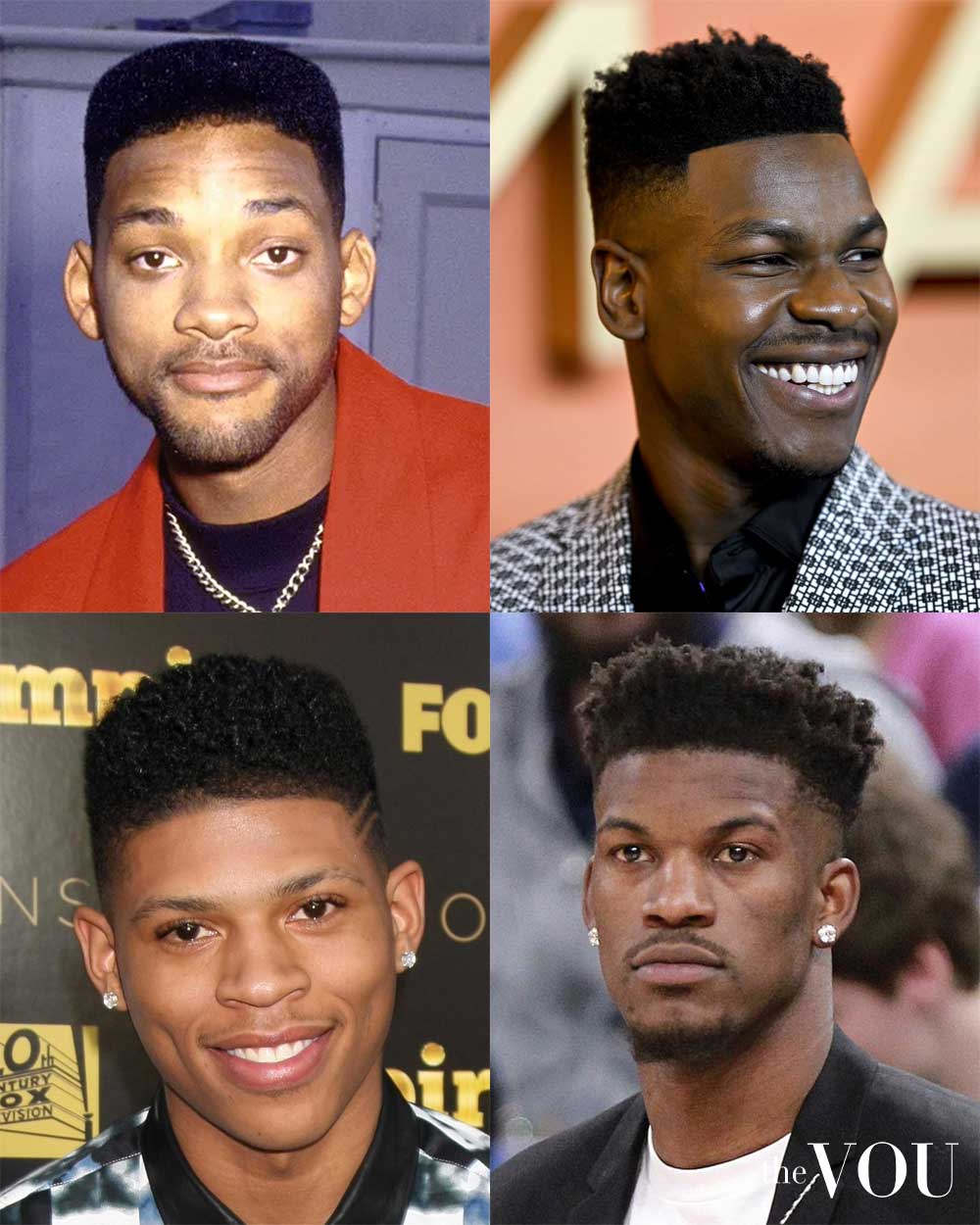
The Modern Hi-Top Fade represents a contemporary edge, characterised by its bold, vertical silhouette and crisp lines.
This style combines classic barbering techniques with modern aesthetics, making it a standout choice for men who want a bold, fashion-forward look.
Face Shape Suitability
The Modern Hi-Top Fade adds height and structure, and it is often suggested for oval and diamond-shaped faces.
On a round face, a higher top with square edges makes the outline look longer, if you want that.
On a square face, slightly softer edges on top reduce the contrast with an angular jaw, if you want that.
If your face is long and you do not want to add length, choose a lower height.
Hair Type Considerations
This style is ideally suited for those with afro-textured hair, showcasing its natural volume and strength.
Coarse, thick hair provides the best foundation for achieving and maintaining the style’s distinctive shape.
Those with looser curls may require additional product and styling to achieve the desired height and structure.
Individuals with straight or fine hair types typically cannot achieve this look without significant alteration.
Maintenance Requirements
The modern hi-top fade requires regular maintenance to preserve its sharp lines and shape.
A barber visit about every 2 to 3 weeks keeps the fade and overall structure sharp.
Daily styling is crucial to keep the top neat and defined, and regular moisturising is vital to prevent dryness and maintain hair health.
Styling Tips
Begin with freshly washed and conditioned hair.
Use a pick or wide-toothed comb to detangle and shape the top section.
Apply a strong-hold mousse or styling cream to damp hair, working it through from roots to tips.
Use a blow dryer with a diffuser attachment to enhance volume, directing air upwards.
Shape the top with hands or a sponge brush to create the desired silhouette.
Finish with a light mist of strong-hold hairspray to set the style.
Historical Context
The Hi-Top Fade originated in the 1980s as part of hip-hop culture, symbolising urban style and individuality.
It gained mainstream popularity in the late 1980s and early 1990s through music and sports icons.
The modern iteration emerged in the 2010s, blending the classic shape with contemporary barbering techniques.
Modern Variations
The Tapered Hi-Top Fade features a more gradual transition from the sides to the top.
The Textured Hi-Top features looser, more natural curls on top, creating a softer appearance.
The Asymmetrical Hi-Top Fade plays with uneven lengths for a bold, avant-garde look.
Professional vs Casual Adaptability
In conservative professional environments, a more subdued version of the style may be more suitable.
For creative or casual settings, bolder heights and dramatic fades can be showcased.
The style’s versatility allows for adjustments in height and texture to suit various occasions.
Grooming Tools
A high-quality sponge or twist brush is essential for shaping and defining curls.
Invest in a powerful blow dryer with a diffuser attachment for volume enhancement.
A sharp line-up trimmer is crucial for maintaining crisp edges between appointments.
Common Mistakes
Avoid over-processing or heat damage, which can compromise the hair’s natural texture and volume.
Refrain from cutting the fade too high, creating an unbalanced appearance.
When styling, ensure even product distribution to prevent patchy or inconsistent texture.
Celebrity Examples
Actor Will Smith wore a Hi-Top Fade in the early 1990s, one of the best-known examples of the cut.
Actor John Boyega showcases a modern interpretation of the style, demonstrating its contemporary appeal.
Basketball player Jimmy Butler has sported variations of the Hi-Top Fade, illustrating its popularity in sports culture.
5. The Slick Back and Its Refined Charm
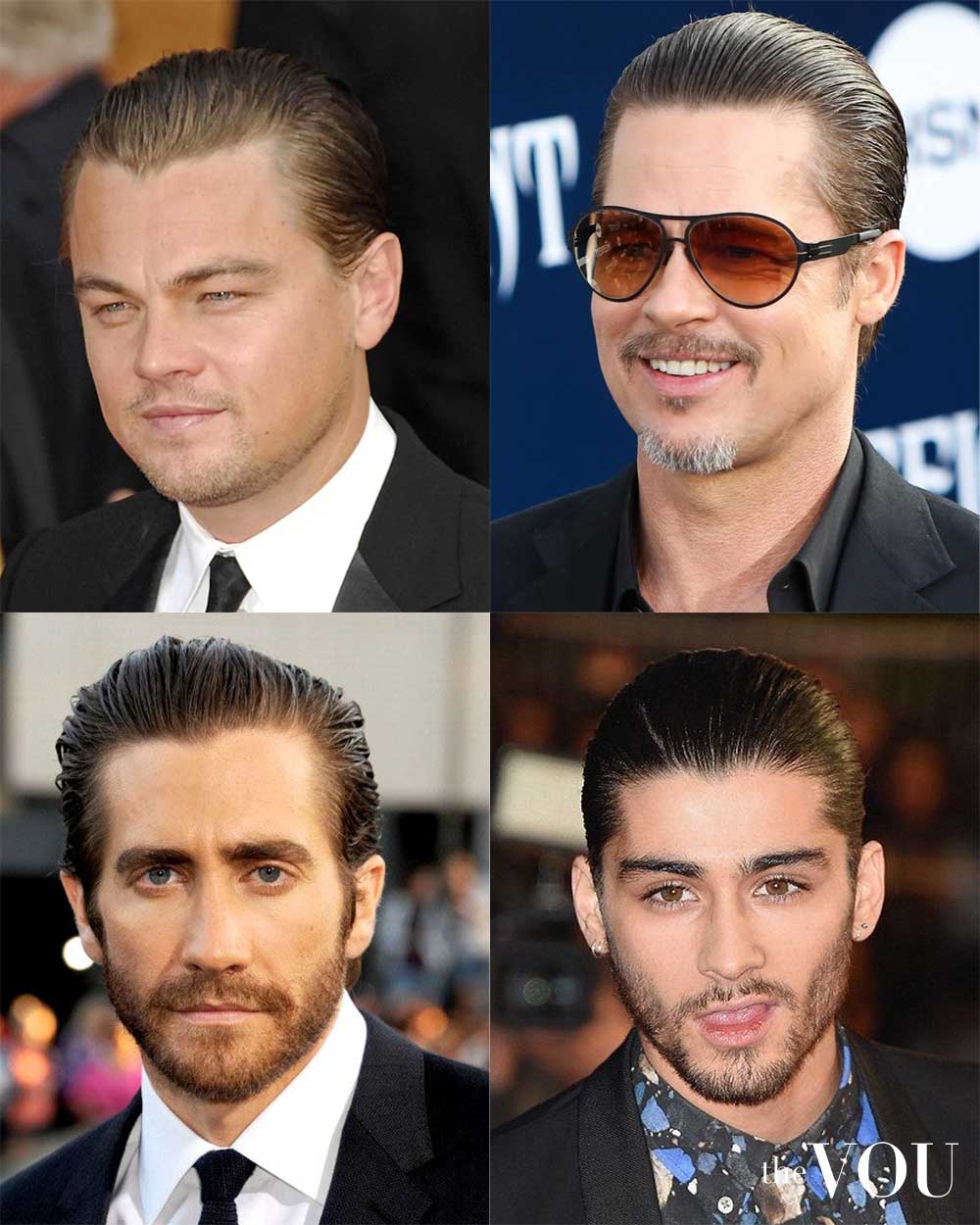
The Slick Back embodies refined charm, characterised by its smooth, swept-back appearance.
It gives a polished look that moves easily from the office to social occasions.
Face Shape Suitability
The Slick Back works with a range of face shapes. It leaves an oval outline much as it is, and it puts an angular jaw on show.
On a round face, its vertical lines make the face look a little longer, if you want that.
Those with heart-shaped faces should note that crown volume adds upward height, not lateral width; a slicked style also exposes the forehead and hairline, which is worth weighing if you have a broader forehead.
Men with receding hairlines may find this style challenging, as it exposes the hairline.
Hair Type Considerations
Straight to slightly wavy hair textures achieve the Slick Back most effortlessly.
Fine hair requires volumising products to prevent a flat appearance, while thick hair benefits from thinning techniques to ensure a smooth finish.
Extremely curly hair may struggle to maintain the style’s sleek lines without significant effort and product use.
Maintenance Requirements
The Slick Back demands regular maintenance to preserve its polished aesthetic.
A trim about every 4 to 6 weeks keeps the shape and stops length building at the nape.
Daily styling is necessary, involving thorough combing and product application.
Weekly deep conditioning treatments help counteract potential damage from frequent styling and product use.
Styling Tips
To achieve the quintessential Slick Back, begin with damp hair.
Apply a small amount of heat protectant before blow-drying the hair backwards using a round brush for volume and direction.
Once dry, work a marble-sized amount of high-shine pomade through the hair, starting from the roots and combing backwards.
For a more textured finish, substitute pomade with matte clay. Secure the style with a light misting of strong-hold hairspray.
Historical Context
The Slick Back gained prominence in the 1920s, embodying the sleek sophistication of the era’s gentlemen.
It experienced a resurgence in the 1980s Wall Street culture, when it became associated with finance-world dress.
Today, it represents a timeless elegance that transcends fleeting trends.
Modern Variations
Contemporary interpretations include the Textured Slick Back, incorporating volume and movement for a less rigid appearance.
The Slick Back Fade combines the classic swept-back top with faded sides, offering a modern edge.
For a more relaxed take, the Loose Slick Back allows for softer lines and natural movement.
Professional vs Casual Adaptability
In professional settings, maintain a sleek, high-shine finish using oil-based pomades for a classic executive look.
For casual occasions, opt for a softer hold product and allow some natural texture to emerge, creating a more relaxed aesthetic.
The style’s versatility allows for easy transition between formal and informal environments by adjusting product choice and application technique.
Grooming Tools
Essential tools for the Slick Back include a high-quality wide-toothed comb for initial styling and a fine-toothed comb for precision finishing.
A powerful hair dryer with a concentrator nozzle ensures efficient styling.
Invest in a round brush with natural bristles to create volume and shape during blow-drying.
Common Mistakes
Avoid excessive products, resulting in a greasy appearance and potential scalp issues.
Neglecting to adapt the style to one’s hair type may lead to an unflattering finish, particularly for those with fine or thinning hair.
When styling, ensure thorough product distribution to prevent visible comb lines or uneven texture.
Celebrity Examples
Notable proponents of the Slick Back include actors Leonardo DiCaprio, Brad Pitt, and Jake Gyllenhaal, who frequently showcases the style on red carpets, demonstrating its enduring elegance.
David Beckham has sported variations of the Slick Back, illustrating its adaptability to athletic and formal contexts.
English singer Zayn Malik has also sported the Slick Back style with long hair, illustrating its popularity among younger demographics.
6. The Side Parting for Timeless Professionalism
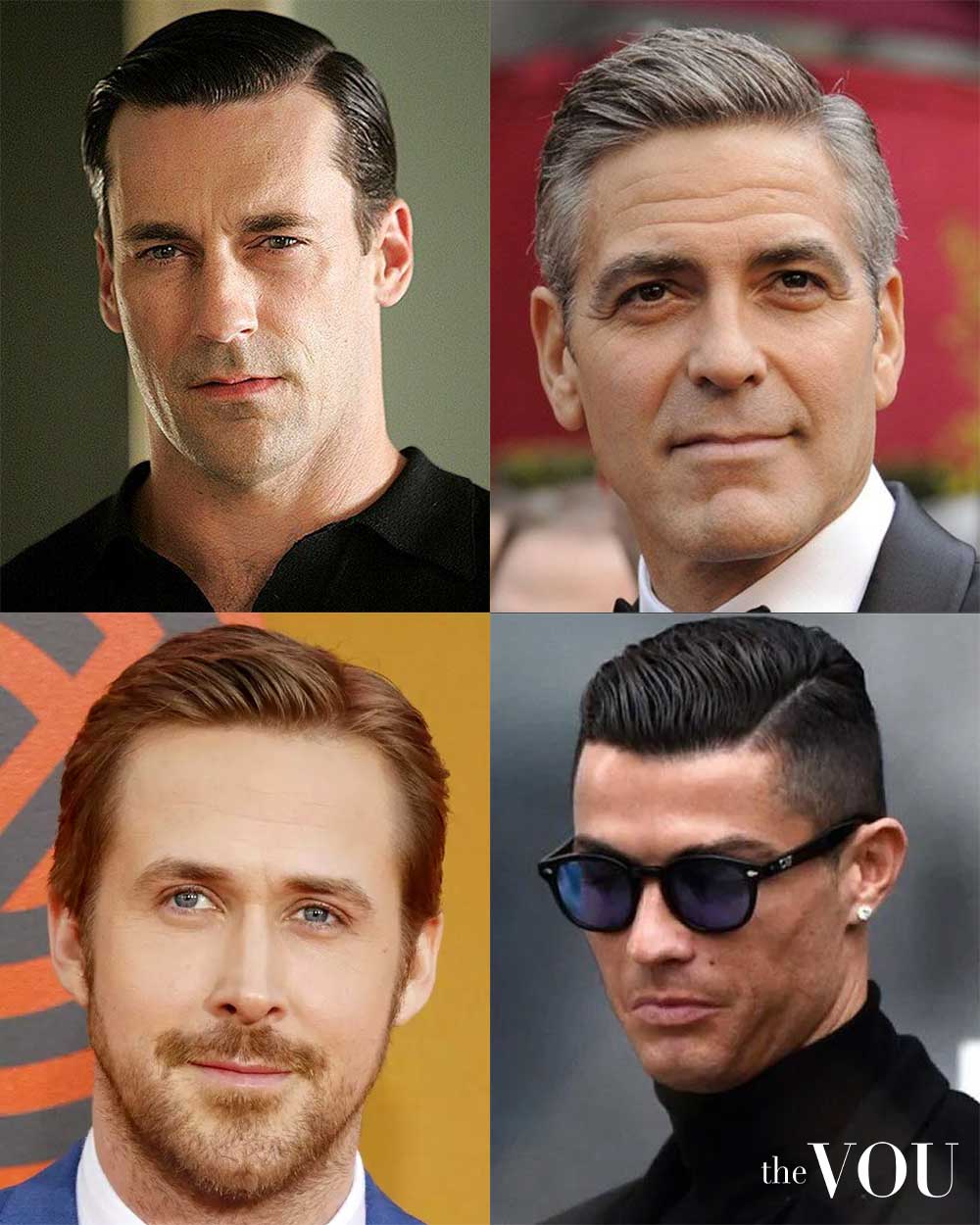
The Side Parting exemplifies timeless professionalism, characterised by its clean, defined line separating the hair into two distinct sections.
This classic style projects an air of refinement and attention to detail, making it a perennial favourite among gentlemen seeking a polished, versatile look.
Face Shape Suitability
The Side Parting adapts well to various face shapes. It leaves an oval outline much as it is, and on a rectangular face its gentle curves soften the corners, if that is the effect you want.
On a round face, a deeper side part adds a diagonal line that makes the face look a little longer.
With a diamond-shaped face, a softer part reduces the number of hard lines, if you want a gentler result. Men with square faces can accentuate their strong jawlines with a crisp, defined parting.
Hair Type Considerations
Straight and wavy hair textures lend themselves naturally to the Side Parting.
Fine hair gains structure and volume from this style, particularly when combined with appropriate styling products.
Thick hair requires thinning to achieve a neat finish. Curly hair may need additional styling and product to maintain the part’s definition throughout the day.
Maintenance Requirements
The Side Parting needs regular upkeep to stay sharp; a trim about every 3 to 4 weeks keeps the shape.
Daily styling is essential, involving careful combing and product application. Weekly deep cleansing removes product build-up, ensuring the hair remains healthy and responsive to styling.
Styling Tips
To achieve the quintessential Side Parting, begin with freshly washed, damp hair. Apply a small amount of styling mousse for hold and volume.
Create the part using the tail of a fine-toothed comb, following the natural direction of hair growth.
Blow-dry the hair using a vented brush, directing each section away from the parting.
Once dry, apply a pea-sized amount of pomade or styling cream, working it through the hair from roots to tips.
Finish by combing the hair into place and setting it with a light mist of medium-hold hairspray.
Historical Context
The Side Parting rose to prominence in the 1920s, epitomising the dapper gentleman of the era.
It maintained its popularity through subsequent decades, symbolising reliability and professionalism.
The style experienced a resurgence in the 2010s as part of a broader revival of classic men’s grooming aesthetics.
Modern Variations
Contemporary interpretations include the Textured Side Part, incorporating tousled volume for a more casual appearance.
The Side Part Fade combines the classic top with faded sides, offering a modern twist.
For a bolder statement, the Deep Side Part shifts the parting line further to one side, creating a dramatic asymmetry.
Professional vs Casual Adaptability
In professional environments, maintain a crisp, well-defined part using high-shine products for a polished look.
For casual settings, relax the style by using matte products and allowing some natural texture to emerge.
The Side Parting’s versatility enables seamless transitions between formal and informal contexts through subtle product choice and styling technique adjustments.
Grooming Tools
Essential tools for the side parting include a high-quality fine-toothed comb for creating and maintaining the part and a wide-toothed comb for general styling.
A powerful hair dryer with a concentrator nozzle ensures precise styling. Invest in a vented brush with mixed bristles to create volume and shape during blow-drying.
Common Mistakes
Avoid creating a part that contradicts the natural growth pattern of your hair, as this can lead to styling difficulties and an unnatural appearance.
Refrain from using excessive product, which can weigh down the hair and diminish the style’s crisp lines.
When styling, ensure even product distribution to prevent visible inconsistencies in texture or shine.
Celebrity Examples
Prominent figures sporting the Side Parting include actor Ryan Gosling, who showcases a classic style interpretation, emphasising its timeless appeal.
George Clooney frequently adopts variations of the Side Parting, demonstrating its suitability for mature gentlemen.
Football player Cristiano Ronaldo has been seen with a modern take on the Side Parting, illustrating its adaptability to contemporary fashion.
Actor Jon Hamm’s Don Draper in “Mad Men” revived interest in this classic look.
7. The Pompadour and Its Iconic Volume
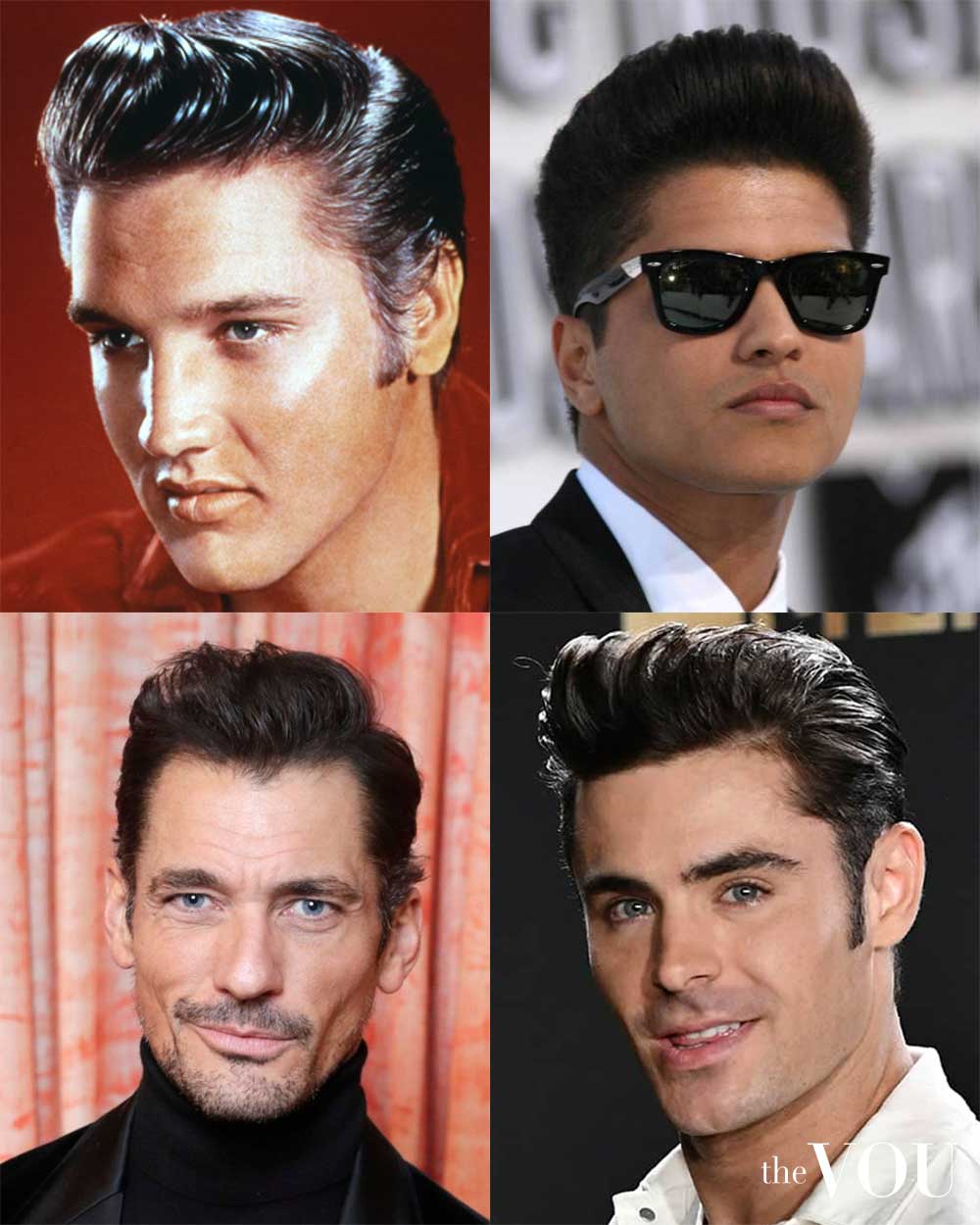
The Pompadour epitomises iconic volume, characterised by its swept-up frontal section and sleek sides.
This classic style offers a bold silhouette for men who appreciate timeless elegance with a touch of drama.
Face Shape Suitability
On an oval face, the Pompadour simply adds height; on a rectangular (longer) face, retaining fuller sides and keeping the front height modest can stop the added lift from making the face look even longer.
On a round face, a higher pompadour with shorter sides makes the face look longer, if you want that.
On a square face, a softer, more textured top reduces the contrast with an angular jaw, if you want that.
With a heart-shaped face, you may prefer a moderate height so the top does not add to the upper face.
Hair Type Considerations
Straight to slightly wavy hair types achieve the classic Pompadour look most easily.
Thick hair provides excellent structure and hold for the style’s signature volume.
Fine hair may require additional product and teasing techniques to maintain height.
Curly hair can adapt to a textured Pompadour variant, embracing natural volume.
Maintenance Requirements
The Pompadour demands regular upkeep to maintain its polished appearance.
A trim about every 3 to 4 weeks keeps the sides neat and the top’s length manageable.
Daily styling is essential, involving thorough blow-drying and product application.
Weekly deep conditioning treatments help counteract potential damage from frequent styling.
Styling Tips
Begin with damp, towel-dried hair and apply a volumising mousse to the roots.
Use a round brush while blow-drying, lifting the hair at the roots for maximum volume.
Once dry, work a dime-sized amount of pomade through the hair, focusing on the top section.
Shape the pompadour using a comb, sweeping the hair backwards and upwards.
Smooth the sides using a fine-toothed comb for contrast.
Set the style with a medium-hold hairspray, applied from a distance to maintain movement.
Historical Context
The Pompadour originated in the 18th century, named after Madame de Pompadour, chief mistress of Louis XV.
It gained popularity among men in the 1950s, becoming synonymous with rock and roll culture.
The style has experienced several revivals, adapting to contemporary grooming trends.
Modern Variations
The Textured Pompadour incorporates a more tousled top for a relaxed, contemporary look.
The Pompadour Fade combines the classic top with faded sides for a modern edge.
The Short Pompadour offers a subtler interpretation, suitable for professional environments.
Professional vs Casual Adaptability
For formal settings, maintain a sleek, well-defined shape using high-shine products.
In casual contexts, embrace a looser, more textured look with matte styling products.
The Pompadour’s versatility allows for adjustment in height and neatness to suit various occasions.
Grooming Tools
A high-quality round brush is essential for creating volume during blow-drying.
Invest in a powerful hair dryer with a concentrator nozzle for precise styling.
A tailcomb is crucial for shaping and defining the pompadour’s signature sweep.
Common Mistakes
Avoid using excessive products, which can weigh down the hair and diminish volume.
Check the height in a mirror from the front and the side once it is dry; how tall to go depends on the effect you want.
When styling, ensure the back and sides are sufficiently neat to contrast with the voluminous top.
Celebrity Examples
Elvis Presley iconically popularised the Pompadour, cementing its place in cultural history.
Actor Zac Efron has sported modern variations of the Pompadour, demonstrating its contemporary appeal.
Model David Gandy showcases a refined Pompadour, illustrating its suitability for high fashion contexts.
8. The Quiff for Versatile Allure
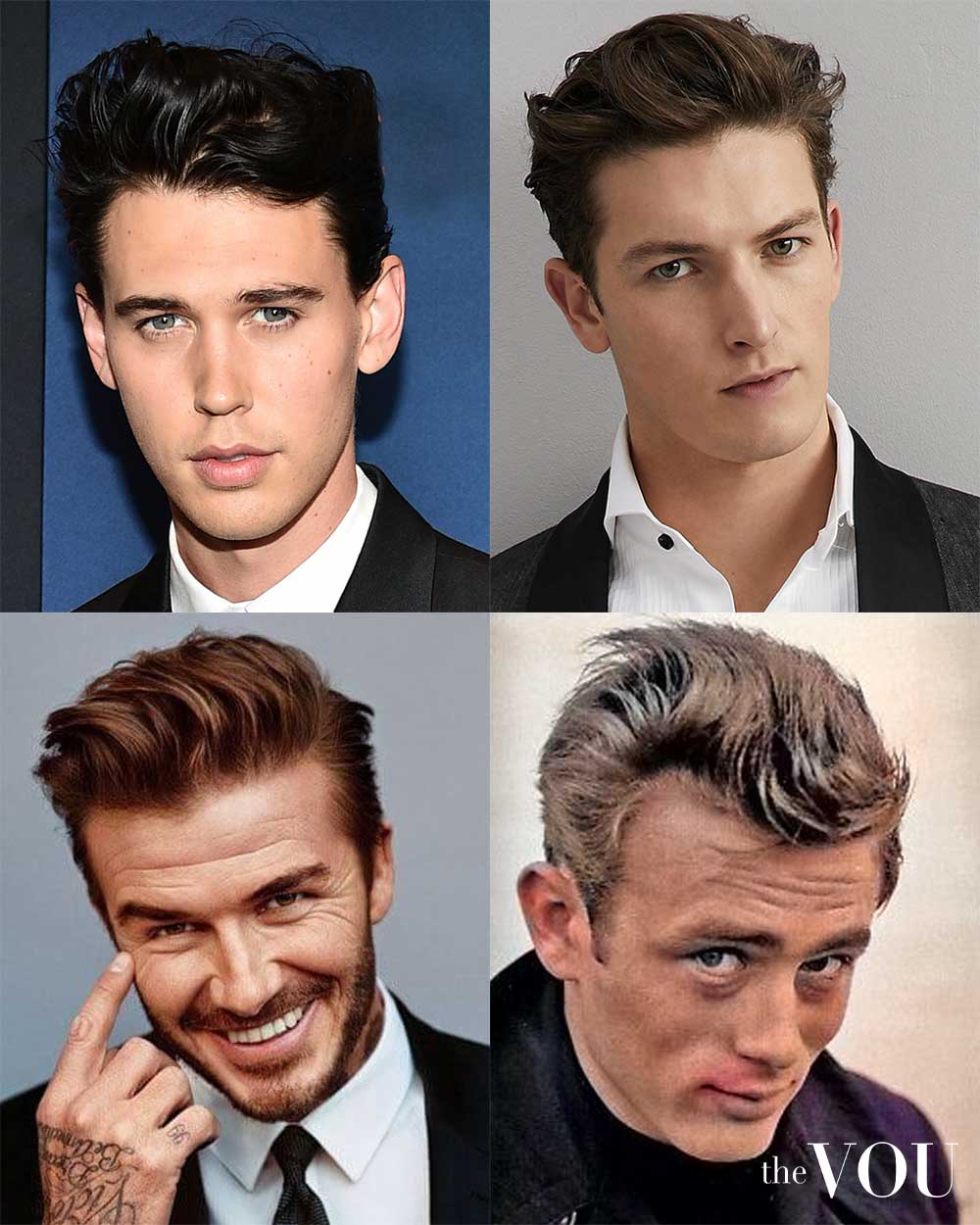
The Quiff embodies versatile allure, distinguished by its voluminous front styled upwards and backwards, gradually tapering towards the crown.
This dynamic style balances classic sophistication and contemporary flair, offering an adaptable look suitable for various occasions and personal styles.
Face Shape Suitability
The Quiff’s adaptability makes it suitable for a range of face shapes, each benefiting from slight variations in styling.
On an oval face, a classic Quiff of moderate height leaves the outline much as it is.
On a round face, a higher Quiff with shorter sides makes the face look longer and more angular, if you want that.
On a square face, a softer, more textured Quiff reduces the contrast with an angular jaw, while a sharper Quiff keeps the angles on show; either is a choice.
With a heart-shaped face, a moderate height with fuller sides draws less attention to a wider forehead, if you want that.
Hair Type Considerations
Straight to wavy hair textures naturally lend themselves to the Quiff’s signature sweep, requiring less product for hold and shape.
Thick hair provides excellent structure, allowing for dramatic height and volume in the Quiff’s front section.
Fine hair may necessitate additional volumising products and careful teasing techniques to achieve and maintain the desired elevation.
Those with curly hair can adapt the style into a ‘Curly Quiff’, embracing natural texture while maintaining the characteristic shape.
Maintenance Requirements
The Quiff demands regular maintenance to preserve its structured yet fluid appearance.
A trim about every 3 to 4 weeks keeps the shape, with the sides neat and the top from growing unmanageably long.
Daily styling is crucial, involving thorough blow-drying and precise product application to achieve the signature sweep and volume.
Weekly deep conditioning treatments are recommended to combat potential dryness or damage from frequent heat styling and product use.
Styling Tips
Begin with freshly washed, damp hair and apply a volumising mousse or root-lifting spray to the roots, particularly at the front hairline.
Using a round brush, blow-dry the front section upwards and backward, creating tension to maximise volume and shape.
Once the hair is completely dry, work a pea-sized amount of styling product (pomade for shine, clay for a matte finish) through the hair, concentrating on the roots and front section.
Use your fingers or a comb to shape the Quiff, sweeping the front upwards and slightly back, ensuring a smooth transition to the sides and back.
For additional hold and texture, lightly mist the styled Quiff with a flexible-hold hairspray, applied from about 30 centimetres away to avoid oversaturating the hair.
Historical Context
The Quiff is usually dated to the 1950s, as a shorter, softer relation of the pompadour.
It gained prominence through rock and roll icons, symbolising youthful defiance and sartorial boldness.
The style has evolved over decades, adapting to contemporary tastes while maintaining its core characteristics of volume and sweep.
Modern Variations
The Textured Quiff incorporates deliberately tousled texture for a more casual, effortless appearance, suitable for day and evening wear.
The Psychobilly Quiff exaggerates the style’s height and shape, creating a dramatic silhouette popular in alternative fashion circles.
The Undercut Quiff combines the voluminous top with sharply contrasting short sides, offering a bold, modern interpretation of the classic style.
9. The French Crop with Old Money Charm
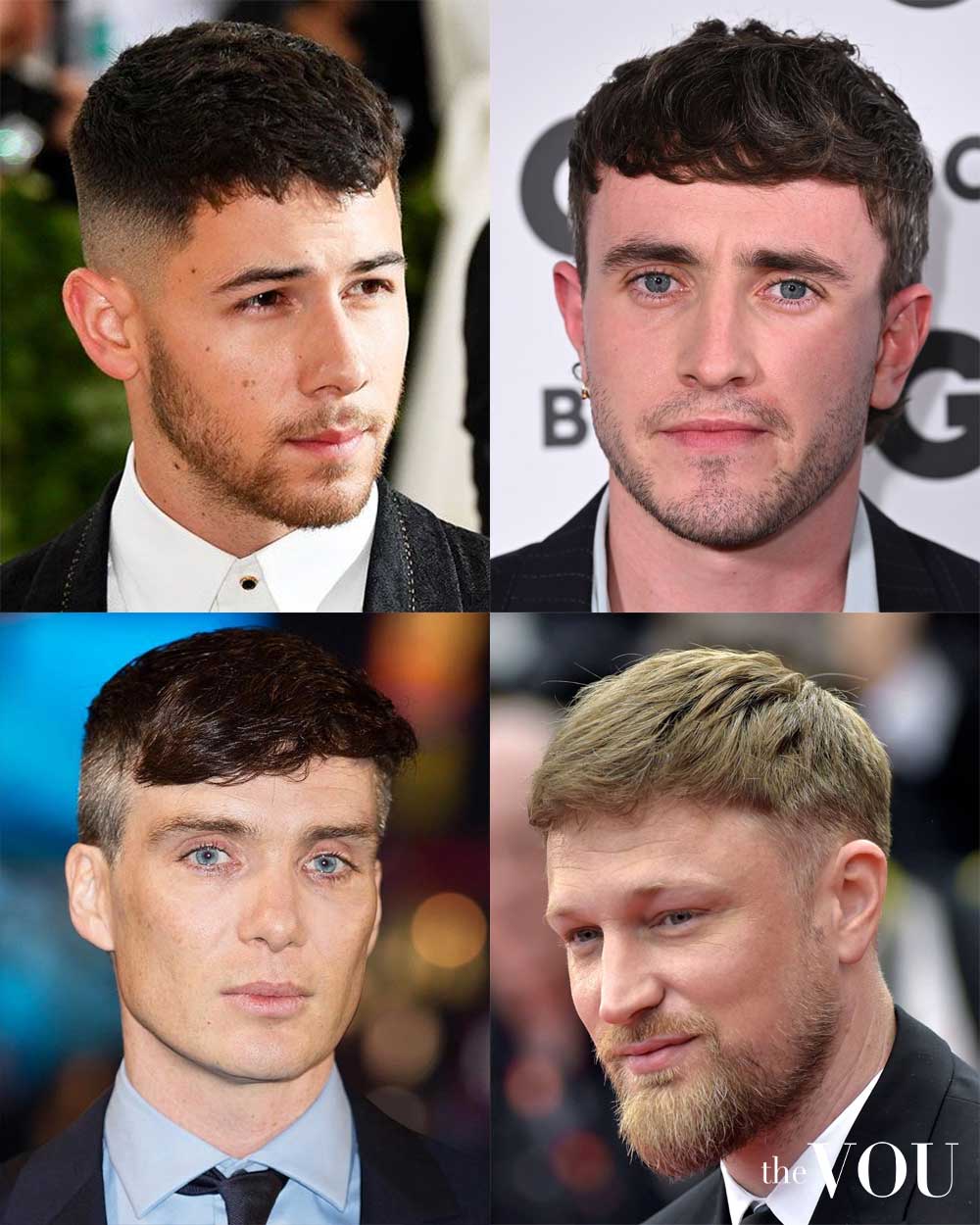
The French Crop exemplifies elegance, characterised by its short sides and back with a slightly longer fringe.
This versatile style balances professional polish and contemporary flair, making it an excellent choice for the modern gentleman.
Face Shape Suitability
The French Crop’s adaptability shines through its suitability for various face shapes. Its clean lines leave an oval outline much as it is and keep an angular jaw on show.
On a round face, a textured fringe with some height can make the face look a little longer, and on a diamond-shaped face the fringe adds some fullness at the forehead.
Hair Type
This style accommodates a range of hair types, from fine to thick.
Fine hair gains volume through textured cutting techniques, whilst thick hair benefits from thinning to achieve the desired shape.
The crop offers a sleek finish for straight hair, while wavy textures add natural movement to the fringe.
Maintenance
The French Crop needs little upkeep; a trim about every 3 to 4 weeks keeps its sharp outline.
Regular shampoo and conditioning suffice daily care, with occasional deep cleansing to remove product build-up and maintain scalp health.
Styling Tips
To achieve the quintessential French Crop look, apply a pea-sized matte clay or paste to towel-dried hair.
Work the product through with your fingers, focusing on creating texture in the fringe.
For a sleeker finish, use a fine-toothed comb to style the fringe forward.
A light mist of medium-hold hairspray ensures longevity without compromising the style’s natural movement.
Historical Context
The French Crop is closely related to the Caesar cut, with a textured fringe and shorter, often tapered sides.
Its resurgence in recent years speaks to a renewed appreciation for minimalist grooming aesthetics.
Modern Variations
Contemporary interpretations of the French Crop include the textured crop, featuring a more messy fringe, and the crop fade, incorporating a gradual side fade for a sharper contrast.
These variations offer personalised options while maintaining the style’s classic essence.
Professional vs Casual Adaptability
The French Crop’s versatility allows for seamless transitions between professional and casual settings.
For formal occasions, style the fringe neatly with a matte pomade for a polished look.
In casual contexts, embrace a more tousled appearance using salt spray for added texture.
Grooming Tools
Essential tools for maintaining the French Crop include high-quality hair scissors for fringe trimming, a fine-toothed comb for precise styling, and a natural bristle brush for smoothing the hair.
Common Mistakes
Avoid over-styling the fringe, resulting in a rigid, unnatural appearance.
Refrain from excessive product, which weighs down the hair and diminishes the style’s effortless appeal.
When requesting this cut, clearly communicate the desired fringe length to prevent an excessively short crop.
Celebrity Examples
Notable advocates of the French Crop include actors Cillian Murphy and Paul Mescal and musician Nick Jonas.
Their interpretations demonstrate the cut’s ability to complement diverse personal styles and facial features.
10. The Shoulder Length Cut for Bohemian Elegance
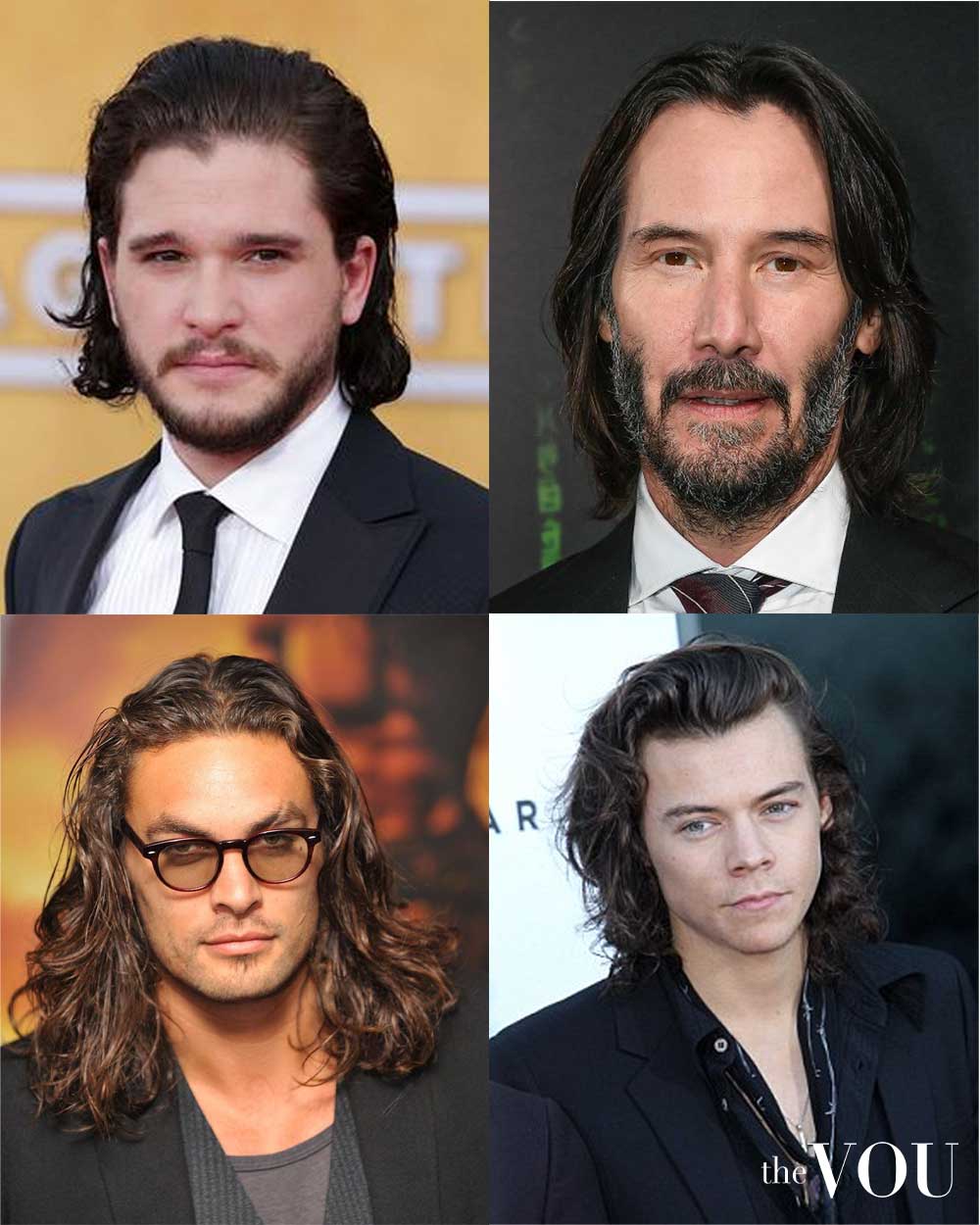
The Shoulder Length Cut embodies bohemian elegance, characterised by its flowing, versatile nature.
This style exudes a sense of artistic freedom and self-expression, making it a choice for men who want a more relaxed, creative look.
Face Shape Suitability
The Shoulder Length Cut adapts well to various face shapes, as it frames an oval face without changing it much, and the added width at the sides softens a long face, if you want that.
For round faces, layers can create a lengthening effect.
Square faces find their strong features complemented by the style’s softer lines.
With a heart-shaped face, hair that ends at or just below the jaw can add visual width there, if you want to offset a wider forehead; a cut cannot change the jaw itself.
Hair Type Considerations
Straight hair at this length can appear sleek and polished or tousled for a more casual look.
Wavy hair naturally enhances the style’s bohemian essence.
Curly hair may require additional maintenance but offers a striking, voluminous appearance.
Fine hair benefits from layers to create the illusion of thickness.
Maintenance Requirements
The Shoulder Length Cut requires consistent upkeep to maintain its shape and health.
A trim about every 8 to 10 weeks keeps the ends tidy and the shape even.
Daily care involves gentle washing and conditioning to preserve natural oils.
Regular deep conditioning treatments are essential to combat dryness and maintain shine.
Styling Tips
To style, start with damp hair by applying a heat-protectant spray and a wide-toothed comb to detangle gently.
For a natural look, apply a small amount of sea salt spray and allow the air to dry.
Use a round brush while blow-drying to create volume and shape for a more polished appearance.
Finish with a light hold styling cream to define layers and control frizz.
Historical Context
The Shoulder Length Cut gained popularity in the 1960s and 1970s, symbolising counter-culture and artistic expression.
It has since evolved into a versatile style, embraced by various subcultures and mainstream fashion alike.
In recent years, it has seen a resurgence as part of the broader trend towards gender-neutral styling.
Modern Variations
Contemporary interpretations include the Textured Shoulder Length, featuring choppy layers for added movement.
The Slicked-Back Shoulder Length offers a more formal option for longer styles.
For a bold statement, the Asymmetrical Shoulder Length incorporates varying lengths for a dynamic silhouette.
Professional vs Casual Adaptability
In professional settings, the hair can be tied back neatly or styled sleekly for a refined appearance.
For casual occasions, embrace natural texture and movement for a relaxed, effortless look.
The style’s length allows for various updos, offering versatility for different dress codes and events.
Grooming Tools
Essential tools include a wide-toothed comb for detangling and a boar bristle brush for distributing natural oils.
Invest in high-quality hair ties and pins for creating various updos.
A diffuser attachment for your hair dryer enhances natural texture and reduces frizz.
Common Mistakes
Avoid over-washing, which can strip natural oils and lead to dryness and frizz.
Please refrain from using excessive heat styling, which can damage the hair and diminish its natural texture.
Regular trims are crucial when growing out shorter styles to maintain shape and prevent an unkempt appearance.
Celebrity Examples
Actors Keanu Reeves and Kit Harington have showcased different versions of the Shoulder Length Cut, demonstrating its rugged appeal.
Musician Harry Styles has popularised various iterations of this length, highlighting its versatility.
Actor Jason Momoa wears a longer, looser version of the style.
11. The Buzz Cut for Minimalist Ease
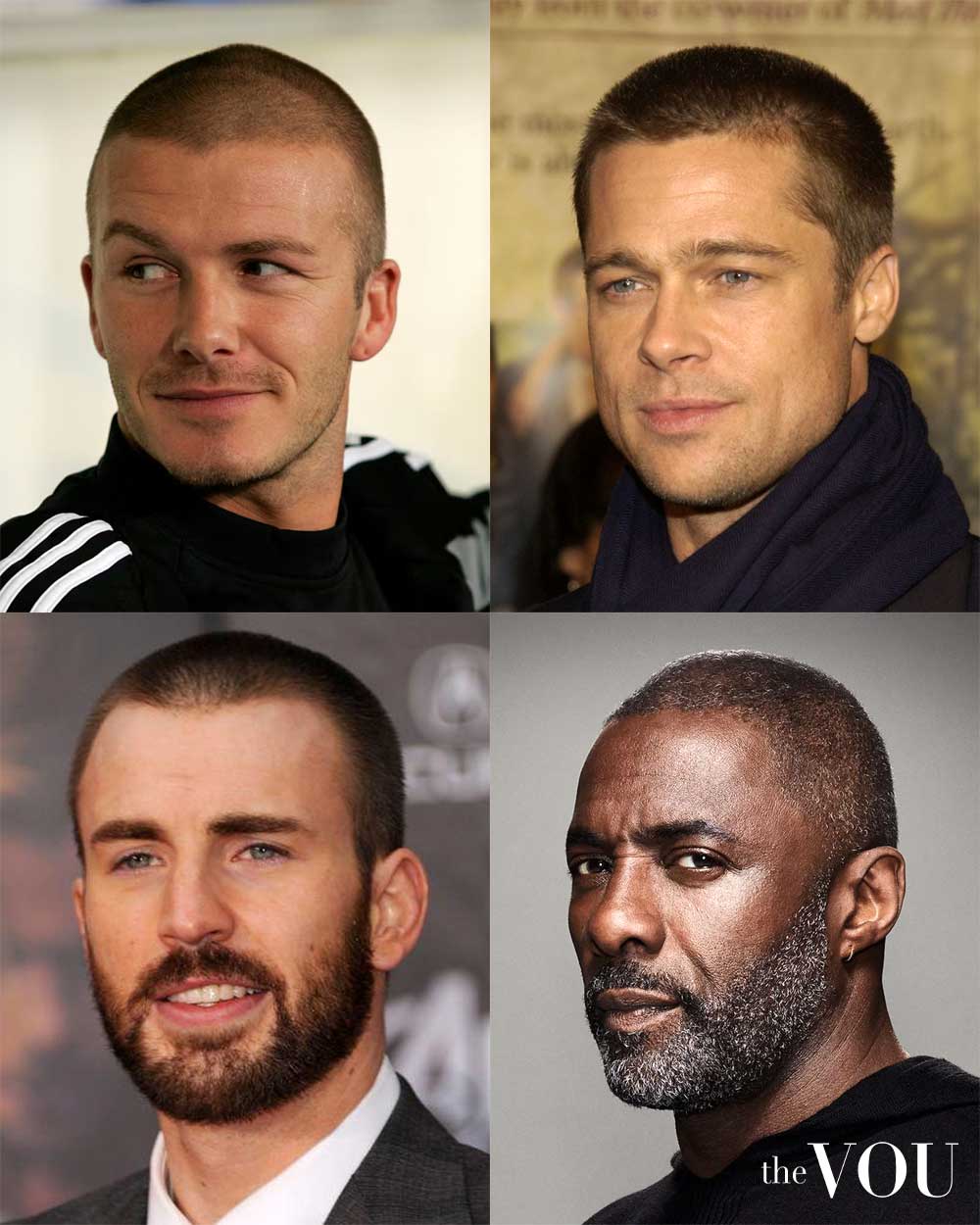
The Buzz Cut is the most minimal cut here, characterised by its uniform short length across the entire scalp.
It is a practical, low-maintenance option for men who value simplicity.
Face Shape Suitability
The Buzz Cut’s suitability varies across face shapes. It shows the whole outline, so it keeps an angular jaw and cheekbones fully on show.
On a round face, slightly more length on top adds a little height. On a diamond-shaped face, a uniform length shows the cheekbones as they are.
Because it offers almost no coverage, it shows your ears and head shape clearly, which some men like and others would rather avoid.
Hair Type
This style works with most hair types. Fine hair can look less sparse when buzzed short, while thick hair becomes more manageable.
For those with thinning hair, a buzz cut reduces the contrast between thinner and thicker areas.
Curly and wavy hair textures are simplified, resulting in a neat, consistent look.
Maintenance
The Buzz Cut needs little daily upkeep; a trim about every 2 to 3 weeks keeps it sharp.
Daily care involves gentle cleansing with a mild shampoo to prevent scalp irritation. Regular exfoliation helps prevent ingrown hairs and maintains scalp health.
Your scalp is more exposed to the sun, so use sunscreen or a hat outdoors.
Styling Tips
Styling the Buzz Cut primarily involves maintaining its shape.
After showering, towel dry the hair and apply a small amount of leave-in conditioner if your scalp or hair feels dry.
For a matte finish, work a pea-sized amount of hair wax through the hair using fingertips.
To add a subtle sheen, apply a light misting of the grooming tonic.
Historical Context
The Buzz Cut’s origins trace back to military practicality, where it facilitated hygiene and uniformity among soldiers.
It has since been widely adopted in civilian life for the same practical reasons.
Today it is widely seen as a plain, practical choice.
Modern Variations
Contemporary interpretations include the Buzz Cut Fade, featuring gradual tapering on the sides and back, and the Textured Buzz, which leaves slightly more length on top for added dimension.
The Burr Cut, with its ultra-short length, offers an even more extreme iteration for those seeking a bold statement.
Professional vs Casual Adaptability
The Buzz Cut’s simplicity lends itself to both professional and casual environments. In formal settings, maintain a precise, freshly-trimmed appearance.
For casual occasions, a slightly grown-out Buzz Cut adds a rugged edge.
The style’s versatility allows easy accessorising with statement eyewear or facial hair to suit different contexts.
Grooming Tools
Essential tools for maintaining the Buzz Cut include high-quality hair clippers with multiple guard lengths, allowing for precise trimming at home.
A handheld mirror facilitates even cutting at the back of the head.
A soft-bristled brush keeps the short hair lying neatly.
Common Mistakes
Avoid using too short guards, which can result in scalp visibility.
Neglecting regular maintenance leads to an unkempt appearance, diminishing the style’s sharp aesthetic.
When buzzing at home, ensure even pressure and consistent direction to prevent patchy results.
Before going very short, ask your barber whether a slightly longer guard would suit the shape of your head.
Celebrity Examples
Prominent figures sporting the Buzz Cut include actor Idris Elba, Chris Evans, and Brad Pitt who frequently showcases the style in various lengths, demonstrating its versatility.
Football player David Beckham has sometimes embraced the Buzz Cut, highlighting its appeal in athletic contexts.
Style Like A Pro
Before you go, here is a simple order to follow, whether you work alone or with an image consultant.
Professional styling usually starts with knowing your body shape and seasonal colour palette, which help you choose well-fitting clothes in colours that suit your skin, eyes and hair.
Then you can plan outfits for each occasion, location, season and time of day, with garments, footwear, and accessories from heritage fashion brands that fit the way you want to look.
Take our three quizzes below, then book a paid consultation if you would like personal help.
1. Find Your Body Shape
Different garments flatter different silhouettes, so knowing your body shape is a useful first step.
To check your body shape, take our body shape quiz for men.
Next, take the second quiz to check your colour palette.
2. Find Your Seasonal Colours
Remember, the garments that compose your outfits come in various colours, and it helps to choose shades that suit your natural colouring.
To do that, find your seasonal colour palette by taking our seasonal colour quiz for men.
3. Find Your Fashion Style
Once you know your body shape and colour palette, the next step is to find your personal fashion style.
You can start with our fashion style quiz for men; it gives style suggestions, outfit ideas, relevant fashion brands, and much more.
4. Professional Image Consultancy with The VOU
If you would like personal help, you can book a paid consultation with our expert image consultants and fashion stylists.
Our styling services for men are paid consultations; the shop page lists what each one includes.
Remember, wearing luxury brands isn’t enough (see logo-heavy luxury brands and how to wear them); it also helps to know your body shape, colour palette, and ideal personal style, and then to dress by occasion, location, season, and time of day.
Contact us if you would like to book a paid consultation.