Start here
What’s This About:
With an oval outline, formal dressing starts with the dress code’s own garments, then a fit that sits comfortably over a fuller middle, standing and seated.
This guide goes through eight dress codes with the fit points that matter most for an oval outline, such as:
– where the trouser waistband sits, and braces, side adjusters or a belt
– fastening a jacket or morning coat over the fullest point of the middle
– cummerbund or waistcoat at black tie, and how each sits
– peak lapels, shawl collars and double-breasted jackets as options
and many more!
Dress codes vary between hosts and venues, so the invitation always comes first.
Key Points:
01Measure your natural waist and the fullest point of your abdomen separately, because the two can differ.
02Decide where you want the trouser waistband to sit and check it standing and seated; rise labels vary between makers.
03A jacket should fasten over the middle without pulling, and its fronts should hang without spreading apart.
04Lapel style, colour and single or double-breasted cuts are choices to compare in a mirror, not rules for an oval outline.
Formal dress codes decide which garments you wear; your outline decides how those garments need to fit.
This guide goes through each dress code, from white tie to business casual, with the fit points that matter most if you have an oval outline.
Oval is one of seven body shape names The VOU uses: Triangle, Inverted Triangle, Rectangle, Trapezoid and Hourglass follow familiar styling usage; Oval and Diamond are described in The VOU’s own words.
In this guide, we use Oval for a rounded, fuller middle with the fullness spread fairly generally through the torso.
If your middle stands out more distinctly between a narrower chest and hips, the Diamond description may fit you as well, and the same fit advice applies.
Dress codes also vary between hosts, venues and countries.
Where an invitation spells out what to wear, follow the invitation.
Fit Through the Middle Comes First
Measure your natural waist and the fullest point of your abdomen separately, because on many men they are not the same place, and the navel is not a fixed waist.
Use the maker’s own measuring diagram: a shirtmaker may ask for the fullest point of the abdomen, while a trouser maker needs to know where you want the waistband to sit.
Decide where you want the trouser waistband to sit, above, at or below the fullest point of your abdomen, and check it standing and seated.
Rise labels such as high, mid and low vary between makers, so try the trousers rather than trusting the label.
Some men with a fuller middle find a waistband that sits higher and is held up by braces stays in place more comfortably than a belt below the abdomen; others prefer side adjusters or a lower waistband.
If the waistband pinches, rolls over or slides down when you sit, the fit needs changing.
A jacket should fasten over the fullest point of your middle without pulling into an X, and the front edges should hang straight rather than spreading apart below the button.
Choose a jacket that fits your shoulders and fastens over your middle; sleeve length and some waist adjustments are usually simpler alterations, while changing the shoulders is difficult and not always possible.
A shirt should close without the buttons gaping when you sit.
White Tie
White tie is the most formal evening dress code.
It means a black tailcoat cut away at the front, matching trousers with two narrow stripes or one wide stripe of braid down each outside seam, a white piqué (Marcella) waistcoat, a stiff-fronted white shirt with a detachable wing collar, a white bow tie, and black patent pumps or plain-toe Oxfords.
Our white tie dress code guide covers each garment in more detail.
With a fuller middle, the fit point that matters most is how the tailcoat front, the waistcoat and the trouser waistband sit together.
By convention the waistcoat should not show below the front of the tailcoat, and the trousers are cut with a high rise and worn with braces so the waistband stays hidden under the waistcoat.
A tailcoat is cut to be worn open, so it does not need to fasten over the middle, but the cutaway fronts should fall cleanly rather than spread apart.
Because the three garments depend on one another, fit them together.
Savile Row tailors such as Henry Poole & Co and Huntsman make evening tailcoats, and specialist hire firms offer white tie for a single occasion; whichever you choose, try the coat, waistcoat and trousers on at the same time and sit down in them.
Shirtmakers such as Turnbull & Asser make formal evening shirts.
Choose a wing collar height that sits comfortably on your neck rather than a fixed measurement, and wear studs that suit the shirt front.
Black Tie
Black tie means a dinner jacket in black or midnight blue, trousers with a single braid down each outside seam and no turn-ups, a white evening shirt, a black bow tie, a black waist covering (a cummerbund or an evening waistcoat) with a single-breasted jacket, and black patent or highly polished shoes.
Midnight blue is a long-standing alternative to black; whether it looks better on you is a matter of taste and lighting, not a rule for an oval outline.
Gieves & Hawkes is one of the Savile Row houses that makes dinner jackets.
Peak lapels and the shawl collar are both traditional.
Peak lapels point up towards the shoulders, which some men with a fuller middle like for the line they draw away from the waist; a shawl collar has a softer, rounded line.
Both are correct for the dress code, so try each on.
A single-breasted, one-button jacket should fasten over the fullest point of your middle without pulling.
A double-breasted dinner jacket is also correct and is worn fastened, which covers the waistband without a cummerbund or waistcoat; its overlapping front adds a layer of cloth across the middle, so compare it with a single-breasted jacket in a mirror.
Waist shaping is a choice: a little suppression follows your outline, while more room through the middle gives a straighter line.
The trousers are traditionally worn with braces, or made with side adjusters, rather than a belt.
A cummerbund and a waistcoat both cover the waistband and both are correct: a cummerbund sits around the middle with its pleats facing up, while a waistcoat runs from the chest to the waistband.
Choose the one that feels comfortable when you sit.
A hem that just meets the shoe with little or no break is the usual choice for evening trousers.
Shirtmakers such as Budd make evening shirts with pleated or piqué fronts.
A self-tie black silk bow tie, from a maker such as Drake’s, is the usual choice; pick a width that sits in proportion with your collar and lapels.
Patent opera pumps or patent or highly polished Oxfords are the traditional shoes; velvet slippers, from makers such as Bowhill & Elliott, are a more relaxed choice some hosts welcome.
A white linen pocket square finishes the outfit.
Morning Dress
Morning dress is the formal daytime dress code for weddings, some race meetings and other ceremonies.
It means a black or dark grey morning coat cut away at the front, grey striped trousers (often called cashmere stripe), a waistcoat, a shirt with a turn-down collar and double cuffs, a tie or cravat, and black Oxford shoes.
Our morning suit styling guide covers the dress code in more detail.
The morning coat fastens with a single button at the waist, so make sure it fastens over your middle without pulling and that the skirts fall without clinging or flaring.
Light shoulder padding gives more structure at the shoulder if you want it; a softer shoulder is also correct.
Welsh & Jefferies and Oliver Brown are among the London firms that make or hire morning dress.
The trousers are traditionally worn with braces rather than a belt, so the waistband position you chose in the fit section applies here too.
The waistcoat can be single or double-breasted, in dove grey, buff or another colour; a double-breasted waistcoat adds a layer across the middle, which some men like for its structure and others find bulky, so try both.
Either way, the waistcoat should cover the trouser waistband.
A pale shirt, plain or with a fine stripe, from a shirtmaker such as Frank Foster, with a collar spread that suits your face, goes under the waistcoat.
Black Oxford shoes, from a maker such as Crockett & Jones, complete the outfit.
A top hat is now usually optional unless the event’s own dress code asks for one, and a plain dress watch or a pocket watch suits morning dress better than a sports watch.
Business Formal
Business formal usually means a dark suit, a white or pale shirt, a tie and dark leather shoes.
A navy or charcoal single-breasted suit is the standard choice.
For an oval outline, look for a one or two-button jacket that fastens over the middle without pulling, a length that covers the seat, and enough room through the middle that the fronts hang straight.
Light shoulder structure gives more definition at the shoulder if you want it; Anderson & Sheppard, for example, is known for a softer, draped cut.
Full canvas construction is a quality choice rather than a fit requirement, and a mid-weight worsted from a cloth merchant such as Dugdale Bros & Co holds its shape well.
Flat-front and pleated trousers both work.
Pleats can give a little more room when you sit, while a flat front looks plainer if the fit is right.
Set the waistband where it is comfortable for you, standing and seated, rather than at a fixed rise.
Black Oxfords, from a maker such as Gaziano & Girling, are the classic shoe.
A white spread-collar shirt, from a shirtmaker such as Charvet, a burgundy grenadine tie, from a tie maker such as E.G. Cappelli, and a white linen pocket square finish the suit.
Choose a dress watch, such as a Jaeger-LeCoultre, in a size that suits your wrist.
Cocktail Attire
Cocktail attire usually means a dark suit, or a dark jacket with contrasting trousers, with more room for texture and colour than business formal; whether a tie is expected varies, so check the invitation.
A dark grey single-breasted jacket in a textured wool, from a tailor such as Cesare Attolini, keeps the formality while adding interest.
A soft Neapolitan shoulder follows your natural shoulder line, which suits a relaxed look; choose light padding instead if you want more structure.
Charcoal wool trousers with an extended tab or side adjusters fasten without a belt, which some men with a fuller middle find more comfortable when seated.
A moderate taper to the hem is one option; a straighter leg is another.
Burgundy Oxfords, from a maker such as Saint Crispin’s, add some colour.
A light blue Bengal stripe shirt, from a shirtmaker such as Finamore, goes with a navy and silver patterned silk tie.
A Cartier Tank or another slim watch and a cream linen pocket square finish the outfit.
Black Tie Optional
Black tie optional means a dinner jacket is welcome but a dark suit is acceptable.
If you wear the full black tie outfit, the black tie advice above applies.
If you wear a suit, choose charcoal or navy; a charcoal single-breasted suit from a maker such as Ring Jacket is one example.
A subtle herringbone adds texture; whether a plain cloth or a quiet pattern suits you better is a matter of taste, so compare them.
Set the trouser waistband where it is comfortable standing and seated, and wear black cap-toe Oxfords, from a maker such as Vass.
A white poplin shirt with a spread collar and double cuffs, from a shirtmaker such as G. Inglese, goes with either a black silk grenadine tie or a black silk bow tie.
Silver cufflinks and a white linen pocket square finish the outfit.
Semi-Formal
Semi-formal usually means a suit and tie, but hosts interpret it differently, so check the invitation or ask.
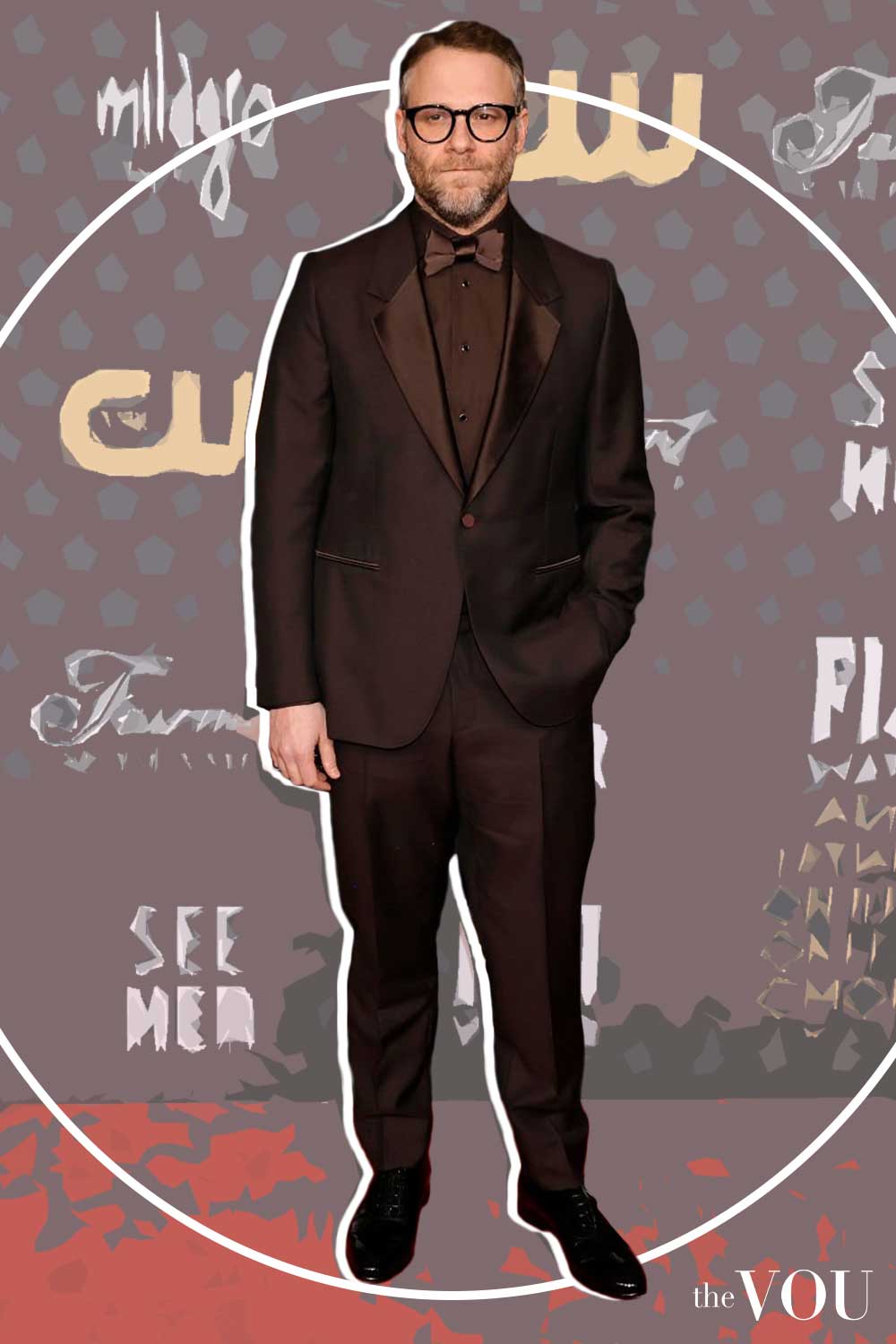
Navy and charcoal are the conventional evening colours; a dark brown suit, from a tailor such as Orazio Luciano, is a less traditional option that suits daytime or more relaxed events.
A Neapolitan cut has a softer shoulder and a relaxed line.
Set the trouser waistband where it is comfortable standing and seated, with a straight or gently tapered leg.
Suede Oxfords, from a maker such as Crockett & Jones, add texture.
An ecru twill shirt with a moderate spread collar, from a shirtmaker such as Ascot Chang, goes with a bronze ancient madder silk tie and a pocket square in a related colour.
A rose gold dress watch, such as one from A. Lange & Söhne, adds warmth.
Business Casual
Business casual usually means tailoring without a tie: a blazer or sports jacket, trousers, a collared shirt and leather shoes.
A navy wool hopsack blazer with natural shoulders and little lining, from a shop such as The Armoury, is lighter and more comfortable than a suit jacket.
A business casual blazer is often worn open, so check that it hangs straight and the fronts do not swing apart over your middle when unbuttoned.
Medium grey tropical wool trousers, from a trouser maker such as Rota, with the waistband where it is comfortable seated, go with suede loafers, from a maker such as Edward Green.
A light blue Oxford cloth button-down shirt, from a shirtmaker such as Mercer & Sons, should close without gaping when you sit; an ancient madder silk pocket square adds colour.
A steel sports watch suits the dress code.
The Art of Formal Refinement
Across every dress code, the same three checks do most of the work with an oval outline: a trouser waistband that stays comfortable where you want it, standing and seated; a jacket or coat that fastens over the middle without pulling; and a shirt that closes without gaping.
After that, lapel style, colour, pattern and single or double-breasted cuts are choices to compare in a mirror.
For everyday dressing and suits beyond formal occasions, see our guide to dressing an oval body shape and our guide to suit cuts for an oval body shape.
Style Like a True Gentleman
Before we say goodbye, fit does most of the work, whether or not you ever work with image consultants.
Professional styling starts with getting the fit right and choosing clothes that suit the occasion; knowing your body shape and seasonal colour palette can make the choosing quicker.
Our guides also cover styling by occasion, location, season and time of day, garments, footwear, accessories and heritage fashion brands.
Take our three free quizzes, then book a consultation if you would like personal help:
1. Find Your Body Shape
Different garments suit different silhouettes.
To compare your outline with the seven body shape descriptions, take our free body shape quiz for men.
2. Find Your Seasonal Colours
The garments in your outfits come in many colours.
To see which seasonal colour palette may suit you, take our free seasonal colour quiz for men.
3. Find Your Fashion Style
To explore your personal fashion style, take our free fashion style quiz for men; it suggests styles, outfit ideas and brands to explore.
Book a Consultation with The VOU
For personal help, you can book paid consultations with our image consultants and fashion stylists.
Our styling services for men page lists the paid consultations.
Wearing luxury brands is not enough on its own; how your clothes fit and suit the occasion matters more, and our personal style guide covers the rest.
For more on labels, see our guide to logo-heavy luxury brands and how to wear them.
Contact us if you would like to book a consultation.
Mandy Meyer’s focus at The VOU is men’s body-shape styling, garment fit and outfit proportions. Her coverage addresses the practical questions behind a wardrobe choice: how a jacket sits across the shoulders, how trousers fall and how different cuts change the silhouette a wearer wants to create.
Her subject areas include the triangle, inverted triangle, rectangle, oval, trapezoid, hourglass and diamond labels used in body-shape styling. These provide starting references for comparing visible proportions; they do not capture every body or prescribe one correct way to dress. The focus connects those observations with garment shape, construction, length and the relationship between the upper and lower parts of an outfit.
Mandy’s editorial coverage combines visual comparisons with fit checks for comfort and movement. Readers can consider whether a cut gives them the room they need, where clothing pulls or gathers and which changes might support their preferred look. The aim is to make menswear choices more understandable while keeping personal preferences and the wearer’s own styling goals central.