
Start here
What’s This About
There is no single right number of clothes for a man; it depends on your work, climate and laundry routine, and the useful aim is a wardrobe you actually wear.
This guide helps you work out your own numbers, such as:
The three factors that change how much you need
Why a smaller, well-matched wardrobe can be easier to use
Example numbers for shirts, T-shirts and knitwear
How many coats, shoes and suits cover most routines
How to review what you already own before buying
and many more!
Start from your own week, then adjust the example to fit.
Key Points
01The numbers here are one example for an office job, a temperate climate and weekly laundry.
02Your profession, climate and laundry habits change the totals most.
03Most shirts should work with most trousers, so a modest wardrobe makes many outfits.
04Sort your clothes into worn, needing repair, occasional and unwanted before you buy.
Many men have a wardrobe full of clothes and still feel they have nothing suitable to wear.
The answer is usually choosing better rather than owning more.
The useful question is not how many clothes you can acquire, but how many you actually need for your work, climate and routine.
This guide starts with the factors that change that number, then gives one example set of numbers you can adjust to your own life.
The Idea Behind a Curated Wardrobe
A curated wardrobe is about choosing clothes on purpose rather than accumulating them.
Fast trend cycles, including fast fashion, make it easy to buy clothes that only work for a short time or in one outfit.
A curated wardrobe is an edited set of versatile garments that you wear often, chosen for fit, durability and how well they combine.
Cost per wear is a useful check: a well-made jacket you wear every week can work out cheaper over time than several you rarely wear, though a higher price alone does not guarantee better quality.
Why Fewer Clothes Can Work Better
A smaller, well-matched wardrobe can make getting dressed quicker for some people, because there are fewer options to sort through.
When most of your clothes go together, it is also easier to see which outfits you return to, which helps a consistent personal style emerge.
Owning fewer clothes is a choice, not a virtue; the aim is a wardrobe you use.
The Capsule Wardrobe Concept Explained
A capsule wardrobe is not a strict rule of minimalism; it is a way of making a limited number of clothes go further.
It centres on a core set of garments in colours that work together, so they can be swapped in and out of outfits easily.
Most shirts should work with most pairs of trousers, and most jackets should layer over most jumpers.
That interchangeability lets a modest number of garments produce many outfits for the occasions you actually dress for.
Factors That Influence Your Ideal Wardrobe Size
There is no universal number: a MEL Magazine round-up by Andrew Fiouzi quotes a Reddit commenter making the same point, that climate, work and lifestyle all change what a man needs.
Before looking at any numbers, think about the three factors that change them most.
Your Profession and Lifestyle
Your working week is usually the biggest factor.
Someone in a firm that expects suits will need more suits and dress shirts than someone in a creative studio or a tech company with a casual dress code.
Your social life matters too: weddings, dinners, sport and travel each add their own needs.
Look at your usual week and put more of your wardrobe where you spend most of your time.
Climate and Seasonality
Where you live changes what you need.
A man in a cool, wet city such as Seattle or London will need more outerwear, knitwear and weatherproof shoes than one living in a warmer climate.
Storing off-season clothes keeps your wardrobe easier to see and use.
Laundry Habits and Practicality
Your laundry routine sets the minimum for everyday basics.
If you wash once a week, you need enough shirts, underwear and socks for seven days plus a few spare.
If you wash every two weeks, you need more.
An Example Set of Wardrobe Numbers
The numbers below are one example for an office-based routine in a temperate climate with weekly laundry; adjust them up or down for your own work, weather and washing habits.
Shirts, T-Shirts and Jumpers
These garments form the base of most daily outfits.
As an example, 7 to 10 T-shirts in colours that combine easily, such as white, black, navy and grey.
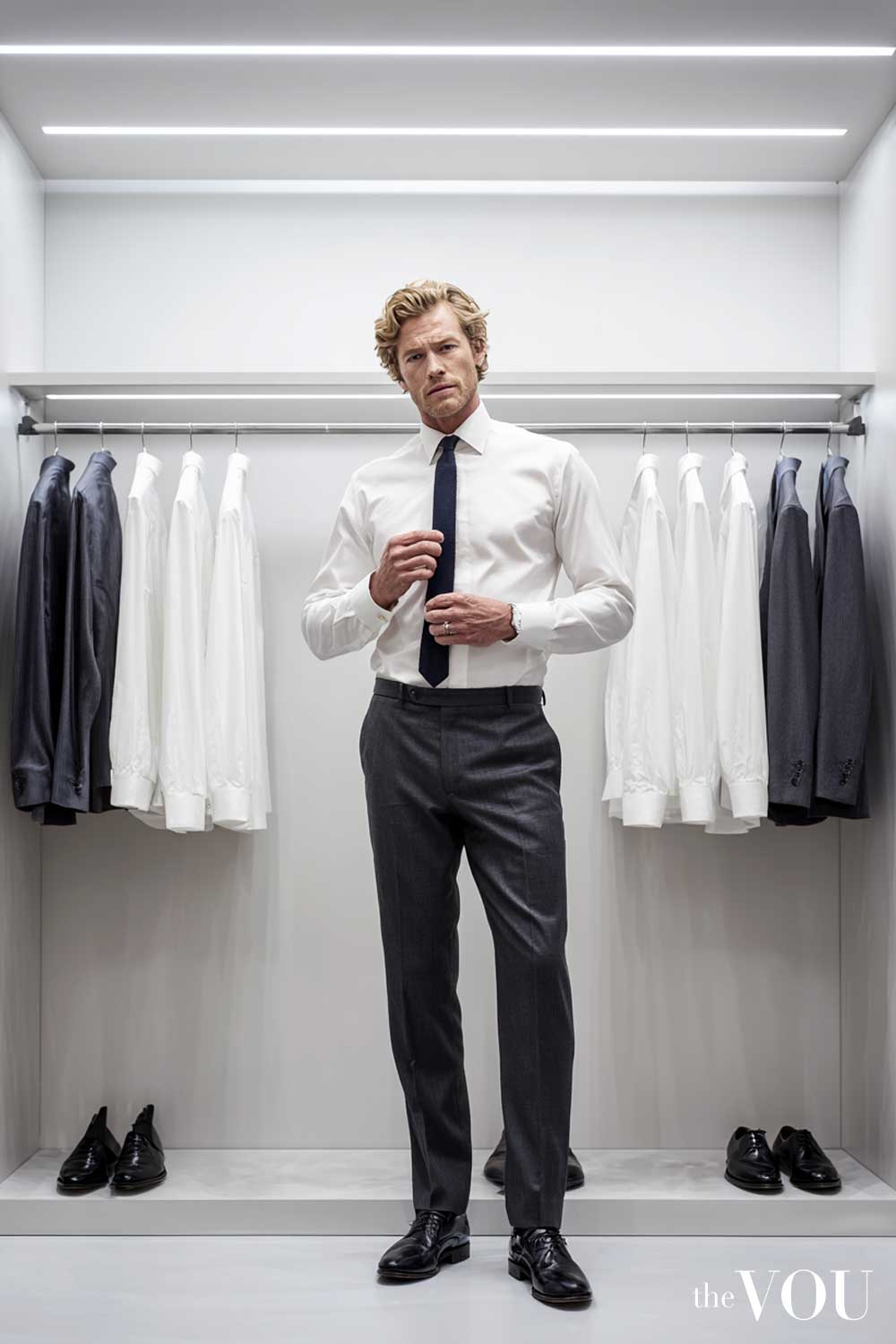
For shirts, 5 to 7 is a workable number, including a few white and light blue dress shirts for formal settings and some Oxford or casual button-down shirts.
For knitwear, 3 to 5 jumpers, such as a merino crew neck, a V-neck and a heavier knit for cold days.
From Denim to Dress Trousers
Two to three pairs of dark, well-fitting jeans cover most smart-casual wear, selvedge or not.
Add two to three pairs of chinos in shades such as stone, navy or khaki.
If your work needs them, two pairs of tailored trousers in charcoal and navy cover most formal occasions.
Coats and Jackets
Three or four is a common number for outerwear.
For example: a wool overcoat for winter, a transitional jacket such as a field jacket or bomber, and a navy blazer or sports coat to sit between casual and formal.
A waterproof raincoat is a practical fourth.
Shoes
Shoes affect how an outfit looks and how comfortable your day is, and four to six pairs suits many routines.
A typical set includes black leather Oxfords for formal events, brown brogues or Derby shoes for business and smart-casual wear, leather or suede boots, and plain leather trainers for off-duty days.
Loafers are a useful addition for warmer months.
Suits and Formalwear
How many suits you need depends on your work.
Many men find at least one suit useful for weddings, funerals and interviews.
For many, two well-fitting suits are enough: one in charcoal and one in navy.
With your dress shirts, these can cover formal business meetings, weddings and other important events.
If your job calls for a suit every day, three or four may suit you better; choose fit and durable cloth over adding more.
Underwear and Socks
These garments matter for comfort, even if no one sees them.
With weekly laundry, 10 to 14 pairs of underwear will last between washes.
The same goes for socks: 10 to 14 pairs, split between fine dress socks for tailored trousers and thicker socks for jeans and boots.
Our guide to undershirts covers what to wear under a dress shirt.
Curating Your Wardrobe Is an Ongoing Process
The right number of clothes is the number that covers your life without leaving much unworn.
Building a wardrobe you use is a continuing process of reviewing, repairing and occasionally buying with a clear gap in mind.
Begin by reviewing your current clothes: sort them into garments you wear, garments that need repair or alteration, seasonal or occasional garments and garments you no longer want, then decide what to keep before buying anything.
Sources
Andrew Fiouzi, “Is There an Exact Number of Clothes I Should Own?”, MEL Magazine, 8 January 2022.