

Most student days involve a lot of walking, rooms that are too hot or too cold, long hours at a library desk and, a few times a term, a presentation or an interview. The clothes that cope with all of that are simple ones, and they happen to be the pieces that make up the old money look.
The “old money” aesthetic borrows from preppy style and the Ivy League wardrobe of the mid-20th century, with plain colours, natural fabrics and a neat fit. For a student, the useful part is the logic behind it, a small set of clothes that all work together, rather than any particular label.
In practice that means a few Oxford shirts, a pair of loafers or plain leather trainers, chinos, a jumper and one jacket.
You do not need to buy into “quiet luxury” to dress this way. Most of the pieces can be found second-hand, and the clothes you already own probably cover half the list.
Why the Look Suits Student Life

Classic old money fashion relies on clothes that are easy to combine. Navy, grey, cream, camel and olive all go with each other, so a small wardrobe produces many outfits.
The look is also forgiving. An Oxford shirt still looks right slightly creased, a jumper covers a shirt that has seen a long day, and chinos survive hours of sitting.
Charity shops, vintage shops and resale apps are good places to find wool jumpers, tweed jackets and wool trousers, which last for years when the size is right. Check the fabric label, the seams under the arms and the elbows before you pay.
Dressing for a Day on Campus

Start with the walk. Comfortable shoes you can wear for several miles matter more than any jacket, so choose loafers or leather trainers with a cushioned insole, and keep a pair of boots for rain or snow. For a relaxed take on preppy outfits, clean trainers with chinos and a knitted polo work as well as loafers.
Then plan for temperature. Lecture halls and libraries are often warm while the walk between them is cold, so layers beat one heavy coat. A T-shirt or Oxford shirt, a crew-neck jumper or zip cardigan, and a light jacket let you add or remove a layer through the day.
In a warm climate or early autumn, swap the jumper for an overshirt and choose cotton or linen trousers. In a cold winter, a wool coat or a quilted jacket over a jumper does more than a blazer.
For presentations, interviews and formal dinners, add a navy blazer and a pair of grey wool trousers. With an Oxford shirt and loafers they cover most smart occasions at university, and with a tie they are smart enough for an interview.
The Core Pieces
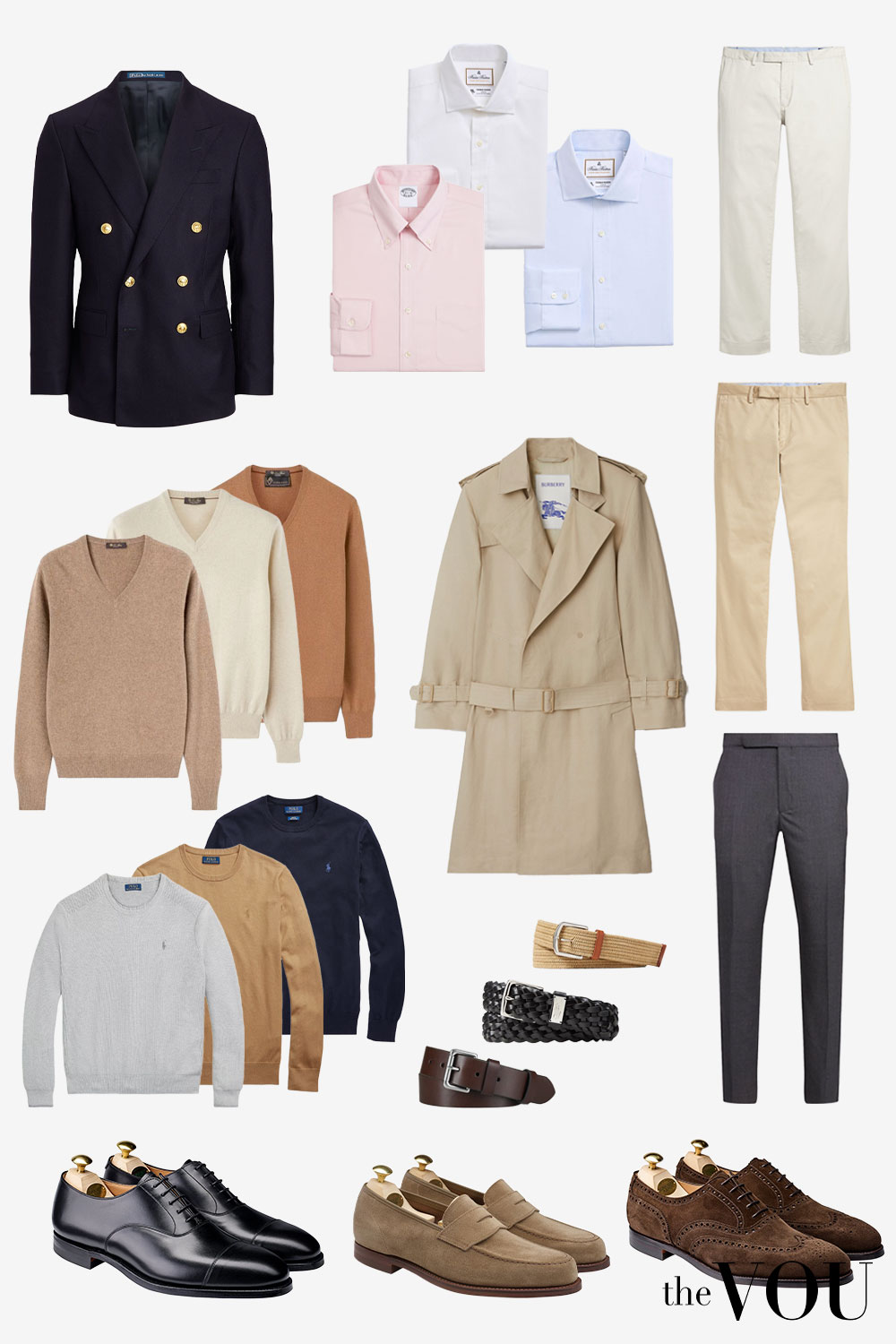
Use the list below as a starting point and adjust the quantities to your timetable, climate and laundry routine. Choose colours that work together so most tops combine with most trousers.
Here is a starting list.
- Three or four shirts, including at least two Oxford button downs, which work tucked or untucked.
- Two or three plain T-shirts or knitted polos in white, navy or grey.
- One pair of chinos, one pair of dark straight jeans and one pair of grey wool trousers.
- One crew-neck jumper in wool or cotton, and one zip cardigan or overshirt.
- One navy blazer, loafers or plain leather trainers, a leather belt and a warm coat suited to your climate.
With that list you can dress for a lecture, a library day and a presentation without buying anything else.
Buying Less and Making It Last

Buying fewer, better clothes is also the cheaper route over a degree, and it is the simplest step towards sustainability. WRAP, the UK waste charity, found that keeping clothes in active use for nine months longer would cut their carbon, water and waste footprints by 20 to 30 per cent each, as FashionUnited reported.
Laundry decides how long clothes last. Wash jumpers less often and dry them flat, hang shirts straight after washing so they need little ironing, and air wool trousers and blazers between wears instead of washing them. Shared machines can run hot, so check the care label and choose a cool wash for wool and dark cotton.
If your campus runs clothing swaps, they are a free way to try a blazer or tweed jacket before you commit to buying one.
How to Build a Campus Capsule Wardrobe
Start with what you already own. Lay everything out, keep the pieces in neutral colours that fit, and note the two or three gaps, usually a good shirt, a jumper or a jacket.
Then fill the gaps in this order.
- Shoes first. Students walk more than most people, so comfortable leather shoes or trainers are the best place to spend.
- A warm coat next, chosen for your climate rather than for looks alone.
- Shirts and a jumper, bought second-hand where you can.
- A navy blazer once you have a presentation, interview or formal event coming up.
- Clean shoes and clothes that are hung up rather than left in a pile, which does more for the look than any label.
A capsule wardrobe like this also saves time in the morning, because the tops and trousers combine easily.
Keeping It Simple
The point of this wardrobe is that it looks after itself. Once the core pieces are in place, getting dressed takes a minute, and the clothes cope with a full day of walking, sitting and changing rooms.
Add pieces slowly, as your timetable, climate and budget show you what you actually need.