Start here
What’s This About
A slim or narrow build looks assured in business clothing when every garment fits first, and structure, cloth weight and proportion are then chosen to suit the frame.
This guide covers business choices for a slim build, such as:
three-piece and double-breasted suits, and what each one changes
shirt collars and cuffs to compare against your neck and wrists
Oxford and monk shoes with soles that suit a narrow leg line
overcoats with structured shoulders, and how to check the shoulder fit
dress watches with a case that sits within the wrist
and many more!
A slim build is not a problem to correct, so treat each suggestion as an option to try in the mirror.
Key Points
01Fit comes first: a suit that is too big reads as borrowed on a slim frame, whatever its cut or colour.
02A waistcoat, a double-breasted front or a firmer cloth can add some visual weight through the torso if that is the look you want.
03Collar height and spread, cuff style and shoe sole are proportion choices to compare, not fixes for a thin neck or narrow wrists.
04No garment guarantees authority; a confident, well-fitted outfit suited to your workplace is the realistic aim.
Many men with a slim or narrow build want their business clothes to look substantial and assured rather than loose or slight.
A slim build is not something to hide.
The usual difficulty is practical: ready-made suits are often cut with more room than a narrow chest needs, so the jacket can hang away from the body unless it is chosen or altered with care.
This guide sets out the suits, shirts, shoes, coats and watches worth comparing, what each one is meant to do on a slim frame, and the fit checks that matter before any of it.
Choose Well-Fitted Three-Piece or Double-Breasted Suits if You Want More Presence
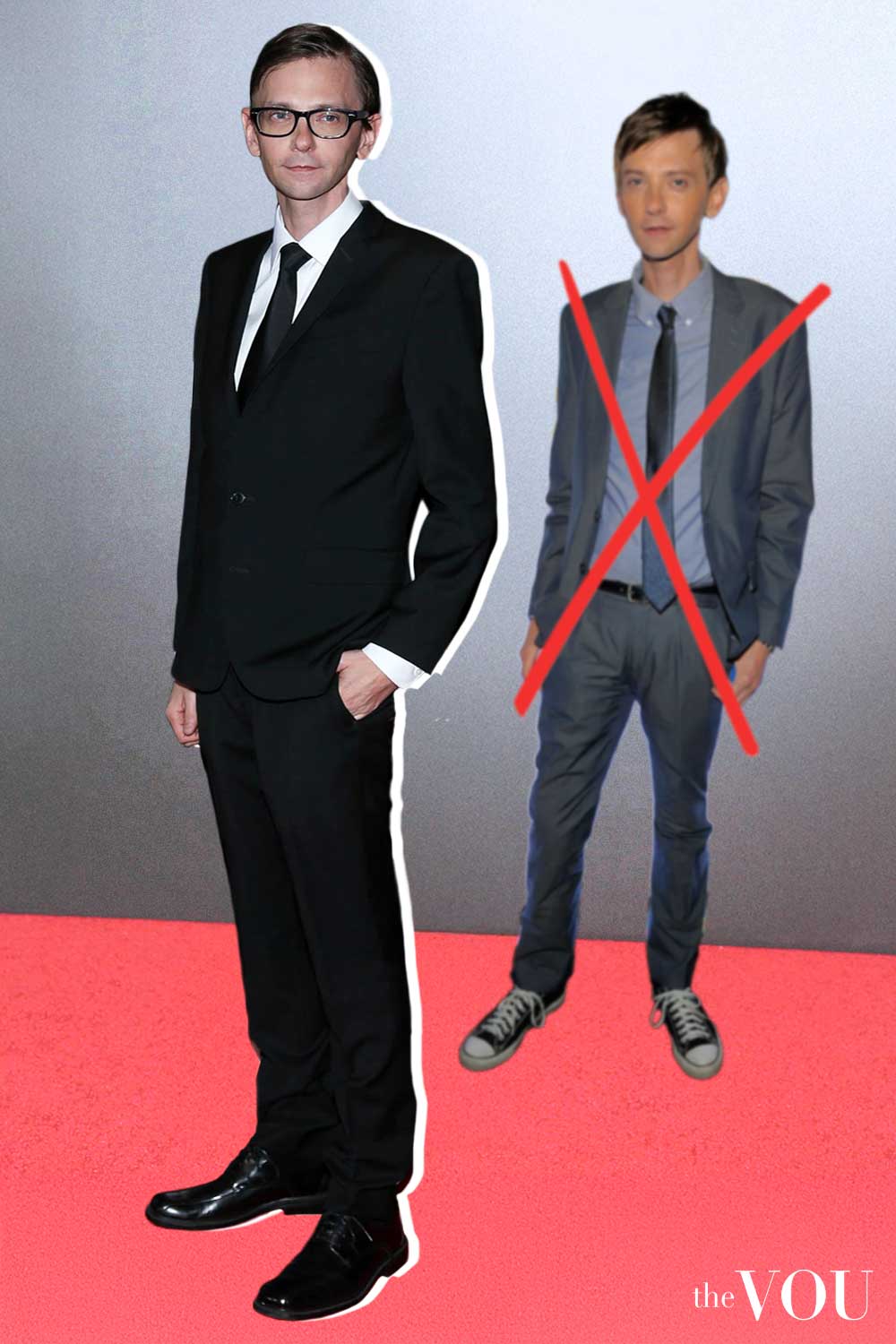
Start with fit.
The jacket shoulder should end close to the edge of your own shoulder, the chest should lie flat without pulling at the button, and the waist should follow your torso without hanging off it.
On a slim frame, a suit that is a size too big is usually what makes the body look slight, more than the cut or colour.
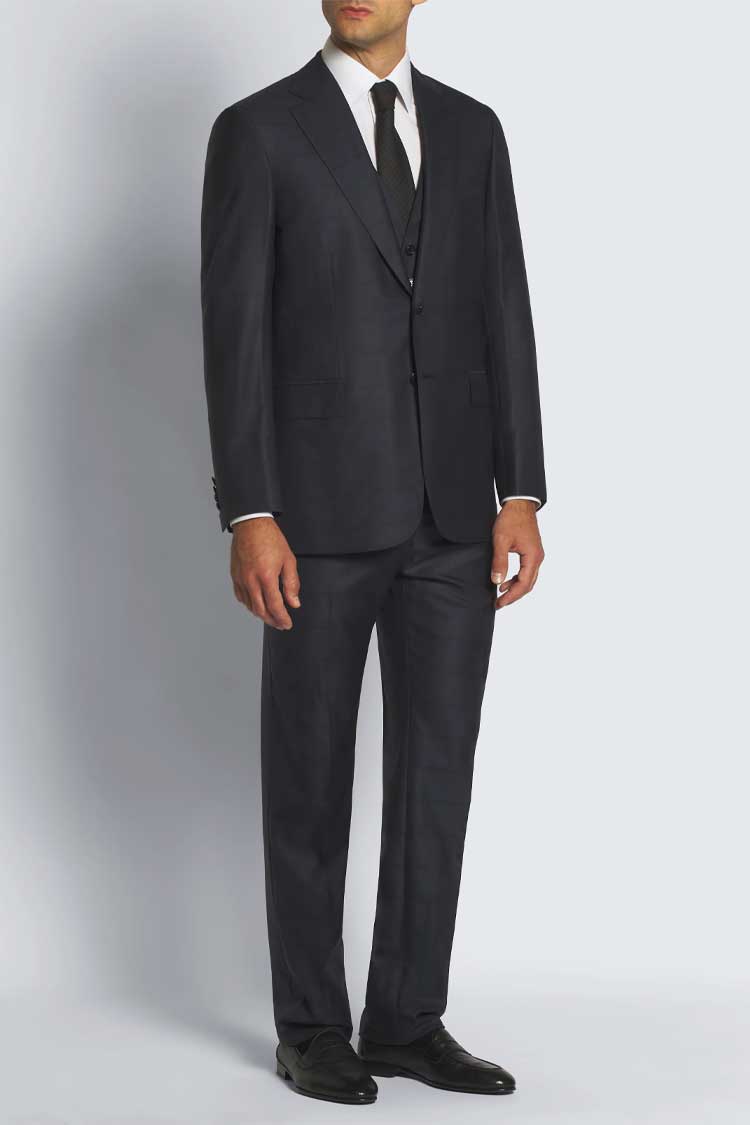
Once the fit is right, a three-piece suit in worsted wool is one way to add some visual weight through the chest and torso.
The waistcoat covers the shirt when the jacket is worn open, so the front reads as cloth rather than a gap, and a cloth with a little more body tends to hold its shape instead of clinging.
Navy and charcoal are the conventional business colours for a three-piece suit, and many men like the continuous dark line a matching waistcoat gives from collar to waist.
Whether a darker or lighter tone suits you better depends on your colouring and your workplace, so compare both in the mirror rather than treating dark as a rule.
The Brioni navy blue wool and silk three-piece Brunico suit is one example to look at.
A good alternative to the three-piece suit is a classic double-breasted suit.
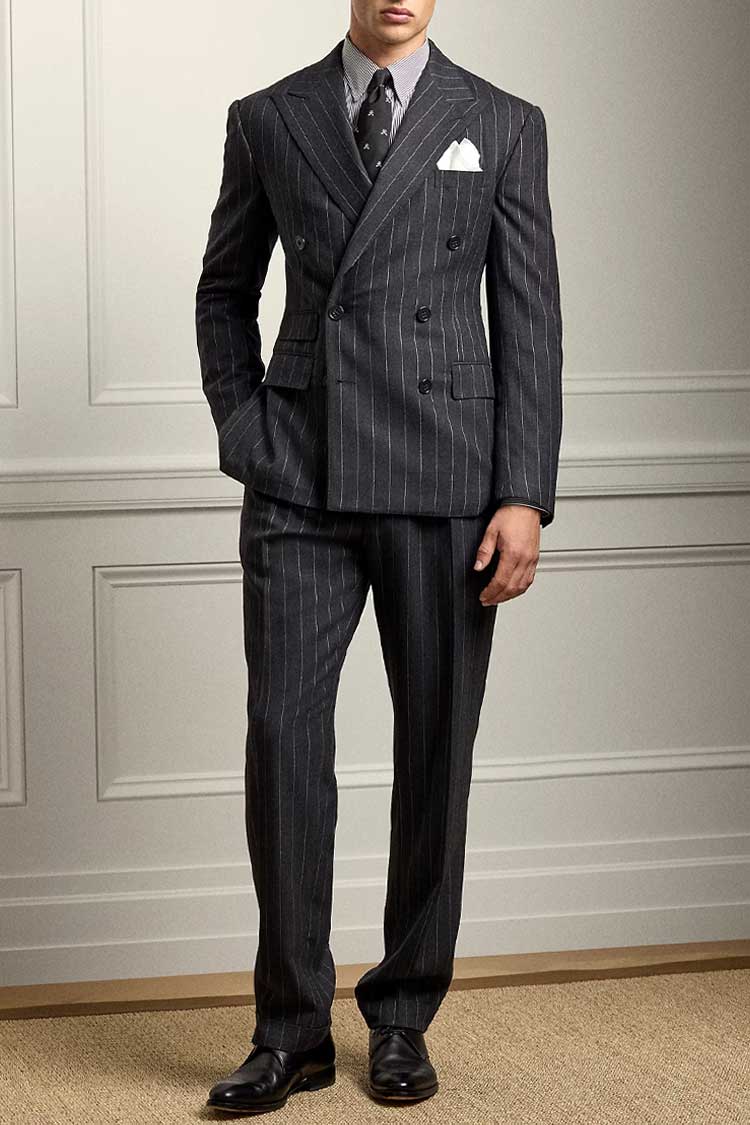
The overlapping front of a double-breasted jacket puts an extra layer of cloth across the chest, and peak lapels point up and out towards the shoulders, so many men with a narrow chest use the cut to make the upper body look a little broader.
Fit matters even more here: a double-breasted jacket is designed to be worn fastened, so check that it closes without pulling and that the overlap does not swamp a narrow torso.
The Ralph Lauren Purple Label Kent hand-tailored double-breasted pinstripe suit is one option to compare.
Compare Spread Collar Shirts and Double Cuffs
Start with the collar size: you should be able to fasten the top button without the collar squeezing, and without a gap standing away from the neck.
A collar that is too big for a slim neck looks loose whatever its style.
If your neck looks long or narrow to you, a spread collar is worth comparing with a point collar.
The wider spread makes more horizontal lines at the neck, which some men prefer, while a point collar keeps the line narrow and vertical.
French (double) cuffs add a little more cloth at the wrist than a button cuff.
Collars with a firmer interlining tend to stand up and keep their shape through the day, and a double cuff in a reasonably substantial cotton folds back neatly rather than going limp.
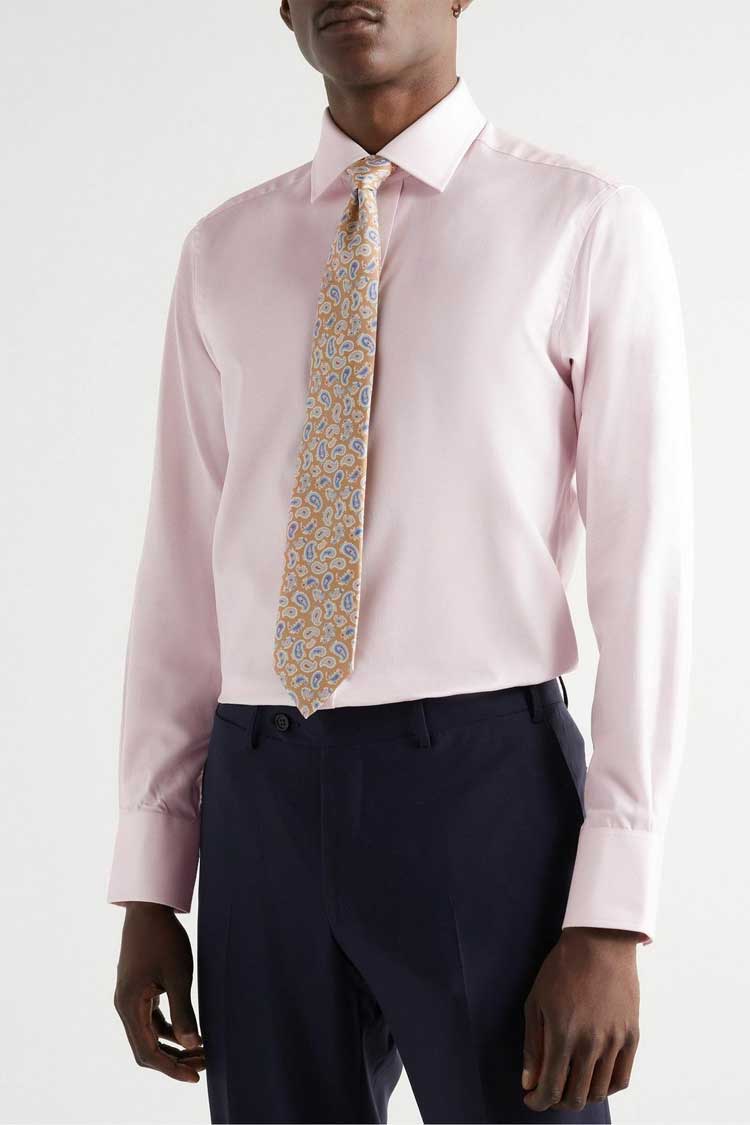
For example, the Emma Willis cutaway collar shirt has a wide spread that sits across the neck and leaves room for a larger tie knot if you like one.
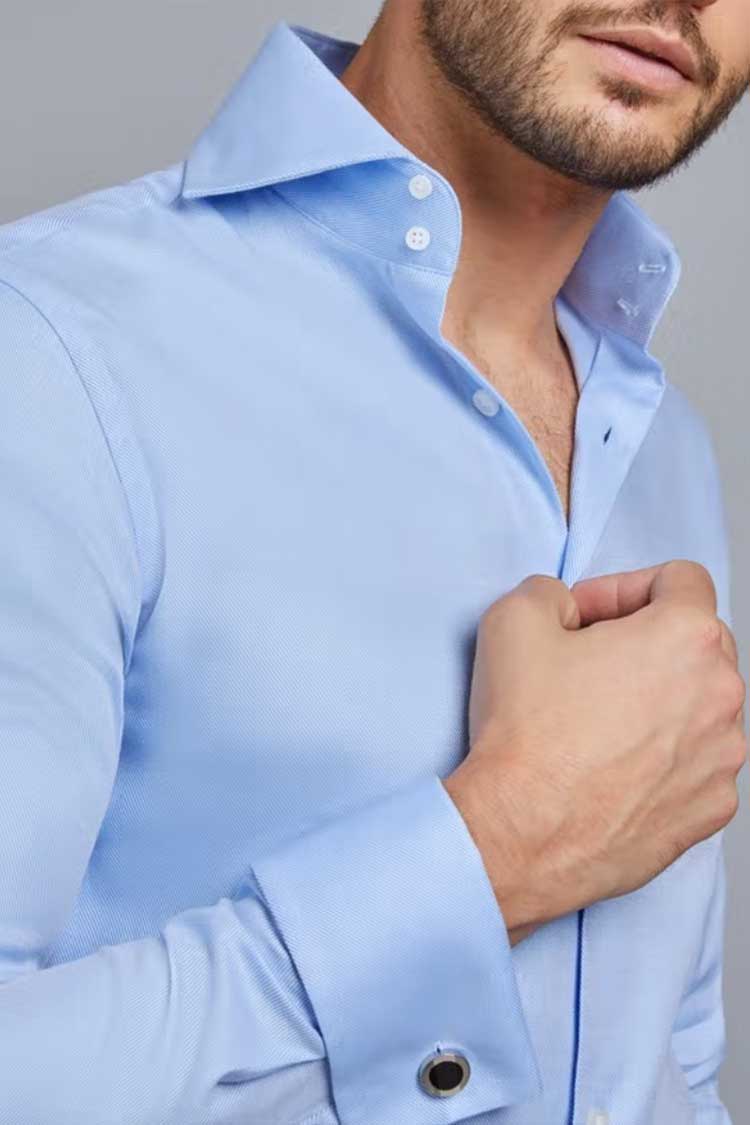
The Turnbull & Asser double-cuff shirt is a classic example of the double cuff.
The folded cuff gives a slightly fuller, more structured finish at the wrist, which some men with slim wrists prefer to a single button cuff.
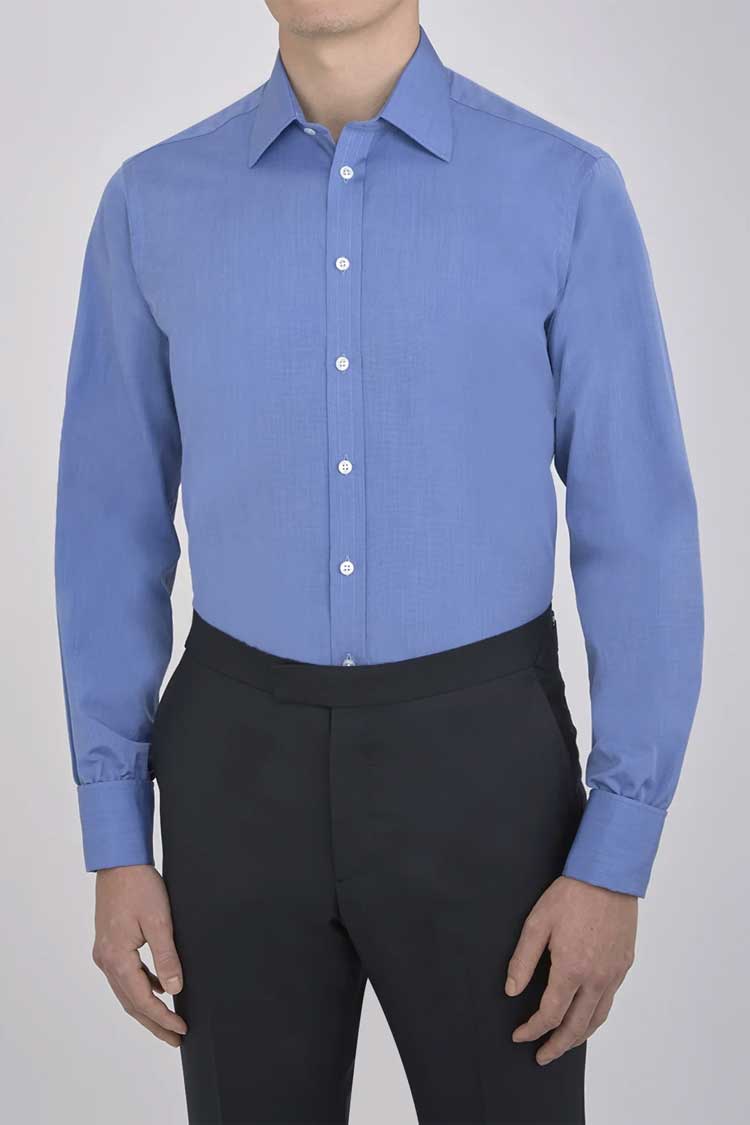
Hawes and Curtis’s high-collar French cuff shirt has a taller collar band, an option to compare if you would like more collar showing above the jacket.
The collar should still close comfortably; a taller band that presses on the neck is a fit problem, not a style choice.
Ground Your Frame with Oxford Shoes
Shoes finish the line of the trouser, so it helps to choose a sole and shape in proportion with a narrow leg.
A traditional Oxford with a medium-weight sole is a safe business choice.
A Goodyear-welted shoe usually has a welt that projects slightly beyond the upper, which gives the shoe a sturdier look than a very slim, closely trimmed sole.
If you have a slim build, compare shoes in the mirror with your suit trousers: a very narrow, elongated toe can look delicate, while a heavy commando sole can look out of scale with a slim business trouser.
A medium sole sits between the two.
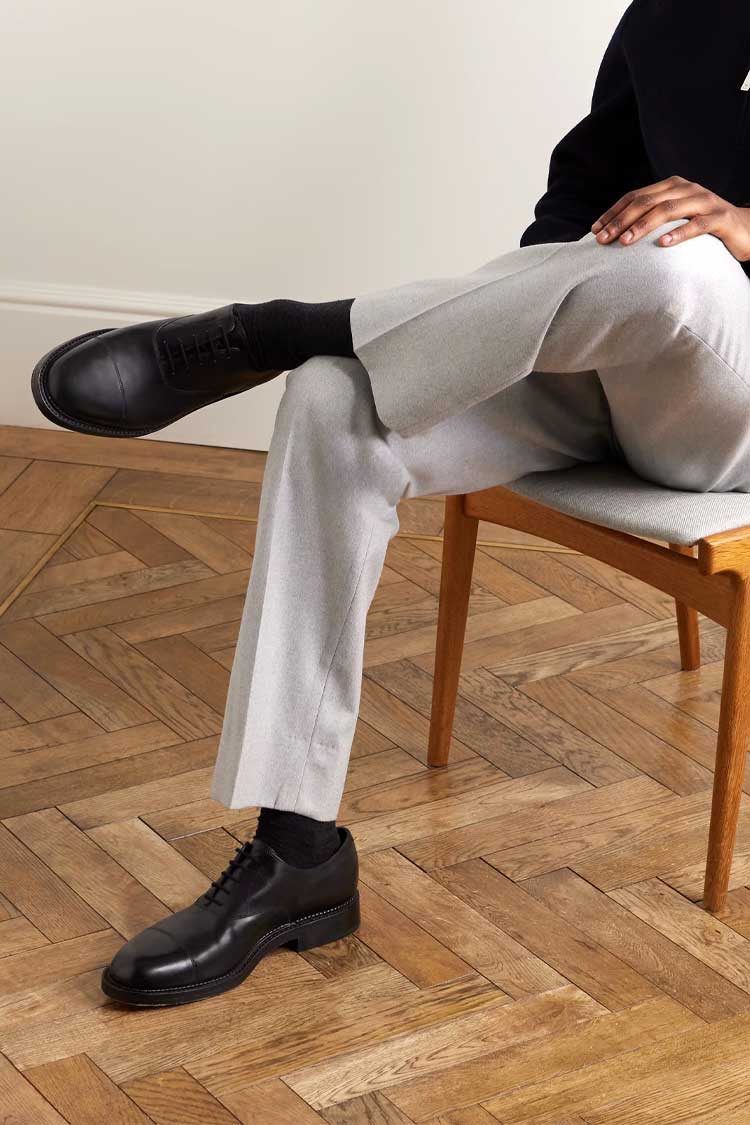
The John Lobb City II cap-toe Oxford with a medium sole is one example.
The toe cap is meant to break up the length of the shoe, and the sole gives it some substance under a slim trouser.
Edward Green Westminster double-sole monk straps have an extra layer of sole, which makes them look more substantial.
The buckles add a horizontal detail across the instep; a monk strap is generally read as slightly less formal than a plain Oxford, so check that it suits your workplace.
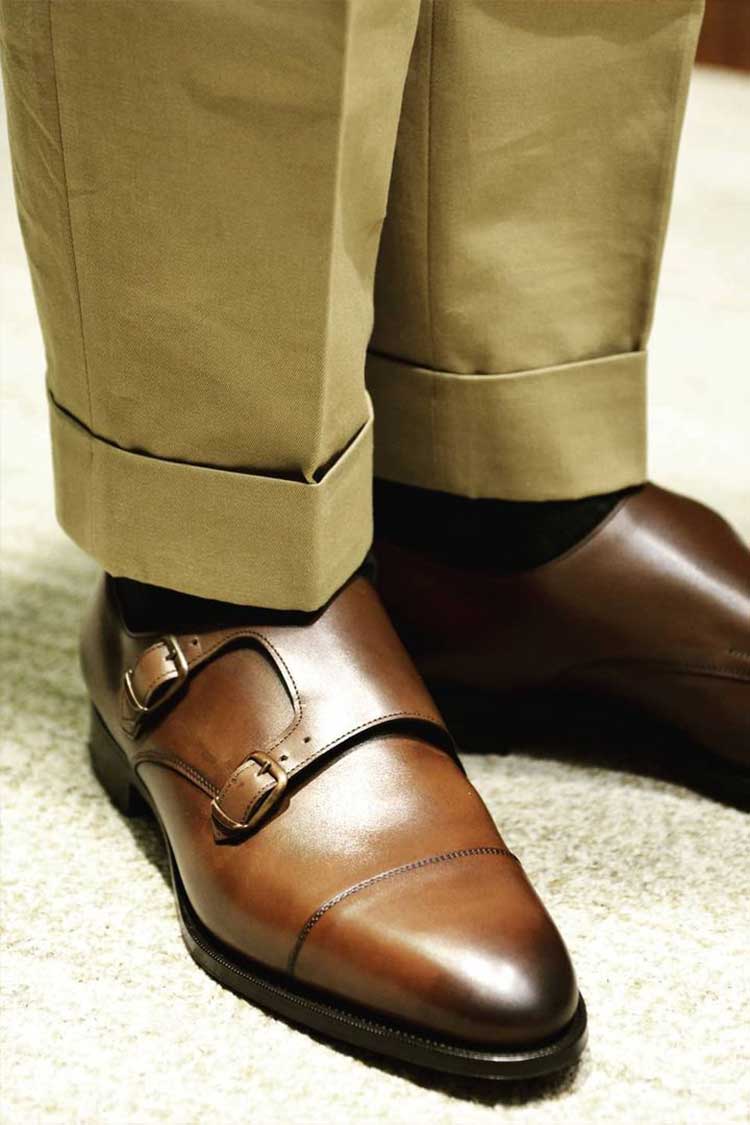
Crockett & Jones Westfield semi-brogue Oxfords have moderate decoration that breaks up the length of the shoe without looking flashy.
The perforations add a little interest while keeping the shoe suitable for business wear.
Look for Structured Shoulders in Traditional British Coats
Many traditional British overcoats are cut with defined shoulders and some chest structure, which suits a slim frame if you want more shape across the upper body.
An overcoat is worn over a jacket, so its shoulder normally sits slightly beyond the jacket shoulder underneath.
Try it on over the suit you will wear it with, and check that the shoulder does not collapse or overhang, and that the chest holds its shape rather than falling in.
Double-breasted overcoats add an extra layer of cloth across the chest, the same idea as the double-breasted suit above.
The Cordings Navy Charcoal Coldstream Loden Coat is one option.
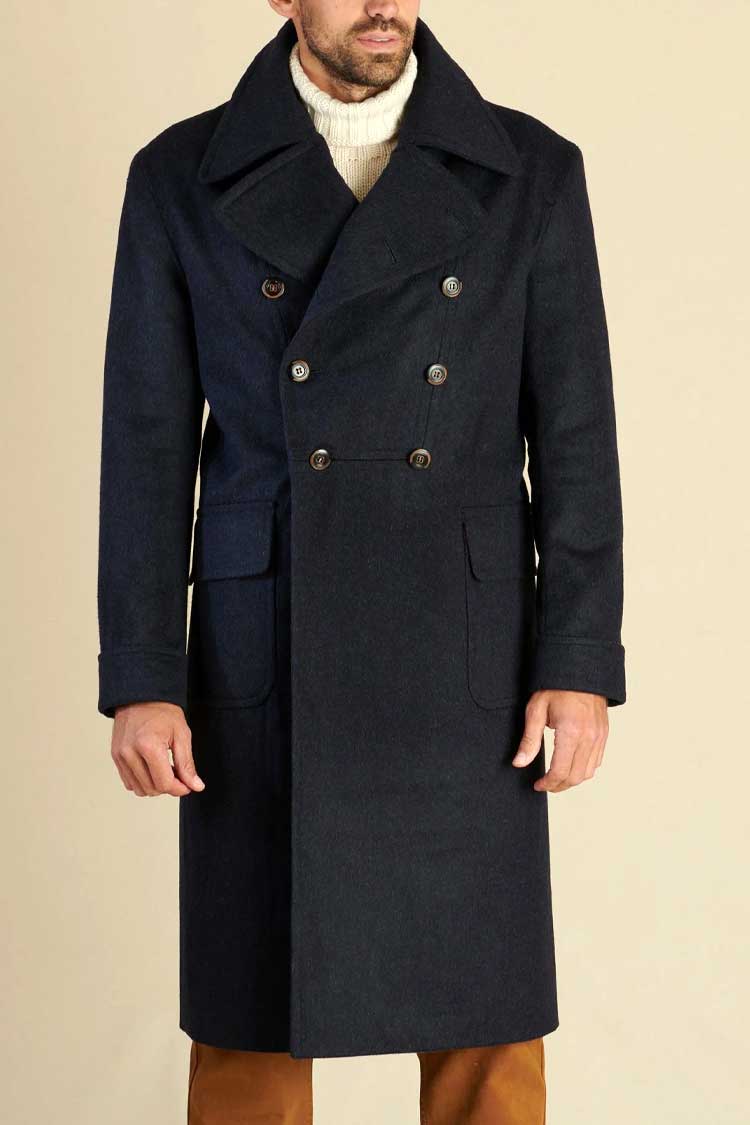
Another option is the Gieves and Hawkes Croft Bridge Wool Coat; a heavier wool generally holds its shape better than a light, soft one.
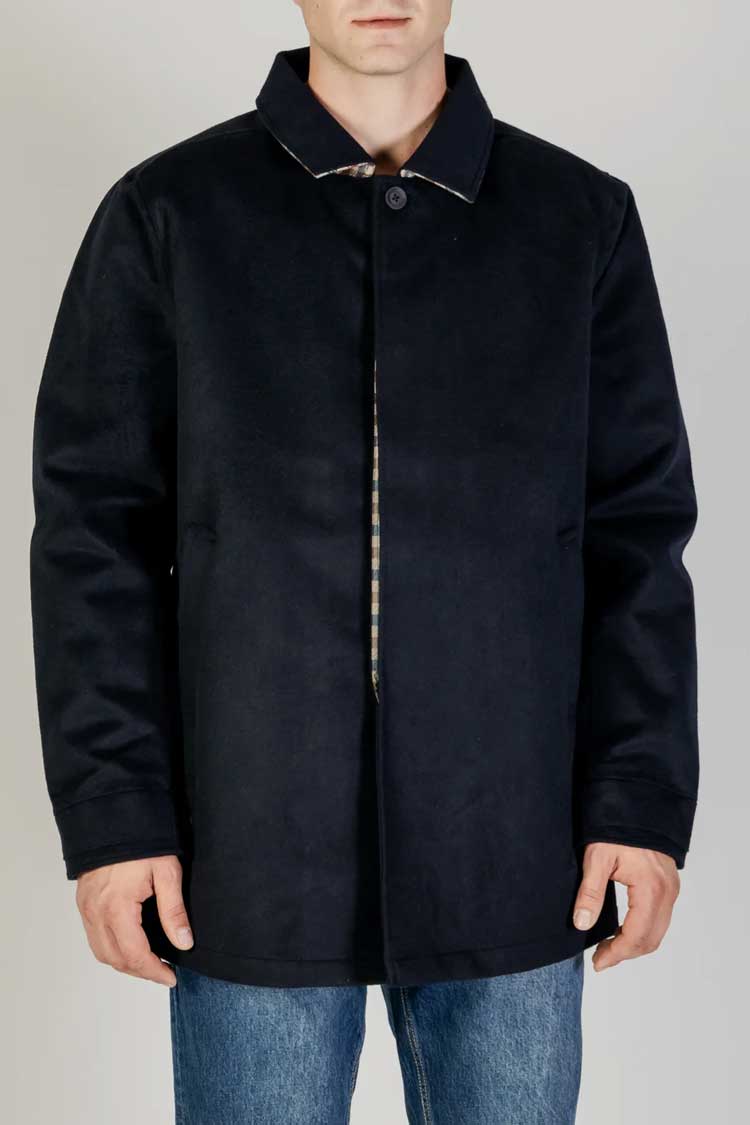
City coats, such as the Aquascutum Wool 3-Way Active Trench Coat, are another route.
Check the product details for the construction you want rather than assuming every city coat is the same.
Look at how the sleeve is joined: a set-in sleeve gives a more defined shoulder line, while a raglan sleeve gives a softer, sloping shoulder.
Choose a Dress Watch in Scale with Your Wrist
On a slim wrist, the useful check is whether the case sits within the width of the wrist, with the lugs not overhanging the edges.
Case diameter on its own is a rough guide, because lug length, case shape and thickness all change how big a watch looks, so try it on.
A dress watch should also be thin enough to slide under a shirt cuff.
The strap width is set by the gap between the lugs, so choose a case you like first and the strap follows from it.
A deployant clasp (deployment buckle) keeps a leather strap from creasing at the buckle and sits neatly under a cuff, though an ordinary pin buckle is just as correct.
The Jaeger-LeCoultre Reverso, Cartier Tank Louis and IWC Portofino Automatic are well-known examples.
The Reverso and Tank have rectangular cases, measured by length and width rather than diameter, and the Portofino is round, so compare each on your own wrist.
Conclusion
For a slim build, business clothes look most assured when they fit closely and are chosen for structure and cloth weight rather than added bulk.
Get the suit, shirt collar and coat shoulder to fit first, then use a waistcoat, a double-breasted front, a spread collar, a medium-soled shoe or a watch in scale with your wrist wherever you like the result.
Your work and how you carry yourself still do more for authority than any garment.
Style Like a True Gentleman
Before we say goodbye, fit does most of the work, whether or not you ever work with image consultants.
Professional styling starts with getting the fit right and choosing clothes that suit the occasion; knowing your body shape and seasonal colour palette can make the choosing quicker.
Our guides also cover styling by occasion, location, season and time of day, garments, footwear, accessories and heritage fashion brands.
Take our three quizzes, then book a consultation if you would like personal help:
1. Find Your Body Shape
Different garments suit different silhouettes.
To compare your outline with the seven body shape descriptions, take our body shape quiz for men.
2. Find Your Seasonal Colours
The garments in your outfits come in many colours.
To see which seasonal colour palette may suit you, take our seasonal colour quiz for men.
3. Find Your Fashion Style
To explore your personal fashion style, take our fashion style quiz for men; it suggests styles, outfit ideas and brands to explore.
Book a Consultation with The VOU
For personal help, you can book paid consultations with our image consultants and fashion stylists.
Our styling services for men page lists the paid consultations.
Wearing luxury brands is not enough on its own; how your clothes fit and suit the occasion matters more, and our personal style guide covers the rest.
For more on labels, see our guide to logo-heavy luxury brands and how to wear them.
Contact us if you would like to book a consultation.