
Start here
What’s This About
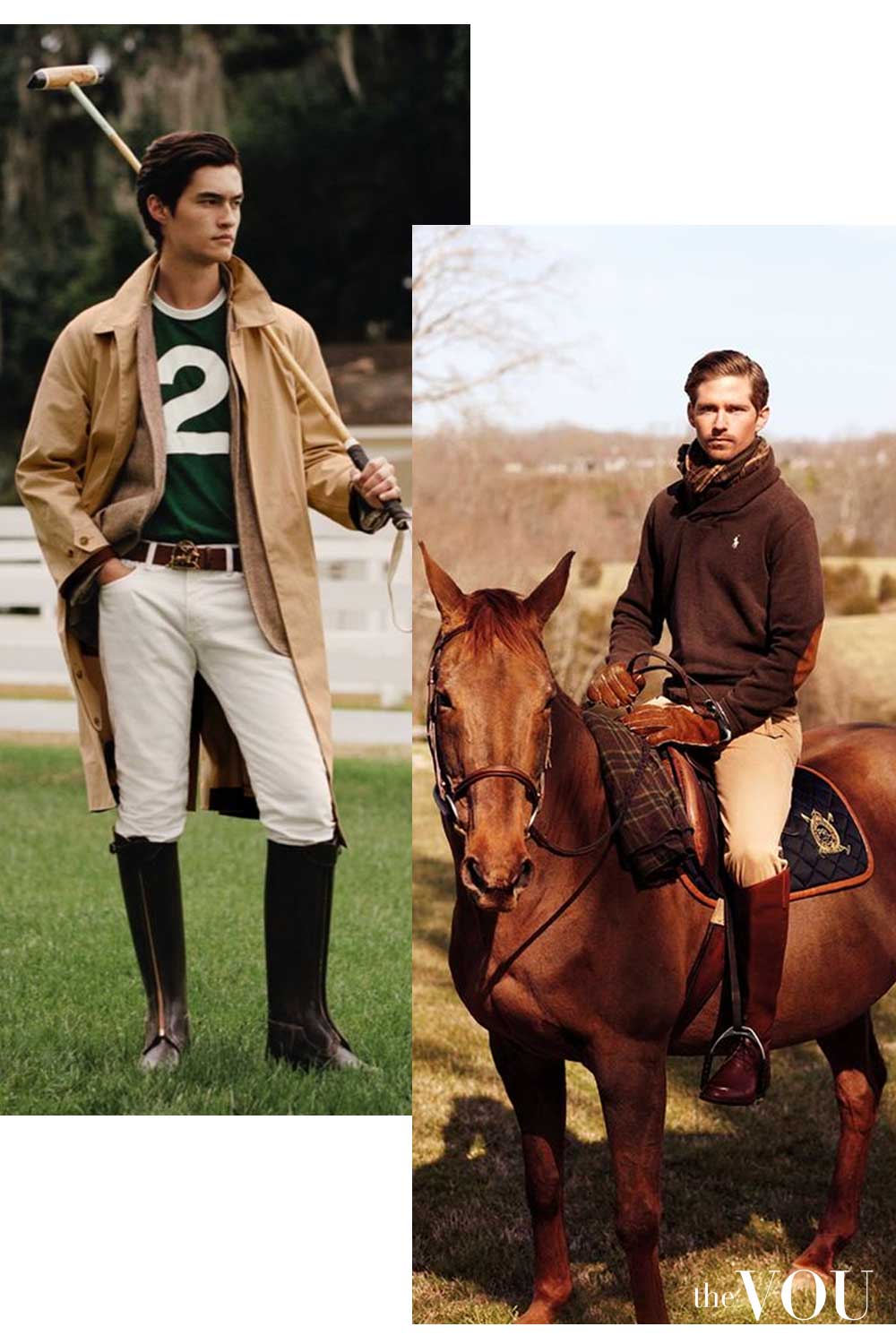
Equestrian style for men means tweed, check shirts, breeches, waxed jackets and leather boots, worn to suit whether you are watching, riding or just borrowing the look.
This guide covers equestrian dressing for men, such as:
What spectators wear to a polo match, including shoes for treading in divots
A tweed outfit for a country ride or hack
What dressage rules ask riders to wear
Why guests do not wear a scarlet hunt coat
An everyday stable-yard look with a waxed jacket
and many more!
Whenever you ride, a certified helmet and heeled boots come before any styling choice.
Key Points
01Riding needs a helmet certified for riding, such as ASTM F1163 or PAS 015, and boots with a heel so the foot cannot slip through the stirrup.
02Spectator outfits are about grass and weather, so brogues, loafers or plimsolls work better than thin heels.
03Dressage, hunting and many polo events have their own dress codes, so check them before you buy.
04Tweed, cord, moleskin and waxed cotton in brown, green and buff give the look without copying a uniform.
Equestrian style borrows the clothes of riding, polo and country sport: tweed jackets, check shirts, breeches, waxed jackets and tall or ankle-height leather boots.
This guide gives five outfits built around real equestrian settings, and it separates two different needs.
If you are watching, visiting a yard or simply like the look, you are dressing for style and weather.
If you are riding, the safety kit comes first and the style follows.
The look sits close to the old-money aesthetic, and our guide to equestrian chic for men explains its history and wardrobe in more depth.
You do not need a horse, a family estate or any particular label for these outfits to work; they share the same practical logic as much old-money style, where durable fabrics and good fit matter more than logos.
Before you ride: safety kit comes first
Anyone riding needs a helmet made for riding, not a cycling or ski helmet.
US Equestrian accepts helmets certified to ASTM F1163, PAS 015, VG1 01.040 or Snell 2016 for its competitions, and many riding schools ask for a certified helmet too.
Some discipline guides, including the US Dressage Federation’s attire guide, still name only ASTM/SEI certification, so check your discipline’s current rulebook before you buy.
Riding schools also advise buying a helmet new, because earlier knocks can leave damage you cannot see.
Wear boots with a defined heel, usually about 1 to 1.5 inches, so your foot cannot slide through the stirrup.
Trainers and flat-soled shoes are unsuitable in the saddle for the same reason.
Choose trousers that move with you without loose fabric: breeches or jodhpurs are designed for this, and stretch jeans without a thick inside seam can do for a first lesson.
Avoid long scarves, loose coats and anything else that could catch on the saddle or bridle.
The outfits below follow these rules wherever riding is involved.
1. Watching a polo match
Spectators are not on horseback, so this outfit is about grass, sun and a smart-casual dress code.
Wear: a navy blazer in a light wool or linen, a white or pale blue cotton shirt or a white piqué polo shirt, stone or white chinos, a tan woven leather belt and brown suede loafers or brogues.
Polo shirts take their name from the sport, and labels such as Polo Ralph Lauren made them a casual staple; any well-fitting cotton piqué version works here.
Cowdray Park Polo Club, for example, tells spectators that no tie is required, that chinos and even smart denim are acceptable, and that brogues, loafers or plimsolls suit the grass when you walk out to tread in the divots at half-time.
Avoid thin-heeled or very smart leather-soled shoes, which sink into turf and slip on wet grass.
Add a Panama or other brimmed straw hat and sunglasses for a sunny day, and keep a light waterproof jacket in the car for British weather.
Check the dress code of the event, because a club’s cup final can be far smarter than an ordinary weekend match.
2. A country ride or hack
This is the classic tweed look adapted for actually riding out, sometimes called ratcatcher in hunting circles.
Wear: a brown or green tweed jacket cut with enough room to move your arms, a tattersall check shirt with a plain knitted tie or stock, tan or fawn breeches, brown leather field boots with a heel, leather riding gloves and a certified riding helmet.
A tweed jacket with a hacking pocket (a slanted flap pocket) and a single long back vent is the traditional riding cut, because the vent lets the jacket sit over the saddle.
A navy lambswool or cashmere scarf can be added before or after the ride, tucked well inside the jacket so it cannot catch.
Off the horse, swap the breeches for cord trousers and keep the same jacket and shirt for a pub lunch, a nod to preppy style, which grew out of similar sporting clothes.
3. Dressage competition dress
Dressage has a written dress code, so check your federation’s rulebook before buying anything.
Wear: a short riding jacket, traditionally black or navy, a white shirt with a white stock tie or tie, white or light breeches, black tall riding boots, gloves in a solid colour and a certified helmet that matches or coordinates with the jacket.
Under the US Dressage Federation’s summary of US Equestrian rules, a tailcoat is only permitted in classes above Fourth Level, and protective headgear is required for every mounted rider on competition grounds.
Bright or patterned breeches are not allowed, and above Fourth Level tall riding boots are required, while lower levels also allow paddock boots with half chaps.
If you only want the look away from the arena, the useful takeaway is the clean contrast of a dark jacket, white shirt and pale trousers, which works with black or dark brown leather boots under jeans or chinos.
4. Hunting dress and the country colour palette
Hunt dress is set by each hunt, and some garments are earned rather than chosen.
Hunting helped shape the wider British countryside wardrobe, but hunt coats follow their own rules.
The scarlet coat is worn by masters, hunt staff and members who have been given the right to wear the hunt’s colours, so it is not a coat for a guest or a fashion outfit.
Guests and new members usually wear ratcatcher (a tweed coat) early in the season and a plain black or navy coat in the formal season, always with a riding helmet.
Wear as a guest in the formal season: a black or navy hunt coat, a white stock tie fixed with a plain stock pin, buff or beige breeches, plain black riding boots, brown or tan leather gloves and a certified helmet, usually with a black velvet cover.
Ask the hunt secretary what is expected before your first day, because rules differ between hunts and between countries.
Off the field, the same palette of deep red, hunter green, brown and buff is easy to borrow: a burgundy lambswool jumper, a green tattersall shirt and buff cord trousers carry the feeling without copying a uniform.
Hunt coats have long been made by traditional tailors, and our Savile Row tailoring guide explains how bespoke tailoring works.
The same muted country colours run through Sloane Ranger dressing.
5. The stable yard and weekend look
This is the easiest outfit to wear every day, whether or not you ride.
Wear: a waxed cotton jacket in olive or brown over a blue chambray or check shirt, a navy crew-neck jumper on colder days, tan moleskin or cord trousers, a brown leather belt and brown leather jodhpur boots or Chelsea boots.
Barbour, founded in South Shields in 1894, is one well-known maker of waxed jackets, and many other makers offer similar designs.
Add a tweed or cotton flat cap and tortoiseshell sunglasses, a touch that also fits French BCBG style and works with vintage clothing such as a second-hand waxed jacket.
If you plan to ride in this outfit, swap the trousers for breeches or jodhpurs and add a certified helmet.
Dos and don’ts
Scroll horizontally to see all columns →
| Do | Don’t |
|---|---|
| Wear a certified riding helmet and heeled boots whenever you ride | Ride in trainers, a cycling helmet or no helmet |
| Choose hard-wearing cloth such as tweed, cord, moleskin and waxed cotton for outdoor days | Wear loose layers or long scarves that can catch on the saddle or bridle |
| Use earthy colours such as brown, green, buff and burgundy | Wear a scarlet hunt coat or a hunt’s colours you have not been given |
| Check the written dress code for a competition, hunt or polo event | Assume one event’s dress code applies everywhere |
| Check that jackets let you lift your arms and that trousers let you bend your knees | Buy riding clothes for a label alone without trying the fit |
Equestrian style works best when the clothes suit what you are actually doing that day, whether that is watching, riding or walking the dog.
For more on makers associated with this look, see our list of equestrian clothing brands, and for the relaxed attitude that keeps it from looking like a costume, read about sprezzatura.
Our guide to old-money dress code rules covers the same habits for other occasions.
Style with The VOU
If you would like to go further, start with our three free quizzes.
Check your body shape with the free body shape quiz for men.
Find your seasonal colours with the free seasonal colour quiz for men.
Take the fashion style quiz to see which styles suit your taste.
None of the quizzes is needed to wear the outfits above.
For personal help, you can book a consultation with The VOU’s stylists, for example a fashion style analysis for men.
Our styling services for men are paid consultations; the shop page lists what each one includes.
Our guide to building a capsule wardrobe shows how a few jackets, shirts, trousers and boots can combine in several ways.
Mandy Meyer’s focus at The VOU is men’s body-shape styling, garment fit and outfit proportions. Her coverage addresses the practical questions behind a wardrobe choice: how a jacket sits across the shoulders, how trousers fall and how different cuts change the silhouette a wearer wants to create.
Her subject areas include the triangle, inverted triangle, rectangle, oval, trapezoid, hourglass and diamond labels used in body-shape styling. These provide starting references for comparing visible proportions; they do not capture every body or prescribe one correct way to dress. The focus connects those observations with garment shape, construction, length and the relationship between the upper and lower parts of an outfit.
Mandy’s editorial coverage combines visual comparisons with fit checks for comfort and movement. Readers can consider whether a cut gives them the room they need, where clothing pulls or gathers and which changes might support their preferred look. The aim is to make menswear choices more understandable while keeping personal preferences and the wearer’s own styling goals central.