

Start here
What’s This About
A good budget dress sneaker is a low-top in smooth leather or suede with a slim sole, little branding and a neutral colour, worn with smart-casual outfits rather than formal tailoring.
This guide explains how to choose an affordable dress sneaker and wear it well.
The features that make a sneaker look dressy
When dress sneakers suit the dress code and when they do not
What to check on a pair under $100
Five affordable styles, from knit to leather and suede
How to wear dress sneakers with chinos and lighter suits
and many more!
A low price is fine for a dress sneaker, as long as the upper, sole and fit pass the checks in this guide.
Key Points
01Smooth leather or suede, a slim low-top shape and minimal branding make a sneaker look smarter.
02Most dress sneakers under $100 have glued soles that usually cannot be resoled, so fit and materials matter more.
03Dress sneakers suit smart-casual and relaxed business-casual outfits, not formal or business formal dress codes.
04Oxfords, Derbys, monk straps and loafers are dress shoes, not sneakers; a plain leather Oxford or Derby is the safer choice when a tie is expected.
A dress sneaker is a trainer cut and finished to look neat enough to wear with chinos, smart trousers and some tailoring.
Good ones do not have to be expensive, but at a low price you need to know what to check, because cheap shoes vary widely in materials and comfort.
This guide sets out how to choose a budget pair, explains when dress sneakers suit the dress code and when they do not, and describes five affordable styles to compare.
The features listed for each shoe are as described by its maker or as visible in the photographs; we have not wear-tested them, so use the criteria below to judge any pair you are considering.
Prices change often and differ between retailers, so check the current price before you buy.
What Makes a Sneaker a Dress Sneaker?
Menswear writers broadly agree on the features that make a sneaker look dressy enough for smart casual outfits.
Upper. Smooth leather or suede looks smarter than mesh or knit, which reads as sportswear.
Shape. A low-top with a slim, clean outline, rather than a bulky running or basketball shoe.
Sole. A slim sole in a colour that matches or quietly contrasts with the upper.
Branding. Little or no visible logo.
Colour. White, off-white, black, brown or navy, which go with most trousers.
Laces. Flat laces that match the upper.
Some shoes sold as dress sneakers copy the look of dress shoes, with wingtip perforations or a lace-to-toe front on a trainer sole.
These sit between a trainer and a dress shoe, and they suit men who want the detail of a brogue with the comfort of a cushioned sole.
When to Wear Dress Sneakers, and When Not To
Dress sneakers suit smart-casual and relaxed business casual dress codes, weekends, travel and many social occasions.
They are not a substitute for leather dress shoes at business formal events, black tie, funerals or any dress code that uses the word formal.
In a conservative office, a semi-formal event or anywhere a suit and tie are expected, wear Oxford or Derby shoes instead, as our guide to business casual shoes explains.
How to Choose a Budget Pair
Under $100, most dress sneakers have cemented soles, meaning the sole is glued rather than stitched, so they usually cannot be resoled.
That is normal at this price, but it makes the following checks more important.
Upper material. Read whether the upper is genuine leather, suede, synthetic (“vegan”) leather or knit; synthetic uppers are usually cheaper and easier to clean, while leather tends to soften and mould to the foot.
Fit. Try the shoes on later in the day, walk in them, and check that the heel does not slip and that the toes have room.
Insole. A removable insole lets you fit your own or an orthotic insole if you need one.
Sole. Press the sole to see whether it is soft foam (EVA) or firmer rubber; foam is light and cushioned, while rubber usually grips and wears better.
Finish. Look at the stitching, the edges where the upper meets the sole, and any glue marks.
Returns. Buy from a retailer with a clear return policy, because fit varies between brands.
Spending less on shoes can leave more for well-fitting trousers and jackets, which our guides to dressing well on a budget and affordable quiet luxury brands cover.
Five Affordable Dress Sneaker Styles to Compare
These five styles show the main types of budget dress sneaker, from knit to leather and suede.
They are listed in no particular order, and none is a ranking or a recommendation over the others.
The Florsheim Heist and Camper Smith have usually been listed above $100 and fall under it mainly when discounted, so check the current price before you buy.
Bruno Marc KnitFlex, a Knit Oxford-Style Sneaker
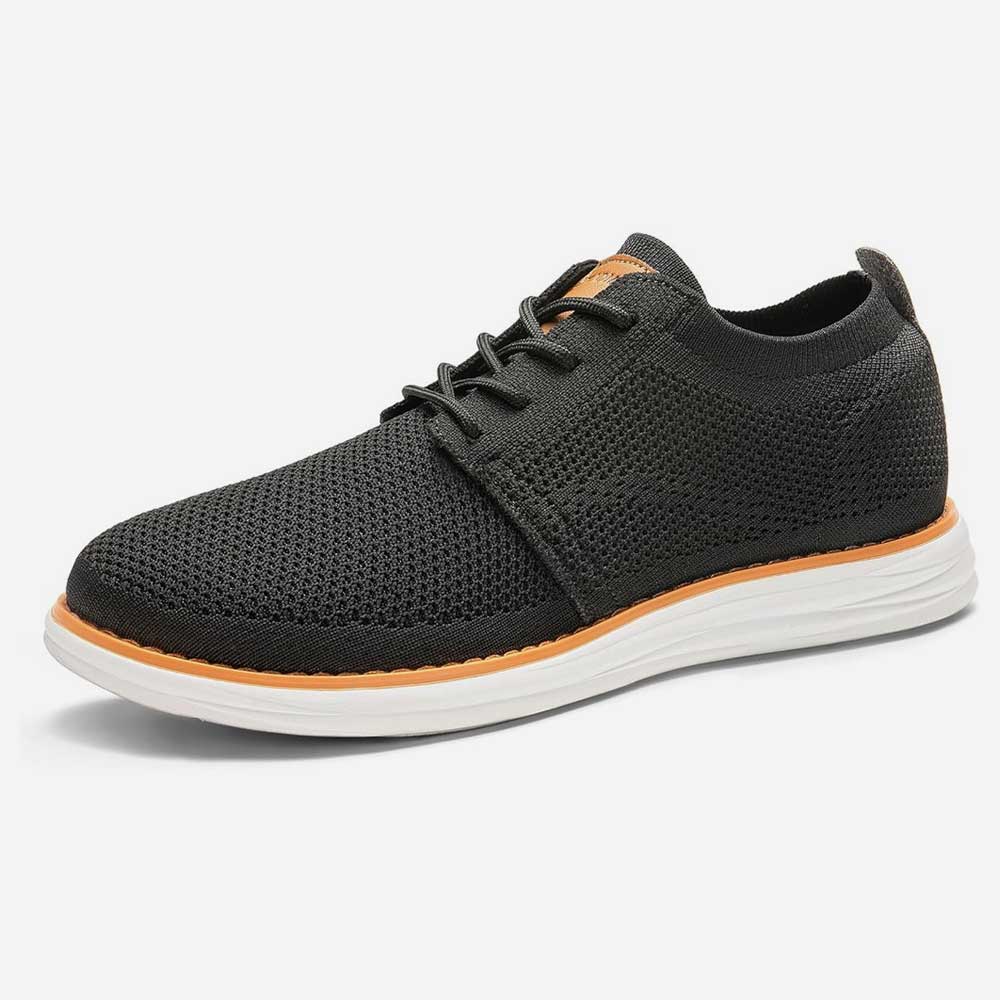
Bruno Marc describes its KnitFlex shoes as having a stretchy knitted upper, a memory foam insole and a lightweight EVA outsole.
A knit upper is light and breathable, but it looks more casual than leather, so it suits jeans, chinos and casual outfits more than tailoring.
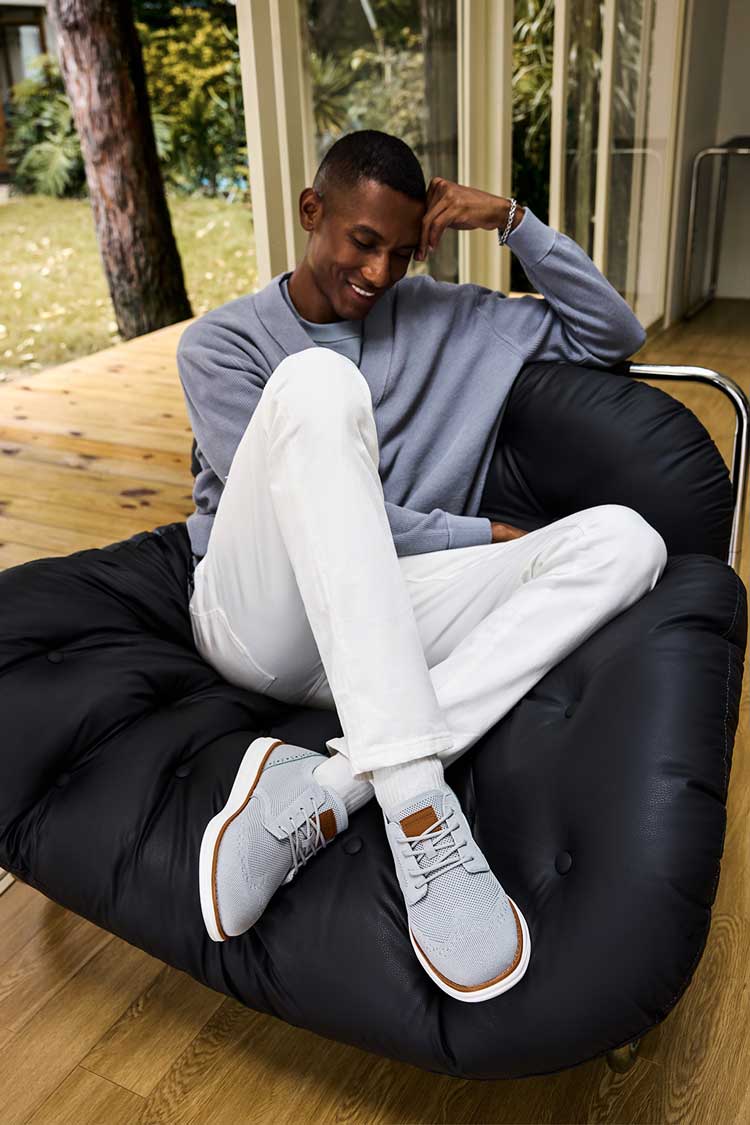
Wear. A grey crew-neck sweatshirt, white or stone trousers, and light grey knit sneakers, with a navy cotton jacket when it is cool.
Bruno Marc MaxFlex, a Wingtip Sneaker
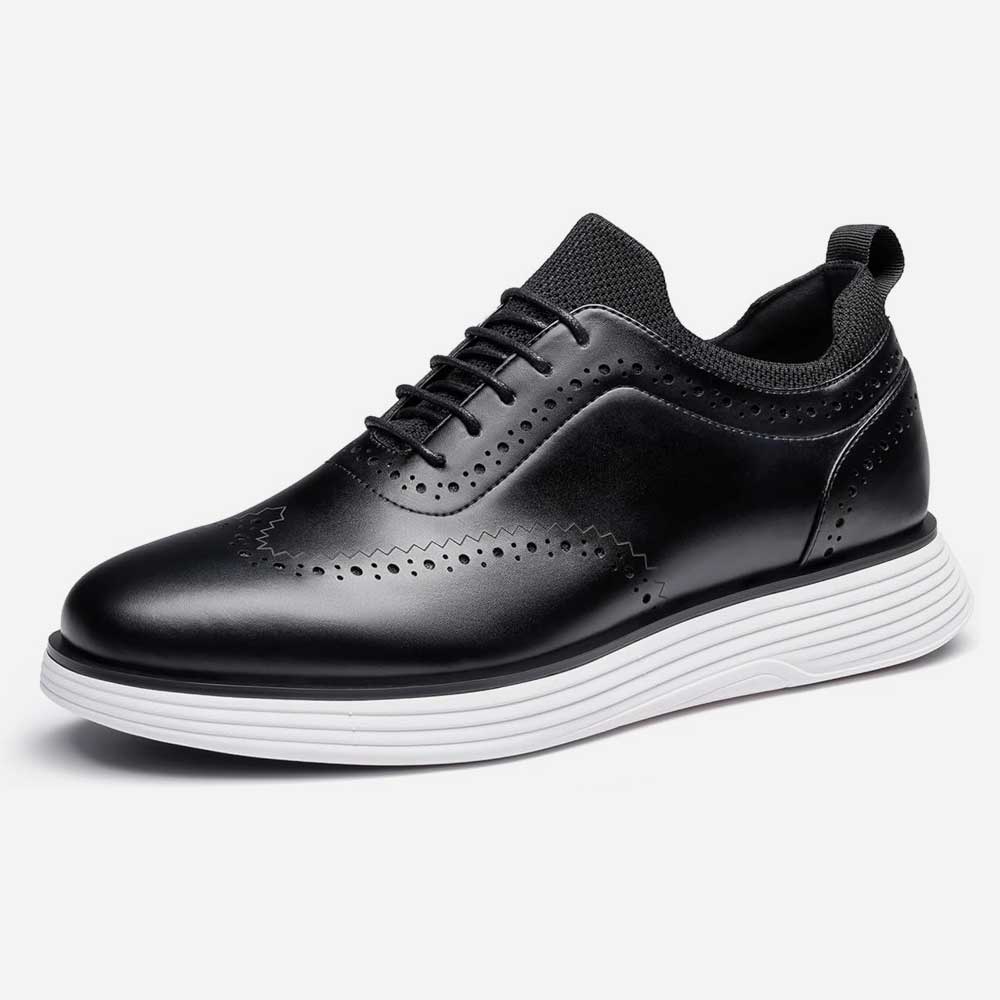
Bruno Marc describes the MaxFlex as having wingtip detailing, a colour-contrast welt, a 5mm mesh-covered EVA insole and a non-slip rubber outsole.
Check the listing to see whether the upper you are buying is leather or synthetic, because that affects how it wears and how you clean it.
The wingtip detail borrows from the brogue, so this style sits closer to a dress shoe than a plain trainer does.
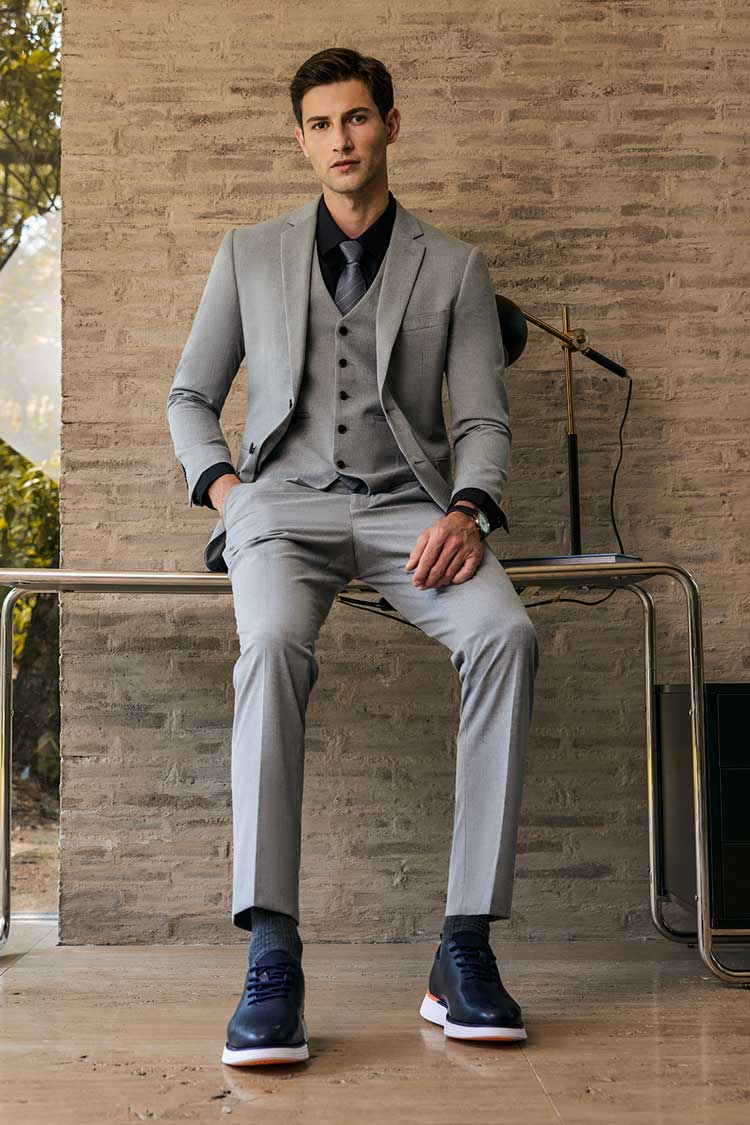
Wear. A light grey suit with a dark shirt, as pictured, suits a relaxed party or a creative workplace; for a conservative office, choose leather dress shoes instead.
Florsheim Heist, a Leather Lace-to-Toe Sneaker
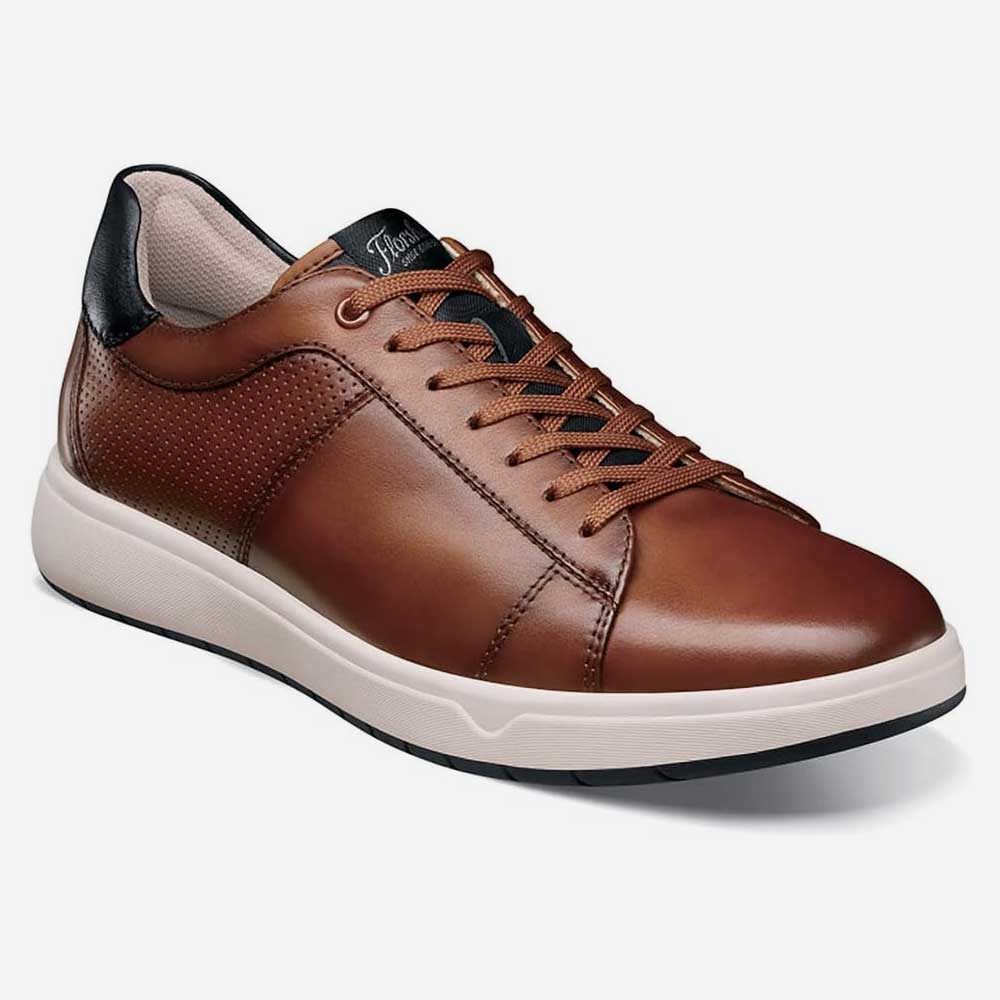
The Florsheim Heist pictured has a cognac leather upper with lacing that runs close to the toe and a white cupsole.
A brown leather sneaker is easier to wear with chinos and smart trousers than a white one, and it hides scuffs better.
Wear. A light blue Oxford shirt, navy chinos, a brown leather belt and cognac leather sneakers, with a navy unstructured blazer for the office on a relaxed day.
Camper Smith, a Suede Blucher on a Sporty Sole
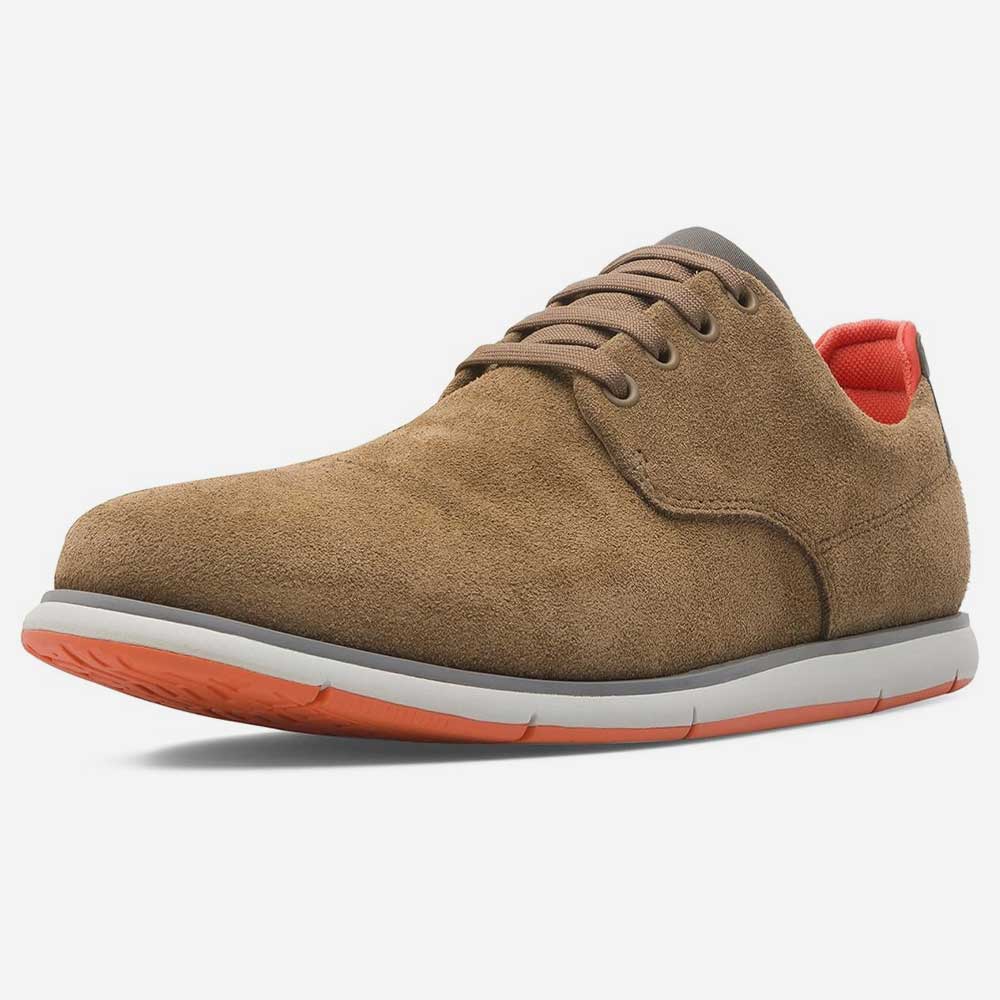
Camper describes the Smith as a classic blucher upper in suede on a lightweight, sporty EVA and rubber sole, with vertical cuts in the outsole for flexibility and grip.
A blucher has open lacing, like a Derby, so this is a casual lace-up shoe on a trainer sole rather than a sneaker in the strict sense; our guide to Oxford and Derby shoes explains the difference.
Wear. A white shirt, a camel crew-neck jumper, dark straight jeans and brown suede shoes, for a weekend or a casual Friday.
Banana Republic Factory’s Plain White Sneaker
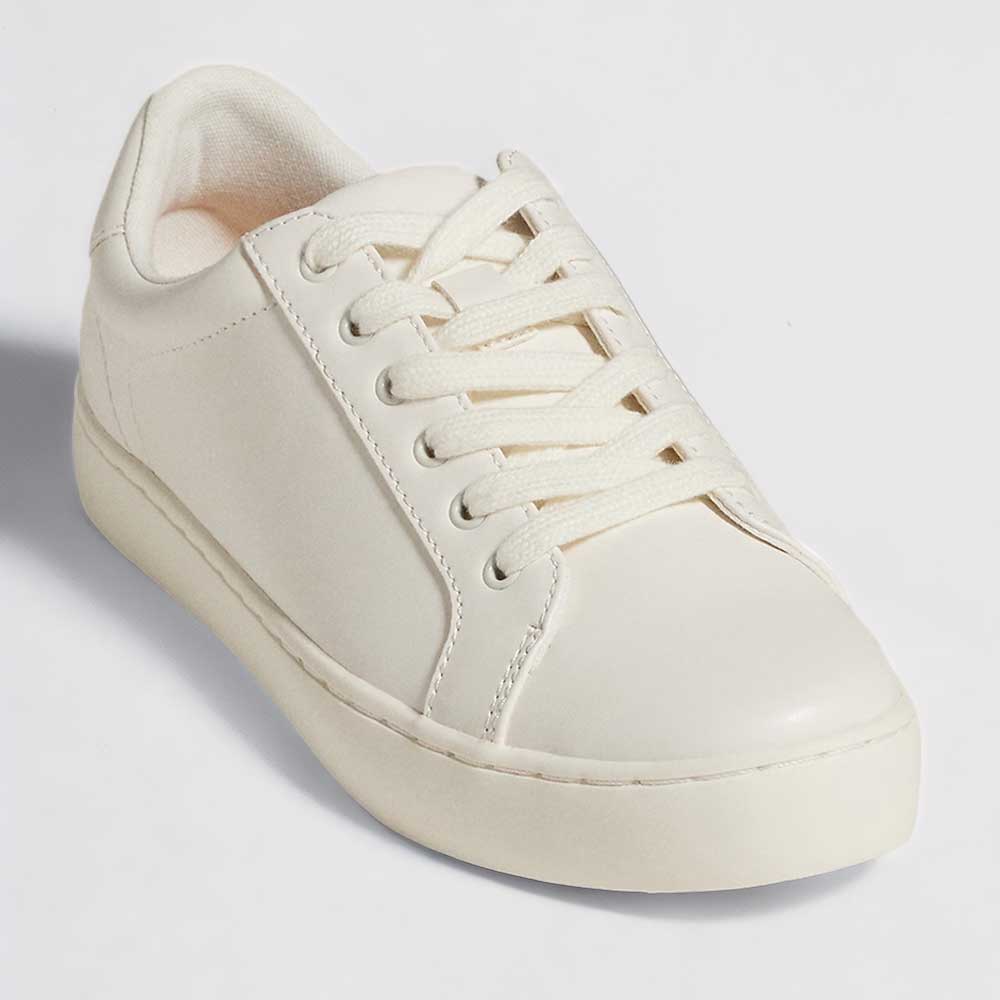
The Banana Republic Factory sneaker pictured is a plain off-white low-top with matching laces and a slim sole.
Banana Republic Factory’s range changes by season, so check the current listing for the upper material and sole.
White is a very versatile colour for a plain sneaker and goes with most casual and smart-casual outfits, but it shows dirt quickly.
Wear. A navy polo shirt, stone chinos with a short break, white sneakers and a navy blazer, for a summer lunch or a relaxed office.
Dress Sneakers versus Dress Shoes
Oxfords, Derbys, brogues, monk straps, wholecuts and loafers are dress shoes, not sneakers, even when they are sold at similar prices.
If your workplace or event expects tailoring with a tie, a plain black or brown leather Oxford or Derby is the safer choice.
Our guide to classic shoes for a quiet luxury look covers smarter options for when a sneaker is too casual.
How to Wear Dress Sneakers with Tailoring
Trousers. Slim or straight trousers with little or no break, so the hem sits just above the shoe instead of bunching over it.
Suits. Lighter, softer suits in cotton, linen or a casual wool work better with sneakers than dark business suits.
Colour. White and off-white sneakers go with almost any trouser colour; brown and navy suit chinos and earthy tones.
Socks. No-show socks for a summer look with bare ankles, or plain socks that match your trousers.
Looking After Budget Dress Sneakers
Wipe leather and synthetic uppers with a damp cloth after wear, and brush suede when it is dry.
Let the shoes dry away from direct heat if they get wet, and use cedar shoe trees or stuffed paper to help them keep their shape.
Clean the edges of white soles regularly, and rotate between pairs so each one has a day to dry out.
Conclusion
A good budget dress sneaker has a clean, low profile, a neat upper, little branding and a comfortable fit.
Check the upper material, the sole and the fit before you buy, and choose white, brown or navy for the widest range of outfits.
Wear them with smart-casual and relaxed business-casual outfits, and keep leather dress shoes for formal dress codes.
Sources
The Modest Man, How to wear dress sneakers, 5 June 2023, updated 14 July 2026 (criteria; commercial links on page).
Real Men Real Style, How to wear sneakers with a suit (minimal low-top leather or suede; avoid formal dress codes).
Ape to Gentleman, How to wear a suit with sneakers, 11 October 2021, updated 6 January 2025 (trouser length, suit types, occasions).
Bruno Marc, Flex Oxford collection press release via Fashion Mannuscript, 30 August 2024 (KnitFlex and MaxFlex features).
Camper, Smith K100478 product page, checked 7 October 2026 (suede blucher upper, EVA and rubber sole).
Mandy Meyer’s focus at The VOU is men’s body-shape styling, garment fit and outfit proportions. Her coverage addresses the practical questions behind a wardrobe choice: how a jacket sits across the shoulders, how trousers fall and how different cuts change the silhouette a wearer wants to create.
Her subject areas include the triangle, inverted triangle, rectangle, oval, trapezoid, hourglass and diamond labels used in body-shape styling. These provide starting references for comparing visible proportions; they do not capture every body or prescribe one correct way to dress. The focus connects those observations with garment shape, construction, length and the relationship between the upper and lower parts of an outfit.
Mandy’s editorial coverage combines visual comparisons with fit checks for comfort and movement. Readers can consider whether a cut gives them the room they need, where clothing pulls or gathers and which changes might support their preferred look. The aim is to make menswear choices more understandable while keeping personal preferences and the wearer’s own styling goals central.