
Start here
What’s This About
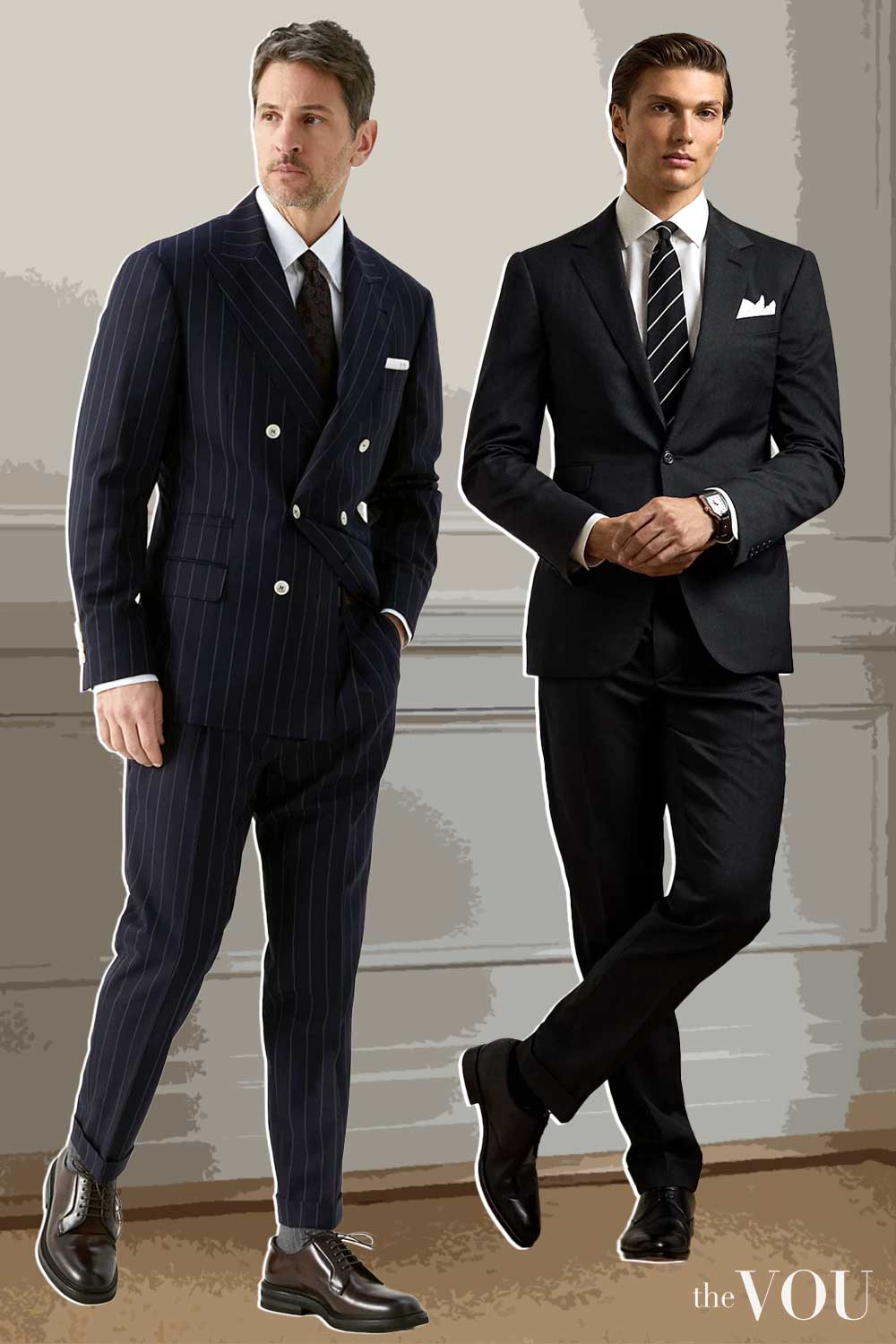
Business formal is the most conservative everyday business dress code: a dark matching suit, a collared shirt, a tie and polished leather dress shoes, worn where an employer, client or event asks for it.
This guide shows how to put that request into practice, such as:
what business formal usually includes and how the term overlaps with “business professional”
the suit, shirt, tie, shoes, belt, socks and accessories, garment by garment
fit, pattern, fabric and layering conventions
five outfit examples for board meetings, presentations, shareholder meetings, conferences and corporate events
dos and don’ts, including how to meet the code without luxury labels
and many more!
The code is set by whoever issues the invitation or policy, so treat these outfits as starting points.
Key Points
01Navy and charcoal suits are the conventional starting choices; black and mid-grey suits also meet the code.
02A white or light-blue long-sleeved shirt and a quiet silk tie are the usual partners; double cuffs and cufflinks are optional.
03Plain black or dark-brown leather Oxfords are the most conventional shoes for the code.
04Fit matters more than the maker’s name, and alterations or second-hand suits are legitimate ways to meet the standard.
Business formal is the most conservative dress code you are likely to meet at work, and the request usually comes with an important occasion: a board meeting, a formal presentation, a shareholder meeting or a corporate event.
Knowing what the code includes takes the guesswork out of getting dressed, so you can concentrate on the meeting itself.
This guide explains the garments, the conventions behind them and how to adapt them to your budget, the weather and the day’s activities.
It also gives five outfit examples for common formal occasions.
What Is Business Formal Attire
Business formal usually means a dark matching suit, a collared shirt, a tie and polished leather dress shoes.
Some employers and careers sites use “business formal” and “business professional” for the same code, while others treat business formal as the stricter of the two, so check the wording your employer or host uses.
The suit itself grew out of the lounge suit, which began in the mid-19th century as informal country and seaside wear and gradually replaced the frock coat for town and business wear in the early 20th century.
Through the 20th century the dark business suit, conservative tie and polished leather shoes became the standard formal dress for many offices.
Many workplaces have since moved to business casual for most days, while some firms in law, finance and other client-facing fields still ask for suits every day or for particular meetings.
Business Formal Attire Essentials
Scroll horizontally to see all columns →
| Garment | Features | Conventional choices |
|---|---|---|
| Suit | Two-piece or three-piece, matching jacket and trousers | Navy, charcoal or dark grey; mid-grey and black also acceptable |
| Shirt | Long-sleeved, collar suitable for a tie | White or light blue; double cuffs optional |
| Tie | Silk or another neat, quiet tie | Plain, small patterns or stripes in navy, burgundy or dark red |
| Shoes | Leather lace-ups, usually Oxfords | Black or dark brown, polished |
| Belt or braces | Plain leather belt with a simple buckle, or braces | Colour that sits well with the shoes |
| Socks | Dark, often over-the-calf | Matching or darker than the trousers |
| Accessories | Quiet and optional | Cufflinks for double cuffs, tie clip, pocket square |
The suit is the foundation of business formal, and getting the fit right comes first.
A suit fits well when the jacket closes without pulling, the shoulders sit comfortably, the sleeves let a little shirt cuff show and you can sit, reach and walk easily.
Bespoke and made-to-measure tailoring can give a close fit, and many people achieve a good result with an off-the-peg suit and a few alterations.
Our guide to tailored suits explains the differences between these routes.
Suit
Navy and charcoal grey are the conventional colours for business formal because they are conservative and combine easily with shirts and ties.
A dark grey worsted wool suit is versatile across seasons, and a navy suit with a subtle pinstripe is a quiet way to add interest.
Black and mid-grey suits also meet the code, and our black suit guide covers how to wear black for daytime business.
Shirt
A crisp white shirt is the classic background for a business-formal tie, and light blue is the most common alternative.
Double cuffs worn with cufflinks are a traditional formal option, and ordinary button cuffs are equally correct with a business suit.
Fine stripes and subtle textures such as a royal Oxford weave also suit the code when kept quiet, and pale pink shirts, or a tie in a deeper warm colour such as burnt orange, can add interest where the setting is less strict, as two of the outfits below show.
Tie
A silk tie in a conservative colour and pattern is the usual choice.
Plain colours, subtle stripes and small geometric patterns in navy, burgundy or dark red all work, and a repp-striped tie in navy and burgundy is a long-standing classic.
Wool and textured ties also meet the code in cooler months if they look neat.
Shoes
Black leather Oxfords are the most conventional business-formal shoe: they have closed lacing and a sleek, plain look that suits a dark suit.
Dark-brown Oxfords and plain cap-toe styles are also widely worn, and some employers accept understated Derbies.
English makers such as John Lobb and Crockett & Jones are well known for Oxfords at the top end of the market, and polished leather Oxfords at much lower prices meet the code just as well.
Accessories
Accessories in business formal are quiet and functional.
Cufflinks in silver or mother-of-pearl suit double-cuff shirts.
A plain leather belt in a colour that sits comfortably with your shoes, or braces if your trousers have buttons for them, keeps the line clean.
A white linen pocket square in a simple straight fold adds a finishing touch without drawing attention.
Business Formal Styling Tips
Once the basics are in place, a few conventions help the outfit look considered.
These are matters of craft and preference rather than requirements of the code.
Suit Fit and Silhouette
Conventional tailoring guidance is that the jacket sleeve shows a little shirt cuff, the jacket is long enough to cover the seat of the trousers and the trousers rest on the shoe with a small break or none.
These are starting points rather than exact measurements, because arm length, shirt style and personal preference all change the result.
A tailor can show you how a particular jacket and pair of trousers can be adjusted.
Pattern Mixing
Business formal leans towards plain cloth, and a little pattern can add depth.
If you combine patterns, vary their scale: a suit with a widely spaced chalk stripe sits comfortably with a tie in a small, dense pattern and a plain or subtly textured white shirt.
Keep the colours quiet so the outfit still reads as formal.
Seasonal Fabrics
Choosing cloth for the season makes a formal suit more comfortable.
Lightweight and open-weave wools, and wool-mohair blends, are common for warm weather, while flannel is a traditional winter cloth.
A mid-weight worsted is a versatile year-round choice; the weight that suits you depends on your climate, your building’s heating and how much you travel.
Textural Variations
Texture adds interest without breaking the code.
A shantung silk tie has a slightly slubbed surface, and a grenadine tie has an open, textured weave.
A waistcoat in the suit’s cloth, or in a quiet tonal fabric, can add depth to a three-piece suit.
Pocket Square
A pocket square is optional and is one of the few places in business formal for a small personal touch.
A white linen square is the most versatile, folded straight (sometimes called the presidential fold) for a crisp look or in a soft puff for a more relaxed one.
Socks
Socks are easy to overlook.
Over-the-calf socks stop skin showing when you sit, and see our guide to men’s socks for fibres and lengths.
Matching your socks to your trousers is the most conservative choice; a subtle pattern or a darker complementary colour also works where the setting allows.
Layering
A waistcoat adds warmth indoors and a traditional look.
Outside, a navy or charcoal Chesterfield or another plain overcoat sits well over a suit, and our guide to wearing a coat over a suit covers lengths and fit.
Choose a coat with room for the suit jacket underneath so it does not crush the shoulders.
Business Formal Outfit Ideas for Specific Occasions
The five outfits below are hypothetical examples to adapt, not prescriptions, and each can be built from garments at any price level.
Check the invitation for any specific instructions before you choose.
Board Meeting Outfit Idea
Wear a charcoal grey worsted wool suit with a crisp white cotton poplin shirt with a spread collar.
Add a navy silk tie with small silver pin dots and black Oxford shoes.
Double cuffs with plain silver cufflinks and a white linen pocket square are optional finishing touches.
Client Presentation Outfit Idea
Choose a navy suit in a fine worsted wool with a light-blue shirt in a fine hairline stripe.
Add a burgundy grenadine tie and dark-brown cap-toe Oxfords.
A cream pocket square is optional; keep it simple so attention stays on your slides and your client.
Shareholders Meeting Outfit Idea
A mid-grey suit, such as a sharkskin wool with a subtle sheen, gives a formal look for a large meeting.
Wear it with a white twill shirt, a forest-green silk tie with a small print and black Oxford shoes.
Charcoal over-the-calf socks and a pale grey pocket square complete the outfit.
Business Conference Outfit Idea
For a long conference day, comfort matters as much as formality.
A navy chalk-stripe suit in a flannel or another cloth suited to the venue’s temperature works with a sky-blue cotton shirt and a burnt-orange printed silk tie.
Dark-brown suede Oxfords and navy merino socks are comfortable for long periods on your feet, and suede is best kept for dry days.
Bring a lighter shirt or a jumper if the venue’s temperature is unpredictable.
Corporate Event Outfit Idea
For a year-end review or a similar daytime event, select a charcoal herringbone wool suit.
Wear a pale pink cotton-twill shirt with a navy and silver regimental-stripe tie and black cap-toe Oxford shoes.
A sky-blue pocket square adds a little colour; if the event continues into the evening, check whether its invitation sets a different dress code.
Business Formal Fit and Your Build
Every body is different, and the right suit is the one that fits yours comfortably and looks the way you prefer.
Jacket length, lapel width, button position and trouser break all change how a suit looks on a particular person.
Try suits in different cuts, sit and move in them, and ask a tailor which adjustments are practical.
If you would like to compare cuts against your proportions, our body shape quiz for men and our guide to the seven men’s body shapes go into this in detail.
Business Formal Attire Do’s and Don’ts
Scroll horizontally to see all columns →
| Do | Don’t |
|---|---|
| Wear a suit that fits you comfortably | Wear a suit that pulls, sags or restricts movement |
| Choose conservative colours such as navy, charcoal, grey or black | Wear bright or flashy colours for a formal request |
| Wear polished leather dress shoes | Wear casual shoes or heavily decorated styles |
| Choose white or light-blue shirts, or quiet patterns | Wear casual shirt styles or bold patterns |
| Choose a quiet tie in silk or another neat fabric | Wear novelty ties or very bright colours |
| Keep accessories subtle | Over-accessorise or wear flashy jewellery |
Do buy the best fit you can afford, from new, made-to-measure, second-hand or altered suits.
Don’t assume an unaltered suit is fine; check the sleeves, trouser length and waist, and have them adjusted if needed.
Do stick to conservative colours such as navy, charcoal, grey and black for your suits.
Don’t choose loud colours or trendy patterns for a business-formal occasion.
Do keep your leather shoes clean, polished and in good repair.
Don’t wear casual footwear or heavily decorated styles with a formal suit.
Do wear white or light-blue shirts, or quiet stripes and checks.
Don’t wear casual shirt styles, bold patterns or unconventional colours to a formal meeting.
Do wear a quiet tie in silk or another neat fabric.
Don’t choose novelty ties or very bright colours.
Do keep accessories subtle: plain cufflinks if you wear double cuffs, a simple watch if you like one, a plain pocket square.
Don’t over-accessorise or wear flashy jewellery.
Conclusion
Business formal is a conservative code with a clear core: a dark suit, a collared shirt, a quiet tie and polished leather shoes.
Within that core there is room for personal choice in cloth, texture, tie and pocket square, and none of it requires an expensive label.
Check what your employer or host asks for, make sure your clothes fit and are well kept, and you will be appropriately dressed for the most formal business settings.
Mandy Meyer’s focus at The VOU is men’s body-shape styling, garment fit and outfit proportions. Her coverage addresses the practical questions behind a wardrobe choice: how a jacket sits across the shoulders, how trousers fall and how different cuts change the silhouette a wearer wants to create.
Her subject areas include the triangle, inverted triangle, rectangle, oval, trapezoid, hourglass and diamond labels used in body-shape styling. These provide starting references for comparing visible proportions; they do not capture every body or prescribe one correct way to dress. The focus connects those observations with garment shape, construction, length and the relationship between the upper and lower parts of an outfit.
Mandy’s editorial coverage combines visual comparisons with fit checks for comfort and movement. Readers can consider whether a cut gives them the room they need, where clothing pulls or gathers and which changes might support their preferred look. The aim is to make menswear choices more understandable while keeping personal preferences and the wearer’s own styling goals central.