
Start here
What’s This About
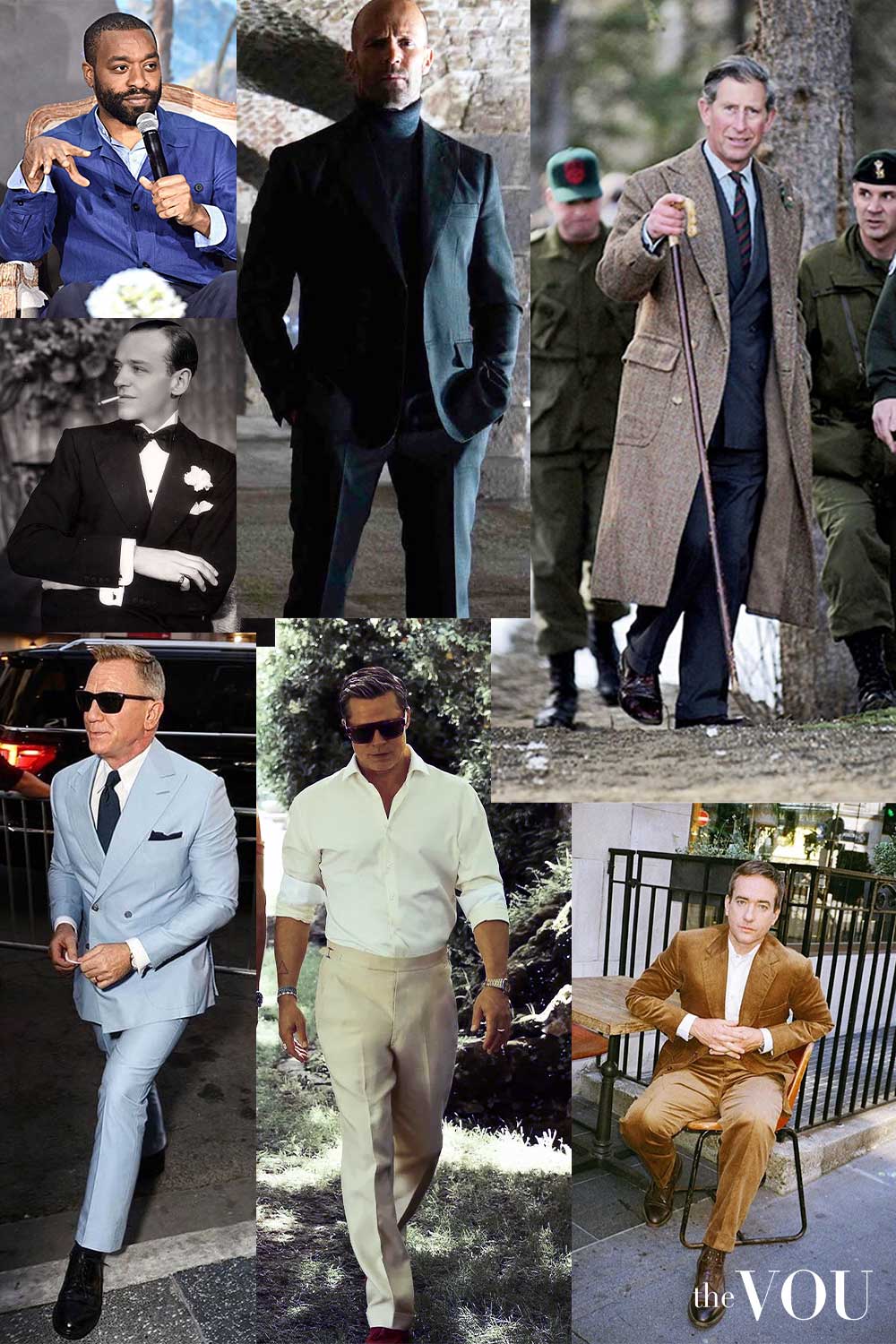
Anderson & Sheppard is a London bespoke tailor founded in 1906, and the house names Fred Astaire, Gary Cooper and Charlie Chaplin among its early clients.
This guide covers the clients the house and dated records name, its drape cut and how to borrow the look, such as:
Fred Astaire’s habit of dancing in the fitting room
King Charles III’s double-breasted suits and the 2011 Royal Warrant
Tom Ford as a customer from 2004
Alexander McQueen’s apprenticeship at the house
Daniel Day-Lewis’s tailoring in Phantom Thread
Daniel Craig’s double-breasted dinner suit at the 2020 Golden Globes
Soft shoulders, a high armhole and light canvas
and many more!
Use it to borrow the soft drape cut from any tailor.
Key Points
01Per Anderson founded the firm on Savile Row in 1906; it moved to 32 Old Burlington Street in 2005.
02The English drape uses soft shoulders, extra cloth through the chest and back, and a high armhole.
03The Duke of Windsor was a client of the cutter Frederick Scholte, who mentored Per Anderson.
04A high price does not prove quality; judge cloth, construction and fit.
Anderson & Sheppard is a bespoke tailor in London, founded in 1906 and known for a soft, draped cut.
According to the firm’s own history, Per Anderson, a Swedish tailor, opened the business at 13 Savile Row with Sydney Sheppard as his trouser cutter, moved to 30 Savile Row in 1927 and moved again to 32 Old Burlington Street in 2005.
Its haberdashery shop at 17 Clifford Street opened in 2012.
This guide looks at the clients the house and dated records name, what its drape cut is, and how to borrow the look with clothes from any tailor.
For the wider history of the street, see our guide to Savile Row tailoring.
A Note on Celebrity Client Lists
Lists of famous tailoring clients are often repeated online without a source, and magazine shoot credits are sometimes read as proof that a person is a customer.
On this page we name only clients that the house itself names or that a dated reference records.
A film costume counts here only when a dated report names the tailor, as with Phantom Thread below.
The House Style: The English Drape
Anderson & Sheppard describes its house style as the English drape: soft, natural shoulders with little padding, extra cloth through the chest and back, and a high armhole that lets the arm move while the collar stays close to the neck.
The firm uses a very light canvas, which gives a less structured, more yielding jacket, and it cuts two side vents.
The house traces this cut to Frederick Scholte, a Dutch cutter who worked at 7 Savile Row and mentored Per Anderson.
Scholte’s best-known client was the Prince of Wales, later the Duke of Windsor; the house history describes him as Scholte’s customer, not Anderson & Sheppard’s.
Wear: a soft-shouldered navy or grey flannel jacket, a light blue shirt, a knitted silk tie, mid-grey flannel trousers and brown suede shoes.
Fred Astaire
Fred Astaire is the client most often linked with the house.
Anderson & Sheppard’s own account says Astaire would dance around the fitting room while watching the mirrors, to check that the coat moved with him and the collar stayed in place.
That is the point of the drape cut: a jacket that stays neat when you move.
Wear: a soft grey or brown tweed jacket, a white or blue shirt, a patterned silk tie, flannel trousers with a high rise and brown leather loafers.
Hollywood and Stage Clients of the 1920s and 1930s
The house history names Charlie Chaplin, Cole Porter, Rudolph Valentino, Douglas Fairbanks Jr., Gary Cooper, Laurence Olivier and the composers George and Ira Gershwin among its clients in the 1920s and 1930s.
Wikipedia’s history of the firm also lists Noël Coward among its clients.
The double-breasted suits and soft shirts of that period remain a useful starting point for classic evening and occasion wear.
Wear: a navy double-breasted suit in a soft wool, a white shirt, a dark red silk tie, a white linen pocket square and black Oxford shoes.
King Charles III
King Charles III has worn Anderson & Sheppard double-breasted suits for many years.
In 2011, John Hitchcock, the firm’s head cutter and managing director, became its Royal Warrant grantee for the then Prince of Wales, who visited the shop in 2012, according to the house history.
The firm also supports the Campaign for Wool, established in 2010 with the King as its patron, and says it uses only responsibly sourced wool.
For a closer look at the double-breasted cut, see our double-breasted suit styling guide.
Wear: a grey or navy double-breasted suit in a check or plain wool, a pale blue shirt, a patterned tie, a folded pocket square and dark brown or black shoes.
Tom Ford
The designer Tom Ford is recorded as becoming an Anderson & Sheppard customer in 2004.
A designer with his own tailoring label ordering from a Savile Row house shows that the drape cut has admirers well beyond traditional British dress.
Alexander McQueen
Alexander McQueen served a two-year coat-making apprenticeship at Anderson & Sheppard before moving to Gieves & Hawkes as a pattern cutter.
He later claimed he had sewn rude messages into the linings of suits made for Prince Charles, but a recall of Anderson & Sheppard suits found no evidence of this.
Phantom Thread
For Phantom Thread (2017), costume designer Mark Bridges had Anderson & Sheppard make Daniel Day-Lewis’s tailoring as the couturier Reynolds Woodcock (InsideHook, 2 February 2018; The Rake, March 2018).
The Rake reports that the house made seven bespoke looks for the film in period-correct, heavier cloths, including a dinner suit in 19oz barathea.
Wear: a soft-shouldered three-piece suit in a mid-weight grey or brown wool, a white shirt with a turn-down collar, a dark knitted tie and brown leather Oxford shoes.
Daniel Craig
At the Golden Globe Awards in January 2020, Daniel Craig wore a double-breasted dinner suit by Anderson & Sheppard (Robb Report Singapore, Justin Fenner, 7 January 2020).
Wear: a double-breasted dinner jacket, a white dress shirt, a black bow tie and black patent or polished shoes.
Lessons From the Anderson & Sheppard Look
You do not need a bespoke suit to borrow the cut, but these points help when you buy or alter any jacket.
Choose a soft shoulder: a jacket with light padding and a natural shoulder line feels easier to wear and suits relaxed outfits as well as formal ones.
Check the armhole: a higher, closer armhole lets you lift your arm without the whole jacket rising, the test Astaire is said to have made by dancing.
Mix tailoring with knitwear: a Shetland or merino jumper with flannel trousers, or under a soft jacket, gives a tailored outfit without a tie.
Use texture: combine smooth worsted, flannel, tweed, corduroy and linen across the seasons rather than relying on pattern.
Try linen in summer: linen trousers with a side-adjuster waistband and a linen or cotton shirt make a light outfit for warm weather.
Keep what lasts: a well-made navy suit or a pair of grey flannel trousers can be worn and repaired for many years.
A high price does not prove higher quality, so judge any jacket by its cloth, construction and fit.
Wear: a green or oatmeal Shetland jumper, a white Oxford shirt, grey flannel trousers and brown suede chukka boots, with a navy soft-shouldered jacket on cooler days.
To compare the house with its neighbours, see our guides to Huntsman’s documented clients, Gieves & Hawkes’s documented clients and why Anderson & Sheppard is so well known, and for how bespoke works, our bespoke fashion guide.
Styling Beyond Anderson & Sheppard
Knowing how a tailor cuts is a useful start, but your own wardrobe works best when it suits your build, your colouring and your plans.
Further reading: dressing for your body shape, seasonal colour palettes, garments, accessories, our list of luxury fashion brands and the old money style guide.
1. Check Your Body Shape
Start with our body shape quiz for men.
2. Find Your Seasonal Colours
Then take our seasonal colour quiz for men.
3. Take the Fashion Style Quiz
Then take our fashion style quiz for men, and read more about personal fashion style.
Personal Help From The VOU
Our styling services for men are paid consultations; the shop page lists what each one includes.
You can read about The VOU’s image consultants and stylists before you book.
To ask a question first, contact us.
Mandy Meyer’s focus at The VOU is men’s body-shape styling, garment fit and outfit proportions. Her coverage addresses the practical questions behind a wardrobe choice: how a jacket sits across the shoulders, how trousers fall and how different cuts change the silhouette a wearer wants to create.
Her subject areas include the triangle, inverted triangle, rectangle, oval, trapezoid, hourglass and diamond labels used in body-shape styling. These provide starting references for comparing visible proportions; they do not capture every body or prescribe one correct way to dress. The focus connects those observations with garment shape, construction, length and the relationship between the upper and lower parts of an outfit.
Mandy’s editorial coverage combines visual comparisons with fit checks for comfort and movement. Readers can consider whether a cut gives them the room they need, where clothing pulls or gathers and which changes might support their preferred look. The aim is to make menswear choices more understandable while keeping personal preferences and the wearer’s own styling goals central.