
Start here
What’s This About
A Huntsman suit can be worth its price if you value its one-button house cut, extensive handwork and Savile Row heritage, but other tailors and made-to-measure services can also give you a well-fitting suit for less.
This review weighs up what you pay for, such as:
the house style: structured shoulder, high armholes and a one-button jacket
bespoke, made-to-measure and ready-to-wear options
handwork, fittings and in-house training
alternatives on and off Savile Row
and many more!
Prices quoted come from Huntsman’s own site and can change, so check them before you visit.
Key Points
01Huntsman dates from 1849 and has been at 11 Savile Row since 1919.
02A two-piece bespoke suit starts from £7,500, according to Huntsman’s FAQ read in October 2026.
03Huntsman says each bespoke commission involves over 80 hours of handwork and two to three fittings for a new customer.
04Whether ready-to-wear fits you depends on the pattern and your build; try it on, and consider made-to-measure or bespoke if alterations cannot solve the fit.
Huntsman dates from 1849, when Henry Huntsman set up at 126 New Bond Street after buying an established ‘gaiter and breeches maker’, and the house of Savile Row has dressed royalty, Hollywood actors and many others for more than 175 years.
But in an age where off-the-rack suits can be had for a fraction of the price, it is fair to ask: is a Huntsman suit worth its eye-watering price tag?
In this article, we answer this question by delving into the rich tapestry of Huntsman’s history, analysing the tailor’s unique cut, craftsmanship, and longevity, comparing its offerings, and assessing the prestige associated with its name today.
Huntsman’s Heritage
Originally located at 126 New Bond Street, the company lists royal warrants from 1876 onwards, including one as leather breeches maker to the Prince of Wales (later Edward VII) in 1886 and one from Queen Victoria herself in 1888.
By 1919, Huntsman had moved to its current location at 11 Savile Row, just in time for its golden age.
In the 1920s, Huntsman’s client list included Winston Churchill, the film star Rudolph Valentino and the dancer Adele Astaire, according to the house’s own history.
This mix of aristocratic and silver-screen clients helped build Huntsman’s reputation.
What Makes Huntsman Suits so Distinctive?
At the heart of Huntsman’s allure lies its distinctive house style, defined by Colin Hammick, Huntsman’s head cutter in the 1950s.
The Huntsman cut is characterised by a strong shoulder with high armholes, a defined waist, and a flared skirt.
This is the house silhouette; how well a jacket fits you still depends on your individual pattern and fittings, or on alterations if you buy ready-to-wear.
Most notably, Huntsman jackets typically feature a single-button fastening, a daring departure from the more common two or three-button styles.
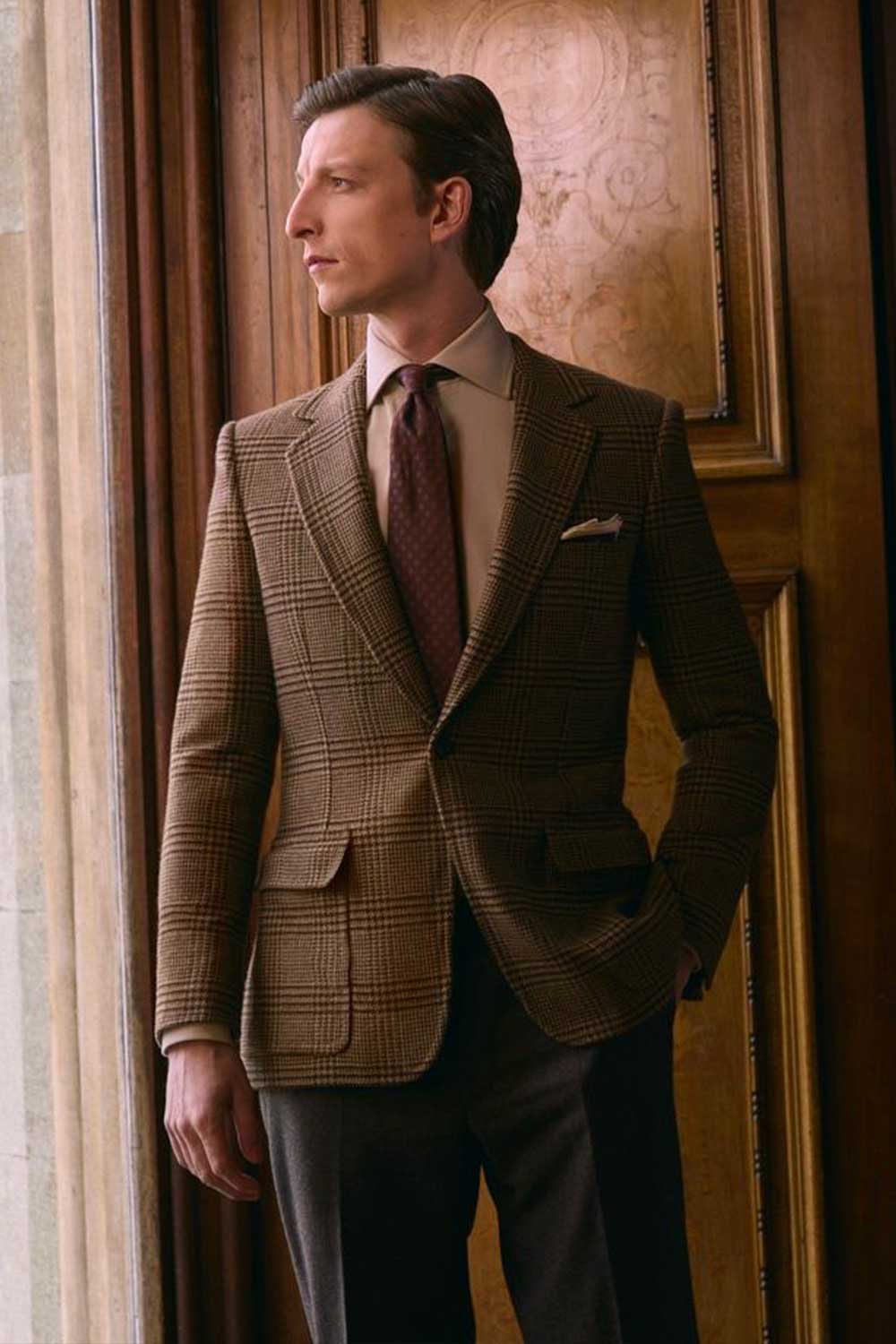
This unique silhouette combines a dinner jacket’s elegance with a riding coat’s practicality, reflecting Huntsman’s equestrian roots.
The result is a distinctive silhouette; whether it suits you is best judged by trying a jacket on.
But is this distinctive cut worth the premium price?
Some argue that while the Huntsman style is undoubtedly elegant, it may be too bold for some occasions and not versatile enough to justify its cost.
However, we think the Huntsman cut is timeless.
It transcends fleeting fashion trends and stands apart from the softer cuts found elsewhere on the Row.
Huntsman’s Bespoke vs. Ready-to-Wear
Huntsman offers three ways to buy its suits: bespoke, made-to-measure and ready-to-wear.
According to Huntsman’s FAQ (read in October 2026), a two-piece bespoke suit starts from £7,500, involves over 80 hours of handwork and two to three fittings for a new customer, with delivery aimed at 14 to 16 weeks from the first appointment.
Huntsman also offers a made-to-measure service with a choice of more than 2,000 fabrics, linings and house style details; made-to-measure usually adjusts an existing pattern to your measurements rather than cutting a new one, so check current prices with the house.
Ready-to-wear suits and jackets give you the Huntsman look without the wait; prices change, so check Huntsman’s own shop.
Huntsman’s offerings cater to different needs, budgets and timelines.
We think ready-to-wear makes sense if you need a suit quickly or want to try the Huntsman style before committing to a more expensive option.
Whether ready-to-wear fits you depends on how closely the pattern matches your build, not on a body shape label; try it on, and remember that a tailor can often adjust sleeve length, trouser length and the waist, while changes to the shoulders are harder.
If alterations cannot solve the fit, made-to-measure offers a middle ground between ready-to-wear and bespoke, with a choice of cloth, lining and some styling details, and usually a closer fit than an unaltered ready-to-wear suit.
The fullest Huntsman experience is bespoke.
It suits those who want a pattern cut for them, several fittings and a suit they view as a long-term investment.
Bespoke is a good choice if you have a specific vision for your suit, fit needs that ready-to-wear and made-to-measure do not meet (our body shape guide explains how outline and fit differ), or simply want the full process.
Ultimately, your choice should depend on your budget, timeline and how much importance you place on fit and customisation.
For many, starting with ready-to-wear or made-to-measure can be a good introduction to Huntsman before stepping up to bespoke.
Others prefer to save for bespoke from the start and treat it as a once-in-a-lifetime purchase.
Whichever option you choose, you are buying into Huntsman’s house style.
Huntsman’s Craftsmanship
The stratospheric price of a Huntsman suit is partially justified by the level of craftsmanship involved.
Huntsman says each bespoke commission involves over 80 hours of handwork.
Huntsman prides itself on training its staff in-house, ensuring the continuation of traditional tailoring techniques.
For instance, in 2015, two of Huntsman’s apprentice tailors, Dionne Reeves and Vanessa Black, qualified as finalists for The Golden Shears, often called the Oscars of Savile Row for new tailors.
The company’s commitment to quality extends to its materials: Huntsman has long worked with the Islay Woollen Mill on the Isle of Islay in the Inner Hebrides, Scotland, for its house tweeds.
This attention to detail and commitment to tradition is undoubtedly impressive.
However, critics argue that other Savile Row tailors offer similar craftsmanship at lower prices.
Is Huntsman’s craftsmanship superior, or are customers paying a premium for the name?
The answer likely lies in the eye (and wallet) of the beholder.
Huntsman’s Celebrity Endorsement
Huntsman’s client list reads like a Who’s Who of the 20th and 21st centuries.
Gregory Peck, who began a fifty-year relationship with Huntsman in 1953 and placed more than 160 orders, stands out as a particularly devoted customer.
Other notable clients have included Clark Gable, Laurence Olivier, Paul Newman, Katharine Hepburn, and even Winston Churchill.
Later patrons include David Bowie.
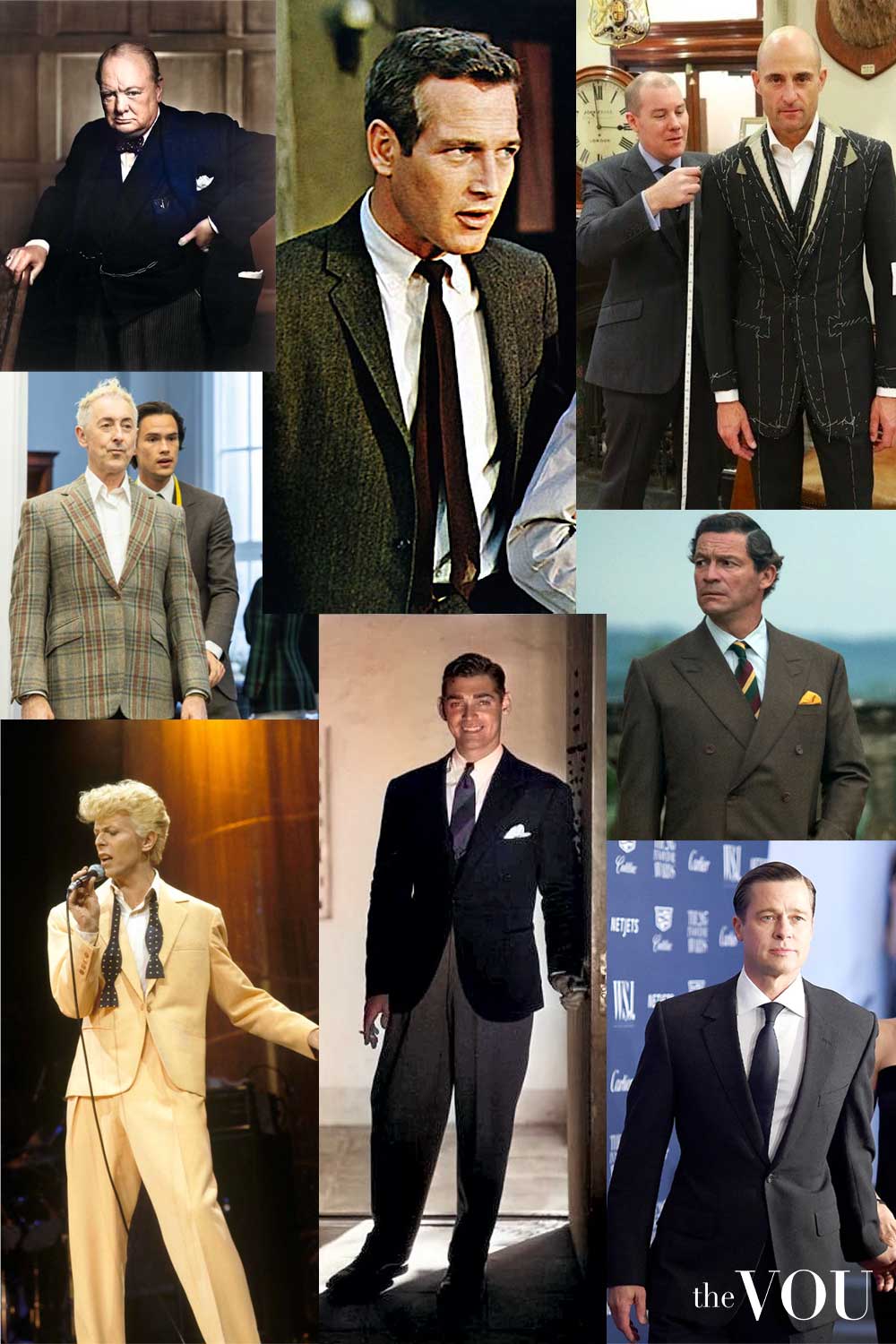
Even fictional characters have donned Huntsman suits, with the shop featured prominently in the Kingsman film series.
This celebrity endorsement adds to Huntsman’s allure and mystique.
But does it add tangible value to the suits themselves?
While some argue that this star power justifies the premium price, others contend it’s simply clever marketing.
After all, a well-made suit should stand on its own merits, regardless of who else has worn the brand.
Huntsman vs. Similar Savile Row Tailors
Savile Row is home to numerous prestigious tailors, each with its own house style and pricing structure.
Huntsman’s published bespoke starting price puts it among the more expensive houses, so compare like-for-like quotations.
Prices change and are not always published, so ask each house for a current quotation for the same garment, such as a two-piece bespoke suit, before comparing.
In terms of style, Huntsman’s structured silhouette contrasts with the softer, draped look favoured by Anderson & Sheppard.
This difference in house styles means that the ‘best’ Savile Row tailor is largely a matter of personal preference.
What cannot be denied is that Huntsman’s pricing positions it as a luxury option even within the rarefied world of bespoke tailoring.
Huntsman Suits’ Longevity
One argument often made in favour of investing in a Huntsman suit is its potential longevity.
A well-made bespoke suit, properly cared for, can last for decades.
Huntsman’s FAQ also mentions an Inherited Garment Service for altering inherited Huntsman garments; ask the house about terms and any charges.
A service like this reflects how long a well-made suit can stay in use.
However, whether a suit that remains wearable for decades is a good investment is worth considering.
Fashion changes, bodies change, and a suit that seemed perfect in one’s thirties might feel dated or ill-fitting in one’s fifties.
While the quality of a Huntsman suit is undeniable, potential buyers should consider how their needs and tastes might evolve.
Huntsman Shopping Experience
Purchasing a bespoke Huntsman suit is more than just a transaction; it’s an experience.
From the initial consultation to the multiple fittings, customers are treated to a level of service that goes beyond mere tailoring.
The shop, with its wood-panelled walls and mounted stag heads (left behind by a customer in 1921), exudes a sense of history and tradition.
Bespoke clients also become members of The Huntsman Club, which, according to Huntsman, gives access to private fitting areas and event spaces.
For many, this experience is part of what they’re paying for when they commission a Huntsman suit.
It’s a chance to be part of a tradition that has clothed some of the most influential figures of the past two centuries.
But is this experience worth the premium price?
Some would argue that the end product, the suit itself, should be the primary consideration.
Others contend that the journey is as important as the destination, particularly when investing in a luxury item.
Huntsman Alternatives to Consider
There are alternatives worth considering for those drawn to the idea of a Huntsman suit but baulking at the price tag.
Some other Savile Row tailors may quote less for bespoke, though it still costs thousands of pounds.
For a more accessible option, consider Huntsman’s ready-to-wear line, which offers a taste of the house style at a fraction of the bespoke price.
Alternatively, other luxury brands such as Tom Ford or Kiton sell ready-to-wear and made-to-measure suits; their prices vary widely, so compare them on the brands’ own sites.
Made-to-measure services from luxury brands can also provide a personalised fit without the full bespoke price tag.
While these alternatives may not offer the full Huntsman experience, they can provide excellent quality and style at a more palatable price.
Are Huntsman Suits Worth the High Price? Our Verdict
So, is a Huntsman suit worth it?
If you value old money tradition, craftsmanship, and the cachet of wearing a suit from one of Savile Row’s most storied houses, we think a Huntsman suit may be worth every penny.
The distinctive cut, impeccable construction, and the experience of commissioning a bespoke garment all contribute to its appeal.
However, the price tag will be too high for many.
But if you can afford it and value the house style, the handwork and the commissioning process, we think it can be worth it; if fit is your main goal, a good tailor or made-to-measure service may get you most of the way for less.
Style Like a True Gentleman
Before we say goodbye, fit does most of the work, whether or not you ever work with image consultants.
Professional styling starts with getting the fit right and choosing clothes that suit the occasion; knowing your body shape and seasonal colour palette can make the choosing quicker.
Our guides also cover styling by occasion, location, season and time of day, garments, footwear, accessories and heritage fashion brands.
Take our three quizzes, then book a consultation if you would like personal help:
1. Find Your Body Shape
Different garments suit different silhouettes.
To compare your outline with the seven body shape descriptions, take our body shape quiz for men.
2. Find Your Seasonal Colours
The garments in your outfits come in many colours.
To see which seasonal colour palette may suit you, take our seasonal colour quiz for men.
3. Find Your Fashion Style
To explore your personal fashion style, take our fashion style quiz for men; it suggests styles, outfit ideas and brands to explore.
Book a Consultation with The VOU
For personal help, you can book paid consultations with our image consultants and fashion stylists.
Our styling services for men page lists the paid consultations.
Wearing luxury brands is not enough on its own; how your clothes fit and suit the occasion matters more, and our personal style guide covers the rest.
For more on labels, see our guide to logo-heavy luxury brands and how to wear them.
Contact us if you would like to book a consultation.
More from The VOU: our old money style guide and about The VOU and our team.
Mandy Meyer’s focus at The VOU is men’s body-shape styling, garment fit and outfit proportions. Her coverage addresses the practical questions behind a wardrobe choice: how a jacket sits across the shoulders, how trousers fall and how different cuts change the silhouette a wearer wants to create.
Her subject areas include the triangle, inverted triangle, rectangle, oval, trapezoid, hourglass and diamond labels used in body-shape styling. These provide starting references for comparing visible proportions; they do not capture every body or prescribe one correct way to dress. The focus connects those observations with garment shape, construction, length and the relationship between the upper and lower parts of an outfit.
Mandy’s editorial coverage combines visual comparisons with fit checks for comfort and movement. Readers can consider whether a cut gives them the room they need, where clothing pulls or gathers and which changes might support their preferred look. The aim is to make menswear choices more understandable while keeping personal preferences and the wearer’s own styling goals central.