Start here
What’s This About
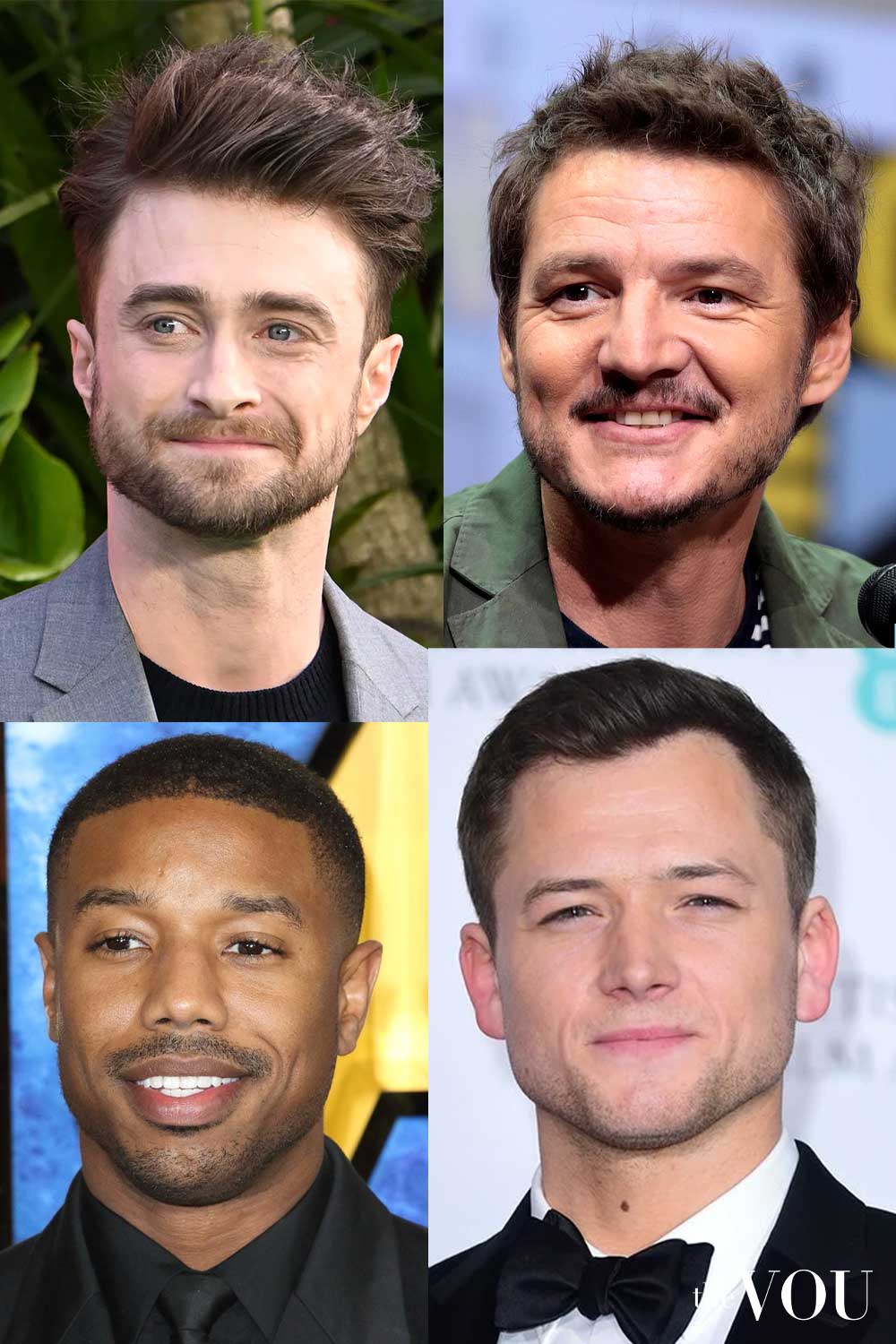
This gallery uses ten celebrities often cited as examples of a square face shape to show what different hair, beard and accessory choices do to a compact outline with angular jaw corners.
The guide covers choices you can adapt, such as:
Textured quiffs and layered cuts that add movement
Off-centre partings that add a little asymmetry
Beards fuller at the chin versus full at the sides
Glasses, sunglasses and collars chosen for fit first
and many more!
We also cover upkeep and what to do if a beard hides your jaw corners.
Key Points
01Square is a description, not a diagnosis; a longer face with a broad angular jaw may sit closer to the rectangle description.
02Movement and texture soften straight lines, while crisp edges echo them; both are valid.
03A beard fuller at the chin makes the lower outline read longer, while full sides echo its width.
04Choose glasses and collars for fit first; curved frames contrast with angular features and angular frames echo them.
Understanding your face shape can help you describe what you see in the mirror and choose a haircut, beard or pair of glasses with a clearer goal in mind.
The square face shape is The VOU’s name for a relatively compact outline with similar breadth at the forehead, cheekbones and jaw, and angular jaw corners.
It is a description, not a diagnosis: a broad angular jaw on a longer face may be closer to the rectangle description, many faces mix features, and a beard can hide the jaw corners, in which case it is fine to record them as unknown.
In this guide, we look at ten male celebrities often cited as examples of a square face shape and describe what each visible hair or beard choice does, so you can decide whether you want the same effect.
Before we start, if you would like a starting point, take our quick and face shape quiz for men to check your face shape and get styling ideas to try.
1. Taron Egerton
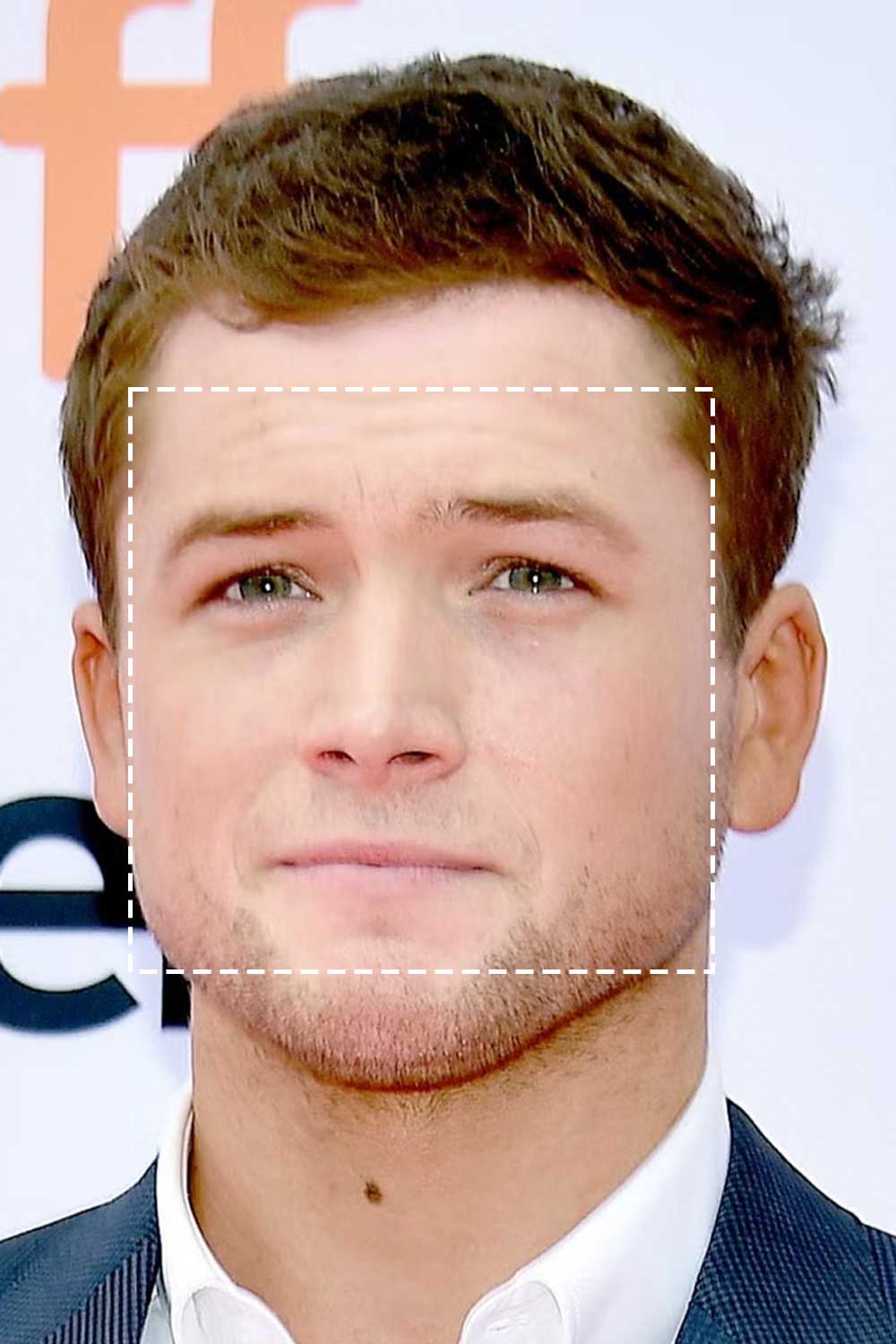
Taron Egerton, pictured above, is often cited as an example of a square face shape, and his looks have varied widely from role to role.
A textured quiff, which he has often worn, adds height that makes the outline read longer, while soft, rounded edges avoid adding more angles.
Sweeping hair slightly diagonally rather than straight back adds a little asymmetry, which softens a strongly symmetrical look if that is what you want.
A medium-length cut with layers starting around cheekbone level breaks up straight lines at the sides.
Among facial hair choices, stubble with a slightly softer line along the jaw reads gentler than a sharp edge; a crisp line is equally valid if you like a more defined look.
2. Daniel Radcliffe
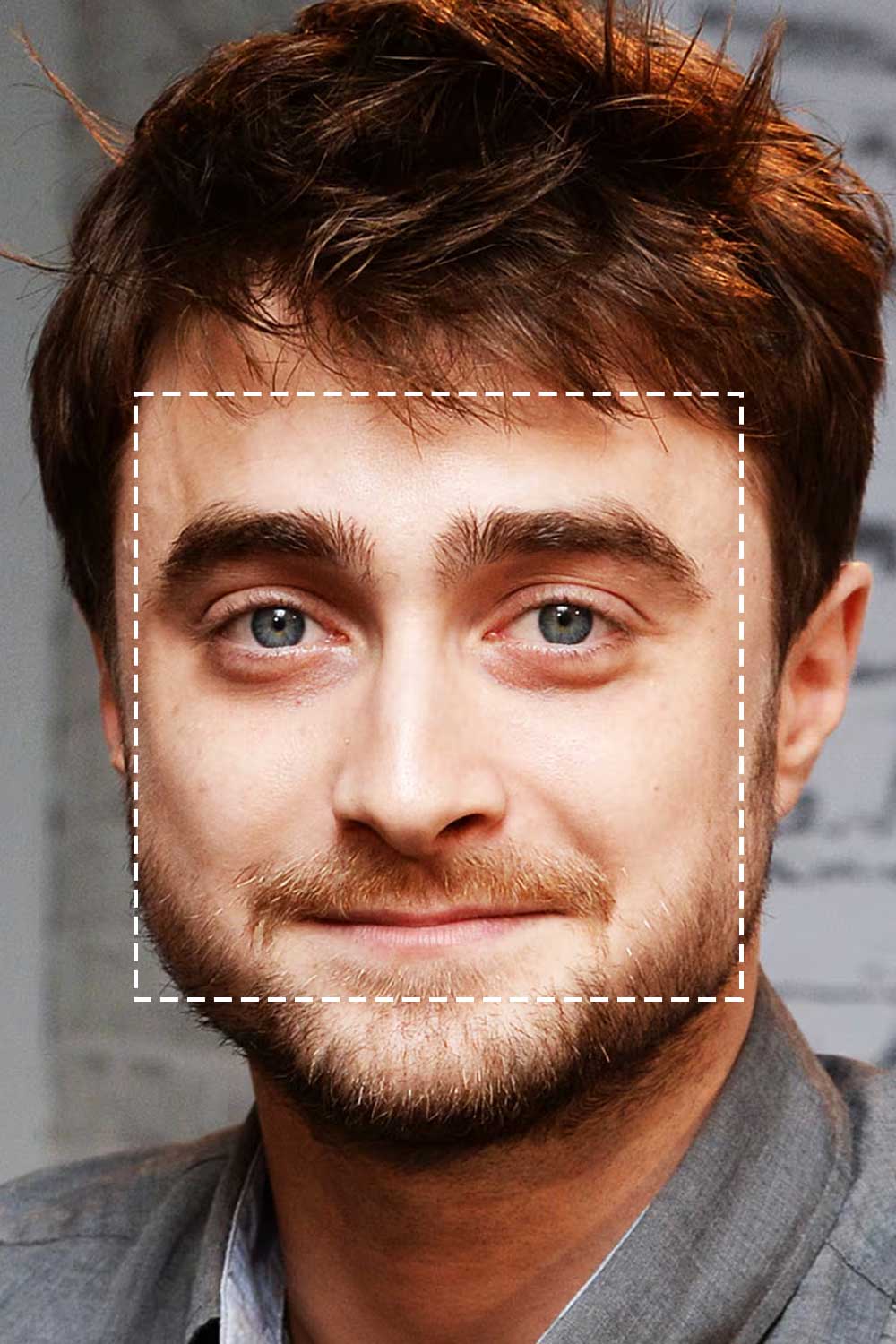
Daniel Radcliffe, pictured above, is often cited as an example of a square face shape, and has often been photographed with shorter hair since the Harry Potter films.
A short cut that keeps the top longer than the sides, with textured layers, adds movement and avoids a flat, horizontal top line; ask your barber for the top length your hair needs to move rather than a fixed number.
A side parting placed slightly off-centre adds asymmetry, which can soften strong angles if you want it to.
Facial hair kept fuller at the chin and slightly shorter at the sides makes the lower outline read longer and less wide; full sides do the opposite, and both are choices rather than rules.
Soft waves styled near the hairline break up a straight horizontal line across the forehead, if you want a softer finish.
3. Pedro Pascal
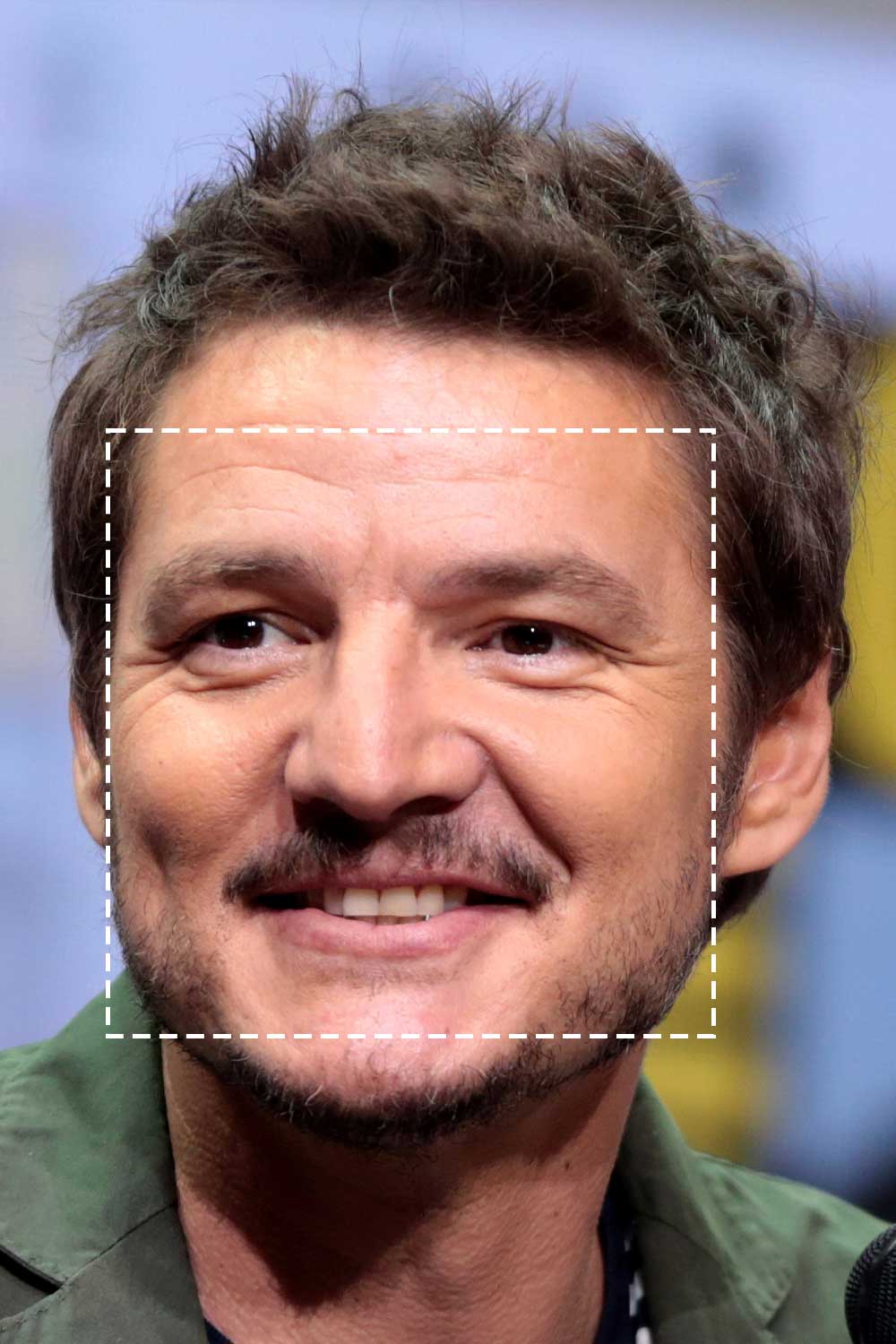
Pedro Pascal, pictured above, is often cited as an example of a square face shape, and is often photographed with wavy hair.
Length and wave around the temples add width at the upper sides, which offsets a strong jaw if that is your goal.
Longer styles that fall around the ears soften the side outline with movement rather than adding more straight lines.
A beard kept fuller at the chin and tapered towards the ears gives a slight point that makes the outline read longer; your growth coverage decides how gradual that taper can be.
As general advice rather than a description of his routine: if your hair is wavy or curly, a light cream can define existing waves without stiffness, but it will not create curl in straight hair.
4. Johnny Depp
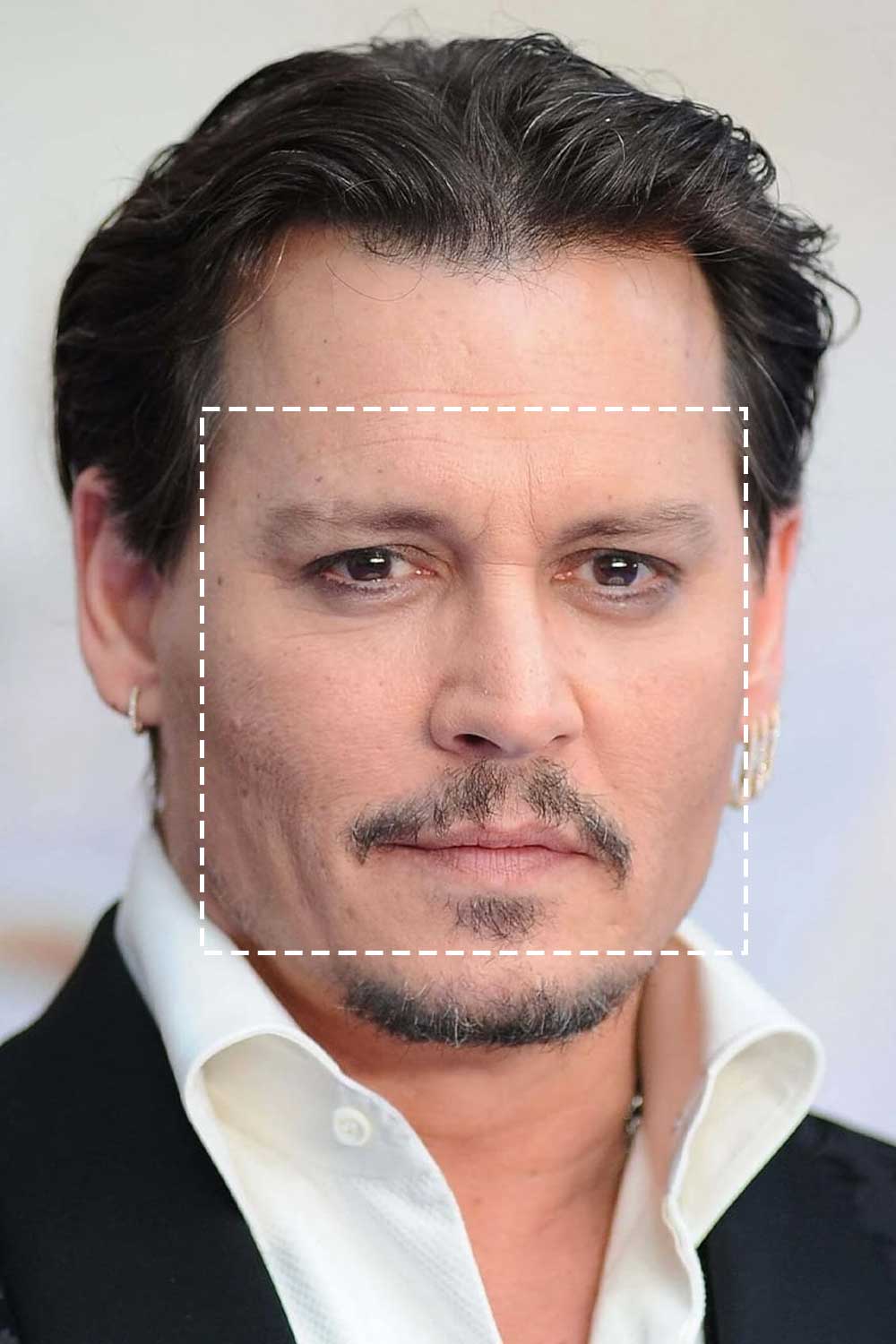
Johnny Depp, pictured above, is often cited as an example of a square face shape, and has worn many different looks over his career.
In longer hair, layers that start below cheekbone level with a gradual graduation avoid harsh horizontal lines.
Depp’s signature middle part is a reminder that parting position changes where hair weight sits: a centre parting splits it evenly, while a slightly off-centre parting adds a little asymmetry; neither changes the face itself.
A full moustache with a pointed chin beard breaks up the horizontal jaw line and adds length at the chin.
A swept-back style with volume at the crown adds height without adding width at the sides.
5. Michael B. Jordan
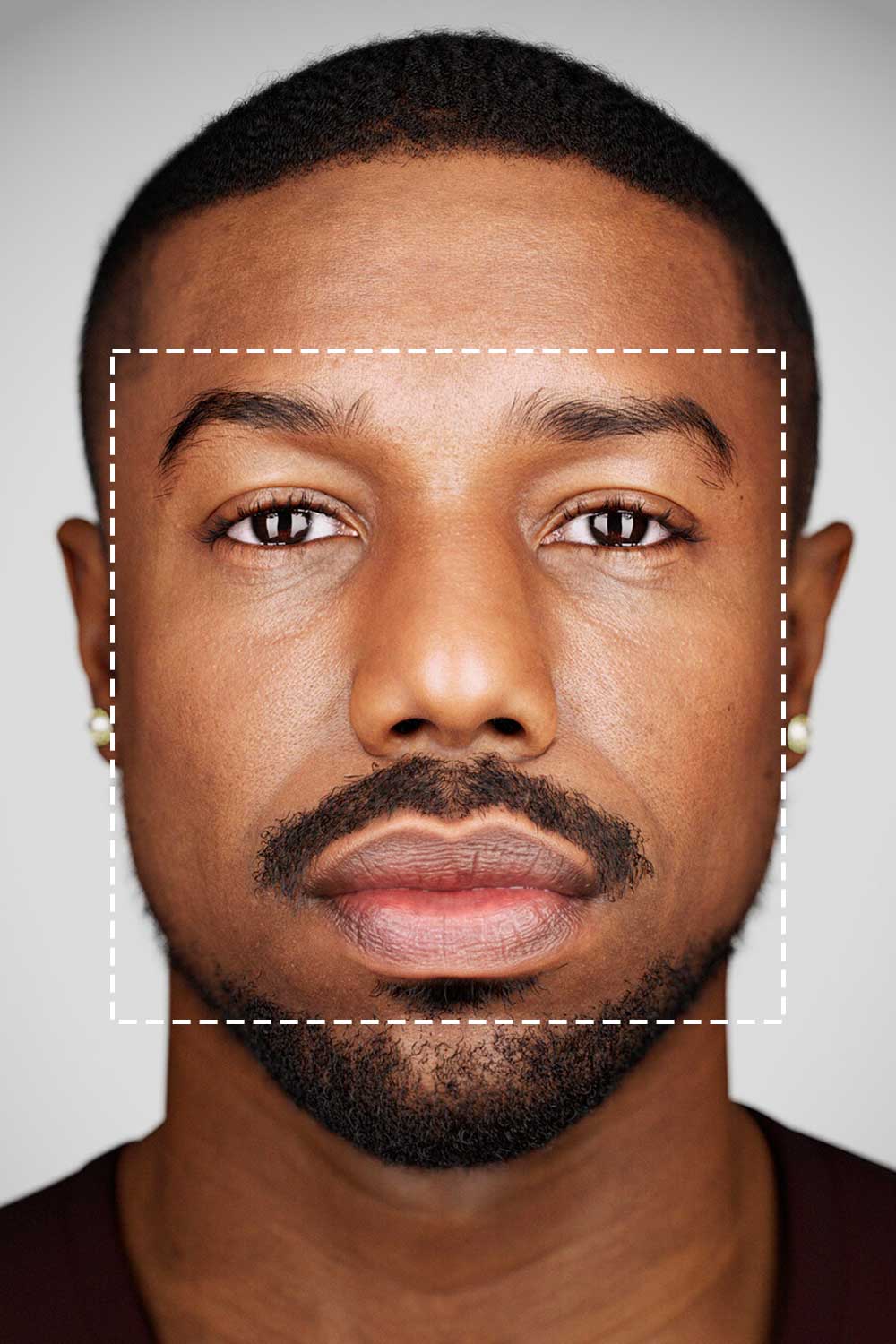
Michael B. Jordan, pictured above, is often cited as an example of a square face shape, and is often photographed with short, textured hair and a short beard.
A low fade, which starts lower on the sides, gives a more gradual transition than a high fade; the fade is a graduated blend your barber maintains as it grows.
A lineup that follows your natural hairline looks softer than one cut to sharp, pushed-back angles; ask your barber not to move the hairline back.
A beard fuller through the chin and tapering towards the sides makes the lower outline read longer and softer, if that is the effect you want.
Slightly more length on top, styled with movement, adds height and draws the eye upward.
6. Charles Melton

Charles Melton, pictured above, is often cited as an example of a square face shape.
The Riverdale actor has often been photographed with medium-length waves; layering in wavy hair adds movement and depth.
Fullness kept at the crown adds height without adding width at the sides.
A clean, defined beard line along the jaw echoes an angular outline rather than softening it, which suits you if you like that emphasis.
A sleek side-parted style with subtle texture is a polished option for formal occasions.
7. Tom Hardy
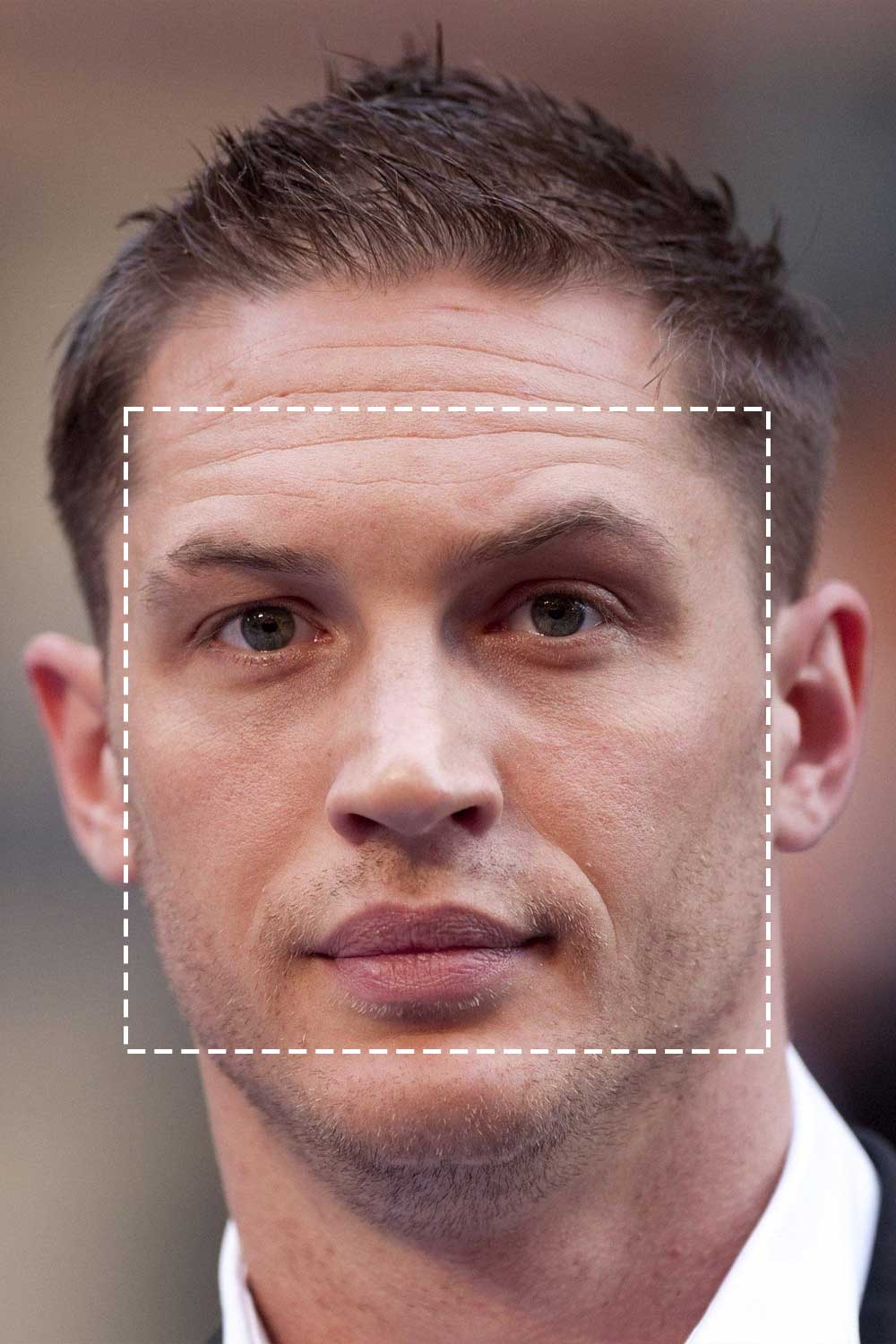
Tom Hardy, pictured above, is often cited as an example of a square face shape, and his looks have changed considerably from role to role.
Shorter styles with closely graduated sides and more length on top leave room to style the top in different ways; agree the side length with your barber for your hair rather than copying a guard number.
A textured crop adds enough movement on top to soften straight lines while keeping the cut short.
A beard full along the jaw but tapered at the upper sides adds less width than one kept full all the way up to the cheeks.
A higher fade with textured length on top puts the emphasis on height, which makes the outline read longer rather than wider.
8. Gerard Butler
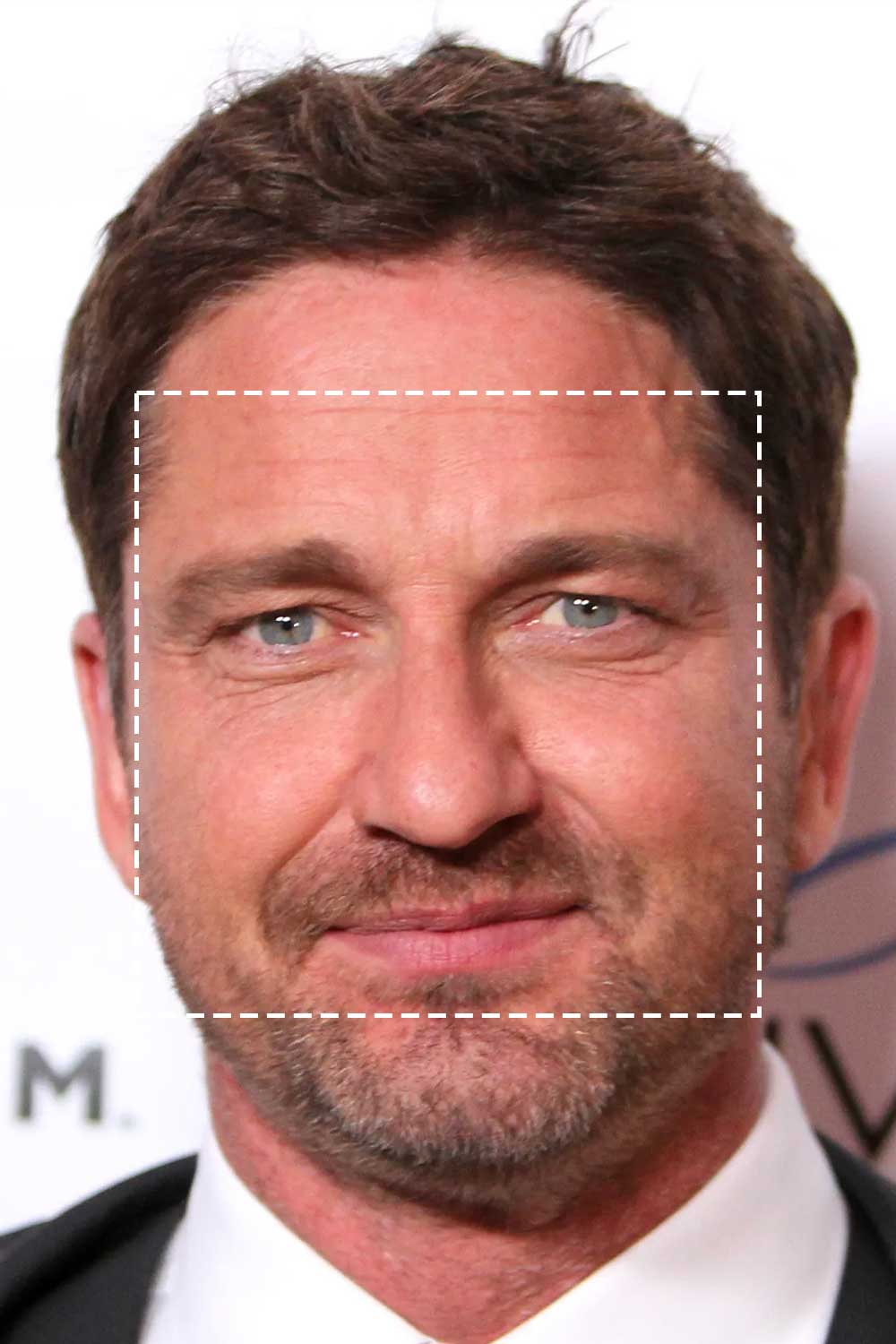
Gerard Butler, pictured above, is often cited as an example of a square face shape, and is often photographed with a full beard.
A cut with some length on top and gradually tapered sides avoids a harsh contrast between top and sides.
As a styling technique, brushing the crown in a diagonal direction adds movement rather than straight lines.
A fuller beard with softly rounded edges adds weight without adding more angles at the jaw corners.
As general advice: matte styling products give definition without shine or stiffness, if you prefer a natural finish.
9. Mark Wahlberg
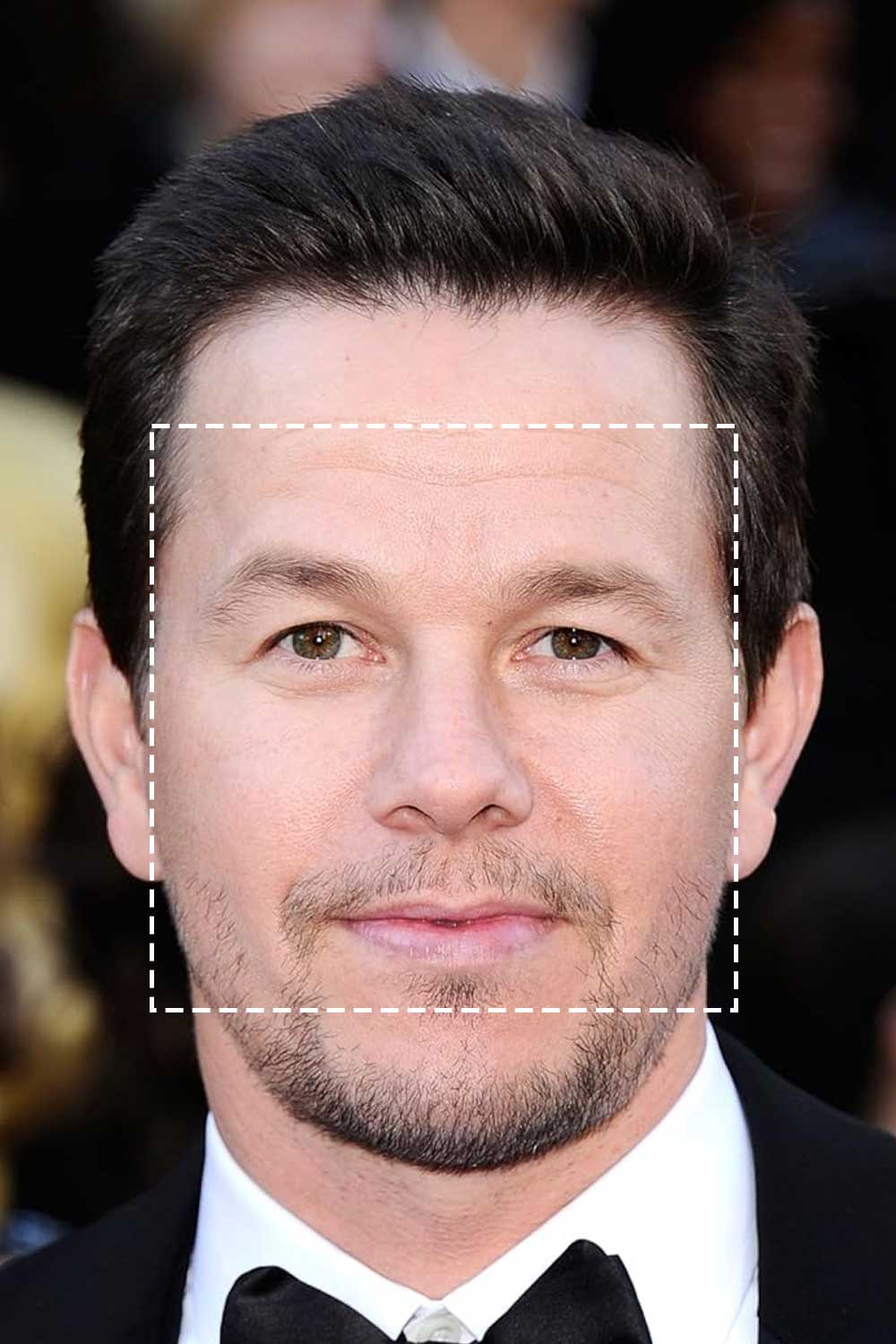
Mark Wahlberg, pictured above, is often cited as an example of a square face shape, and is often photographed with short, clean cuts.
A medium fade, starting around temple level, gives a gradual transition from short sides to the top.
Natural texture on top with modest height adds movement without making the outline read much longer; add more height if you want that effect.
Even, short stubble defines the jaw without creating harsh lines; choose the trimmer setting that suits your growth rather than a fixed number.
A little texture at the crown avoids a flat, horizontal top line, if you want a softer finish.
10. Daniel Dae Kim

Daniel Dae Kim, pictured above, is often cited as an example of a square face shape.
The Lost and Hawaii Five-0 actor has often been photographed with clean, structured sides and a short top, a neat outline that leaves the jaw as the focus.
Using only a little product keeps texture natural-looking.
Even stubble defines the jaw contour without adding sharp lines.
A subtle side parting adds a little asymmetry, which softens a very geometric look while staying polished.
Styling Guide for Square Faces
Start by choosing your goal: echo the angular outline, soften it, add height, or simply wear a style you like; none of these is required.
If you want a softer look, choose cuts with movement and avoid flat, horizontal lines at the top and sides, which repeat the width of the jaw.
Medium-length styles offer the most ways to style, but tell your barber where you want length, height, weight and movement, and mention your hair density, texture, curl, growth direction and hairline, because the same cut sits very differently on fine straight hair and on dense coily hair.
For a beard, describe side fullness, chin length, cheek line and neckline separately: chin length makes the outline read longer, full sides echo its width, and your growth coverage sets what is achievable.
If you want movement, lighter styling products usually allow it more than stiff, high-hold ones; check the result dry-styled in the mirror, from the front and both sides, before deciding whether to keep it.
Choosing Complementary Accessories
Choose glasses for fit first: the frame width, bridge and arms need to sit comfortably and stay put, and an optician can check lens needs; after that, curved frames contrast with angular features and angular frames echo them, and either is a valid choice.
When selecting sunglasses, aviator and round styles contrast with strong angles if you want that effect; check the lenses offer the UV protection you need.
For formal wear, choose collar styles for your neck, tie knot and jacket first; spread and point collars both work, and a collar cannot change the shape of your face.
Ties with diagonal stripes add a line that breaks up horizontals, but choose neckwear for the outfit and occasion first.
Final Considerations
A square outline works with a wide range of looks, as these ten examples show.
Softer textures and curves offset angles if you want a gentler look, while crisp lines echo them; both are valid.
Sharp edges and short fades need more frequent trims than softer, longer cuts, so factor in the upkeep you are happy with.
If your features look mixed, or a beard hides your jaw corners, compare neighbouring face-shape guides, such as rectangle, rather than forcing a single label.
Style Like A True Gentleman
Before you go, here is a simple order to follow, whether you work alone or with an image consultant.
Professional styling usually starts with knowing your body shape and seasonal colour palette, which help you choose well-fitting clothes in colours that suit your skin, eyes and hair.
Then you can plan outfits for each occasion, location, season and time of day, with garments, footwear, and accessories from heritage fashion brands that fit the way you want to look.
Take our three quizzes below, then book a paid consultation if you would like personal help:
1. Find Your Body Shape
Different garments flatter different silhouettes, so knowing your body shape is a useful first step.
To check your body shape, take our body shape quiz for men.
Next, take the second quiz to check your colour palette.
2. Find Your Seasonal Colours
Remember, the garments that compose your outfits come in various colours, and it helps to choose shades that suit your natural colouring.
To do that, find your seasonal colour palette by taking our seasonal colour quiz for men.
3. Find Your Fashion Style
Once you know your body shape and colour palette, the next step is to find your personal fashion style.
You can start with our fashion style quiz for men; it gives style suggestions, outfit ideas, relevant fashion brands, and much more.
Professional Image Consultancy with The VOU
If you would like personal help, you can book a paid consultation with our expert image consultants and fashion stylists.
Our styling services for men are paid consultations; the shop page lists what each one includes.
Remember, wearing luxury brands isn’t enough (see logo-heavy luxury brands and how to wear them); it also helps to know your body shape, colour palette, and ideal personal style, and then to dress by occasion, location, season, and time of day.
Contact us if you would like to book a paid consultation.