
Driven by growing demand for sustainable fashion, the slow fashion movement sees increasing support.
As a new way of manufacturing clothes, in a slower, more considerate way towards the people, animals, and the environment, the slow fashion method can offset some of the damage done by fast fashion.
In this article, we’ll explore the origin of slow fashion, compare slow vs. sustainable vs. fast fashion, and see what it’s all about.
What is Slow Fashion?
Slow Fashion is a ‘global movement’ that opposes the fast fashion business model of industrial manufacturing and advocates for slow-fashion production and consumption with respect for people, animals, and the environment.
As a manufacturing process, slow fashion promotes the use of local craftsmen and eco-friendly materials.
Slow fashion aims to preserve local crafts and the environment while it provides value to producers and consumers.
The Origin of Slow Fashion
Kate Fletcher (professor of Sustainability, Design, and Fashion at UAL, London) coined the term ‘slow fashion’ in 2007.
Inspired by the slow food movement, Fletcher observed a need to slow down the fashion industry.
However, the ‘slow fashion’ movement reached global recognition thanks to Elizabeth L. Cline, one of the earliest critics of fast fashion.
In her 2012 book, ‘Overdressed: The Shockingly High Cost of Cheap Clothing,’ Cline assesses the costs of making low-priced garments.
Slow Fashion Philosophy
The slow fashion movement tracks and debates several critical aspects, of which manufacturing and consumption are the most ardent.
Slow Manufacturing
Slow fashion must be made in small batches by sustainable designers or local artisans from high-quality, (ideally) eco-friendly, and cruelty-free materials.
Borrowing from the luxury business model, the slow fashion manufacturing approach emphasizes product longevity and quality instead of quantity and mass production.
As such, slow manufacturing:
- Supports (implicitly) local artisans and their crafts.
- Promotes fair wages.
- Fights climate change with lower carbon emissions.
- Protects the environment.
Slow Consumption
The second critical aspect of the slow fashion approach is consumption, which can be achieved via several small stages:
- The purchase of vintage-style clothes.
- Redesigning/repurposing old clothes.
- Buying from smaller producers.
- Making apparel at home.
- Buying lesser but high-quality couture that lasts longer.
As Fletcher put it:
“The slow fashion approach encourages designers to ensure product quality and provide further value by developing the product in connection to people and the environment.”
Slow Fashion vs. Sustainable Fashion
While slow fashion and sustainable fashion are used interchangeably in fashion parlance, there are slight conceptual differences given their shared goal of a cleaner, safer, and happier world.
By construction, sustainable fashion incorporates the whole range of ‘eco,’ ‘green,’ ‘slow,’ and ‘ethical’ fashion movements.
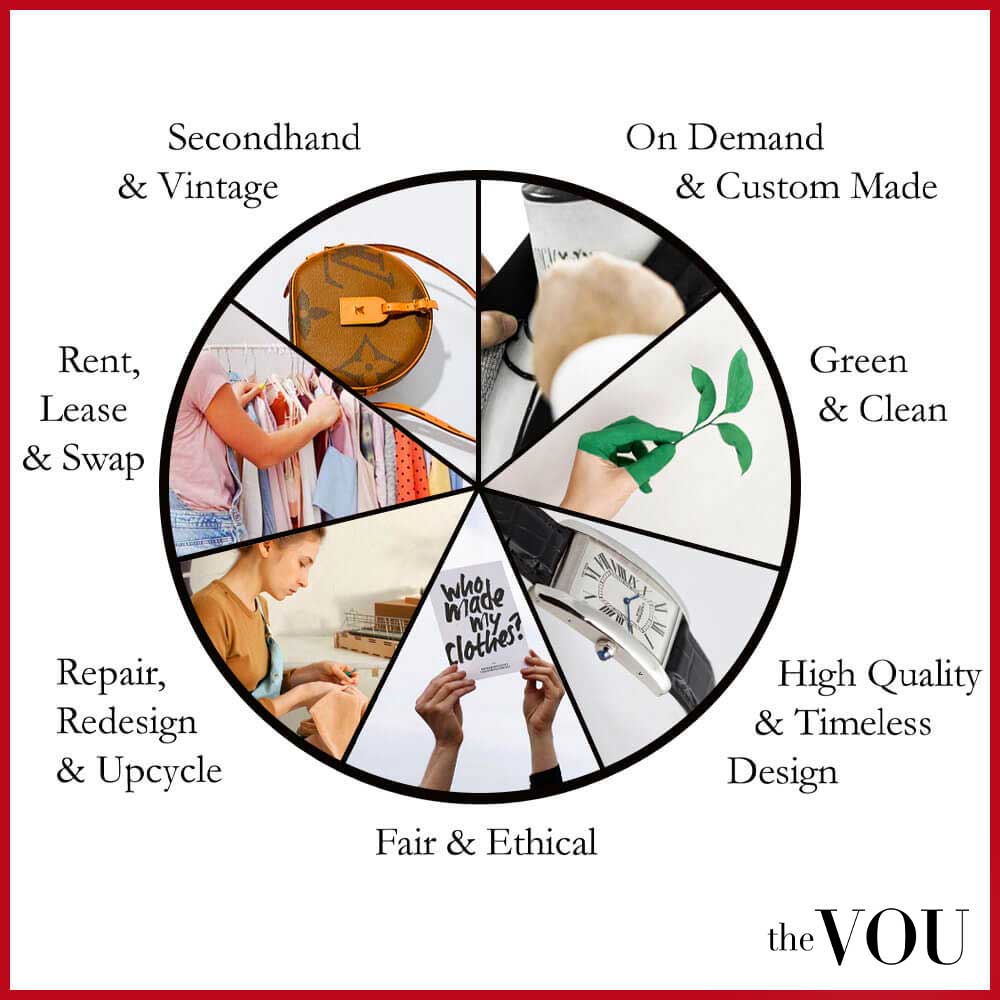
Since slow fashion doesn’t view products as disposable, it is sustainable.
Also, by looking at the constituting parts of fashion and the links between them, slow fashion has an intrinsic ethical construct.
Slow fashion cares about raw materials, human labor, the environment, and the maintenance of these connections.
In this respect, slow fashion is a ‘workable solution’ to the existing wasteful fashion ecosystem.
Slow Fashion vs. Fast Fashion
Fast fashion is a manufacturing model built on cheap labor, resource depletion, waste creation, and overconsumption.
Fast fashion model (manufacturing, returns, and waste) is one of the most significant global heating contributors, known to generate over 1.7 billion tonnes of CO2 each year.

On the other hand, slow fashion advocates advise consumers to retain their garments for more than one season by creating garments with cultural and emotional connections relevant to the places and people that made them.
By proposing a thoughtful, intentional, and holistic fashion-making approach, slow fashion can counter some of the overproduction and pollution caused by the fast fashion model.
Moreover, slow fashion could resurface the long-lost art of clothesmaking and celebrate the skills of the artisans who create them.
The Benefits of Slow Fashion
The adoption of a slow fashion model could be of further benefit to the fashion industry by:
- Offering high-quality and timeless products, allowing customers to wear them for a lifetime.
- Slowing down mindless consumerism.
- Reducing pollution and textile waste clogging landfills.
- Having lower carbon emissions and thus protecting the environment.
- Supports local artisans and their crafts through fair wages.
How Can You Support Slow Fashion (6 ways)
- Take care of your clothes; wash only when necessary and on low-impact washing.
- Repairing garments, sewing, and replacing missing parts and buttons is simple.
- Engage in thoughtful purchases; think twice before buying.
- Buy only from slow fashion brands.
- Upcycle broken garments to make a unique capsule wardrobe.
- Recycle or donate the clothes you no longer need.
The ‘slow fashion’ approach to manufacturing apparel suggests a complete overhaul of production and consumption, with positive results amongst the younger generation:
However, while there are positive results and the support for slow fashion is growing, there is still a long way to go.
Be Sustainable with The VOU
Knowing what sustainable fashion is, and purchasing eco-friendly brands is one thing.
But knowing how to match them according to your seasonal colour and body shape…well, that’s a different thing.
True fashion mastery lies in knowing and matching your body shape/type with your seasonal colour, skin, eye, and hair colours.
It requires understanding how to shop and pair the most ideal garments, footwear, and accessories from the most relevant, heritage brands.
This is paramount to being able to dress correctly by body shape, occasion, location, time of the day, and lifestyle and ensure the garments you buy are not for a season, but a lifetime.
Find Your Body Shape
Different garments flatter different physiques so discover your body shape now by taking our body shape quiz for men.
Identify Your Best Colors
Fashion comes in a wide range of colours, but not every hue will complement your natural colouring so find out your ideal colours with our seasonal colour quiz for men.
Then, learn how to dress by occasion, location, season, and even time of the day.
Dress for the Occasion
Understanding how to choose and style garments from relevant heritage brands, and style them by occasion, season, location, and body shape is crucial.
From casual weekends to formal events, each occasion requires a unique approach to styling.
To save time, headaches, and even money, get in touch with The VOU’s expert stylists now.
Get Expert Styling Advice
Take our comprehensive fashion style analysis for men, and let our expert stylists guide you in selecting and curating items of maximum impact in a wardrobe that communicates success and confidence.
Our team of seasoned stylists will curate a bespoke capsule wardrobe that reflects your tastes and aspirations while honouring the time-honoured traditions of the equestrian world.
Remember, owning luxury brands isn’t enough. To look stylish, confident, wealthy, and successful you must match your body shape, colour palette, season, occasion, location, time of the day, to perfection.
With these tools and expert guidance, you’ll not just wear the brand, you’ll master it, creating a wardrobe that truly reflects a unique fashion taste and many achievements
Lawrence Anderson’s focus at The VOU is old-money style, British heritage menswear and the wider strategy behind a man’s wardrobe. His coverage addresses readers who want a composed, consistent style but need practical guidance on where to begin, what to keep and which pieces deserve a place in their wardrobe.
His subject areas connect classic tailoring, knitwear, footwear and accessories with the proportions and formality of a complete outfit. British countryside clothing, preppy dressing and Ivy-inspired references provide context for understanding different versions of the look. The emphasis is on recognising the relevant details and adapting them to the wearer’s life, rather than treating an aesthetic as a requirement to buy particular labels.
Lawrence’s editorial coverage brings wardrobe planning back to the reader’s needs: everyday clothing, professional presentation, occasion dressing and a workable budget. It considers existing pieces, outfit coordination and repeat use, giving men a basis for building personal style over time. A coherent wardrobe should reflect the person wearing it and the situations they actually need to dress for.
Raf Adams’s focus at The VOU is luxury menswear, brand analysis and quiet-luxury styling. His coverage addresses men who want to understand the difference between a recognisable label, a documented garment feature and a buying choice that makes sense for their wardrobe.
His subject areas include materials, construction details, brand positioning and the understated clothing references associated with quiet luxury. This focus examines what can be established from product information and what remains a matter of appearance or preference. Price and reputation provide context, but neither replaces attention to fit, intended use and the details of the item being considered.
Raf’s editorial coverage connects those comparisons with complete outfits and repeat wear. Readers exploring premium clothing can consider how a purchase works with existing pieces, which features matter to them and whether a less conspicuous look suits their needs. The aim is to make luxury menswear easier to assess without turning a brand name into a promise of quality or personal style.