

Start here
What’s This About:
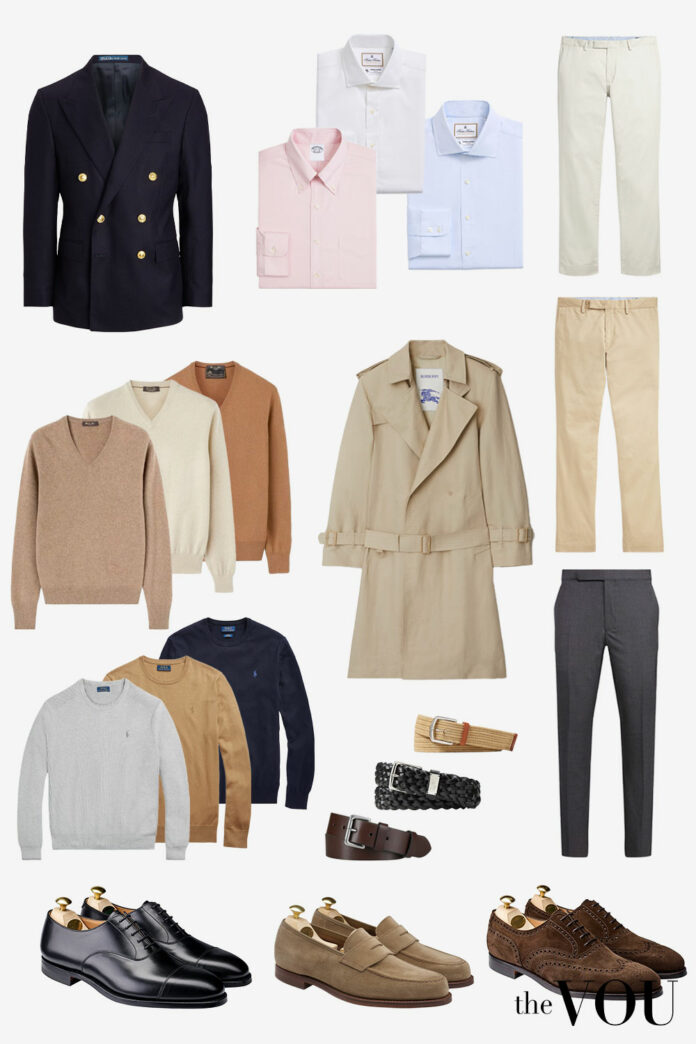
The sixteen kinds of garment and accessory that make up an Old Money capsule wardrobe, each one photographed, with what to look for when you buy it.
The sixteen categories, in the order they appear:
– three shirts: a white dress shirt, a blue dress shirt and an Oxford cloth button-down
– three bottoms: chinos, grey wool trousers and dark denim
– two jumpers: a crew neck and a V-neck
– two outer layers: a navy blazer and a trench coat
– three pairs of shoes: dress shoes, loafers and white leather trainers
– three accessories: a leather belt, a watch and sunglasses
These are categories rather than a count of possessions – most people own more than one shirt. For how many of each your own week needs, and in what order to buy them, use our step-by-step method for building a capsule wardrobe.
Key Points:
01Sixteen categories: three shirts, three bottoms, two jumpers, two outer layers, three pairs of shoes and three accessories. A pair of shoes counts as one; how many of each you own is a separate question.
02This is one register – the Old Money, quiet-luxury idiom – applied to a capsule. It is not the only way to run one, and some of what follows is preference rather than rule; where it is, the text says so.
03Every picture is an example of the category above it, not a specification. Where a picture differs from the advice beside it, the caption says which is which.
04The seasonal section separates swapping a garment for a heavier one from buying an extra garment, because those are different decisions.
05How many of each to own, and in what order to buy them, is decided by your own week – that is what our step-by-step method for building a capsule wardrobe is for.
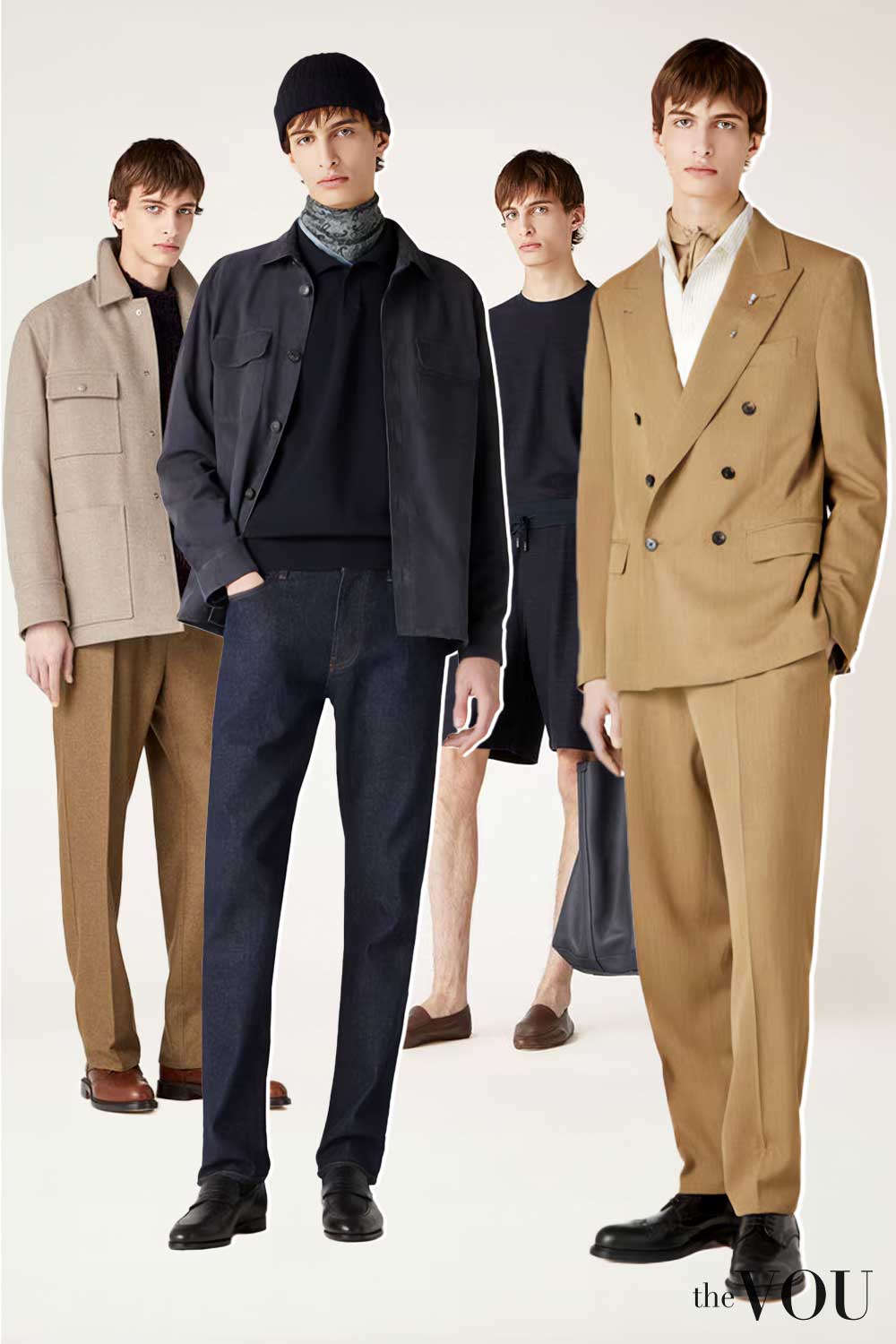
Four looks assembled from neutral separates – camel, navy, brown and indigo. Illustration retained from an earlier version of this article; the garments are not identified and no maker is established by the photograph.
What This Page Is, and Where the Method Is
One route to a wardrobe where most things go with most things is to pick a restrained register and stay inside it. The Old Money look is a good candidate because it leans on colours that combine easily – navy, grey, white, stone, brown and dark indigo – which is the discipline a capsule needs. It is not the only such register, and a wardrobe built on warmer or brighter colours can interchange just as well.
What follows is that register laid out category by category, with a photograph of each. It is a reference rather than a process: it will show you what a good Oxford button-down looks like, but it will not tell you how many shirts your week needs or what to buy first. For that, our step-by-step method for building a capsule wardrobe works through the week, the wardrobe you already have, the counts and the buying order, and this page is the illustrated companion to it.
The two pages differ in places, and where they do it is a difference of register rather than a contradiction. The method page keeps dress shirts for tailored trousers in its worked example; this page pairs a dress shirt with dark denim on purpose, because that pairing is part of this look. If you would rather choose your colours from a seasonal palette matched to your own colouring, a capsule built on a True/Warm Spring palette shows what that looks like instead.
Read the pictures as examples
Each photograph below shows one version of the garment named above it. Where the pictured item differs from the advice – a different colour, a different collar, a decorative rather than a plain version – the caption says which is which, so nothing here relies on you not looking closely.
Shirts
Three Shirts
1. A white dress shirt
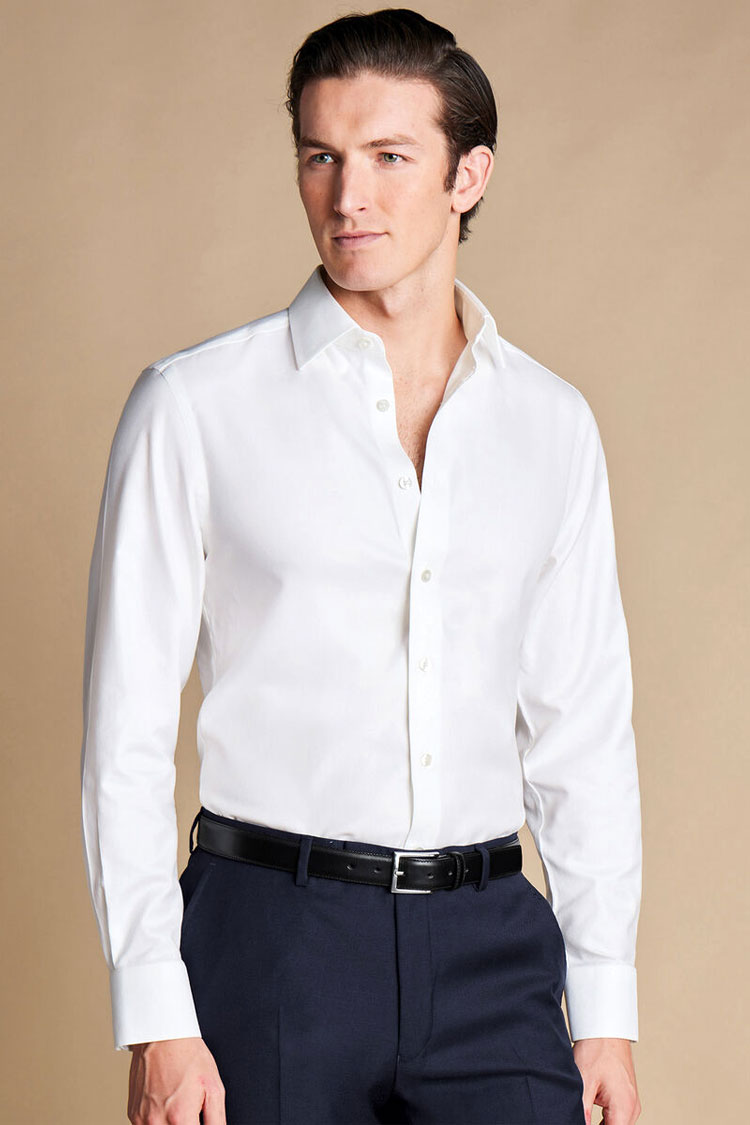
A plain white dress shirt with a spread collar, worn open-necked with navy trousers. Image courtesy: Charles Tyrwhitt.
The most broadly useful shirt in this list: it goes with the blazer and the wool trousers, under a jumper, with jeans at the weekend, and to most formal events that ask for a jacket. A white shirt is also what most stated dress codes assume at the smart end, though not every one – Debrett’s on dress codes is a useful summary of what the common codes actually ask for, and white tie has its own shirt, which is not this one. Read the invitation rather than assuming a white shirt covers everything.
On cloth: a shirtmaker’s description of the common weaves describes poplin as closely woven, lightweight and smooth, and twill as a diagonal weave that drapes well, feels substantial and is crease-resistant. Those are descriptions of two particular cloths rather than a rule about weight. Buy the collar that suits your face and a fit that lets you fasten the top button without discomfort, whether or not you intend to.
2. A blue dress shirt
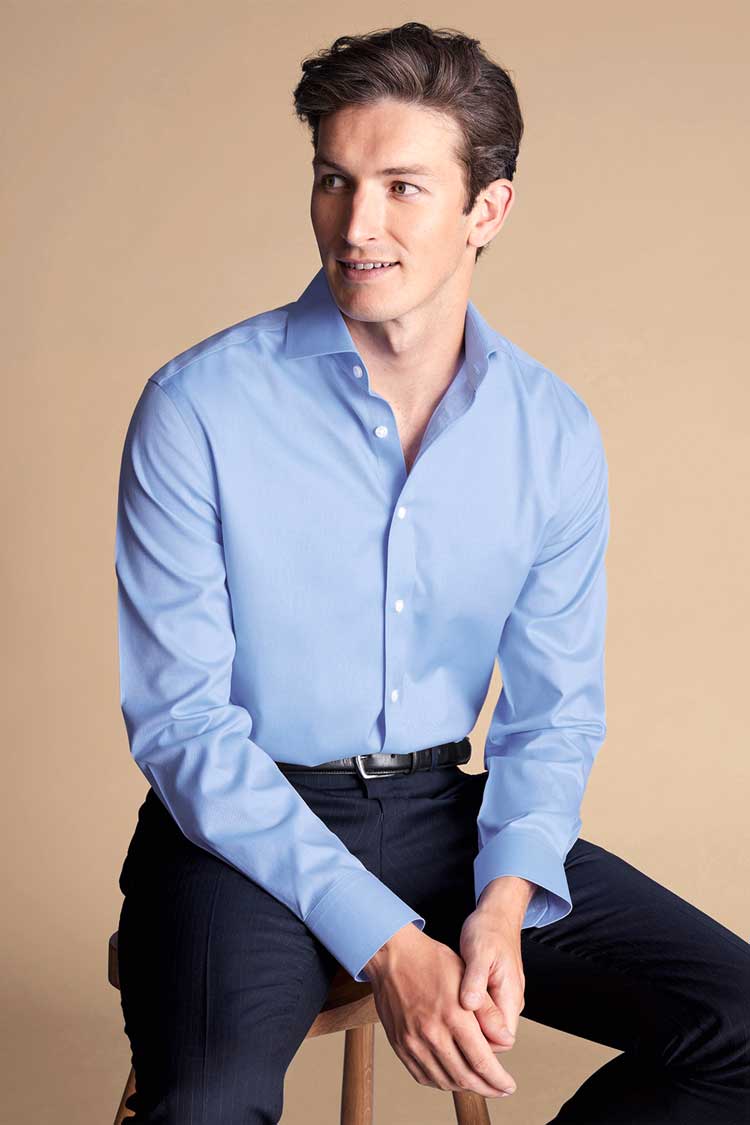
A light blue dress shirt with the same spread collar. Image courtesy: Charles Tyrwhitt.
Softer than white and nearly as versatile. A light blue, as pictured, reads more relaxed; a deeper blue reads sharper under a dark jacket. Either goes with grey and navy tailoring, and either works for casual outings with the sleeves rolled.
3. An Oxford cloth button-down
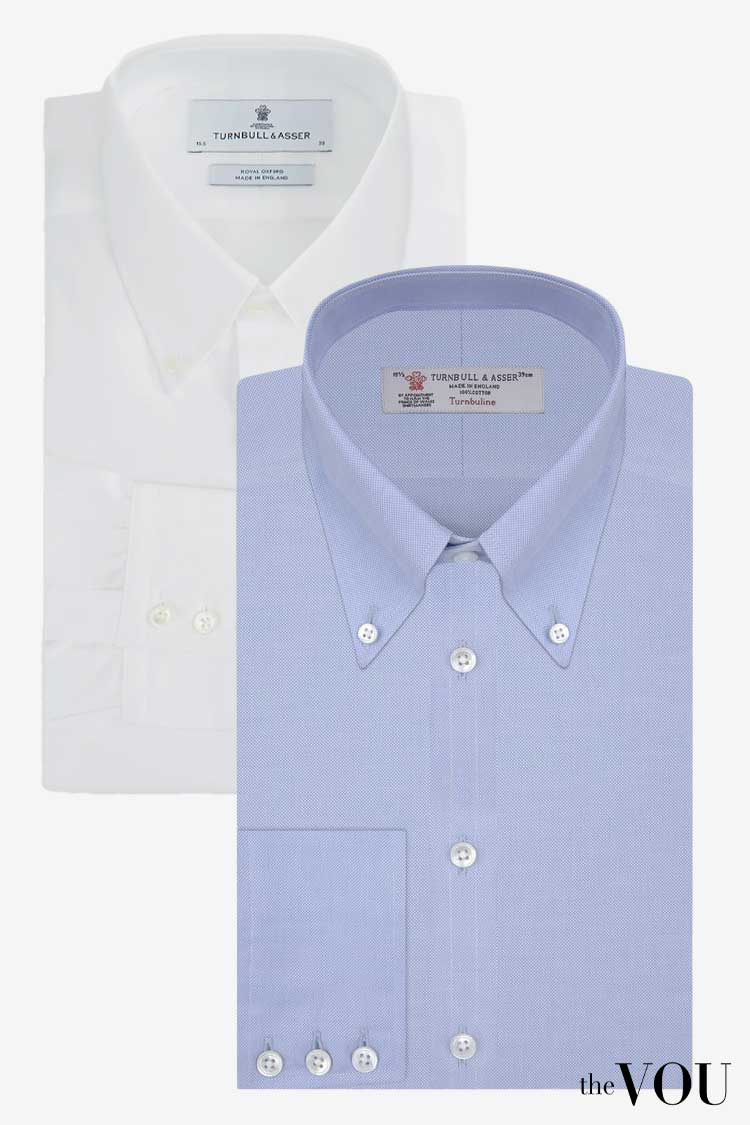
Two shirts photographed folded. Only the blue one has a button-down collar – the white shirt behind it has a plain collar with no buttons at the points. The neck labels visible in the photograph read Turnbull & Asser.
The Oxford cloth button-down shirt is the Preppy shirt that outlasted the fashion that produced it. The basketweave cloth is thicker and more textured than fine dress shirting, which is how the shirtmaker’s guide describes an Oxford, and it looks right without a tie. White and light blue cover most of what this wardrobe does; a university stripe is the pattern that belongs here. It goes under a blazer, over chinos and with jeans, which is a wider range than the two dress shirts above.
Bottoms
Three Bottoms
4. Chinos
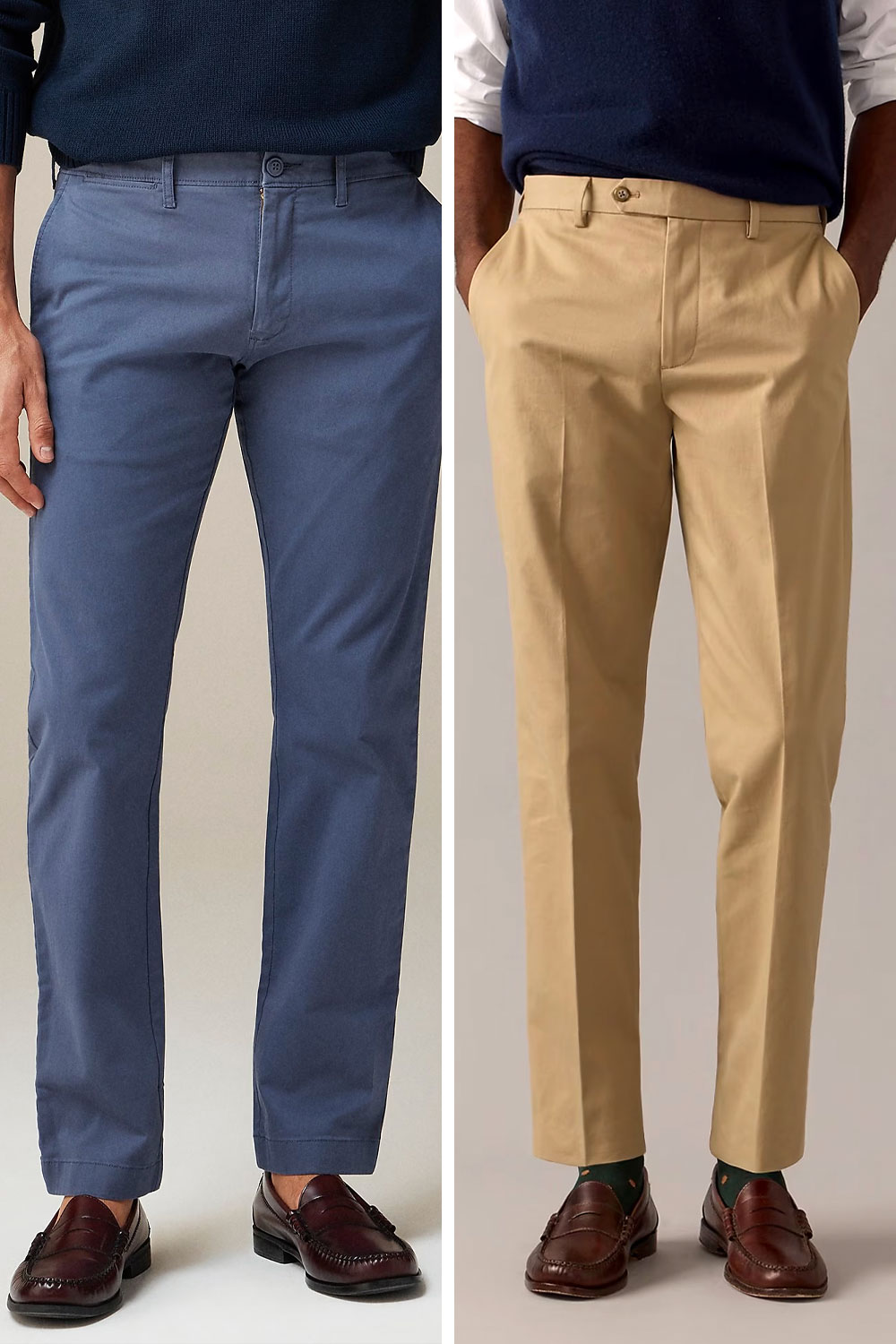
Two pairs of chinos – a slate blue on the left and a khaki on the right – each with burgundy loafers. The left-hand shoe is a woven-front loafer, the right a penny loafer.
Chinos are the bottom half of most of this wardrobe. Dress them up with a blazer and a shirt or down with a polo shirt or a sweater. Stone, khaki and navy go with everything else here; grey chinos work too, though neither pair photographed above is grey. A mid-weight cotton twill feels more substantial in the hand than a light one and hangs with more body; how long any pair lasts, and how well it holds a press, depends on the cloth, the finish and how hard you wear it.
5. Grey wool trousers
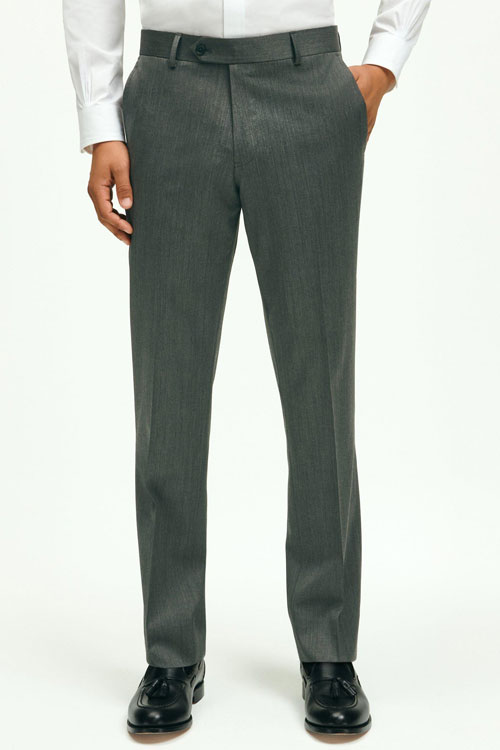
Flat-front mid-grey tailored trousers. The cloth reads as a fine plain grey at this resolution; no weave pattern, fibre or maker can be identified from the photograph.
A pair of grey wool trousers in mid or charcoal grey takes this wardrobe to formal occasions. Grey is the more flexible choice here because it sits comfortably under navy as well as under grey. Black tailored trousers are not a mistake – they are the right answer with black shoes and at the sharper, more urban end – they simply pair with fewer of the jackets in this particular list. A mid-weight worsted hangs with more body than a lightweight cloth; a flat front, as pictured, is the plainer option and pleats are a preference.
6. Dark denim jeans
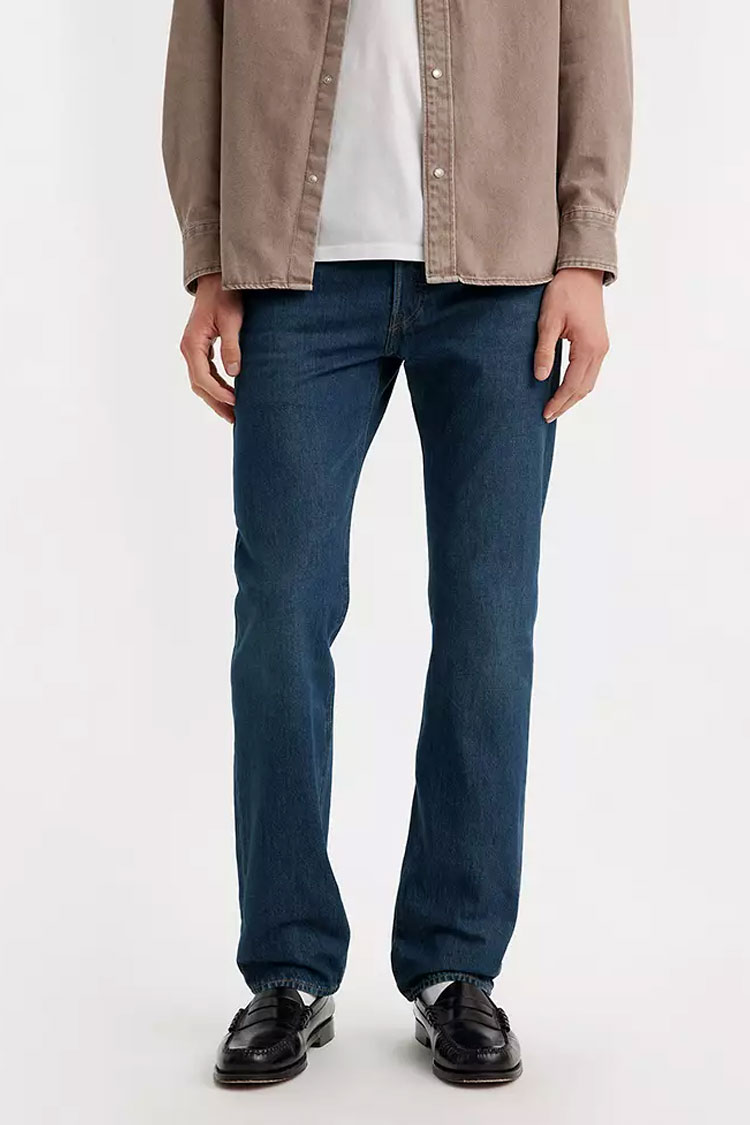
Straight-leg indigo jeans worn with an overshirt and loafers. This pair shows some fading through the thigh; a flatter, more uniform wash is the more versatile choice described below.
One pair, straight-legged, sitting at the waist and finishing at the ankle. The wash decides how far a jean travels: a flat, uniform dark indigo goes with a blazer and dress shoes, while fading and distressing pull it towards the casual half of the week. The pair photographed has visible fading through the thigh, so it sits nearer the casual end than the description does.
Knitwear
Two Jumpers
7. A crew neck
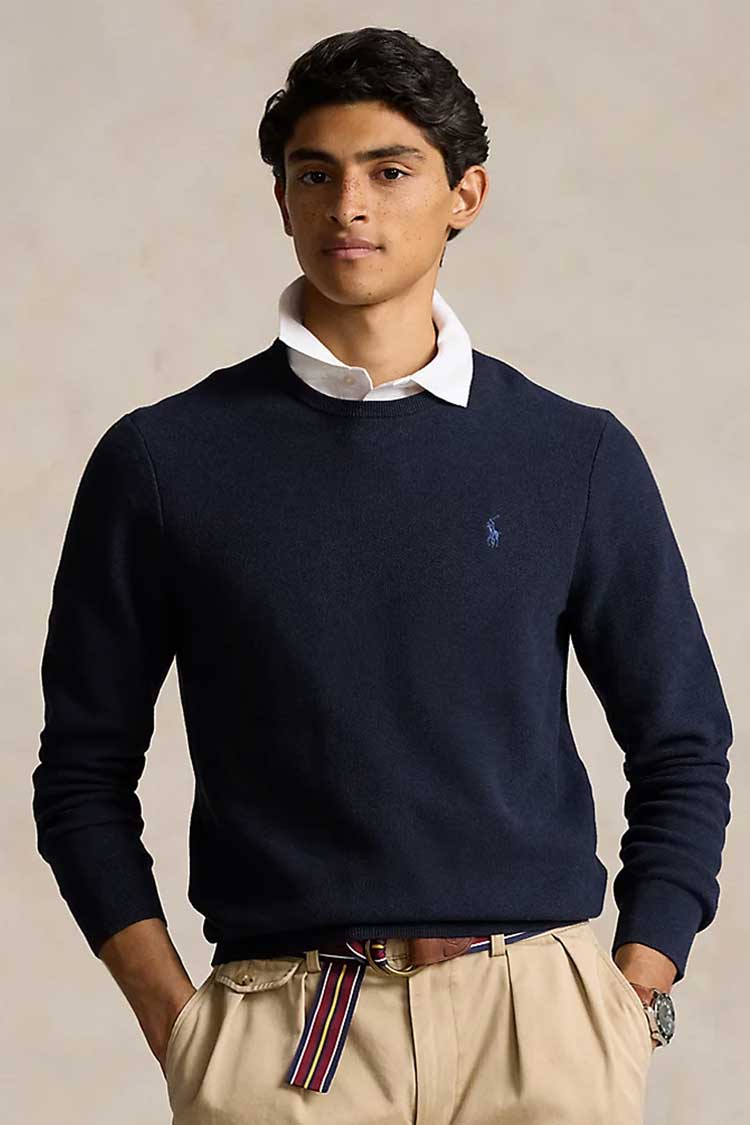
A navy crew neck worn over a white shirt with the collar out. The chest carries a Ralph Lauren polo-pony logo. Image courtesy: Ralph Lauren.
The most useful layer here. It goes over a shirt with the collar out, as pictured, or straight over a T-shirt, and it fits under a blazer if the gauge is fine enough. Navy, grey or brown sit with everything else in this list. A fine-gauge merino or a cashmere blend gives useful warmth at a thickness that will still go under a jacket, which is the practical reason those fibres suit a small wardrobe. What the jumper above is made of is not something the photograph can show.
8. A V-neck
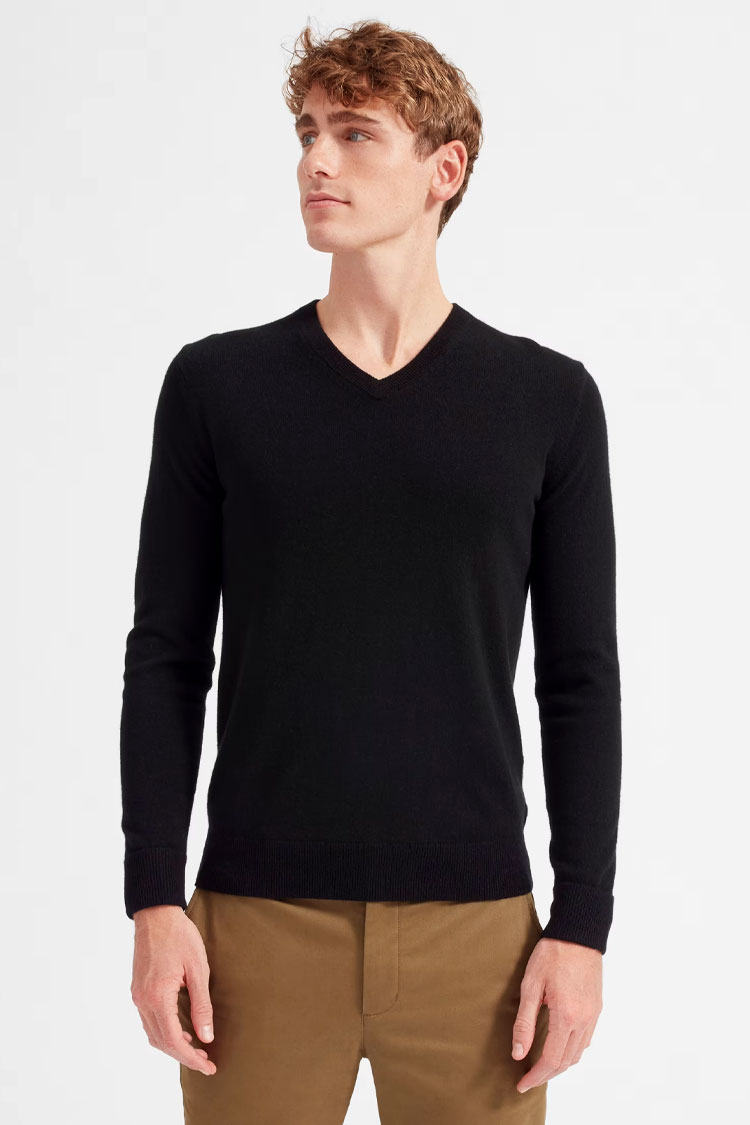
A plain fine-gauge V-neck, photographed here in black rather than in one of the colours named below. Image courtesy: Everlane.
A V-neck is the dressier of the two because it shows a shirt collar, and a tie if you are wearing one. Navy, grey and brown go with the rest of this list; the jumper photographed is black, which is a fourth option and a slightly sharper, more urban one. Fine gauge again, for the same reason.
Outer layers
Two Outer Layers
9. A navy blazer
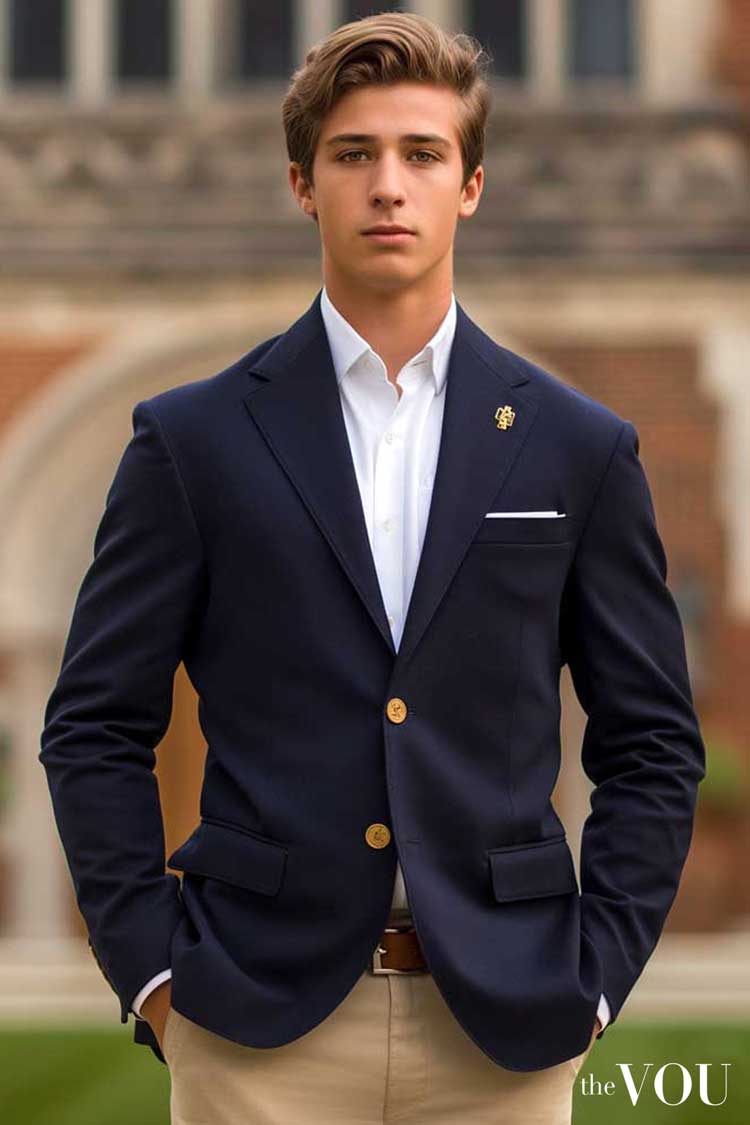
A navy single-breasted jacket with gold buttons and a lapel pin, over an open white shirt and stone trousers.
The most useful jacket on this list: you can dress a navy blazer up or down more easily than with anything else here. A single-breasted navy jacket, as pictured, is the version to own first. What separates a blazer, a suit jacket and a sport coat is mostly cloth and cut – a suit jacket has matching trousers, a sport coat is patterned or textured and made to be worn alone, a blazer is a plain solid odd jacket – and metal buttons are a traditional blazer marker rather than the definition; plenty of blazers have horn buttons, and self-covered or horn buttons make a jacket read closer to a sport coat. We set the differences out properly in our guide to the old-money look. Whatever the buttons, it wants a cloth with enough weight to hold its shape across the shoulders.
10. A trench coat
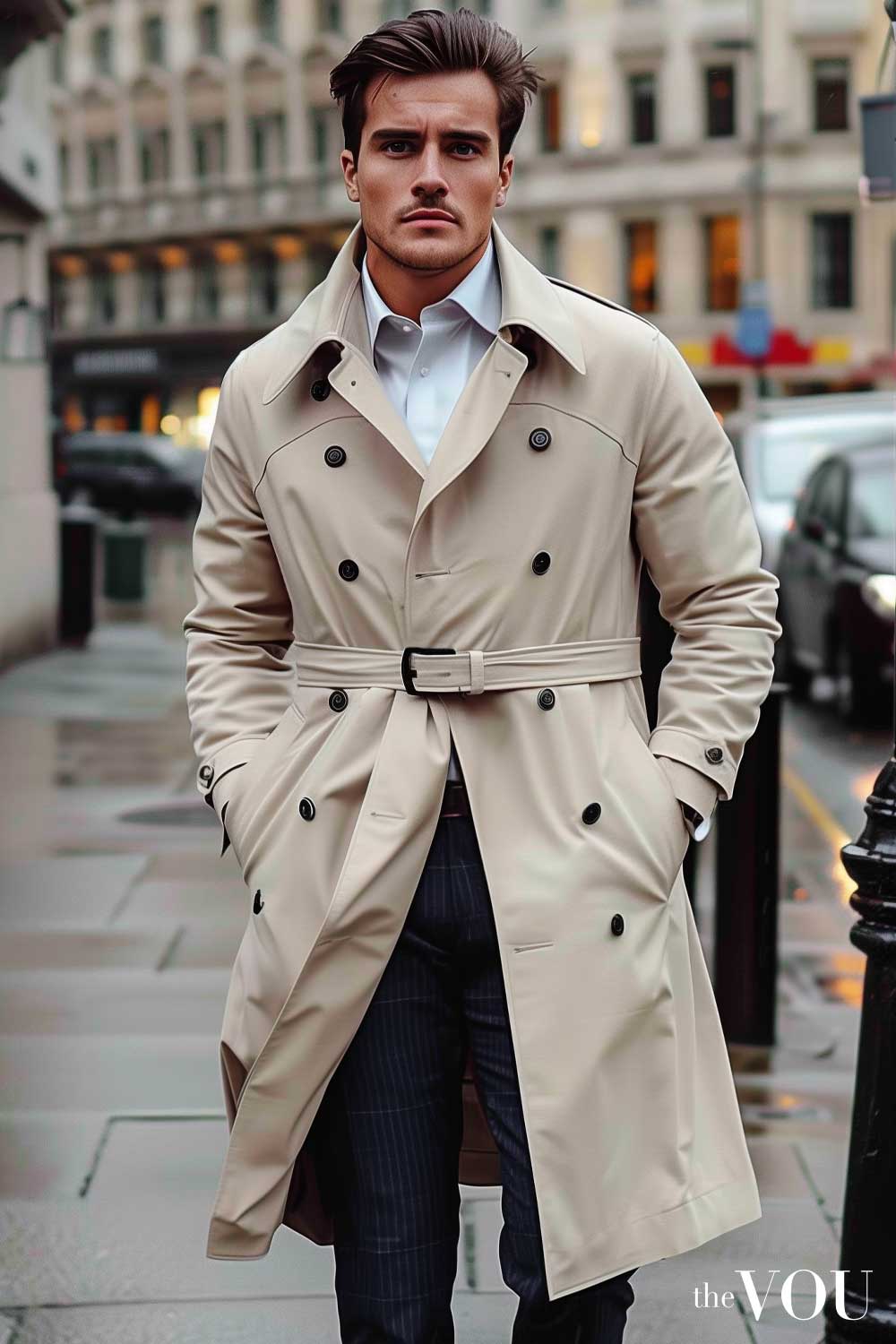
A stone double-breasted trench with a storm flap and epaulettes, its belt buckled at the waist and the front hanging open below it.
A trench coat covers a blazer without flattening it and still looks deliberate over jeans. Stone, as pictured, and navy fit this wardrobe. A closely woven cotton gabardine is the traditional cloth and the reason the coat exists; check what any particular coat is actually made of and how it is finished rather than assuming the shape brings the weather resistance with it.
Footwear
Three Pairs of Shoes
11. Leather dress shoes
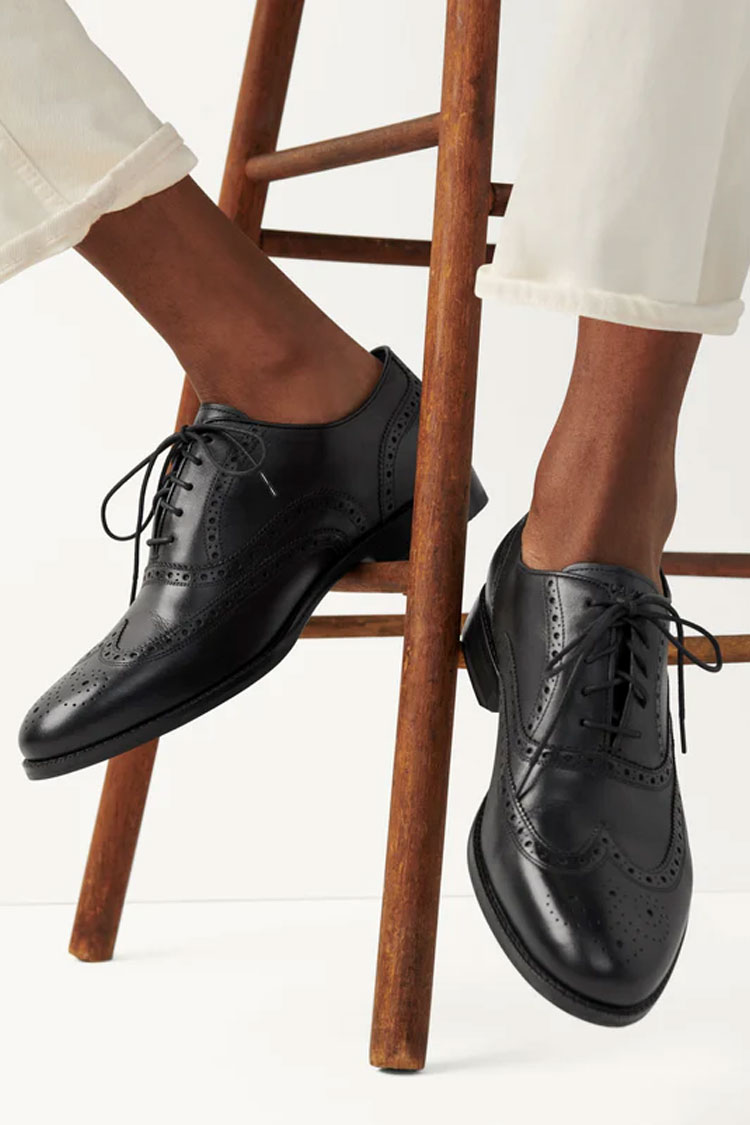
Black full brogues with a smooth, polished finish. Brown and black do different jobs here, as the paragraph below explains; this pair is the black case.
Two cases, worth keeping apart. Brown leather dress shoes – an Oxford or a derby in mid or dark brown – are the pair to own first here, because they go with navy, grey and stone, which is most of this wardrobe. Black shoes, like the brogues photographed, suit the sharper, more urban end and go with black or very dark grey trousers. Formality within the black pair also varies: brogueing is decoration, so a plain-toe black Oxford is the more formal shoe and a full brogue the more relaxed one, which matters if an invitation states a code. How a pair ages depends far more on the leather than on the pattern of holes in the toe cap: full-grain, corrected-grain and bonded are three different materials, and the finish applied over them changes the wear again.
12. Loafers
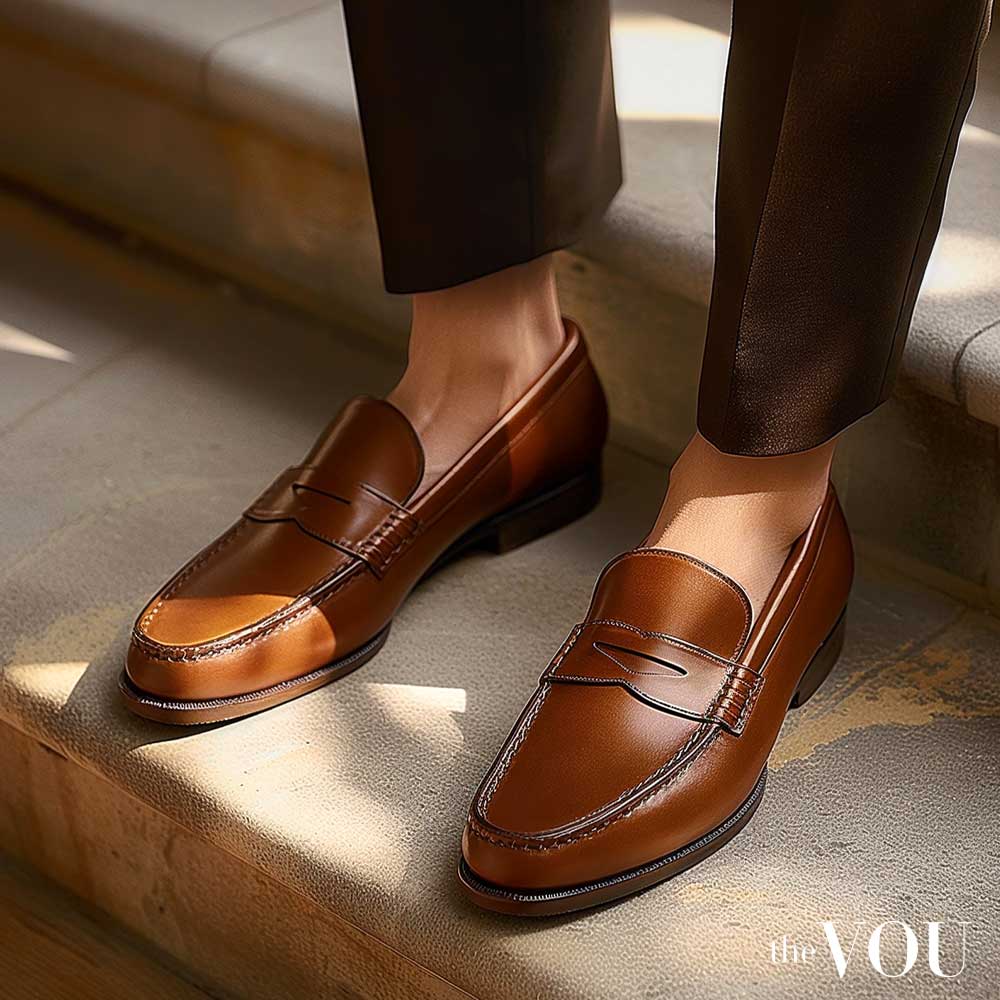
Tan penny loafers with the classic saddle strap.
Brown loafers tend to be the most-worn shoe in a wardrobe like this: smart enough for chinos and a blazer, relaxed enough for jeans and a T-shirt. A penny, as pictured, is the plainest and the most flexible; a tassel or a bit loafer reads dressier and narrower in use. Tan and mid brown are the easiest colours to place.
13. White leather trainers
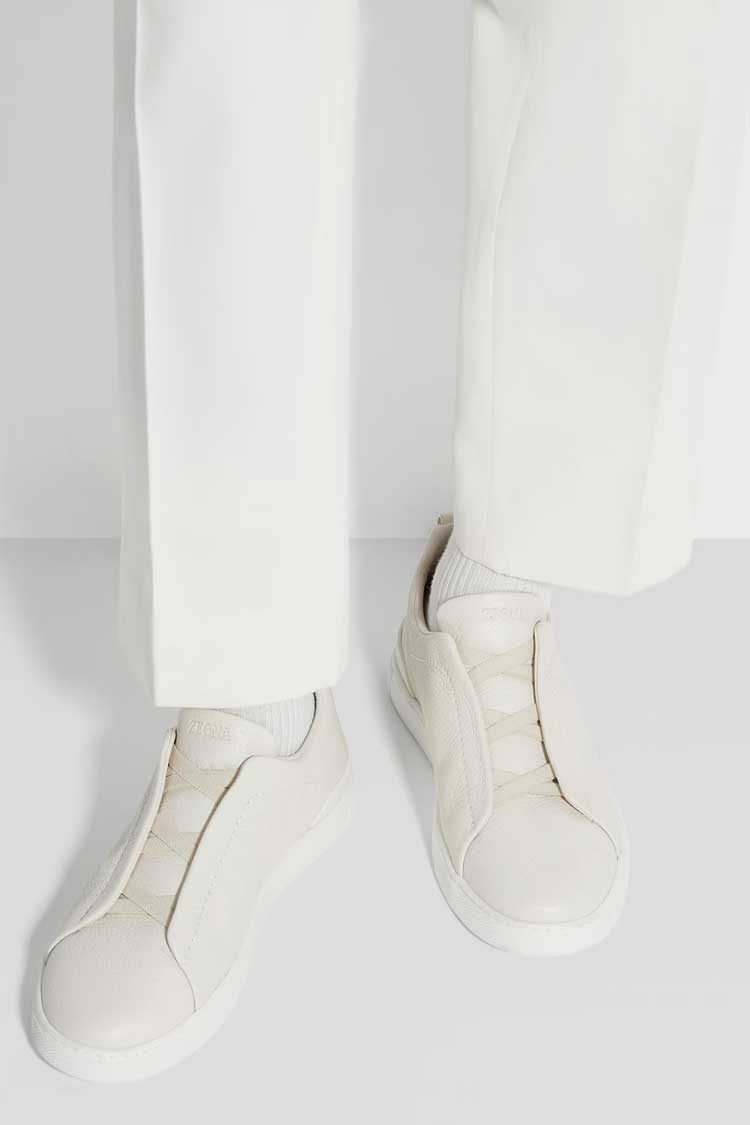
Off-white sneakers with a smooth matte finish and a laceless elastic band across the front. Image courtesy: Zegna.
Plain white or off-white leather, low-profile, without loud branding or a technical sole. That is the whole specification, and it is what lets a trainer sit under chinos without looking like a compromise. The pair photographed uses an elastic band instead of laces, which is one construction among several; a plain laced court shape does the same job and is easier to replace like for like.
Accessories
Three Accessories
14. A leather belt
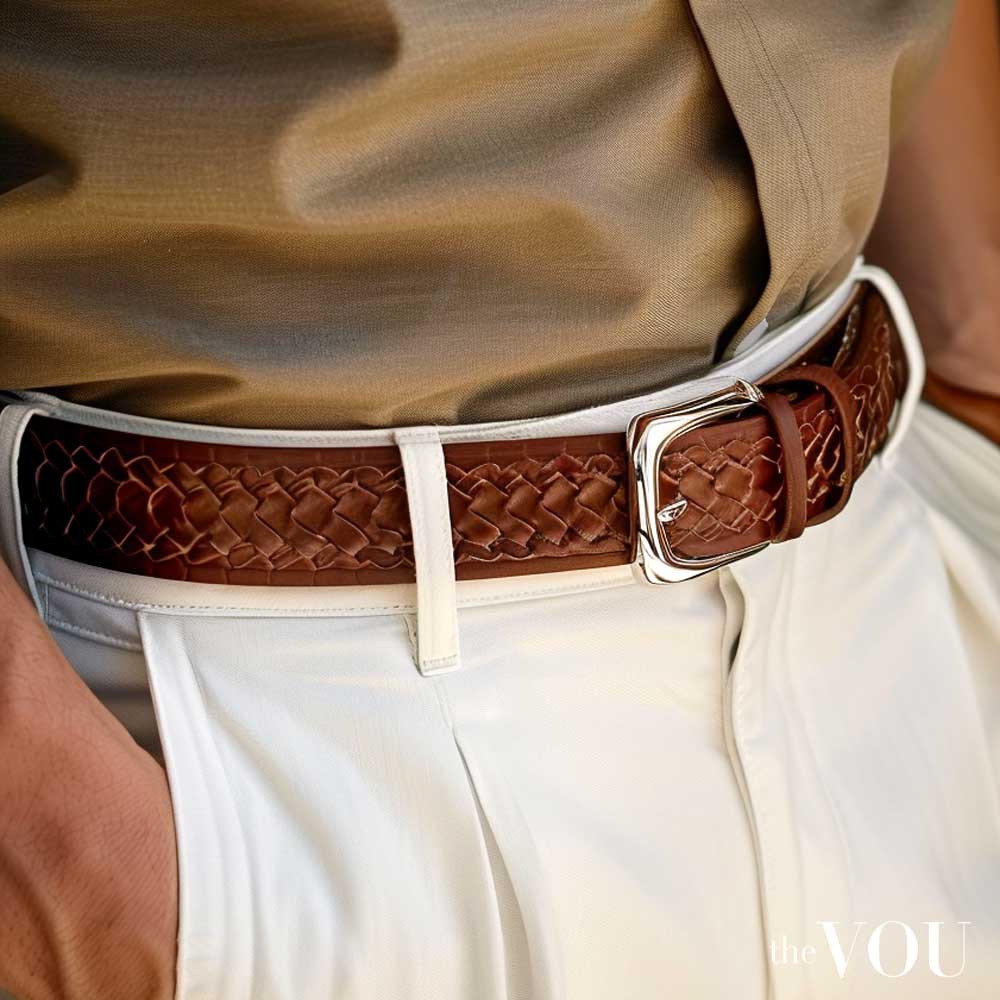
A woven basketweave belt in mid brown with a squared silver-coloured buckle. A plain smooth strap, described below, is the more formal of the two.
Matching the belt to the shoes settles the question for good – brown belt with brown shoes, black with black. A plain smooth strap with an understated buckle is the more formal and the more flexible; the woven basketweave belt photographed is a summer and weekend option that sits closer to casual outings than to a suit. Silver-coloured or brass hardware, whichever you prefer, kept consistent with your other metals if that matters to you.
15. A watch
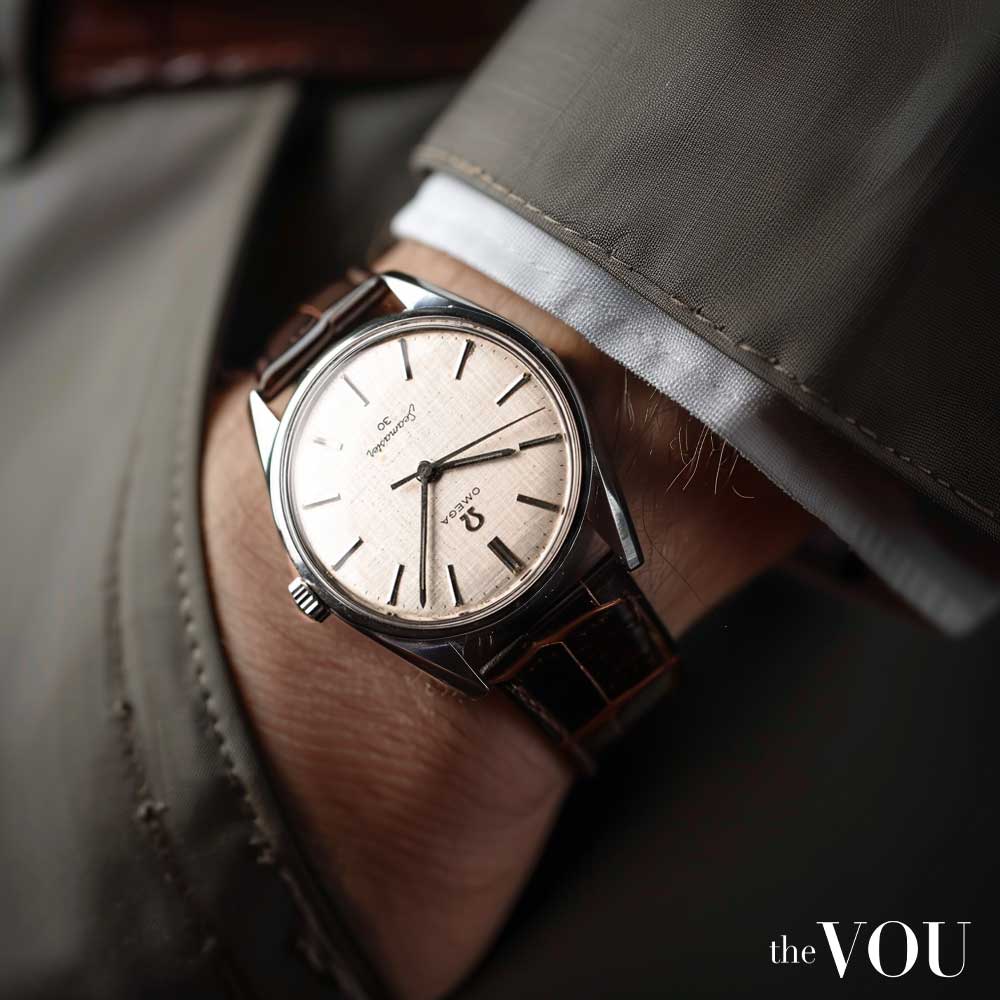
One watch: a round silver-coloured case with a pale textured dial, on a dark brown textured strap, worn under a suit sleeve. The case and strap materials are not identifiable from the photograph.
One watch worn daily does more than three kept in a drawer. A plain round case, a legible dial and a strap in your belt colour goes with everything in this list, which is what the photograph shows. A metal bracelet or a fabric strap reads differently and is a matter of taste rather than a second watch you have to buy; many people wear one watch and change the strap. Our Old Money accessories guide covers the rest.
16. Sunglasses
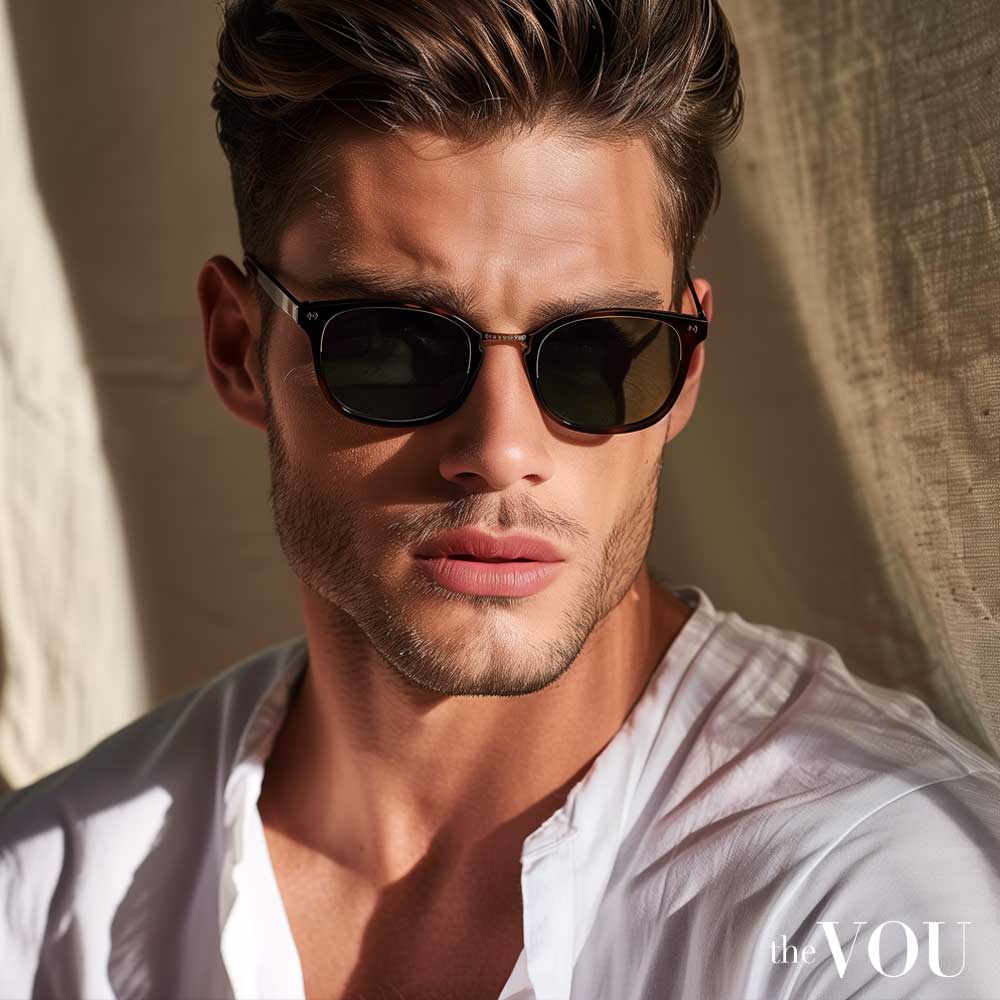
Dark sunglasses with a thick glossy frame, a keyhole bridge and rounded lenses – a third shape alongside the two named below.
Aviators and Wayfarers are the two shapes we would start with for this wardrobe, and either in black, tortoiseshell or gold will sit with it. Neither is a shape that suits everyone: face shape, the width of the frame against your temples and where the lenses sit relative to your brows decide far more than the name does. The pair photographed is a rounded thick-rimmed frame with a keyhole bridge, which is a third classic shape and a softer one. Try them on.
Adjusting It Through the Year
Most of the sixteen categories hold steady all year. What changes falls into two different kinds, and it is worth keeping them apart because they move different numbers. Only the first leaves the list of categories the same length, and neither is free unless the garment is already in your wardrobe.
A swap inside the list
The same category, a different weight
A linen or linen-blend shirt in place of a cotton one in summer, and flannel or a heavier worsted in place of the lighter grey trousers in winter. The list of categories stays the same shape; you are choosing a different version of a category you already have. Wearing something you own costs nothing, and buying the linen shirt to swap in is a purchase that adds a garment to the wardrobe even though the category count has not moved.
An addition
Genuinely extra garments, with their own count
A cotton polo, a seersucker or madras shirt, a pair of tailored shorts, a wool overcoat or a waxed jacket over the top. These are more garments, not a rearrangement of the sixteen. Count them, budget for them, and store them out of season.
Wearing more clothes across a full year than across one season is arithmetic, not a sign that anything is wrong with the wardrobe. What a restrained colour base buys you is that the additions still go with what you already own, so a summer shirt works with the same chinos and the same loafers.
Where to Go Next
For the method
How many, and in what order
This page shows the categories. For how many of each your own week needs, what to clear out before you buy, and what to buy first when the budget is limited, use our step-by-step method for building a capsule wardrobe.
For the register
More on the look itself
Our old-money look guide covers the dress-code conventions behind these choices, and Old Money wardrobe essentials goes further into the wardrobe. If you are still deciding what you want to look like, we have a guide to building a personal style.
We also run two free quizzes, if you want them: a body shape quiz for men and a seasonal colour quiz for men. Neither is needed to use this page or to build the wardrobe on it.
Similar Topic Articles
Authentic Old Money Style Clothing Brands
Old Money Designer Brands Every Gentleman Must Know
Quiet Luxury Brands for an Understated Luxury Style
British Old Money Brands for an Upper-Class Sloane Ranger Look
French Old Money Clothing Brands for a BCBG Look
Old Money Summer Aesthetic Clothing Brands
Affordable Clothing Brands for a Quiet Luxury Look
Affordable Clothing Brands That Make You Look Like a Million Buck
About the photographs on this page. All seventeen illustrations – the line-up at the top and one for each of the sixteen categories – are retained from earlier versions of this article, along with the credit lines that came with some of them. Those credits are reproduced as they were inherited; this page has not re-established authorship, rights or product identity for any image. Each caption describes what is visible in the picture, and where a maker’s label or logo is legible the caption says so. No caption states a fibre, a material, a maker or an occasion that the photograph does not show; where the text recommends leather shoes or a leather belt, that is the specification to shop for and not a claim about what the item photographed is made of.
With years of expertise in high-end fashion collabs and a PhD in Sustainable Fashion, Ru specialises in eco-luxe wardrobes for the modern gentleman seeking understated refinement.
A passionate advocate for inclusivity and diversity, Aidan is the driving force behind The VOU as its Editorial Manager. With a unique blend of editorial acumen and project management prowess, Aidan's insightful articles have graced the pages of The Verge, WWD, Forbes, and WTVOX, reflecting his deep interest in the dynamic intersection of styling with grooming for men and beyond.
With over twenty years of front-row fashion and styling events, collabs with haute-couture houses, and a PhD in Luxury Fashion, Laurenti is an expert in crafting personalised looks that depict old-money sophistication.