
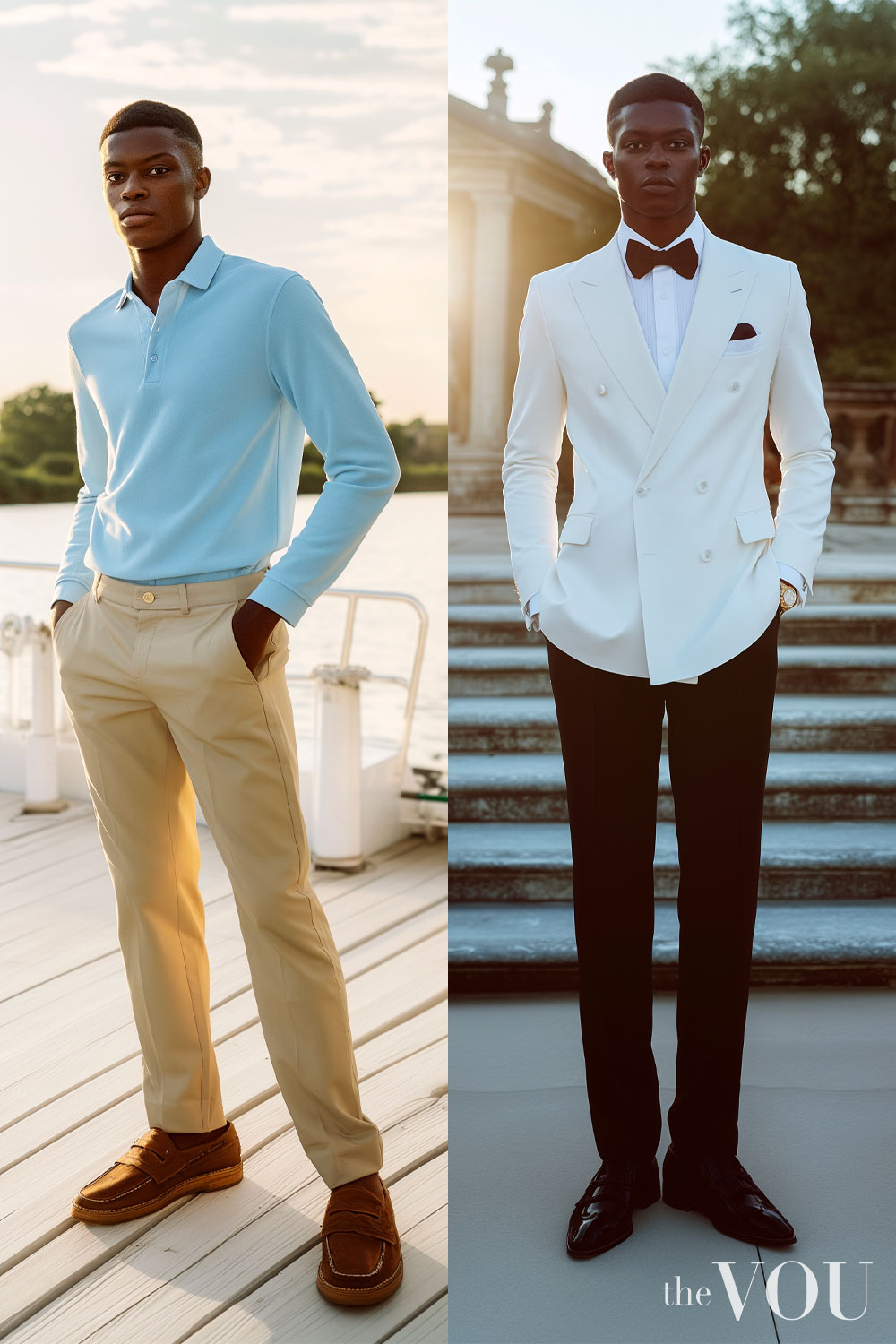
Start here
What’s This About
A dress code tells you how formal to dress, and only a few codes, such as white tie, black tie and morning dress, have one widely agreed outfit for men.
This guide explains the common men’s dress codes from the most formal to the most relaxed, such as:
White tie, with the tailcoat worn open over a white waistcoat
Black tie, plus what black tie optional and creative black tie allow
Morning dress for formal daytime weddings and Royal Ascot
Business formal and business casual, and why workplaces read them differently
Smart casual, which Debrett’s calls possibly the hardest code to interpret
and many more!
Each code comes with a garment table and one example outfit, and the final checklist covers what to do when an invitation leaves you unsure.
Key Points
01White tie, black tie and morning dress are well defined, so etiquette guides largely agree on the outfit.
02Cocktail, business casual, smart casual, resort and beach formal vary by host, venue and workplace.
03The invitation, the host or your written workplace policy decides what a code means for that occasion.
04When the wording is unclear, ask the host or organiser; if you cannot, the slightly more formal reading is easier to adjust.
A dress code tells you how formal the host or employer expects the clothes to be.
Some codes, such as white tie, black tie and morning dress, have long-established outfits that most etiquette guides describe in the same way.
Others, such as cocktail, business casual and smart casual, are read differently by different hosts and workplaces.
This guide explains what each common code usually asks of men, gives one example outfit for each, and shows when it is worth asking the host before you get dressed.
How to read a dress code
The invitation, the host or the written workplace policy decides what a dress code means for that occasion.
Etiquette guides and this article describe the usual reading, which helps when the wording is short.
If the wording is unclear, Debrett’s suggests finding out what other guests intend to wear and, if that is not possible, asking the host.
For work, the Emily Post Institute notes that you can always ask about the details of a dress policy, for example whether jeans are allowed.
British and American guides also use different words for the same clothes: a dinner jacket is a tuxedo, a waistcoat is a vest, and braces are suspenders.
Dress codes at a glance
Scroll horizontally to see all columns →
| Code | How fixed is it? | Usual outfit for men | Typical occasions |
|---|---|---|---|
| White Tie | Well defined | Black tailcoat worn open, white waistcoat, white wing-collar shirt, white bow tie | State banquets, some balls and formal dinners |
| Black Tie | Well defined | Dinner suit (tuxedo), white dress shirt, black bow tie, cummerbund or waistcoat | Formal evening dinners, galas, evening weddings |
| Black Tie Optional | Defined choice | Dinner suit, or a dark suit with a white shirt and a conservative tie | Evening weddings, charity dinners |
| Morning Dress | Well defined | Black, grey or navy morning coat, waistcoat, grey or striped trousers, tie | Daytime formal weddings, Royal Ascot, some formal day ceremonies |
| Business Formal | Fairly consistent, wording varies | Dark suit, shirt, tie, dress shoes | Formal business meetings, interviews, receptions |
| Cocktail or Semi-Formal | Varies by host | Suit, usually with a tie | Evening parties, many weddings |
| Business Casual | Varies by workplace | Blazer or sports coat, trousers or chinos, collared shirt, no tie needed | Everyday office wear in many workplaces |
| Smart Casual | Varies by host | Jacket or knitwear, chinos or dark jeans, collared shirt or fine knit, leather shoes | Dinners, relaxed social events, some offices |
| Casual | Varies by host | Jeans or chinos, T-shirt or polo shirt, casual shoes | Weekend gatherings, informal parties |
| Resort | Varies by venue | Linen or cotton shirt, light trousers or tailored shorts, loafers | Holidays, resorts, cruises |
| Beach Formal | Varies by host | Light-coloured suit in linen or cotton, light shirt, tie unless told otherwise | Beach and destination weddings |
White Tie Dress Code: The Most Formal Evening Code
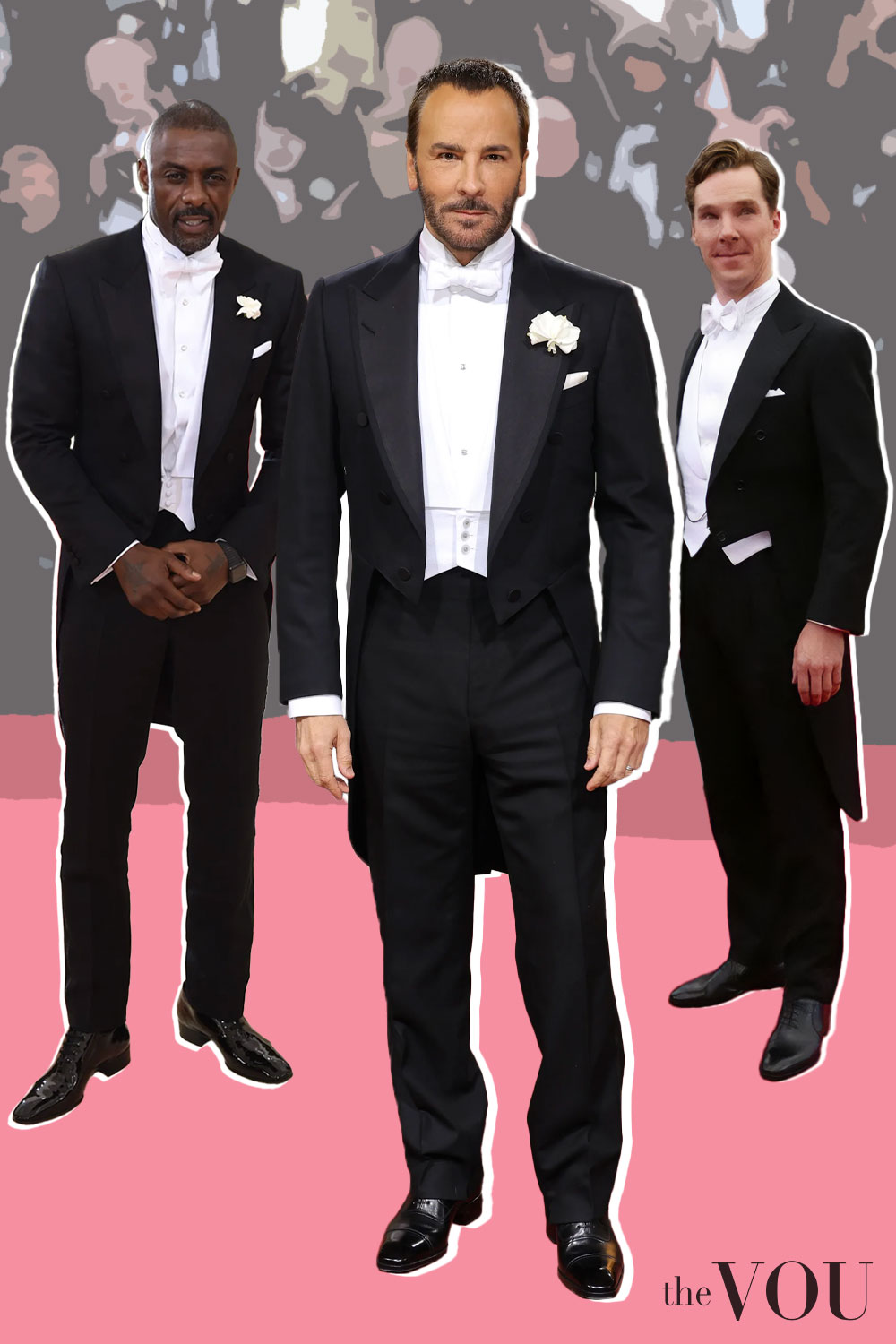
White tie, also called full evening dress, is the most formal evening dress code.
The black evening tailcoat was standard formal evening wear for men in the 19th century, before the shorter dinner jacket arrived as a less formal alternative.
Debrett’s describes white tie as the most formal dress code and notes that it is not common today, so you are most likely to meet it at a state banquet, a traditional ball or a formal society dinner.
Scroll horizontally to see all columns →
| Garment | Description | Styling Tips |
|---|---|---|
| Tailcoat | Black wool, silk-faced peaked lapels | Cut away at the front and worn open rather than fastened |
| Trousers | Black, high-waisted, matching the coat | Satin or braid stripe on the outer seams; a single stripe is the US convention |
| Waistcoat | White piqué or marcella, low-cut | Should not show below the front of the tailcoat |
| Shirt | White, stiff piqué or marcella front | Wing collar, often detachable; studs and cufflinks |
| Bow Tie | White piqué or marcella | Self-tied |
| Shoes | Black patent or highly polished black lace-ups | Black socks; patent opera pumps with grosgrain bows are a traditional alternative |
| Accessories | White or grey gloves, braces | Top hat optional and rarely worn today |
White Tie Outfit Idea
Start with a black wool barathea tailcoat with silk-faced peaked lapels, cut so that it is worn open at the front.
Under it, wear a low-cut white marcella waistcoat that stops above the front edge of the coat, so no waistcoat shows beneath it.
Add high-waisted black trousers with a satin stripe along each outer seam, held up by white braces.
Choose a white shirt with a stiff marcella front and a starched wing collar, fastened with mother-of-pearl studs and matching cufflinks.
Add a white marcella bow tie that you tie yourself, which is the traditional choice.
Finish with black patent lace-up shoes and black silk socks, with white gloves and a white silk pocket square if you wish.
A black silk top hat is optional and rarely seen at events today.
Black Tie Dress Code: Formal Evening Wear
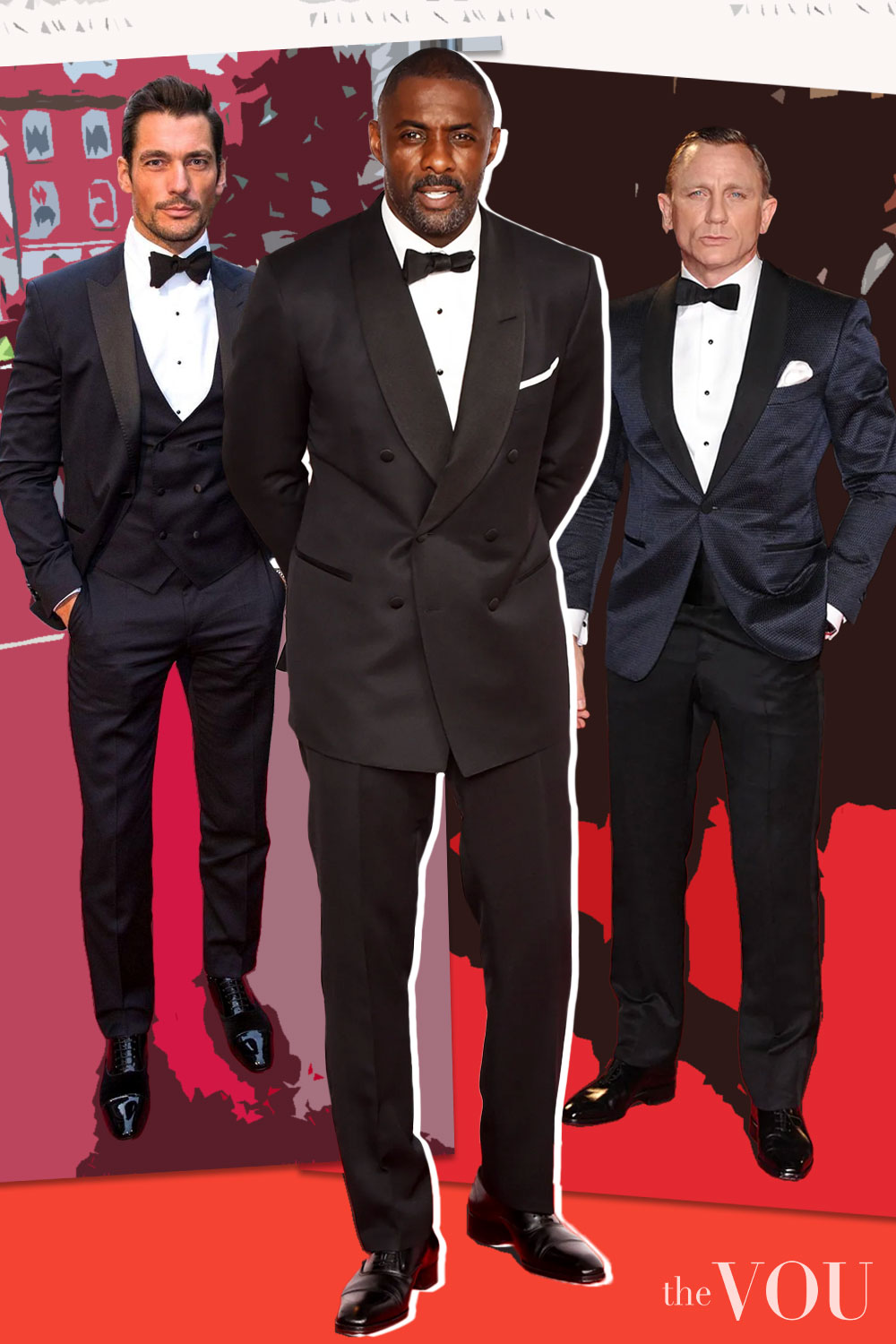
Black tie is the most common formal evening dress code and is less formal than white tie.
The dinner jacket began in England in the 1860s as informal evening wear: Henry Poole and Co’s ledgers record a blue silk smoking jacket made for the Prince of Wales in 1865, often cited as an early prototype.
James Brown Potter is credited with bringing the style to Tuxedo Park, New York, in 1886, which is why Americans call it a tuxedo.
A popular story says Griswold Lorillard introduced it by wearing a tailless jacket to a Tuxedo Park ball, but Gentleman’s Gazette’s history of the dinner jacket treats that account as a misreading of a Town Topics report on the 1886 ball: the “tailless dress coat” it described was a tailcoat with the tails removed, closer to a mess jacket than a dinner jacket.
The Emily Post Institute lists the core black tie outfit as a black tuxedo jacket with matching trousers, a formal white shirt with studs and cufflinks, a black bow tie, a black cummerbund or a waistcoat, and black patent shoes with black dress socks.
Scroll horizontally to see all columns →
| Garment | Description | Styling Tips |
|---|---|---|
| Dinner Jacket | Black or midnight blue wool | Peaked or shawl lapels faced in satin or grosgrain; single-breasted, or double-breasted for a more traditional look |
| Trousers | Matching jacket fabric | Single satin or grosgrain stripe on the outer seams |
| Shirt | White dress shirt | Piqué or pleated front, double (French) cuffs |
| Bow Tie | Black silk, satin or twill | Self-tied is traditional; often matched to the lapel facing |
| Waistcoat or Cummerbund | Black or matching the jacket | Wear one or the other, not both; a double-breasted jacket kept fastened needs neither |
| Shoes | Black patent leather lace-ups | Highly polished black calf is a common alternative |
| Accessories | Black dress socks, studs, cufflinks | Mother-of-pearl or onyx studs |
Black Tie Outfit Idea
Start with a midnight blue single-breasted dinner jacket with a shawl collar faced in black grosgrain and a single-button fastening.
Midnight blue is a long-established alternative to black and is widely accepted for black tie.
Pair it with matching trousers finished with a single black satin stripe along each outer seam.
Wear a white shirt with a marcella bib and double cuffs, fastened with onyx cufflinks and matching studs.
Add a self-tied black silk bow tie that echoes the lapel facing.
Choose a black silk cummerbund worn at the natural waist, rather than a waistcoat.
Finish with black patent leather Oxford shoes, fine black over-the-calf socks and a white linen pocket square in a simple straight fold.
Black tie optional and creative black tie
“Black tie optional” means a dinner suit is welcome, but a dark suit with a white dress shirt and a conservative tie is also acceptable, according to the Emily Post Institute.
Our black tie optional guide covers that choice in more detail.
“Creative black tie” keeps the black tie foundation but leaves room for a personal touch, such as a coloured bow tie or a velvet jacket, so check the invitation or ask the host how far that goes.
Morning Dress Code: Formal Daytime Wear
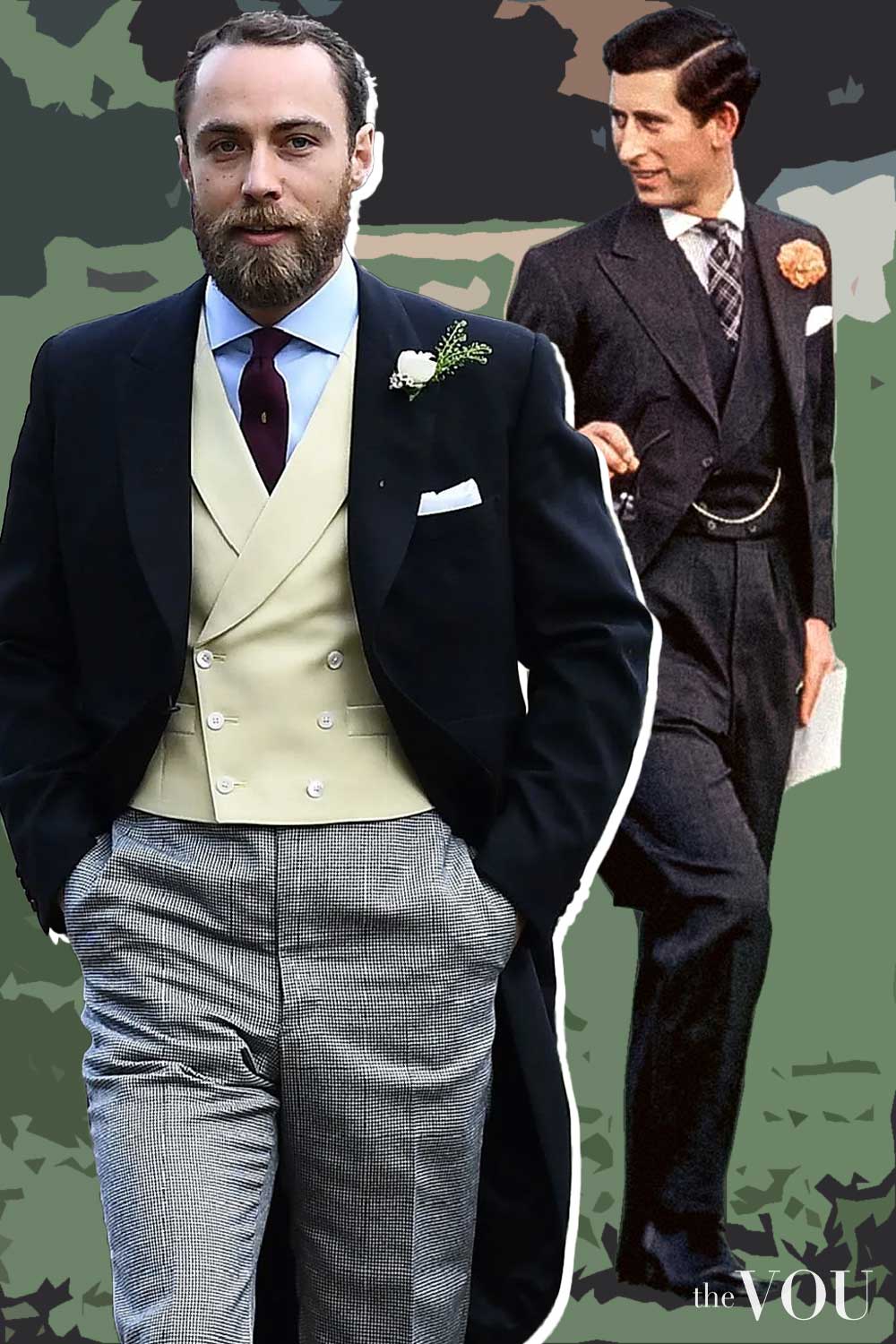
Morning dress, also called formal day dress, is the daytime counterpart to white tie and is worn before the evening.
In Britain it is traditional for formal daytime weddings and for race meetings such as Royal Ascot, where the Royal Enclosure currently requires black, grey or navy morning dress with a waistcoat and a tie (not a bow tie or cravat), a black or grey top hat, black shoes and socks that cover the ankle.
Debrett’s notes that the top hat is worn at the races but at most other events is carried rather than worn.
Scroll horizontally to see all columns →
| Garment | Description | Styling Tips |
|---|---|---|
| Morning Coat | Black or grey, matt finish; navy is also permitted at Royal Ascot | Single-breasted, peaked lapels, front edges curving back into tails |
| Trousers | Grey, or grey and black stripes | High-waisted and worn with braces; grey checks are also seen |
| Waistcoat | Single or double-breasted | Buff, grey or duck-egg blue; leave the lowest button of a single-breasted waistcoat undone |
| Shirt | White or pale | Turn-down collar, double cuffs |
| Tie | Woven silk | Preferred to a cravat; subdued patterns or plain colours |
| Shoes | Black lace-ups | Highly polished, not patent |
| Accessories | Top hat, pocket square | Grey or black top hat, worn at the races and often carried elsewhere |
Morning Dress Outfit Idea
Start with a black barathea morning coat with peaked lapels, its tails reaching to about the back of the knee.
Pair it with high-waisted grey trousers with black and grey stripes, held up by braces so the waistband stays hidden.
Add a double-breasted waistcoat in pale duck-egg blue, long enough that no shirt shows between waistcoat and trousers.
Wear a white cotton shirt with a turn-down collar and double cuffs, and a silk tie in a muted gold and navy pattern.
Finish with highly polished black Oxford shoes, charcoal over-the-calf socks and a white linen pocket square.
For Royal Ascot, add a black or grey top hat; at a wedding, check whether the couple expects guests to wear or carry one.
Business Formal Code: The Suit and Tie
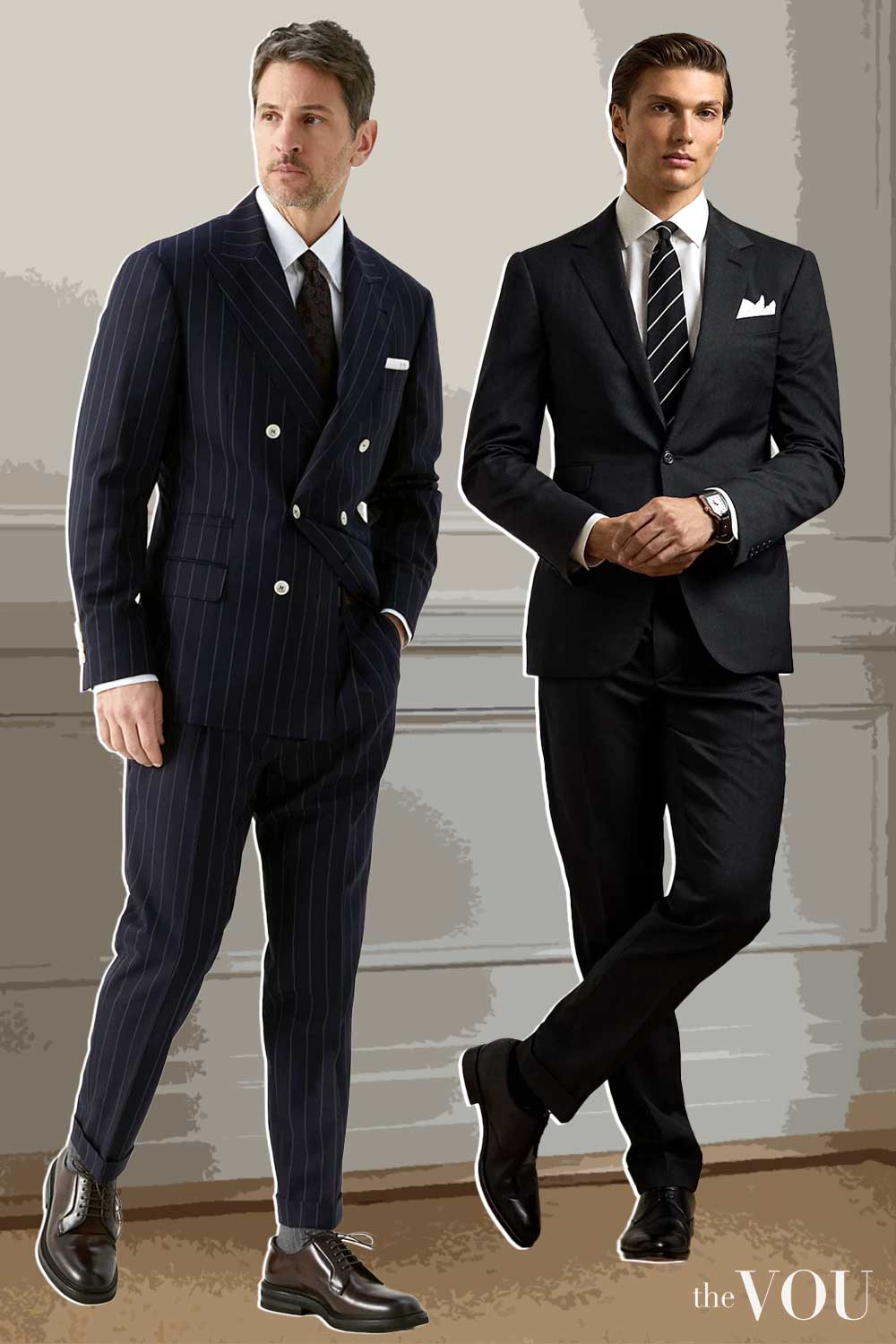
Business formal attire usually means a dark suit, a shirt and a tie.
The lounge suit it is based on began as informal late 19th-century wear and replaced the frock coat for town wear in the early 20th century.
Workplaces and guides use “business formal” and “business professional” inconsistently: some treat them as the same, while others allow tailored separates under “business professional”.
If a written policy or invitation gives details, follow it; if it does not, a conservative suit and tie is the safe reading.
Debrett’s uses the British term “lounge suit” for the same suit, shirt and tie when it appears on a social invitation.
Scroll horizontally to see all columns →
| Garment | Description | Styling Tips |
|---|---|---|
| Suit | Dark colours (navy, charcoal, black) | Single or double-breasted; navy and charcoal are the conventional first choices |
| Shirt | White or light colours | Cotton, double or single cuffs |
| Tie | Silk or wool | Conservative patterns or plain colours |
| Shoes | Black or dark brown Oxfords | Leather, polished |
| Belt | Leather | Matching the shoe colour |
| Accessories | Pocket square, watch | Optional and understated |
Business Formal Outfit Idea
Start with a single-breasted charcoal wool suit with notched lapels, a two-button fastening and flat-front trousers with a slight break.
Wear a white cotton twill shirt with a semi-spread collar, with double cuffs and plain cufflinks if you like them, or single button cuffs.
Add a burgundy silk grenadine tie in a half-Windsor or four-in-hand knot.
Finish with black cap-toe Oxford shoes, a black leather belt, dark socks and, if you wish, a plain white pocket square in a straight fold.
Check that the jacket fastens without pulling and that the collar is comfortable when you sit, since fit matters more here than any single detail.
Cocktail and Semi-Formal Dress Codes: Varies by Host
Cocktail and semi-formal sit between business formal and black tie, and hosts use them in different ways.
The Emily Post Institute describes semi-formal for men as a dark business suit, dress shirt, tie, leather dress shoes and dark socks.
Wedding guides such as The Knot describe cocktail attire as a suit and tie, with more room for colour if it suits the venue.
Some hosts treat cocktail as permission to drop the tie or wear a velvet or patterned jacket, so the invitation, the venue and the time of day all help.
A safe example is a navy or charcoal suit, a white or pale blue shirt, a silk tie, black or dark brown leather shoes and dark socks; you can remove the tie if everyone else has.
Our cocktail attire styling guide has more outfit examples.
Business Casual Code: Varies by Workplace
Business casual is read differently from one workplace to the next, so your employer’s policy and what colleagues wear on an ordinary day are the best guide.
Casual office dress spread in the US in the 1990s; Levi Strauss says its Dockers brand mailed a “Guide to Casual Business Wear” to around 25,000 human resources managers in 1992.
The Emily Post Institute describes business casual as roughly one notch down from a workplace’s usual expectations, for example a seasonal sports coat or blazer with trousers or chinos, and a dress shirt, button-down or polo shirt, with a tie optional.
Emily Post’s guide treats jeans as usually unsuitable for business casual unless the workplace is clearly relaxed.
Whether jeans, trainers or polo shirts count still depends on the workplace, so ask if the policy does not say.
Scroll horizontally to see all columns →
| Garment | Description | Styling Tips |
|---|---|---|
| Jacket | Blazer or sports coat | Navy, grey or earth tones; often optional |
| Trousers | Chinos or wool trousers | Coordinating with the jacket |
| Shirt | Button-down or dress shirt; polo shirt where allowed | Plain colours or subtle patterns |
| Shoes | Loafers, brogues or Derbies | Leather or suede, kept clean |
| Optional | Tie, pocket square | Adds formality when needed |
| Accessories | Belt, watch | Coordinated with the outfit |
Business Casual Outfit Idea
Start with a navy hopsack blazer with soft shoulders and patch pockets.
Pair it with sand-coloured cotton chinos in a straight or slightly tapered cut, hemmed with little or no break.
Wear a light blue Oxford cloth button-down shirt with the top button undone.
Finish with brown suede penny loafers, navy over-the-calf socks and a brown leather belt.
Keep a plain tie in a drawer or bag for the days when a client meeting calls for one.
Smart Casual Dress Code: Varies by Host
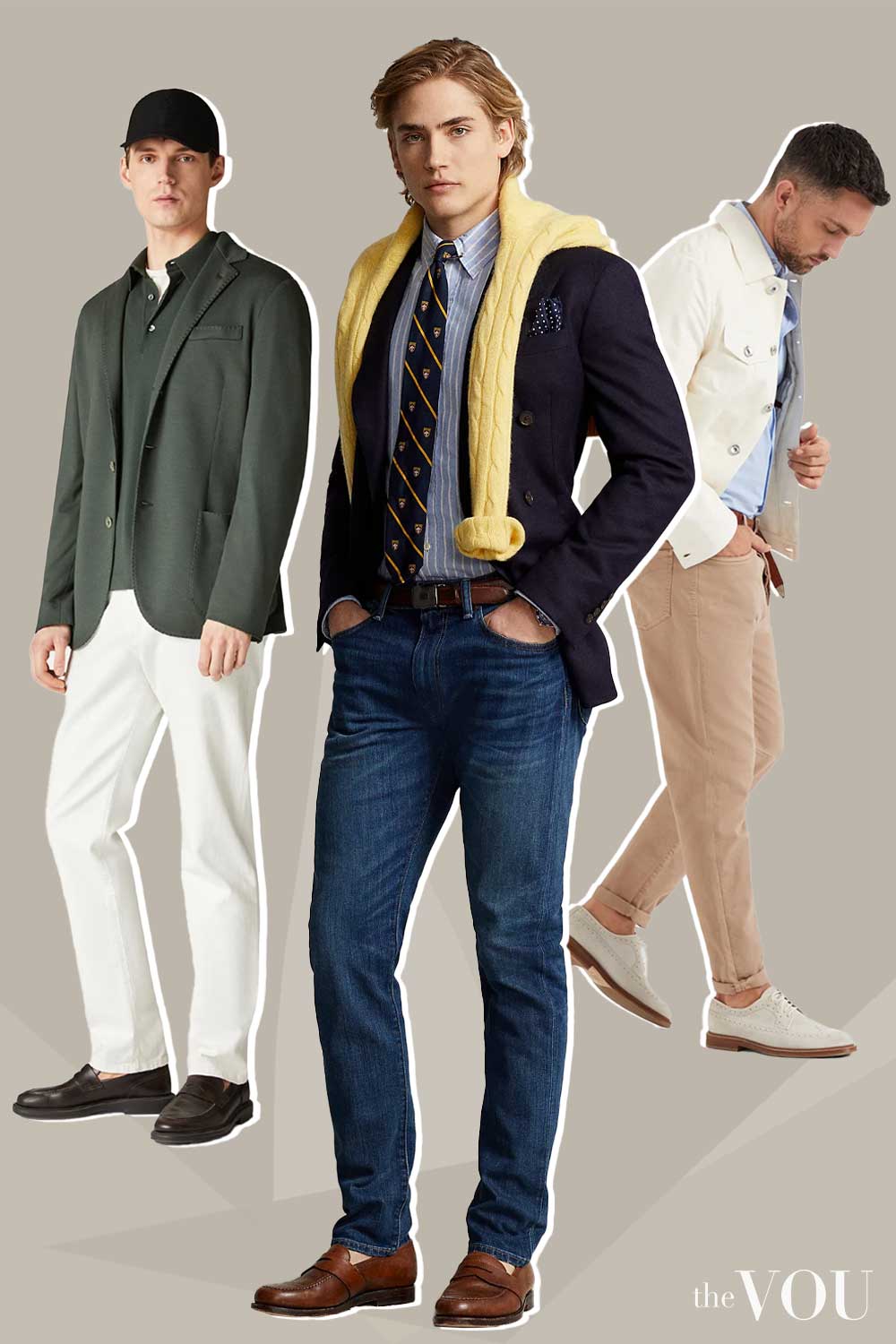
Smart casual sits between business casual and casual, and Debrett’s calls it possibly the hardest dress code to interpret.
At its more relaxed end it can include smart, clean, dark jeans, while some hosts still expect a jacket or a collared shirt.
If you are unsure, ask the host or find out what other guests plan to wear.
Scroll horizontally to see all columns →
| Garment | Description | Styling Tips |
|---|---|---|
| Jacket | Sports coat, blazer or unstructured jacket | Textured fabrics, relaxed shoulders |
| Trousers | Chinos, wool trousers or dark jeans | Clean, well fitted, no distressing |
| Shirt | Button-down, polo shirt or fine knit jumper | A collar is the safer choice |
| Shoes | Loafers, brogues, chukka boots or clean leather trainers | Leather or suede; trainers only where the host is relaxed |
| Accessories | Belt, watch, pocket square | Coordinated but not matching |
| Optional | Tie, scarf | For a dressier occasion or cooler weather |
Smart Casual Outfit Idea
Start with an unstructured tobacco-brown linen blazer with soft shoulders and patch pockets.
Pair it with dark indigo jeans with no distressing and a hem that clears the top of your shoes.
Wear a fine-gauge merino polo shirt in muted sage green underneath.
Finish with brown suede chukka boots, a brown leather belt and a vintage-inspired watch on a tan leather strap.
If the host prefers no jeans, swap them for grey wool trousers and keep the rest of the outfit.
Casual Dress Code: Comfortable Clothes
Casual is the most relaxed dress code and leaves the most room for personal choice.
Even so, clean, well-fitting clothes suited to the venue and the weather still help, and the Emily Post Institute’s guide suggests khakis or good jeans with a plain T-shirt, polo shirt or turtleneck.
Shorts, sandals and slogan T-shirts depend on the host and the setting, so check if the event is at a restaurant or someone’s home.
Scroll horizontally to see all columns →
| Garment | Description | Styling Tips |
|---|---|---|
| Top | T-shirt, polo shirt or casual button-down | Well fitted, clean |
| Bottom | Jeans, chinos or shorts | Shorts only where the setting suits them |
| Outerwear | Denim jacket, bomber or jumper | Chosen for the weather |
| Shoes | Trainers, boat shoes or desert boots | Clean and maintained |
| Accessories | Watch, sunglasses | Practical first |
Casual Outfit Idea
Start with a well-fitting heather grey cotton crew-neck T-shirt.
Layer a light-wash denim jacket over it for cooler moments.
Choose olive chino shorts ending just above the knee on a hot day, or olive chinos if the venue is less relaxed.
Finish with white leather low-top trainers, a simple watch on a leather strap and tortoiseshell sunglasses.
Resort Attire Dress Code: Holiday Wear
Resort attire, sometimes called resort casual, combines relaxed holiday clothes with a little more polish, for resorts, cruises and holiday parties.
It usually means lightweight, breathable fabrics such as linen and cotton, lighter colours and slip-on shoes.
Some resorts, clubs and cruise lines set their own evening rules, such as long trousers or collared shirts at dinner, so read the venue’s own guidance before you pack.
Scroll horizontally to see all columns →
| Garment | Description | Styling Tips |
|---|---|---|
| Shirt | Linen shirt or polo shirt | Light colours, breathable fabrics |
| Trousers | Linen trousers or tailored shorts | Lighter shades, relaxed fit |
| Jacket | Linen blazer or light cotton jacket | Optional, useful in the evening |
| Shoes | Loafers, boat shoes or espadrilles | Bare ankles or no-show socks |
| Accessories | Panama hat, sunglasses, light scarf | Sun protection first |
Resort Attire Outfit Idea
Start with a stone-coloured linen shirt with a band collar, sleeves rolled to just below the elbow.
Pair it with tailored Bermuda shorts in soft azure blue ending just above the knee, or light linen trousers for dinner.
Finish with tobacco-brown leather loafers worn without visible socks, a cream Panama hat and tortoiseshell sunglasses.
For a cooler evening, add a fine-gauge oatmeal jumper over your shoulders or a light linen blazer.
Beach Formal Dress Code: Formal Wear for the Seaside
Beach formal is most often used for weddings on or near a beach, and couples interpret it in different ways.
The Knot advises skipping black for a lighter suit in blue or tan, in summer fabrics such as linen or seersucker, and to assume a tie or bow tie is expected unless the invitation says otherwise.
It also points guests to the dress code on the couple’s wedding website, which is where you will find out whether ties, loafers without socks or sandals are welcome.
Scroll horizontally to see all columns →
| Garment | Description | Styling Tips |
|---|---|---|
| Suit | Linen, cotton or seersucker | Light colours such as tan, light grey or light blue |
| Shirt | Light cotton or linen | White or pastel colours |
| Trousers | Matching suit trousers or smart chinos | Pressed; shorts only if the couple says so |
| Shoes | Leather loafers or other dress shoes | Sandals only if the couple invites them |
| Accessories | Tie, pocket square, buttonhole | Tie unless told otherwise; lighter colours and textures suit the setting |
Beach Formal Outfit Idea
Start with a half-lined suit in soft khaki linen with patch pockets, which keeps the jacket lighter in the heat.
Wear a pale blue cotton-linen shirt with a light silk or knitted tie, and take the tie off only if the couple has said ties are optional.
Have the trousers finished with a short break or a turn-up so the hems stay clear of the sand.
Finish with mid-brown leather loafers, a white linen pocket square, tortoiseshell sunglasses and a Panama hat for an outdoor ceremony.
Linen creases quickly, so hang the suit as soon as you arrive and expect a few creases, which are normal for linen.
Before You Get Dressed: A Quick Check
Read the dress code exactly as written, including words such as “optional” or “creative”.
Check the time, venue and weather, since an outdoor afternoon wedding and an evening dinner under the same code can call for different fabrics and colours.
For work, read the written policy first and use what colleagues wear as a guide only where the policy is vague.
If the code still leaves you unsure, ask the host, organiser or the person who invited you.
If you cannot ask, choosing the slightly more formal reading is often easier to adjust, because you can take off a tie or jacket but cannot add one.
For how dress codes relate to personal style, see our guide to what a fashion style is.
Sources
Emily Post Institute, attire guide: dress codes from casual to white tie.
Emily Post Institute, black tie dress code.
Emily Post Institute, business casual attire.
Debrett’s, events and dress codes (white tie, black tie, morning dress, lounge suits, smart casual).
The Knot, what to wear to a beach formal wedding.
Gentleman’s Gazette, late Victorian dinner jacket debut (history of the dinner jacket and Tuxedo Park).
Horse and Hound, Royal Ascot dress code (18 May 2026; summary of the Royal Enclosure rules; check the current rules on Ascot’s own site before attending).
Levi Strauss and Co., Dockers and the birth of casual Fridays (company account).
Mandy Meyer’s focus at The VOU is men’s body-shape styling, garment fit and outfit proportions. Her coverage addresses the practical questions behind a wardrobe choice: how a jacket sits across the shoulders, how trousers fall and how different cuts change the silhouette a wearer wants to create.
Her subject areas include the triangle, inverted triangle, rectangle, oval, trapezoid, hourglass and diamond labels used in body-shape styling. These provide starting references for comparing visible proportions; they do not capture every body or prescribe one correct way to dress. The focus connects those observations with garment shape, construction, length and the relationship between the upper and lower parts of an outfit.
Mandy’s editorial coverage combines visual comparisons with fit checks for comfort and movement. Readers can consider whether a cut gives them the room they need, where clothing pulls or gathers and which changes might support their preferred look. The aim is to make menswear choices more understandable while keeping personal preferences and the wearer’s own styling goals central.