Start here
What’s This About
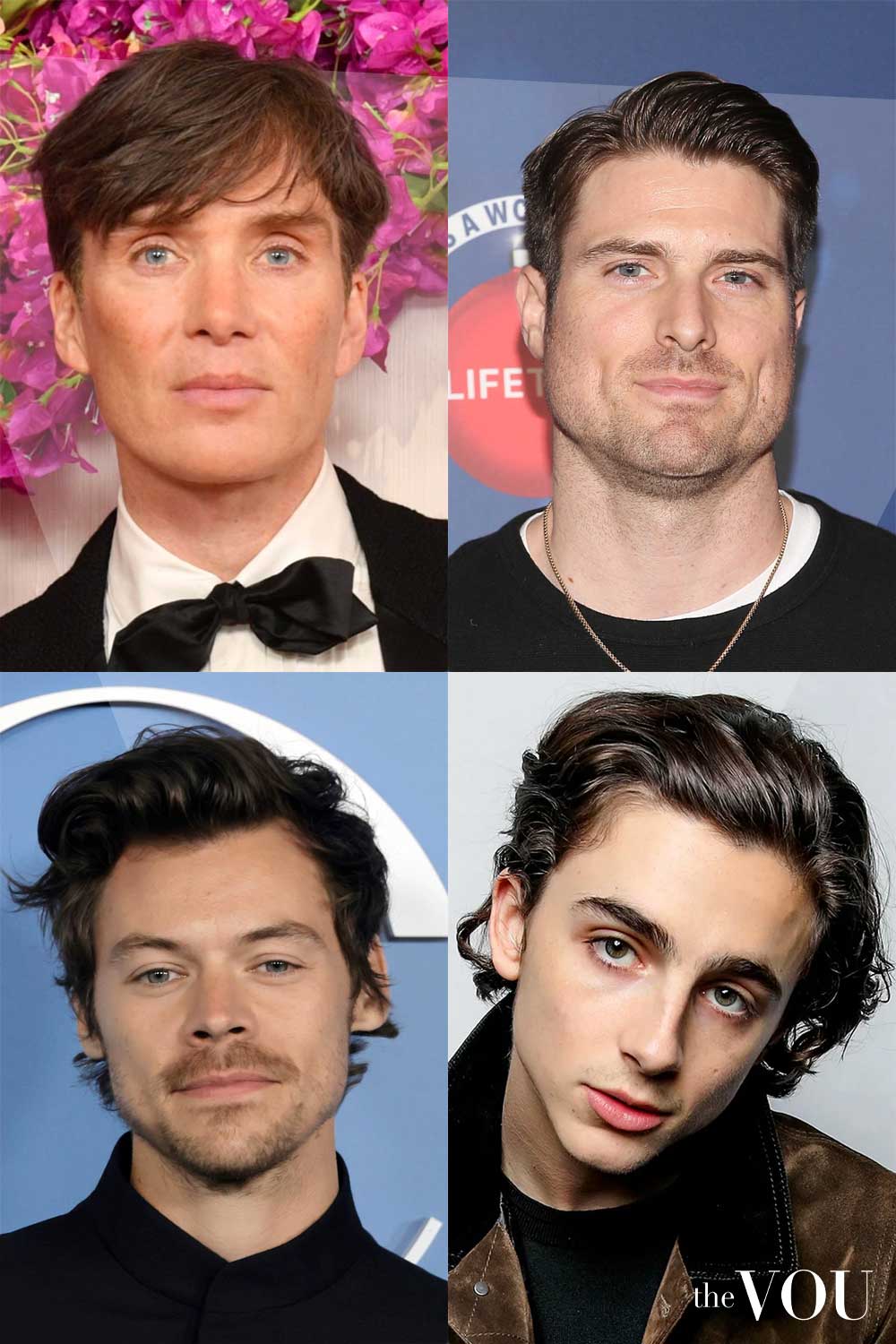
A triangle face is jaw-wide, and your haircut can add breadth at the temples, add height on top, or stay close so the jaw remains the main feature.
This guide covers ten cuts and the choices behind them, such as
Why temple breadth and crown height are different effects
When a low taper keeps the side width that a high fade removes
How a comb-over adds breadth over the temples
What a Caesar fringe or a goatee changes in the outline
and many more!
We also cover texture, curl, hairline, upkeep and how to brief your barber.
Key Points
01Triangle and pear are two names this site uses for one jaw-wide family, so either guide can help.
02Length kept at the temples adds breadth up top, height on the crown lifts the outline, and you can choose one, both or neither.
03Styling the top each morning and keeping a fade or taper sharp at the barber are separate commitments.
04Check the finished cut dry, from the front and from the side, and adjust temple length at your next visit.
The haircut you choose changes where the eye lands, from the width at your temples to the line of your jaw.
If you have a triangle face shape, described on this site as a jaw that is visibly broader than the forehead, the haircut you choose can either show that width off or add breadth higher up. Both are valid choices.
The VOU also publishes a pear face shape hairstyle guide. Triangle and pear are two names this site uses for the same jaw-wide family; some descriptions call a sharper narrowing triangle and a gentler one pear, but that is a descriptive nuance rather than a reliable dividing line. The real difference is in the lists. This one includes shorter, lower-maintenance cuts such as the Caesar cut and short back and sides, while the pear guide concentrates on crown and temple volume.
If you are not sure your jaw is the widest point, or your forehead, cheekbones and jaw look close in width, our guide to reading your own face shape explains what to compare. Mixed observations are common, and you can still use this list by focusing on what each cut does at the temples, the crown and the jaw.
Below are ten hairstyles for men with a triangle face shape.
Each haircut is detailed with what it does to the visible outline and includes tailored tips for men with thick or thin hair, styling products, and facial hair combinations.
Read on to find a cut that fits your hair, your routine and the effect you want.
Match This List to Your Actual Hair
Every cut below assumes hair that can do what its styling tips describe, so check these points before you pick one.
Texture and density. Strand texture (fine, medium or coarse) and density (how closely the hairs grow) are different, and both decide which heights and widths your hair can hold. Fine or low-density hair usually needs lift built at the root while blow-drying, with a mousse or light powder, before it will hold the pompadour or quiff heights described below; coarse, dense hair often needs weight removed first so the top does not sit heavy or push out at the sides. Pomade, wax and clay change hold and shine; they do not change your hair’s texture or density.
Curl pattern and growth direction. Curly and coily hair shrinks when it dries, so a length that looks right wet can sit shorter and rounder once styled; cowlicks near the crown or hairline can also push a fringe or quiff off-centre no matter how it is cut.
Hairline. A receding or uneven hairline changes how a fringe, Caesar cut or slicked-back style sits at the front; if this applies to you, say so to your barber rather than choosing a style that assumes a full, even hairline.
Upkeep. Daily styling and barber upkeep are separate commitments. The pompadour, faux hawk and textured quiff need product, and usually a blow-dry, each morning to hold their height. A high fade is a side-cutting choice that needs more frequent barber visits to keep the graduation crisp, whatever you do with the top. A side part or short back and sides with a shorter top needs less daily work, though the sides still need regular trims to keep their line.
Choose your effect. Crown height and temple width are different effects. Height on top, as in the pompadour, faux hawk or quiff, lifts the outline upward. Length left at the temples and above the ears, as in the comb-over, a side part with fuller sides or a low taper, adds breadth higher up so the forehead reads closer to the width of the jaw. If your face is also long, you can choose temple breadth without adding extra height, and there is no need to grow a longer chin beard. If you would rather keep the jaw as the main feature, several of these styles, including the side part and the Ivy League, work kept close and even without added height or side volume.
When you brief your barber, describe your hair’s natural texture and how it behaves when it dries, point out any cowlicks or a receding hairline, and say whether you want height at the crown, breadth at the temples, both, or a close natural shape, and whether the sides should be a fade, a taper or left with length above the ears. Bring a reference photo if you have one and ask how it would need to change for your actual hair.
Check it dry. Once the cut is dry and styled as you would wear it, look straight into a mirror in even light. Check whether the hair at your temples sits out past the edges of your forehead or lies flat against it, and whether the jaw still reads as the widest point, if that is what you wanted. Then turn to each side and check how far forward the height on top sits and whether it flattens after a few hours. At your next visit, ask for more or less length at the temples or on top rather than switching to a new named cut.
1. Pompadour
The pompadour adds height and volume above the forehead, which moves the eye upward from a broader jawline. Height alone does not widen the forehead line, so ask for some length kept at the temples as well if you also want breadth up top.
Styling Tips
Thick Hair. Use a strong-hold pomade to maintain structure.
Thin Hair. Apply lightweight mousse for lift without weighing down your strands.
Facial Hair. Pair with light stubble to soften the overall look.
2. Textured Quiff
A textured quiff adds layers and movement at the front of the top. The height makes the face look a little longer and lifts attention from the jaw, which is one option if you want more weight up top; it does not change the symmetry of your face.
Styling Tips
For thick hair, use a matte styling paste for a defined look.
For thin hair, volumising powder helps add body and lift.
As for facial hair, a mid-length beard adds a bold, contemporary edge, though full sides add to the width at the jaw; keep the sides closer than the chin if you want the jaw to read less broad, within what your growth allows.
3. Side Part with Volume
This classic hairstyle puts volume on top and structure along the sides. Leaving the sides with some length above the ears adds breadth at the temples, while a tighter taper keeps the jaw as the widest line.
Styling Tips
Thick hair stays polished with a medium-hold wax.
With thin hair, add layers to create texture and mask sparseness.
For facial hair, a short beard or goatee pairs beautifully with this style.
4. Fringe Hairstyle
A layered fringe adds texture across the forehead and draws attention to the upper face. Because it covers some of the forehead, it makes the face look slightly shorter, which helps if your outline is long as well as jaw-wide and works against you if you wanted extra height.
Styling Tips
If your hair is thick, thin the fringe to reduce bulk and maintain movement.
If your hair is thin, a light-textured fringe works well for creating depth.
As for facial hair, stay clean-shaven for a youthful and casual look.
5. Short Back and Sides with Longer Top
This minimalist look keeps the sides short and the top longer. Close sides keep the temples narrow, so the jaw stays the broadest line; choose it if you like a neat, low-effort shape rather than added breadth up top.
Styling Tips
Thick Hair. Style upwards with a strong-hold pomade.
Thin Hair. Keep the top textured for a fuller appearance.
Facial Hair. Stubble works well, keeping the look sharp and modern.
6. Faux Hawk
The faux hawk is a bold and modern hairstyle that adds height to the crown, drawing attention upwards and away from the wider jawline.
Because the sides are short, the effect is height rather than width; leave the sides a little longer if you want some temple breadth as well.
Styling Tips
For thick hair, use a strong-hold gel to maintain the spiky structure.
For thin hair, create a softer faux hawk using volumising mousse to add lift.
Facial Hair. Pair with a light beard to frame the face and add dimension.
7. Ivy League
Inspired by the Ivy League lifestyle, this cut combines neatness with a touch of sophistication and works on a triangle outline without much daily styling.
The longer front can be combed to one side for a tidy finish or pushed up slightly for a little height.
Styling Tips
Thick hair needs regular trims and a matte pomade for control.
With thin hair, add texture with a lightweight styling clay to create volume.
Facial Hair. Combine with a light moustache or a short beard for a refined, structured appearance.
8. Medium-Length Comb Over
The medium-length comb-over creates a classic and structured appearance. Because the hair is combed across rather than up, the length lying over the temples adds visible breadth to the upper head.
Of the cuts here, it is the most direct route if you want the forehead line to read closer to the width of the jaw.
Styling Tips
Thick Hair. Use a medium-hold cream for sleekness without stiffness.
Thin Hair. Opt for feathered layers to avoid revealing the scalp.
Facial Hair. A short boxed beard pairs well with this clean and professional style.
9. High Fade with Curly Top
This hairstyle suits men with natural curls. Keeping the curls on top and fading the sides draws attention to the crown, though a high fade also removes the temple width you may want to keep. If you would rather retain width at the sides, ask your barber for a low taper instead of a high fade, keeping more length above the ears.
Styling Tips
For thick hair, use a curl-enhancing cream for defined texture and control.
For thin hair, ask for a softer fade with some length kept on the sides, so the top and sides do not contrast sharply.
As for facial hair, a disconnected beard can add a creative and bold touch to this style.
10. Modern Caesar Cut
The Caesar cut features a short horizontal fringe and short, even sides. The fringe frames the forehead and shortens it slightly, and the even sides keep the outline neat; it adds little height or temple breadth, so the jaw stays the widest line.
This look needs little daily styling and regular trims to keep the fringe line. It is sharp, though how it reads on you depends on your fringe density and hairline shape rather than being universally flattering.
Styling Tips
Thick hair keeps a sleek, structured look with a styling cream.
If your hair is thin, incorporate micro-layers in the fringe to create the illusion of density.
Facial Hair. A goatee adds length at the chin rather than width at the jaw, if you want that extra length; it is optional.
Conclusion
Understanding your triangle face shape and choosing a hairstyle tailored to your proportions can change your look.
You do not need a confirmed label to use this list. If your jaw looks broader than your forehead, start from the effect you want at the temples, the crown and the jaw.
If your features look mixed, compare the neighbouring descriptions rather than forcing one label.
If you’re unsure about your face shape, our Face Shape Quiz for Men is a quick starting point, not a measured or scientific result, and it works best alongside a straight-on mirror check.
Whether you prefer the bold pompadour or the classic Ivy League hairstyle, choose by the effect you want, whether that is height, temple breadth, or a close shape that keeps the jaw as the main feature.
Always consider your hair type, texture, and facial hair when styling. Products add hold and finish; the cut decides where the length sits.
With the right haircut and attention to detail, you can elevate your style and feel your best.
Explore these styles and find the one that resonates with your personality and aesthetic preferences.
The right choice is the one that suits your hair and the way you want to look.
Style Like A True Gentleman
Before you go, here is a simple order to follow, whether you work alone or with an image consultant.
Professional styling usually starts with knowing your body shape and seasonal colour palette, which help you choose well-fitting clothes in colours that suit your skin, eyes and hair.
Then you can plan outfits for each occasion, location, season and time of day, with garments, footwear, and accessories from heritage fashion brands that fit the way you want to look.
Take our three quizzes below, then book a paid consultation if you would like personal help.
1. Find Your Body Shape
Different garments flatter different silhouettes, so knowing your body shape is a useful first step.
To check your body shape, take our body shape quiz for men.
Next, take the second quiz to check your colour palette.
2. Find Your Seasonal Colours
Remember, the garments that compose your outfits come in various colours, and it helps to choose shades that suit your natural colouring.
To do that, find your seasonal colour palette by taking our seasonal colour quiz for men.
3. Find Your Fashion Style
Once you know your body shape and colour palette, the next step is to find your personal fashion style.
You can start with our fashion style quiz for men; it gives style suggestions, outfit ideas, relevant fashion brands, and much more.
Professional Image Consultancy with The VOU
If you would like personal help, you can book a paid consultation with our expert image consultants and fashion stylists.
Our styling services for men are paid consultations; the shop page lists what each one includes.
Remember, wearing luxury brands isn’t enough (see logo-heavy luxury brands and how to wear them); it also helps to know your body shape, colour palette, and ideal personal style, and then to dress by occasion, location, season, and time of day.
Contact us if you would like to book a paid consultation.