
Start here
What’s This About
Clothes can help you look slimmer mainly through fit, and colour, pattern and layering choices can add to that, though none guarantees an effect.
This guide covers the choices most often suggested for a slimmer look, such as
jackets and trousers that fit rather than hang loosely
open jackets, layers and necklines that keep a vertical line
dark colours, tonal outfits and fine vertical patterns
how your body shape changes which choices help
and many more!
Compare each idea in a mirror and keep the ones that work for you.
Key Points
01Fit comes first, because clothes that are too big add visible bulk and clothes that are too tight pull and crease.
02Darker colours and one-colour outfits are common choices for a leaner look, but research does not show a universal slimming rule.
03Tucking in, belts, pleats and necklines are options that depend on your shape and comfort, not fixed rules.
04The VOU’s seven body shape descriptions can help you decide where you want room and where you want structure.
Can Clothes Make You Look Slimmer?
Clothes can change how slim you look, mostly through fit, and then through colour, pattern and layering.
Your body shape and your preferred colours can help you choose which of those ideas to try.
In this article, we look at clothes that are often suggested for a slimmer look, with notes on how the seven male body shapes The VOU describes can guide your choices, and where the four seasonal colour palettes fit in.
By the end, you will have a set of options to try as you curate a wardrobe that suits your proportions and personal aesthetic.
If you would like a starting point for your body shape or seasonal colour palette, you can take our body shape quiz and seasonal colour quiz.
They suggest ideas to compare; they are not a requirement before you can dress well.
Start With Fit
Fit is the most reliable way to look neater and slimmer.
Clothes that are too big add folds and volume you do not have, and clothes that are too tight pull, crease and draw attention to where they strain.
For example, a suit jacket that hangs off the shoulders or trousers that billow around the legs tend to make you look larger than you are.
Good fit starts with buying a size that fits your shoulders and the widest part of your body, then altering where needed.
A tailor can often shorten sleeves and hems or take in a waist; changes to jacket shoulders are harder and not always possible, so get the shoulders right when you buy.
A jacket whose shoulder seam ends at your own shoulder gives a clean, structured line.
Trousers that sit where you want them, standing and seated, and that fall straight or taper gently towards the ankle without clinging, complete a neat outline.
Rise labels vary between makers, so check where the waistband actually sits.
Layering and Jackets
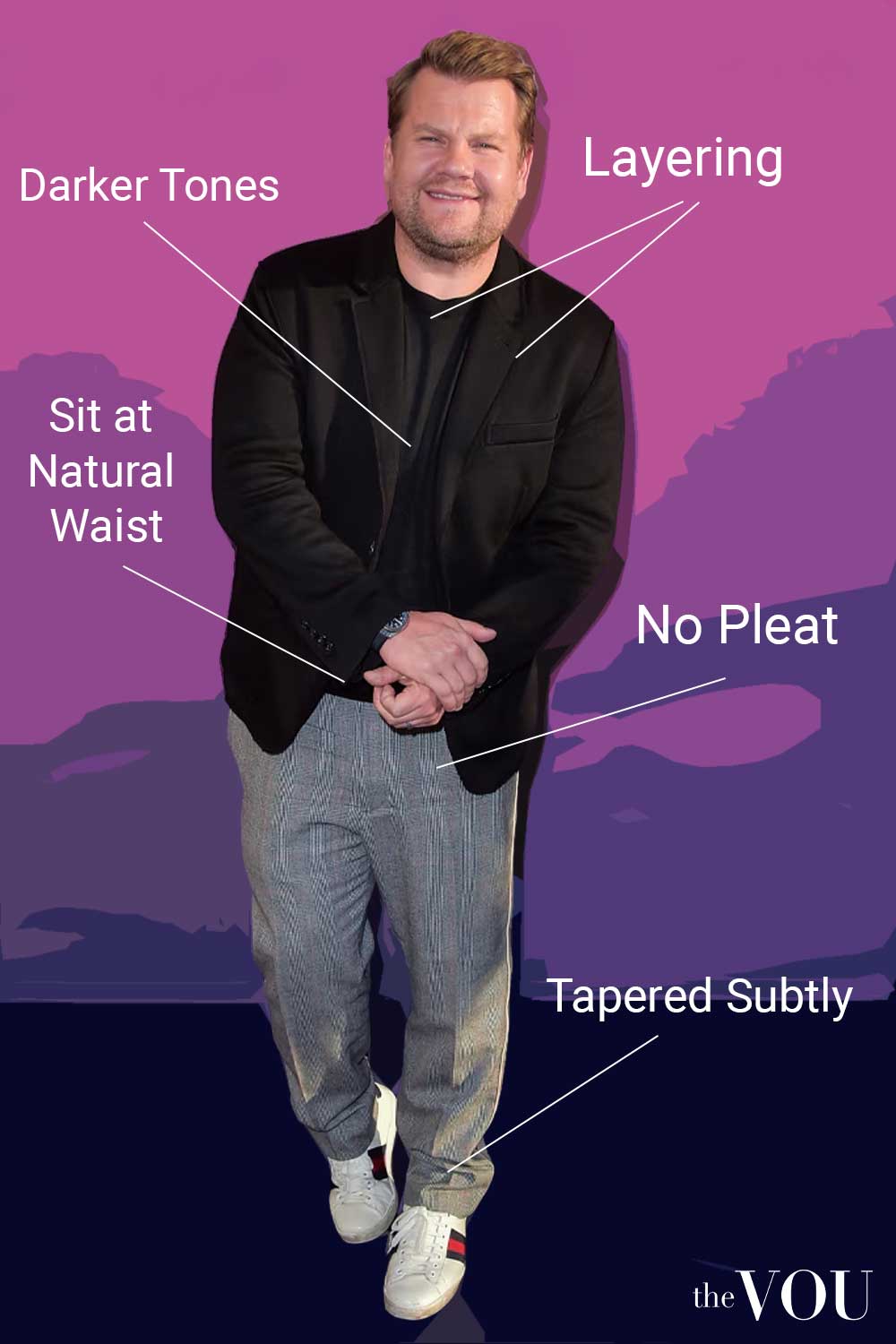
If tailoring is not an option, layering can add structure.
A blazer with light shoulder padding gives the upper body a clearer shape, which many men like for a leaner look; how much it changes your outline depends on your shoulders and the cut.
Choose breathable, lightweight fabrics for layers so they add shape without bulk.
For example, a merino wool blazer over a cotton shirt is light, smart and easy to wear.
Wearing a jacket open shows a vertical strip of shirt down the front, which is meant to lengthen the torso; a jacket that fastens without pulling is the alternative, so try both.
Trousers and Shirts
If you want to look slimmer, your trousers matter as much as your top.
Slim-straight trousers are a common choice, and the details make the difference.
Trousers that sit where you want them and fall straight or taper gently towards the ankle give a neat line.
If your abdomen is fuller, check that the waistband sits comfortably rather than rolling under the stomach.
Flat-front trousers give a plain, clean front.
Pleats add cloth, which can look fuller on some men but gives others the room they need through the seat and thighs; choose the one that lies flat on you.
Shirts look best when they skim the body rather than cling or billow.
Necklines are a matter of context.
A V-neck adds a vertical line at the chest, which is often suggested for a longer look; a crew neck can look neater under a jacket or on a slim neck, so compare both.
Tucking in your shirt with a slim belt defines the waist and gives a structured look.
If you would rather not mark the waist, an untucked shirt cut to the right length, or side adjusters instead of a belt, are alternatives.
Colour, Tone and Pattern
Colour is more than aesthetic; it is one of the tools men use when they want a leaner look.
Darker tones such as navy, charcoal and black are a common choice because they make folds and contours less noticeable to many eyes.
Research comparing dark and light clothing does not show a fixed slimming effect for everyone, so treat dark colours as a tendency rather than a guarantee.
One-colour, or tonal, outfits avoid a strong break at the waist, which is meant to keep the eye moving up and down.
Darker does not have to mean dull, so vary the shades and textures.
For example, a charcoal suit with a deep navy shirt gives depth and a quiet, even silhouette.
Fine vertical pinstripes or subtle texture add interest.
Studies of stripes do not support a universal rule that vertical stripes make people look taller or leaner, so wear them because you like them and compare in a mirror.
Know Your Body Shape and Colour Palette
One starting point used by image consultants is knowing your outline and colouring.
One size does not fit all in personal styling.
Before you spend money on clothes to look slimmer, it helps to know your body shape and natural colouring.
Just as an architect designs a building to suit its landscape, you can choose a wardrobe that suits your build.
The VOU describes seven male body shapes, which are rectangle, triangle, inverted triangle, oval, trapezoid, hourglass and diamond.
Triangle, Inverted Triangle, Rectangle, Trapezoid and Hourglass follow familiar styling usage; Oval and Diamond are described in The VOU’s own words.
Named examples of the hourglass shape are collected in 10 Celebrities with Hourglass Body Shapes.
The shape you see in the mirror changes which slimming choices help.
A man with a rectangular outline might want a jacket that adds some shape at the waist, while a man with an oval outline usually needs room through the middle first.
Your seasonal colour palette, Winter, Autumn, Spring or Summer, is about which shades harmonise with your natural colouring near your face; it is a separate question from looking slimmer.
Knowing your body shape and colour palette is useful but not essential.
Without it, you can still dress well by checking fit and comparing options in a mirror.
Our body shape quiz and seasonal colour analysis offer a starting point if you would like one.
Beyond Clothing, Posture and Confidence
Looking slimmer is not about radical transformations or impossible standards; it is about dressing with a clear aim.
Posture matters as much as any garment, because standing tall with relaxed shoulders changes how your clothes hang.
The right outfit helps, and so does feeling comfortable in it.
Understand your body, dress with intention and keep the choices that make you feel at ease.
Professional Image Consultancy with The VOU
For personal help, you can book paid consultations with our image consultants and fashion stylists.
Our styling services for men page lists the paid consultations.
Remember, wearing luxury brands is not enough on its own; knowing your body shape, colour palette and personal style can make styling by occasion, location, season and time of day easier.
For more on labels, see our guide to logo-heavy luxury brands and how to wear them.
Contact us if you would like to book a consultation.