Start here
What’s This About:
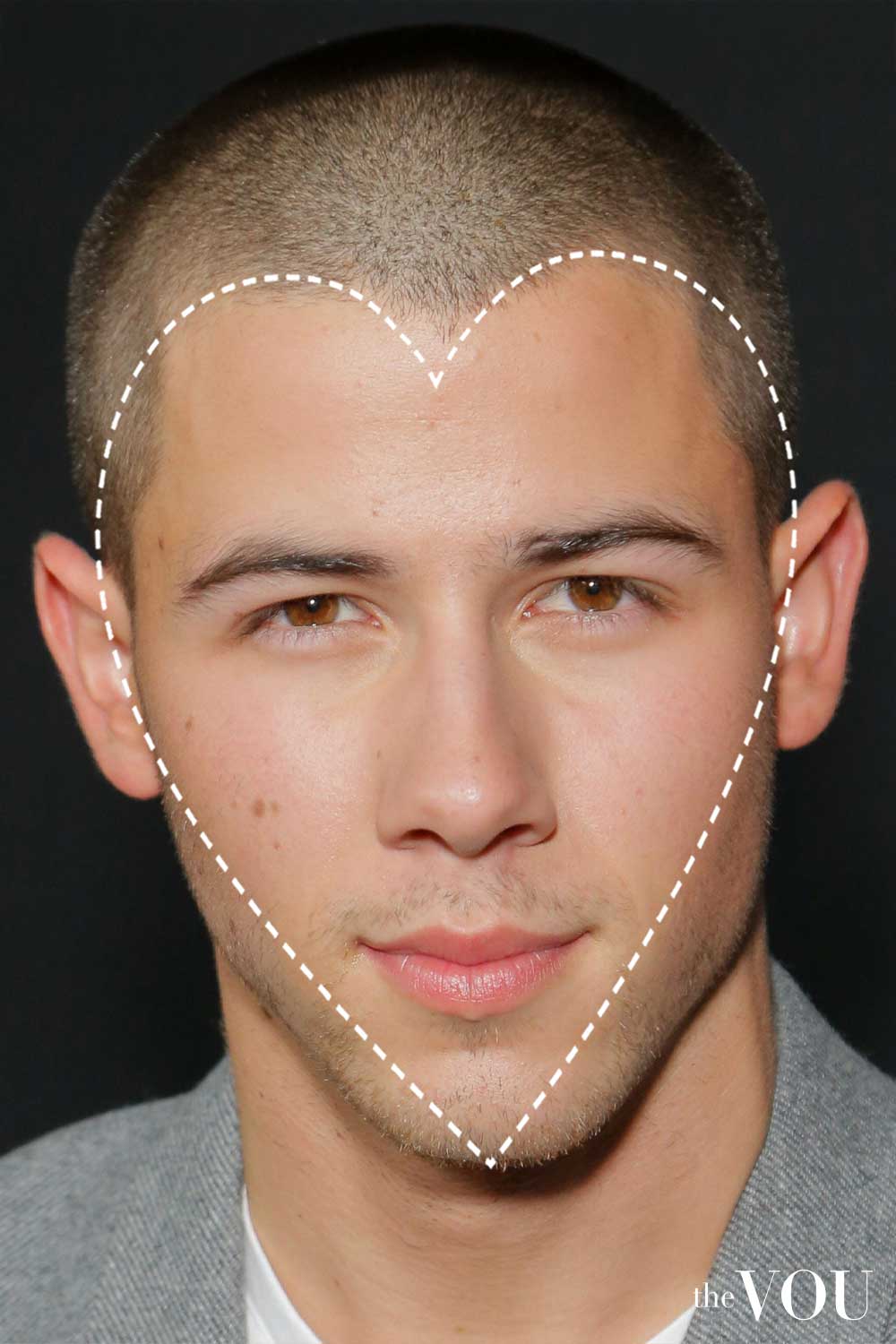
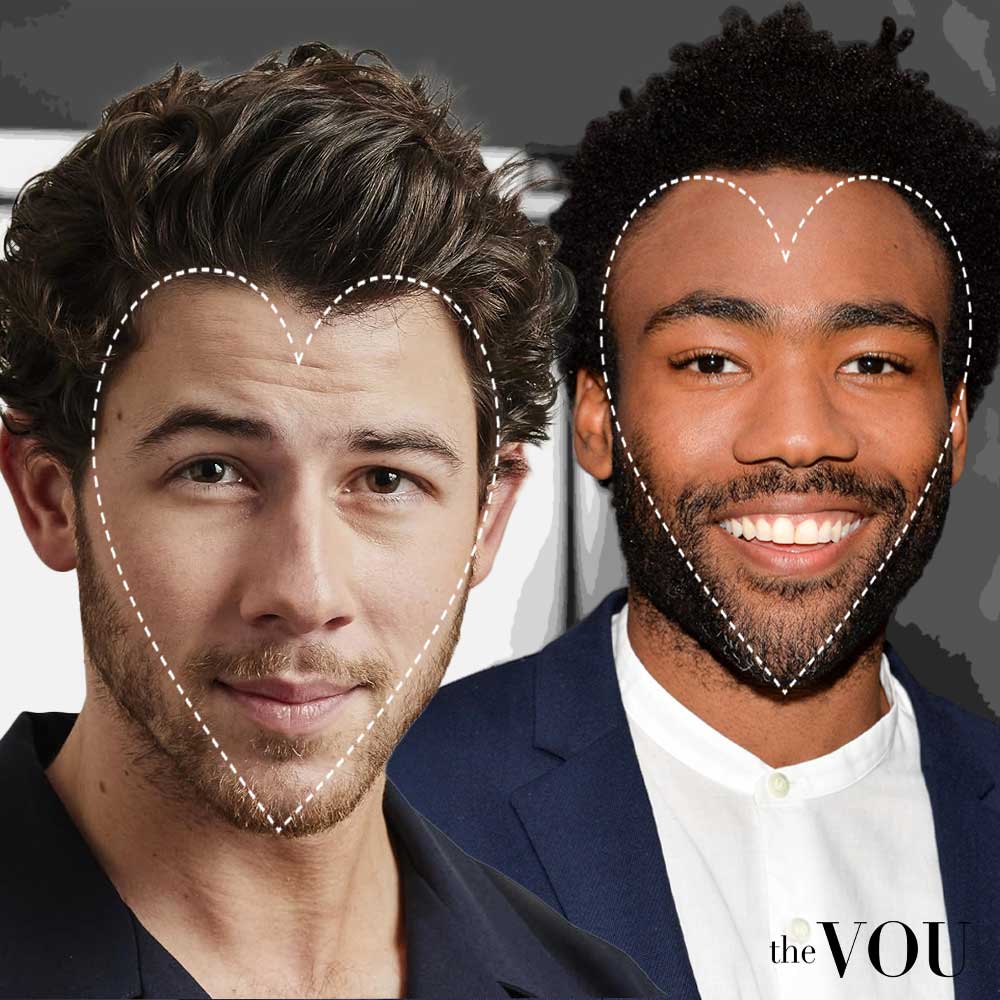
Your face reads as heart when your forehead is the widest of your three widths and the outline tapers downwards, so the span between your jaw corners is the narrowest part of your face.
Heart is also called inverted triangle, and this guide is careful about two comparisons that most writing on the subject runs together, such as:
– the difference between your chin and the span across your jaw corners
– how heart differs from diamond, which puts the widest span in the middle rather than at the top
– why a widow’s peak is a hairline observation rather than a requirement
– where hair volume and beard length actually go, which is not always where the advice claims
and many more!
Everything here rests on ranking three widths in a mirror, with nothing to measure.
Key Points:
01One observation makes this reading: rank your forehead, your cheekbones and the span between your jaw corners, and the forehead comes first while the jaw comes last.
02A pointed chin is not the test, and neither is a widow’s peak. Compare the forehead, cheekbones and span between the jaw corners; describe the chin tip separately.
03Crown height and chin weight are different effects in different places, so a haircut that adds height on top does not add weight near your chin, whatever a recommendation pairing the two may imply.
04A beard sits on the narrow lower end of this outline and changes that contour directly, so if you want your chin to carry more visible weight, facial hair is the most direct route; hair worn long enough to fall past the jaw frames the same area, and your present growth coverage decides how much is available.
Finding your face shape shouldn’t require complex measurements or scientific tools.
Four observations in a mirror are what this guide asks of you, and it is explicit about where each one runs out before any styling advice follows.
How to See Whether Your Face Reads as Heart
Set up once
Stand square to a mirror in even light, chin level, expression relaxed, head upright and facing straight ahead.
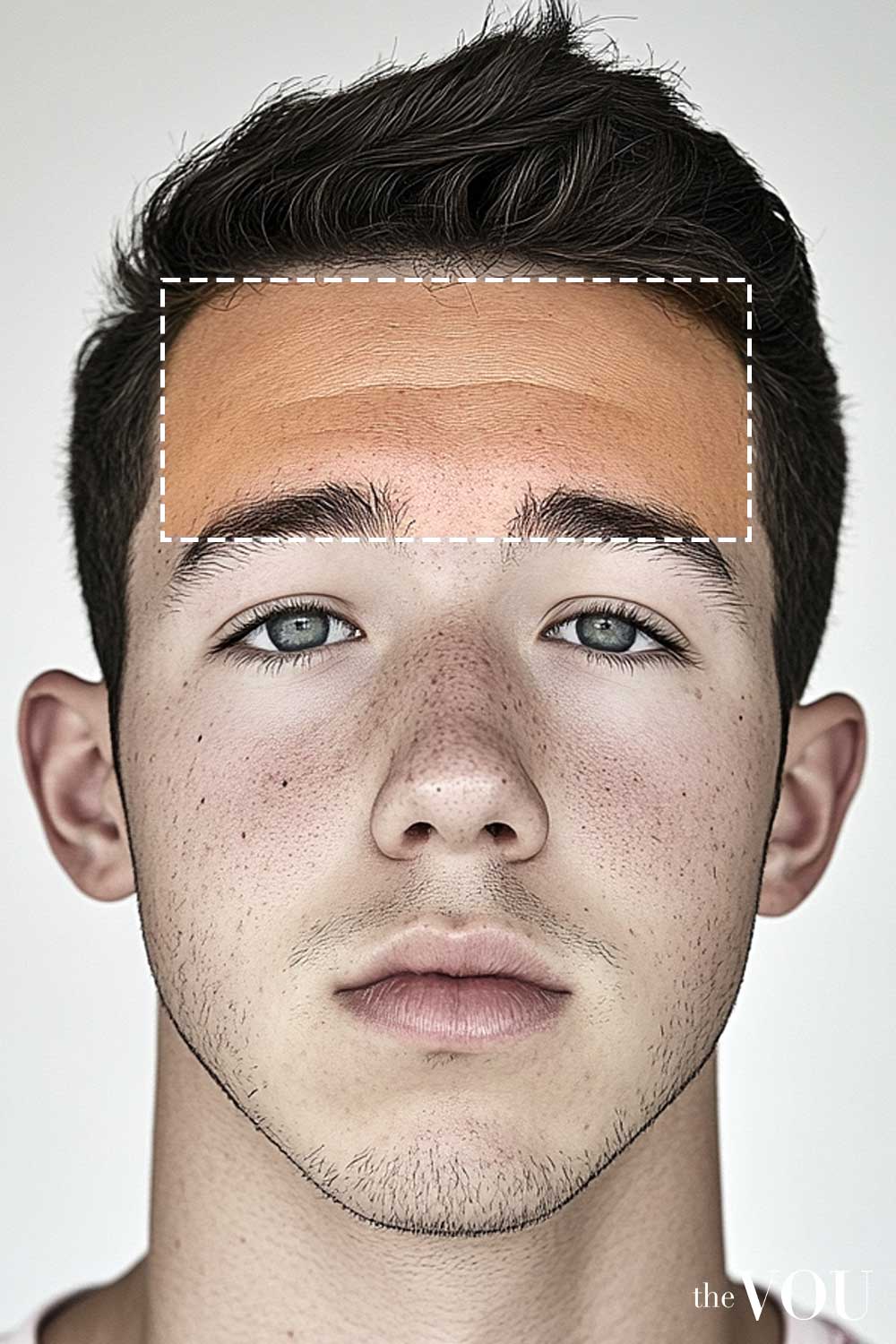
Push your hair right back off your forehead and hold it there, because this reading needs your forehead to come first in the ranking and hair falling at the temples hides exactly the breadth you are judging.
Stay with the same front-on view throughout, since what you are comparing is three widths on one plane.
The Four Observations, In Order
Observation one
Rank the three widths from widest to narrowest
Compare your forehead above the eyebrows, the widest region of your cheekbones and the span between your jaw corners, then put the three in order.
A heart reading runs forehead widest, cheekbones in the middle and jaw narrowest, so the widths fall away as your eye travels down; if your cheekbones come first instead, read the diamond guide, because that is the comparison readers most often get the wrong way round.
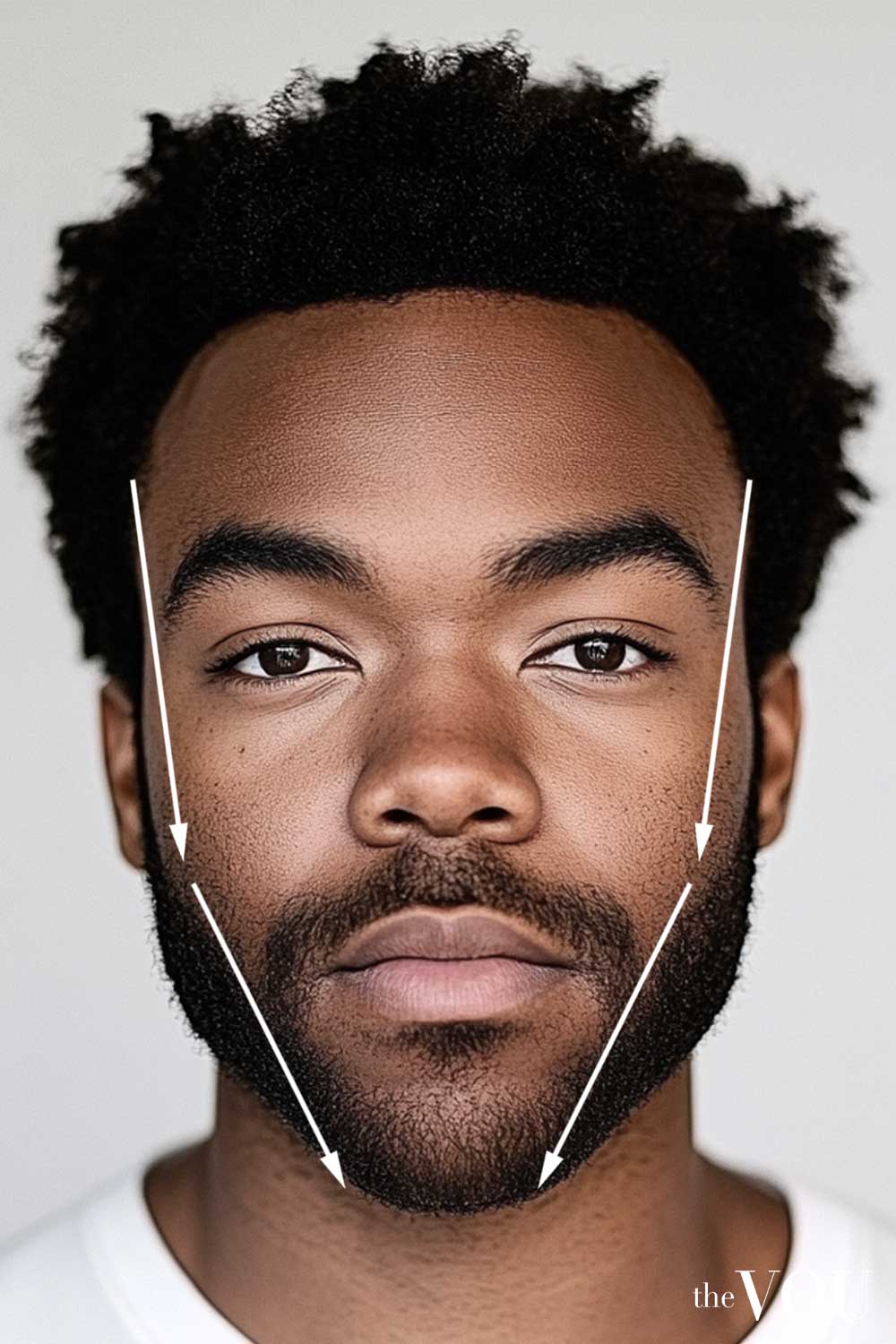
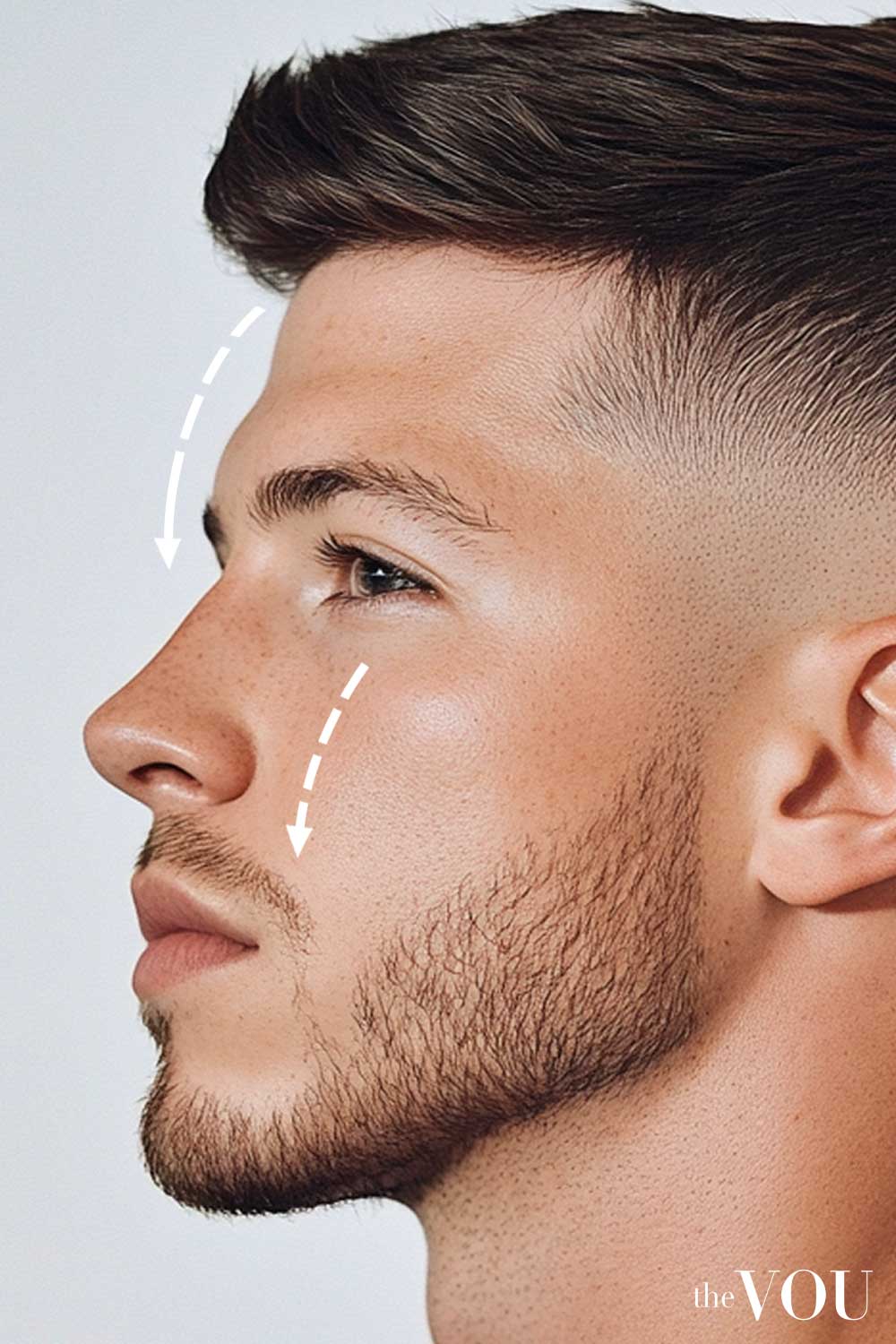
Observation two
Use the jaw corners, not the point of the chin
The span to compare is the straight distance between the two corners at the back of your jaw, below and slightly forward of your ears, and that span is a different landmark from the width of your chin.
A tapered chin can sit on a broad jaw. Compare the jaw-corner span when ranking facial widths, then describe the chin tip separately. The note on the diagrams below explains where the illustrations use different landmarks.
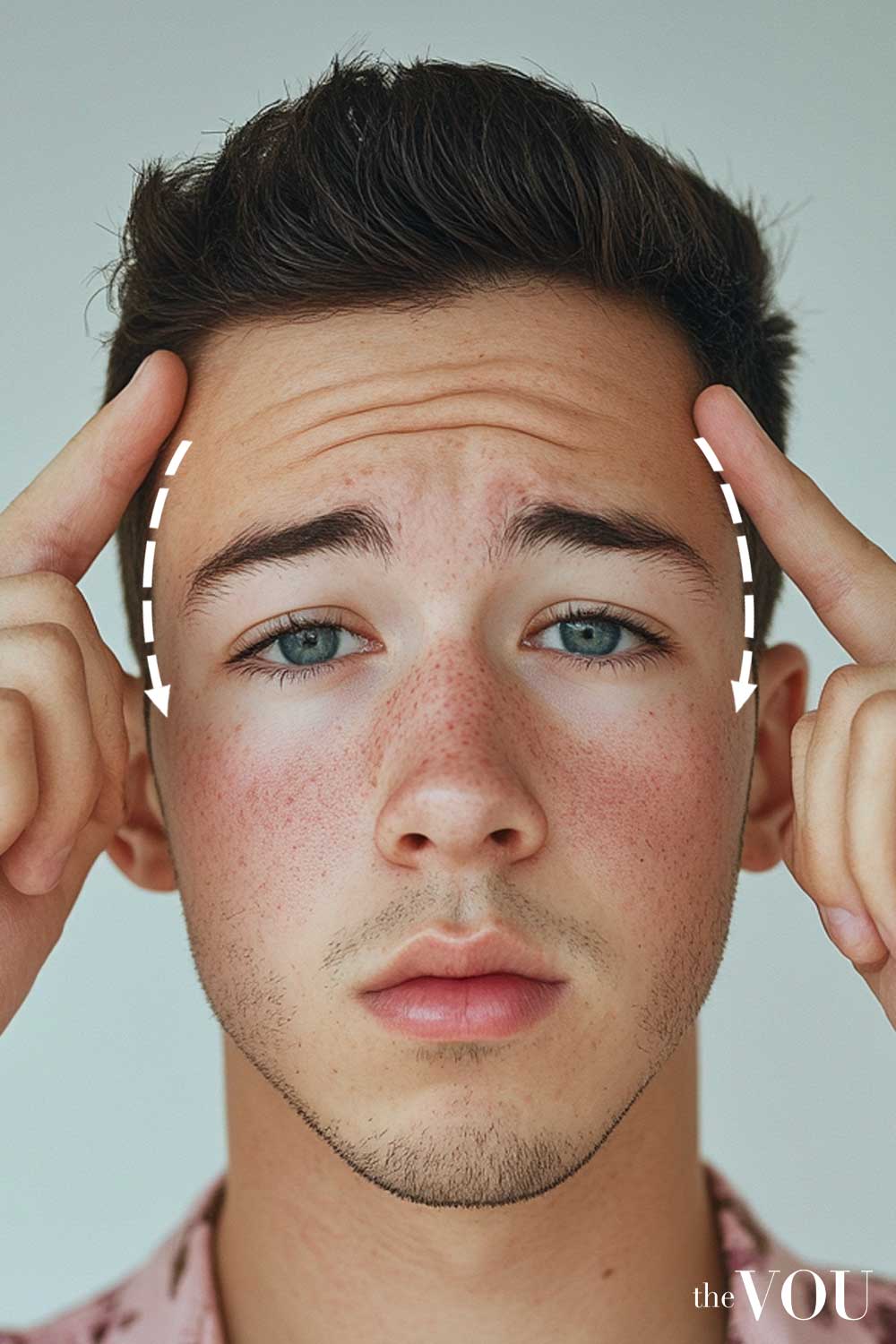
Holding your fingers at your temples and then at the corners of your jaw is a quick way to keep the two spans in mind while you rank them, and the photographs here show that comparison being made.
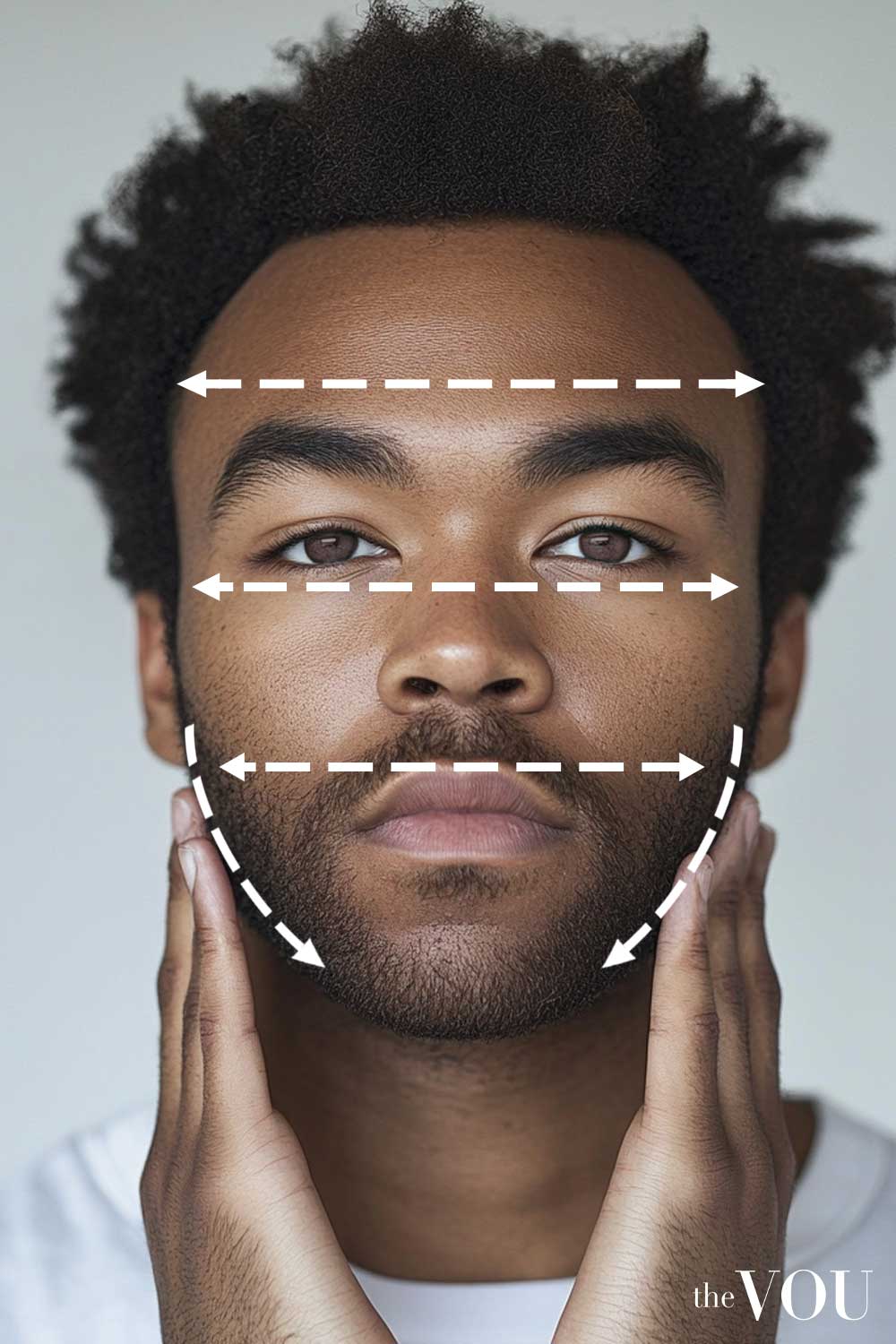
Observation three
Note your hairline, and do not let it decide anything
Describe the hairline you have: a straight line across, a gentle curve, or a peak dipping down at the centre.
A widow’s peak is commonly mentioned alongside this outline and it is not part of the definition, because a peak changes where your hairline sits rather than how broad the bone of your forehead is, so rank the forehead by the breadth above your eyebrows either way.
Observation four
Chin shape and overall length
Describe the bottom edge on its own, whether pointed, rounded or flat, and compare the drop from your visible central hairline to your chin against your cheekbone width.
Neither observation decides this reading, and both change the styling advice, because a tapering face that is also long takes a different haircut brief from a tapering face that is compact.
Keep the four answers, because the styling notes below work from your ranking, your chin and your length rather than from a category.
What the Front View Cannot Settle
The four observations describe an outline seen from the front, and nothing beyond that outline.
A broad forehead seen from the front does not establish that your chin sits further back than your brow in profile, because width across and projection forward are different measurements and neither establishes the other.
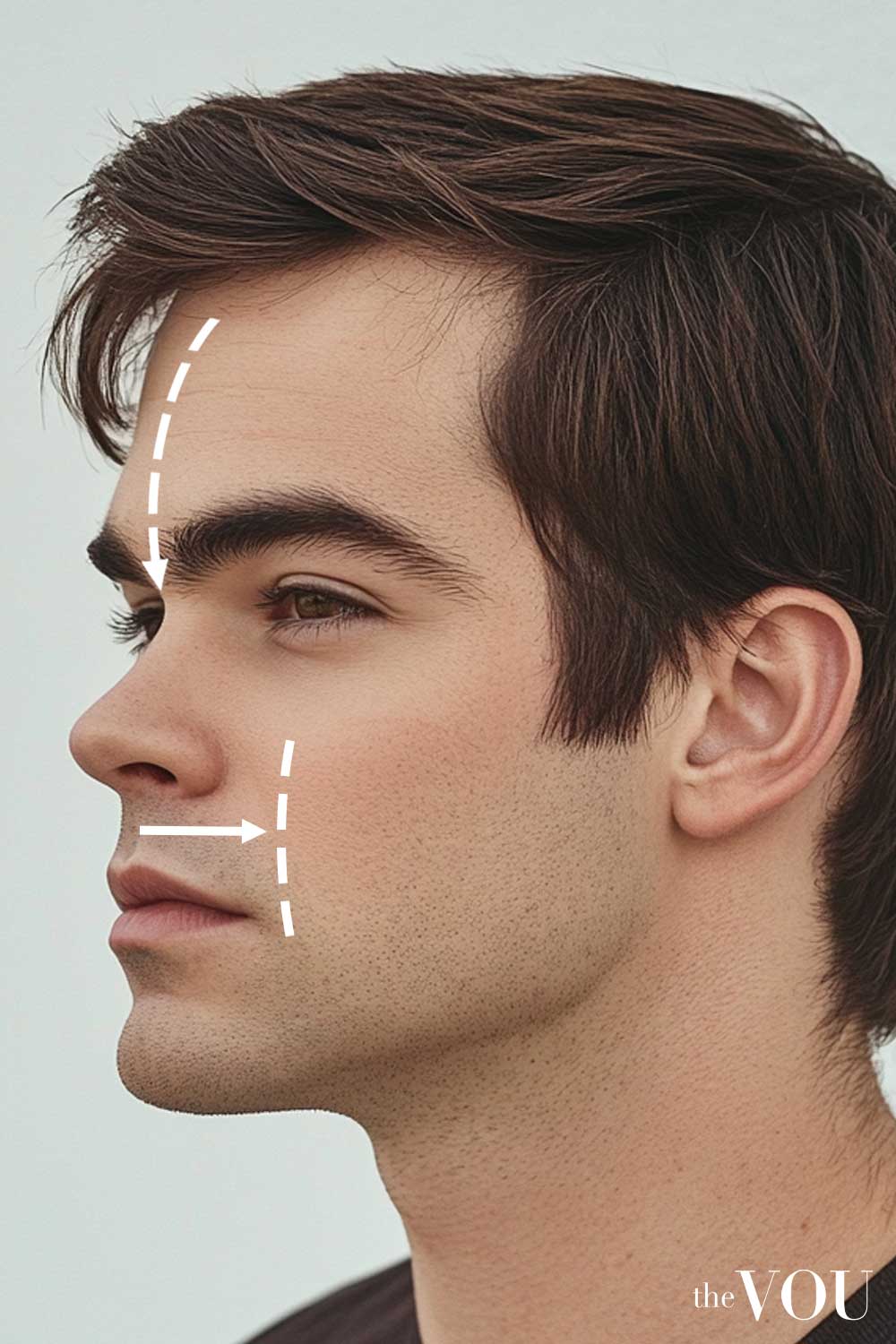
A side view is worth having in its own right, since a barber uses the profile when deciding how far forward to bring hair at the front and where a beard should sit under the chin, so describe what you see there separately rather than treating it as a test of the label.
This label also says nothing about how far apart your eyes sit, how your brow or nose is built, or where your ears are set. Describe those features separately rather than inferring them from the outline.
A Note on the Diagrams on This Page
Several illustrations on this page show a ratio between the forehead and the chin, a ratio between the forehead and the total length, a vertical position for the cheekbones and a division of the face into thirds.
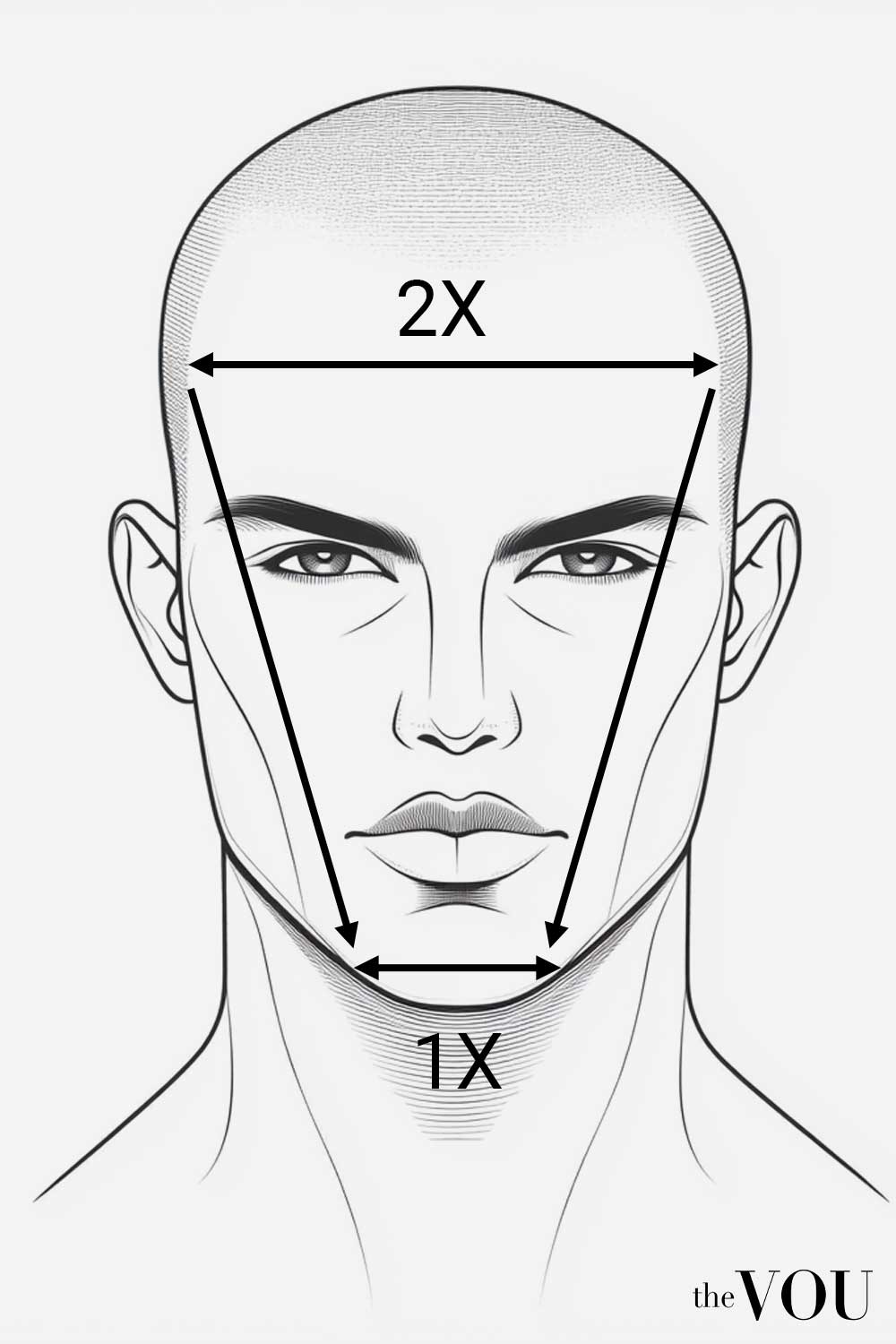
This guide does not use any of those figures, because no adequate source supports them, so read each illustration as a picture of the landmarks being named rather than as a test you should be passing.
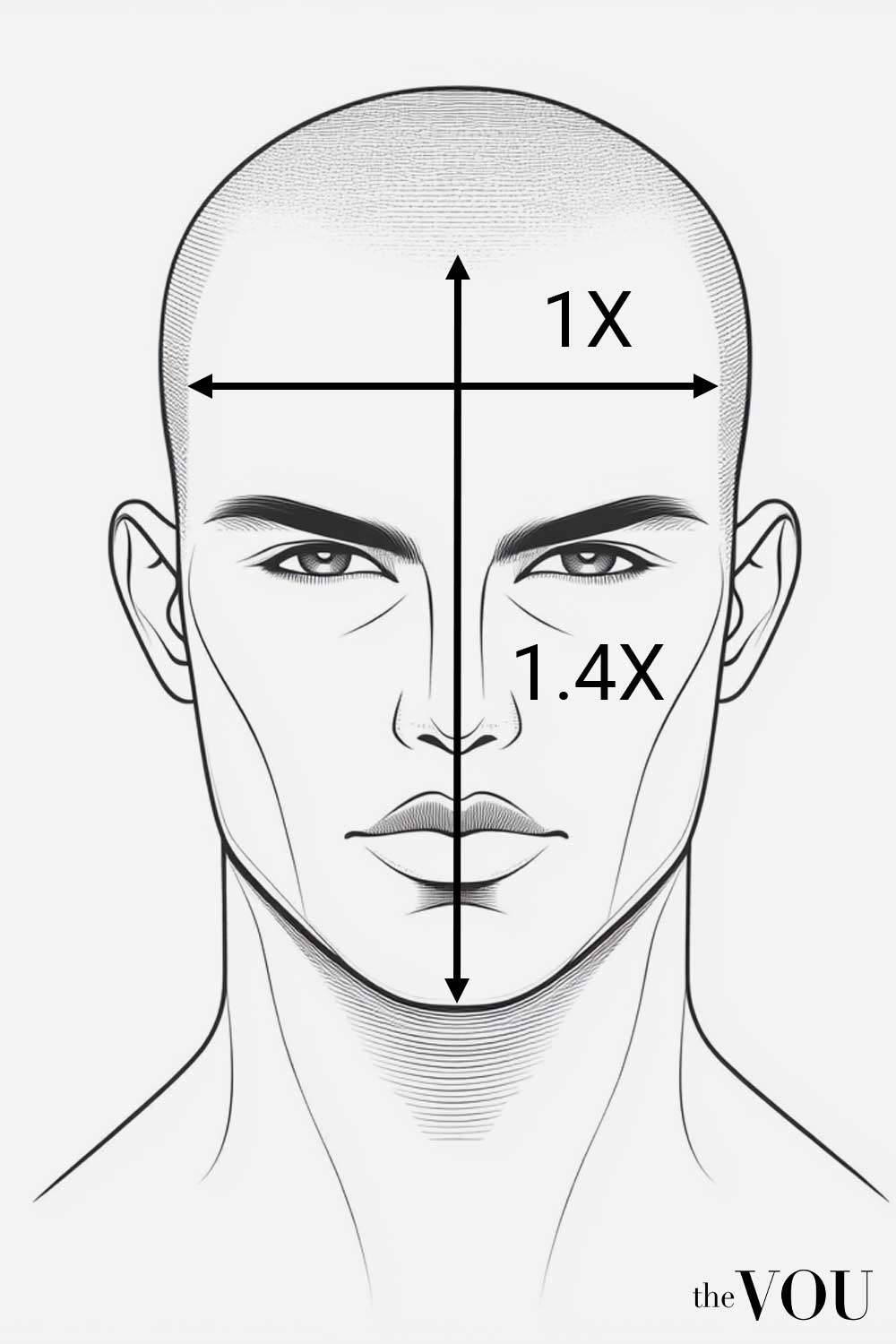
Where an illustration labels the span at the jaw corners as a chin width, work from the jaw-corner span described in observation two instead.
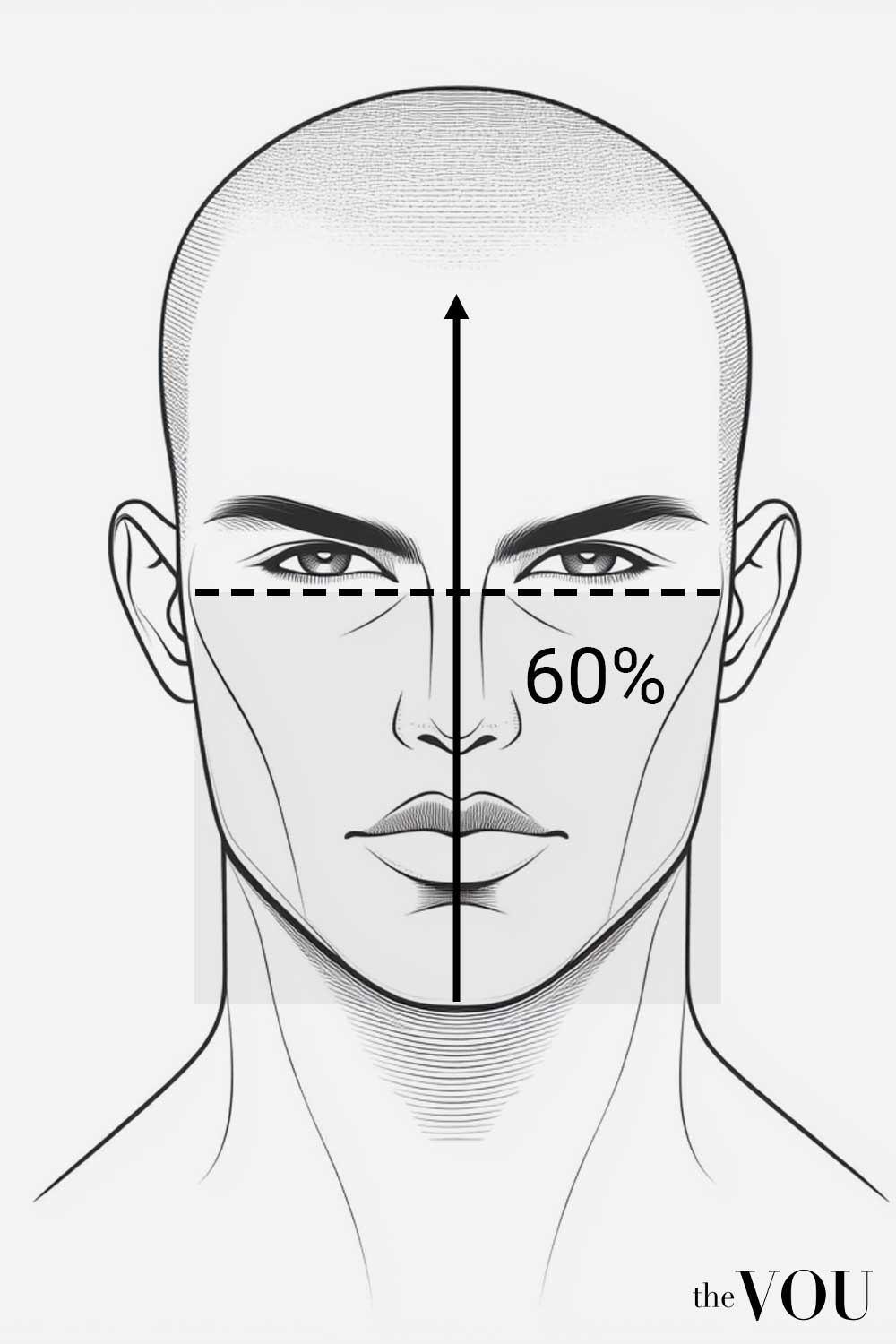
Nothing in the mirror fixes how high on your face your cheekbones sit as a proportion of its length, so treat the vertical position drawn here as an illustration of where to look rather than as a figure to check yourself against.
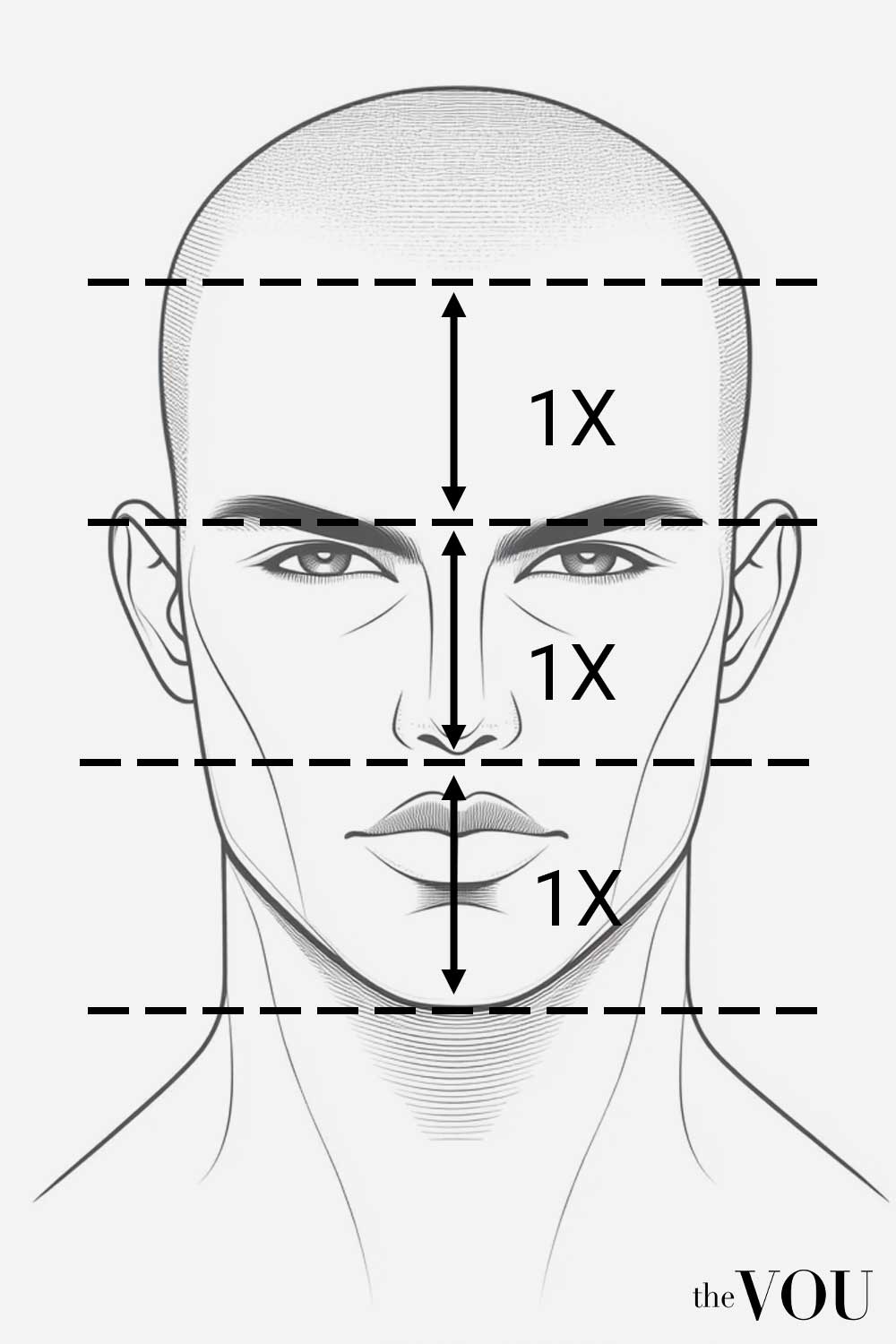
The same applies to dividing a face into thirds: the division is a drawing convention, and equal thirds are not a requirement of this outline or evidence of any category.
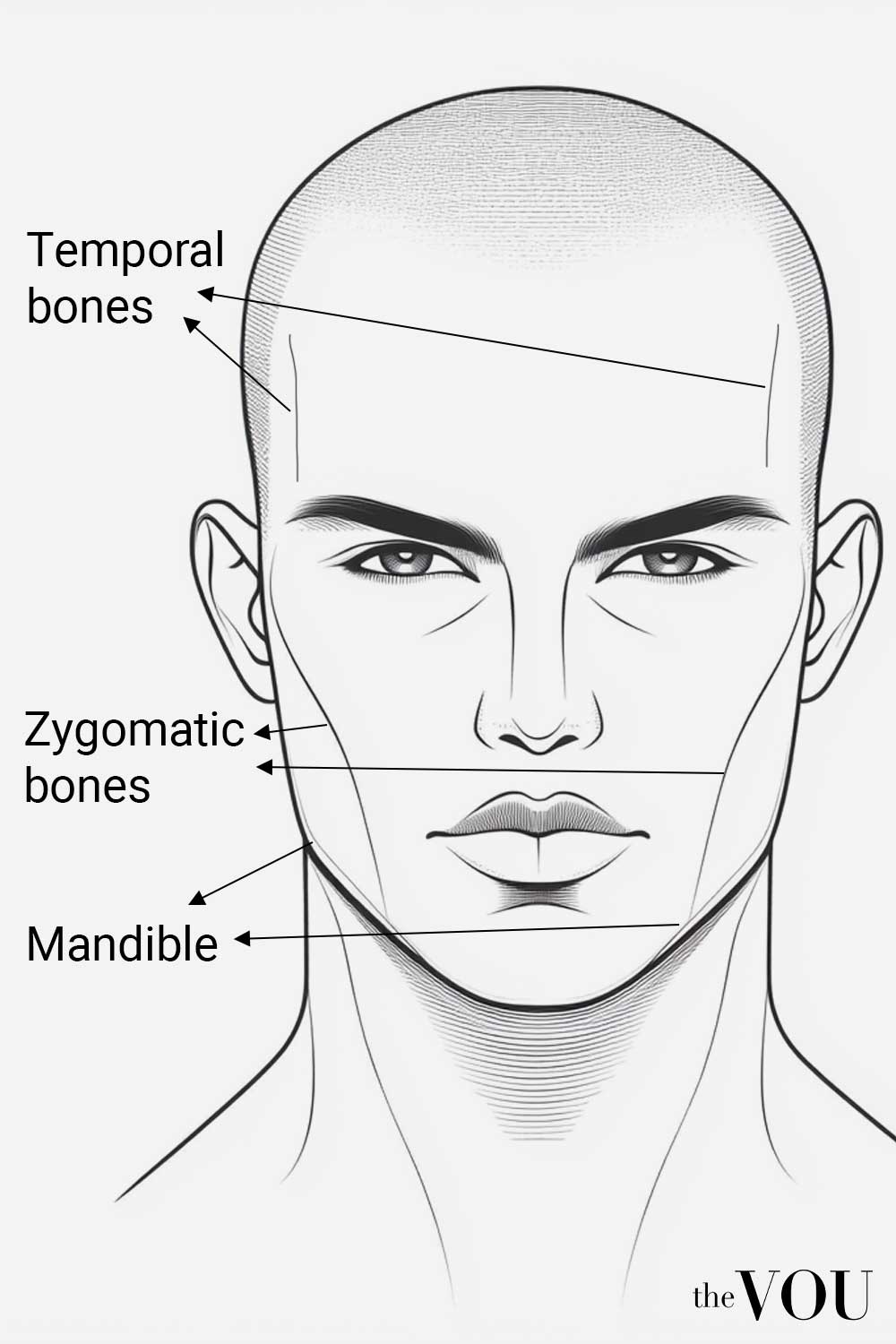
The anatomy illustration above names the bones behind a tapering outline, and naming them is as far as a front-on look can go: nothing you can see in a mirror tells you how your own bone is built underneath, and no styling label is a statement about your anatomy.
When You Cannot See the Landmarks
Both ends of this reading can be produced or hidden by something you are wearing, so check before you trust the ranking.
Hair falling at the temples narrows the forehead you are ranking, which is the single most common reason a broad forehead does not read as one.
A receding hairline exposes more of the forehead and moves the point your length runs from, so mark the length uncertain and rank the forehead by the breadth you can see above your eyebrows rather than by where the hair now starts.
A beard is the other complication, because a full beard left wide at the sides broadens the jaw you are ranking and can remove the taper altogether; if you are bearded, rank the bearded outline as one answer and record the jaw beneath as unknown.
A clear straight-on photograph from before the beard is the practical way round that, and nothing here asks you to shave.
If you work from a photograph rather than a mirror, keep it straight on with the lens level with your eyes, take it from farther back where practical, and hold the same head position when you compare two shots. In a 2023 study of twelve subjects photographed at several distances, using a specified phone and camera, the closest shots changed the measured proportions of the midface. A casual photograph is not precise evidence for a classification, so read what you see in one as a description rather than a result.
If one side of your jaw angles differently or one cheekbone sits higher, note which side and carry on, because a small asymmetry is worth mentioning to a barber and is not a reason to change the name.
Common Variations Within This Reading
Faces that share the same ranking still differ in ways that change what you ask for, and the differences below are worth naming separately because a barber acts on each one differently.
Chin Variations
Some tapering faces finish in a clearly pointed chin and others in a softly rounded one, and neither is more correct than the other.
The difference matters for a beard, because a squared beard bottom on a pointed chin is the most visible change available to you, while a rounded chin needs less work to read as full.
Forehead and Hairline Variations
The gap between the forehead and the jaw can be large or slight, and a slight gap reads as a gentler taper without moving you into another guide.
The hairline can run straight across, curve, or dip to a peak at the centre, and all three sit comfortably here, since the hairline shape and the forehead breadth are separate observations.
Mixed Readings
A face can read as tapering overall while its cheekbones stand out almost as much as the forehead, which puts it between this guide and the diamond one.
A tapering face can also be gently curved throughout and only somewhat longer than wide, which is a description the oval guide covers as well.
Read both guides in either case rather than averaging the two names into a single answer, and do not attach a confidence figure to the result.
Asymmetry
Faces are rarely symmetrical, so one side of your jaw may angle a little differently from the other and one cheekbone may sit slightly higher.
Record what differs and mention it when you discuss a cut or a beard line, because a barber can cut to it once told and cannot see it from a description of your face shape.
Length Variations
Two faces with the same ranking can differ in overall length, and the length is worth carrying into the styling decision: a longer face that wants less apparent length is offered weight at the sides rather than height on top, while a more compact one has height available. Neither is required, and a reader who likes the length can ignore both.
That is why observation four is worth making even though it does not decide the name.
Heart and the Names Next to It
These names come from barbering and grooming writing rather than one agreed standard, and this one carries an extra complication because the same outline is called inverted triangle elsewhere.
Heart vs Diamond
This is the comparison readers get wrong most often, because both readings commonly show a narrow chin.
Diamond faces put the greatest width at the cheekbones with both the forehead and the jaw narrower, while a heart reading puts the greatest width at the brow and tapers in one direction only.
Rank your forehead against your cheekbones and the answer follows, and ignore the chin entirely for this comparison.
Heart vs Triangle and Pear
Triangle faces on this site are the exact reverse of a heart reading, broadest at the jaw and narrowest at the brow, and the quiz treats pear and triangle as one result, though some guides separate them by how sharply the face tapers.
Several publications use triangle for the brow-widest outline described here, which means advice you find under the word triangle elsewhere may have been written for your face or for its opposite, so check which width the writer calls greatest before following anything.
Heart vs Oval
Oval faces put the cheekbones slightly ahead with the forehead and jaw close behind, so no direction of taper stands out.
A heart reading has the forehead clearly first and the jaw clearly last, so the question is whether your widths fall away in order or sit close together.
Heart vs Square
Square faces hold all three widths level on a compact outline with an angular corner at the jaw.
If your jaw is as broad as your forehead, the square notes fit you better whatever your chin is doing.
Heart vs Round and Rectangle
Round faces are compact with curved jaw transitions and no width clearly in the lead, and rectangle faces keep parallel sides down a clearly longer outline.
Neither carries the downward taper this reading is named for, so if your widths sit level, one of those two guides describes your face better.
Decide What You Want Before You Decide What to Wear
Settle this first
Decide which end of your face you actually mind, because narrowing the look of a broad forehead and adding visible weight at a narrow chin are two different jobs done in two different places, and most readers want only one of them.
Advice for this outline usually promises both at once, and the two are handled by different styling choices that do not overlap.
Keeping volume off the temples is what stops the top of your face reading wider, and it is a haircut decision.
Adding visible weight at the chin and jaw is mainly a beard decision, because a short or mid-length cut sits above and beside your face rather than alongside your jaw. Hair worn long enough to fall past the jaw does frame the lower face, so that route is open if you want it.
You can also leave the taper alone, since a broad brow above a narrow chin is a perfectly ordinary outline rather than an imbalance in need of correction.
Hair: Keep the Weight Off the Temples
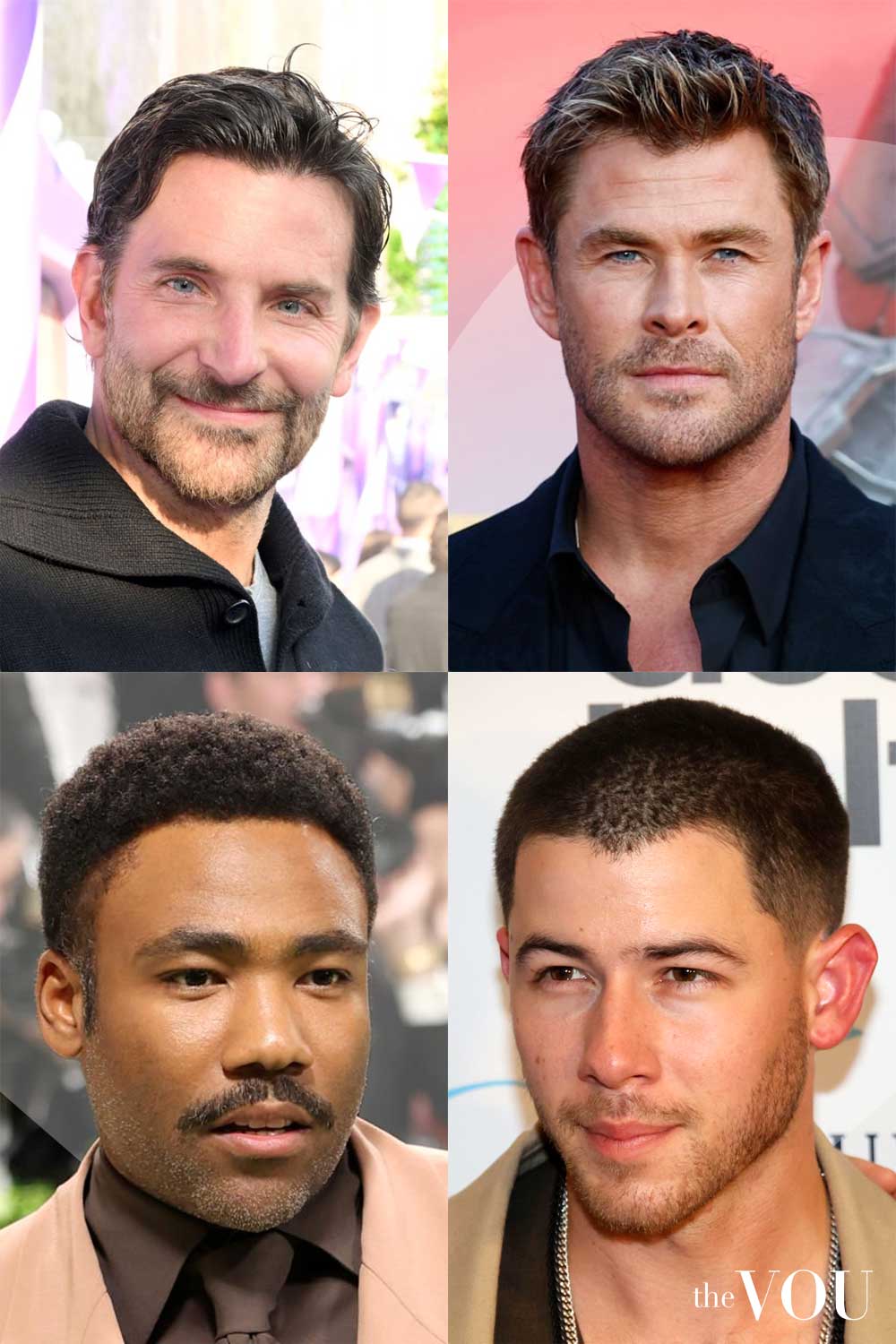
The haircuts collected for heart shaped faces work mostly on the upper half of your face, which is the half a short or mid-length cut sits against; hair worn long enough to reach past the jaw frames the lower face as well.
Volume at the temples widens the top of your face, so keeping the sides close through the temples is what stops the broadest part reading broader still, and that is the most direct control a cut gives you here.
Height at the crown lengthens the outline rather than narrowing the forehead, which is worth knowing because a quiff or a pompadour is frequently recommended for this reading on the grounds that it balances the lower face, and crown height does nothing at all near your chin.
A little length falling forward at the front covers part of the forehead and shortens the visible drop from hairline to chin, which is the other change available, and it works against crown height rather than alongside it.
Then check what your own hair will actually do, because that is what decides which of these you can keep.
What follows are tendencies rather than rules, because density, curl pattern, length and growth direction all pull separately and your own combination decides the result. Fine or low-density hair usually needs the cut, and often some drying, to hold height or width, and it tends to lose a shape sooner through the day. Dense hair generally holds a shape more readily and can need weight removed so it does not read wider than you wanted. Curly and coily hair often carries width with less work and shrinks as it dries, so agree the finished shape dry rather than wet. Growth direction at your hairline can defeat a fringe or a parting whatever your texture.
Ask how the cut sits on the third morning after a wash, and dry it yourself in the mirror once before deciding it works.
Beard: The Most Direct Control on the Lower Face
If you want your chin and jaw to carry more visible weight, a beard is the way to do it, so the beard styles collected for heart faces matter more here than the haircut does.
Treat the beard as four decisions: the length at your chin, the fullness at the sides, the height of the cheek line, and the position of the neckline.
Length concentrated at the chin with the cheeks kept short adds weight at the narrowest end without widening the jaw, and a squared bottom edge broadens the finish rather than pointing it.
A chin beard with the jaw line shaved clear between the moustache and the chin puts weight at the chin only, which is the most targeted version of the same job.
Your present growth coverage sets what is available, because weight at the chin needs enough density at the chin to read as deliberate, so work from the coverage you have now rather than the coverage you were hoping for.
Agree beard length with your barber using your current beard, reference photographs and the finish you want. A photograph alone does not reveal the trimmer setting used to create that finish.
The photographs in this site’s heart face shape gallery are useful for the same reason any styling photograph is: each one shows a beard outline you can point at and ask for, rather than a length you can measure off the screen.
A fade in a beard means a graduated transition with no visible step, which is separate from chin length, so ask for the two separately; set the neckline in the mirror with your barber rather than by a finger-width rule.
Glasses: Preference and Fit Are Two Questions
Frames sit across your cheekbones with their top edge near your brow line, so a lighter rim along the top draws less attention to the broadest part of your face, and a frame with weight lower down shifts the emphasis downwards.
A frame does not reach your chin or your jaw, so read any promise about balancing the lower face as being about emphasis higher up.
Fit is the separate question and the one that decides whether you keep wearing them: enough overall width that the arms are not pressing your temples, a bridge that rests on your nose without pinching or sliding, and arms that reach your ears at a length that holds without digging in.
The three numbers printed inside an arm are the lens width, the bridge width and the temple length, all in millimetres. They describe the frame rather than your face, and they do not add up to the overall outside width of the frame front, because rims and endpieces vary, so use them to compare frames you have tried rather than as a fit guarantee. Take the prescription and lens questions to an optician, and treat the protection rating on sunglasses as a separate check.
Collars: Spread, Point Length and Comfort
A collar sits below your chin and cannot widen your jaw, though a moderate spread draws a horizontal line under a narrow lower face, which is the effect to ask for if that is your goal.
A long narrow point does the opposite by drawing the eye down to the point of your chin, and a very wide spread opens the line so far across that it competes with your forehead instead.
Band height and comfort at the neck come first, because a collar that grips is one you will unbutton by lunchtime, and the knot needs room for the tie you actually own.
For casual shirts and knitwear, a high tight neckline sits directly under the narrowest end of your outline, so an open neck leaves more space there if that is the effect you want. Which is comfortable depends on your own neck and the garment rather than on your face shape.
Frequently Asked Questions About Heart Face Shapes
Q. How do I tell heart from diamond?
By which width is greatest. A heart reading has the brow widest and tapers in one direction down to the chin, while a diamond reading has the cheekbones widest with both ends narrower. A pointed chin turns up in both, so it settles nothing; rank your forehead against your cheekbones and the answer follows.
Q. Do I need a widow’s peak to have a heart shaped face?
No. A widow’s peak is a hairline shape, and a hairline changes where your hair starts rather than how broad the bone of your forehead is. Rank the breadth above your eyebrows, and read the hairline as a separate observation that matters for how a fringe will sit rather than for the name.
Q. How do I make a broad forehead look narrower?
Keep the hair close through the temples rather than full, and let a little length fall forward at the front so part of the forehead is covered. Height at the crown does not narrow the forehead, so a tall style on its own will not do this job even though it is often recommended for the outline.
Q. Does facial hair help balance a heart shaped face?
A beard sits on the narrow lower end and adds visible weight near your chin directly, which is why it is the usual answer here, and hair long enough to fall past the jaw frames the same area. Length at the chin with the cheeks kept short and a squared bottom edge is the combination that does it, and your present growth coverage at the chin decides how much is actually available to you.
Q. Can I wear my hair very short?
Yes, and a short cut keeps weight off the temples, which suits this outline if narrowing the top is your goal. What a short cut removes is the option of a fringe, so if covering part of your forehead matters to you, leave enough length at the front to do it.
Q. Can my face shape change over time?
How it reads changes. A receding hairline exposes more forehead, which can strengthen this reading over years, and fullness rising or falling with weight changes how narrow the lower face looks. Facial hair changes it faster than either. This guide describes the appearance and does not claim what underlies it.
Still Not Sure?
Try our quick and free face shape quiz, which asks you to compare what you can see rather than to measure anything.
The quiz sorts you into the profiles it carries, and because heart and diamond sit next to each other on one comparison, a face with a narrow chin can reasonably land on either.
Treat the result as a starting description, and if it disagrees with your own ranking of the three widths, trust the mirror and read both guides.
Expert Style Guidance
Knowing which end of your face is broadest is the starting point for the decisions above.
Our Professional Face Shape Analysis package is a paid consultation; its product page lists what it includes.
Our Complete Image Transformation Package combines the face shape, seasonal colour, body shape and fashion style analyses.
Mandy Meyer’s focus at The VOU is men’s body-shape styling, garment fit and outfit proportions. Her coverage addresses the practical questions behind a wardrobe choice: how a jacket sits across the shoulders, how trousers fall and how different cuts change the silhouette a wearer wants to create.
Her subject areas include the triangle, inverted triangle, rectangle, oval, trapezoid, hourglass and diamond labels used in body-shape styling. These provide starting references for comparing visible proportions; they do not capture every body or prescribe one correct way to dress. The focus connects those observations with garment shape, construction, length and the relationship between the upper and lower parts of an outfit.
Mandy’s editorial coverage combines visual comparisons with fit checks for comfort and movement. Readers can consider whether a cut gives them the room they need, where clothing pulls or gathers and which changes might support their preferred look. The aim is to make menswear choices more understandable while keeping personal preferences and the wearer’s own styling goals central.