

Start here
What’s This About
If you want more visual weight under a broader forehead, a beard that keeps its fullness at the chin and jaw while the cheeks stay shorter does that, and a clean-shaven face or light stubble is just as valid.
This guide covers the choices that shape the result, such as
Where to keep length, whether at the chin, the jaw corners or the cheeks
Why a broad chin adds breadth while a pointed chin mainly adds length
How a Balbo separates the moustache from the chin beard
What to do when your cheeks grow thinly or your beard hides your jaw
and many more!
Your actual growth and how much upkeep you want decide the rest.
Key Points
01Heart, as The VOU uses it, describes an upper face that looks broader than the jaw and tapers towards the chin; it is a navigation description, not a measurement.
02Width across the chin and jaw and length below the chin do different jobs. Width adds lower breadth, while extra length drawn to a point mainly adds length.
03Your real cheek, chin and moustache growth limits which outline is achievable; trimming shapes what grows, it does not create new growth.
04No millimetre setting suits everyone, so start longer than you think, trim down gradually and judge the dry, brushed beard in a mirror.
Men with heart face shapes, as The VOU uses the term, have an upper face that looks broader than the jaw, tapering towards a narrower chin.
A widow’s peak is a hairline observation, not a requirement for this description.
If that is the outline you see, a beard can add visible weight at the chin and jaw; some men like how that evens out the top and bottom of the face, and others prefer to keep the taper visible, which is just as valid.
Understanding your facial structure is useful background, and our face shape analysis quiz can give you a starting point, though it is a guide rather than a measurement.
If your cheekbones look wider than your forehead, compare this guide with our diamond face beard guide and use whichever matches what you actually see.
For every face description in one place, see our guide to choosing a beard by face shape.
Four Separate Beard Decisions
A beard is easier to plan as four separate decisions than as one style name.
Side fullness is how much length you keep on the cheeks and along the jaw corners, which controls how wide the bottom of the face looks.
Chin length is how far the beard extends below the chin; a rounded or squared bottom keeps that length broad, while a pointed bottom narrows it and mainly adds length.
Cheek line means the upper edge of the beard on the cheek, which you can leave natural, tidy slightly or set lower for a cleaner look.
Neckline marks where the beard stops under the jaw; a common starting point is a neckline about one to two finger widths above the Adam’s apple, curving back towards the angle of the jaw below the ears; check it with your head level rather than tilted back, and adjust it for your beard length and your own neck.
For a heart outline, the useful question is usually how much width you want across the chin and jaw compared with how much length you want below the chin.
Check Your Growth First
Your coverage sets the limits, so look at your cheeks, jaw corners, chin and moustache after a few weeks without trimming, and note where hair is dense, where it is sparse and which way it grows.
If your cheeks are thin but your chin and moustache are strong, chin-focused outlines such as the Balbo or a fuller chin with short sides usually look more deliberate than a full beard.
Curly and coily beard hair shrinks as it dries and sits fuller than straight hair at the same trimmer setting, so judge length on the dry, brushed beard.
If you already wear a full beard and cannot see your jaw, you do not need to shave to use this guide. Describe the outline your beard makes now and treat the underlying jaw shape as unknown.
Full Chin Beard
The full chin beard keeps its most noticeable length at the chin and along the lower jaw, with the cheeks trimmed shorter.
In the example photograph (Chris Pine), the cheeks are visibly shorter than the chin, so the eye goes to the bottom of the face rather than the sides.
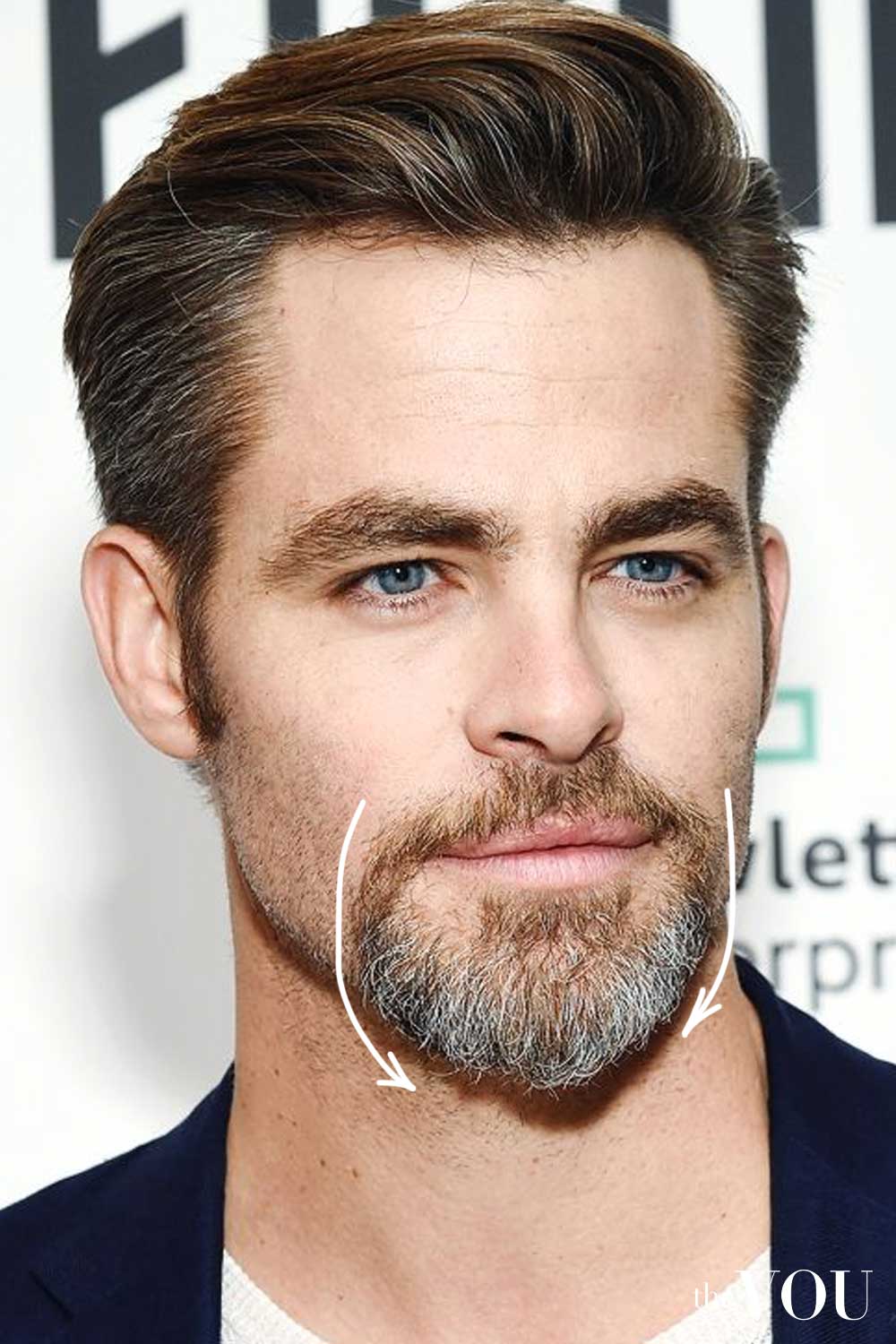
Why it works. If you want more visual weight under a broader forehead, length at the chin adds it.
Keeping that length across the full width of the chin, rather than drawing it to a point, adds breadth as well as length; a narrow, pointed chin beard does the opposite and makes the taper more noticeable.
Ask your barber, “Keep the length on my chin and lower jaw, blend the cheeks shorter, and keep the bottom rounded or squared rather than pointed.”
Maintenance. The shorter cheeks show regrowth first, so the cheek blend needs touching up more often than the chin; how often depends on how fast your beard grows and how crisp you like it.
Mirror check. Straight on, if the chin starts to look long and narrow, square off the bottom slightly or let the jaw corners fill in.
Balbo Beard
The Balbo beard combines a moustache, usually separated from the beard at the corners of the mouth, with a chin beard that extends along the lower jaw, while the cheeks stay clean-shaven.
In the example photograph (Ethan Hawke), the cheeks are bare and the beard sits around the mouth and chin, with more length at the bottom.
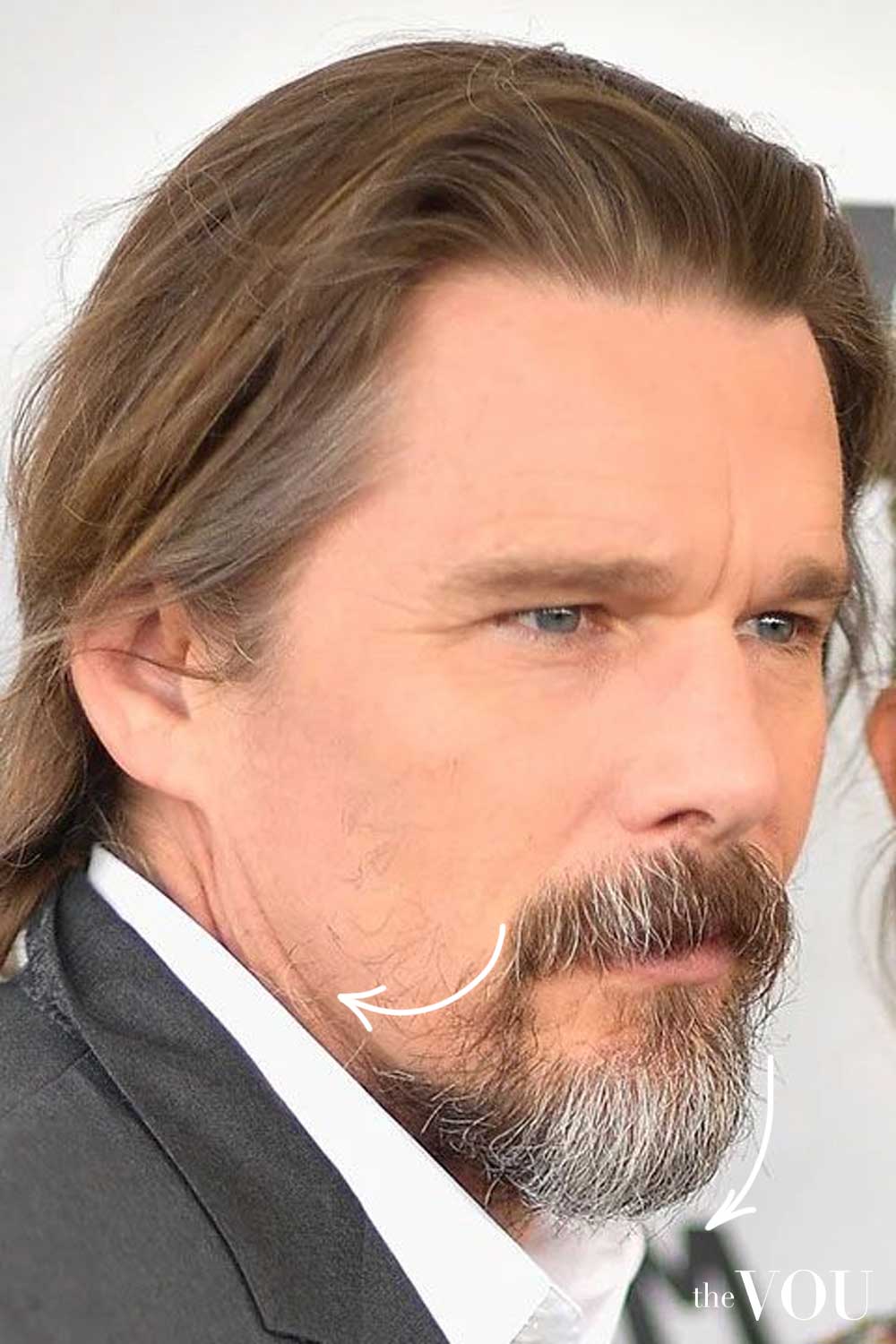
Why it works. With no cheek coverage, all the visible beard sits under the narrower lower face; how far you take the chin section out towards the jaw decides how much breadth it adds.
A Balbo whose chin section is wider than the mouth adds breadth, while a small, narrow chin patch adds very little.
Growth check. This style relies on a strong moustache and chin, so it suits thin cheek growth well; if the chin itself grows sparsely, the gap beside the mouth can look accidental rather than deliberate.
What to ask your barber. “Clean the cheeks, keep the moustache separate from the chin beard, and take the chin section out wider than the corners of my mouth.”
In terms of maintenance, the bare cheeks and the gaps beside the mouth need frequent shaving to stay crisp, so a Balbo asks for more edging than a full beard of the same length.
Full Beard with Tapered Sides
The full beard with tapered sides covers the cheeks, jaw and chin, with the sides kept shorter and the length building towards the chin.
The example photograph (Chris Hemsworth) is taken at an angle, so use it for the gradual change from shorter sides to a fuller chin rather than as a front view.
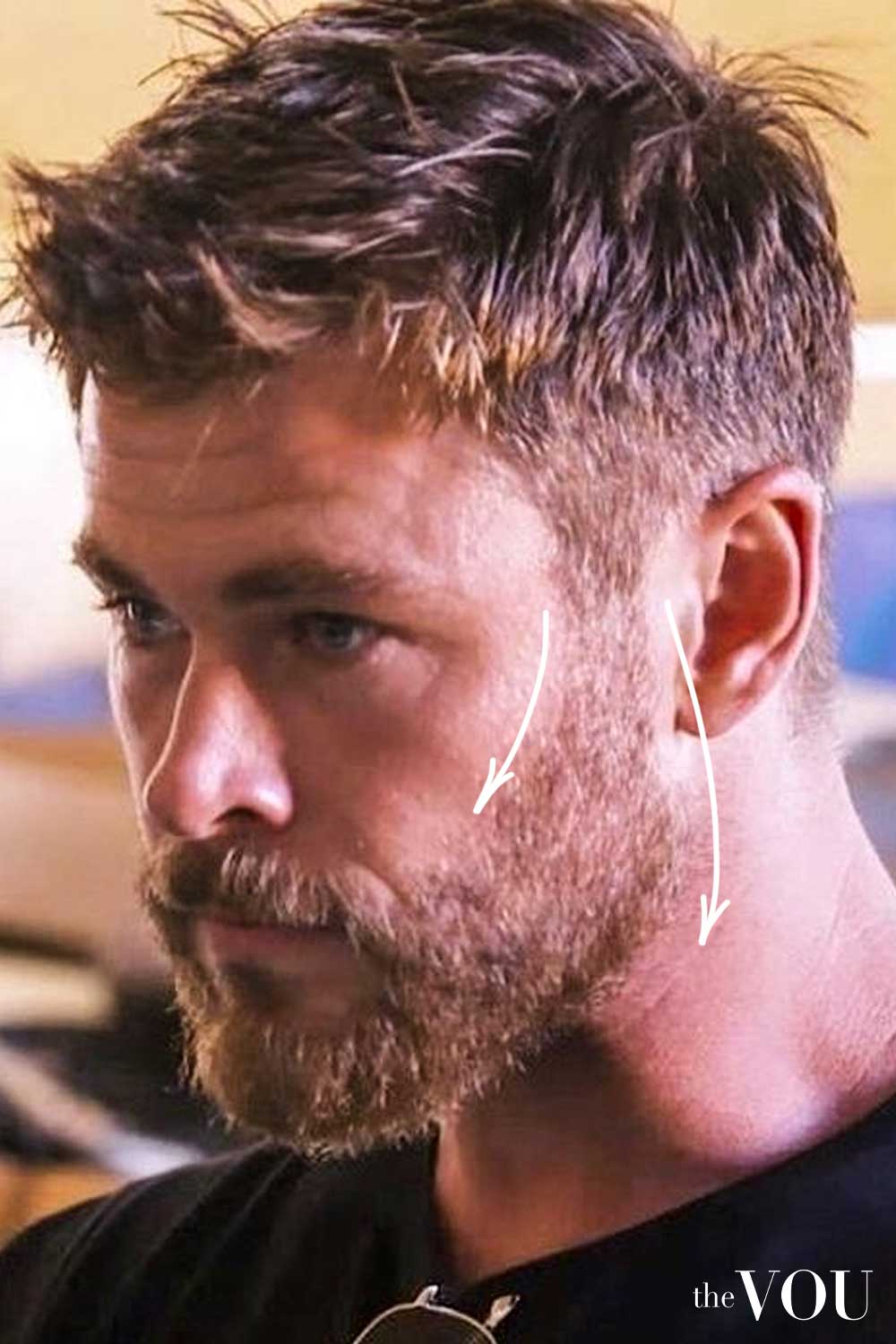
It works because shorter cheeks avoid adding width at cheekbone level, where a heart outline already looks broadest, while the fuller chin and jaw add weight lower down.
Ask your barber for “Full beard, sides tapered shorter from the sideburns, length kept at the chin and jaw, natural cheek line, and a neckline that looks clean from the side.”
Maintenance. The graduation from sides to chin is what drifts first; a barber visit every few weeks keeps it even, with light trims at home in between.
Defined Stubble with Fuller Chin
Defined stubble with a fuller chin keeps the cheeks and jaw at a short stubble while the chin and moustache are left a little longer.
In the example photograph (Henry Golding), the stubble is short and even, with the moustache and chin reading slightly denser.

Why it works. The slightly longer chin adds a small amount of visual weight at the bottom of the face without committing to a full beard; it is a quieter version of the full chin beard.
Growth check. Stubble shows density honestly; if your growth is light, the fuller chin may look much the same as the sides, which is fine but makes the effect subtler.
Maintenance. Stubble changes within days, so trim every few days to hold the same finish; use one trimmer guard for the sides and a slightly longer guard for the chin, and blend where they meet.
Shaped Full Beard
The shaped full beard is a longer, fuller beard trimmed to a deliberate outline, with tidy cheek and neck lines and a controlled bottom.
In the example photograph (Donald Glover), the beard is long and dense, and its width carries down to the bottom rather than narrowing to a point.
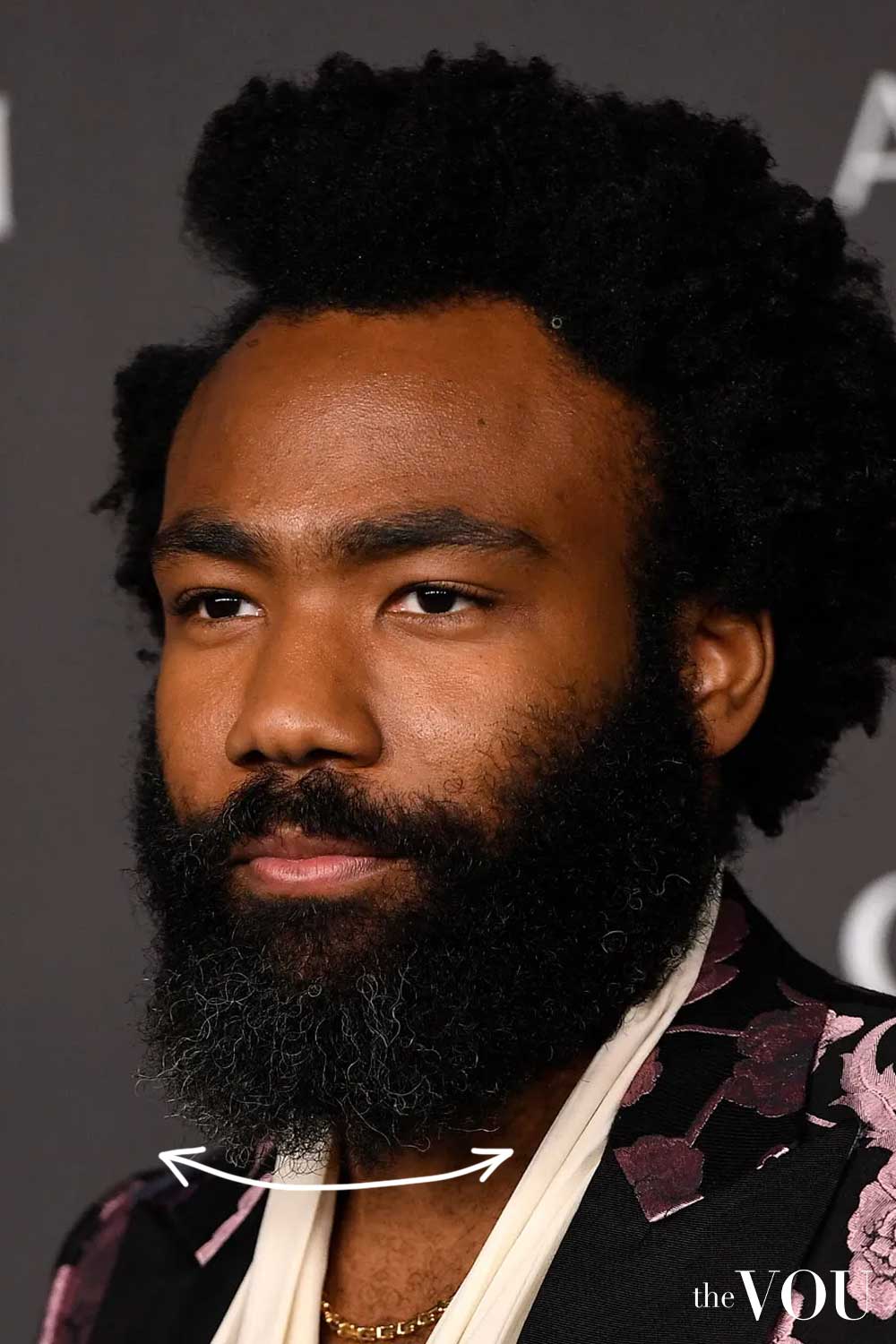
It works because a longer beard adds the most visual weight to the lower face, and a broad rather than pointed bottom adds breadth as well as length.
Growth and texture check. This needs dense growth across the cheeks and jaw; curly and coily beards often reach this fullness at a shorter length, while straight beards may need more length for the same shape.
Ask your barber. “Keep the length, shape the outline, keep the bottom rounded or squared, and stop the sides bulking out more than I want.”
As for maintenance, more length usually means fewer trims but more daily care, such as washing, brushing or picking the beard into shape, plus a regular shape-up of the outline.
Mixed Features and Uncertain Outlines
If your beard already hides your jaw, plan from the outline you see now; the underlying jaw shape can stay unknown.
If your hairline is receding or unclear, face length is hard to judge, so rely on what you can see and check whether the jaw looks clearly narrower than the forehead and cheekbones.
If your cheekbones, not your forehead, are your widest point, the diamond guide may describe you better, and many of the same chin-focused styles appear there.
If you like the taper as it is, a clean-shaven face, light stubble or a neat goatee is a perfectly good choice; nothing here needs correcting.
Conclusion
For a heart outline, the main beard decision is how much fullness to keep at the chin and jaw compared with the cheeks, and how broad or pointed to keep the bottom.
Whether you choose stubble or a full beard, let your real growth, texture and the upkeep you want guide the choice, and adjust the outline in the mirror rather than chasing a fixed length.
Use our face shape quiz as a starting point, and ask your barber to adapt these styles to your growth and features.
Take the First Step With The VOU’s Styling Quizzes
Start your style journey with our resources. First, take our Face Shape Quiz for a starting point on your face shape and initial styling guidance.
Then, check your colours with our Seasonal Colour Analysis Quiz.
Check your body shape with our Body Shape Quiz, and your personal style with our Fashion Style Quiz.
Styling Consultations
Before you go, a note on where this guide fits in a wider styling plan.
Face shape is one input among several. At The VOU, we look at it alongside your colouring, body shape and personal style.
Our Professional Face Shape Analysis package is a paid consultation; its product page lists what it includes.
Our Complete Image Transformation Package combines the face shape, seasonal colour, body shape and fashion style analyses.
If you would like personal help, you can book a paid consultation.
Our styling services for men are paid consultations; the shop page lists what each one includes.