Start here
What’s This About
If you would rather not add bulk at a broader jaw, short, even beards and chin-focused outlines keep the lower face neat, and a fuller beard is still yours to choose if you like the look.
This guide covers the choices that shape the result, such as
What a short boxed beard and stubble each do along the jaw
How a taper keeps the jaw corners closer than the chin
Chin-focused and minimal line beards when cheek growth is light
What to ask your barber and how to check the result in a mirror
and many more!
Pear and triangle describe the same jaw-wide family at The VOU, so both guides apply.
Key Points
01Pear, as The VOU uses it, describes a jaw that looks broader than the forehead; The VOU’s triangle guides cover the same jaw-wide family, and a gradual or abrupt widening is a nuance rather than a separate category.
02Keeping the jaw sides short and the chin slightly fuller moves the visible weight towards the centre of the chin and away from the jaw corners.
03Three-day stubble names a short, even finish, not a fixed length, because beards grow at different speeds; set the trimmer guard by the look you want.
04A full, wide beard is not wrong on a broad jaw; it simply adds width there, which some men want.
Men with pear face shapes, as The VOU uses the term, have a jaw that looks broader than the forehead, often widening gradually from the temples down.
The VOU also uses the name triangle for this jaw-wide family, so our triangle face beard guide applies too; whether the widening looks gradual or abrupt is a nuance, not a different set of rules.
This guide focuses on short, restrained beards for readers who would rather not add bulk at the jaw; if you like a fuller jaw, that is a valid choice too.
Understanding your facial structure is useful background, and our face shape analysis quiz can give you a starting point, though it is a guide rather than a measurement.
For every face description in one place, including fuller routes, see our guide to choosing a beard by face shape.
What a Short Beard Changes at the Jaw
The four separate decisions that shape any beard are side fullness, chin length, cheek line and neckline.
Side fullness along the jaw is the main control here. The longer the sides, the wider the jaw reads, so restrained styles keep the sides short and even.
Chin length moves attention towards the centre of the chin; a little more length there, with short sides, shifts the visible weight inwards from the jaw corners.
The cheek line can be left natural or tidied; a cleaner, slightly lower cheek line keeps the beard compact, while a natural line spreads coverage further up the face.
The neckline sets where the beard stops under the jaw, and a clear neckline keeps a short beard tidy; a common starting point is a neckline about one to two finger widths above the Adam’s apple, curving back towards the angle of the jaw below the ears; check it with your head level rather than tilted back, and adjust it for your beard length and your own neck.
Mirror check. Straight on, compare the width of the beard at the jaw corners with the width of your temples; if you want less contrast between them, keep the sides shorter.
Your Growth Sets the Options
Look at where your beard actually grows, on the cheeks, jaw corners, chin and moustache, and note any patches, the direction the hair grows and whether it is straight, wavy or curly.
If cheek growth is light, the chin-focused and minimal line styles below are easier to make look deliberate than a full boxed beard.
Curly beard hair sits fuller than straight hair at the same trimmer setting, so a “short” beard may need a shorter guard on the sides to give the same restrained look.
If an existing beard already covers your jaw, you do not need to shave to use this guide; plan from the outline you see now and treat the underlying jaw shape as unknown.
Short Boxed Beard
The short boxed beard is a short, even full beard with a defined outline, made up of a clean cheek line, a tidy neckline and neat lines along the jaw.
In the example photograph (Édgar Ramírez), the beard is short and even across the cheeks, jaw and chin, with a clear outline.
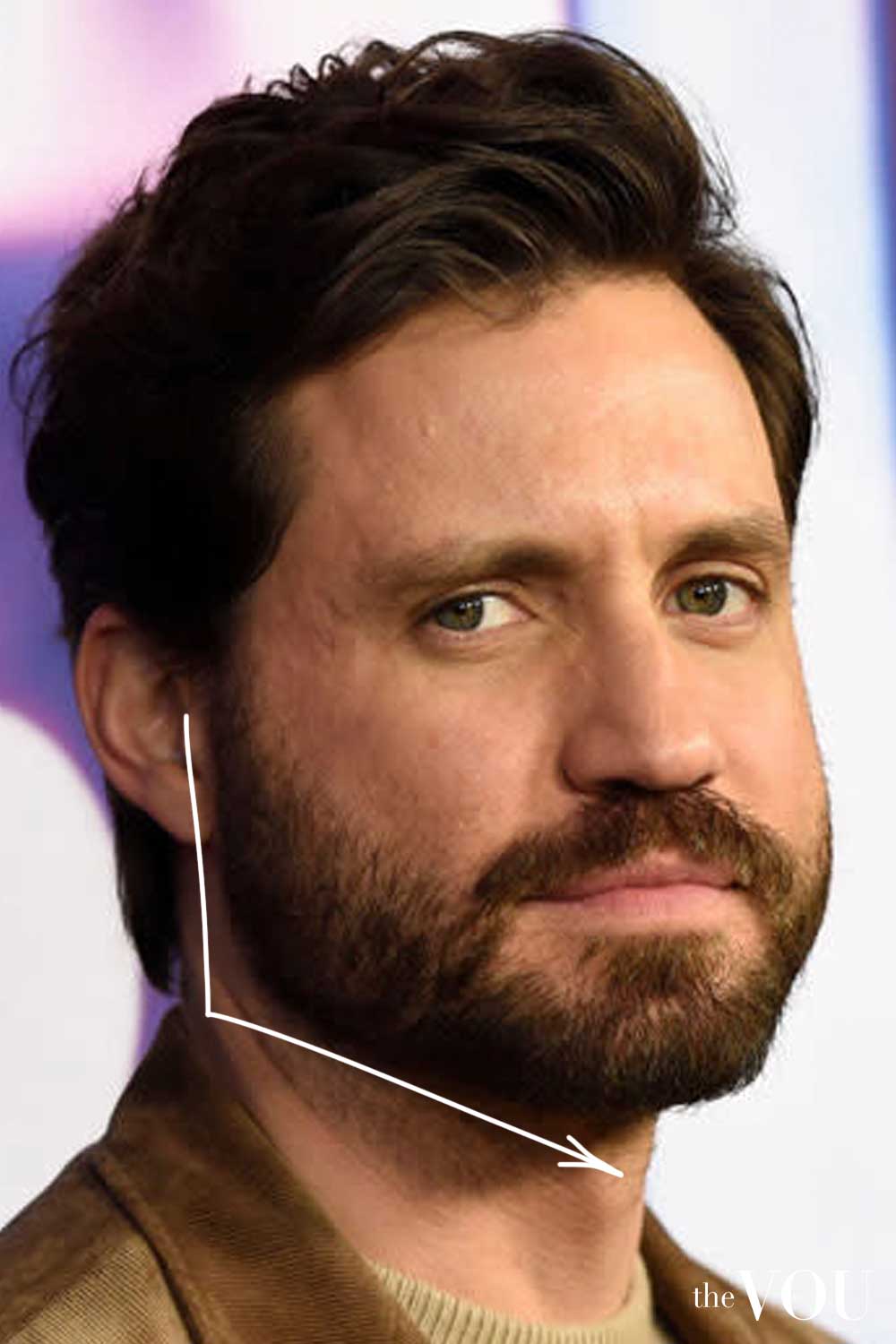
Why it works. An even, short length covers the jaw without building width there, and the clean outline gives definition without bulk.
If you want the jaw corners to look softer, ask for them rounded rather than squared.
Ask your barber, “Short boxed beard, the same short length all over, clean up the cheek line and neckline, and keep the sides from bulking out.”
Maintenance. An even length shows uneven regrowth quickly, so it needs a home trim every few days to a week, depending on how fast your beard grows, with the outline cleaned as often.
Three-Day Stubble
Three-day stubble is the usual name for a short, even shadow of growth; it describes a look, not a fixed number of days or millimetres, because beards grow at different speeds.
In the example photograph (Matt Bomer), the stubble is short and even across the cheeks, jaw and chin.
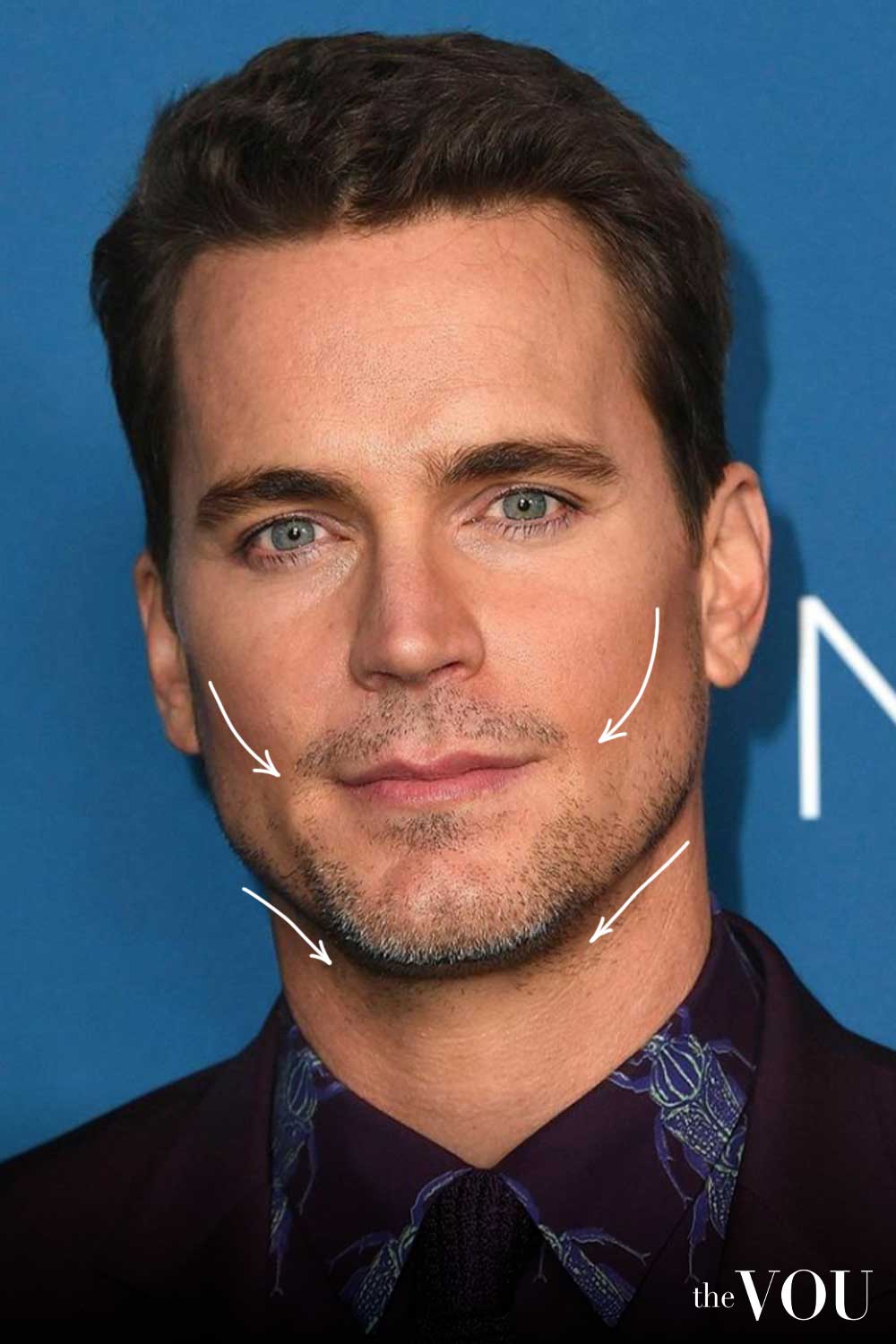
Why it works. Stubble adds texture without adding width at the jaw, and it keeps the jawline visible if you like it.
To set your trimmer, start on a longer guard than you expect and go down one setting at a time until it looks like the shadow you want; tidy the neckline so the stubble does not run down the neck.
Maintenance. Stubble changes within days, so a quick trim every few days keeps the same finish.
Tapered Short Beard
The tapered short beard graduates in length, shortest at the sideburns and building gradually towards the chin.
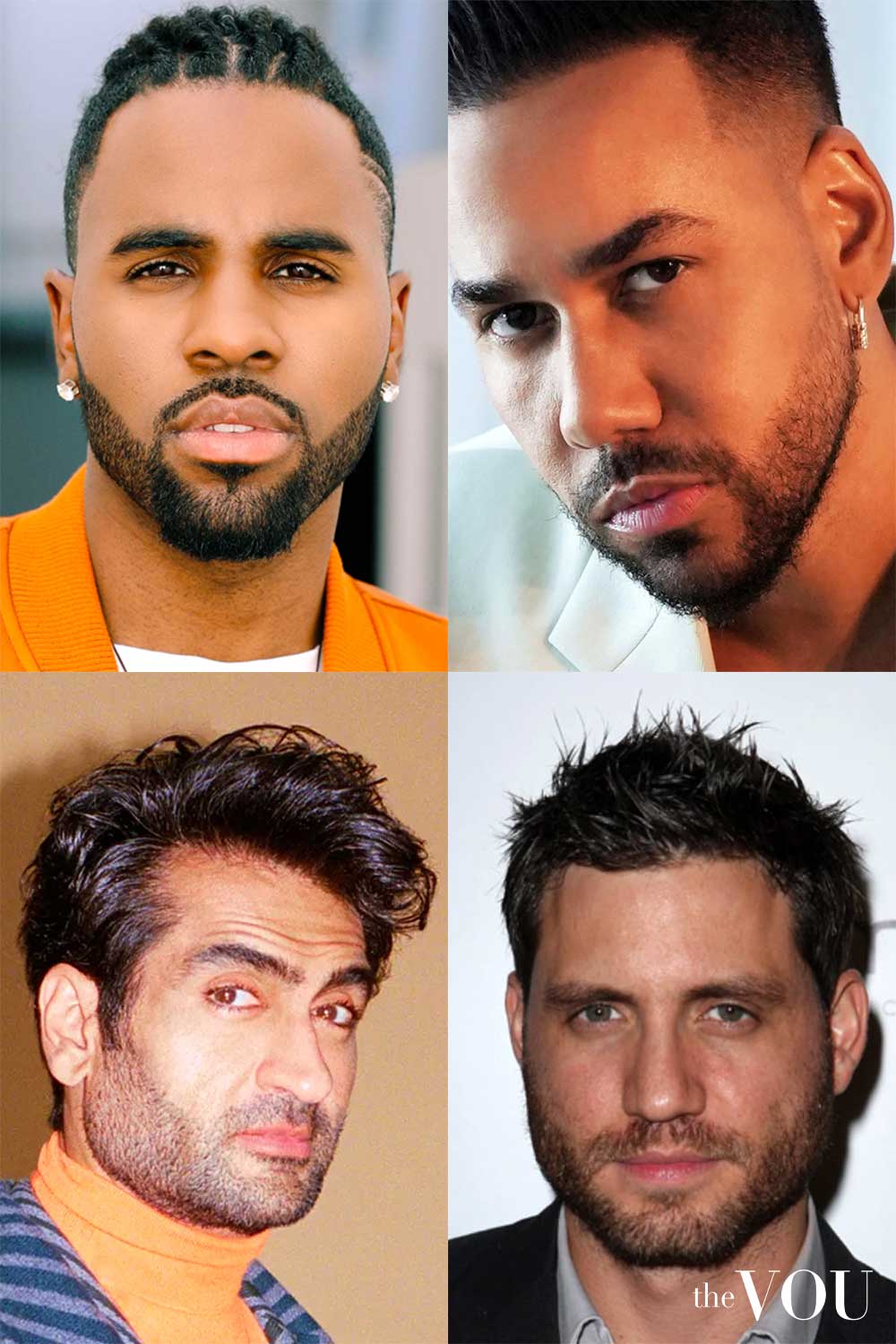
In the example photograph (Romeo Santos), the sides of the beard stay close to the skin and blend into a short haircut, while the chin carries a little more length.
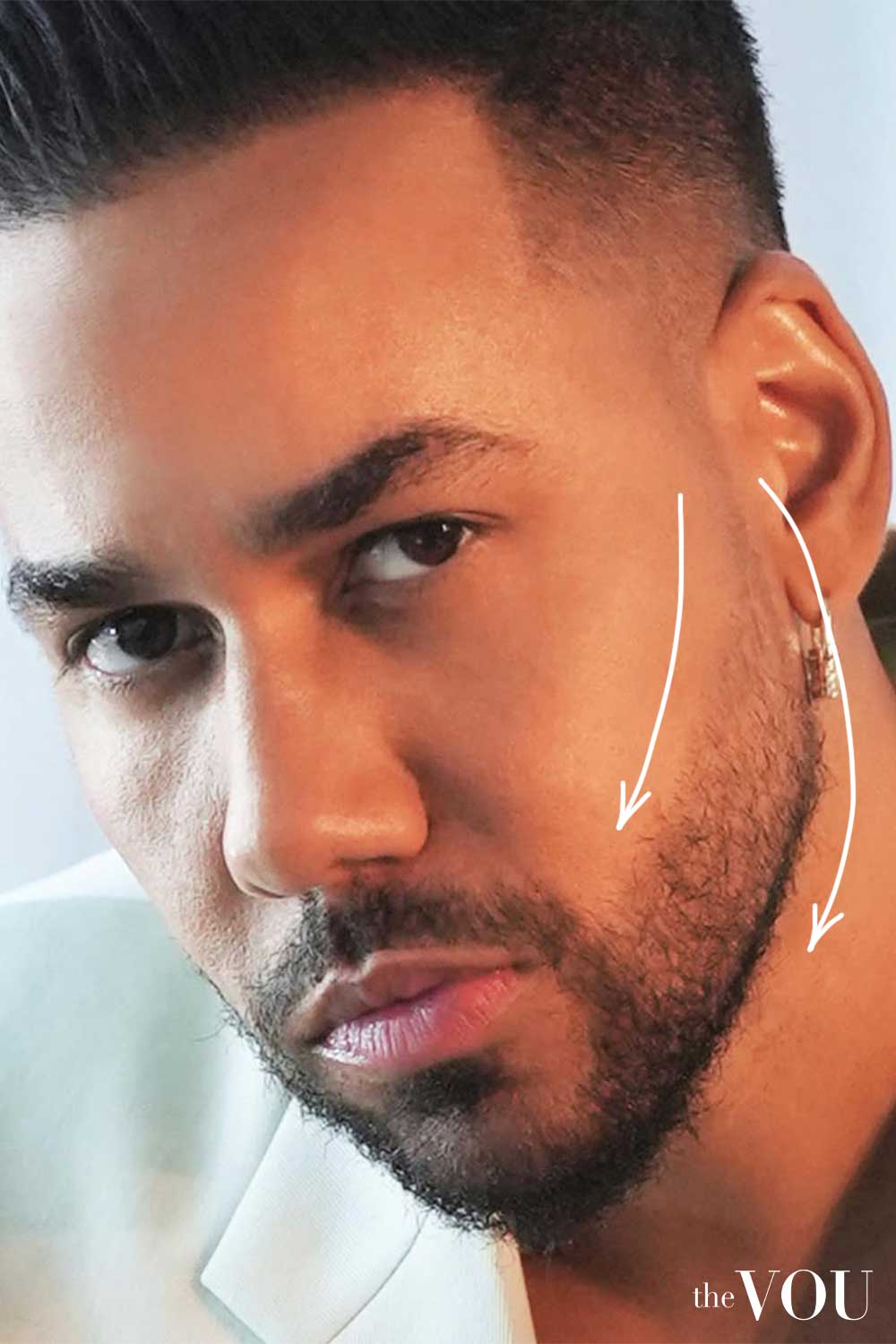
Why it works. Because the sides stay short, the jaw corners do not gain width, and the slightly fuller chin draws the eye towards the centre.
Ask your barber, “Short beard, tapered from the sideburns down, a little more length on the chin, and keep the jaw corners close.”
Maintenance. The graduation is the first detail to lose shape, so a barber visit every few weeks keeps it, with light edging at home in between.
Chin-Focused Growth
Chin-focused growth keeps the most length on the chin and around the mouth, with the beard along the jaw kept much shorter.
In the example photograph (Jason Derulo), the moustache and chin are fuller and the beard along the jaw is kept short.

Why it works. Length at the centre of the chin, with short sides, keeps the visible weight away from the jaw corners and adds a little vertical length.
Keep the chin section narrower than the jaw if that is the effect you want; a chin beard as wide as the jaw adds width instead.
Growth check. This suits a strong chin and moustache with lighter cheeks; if the chin grows thinly, a short, even beard may look more deliberate.
Maintenance. The contrast between the chin and the sides needs regular shaping, often about once a week, to stay clear.
Minimal Line Beard
The minimal line beard is a short beard or heavy stubble with sharply defined edges, meaning a clean cheek line and a clear neckline.
In the example photograph (Kumail Nanjiani), the beard is short with a crisp cheek line.

Why it works. The definition comes from the edges rather than from volume, so the jaw gains a clear outline without extra width.
Ask your barber, “Keep it short and even, set the cheek line close to where my growth naturally stops, and define the neckline.”
Maintenance. Sharp edges show regrowth within days, so the lines need frequent touching up if you want them crisp; letting them soften slightly means less work.
Mixed Features and Uncertain Outlines
If your jaw looks about as wide as your cheekbones and forehead, you may sit closer to the square, rectangle or oblong descriptions; use the guide that matches what you see.
If your hairline is receding or unclear, you can still judge forehead width just above the eyebrows; ignore hair volume when you compare it with the jaw.
If your beard already hides your jaw, plan from the visible outline and leave the underlying jaw shape as unknown.
If you want a fuller, wider jaw, a full beard is a valid choice, and the triangle guide and the beard hub cover fuller routes.
Conclusion
For a jaw that looks broader than the forehead, the main beard decision is how much length to keep along the jaw sides compared with the chin.
Whether you choose stubble or a short beard, let your real growth, texture and the upkeep you want guide the choice, and check the outline in the mirror rather than chasing a fixed length.
Use our face shape quiz as a starting point, and ask your barber to adapt these styles to your growth and features.
Take the First Step With The VOU’s Styling Quizzes
Start your style journey with our resources. First, take our Face Shape Quiz for a starting point on your face shape and initial styling guidance.
Then, check your colours with our Seasonal Colour Analysis Quiz.
Check your body shape with our Body Shape Quiz, and your personal style with our Fashion Style Quiz.
Styling Consultations
Before you go, a note on where this guide fits in a wider styling plan.
Face shape is one input among several. At The VOU, we look at it alongside your colouring, body shape and personal style.
Our Professional Face Shape Analysis package is a paid consultation; its product page lists what it includes.
Our Complete Image Transformation Package combines the face shape, seasonal colour, body shape and fashion style analyses.
If you would like personal help, you can book a paid consultation.
Our styling services for men are paid consultations; the shop page lists what each one includes.