

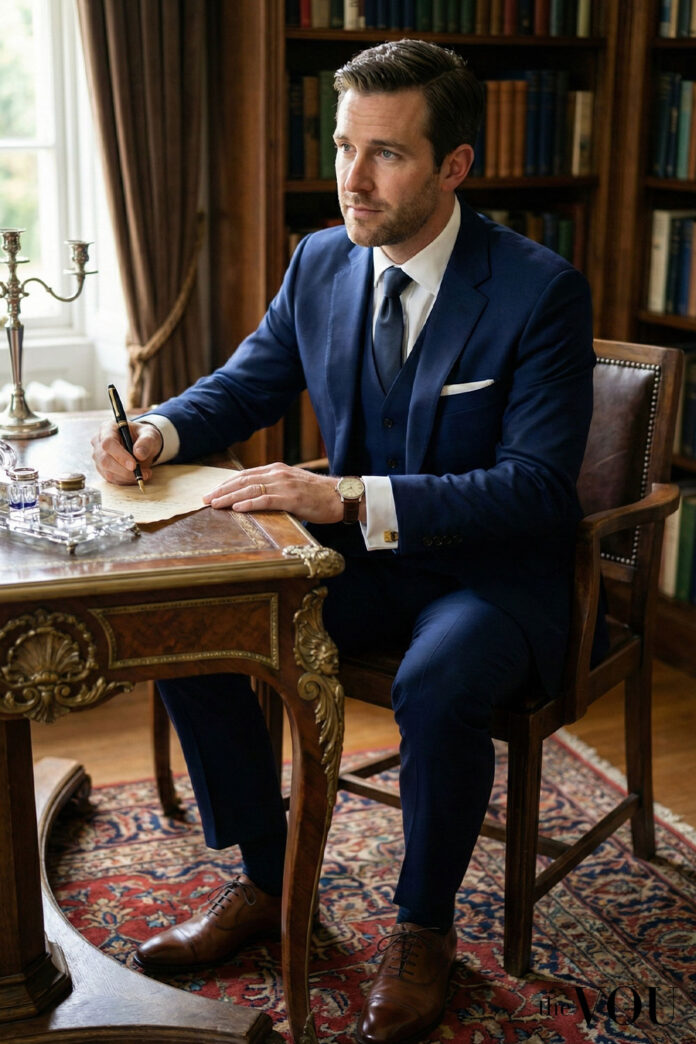
If you’re an author, you must know that nowadays you are no longer characterised solely by your words.
Your Instagram profile picture, author bio, conference attire, or even a Zoom appearance all add to how other people perceive you.
This is where personal style meets the page. When your personal choices are in line with your writing voice, you develop an integrated and real personal brand that can be noticed.
It is not about vanity or trends to match the writing identity with your fashion style. It’s about creative self-expression, clarity, and consistency.
When done intentionally, your visual presence reinforces your message, making your creative identity more memorable both online and offline.
Think of it as curating your aesthetic narrative—much like how stylists create cohesive looks for editorials, you’re crafting a visual story that complements your literary voice.
Realising Who You Are as a Writer
Your writing self must be known before you look at your wardrobe. Just as fashion designers begin with a mood board and concept, understanding your creative identity is the foundation upon which your style aesthetic is built.
There are a number of factors that will help you form your identity as a writer:
- Subjects that you write about (culture, business, fiction, academia, lifestyle, etc.)
- Tone/Voice (formal, witty, conversational, edgy/poetic)
- Feelings that you want to engender (comfort, excitement, rebellion, nostalgia, authority)
- Shared values (authenticity, innovativeness, tradition, creativity) you communicate
Ask yourself:
Assuming my writing were a person, what would it wear?
What are the words used to characterise my voice?
Who will be my audience, and what emotions would I like them to experience when they read my work?
As an illustration, the author who writes funny pop-culture articles usually has a lighthearted, active voice.
The given personality can automatically be represented in bold colours, bold accessories, or surprising combinations—perhaps channelling the playful energy of Iris Apfel or the eclectic street style of Tokyo’s Harajuku district.
Conversely, a writer of academic or analytical write-ups might be most comfortable in traditional, rigid and modest attires, drawing inspiration from the clean lines of Scandinavian minimalism or the refined tailoring of Jil Sander’s aesthetic, which aligns with mastering the preppy look.
Clarity here is essential. The fashion style you have must enhance rather than refute your written voice.
Your wardrobe should function as a visual extension of your manuscript—each piece carefully selected to reinforce your narrative.
Translating Writing Themes Into Fashion
Once you understand your writing identity, the next step is turning abstract qualities into visual cues.
Figuring out how to write with confidence can be just as challenging as choosing the right personal style, especially when you are still developing your voice.
Both processes require focus and clarity, because without them, your message—visual or written—can feel scattered or inconsistent.
When deadlines and creative pressure build up, staying aligned with your identity becomes more difficult.
Turning to do my homework for me can reduce mental strain and create space to refine both your writing and self-presentation. Over time, clarity grows from making intentional choices and protecting your creative energy.
Tone Matching
The kind of clothing you wear should be informed by your tone of writing, much like how fashion houses develop signature aesthetics that define their brand identity.
Imaginative and experimental writing goes hand in hand with mixed textures, layered effects, distinct patterns, and atypical accessories.
Think of the avant-garde collections of Comme des Garçons or the deconstructed silhouettes of Maison Margiela—fashion that challenges conventions whilst remaining deeply intentional.
Clean lines, neutral colours, and simple silhouettes are compressed with the minimalist or straightforward writing.
Channel the understated elegance of The Row, the monochromatic palettes of COS, or the timeless sophistication of a crisp white shirt and well-tailored trousers.
Witty writing can be represented in the colours of brightness, curious details, or statement items.
Consider the whimsical prints of Mary Katrantzou, the unexpected colour combinations of Missoni, or the cheeky accessories that add personality to an otherwise simple ensemble.
Authoritative or formal writing is more professional with a smooth modification and a vintage structure. Draw from the power dressing era of the 1980s, the sharp tailoring of Armani, or the classic elegance of Chanel’s tweed suits.
The goal is harmony. The transition should be natural when one is reading your work, and then they see you—like the seamless flow of a well-styled outfit where each element complements the next.
Thematic Elements
There are numerous authors who deal with motifs. These may turn into strong fashion signals, creating a visual language that speaks before you do.
- Nostalgia or history – vintage, retro-inspired fashion. Embrace the romance of vintage Dior silhouettes, the mod aesthetic of the 1960s, or the grunge revival of 90s fashion. Scour charity shops for authentic pieces or invest in contemporary brands like Polo Ralph Lauren that reinterpret vintage codes.
- Innovation or futurism – contemporary edits, technologically inspired fabrics, smooth design. Look to the sculptural forms of Hussein Chalayan, the technical fabrics of Acronym, or the futuristic minimalism of brands like Cos×Andam and A-COLD-WALL*.
- Rebellion or counter-culture – leather, asymmetry, distressed fabric. Channel the punk ethos of Vivienne Westwood, the rock-and-roll aesthetic of Saint Laurent, or the subversive romanticism of Alexander McQueen’s earlier collections.
- Comfort or wellness – soft fabrics, loose fittings, natural colours. Embrace the slow fashion movement with pieces from Eileen Fisher, the organic cottons and linens of Arket, or how to build a capsule wardrobe that blurs the line between home and street style.
What you wear literally makes your tale a thing to be seen. Your clothing becomes the cover design of your personal brand—the first impression that sets expectations for the story within.
Emotional Resonance
Your attire must be able to elicit the same emotions as your text, creating a multisensory experience of your creative identity.
If your writing is:
- Comforting – knits from Ganni or &Other Stories, velvety materials reminiscent of autumn evenings, warm tones like rust, camel, and burnt orange. Think cashmere jumpers, soft corduroy, and textures that invite touch.
- Bold – blunt shapes from Jacquemus, negligent collections that exude confidence, gloomy contrasts in black and white. Incorporate architectural shoulders, statement proportions, and the kind of pieces that enhance professional image without trying.
- Classy – soft clothes in luxe fabrics like silk and satin, exquisite accessories from heritage brands, the understated elegance of a Hermès scarf or delicate gold jewellery. Prioritise quality over quantity and timeless pieces from old money brands over trends.
- Quirky – playful designs from brands like Lazy Oaf or Molly Goddard, odd combinations that show personality, the kind of outfit that makes people smile. Mix prints, play with proportion, and don’t be afraid to clash patterns intentionally.
This emotional alignment strengthens your personal branding because people subconsciously associate how you look with how your work makes them feel.
It’s the fashion equivalent of a literary motif—recurring elements that create deeper meaning.
Practical Steps to Align Fashion and Writing
To make the turning theory into action does not need an entirely new wardrobe. Minor, deliberate decisions can do a lot.
Start by auditing your current wardrobe with the same critical eye you’d apply to editing a manuscript—what stays, what goes, and what needs refinement?
Create a Mood Board
A mood board helps you visualise your ideal creative identity, functioning as your personal style bible.
Gather pictures of clothing, materials, colours and accessories from fashion magazines, Pinterest, Instagram saves, and runway archives.
Insert samples or accounts of your writing style alongside fashion references. Include textures, colour palettes, and even fashion editorial layouts that resonate with your creative vision.
Search for the repetition of the themes, tones, and aesthetics. Do certain silhouettes keep appearing? Are you drawn to particular colour stories or styling techniques?
Once your writing samples and fashion photographs become one in terms of mood and feeling, you are headed in the right direction.
This visual cohesion is what fashion editors achieve when styling a shoot—every element working towards a unified vision.
Identify Signature Pieces
Repeat elements are signature pieces, which become associated with you—your personal style signature, if you will.
Think of how Karl Lagerfeld was never seen without his signature white collar, dark glasses, and fingerless gloves, or how Iris Apfel’s oversized spectacles became synonymous with her name.
Examples include:
- A tailored blazer—perhaps in an unexpected colour or with unique buttons
- Statement glasses—oversized frames or distinctive shapes that become your trademark
- A leather jacket—vintage biker, sleek contemporary, or embellished
- Distinctive shoes—bold colours, interesting textures, or signature styles like always wearing brogues or Stan Smiths
- A specific colour palette—perhaps you’re always in earth tones, or you favour a monochrome scheme with pops of red
They must be as personal to your writing as possible and must be capable of fitting in various contexts, as in your profile picture, events, or social networks.
These are your wardrobe’s equivalent of a recurring character—familiar, reliable, and distinctly yours.
Look at the Congruence, but Not the Perfection
Uniformity is better than being trendy. You do not have to wear the same things on a daily basis, but the clothes you wear should be like a different version of the same story.
This consistency strengthens your creative identity and helps your audience recognise you instantly.
Fashion is cyclical, trends are fleeting, but style is eternal. Rather than chasing what’s currently on the catwalks, focus on building a capsule wardrobe of pieces that authentically represent your creative identity.
Think of it as developing your signature style—much like developing your writing voice, it takes time, experimentation, and self-awareness.
Adapt to the Situation and Not to Yourself
Your style must be adaptable to various circumstances, such as book signings, conferences, interviews, and at the same time, must be authenticated. Imagine it is like applying a volume to it, but not the song.
For formal literary events, you might reach for your tailored pieces—a well-cut blazer, structured trousers, perhaps a silk blouse.
For casual book shop readings, the same aesthetic can be dialled down with softer fabrics and relaxed silhouettes.
The colour palette remains consistent, the overall vibe unchanged, but the formality adjusts to suit the occasion.
This is the art of building a versatile wardrobe—much like a writer’s ability to adjust tone for different audiences whilst maintaining their distinctive voice.
Writing Style and Fashion Style Examples
| Writing Style | Fashion Style Suggestion | Example Outfit Element |
|---|---|---|
| Witty, playful | Bold, colourful, quirky—think Moschino’s playful aesthetics or Lazy Oaf’s irreverent designs | Statement trainers from Veja or Converse customised, bright scarf from Liberty London, novelty brooches, clashing prints |
| Serious, academic | Classic, minimalist—inspired by Phoebe Philo’s Céline or Margaret Howell’s understated elegance | Blazer in navy or charcoal, neutral palette of beige and grey, Oxford shoes, simple leather tote |
| Edgy, rebellious | Leather, asymmetrical cuts—drawing from Yohji Yamamoto or Rick Owens’ dark romanticism | Leather jacket (vintage or All Saints), ripped jeans, chunky boots from Dr. Martens, statement jewellery |
| Nostalgic, vintage | Retro, vintage-inspired—channelling the romance of vintage Ossie Clark or Laura Ashley florals | High-waisted trousers in tweed or corduroy, vintage band tee, Mary Jane shoes, carpet bag or vintage Gucci |
Use this table as inspiration, not a rulebook. Personal style should always feel lived-in, not forced.
The best-dressed people aren’t those who follow fashion rules religiously, but those who understand which rules to break and when.
Why This Alignment Strengthens Personal Branding
Having a style that aligns with your writing character produces a smooth experience to the reader or the audience.
In an age where authors are increasingly visible—on social media, at literary festivals, in author photographs—your visual presentation is part of your professional toolkit.
This alignment:
- Earns credibility and authenticity—when your appearance matches your writing, it signals self-awareness and intentionality
- Makes your brand more memorable—think of how easily we recall authors with distinctive styles, from Zadie Smith’s head wraps to Neil Gaiman’s signature black attire
- Increases self-esteem and self-confidence—dressing in alignment with your identity feels empowering, like wearing armour made specifically for you
- Strengthens your overall personal branding strategy—creating a cohesive presence across platforms, from your book covers to your author photos to your public appearances
Cohesion works in a busy creative environment. Readers do not forget authors who seem completely realised—on paper and in life.
Your style becomes part of your story, an additional layer of communication that reinforces your creative message before you’ve spoken a single word.
Final Thoughts
Fashion and writing are both forms of creative self-expression. Their combination in work makes the story more compelling and also richer.
Both are languages—one written, one worn—and when they speak in harmony, they create something more powerful than either could achieve alone.
It is not about fashion or fashion rules when it comes to matching your writing with that fashion statement. It is about knowing yourself as an artist and allowing that to reflect through the work you do.
You can transform your voice, themes, and emotions into a visual selection. When you do this, you develop a personal brand that becomes authentic, deliberate, and uniquely yours.
Remember that developing your style, like developing your writing voice, is an evolution. Allow yourself the freedom to experiment, make mistakes, and refine your aesthetic over time.
Browse fashion archives, study the style of authors you admire, notice which pieces make you feel most like yourself. Your wardrobe is your visual vocabulary—choose your words wisely.
Your creative presence can never be overlooked when the language of your words and your wardrobe is one.
In the end, the most memorable authors are those who understand that storytelling extends beyond the page—it’s in every choice you make, every piece you wear, every impression you leave.
Fashion and writing are not separate pursuits but interconnected expressions of the same creative soul.
A passionate advocate for inclusivity and diversity, Aidan is the driving force behind The VOU as its Editorial Manager. With a unique blend of editorial acumen and project management prowess, Aidan's insightful articles have graced the pages of The Verge, WWD, Forbes, and WTVOX, reflecting his deep interest in the dynamic intersection of styling with grooming for men and beyond.