

Start here
What’s This About:
You can wear the Old Money look on a modest budget by choosing well-fitting, lightly branded classics in quiet colours and buying them slowly.
This guide shows how to build the wardrobe for less, such as:
– Seven principles behind the look, starting with fit
– Twelve wardrobe staples with lower-priced and higher-priced labels to compare
– A three-phase build order starting with seven garments
– How to shop the sales and buy second-hand by measurements
– Six common mistakes and how to avoid them
and many more!
Read it in order the first time, then use it as a shopping checklist.
Key Points:
01Fit matters more than price: buy for the shoulders, then have sleeves and hems altered.
02Cotton, wool, linen and cashmere are typical cloths, but check the weave, seams and fit as well as the label.
03Seven garments are enough to start: a navy blazer, two shirts, chinos, dark jeans, penny loafers and a V-neck.
04The clothes cannot show anyone’s wealth or background, and you do not need either to wear them.
The Old Money look is a contemporary label for classic, lightly branded clothes: tailored jackets, Oxford shirts, chinos, plain knitwear and leather shoes in quiet colours.
Very little of what makes it work depends on price.
Fit, cloth, colour and how carefully you look after your clothes matter more than the label, and many of these garments turn up second-hand or in the sales.
This guide sets out the principles first, then twelve garments with lower-priced and higher-priced labels to look at, then a build order, where to shop, common mistakes and care.
The clothes can look neat and considered, but they cannot show anyone’s wealth, background or manners, and you do not need any particular background to wear them.
If you want the wider look beyond a budget wardrobe, our Old Money style guide covers the history and the clothes in detail, and our guide to the country club aesthetic shows outfits for sport and summer settings.
Start where you are
You own very little that fits this look: start with the seven-garment core in the three-phase build order.
You have clothes but no direction: read the principles to decide what stays and what goes.
You want the shopping list: go to the twelve wardrobe staples.
You tried the look and it felt off: the cause is often one of the six common mistakes.
Seven principles behind the look
Every garment further down this page follows these principles, so read them first and the shopping becomes easier.
The principle that matters most is fit: a modestly priced jacket that fits your shoulders, then altered at the sleeves and waist, usually looks better than an expensive one that does not fit.
1. Well-fitting, logo-free clothing
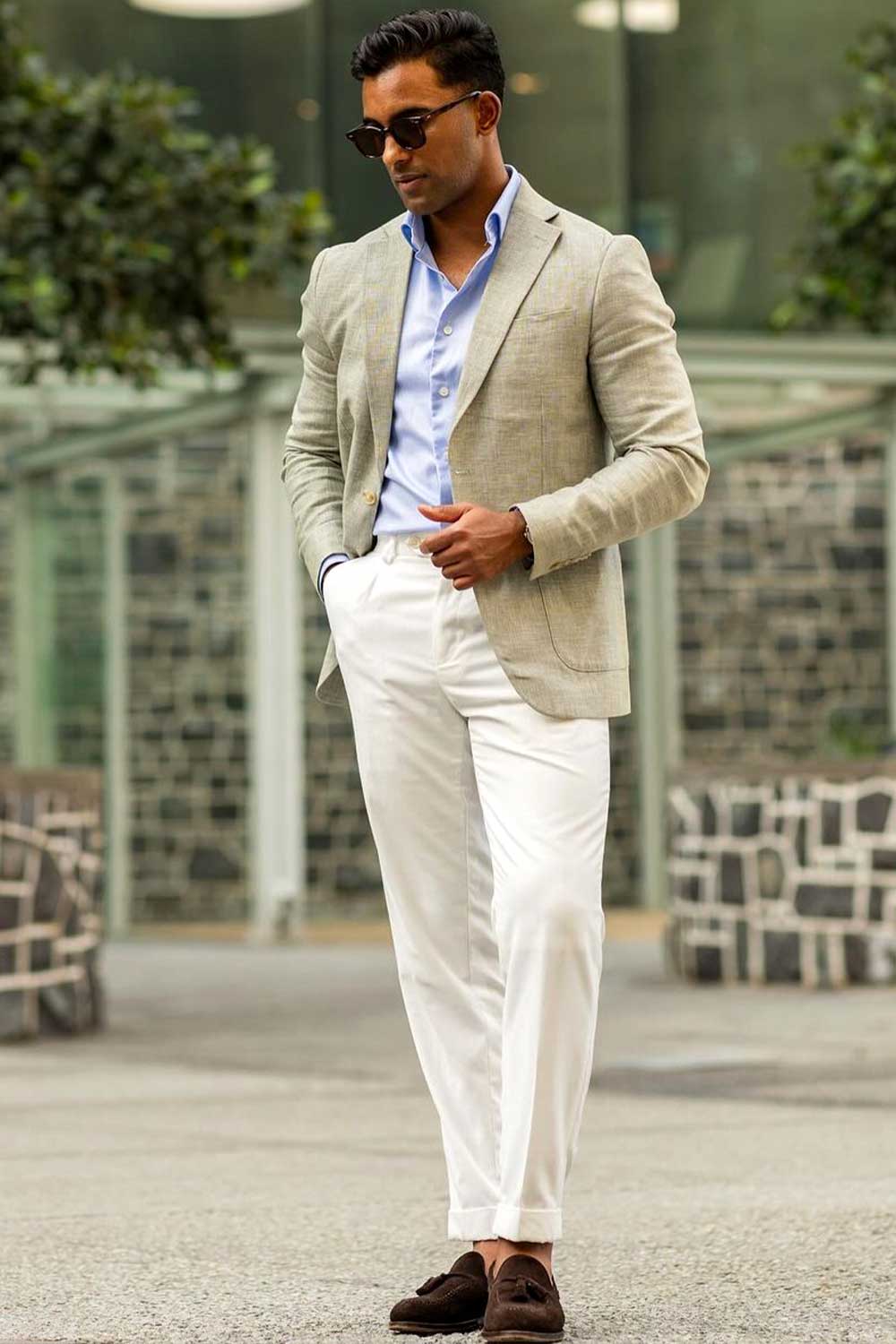
Clothes look sharp when they follow your shape without pulling or hanging loose, whatever they cost.
As a starting check, the jacket shoulder seam should end where your shoulder ends, about a quarter to half an inch (roughly half a centimetre to a centimetre) of shirt cuff should show below the jacket sleeve, and trousers should touch the shoe without pooling over it.
Fit and silhouette are separate choices: you might prefer a closer or a fuller cut, but either one still needs to sit correctly at the shoulders, collar and waist.
Buy for the shoulders first, because tailoring guides such as Gentleman’s Gazette describe reshaping a jacket shoulder as major work that is not worth attempting, while sleeve length, trouser hems, waistbands and trouser tapering are routine alterations.
Alteration prices vary a lot by town and tailor, so ask for a quote before you buy anything that needs work and add that sum to the price of the garment.
Keep branding small or absent: no large chest logos, monograms or slogans, and nothing where the brand name is the design.
2. Fewer garments, chosen carefully
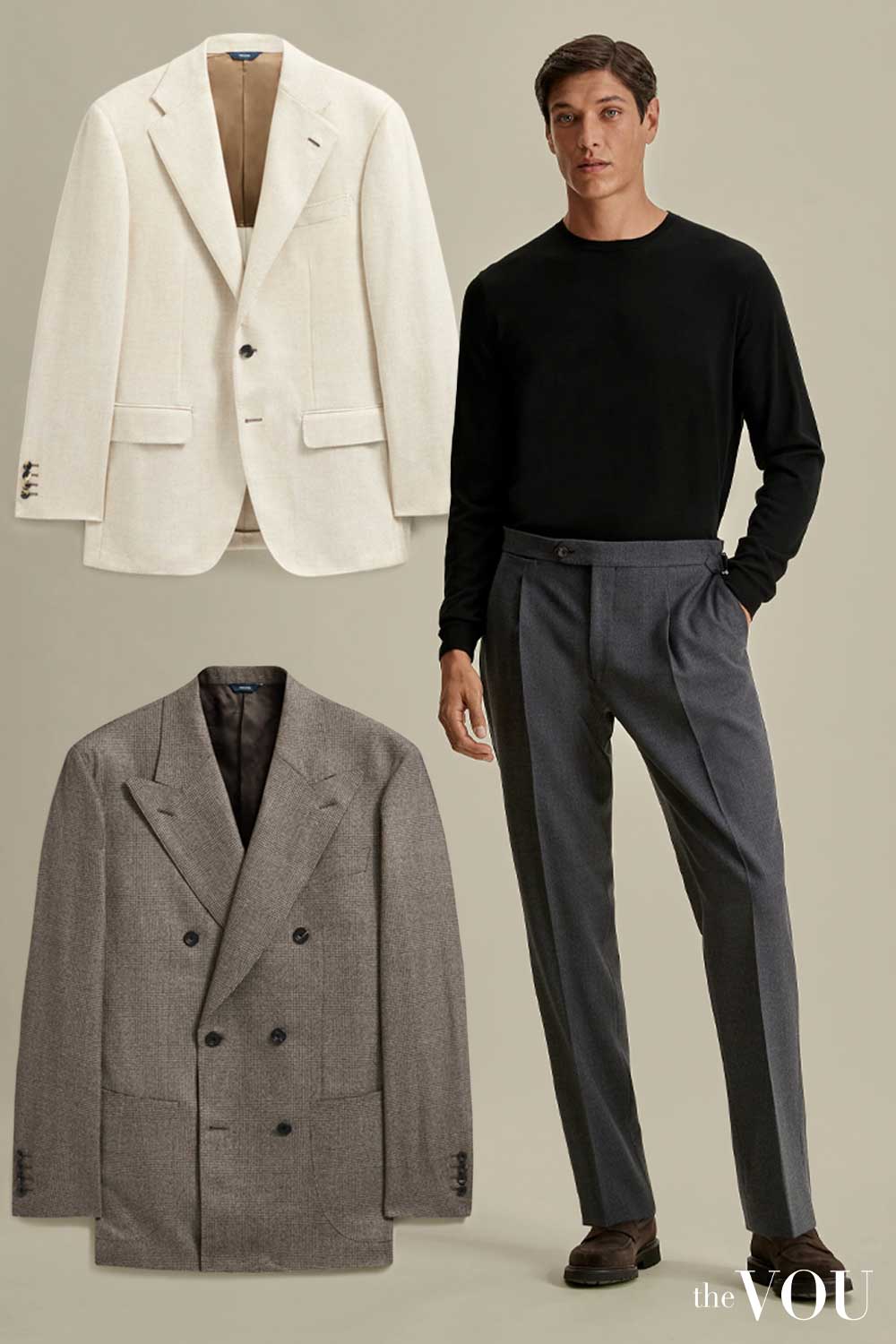
A handful of garments you wear every week will do more for you than a rail of clothes you rarely reach for.
Read the fibre label as well as the price tag.
Cotton, wool, linen and cashmere are the usual choices for this look because of how they drape and breathe, although fibre alone does not guarantee a garment will wear well, so check the weave, the seams and the fit too.
A little elastane in trousers can add comfort, and some wool and polyester blends wear well, so judge the cloth by how it looks and feels rather than by a fixed percentage.
Our guide to building a capsule wardrobe explains how to plan a small set of clothes that work together.
3. Classic shapes and colours
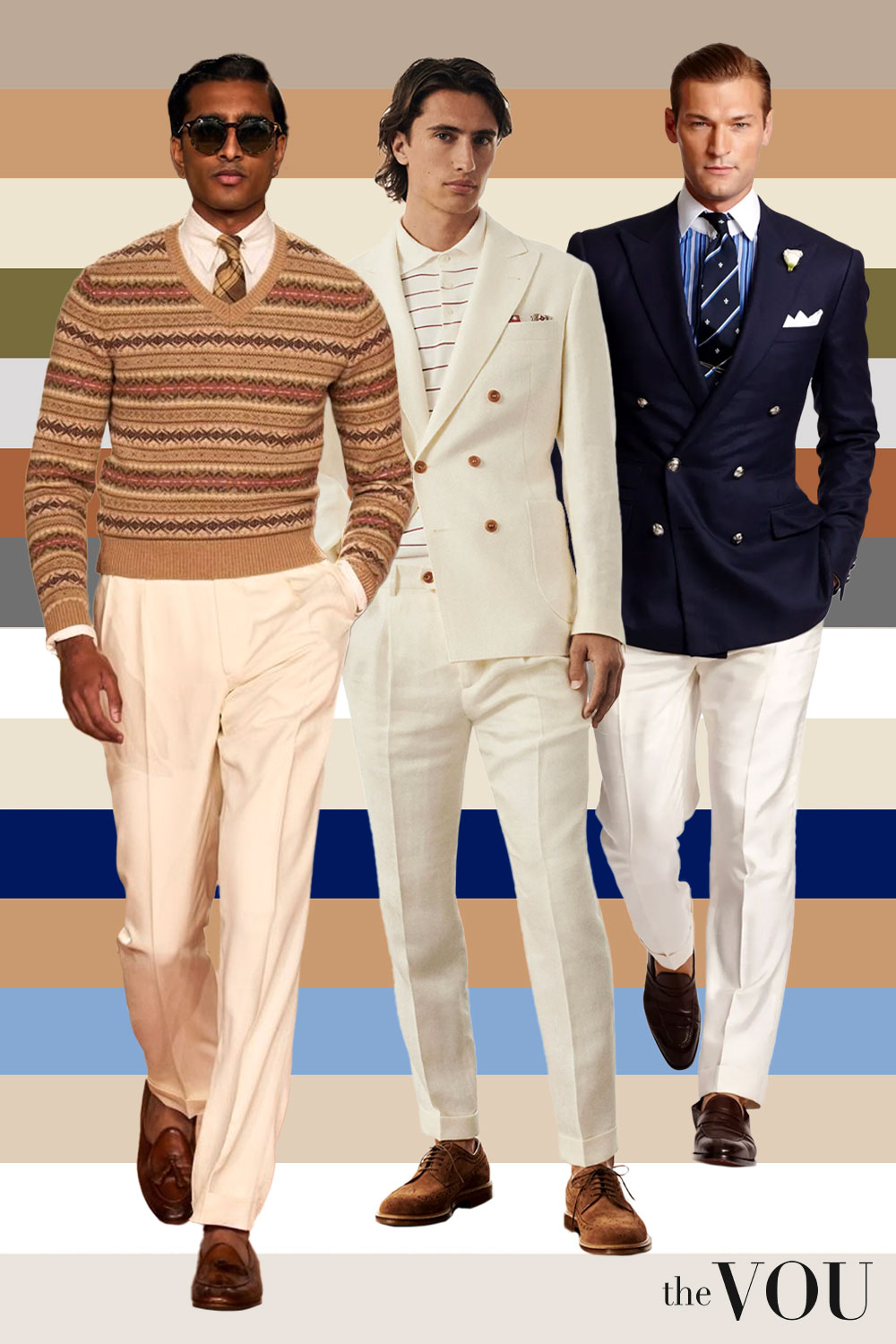
Navy, charcoal, camel, cream, white, stone and hunter green are useful starting colours for this look.
Pale blue and soft pink are two pastel options; keep other colours you enjoy rather than replacing them to follow this list.
A limited palette can make planning easier, but try jackets and trousers together, because the actual shades, patterns, cloth and formality still need to suit the outfit.
Classic cuts help a small wardrobe stretch further: a two-button single-breasted jacket, straight or gently tapered trousers, and a point or button-down collar.
If you are drawn to double-breasted jackets, our double-breasted suit guide explains how they differ.
Our breakdown of Old Money colours shows more shades and combinations.
4. A few restrained accessories

Three accessories cover most outfits: a simple watch on a leather or fabric strap, a leather belt in a similar shade to your shoes, and a knitted or silk tie for occasions that call for one.
A second-hand watch is often good value; if you buy one, ask whether it has been serviced and budget for a service if not.
Sunglasses and a plain white pocket square are optional extras.
Wearing every accessory at once is the quickest way to make the look feel like a costume, so choose two or three.
Our vintage shopping guide explains how to judge second-hand condition before you pay.
5. Grooming
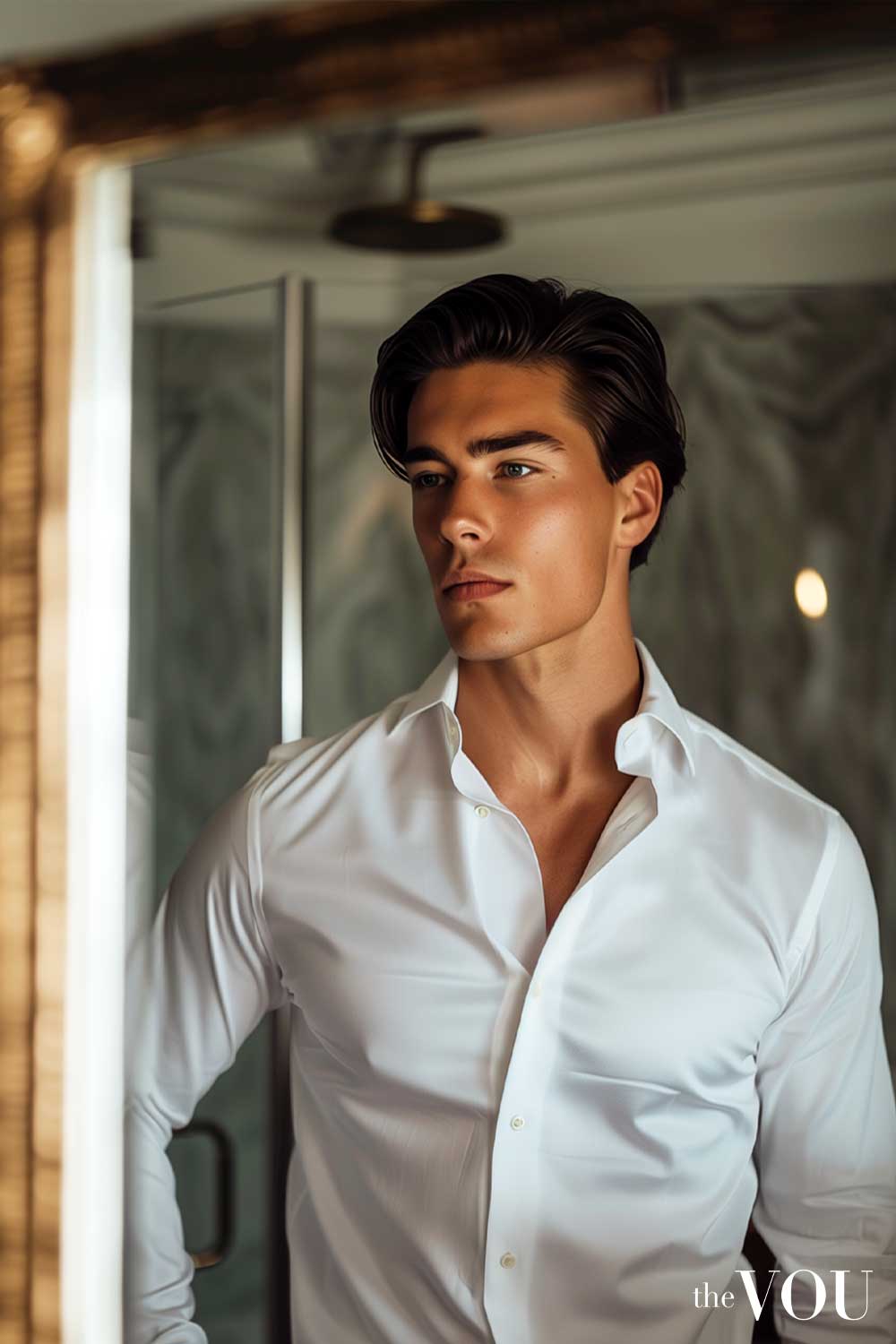
Grooming costs little and makes even simple clothes look cared for.
A haircut that keeps its shape between visits, a beard that is either trimmed or shaved, and clean, short nails go well with this look.
A simple skincare routine is a personal choice; daily sunscreen is widely recommended for skin health rather than for appearance.
Our Old Money hairstyle guide covers haircuts often worn with this look.
6. Sport and country clothes
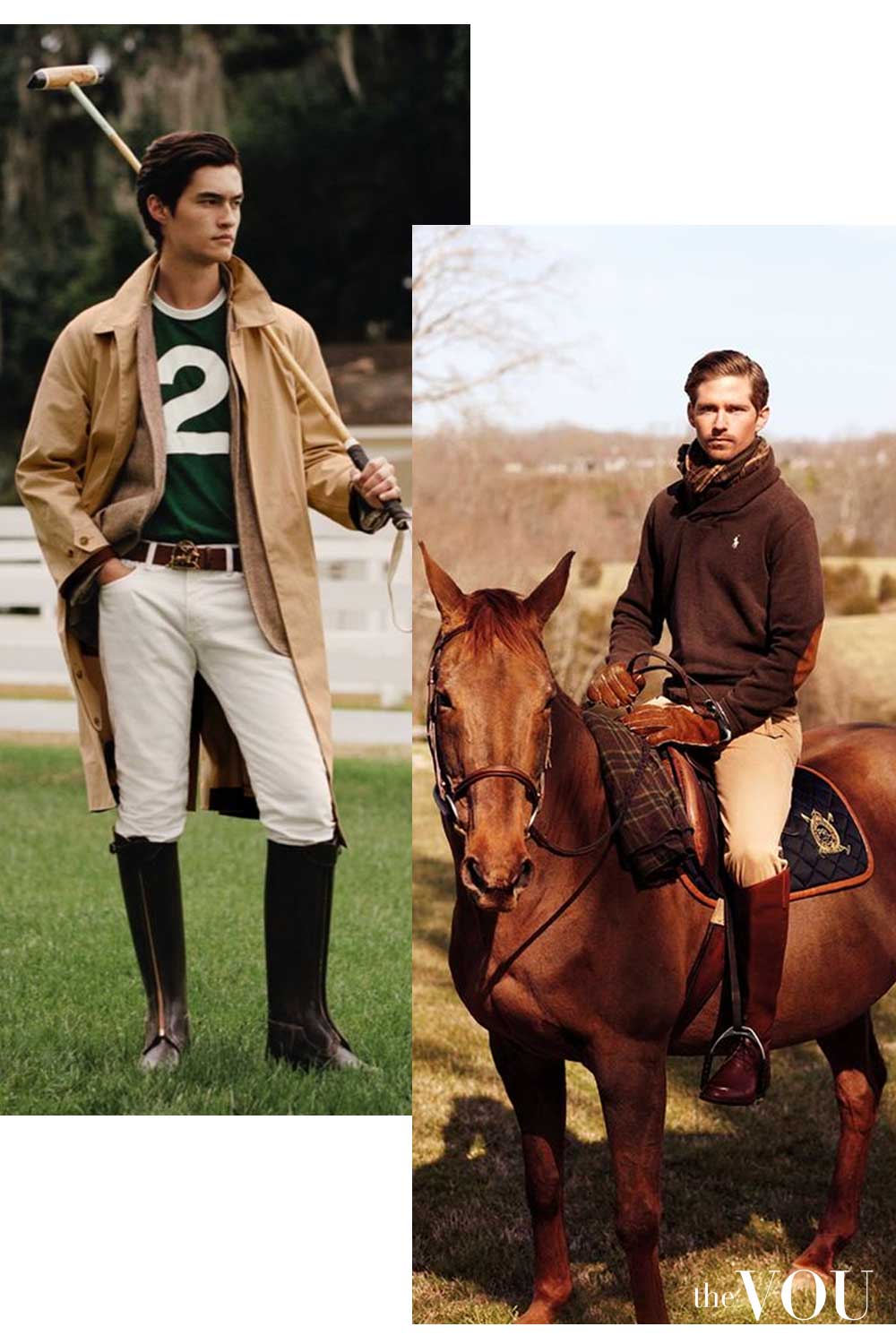
Many Old Money staples come from sport and country clothing: polo shirts from tennis and polo, cable knits from cricket and sailing, and waxed jackets, tweed and riding boots from the countryside.
You do not need to play these sports to wear the clothes, and the clothes say nothing about whether you do.
If a sport interests you, local clubs and public courts are often more accessible than people expect, but take it up because you enjoy it, not to complete an outfit.
7. Wear it comfortably
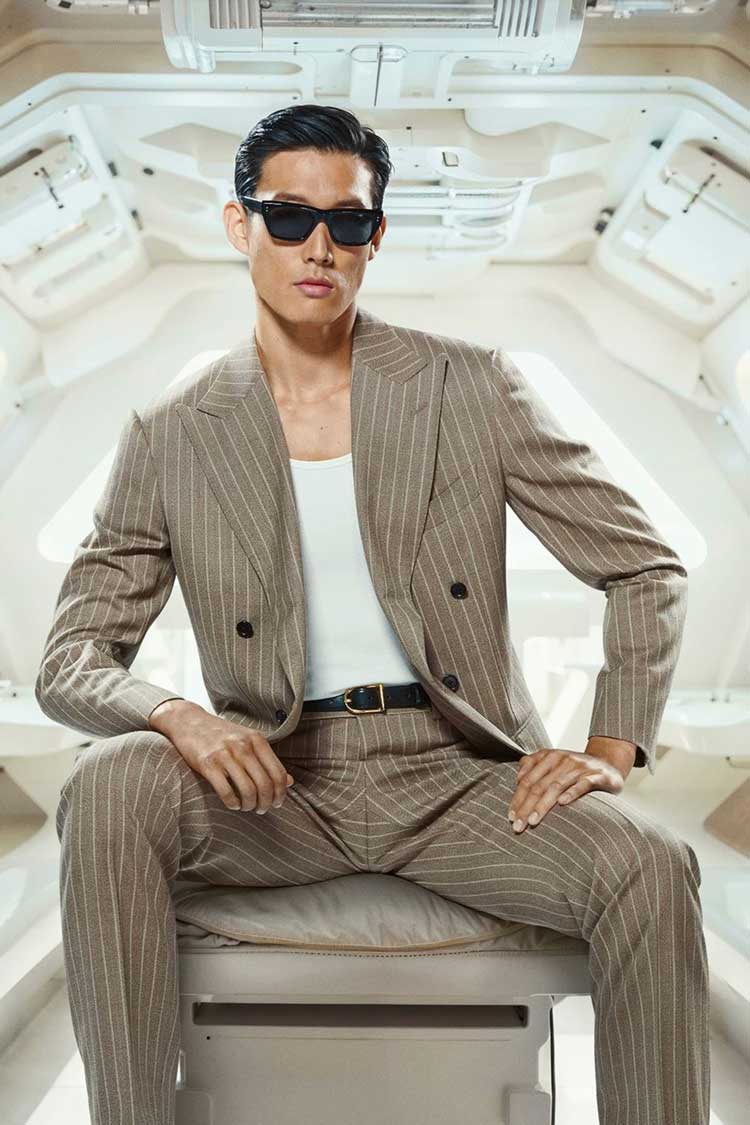
Clothes look more natural when they fit well enough that you stop thinking about them.
Wear new shoes and jackets around the house for a few days before an important occasion so they feel familiar.
The look is about quiet clothes, not about how you behave, and nobody needs to change their manners or opinions to wear a navy blazer and loafers.
Twelve wardrobe staples, with lower-priced and higher-priced labels to look at
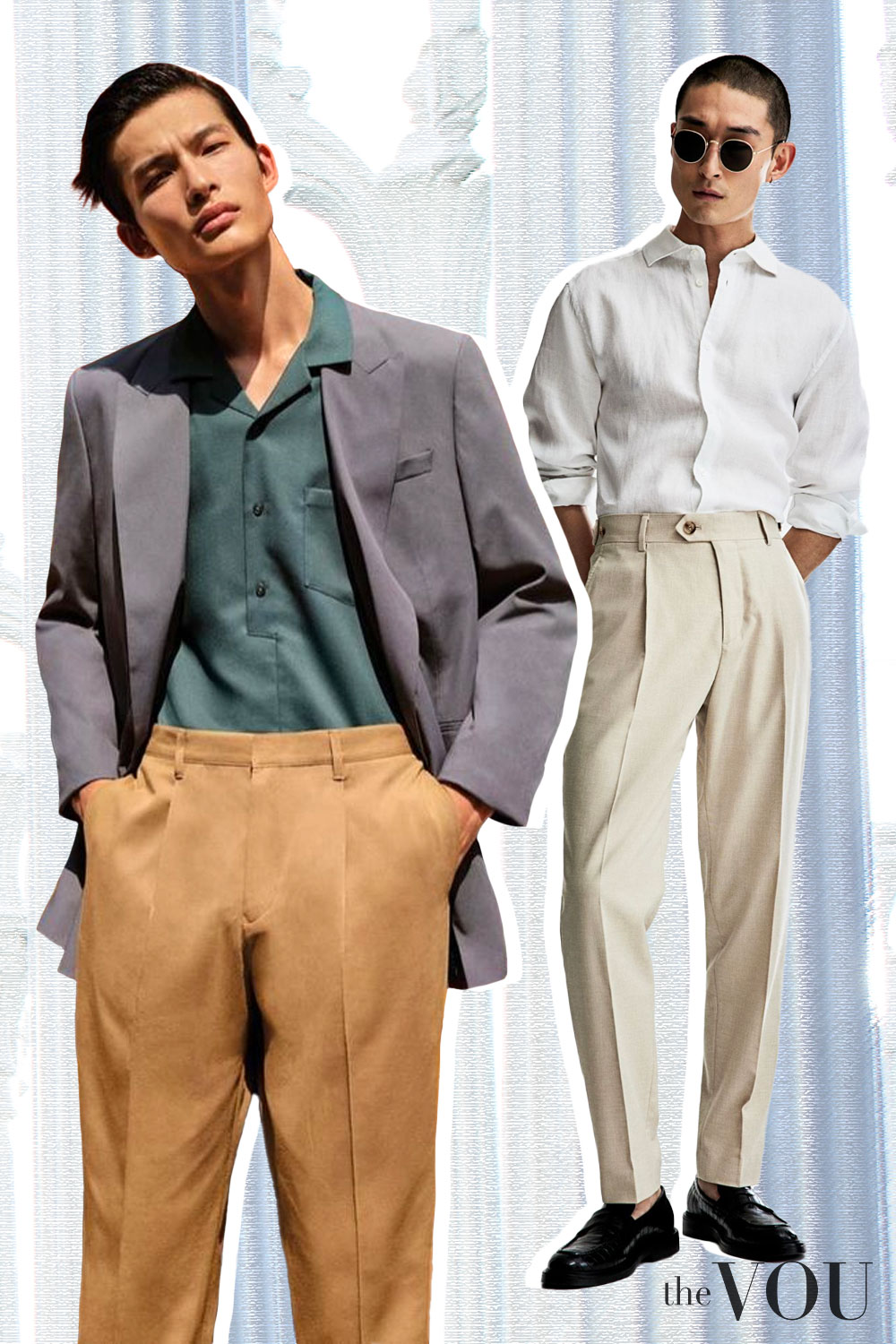
These twelve garments cover work, weekends, weddings and holidays for many men, but start with what you already own and fill the gaps that matter for your own week.
The labels below are examples to compare, not endorsements, and a higher price does not by itself mean better cloth or construction.
Prices change often, so check current listings and compare them with second-hand and sale prices; many retailers hold end-of-season sales in winter and summer.
For a wider brand list at different price levels, see our guide to affordable Old Money clothing brands and our Old Money wardrobe essentials.
1. The single-breasted suit
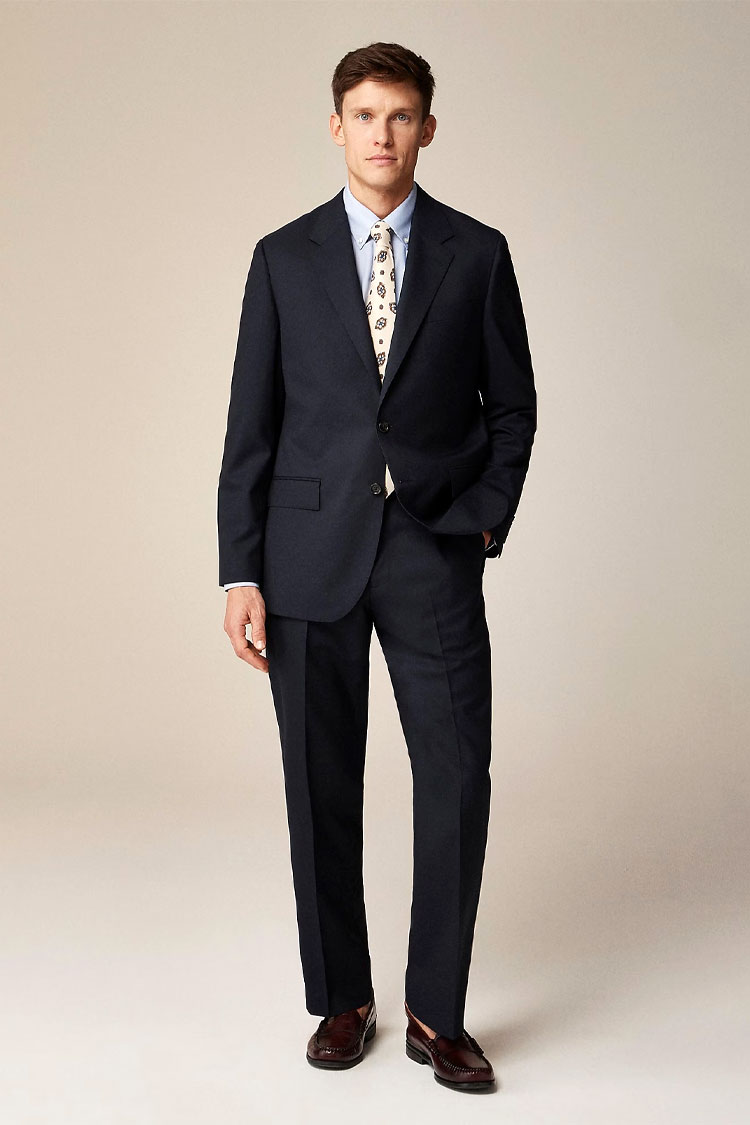
A navy or charcoal two-button single-breasted suit in mid-weight wool works with a tie for formal events and as a separate jacket over chinos.
Navy and charcoal provide dark suit options to compare with different shirts and ties; their usefulness does not depend on a promise that one shade suits everyone.
Buy for the shoulders and the chest, then take it to a tailor for the sleeves, the waist and the trouser hem if needed.
Lower-priced labels to look at: J.Crew Factory and Suitsupply.
Higher-priced labels to look at: Boglioli and Canali; the jacket also works on its own, as our blazer styling guide shows.
2. Classic outerwear
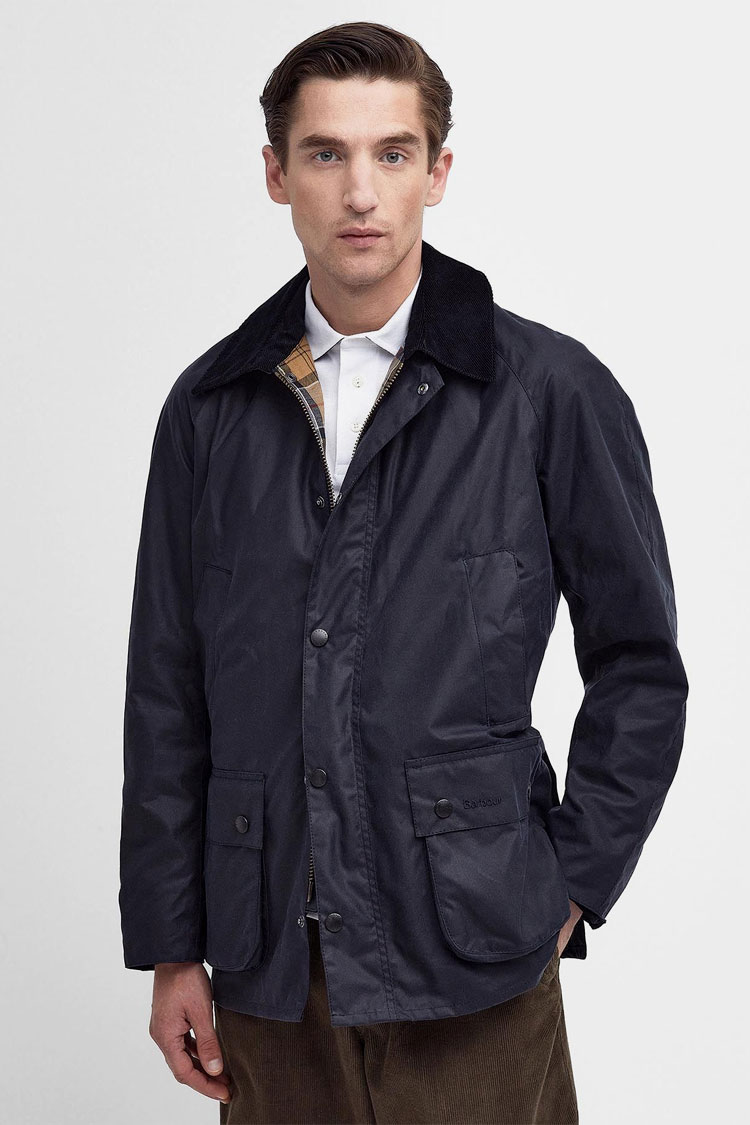
One coat suited to your weather completes the wardrobe.
A waxed cotton jacket suits wet, mild climates, a camel or charcoal wool overcoat suits cold ones, and a stone trench coat covers the seasons in between.
Lower-priced options to look at: a second-hand Barbour that you re-wax yourself, or a Uniqlo wool-blend overcoat.
Higher-priced labels to look at: Grenfell and Aquascutum.
3. Dress shirts in white or pale blue
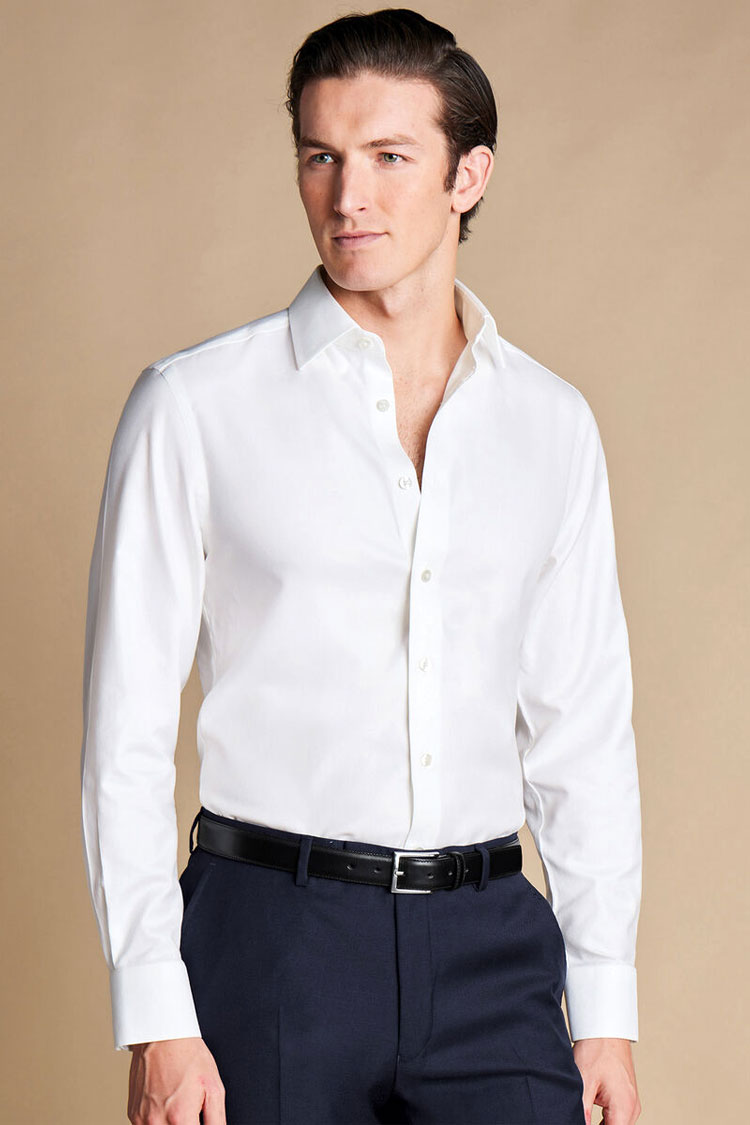
White works with every suit and tie, and pale blue is a softer everyday alternative.
Look for cotton in a poplin or twill weave, and check that the collar keeps its shape under a jacket without feeling stiff.
Lower-priced options to look at: Charles Tyrwhitt or Brooks Brothers multi-buy offers.
Higher-priced labels to look at: Eton and Turnbull & Asser.
4. Button-down shirts in cotton or linen
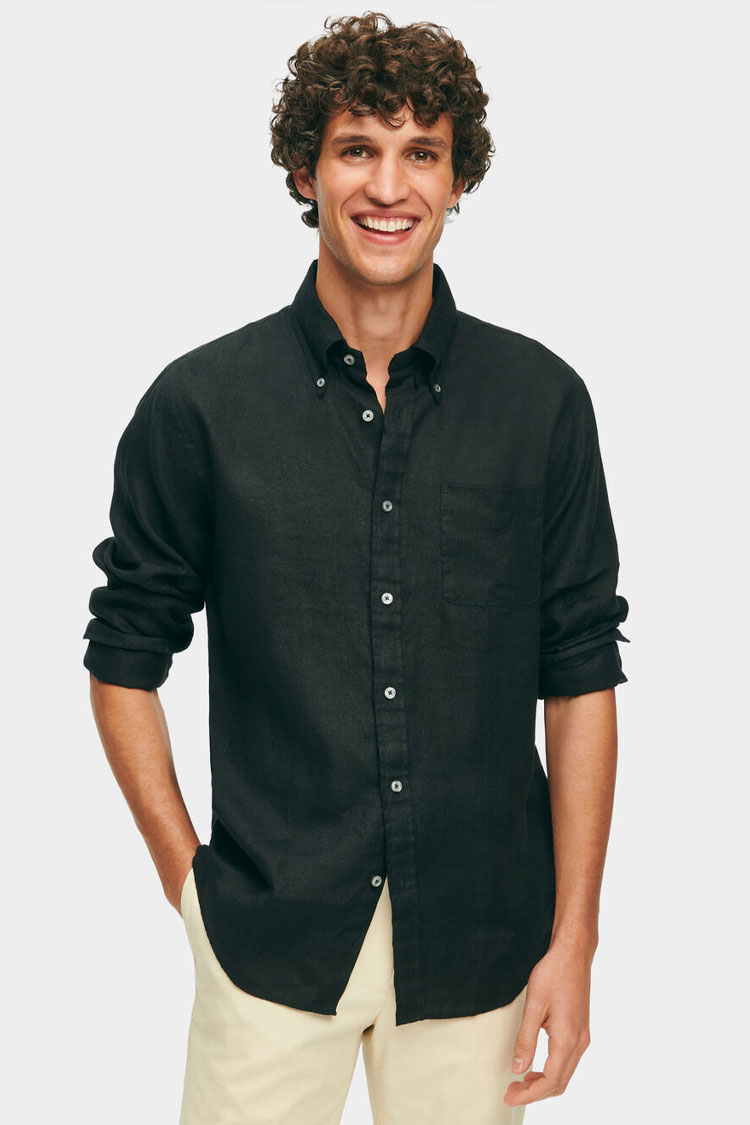
The button-down collar works under a blazer and open at the neck, which makes it one of the most useful shirts in warm weather.
Oxford cotton in white, blue or a soft stripe covers spring and autumn, while linen is cooler in the heat and creases naturally.
Lower-priced labels to look at: J.Crew and Uniqlo.
Higher-priced labels to look at: Brooks Brothers and Drake’s; our Old Money summer clothing brands guide covers warm-weather versions.
5. Polo shirts
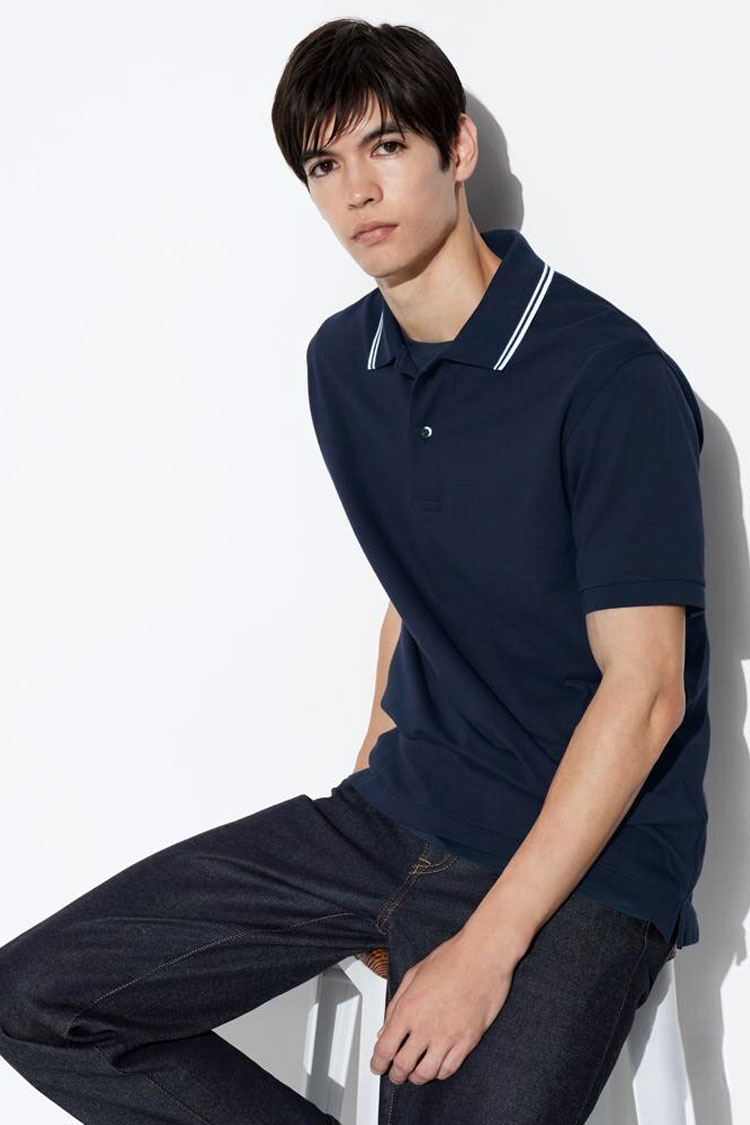
A cotton piqué polo in white, navy or a muted pastel sits between a T-shirt and a shirt in formality.
Look for a collar firm enough to hold its shape and sleeves that end around the middle of the upper arm rather than at the elbow.
Lower-priced label to look at: Uniqlo.
Higher-priced labels to look at: Lacoste and Polo Ralph Lauren, ideally with a small or tonal logo.
6. Crew-neck T-shirts
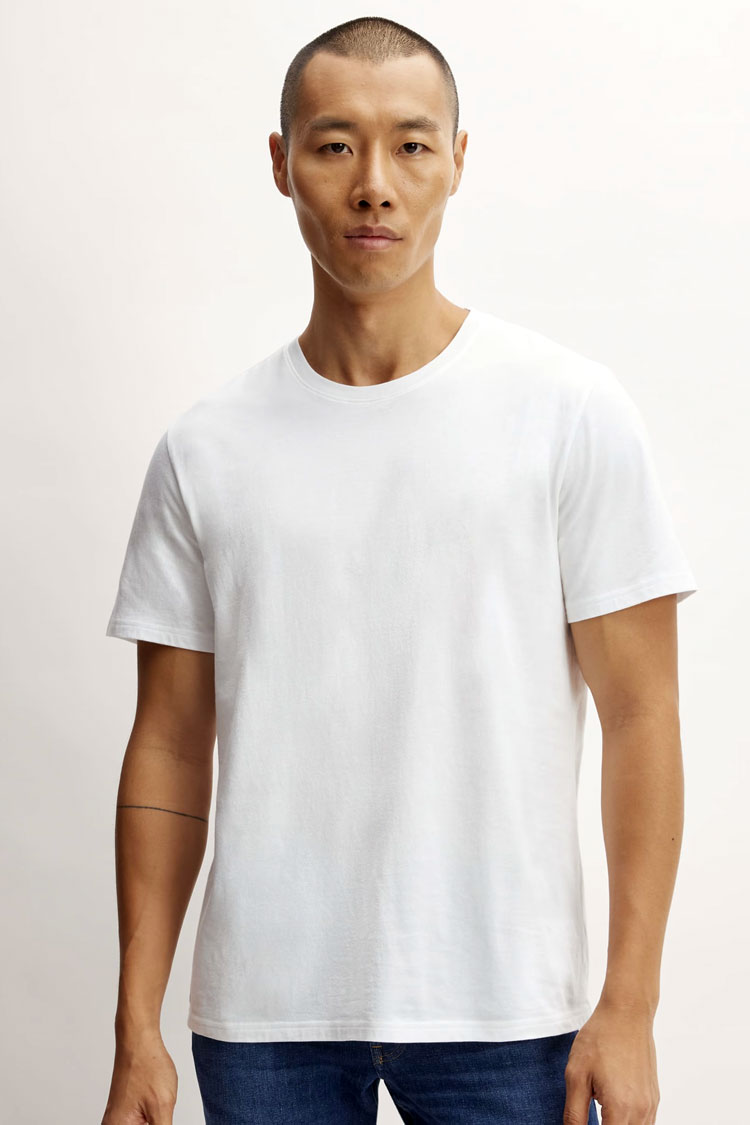
A plain white or navy crew-neck in a heavier cotton works alone in summer and under knitwear the rest of the year.
Heavier jersey tends to hang more smoothly and show less through a shirt; some makers list the weight in grams per square metre (gsm), which helps you compare.
Lower-priced labels to look at: Uniqlo and Everlane.
Higher-priced labels to look at: Sunspel and James Perse.
7. V-neck jumpers
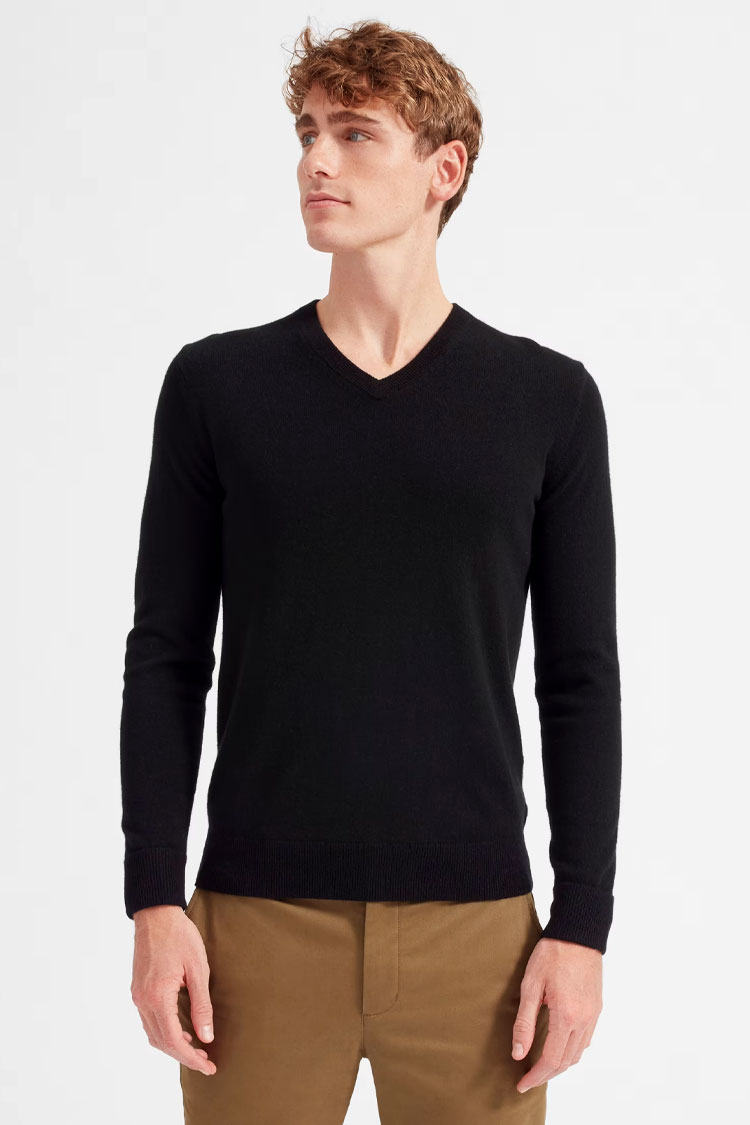
A fine-gauge V-neck in navy, grey or camel layers over a collared shirt without bulk, and the neckline leaves room for a collar and tie.
Merino wool is a practical choice, lambswool is warmer and slightly hairier, and cashmere is softer but needs more care.
Lower-priced labels to look at: Uniqlo merino and Everlane.
Higher-priced labels to look at: John Smedley and Pringle of Scotland.
8. Chinos
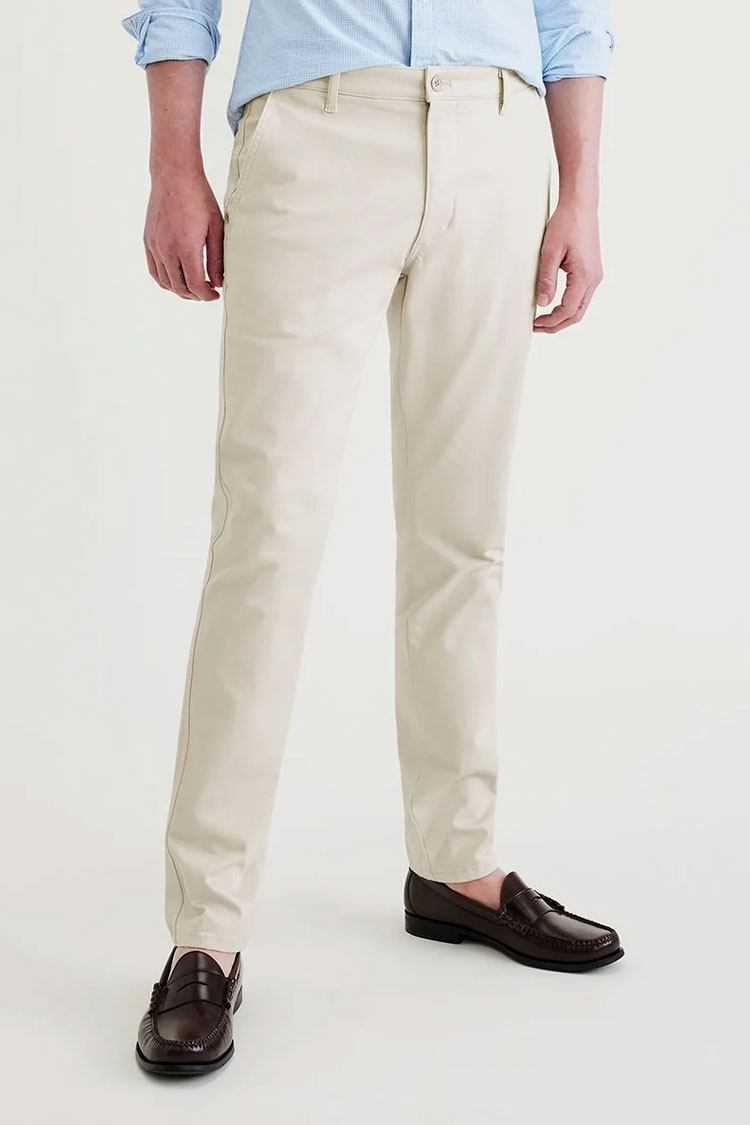
Chinos in khaki, stone or navy are among the most useful trousers here: smart enough under a blazer and easy with a polo.
Choose cotton twill with a straight or gently tapered leg; a little stretch is fine, but very stretchy chinos can lose their shape at the knee.
Lower-priced labels to look at: Dockers and Bonobos.
Higher-priced labels to look at: Incotex and Polo Ralph Lauren; our Old Money casual guide shows how to wear them off duty.
9. Straight-cut jeans in dark denim
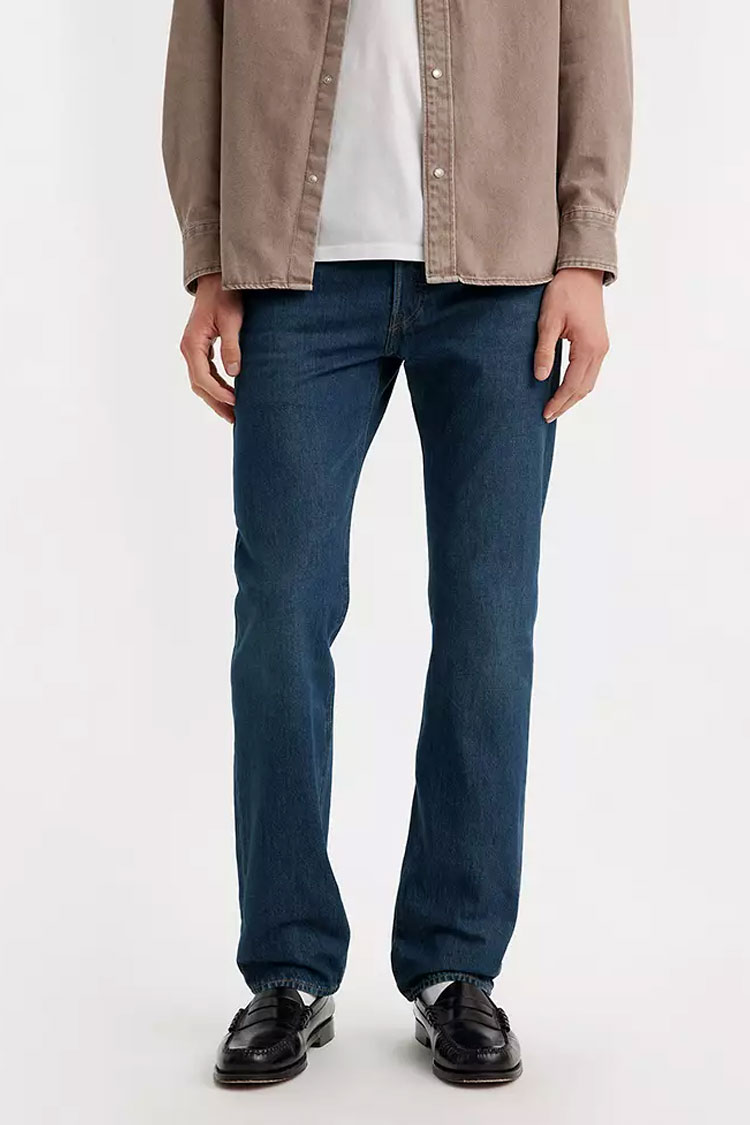
One pair of dark, straight-cut jeans covers most casual occasions in this look.
Plain denim without rips, heavy fading or contrast stitching looks closest to ordinary trousers from a distance.
Lower-priced labels to look at: Levi’s 501 and Lee.
Higher-priced labels to look at: Orslow and Jean Shop.
10. Khaki shorts
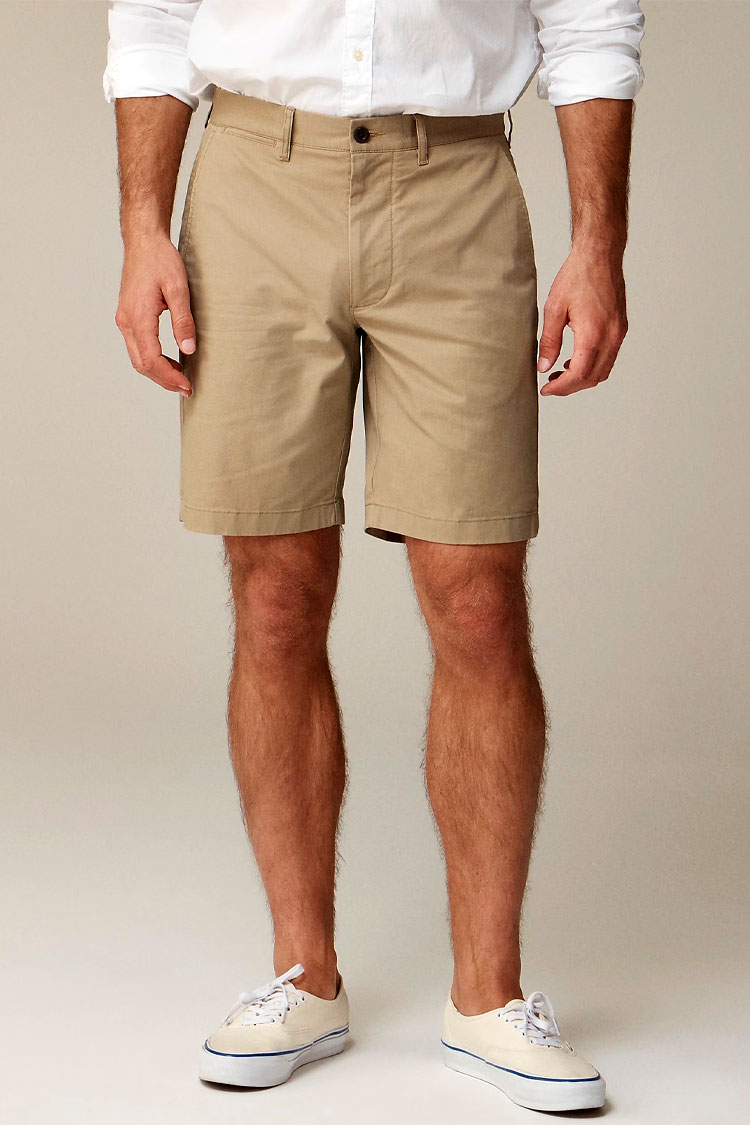
Flat-front cotton or linen shorts in khaki or stone, ending just above the knee, keep summer outfits neat.
Wear them with a polo or a linen button-down and loafers, boat shoes, leather sandals or plain canvas trainers.
Lower-priced labels to look at: J.Crew and Gap.
Higher-priced label to look at: Orlebar Brown; our Preppy style guide covers summer combinations in more detail.
11. Leather dress shoes
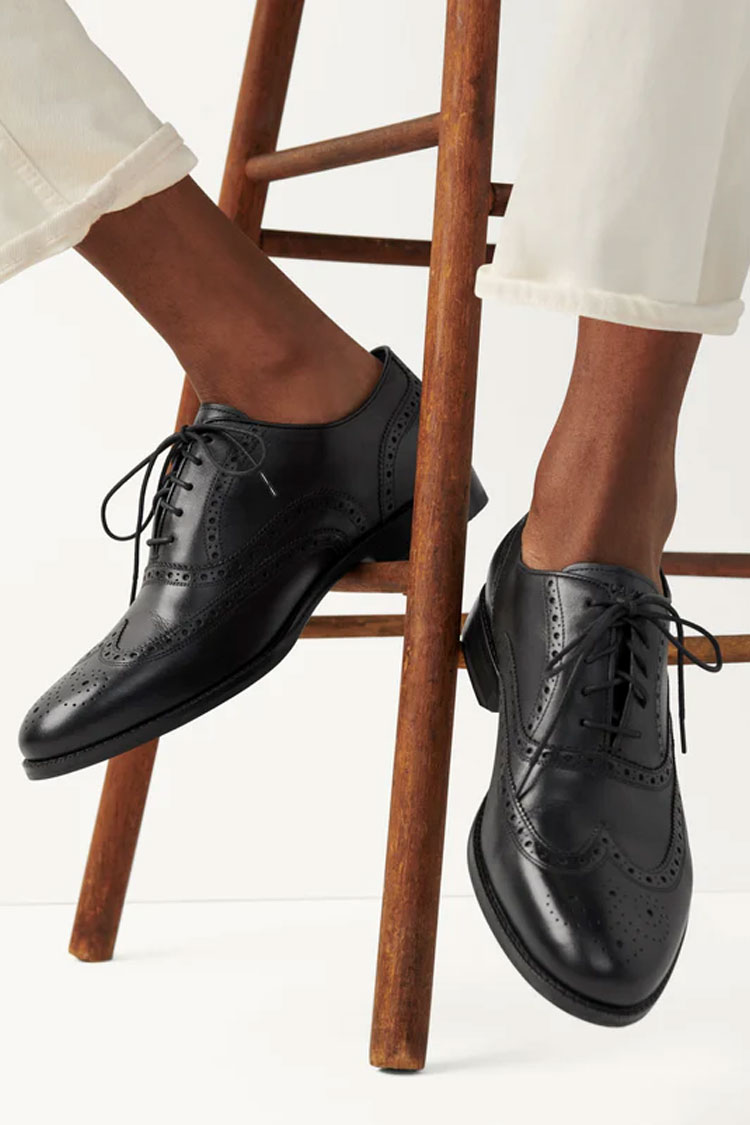
A pair of Oxfords or brogues in black or dark brown calf leather covers work, weddings and funerals.
Goodyear-welted shoes can usually be resoled rather than thrown away when the sole wears through, which helps a higher purchase price go further.
Lower-priced labels to look at: Clarks and Cole Haan.
Higher-priced labels to look at: Loake 1880 and Allen Edmonds; our dress shoes styling guide has more detail.
12. Penny loafers
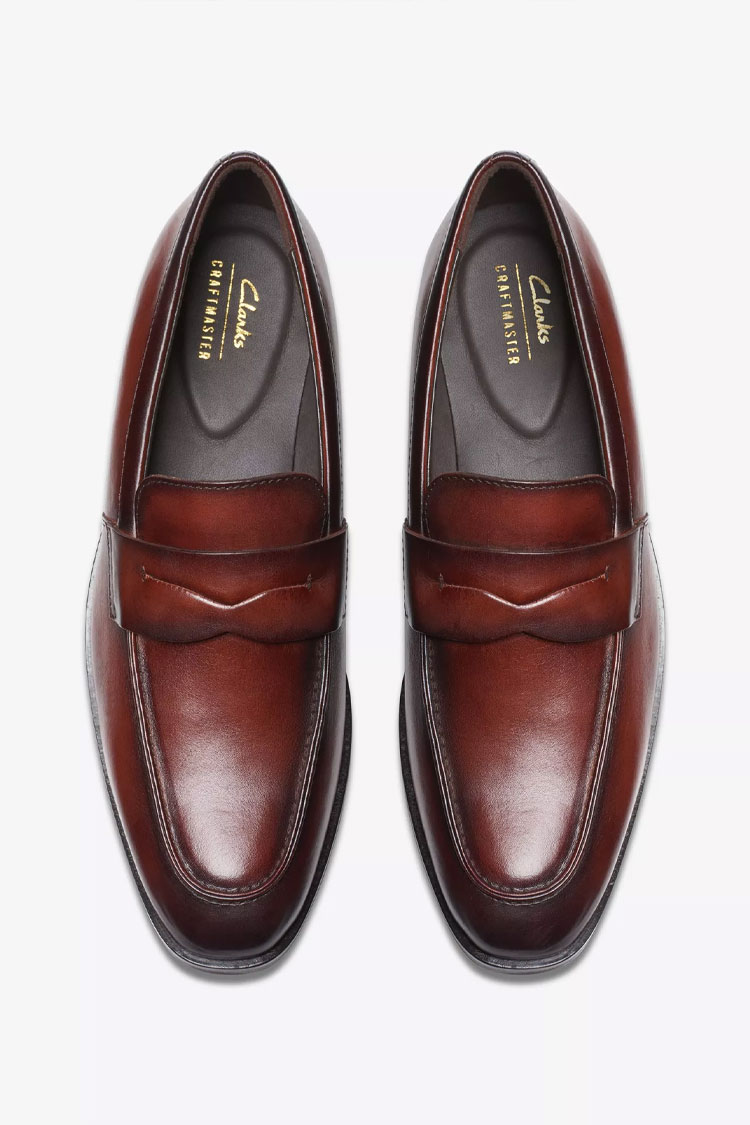
Brown leather penny loafers are closely linked with this look and go with chinos, shorts, jeans and summer suits.
Wear them with no-show socks in summer and fine wool socks in cooler weather.
Lower-priced labels to look at: G.H. Bass Weejuns, Sebago and Clarks.
Higher-priced labels to look at: Alden and Tod’s; our Old Money formal wear guide covers occasions where loafers are too casual.
A three-phase build order
Buying all twelve garments at once is expensive and often leads to mistakes, so build in phases and see what you actually wear.
Set your own monthly limit, and include the cost of alterations in it.
Phase one: the core seven
A navy blazer or suit jacket, a white dress shirt, a pale blue button-down, khaki chinos, dark straight jeans, brown penny loafers and a navy V-neck jumper.
Those seven garments make several complete outfits for work and weekends.
Wear: the navy blazer, the pale blue button-down, khaki chinos and brown penny loafers for a smart-casual office or dinner.
Wear: the navy V-neck over the white shirt, dark jeans and brown penny loafers for a weekend.
Phase two: the next few months
Matching suit trousers if you started with the jacket, black or dark brown leather dress shoes, one coat suited to your climate, and a leather belt in a similar shade to the shoes.
This is the phase where a welted pair of shoes is worth considering, because it can be resoled.
Phase three: later in the year
Polo shirts, crew-neck T-shirts, khaki shorts, a second jumper in camel or grey, and a simple watch.
Second-hand and sale buying can bring the total down considerably at every phase.
Where to buy
There are two sensible routes, and most people end up using both.
Buy new in the sales
End-of-season sales and clearance sections often cut high-street prices substantially.
Buying out of season helps too: wool coats are usually discounted as winter ends and linen as summer ends.
Outlet sites such as The Outnet and Yoox discount designer labels, though sizing varies between brands, so check measurements and the returns policy before you order.
Buy second-hand
Tailoring, knitwear and leather shoes in classic shapes are widely available second-hand.
Visit charity and thrift shops regularly, since stock changes often, and try shops in several neighbourhoods.
Search eBay and Vinted by measurements rather than size labels, using the chest, shoulder and length figures from a jacket that already fits you.
Check the armpits, the trouser seat and the shoe welt before buying, because wear in those places is costly or impossible to repair.
Six common mistakes
When the look feels off, the cause is often one of the following.
Wearing everything at once: a blazer, pocket square, signet ring, silk tie and watch together can look like a costume, so leave one or two off.
Shiny or thin cloth: some synthetics show a shine and crease in ways that stand out next to wool and cotton, so compare fabrics in daylight.
Clothes that are too tight: if the jacket button pulls or the trouser thigh strains, try the next size and have it altered.
Mismatched formality: a structured wool blazer over a thin, clingy T-shirt can look disjointed, so keep the jacket, shirt, trousers and shoes at a similar level of formality.
Very fashion-led shapes: strongly cropped trousers, exaggerated lapels and very oversized shoulders move the outfit away from this classic look, if a classic look is what you want.
Large logos: a brand name across the chest pulls attention away from the rest of the outfit, and this look relies on small or absent branding.
Make your clothes last
Care costs little and keeps a modest wardrobe looking good for longer.
Rotate shoes so no pair is worn two days running, use shoe trees while they dry, and resole welted pairs rather than replacing them.
Brush wool jackets after wearing and air them overnight, and follow the care label for cleaning.
Wash knitwear as the label directs, usually by hand in cool water, dry it flat and remove bobbles with a fabric comb.
For a waxed jacket, Barbour’s care guide advises re-waxing annually, cleaning with cold water and a sponge, and avoiding hot water, soap and dry cleaning.
Hang jackets on wide wooden hangers that support the shoulders.
Frequently asked questions
Q. How much do I need to start?
There is no fixed figure: start with the garments you already own, then add the core seven one at a time, second-hand or in the sales where you can, and set aside money for alterations.
Q. Can the look really be built from charity shops?
Yes, many of the garments are common second-hand, provided you go often, judge each garment by its cloth and shoulder fit rather than its label, and allow for alterations.
Q. What is the difference between Old Money style and preppy style?
They share many garments, but preppy usually includes brighter colours, stripes and collegiate motifs, while the Old Money label favours the same garments in quieter shades, as our Preppy style guide explains.
Q. Is Old Money style the same as quiet luxury?
Quiet luxury usually describes expensive clothing with little visible branding, whereas the Old Money look is a set of classic garments and colours that can be bought at many prices, which is why this guide works on a small budget.
Q. Do I need a suit if I never wear one to work?
Start with a navy jacket worn over chinos and a button-down, and add matching trousers later if weddings and formal events start appearing in your calendar.
Q. Which single purchase changes the most?
A visit to the tailor with clothes you already own is often the best value, since hemming trousers and adjusting a shirt can improve outfits you already wear.
Dress well on your own budget
The whole approach fits in one sentence: buy fewer garments in cloths you like, have them altered to fit, keep the colours quiet and the logos small, then look after them.
Start with the core seven, wear them for a month, then add the next phase once the first feels natural.
Take our four free quizzes
Check your face shape with our Face Shape Quiz.
If useful, try our Seasonal Colour Analysis Quiz as an initial prompt for clothing comparisons, and keep any result provisional.
Check your body shape with our Body Shape Quiz.
Take our Fashion Style Quiz to see which styles match what you like wearing.
Book a consultation for personal help
If you would like personal help after the quizzes, The VOU offers paid consultations.
Our Professional Face Shape Analysis package covers your face shape with suggestions for haircuts, facial hair, glasses and grooming.
Our Professional Body Shape Analysis and Professional Fashion Style Analysis cover cuts for your proportions and a style direction that suits how you live.
Our Professional Seasonal Colour Analysis can suggest palette directions to explore; compare the actual navy, camel or grey garment rather than expecting an exact match from a colour name.
Our Complete Image Transformation Package combines the face shape, seasonal colour, body shape and fashion style analyses.
Mandy Meyer’s focus at The VOU is men’s body-shape styling, garment fit and outfit proportions. Her coverage addresses the practical questions behind a wardrobe choice: how a jacket sits across the shoulders, how trousers fall and how different cuts change the silhouette a wearer wants to create.
Her subject areas include the triangle, inverted triangle, rectangle, oval, trapezoid, hourglass and diamond labels used in body-shape styling. These provide starting references for comparing visible proportions; they do not capture every body or prescribe one correct way to dress. The focus connects those observations with garment shape, construction, length and the relationship between the upper and lower parts of an outfit.
Mandy’s editorial coverage combines visual comparisons with fit checks for comfort and movement. Readers can consider whether a cut gives them the room they need, where clothing pulls or gathers and which changes might support their preferred look. The aim is to make menswear choices more understandable while keeping personal preferences and the wearer’s own styling goals central.