
Start here
What’s This About
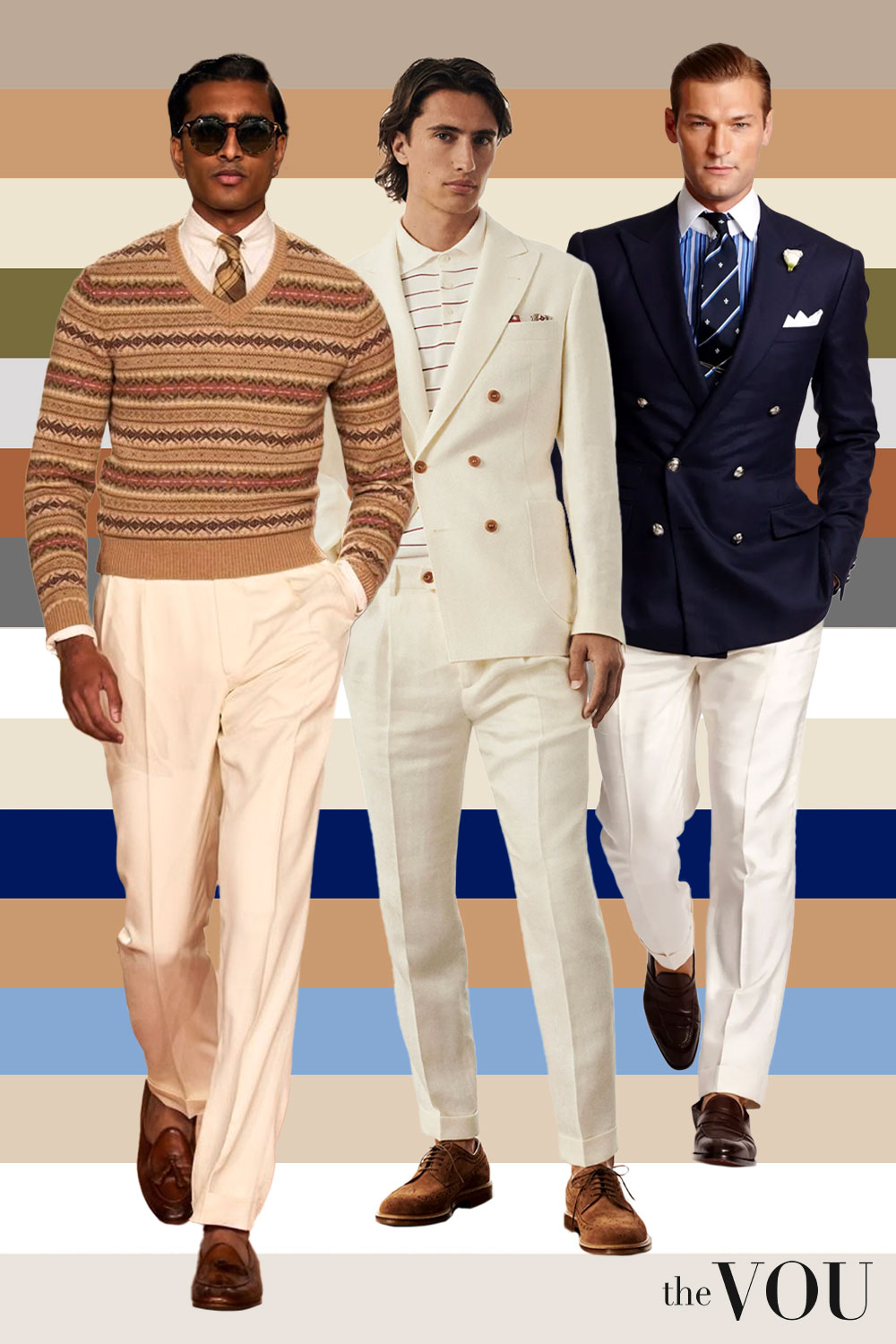
Old Money colours are mostly quiet neutrals, such as navy, grey, white, cream, beige and brown, with green, red and pastels as accents.
This guide explains the main colour groups and how to wear them together, such as:
Which garments usually come in navy, brown and cream
Where black fits in, mainly for evening wear
How to use red, green and pastels as single accents
Four colour combinations shown in outfit photographs
How to match textures to the occasion
and many more!
Use the palette as a set of options to mix, not a rule book, and choose the shades you like best.
Key Points
01Navy and grey are the usual base colours for daytime suits and blazers, with black mainly kept for evening wear.
02Brown is the usual colour for loafers, brogues, belts and suede boots, and it adds warmth to tweed and overcoats.
03Red, bright green and pastels work best as one accent in an otherwise neutral outfit.
04Colour analysis is optional; comparing shades near your face in daylight is a simple way to choose.
The Old Money look is a contemporary label for classic, quiet menswear, and its colours do much of the work.
Most outfits in this style rest on navy, grey, white, cream, beige and brown, with green, red and soft pastels used as accents.
This guide goes through nine colour groups, the garments each one usually appears in, and simple ways to combine them into complete outfits.
The colours describe a way of dressing, not the wearer, so you can use them whatever your background or budget.
The Old Money colour palette
The swatches below are examples of each colour group rather than exact shades you have to match.
Within each group, choose the shade you like and that sits well with the clothes you already own.
1. Off-white and white

 |
 |
A soft off-white looks less stark than pure white and sits easily next to navy and light blue.
White and off-white appear across the Old Money style in dress shirts, Oxford shirts, summer trousers and, less often, linen blazers.
The photographs show a white double-breasted linen jacket worn with a patterned neckerchief, and off-white trousers worn with a coral polo shirt and brown penny loafers.
A white or off-white jacket or pair of trousers is mainly a warm-weather choice, while a white shirt works all year.
2. Navy

 |
 |
Navy is the most common base colour in this style, because it suits blazers, suits, knitwear and trousers and goes with almost every other colour on this list.
A navy blazer, single-breasted or double-breasted, is the usual starting point, followed by a navy suit and navy knitwear.
Grey works the same way: grey flannel trousers and grey or charcoal suits sit beside navy as everyday base colours, so this guide covers grey together with navy rather than as a separate group.
Navy also works in small doses, such as a silk tie or a pocket square.
The photographs show navy cotton trousers worn with espadrilles, and navy suede espadrille slippers for summer.
3. Black

 |
 |
Black has a smaller role in the Old Money palette than navy and grey, which are the usual colours for daytime suits and blazers.
Black is most at home in evening wear, such as a dinner suit, black patent leather Oxfords or opera pumps, and in knitwear or a smart jacket worn after dark.
Black calf Oxfords are a classic choice with a navy or charcoal suit for formal daytime dress codes.
The photographs show a black velvet bomber jacket worn with dark grey trousers, and a black cable-knit jumper worn with black pleated trousers.
4. Brown
 |
 |
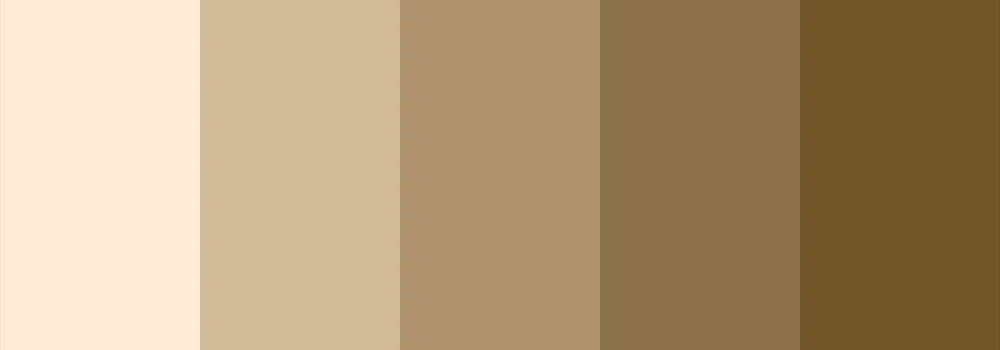
Browns from light tan to dark chocolate add warmth to Old Money wardrobes.
Brown is the usual colour for loafers, brogues, suede boots, belts and watch straps, and it also appears in tweed jackets, overcoats and corduroy trousers.
The photographs show a light brown double-breasted overcoat and dark brown suede tassel loafers worn with pale wool trousers.
5. Green

 |
 |
Dark greens such as forest and bottle green are traditional colours for country clothes, including waxed jackets, tweed and knitwear.
Brighter greens also appear, usually as a single knitted layer over a white shirt.
The photographs show a green waxed jacket with a brown corduroy collar, and a bright green cable-knit jumper worn with a white collar, a brown belt and stone trousers.
6. Red and coral

 |
 |
Reds from coral to brick appear in casual and nautical outfits, such as a half-zip top, chinos, a polo shirt or a striped jumper.
Use red as one accent in an outfit rather than several, because red with white and navy already makes a strong combination.
The photographs show a coral half-zip top worn with navy trousers, and salmon-red chinos worn with a white shirt, a navy-and-white striped jumper tied at the waist and brown boat shoes.
For tailoring, deeper reds such as burgundy are more common, usually in a tie, a pocket square or a knitted layer.
7. Beige, cream and khaki
 |
 |
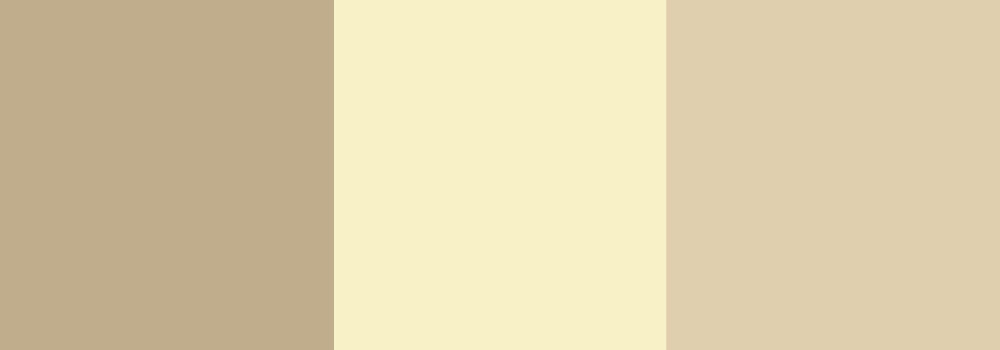
Beige, cream and khaki are light neutrals that pair with navy, brown and green.
They are common in chinos, linen trousers, summer suits, knitwear and suede shoes.
The photographs show a beige linen suit worn with a white knitted shirt and brown suede loafers, and a pair of beige suede Chelsea boots.
8. Pastels

 |
 |
Pastels such as pale pink, light blue, lavender and mint are mainly spring and summer colours in this style.
They appear most often in Oxford shirts, polo shirts and lightweight jackets.
The photographs show a pale pink polo shirt with a pale yellow jumper over the shoulders, and a mint linen jacket worn over a white T-shirt with cream trousers.
9. Bright summer blue

 |
 |
Clear blues, from light sky blue to turquoise, are summer colours that sit well with navy, white and cream.
They are most common in Oxford button-down shirts and polo shirts.
The photographs show a light blue Oxford button-down shirt worn with navy pinstriped trousers, and a turquoise polo shirt worn with grey trousers.
How to combine Old Money colours
These four combinations come from the photographs below; for more ideas, see our list of Old Money colour combinations for men.
All-white outfits
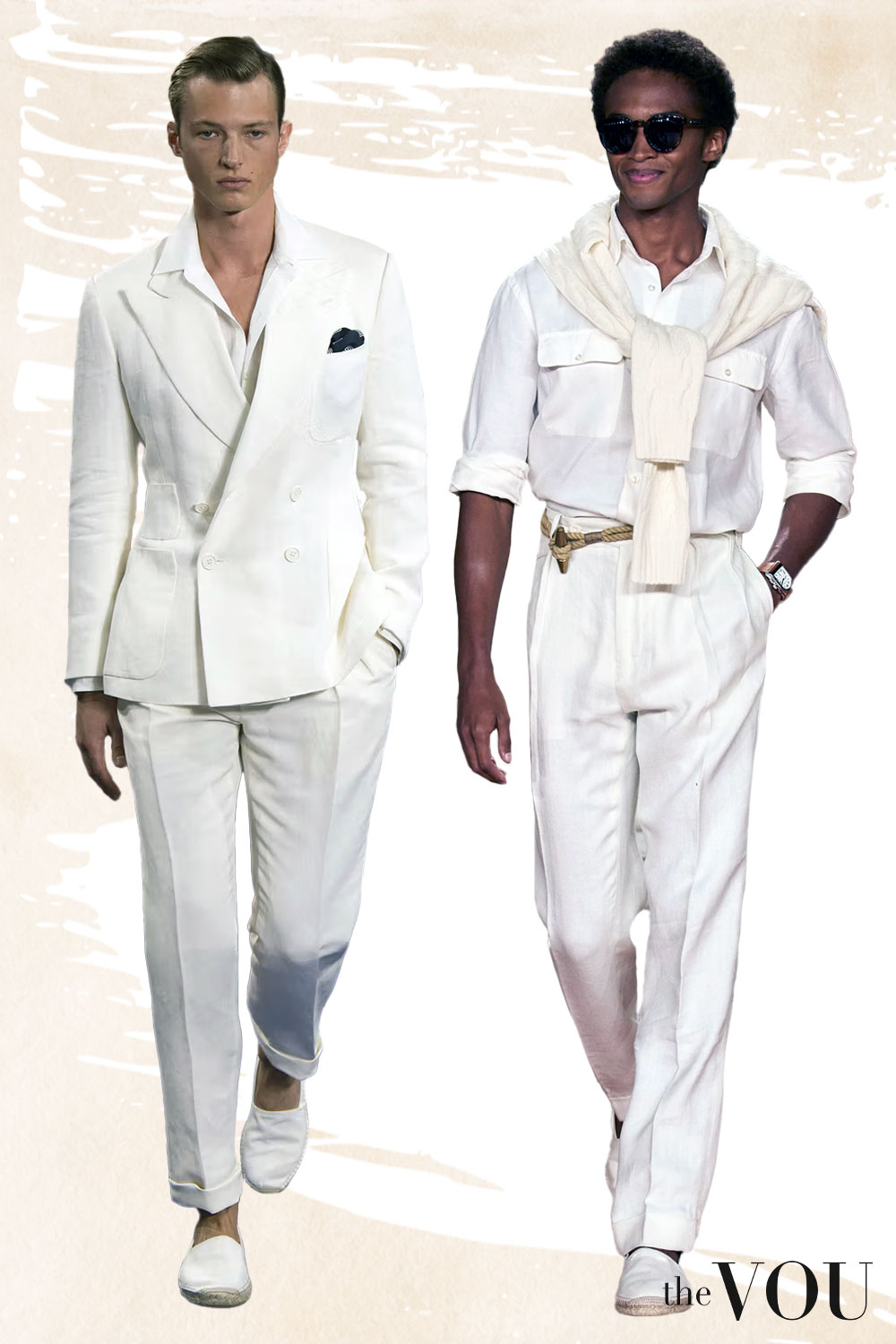
An all-white or white-and-cream outfit is a summer look that suits holidays, garden parties and a casual Old Money look.
The photograph shows two examples: a white double-breasted suit, and white trousers with a white overshirt and a cream jumper over the shoulders.
At a wedding, check the invitation and the couple’s wishes first, because some couples prefer guests not to wear all white.
Whites vary from bright white to cream, so compare the shades of each garment in daylight before you combine them.
Keep accessories few, with one touch of navy or brown, such as a belt or a pair of loafers.
Nautical colours
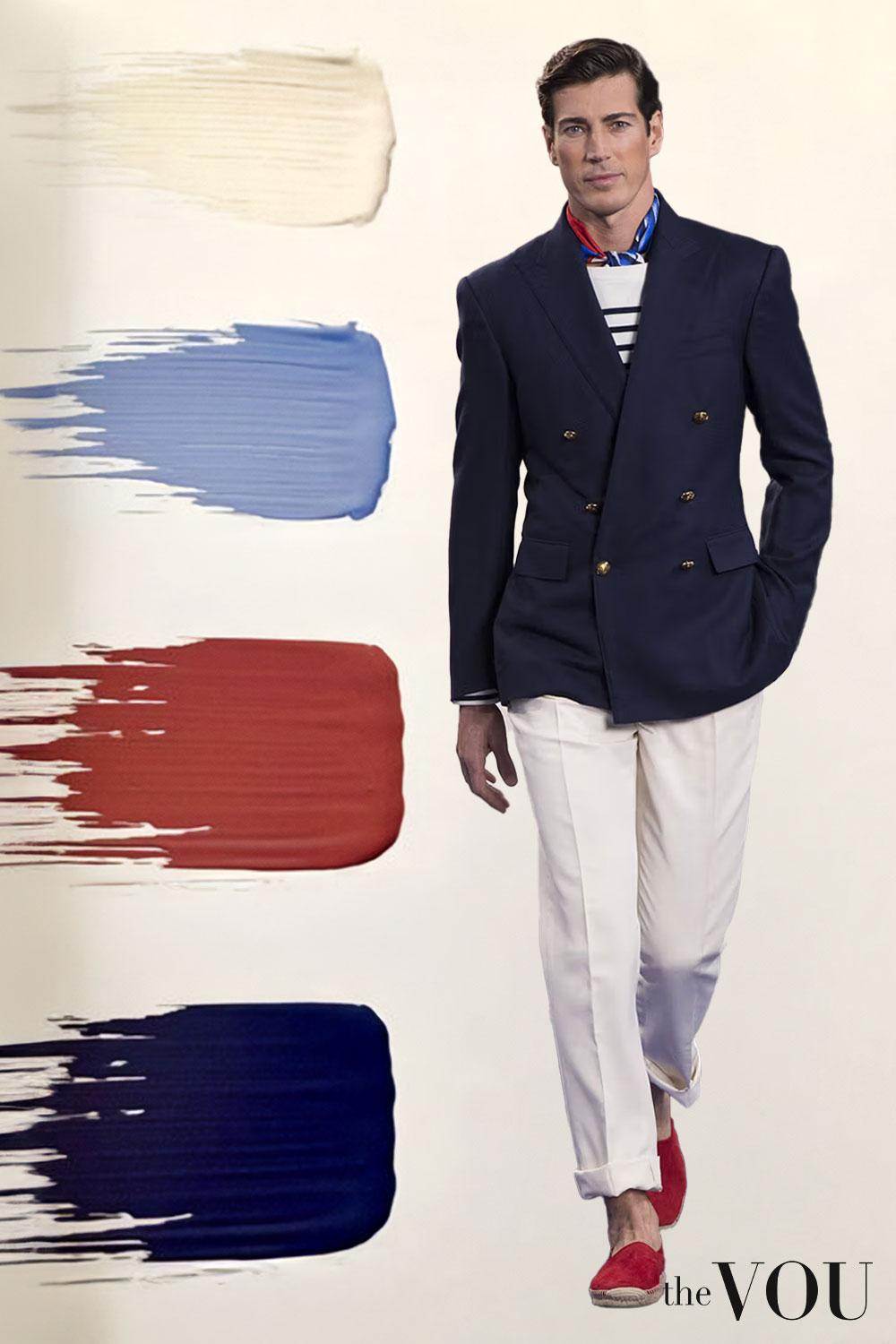
White, light blue, red and navy together make the nautical combination often linked with New England summers and the traditional Preppy look.
The photograph shows a navy double-breasted blazer over a striped top, with white trousers and red espadrilles.
Keep the red to one garment or accessory, so the navy and white stay in charge.
Browns with golden tones
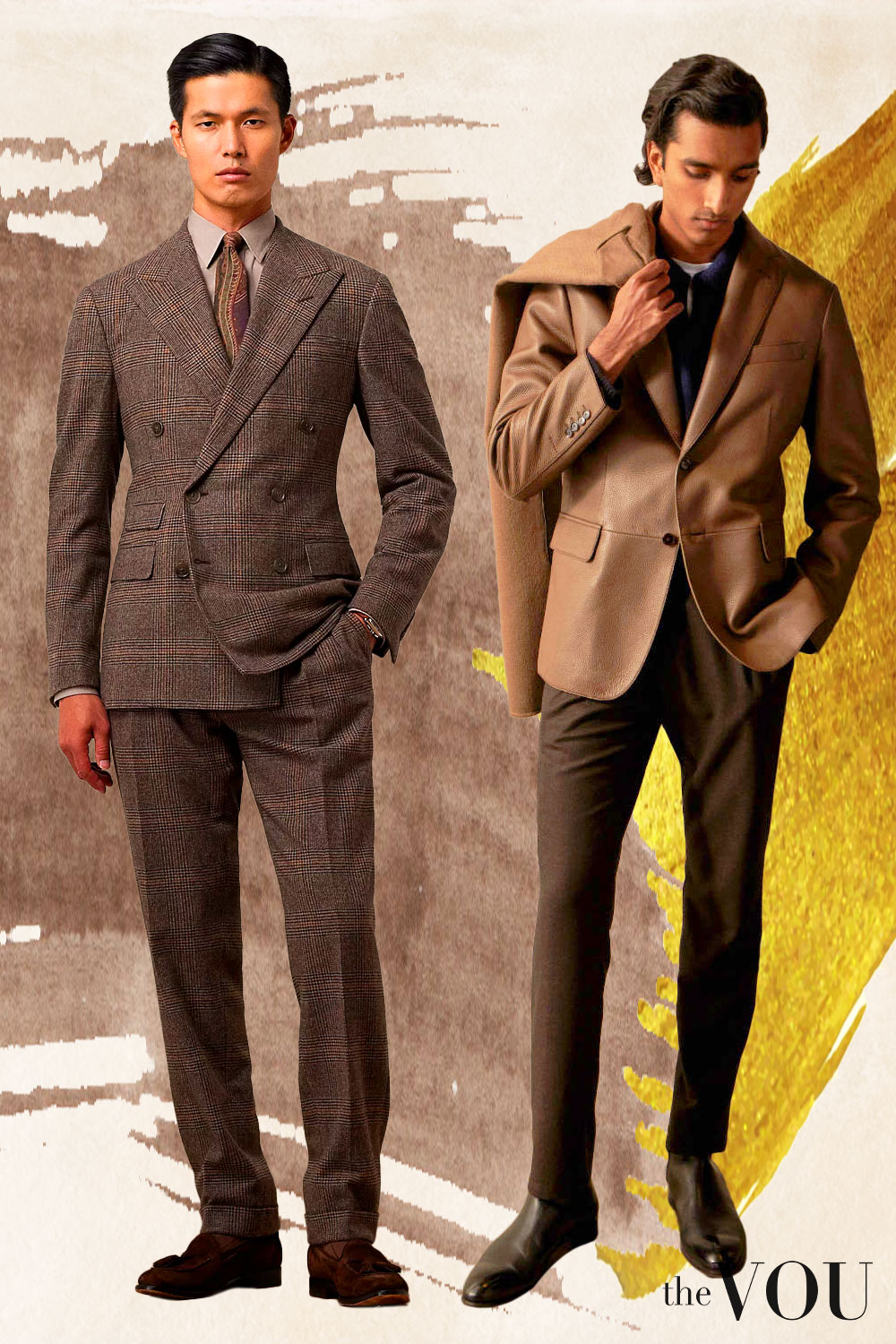
Brown tailoring looks warm when you add golden tones such as camel, tan or a mustard tie.
The photograph shows a brown checked double-breasted suit with a brown tie, and a camel jacket worn over dark brown trousers.
A gold-tone watch or belt buckle is an easy way to bring the same warmth into an outfit.
Light blue and white
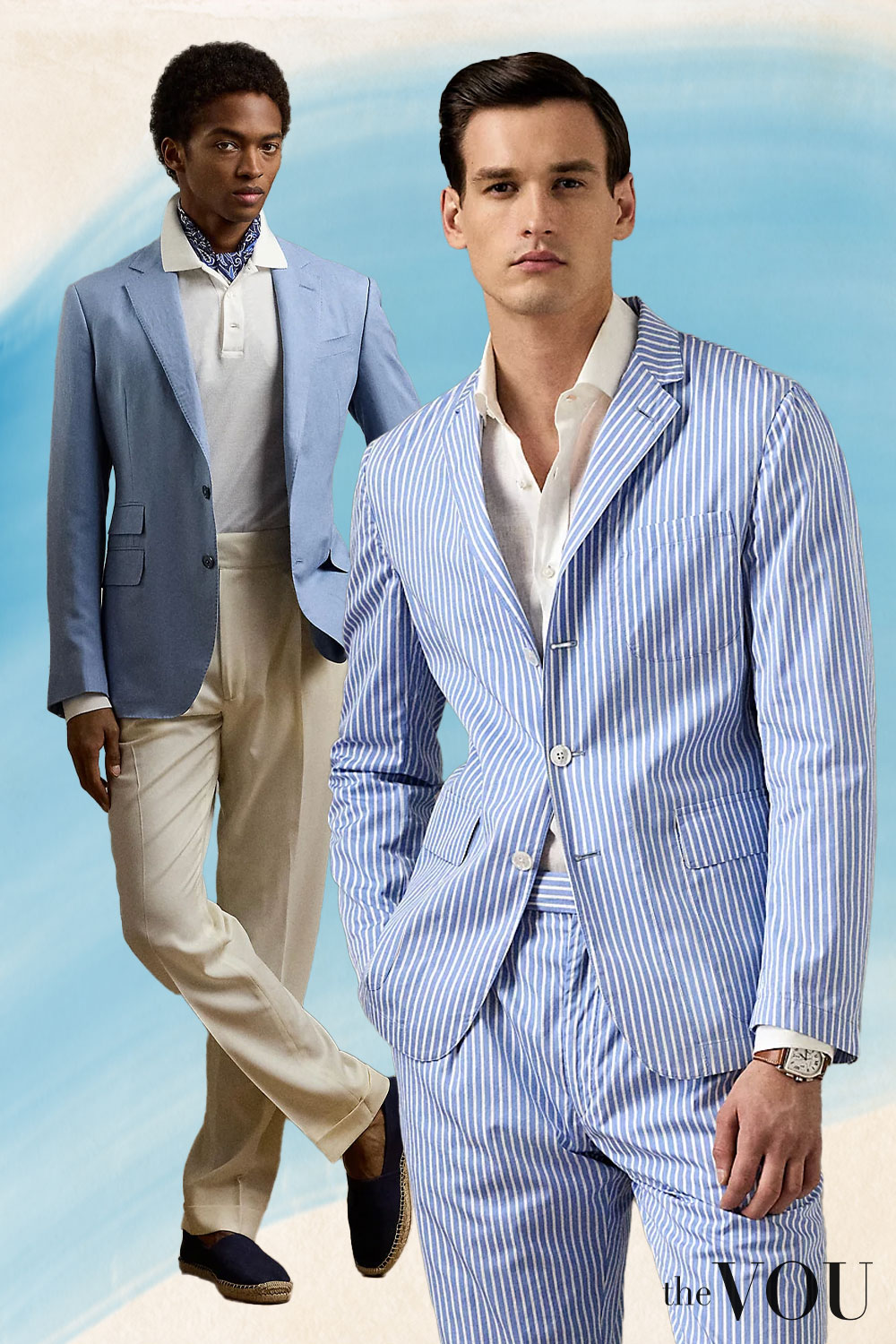
Light blue and white is a fresh summer pairing for both smart and casual outfits.
The photograph shows a light blue blazer with cream trousers and a white polo shirt, and a blue-and-white striped suit worn with a white shirt.
A brown leather belt or a pair of espadrilles keeps the combination relaxed.
More styling tips for Old Money colours
Start with a neutral base
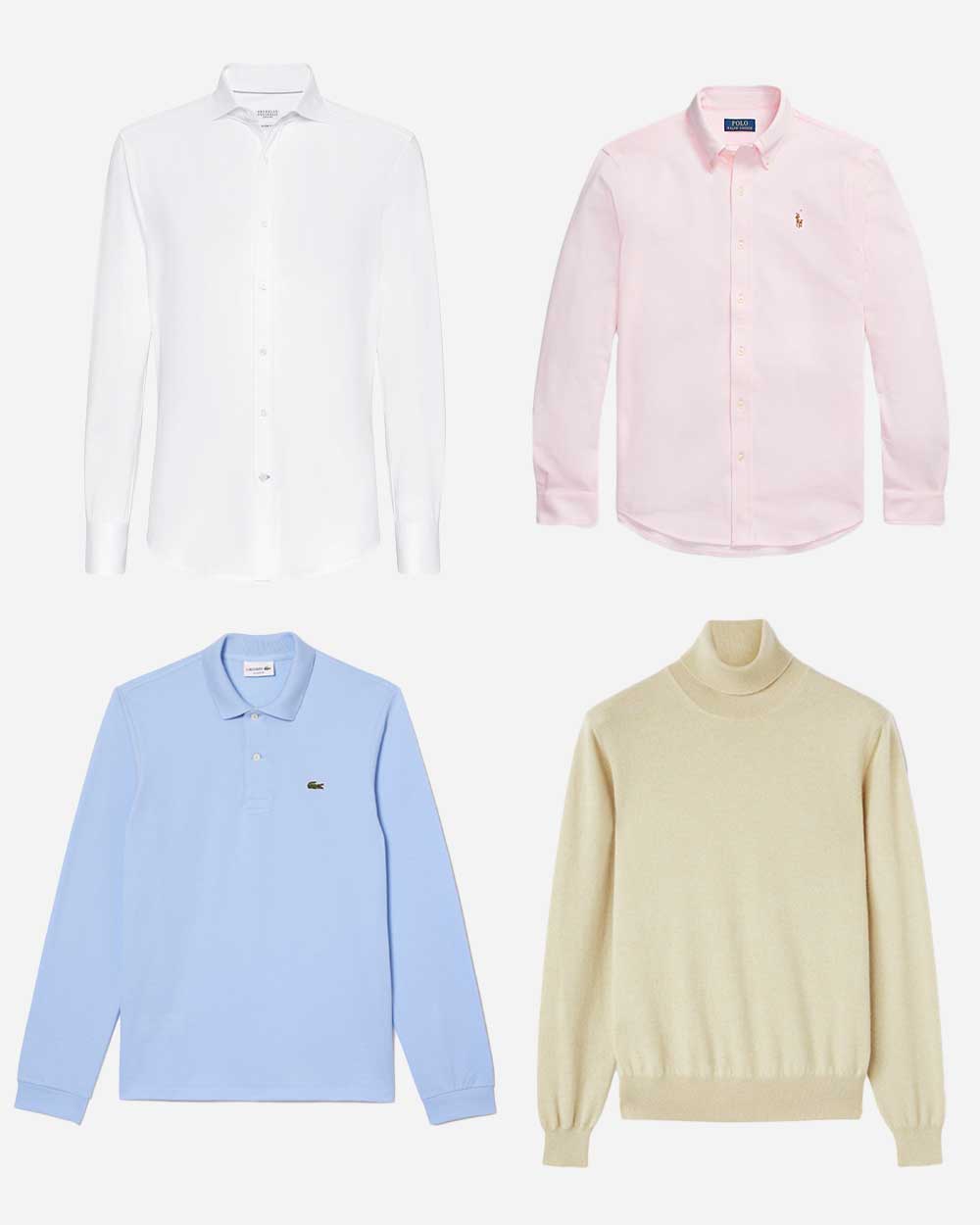
Build each outfit on one or two quiet colours, then add one stronger colour or texture.
The photograph shows four simple bases: a white shirt, a pale pink Oxford button-down, a light blue long-sleeved polo shirt and a cream roll-neck.
Light khaki chinos, grey flannel trousers and a navy blazer do the same job for the rest of the outfit.
These garments then give you room to add a coloured jumper, tie or jacket.
Match textures to the occasion
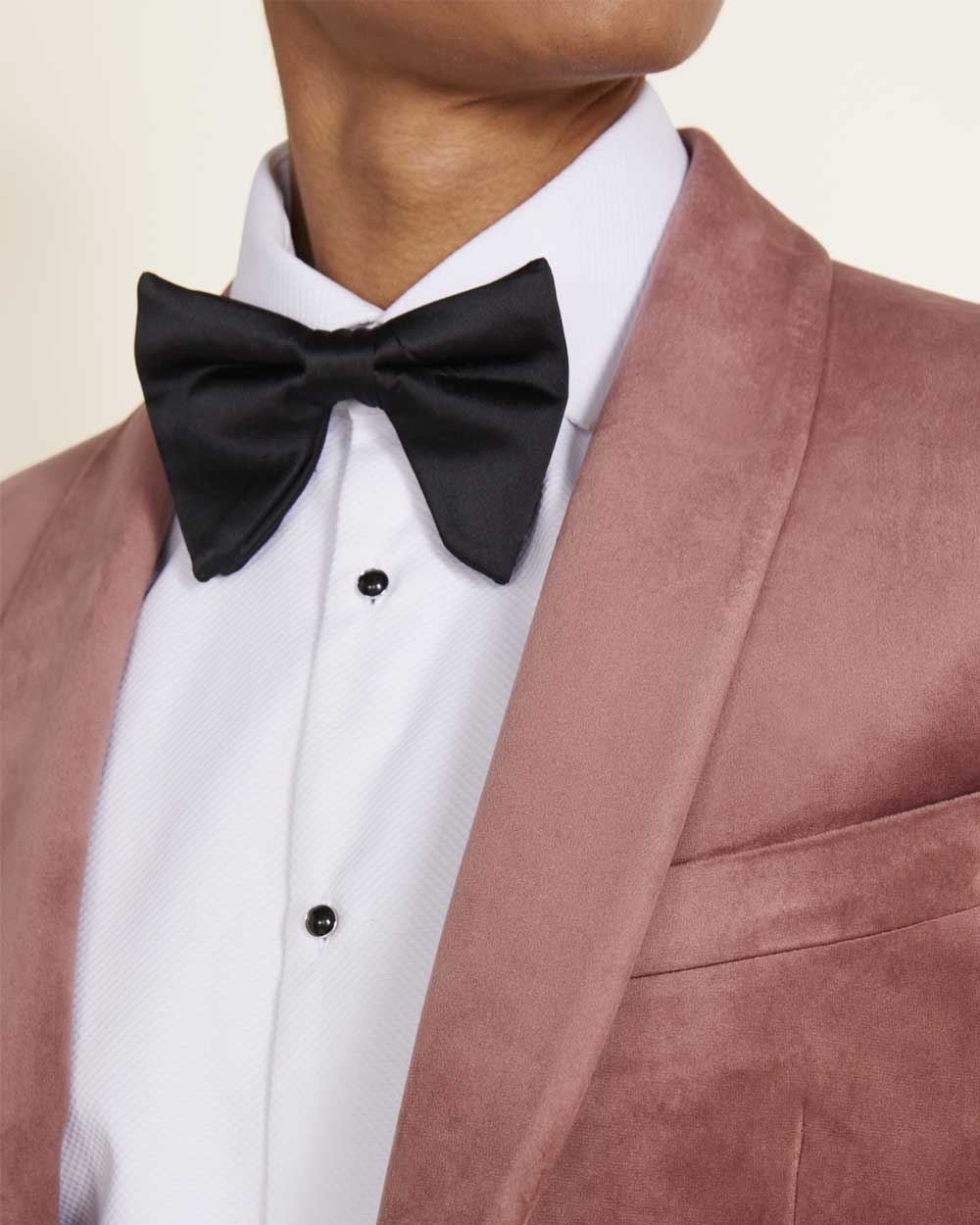
Different textures add depth to an outfit, and they combine most easily when they suit the same setting.
The photograph shows an evening example: a dusky pink velvet dinner jacket worn with a white dress shirt and a black silk bow tie.
Velvet, silk and patent leather belong together in the evening, while tweed, flannel, corduroy and suede suit the country and the weekend.
For a smart daytime outfit, a cotton shirt, a cashmere jumper, a silk tie and suede Oxford dress shoes sit well together.
Use contrast with care
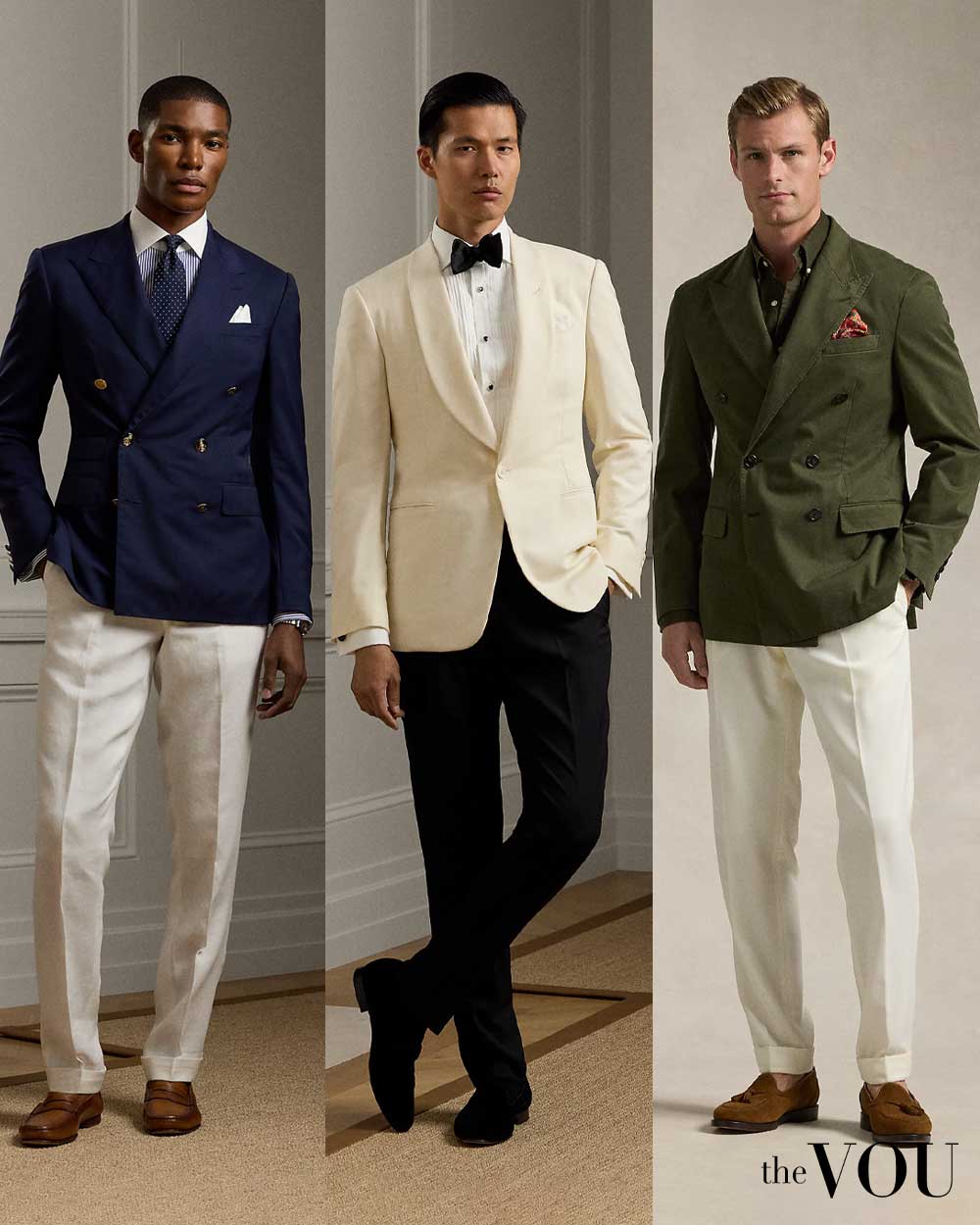
Light and dark colours worn together create clear contrast.
The photograph shows three examples: a navy double-breasted blazer with cream trousers, an ivory dinner jacket with black trousers, and an olive double-breasted jacket with cream trousers.
For a daytime version, wear a navy blazer with cream chinos, or style a white double-breasted suit with dark brown loafers.
Choosing your own shades
Every colour group above has lighter, darker, warmer and cooler versions, and some will look better on you than others.
To compare, hold two shirts or jumpers of the same colour group near your face in daylight and keep the one you prefer.
Our guide to seasonal colour analysis explains one optional way of thinking about this, but you do not need it to wear the colours on this page.
Start with the clothes you need, a good fit and the combinations you enjoy.
The final word
The Old Money palette is built for mixing, because its neutrals go with each other and with a small number of accent colours.
Add the colours to your capsule wardrobe gradually: a neutral base first, then texture, then one accent colour or a touch of contrast.
Quizzes and personal help from The VOU
None of these tools is needed to wear the colours above, but some readers like extra help when choosing clothes.
Our guides to dressing for your body shape and seasonal colour palettes explain two optional frameworks for thinking about proportion and colour.
For more on dressing for the setting, see styling by occasion, location, season and time of day.
For the vocabulary behind this guide, see our explainers on garments and accessories, and our guides to heritage fashion brands and the wider Old Money style.
1. Check your body shape
Check your body shape with the body shape quiz for men.
2. Find your seasonal colours
Find your seasonal colours with the seasonal colour quiz for men, and treat the result as a starting point for comparing clothes.
3. Take the fashion style quiz
Take the fashion style quiz for men to see which personal fashion styles and outfit ideas match what you like wearing.
Book a consultation for personal help
If you would like personal help after the three quizzes, you can book one of our paid consultations with The VOU’s image consultants and stylists through our styling services for men, or contact us with questions.
Mandy Meyer’s focus at The VOU is men’s body-shape styling, garment fit and outfit proportions. Her coverage addresses the practical questions behind a wardrobe choice: how a jacket sits across the shoulders, how trousers fall and how different cuts change the silhouette a wearer wants to create.
Her subject areas include the triangle, inverted triangle, rectangle, oval, trapezoid, hourglass and diamond labels used in body-shape styling. These provide starting references for comparing visible proportions; they do not capture every body or prescribe one correct way to dress. The focus connects those observations with garment shape, construction, length and the relationship between the upper and lower parts of an outfit.
Mandy’s editorial coverage combines visual comparisons with fit checks for comfort and movement. Readers can consider whether a cut gives them the room they need, where clothing pulls or gathers and which changes might support their preferred look. The aim is to make menswear choices more understandable while keeping personal preferences and the wearer’s own styling goals central.