
Start here
What’s This About
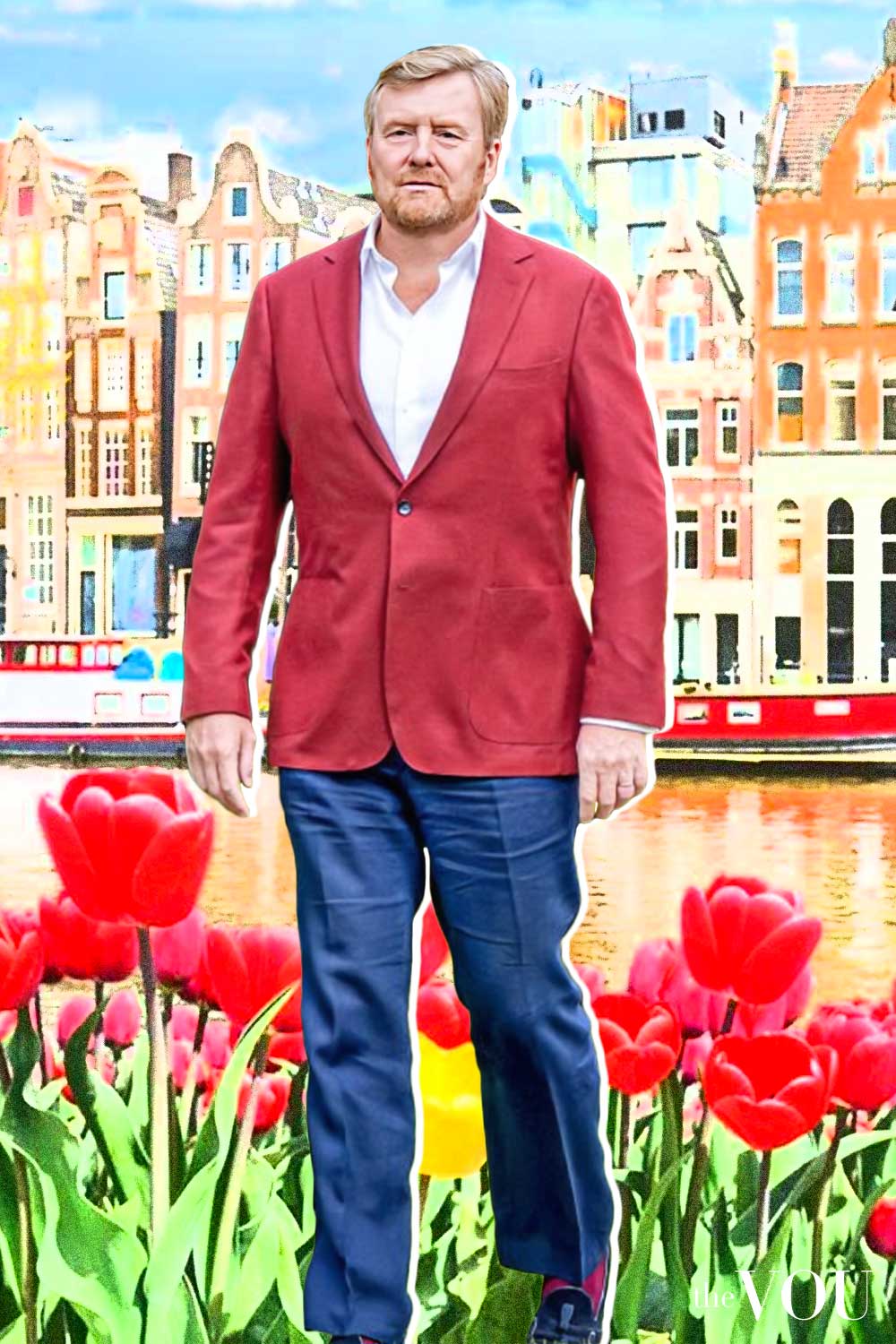
Amsterdam Chic is this guide’s name for smart, practical city clothes in quiet colours that work on a bicycle and in the rain, not a documented Dutch tradition.
This guide covers dressing well for Amsterdam’s streets and weather, such as:
Which Dutch references are genuine, from Delft blue to the pea coat
What rain, wind and cycling ask of your clothes
A city wardrobe of blazers, knitwear, trousers, coats and rubber-soled shoes
Four complete outfits from business formal to a winter evening
How the look compares with London and Paris city dressing
and many more!
Dutch details work best as small touches in an otherwise practical outfit.
Key Points
01People in Amsterdam dress in many ways, so treat Amsterdam Chic as a practical approach rather than a uniform.
02Water-resistant layers, room to pedal and shoes that grip on wet streets matter more than any historical reference.
03Navy, grey, charcoal, beige and denim make an easy base, with orange kept to small accents.
04A navy pea coat, whose name comes from the Dutch pijjekker, is one of the easiest Dutch-linked garments to wear.
“Amsterdam Chic” is the name this guide uses for a smart, practical way of dressing for city life in the Netherlands: tailored or neat casual clothes in quiet colours that still work on a bicycle and in the rain.
It is not a documented historical style or a uniform that Dutch men share, and people in Amsterdam dress in as many ways as people in any other large city.
What the label does describe is a useful approach for anyone who walks or cycles to work: plain, well-fitting clothes chosen for wet weather, cobbled streets and changes of temperature during the day.
This guide explains which Dutch references are genuine, what the weather and the bike ask of your clothes, which garments to look for and how to put complete outfits together.
Dutch references behind the look
Several real Dutch traditions are often borrowed for colour and pattern ideas, but none of them amounts to a dress code for modern men.
Seventeenth-century portraits
Dutch portraits from the seventeenth century often show men in dark clothes with large white linen collars or ruffs.
The Textile Research Centre in Leiden notes that the ruff stayed popular in the Dutch region well into the seventeenth century, where it was also called a molensteenkraag or millstone collar, and that it was worn by urban men, women and children.
A modern band-collar shirt or a white shirt under dark tailoring can nod to those portraits, but it is a design choice rather than a continuation of them.
Delft blue, De Stijl and orange
Delftware, the tin-glazed pottery made in and around Delft, is best known in blue and white, which is why a mid or deep blue is often linked with Dutch design.
De Stijl was a Dutch art movement founded in 1917, known for straight lines, rectangles and primary colours, and its grid patterns sometimes appear on ties, scarves and knitwear.
Orange is the national colour associated with the Dutch royal House of Orange-Nassau, and it works best as a small accent, such as a pocket square or socks.
Workwear and sailors’ clothes
The klomp, the whole-foot wooden clog, is a national symbol of the Netherlands, although most city dwellers do not wear wooden clogs today.
The pea coat has a genuine Dutch link in its name: Merriam-Webster traces “pea jacket” to the Dutch pijjekker, from pij, a kind of cloth, and jekker, jacket.
A navy wool pea coat is therefore one of the easiest Dutch-connected garments to wear in a city wardrobe.
Dutch fashion today
Dutch designers are known internationally for experimental work, such as the fashion house Viktor & Rolf, founded in 1993, and Iris van Herpen, who opened her label in 2007, but their couture is a long way from everyday menswear.
Closer to daily dressing, the menswear label Suitsupply was founded in Amsterdam in 2000 by Fokke de Jong, and Scotch & Soda was founded in 1985 and often trades as Scotch & Soda Amsterdam.
Those brands are examples rather than a shopping list, and similar clothes are made in many countries and at many prices.
What the weather and the bike ask of your clothes
Amsterdam has an oceanic climate, with at least 1 mm of rain on about 133 days a year on average, so rain is possible in every season.
The city’s official visitor site, I amsterdam, describes up to 400 kilometres of bicycle paths and thousands of bikes on the road at the morning and evening rush hours.
Those two conditions shape the practical advice below more than any historical reference does.
Scroll horizontally to see all columns →
| Condition | What it means for your clothes |
|---|---|
| Rain at any time of year | Keep a water-resistant coat or shell that fits over a jacket or jumper, and choose shoes with rubber soles. |
| Cool, windy days | Layer a shirt, a fine wool jumper and a coat, so you can remove a layer indoors. |
| Cycling | Trousers need enough room at the seat and knee to pedal, jackets need room across the back to reach the handlebars, and long coats need a vent. |
| Bike chains | Turn up or clip a wide trouser hem on the chain side to keep it clean. |
| Dark mornings and evenings | Use bike lights, and consider a reflective band or a bag with reflective trim. |
| Cobbles and wet brick | Rubber or studded rubber soles grip better than smooth leather soles on wet streets. |
The colour palette
A practical city palette starts with navy, grey, charcoal, black, beige and washed denim.
Add Delft-style blues in a shirt, tie or jumper, earthy greens and browns in knitwear and outerwear, and orange only as a small accent.
Tonal outfits, such as charcoal trousers with a mid-grey jumper and a navy coat, look tidy with very little planning.
These colours are suggestions, not a fixed Dutch palette.
Essential wardrobe
The table lists garments that suit a smart city wardrobe for walking and cycling; start with what you already own and fill one gap at a time.
Scroll horizontally to see all columns →
| Garment | What to look for | Why it helps |
|---|---|---|
| Navy blazer | Wool or wool blend, soft or lightly structured shoulders, side or centre vents. | Works with wool trousers, chinos and jeans; vents and a soft shoulder make reaching the handlebars easier. |
| Suit | Mid-weight worsted wool in navy or charcoal; plain or with a quiet stripe. | Covers business meetings and evening events; wool copes with a light shower better than linen. |
| Shirts | White and light blue poplin or Oxford cloth; a band collar if you like a more modern look. | Easy to wear with or without a tie. |
| Trousers | Grey wool or stone and navy chinos, with room at the seat and thigh; some stretch helps on the bike. | Smart enough for most offices, practical enough to pedal in. |
| Fine wool knitwear | Merino crew necks and V-necks in navy, grey and blue; perhaps one with a geometric pattern. | A warm, thin layer under a blazer or coat. |
| Trench coat or mac | Water-resistant cotton gabardine or a technical fabric, mid-thigh to knee length, with a back vent. | Covers a suit or blazer in rain without restricting pedalling. |
| Pea coat or wool overcoat | Navy or charcoal heavy wool, short enough to ride in. | Winter warmth with a Dutch-linked history in its name. |
| Shoes | Derbys or Oxfords with rubber soles, water-resistant leather or treated suede Chelsea boots, plain leather trainers. | Grip on wet streets and cope with puddles. |
| Accessories | Leather gloves, a wool scarf, a water-resistant backpack or messenger bag, a plain belt and watch. | Keep hands warm on the handlebars and documents dry. |
Leather clogs with rubber soles are sold as casual shoes, and they can work at the weekend, but they are optional rather than a Dutch requirement.
Look at the fibre label, seams and fit of each garment rather than its claimed origin, because a “Dutch-inspired” description does not tell you how well a coat or shoe is made.
Fit versus the silhouette you choose
Fit is about whether a garment sits correctly on you: jacket shoulders ending where your shoulders end, sleeves showing a little shirt cuff and trousers that do not pull when you sit or pedal.
Silhouette is the overall shape you choose, such as a slim or a straight trouser leg, or a short or knee-length coat.
Choose the shape you like and can move in, then have a tailor adjust the fit.
Outfits by occasion
These outfits are starting points; swap colours and cloths for the season and for your own dress code.
Business formal, arriving by bike
Wear: a navy or charcoal worsted suit, a white poplin shirt, a dark blue silk tie, black or dark brown Derbys with rubber soles, a knee-length water-resistant mac and leather gloves.
Keep the trousers’ chain-side hem clipped while you ride, and allow a few minutes to cool down before a meeting.
Business casual
Wear: a navy soft-shouldered blazer, a light blue Oxford shirt, a grey merino V-neck, grey wool or stone chino trousers and brown suede Chelsea boots, with a navy rain shell in your bag.
Creative office or weekend
Wear: a navy overshirt or chore jacket, a white T-shirt, dark straight-leg jeans, plain white leather trainers and a water-resistant backpack, adding a blue jumper with a De Stijl-style or tile pattern if you want a Dutch reference.
Evening out in winter
Wear: a navy wool pea coat, a black or charcoal fine roll-neck, charcoal wool trousers, black leather Chelsea boots and a grey wool scarf.
Amsterdam, London and Paris compared
The comparison below describes common tendencies in smart city dress, not rules for everyone in each city.
Scroll horizontally to see all columns →
| City look | Typical clothes | Practical focus |
|---|---|---|
| Amsterdam, as described here | Soft tailoring, knitwear, chinos, water-resistant coats, rubber-soled shoes | Cycling and changeable weather |
| London, in traditional City offices | Dark wool suits, white or blue shirts, ties, leather-soled Oxfords | Formal business dress codes |
| Parisian chic | Simple dark or neutral clothes, roll-necks, well-cut coats | A pared-back look with few colours |
All three overlap with the classic garments in our Old Money style guide, which explains blazers, Oxford shirts, knitwear and overcoats in more detail.
For a broader look at clothes seen around the city, see our article on fashion in Amsterdam.
Bringing it together
Dressing well for Amsterdam, or any wet city where you cycle, comes down to neat garments that fit, layers you can adjust and shoes that grip.
Dutch references such as Delft blue, De Stijl patterns and the pea coat can add interest, as long as they stay small details in an otherwise practical outfit.
Free quizzes and personal help from The VOU
None of these tools is needed to wear the outfits above, but some readers like extra help when choosing clothes.
Our guides to dressing for your body shape and seasonal colour analysis explain two optional frameworks for thinking about proportion and colour.
For more on dressing for the setting, see styling by occasion, location, season and time of day, our explainers on garments and fashion accessories, and our overview of heritage luxury brands.
Our Old Money style overview and fashion style guide explain related looks.
1. Check your body shape
Check your body shape with the free body shape quiz for men.
2. Find your seasonal colours
Find your seasonal colours with the free seasonal colour quiz for men.
3. Take the fashion style quiz
Take the free fashion style quiz for men to see which styles and outfit ideas match what you like wearing.
Book a consultation for personal help
If you would like personal help after the three free quizzes, you can book a consultation with The VOU’s image consultants and stylists through our styling services for men, or contact us with questions.
Mandy Meyer’s focus at The VOU is men’s body-shape styling, garment fit and outfit proportions. Her coverage addresses the practical questions behind a wardrobe choice: how a jacket sits across the shoulders, how trousers fall and how different cuts change the silhouette a wearer wants to create.
Her subject areas include the triangle, inverted triangle, rectangle, oval, trapezoid, hourglass and diamond labels used in body-shape styling. These provide starting references for comparing visible proportions; they do not capture every body or prescribe one correct way to dress. The focus connects those observations with garment shape, construction, length and the relationship between the upper and lower parts of an outfit.
Mandy’s editorial coverage combines visual comparisons with fit checks for comfort and movement. Readers can consider whether a cut gives them the room they need, where clothing pulls or gathers and which changes might support their preferred look. The aim is to make menswear choices more understandable while keeping personal preferences and the wearer’s own styling goals central.