

Start here
What’s This About
Ten men, from Cary Grant to King Charles III, are still used as references for classic menswear, and each offers one practical lesson.
This guide looks at what each man’s best-known outfits show and how to wear a similar look, such as:
Cary Grant’s plain grey suit
Steve McQueen’s Harrington jacket over a cable-knit jumper
Gianni Agnelli’s watch worn over the shirt cuff
David Bowie’s bright scarf with a pinstripe suit
Sidney Poitier’s grey suit with a striped tie
and many more!
Each section ends with a complete outfit you can wear with clothes from any maker.
Key Points
01The ten men are Grant, McQueen, Kennedy, Agnelli, Newman, Bowie, Brando, Astaire, Poitier and King Charles III.
02Their outfits mostly use navy, grey, white and brown, with one detail that stands out.
03Fit matters more than price, and a high price does not prove quality.
04Borrow one idea at a time so the look stays your own.
Some men are still used as a reference for classic menswear decades after they were first photographed.
This guide looks at ten of them, what their best-known outfits show, and one practical lesson you can take from each.
The aim is not to copy anyone, but to borrow ideas that suit your own wardrobe and plans.
1. Cary Grant
Simple suits with a clean fit
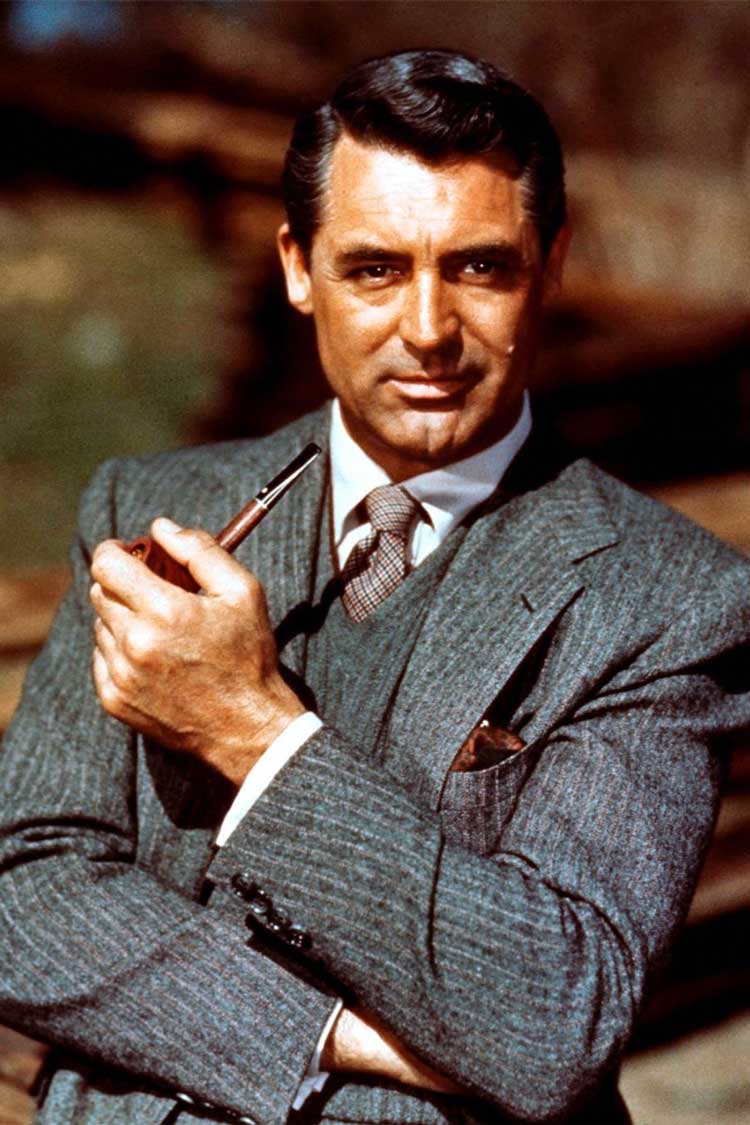
Cary Grant is best remembered on screen for his grey suit in North by Northwest (1959).
The photograph shows a grey striped suit with a white shirt, a patterned tie and a folded pocket square.
He kept to greys, navy and other muted colours, so the cut of the suit did the work.
The lesson: a plain suit that fits well at the shoulders, waist and trouser hem looks smarter than a busy one.
Wear: a mid-grey wool suit, a white shirt, a muted patterned silk tie, a white or brown pocket square and black Oxford shoes.
2. Steve McQueen
Casual jackets and knitwear
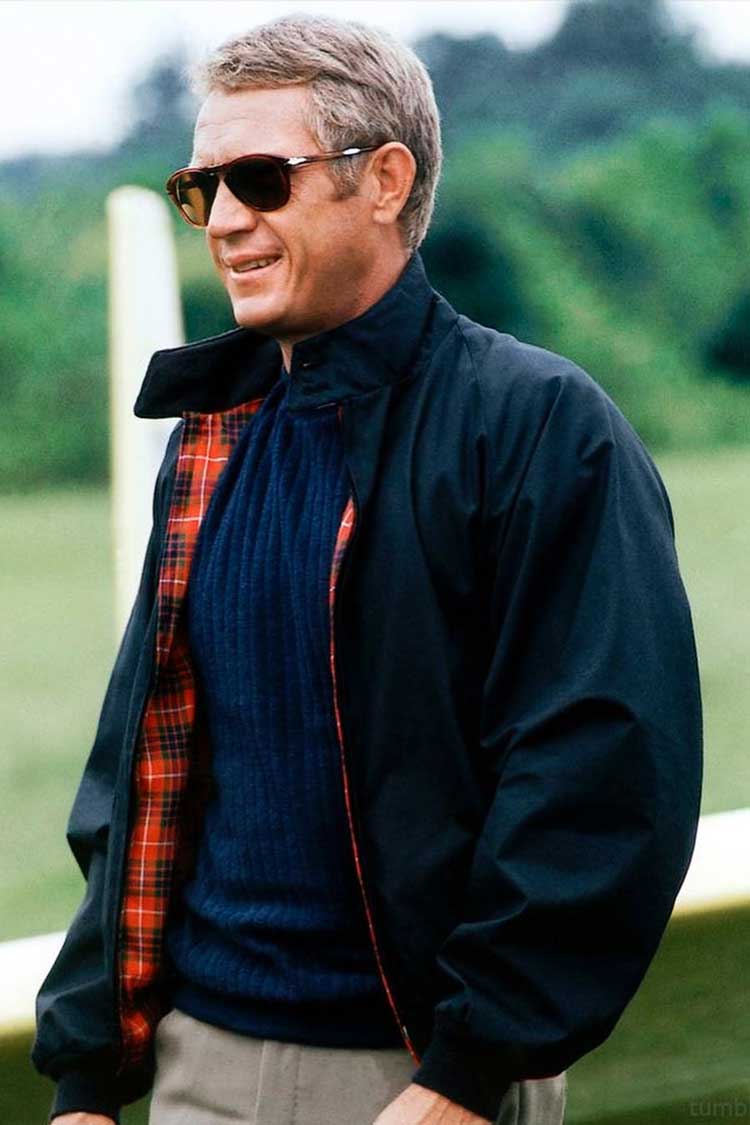
Steve McQueen, nicknamed “the King of Cool”, moved easily between the three-piece suits of The Thomas Crown Affair (1968) and casual clothes off screen.
The photograph shows a navy zip-up jacket with a red tartan lining, in the style now called a Harrington, over a navy cable-knit jumper with grey trousers and dark sunglasses.
The jacket style took its name from Rodney Harrington, a character in the television series Peyton Place who often wore one.
The lesson: a short cotton jacket over a knitted jumper is a smart, practical alternative to a blazer.
Wear: a navy cotton Harrington jacket, a navy or cream cable-knit jumper, grey or stone chinos and brown suede desert boots.
3. John F. Kennedy
Relaxed summer clothes
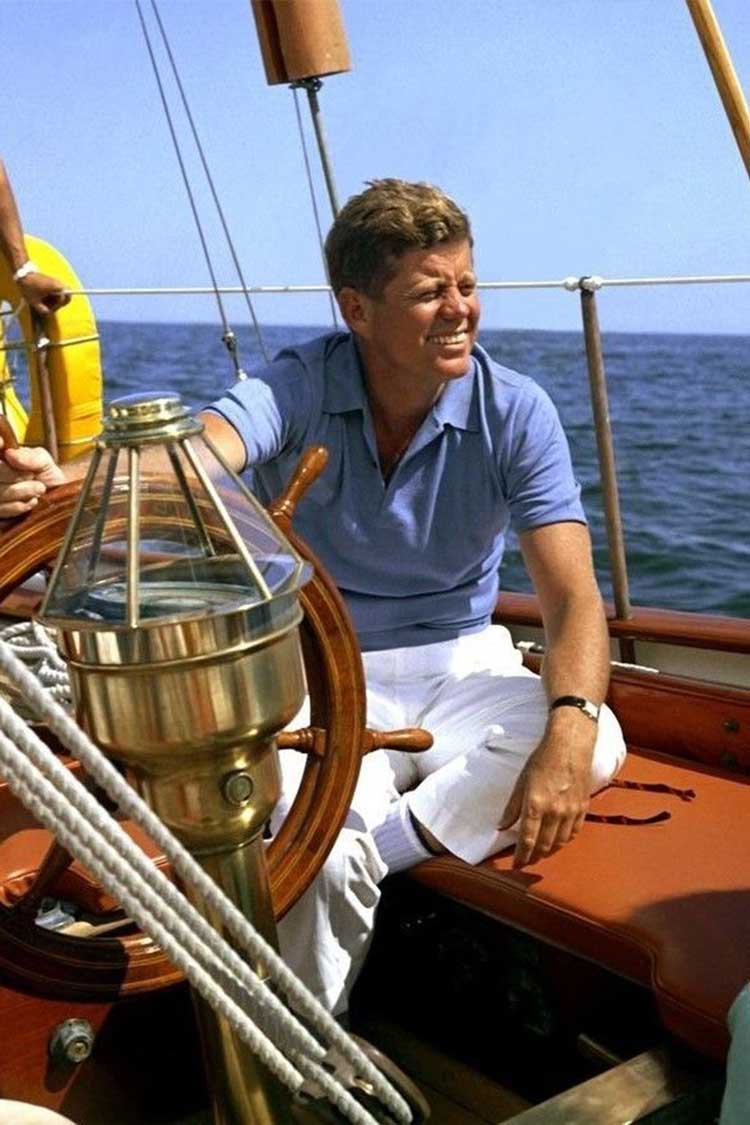
John F. Kennedy, the youngest man elected President of the United States, was widely photographed in slim single-breasted suits and narrow ties.
Off duty, as in this photograph, he wore simple summer clothes: a blue short-sleeved knitted polo shirt and white trousers.
The lesson: a small set of reliable clothes, worn again and again, makes dressing quicker and keeps your look consistent.
Wear: a blue knitted or piqué polo shirt, white or stone cotton trousers, leather boat shoes or canvas plimsolls, and a navy blazer for the evening.
4. Gianni Agnelli
Personal habits within classic tailoring
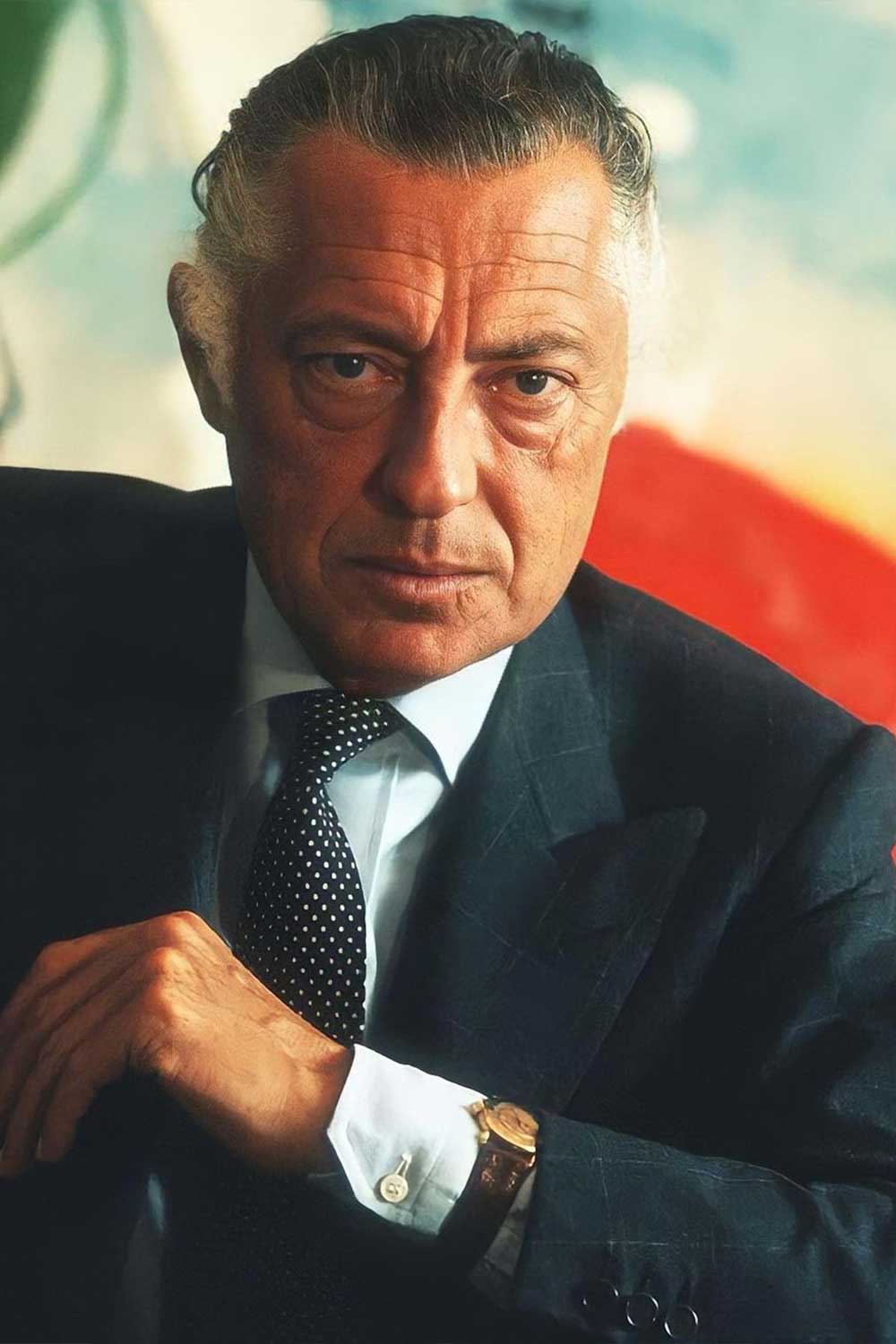
Gianni Agnelli, the head of Fiat, is associated with the Caraceni tailors and with small, personal habits.
The best known is visible here: his wristwatch buckled over his shirt cuff, worn with a navy windowpane suit, a white shirt and a navy polka-dot tie.
He is also remembered for an unbuttoned button-down collar and a tie worn slightly askew, a relaxed approach often described as sprezzatura.
The lesson: one personal touch on an otherwise classic outfit is enough to make it yours.
Wear: a navy suit with a faint windowpane check, a white or light blue shirt, a navy polka-dot tie and dark brown suede loafers.
5. Paul Newman
Casual clothes worn simply
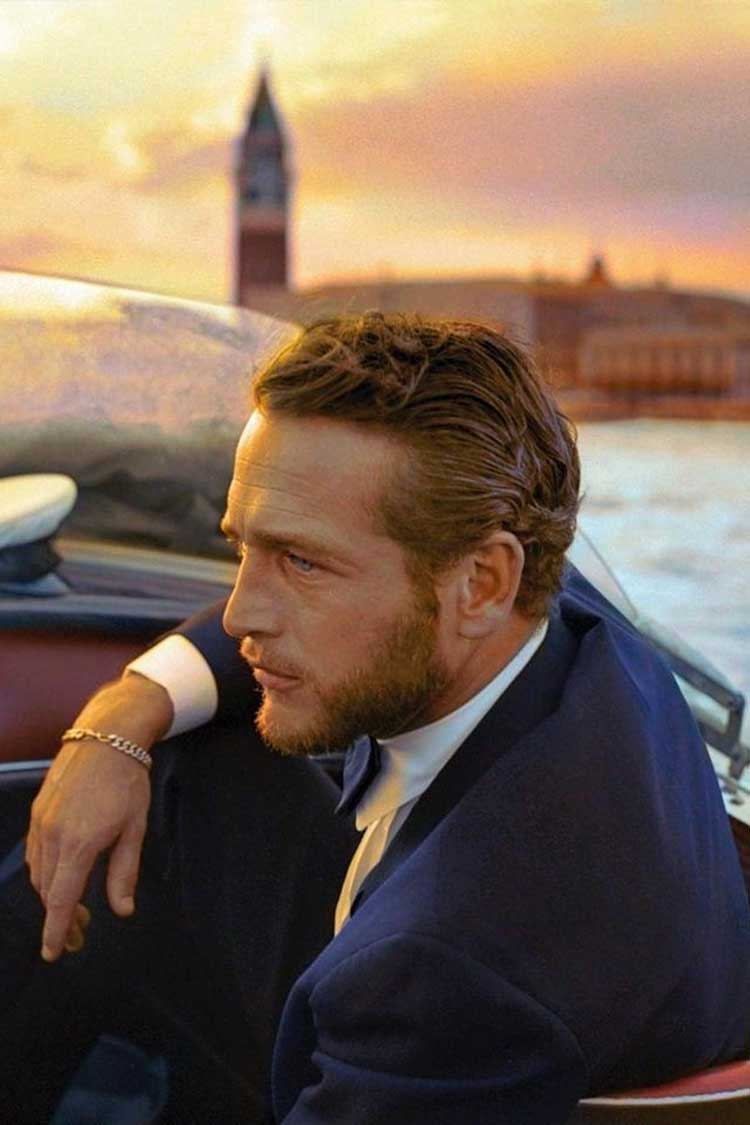
Paul Newman is often cited for relaxed, simple casual dress.
The photograph shows a navy jacket over a white high-necked top.
The lesson: a few good basics in plain colours, such as a white top, a navy jacket and dark trousers, cover most casual occasions.
Wear: a navy cotton or wool jacket, a white roll-neck or crew-neck top, dark jeans or navy chinos and brown suede boots.
6. David Bowie
Bold colour against classic tailoring
David Bowie changed his look many times, from the glam rock of Ziggy Stardust to the sharp tailoring of his “Thin White Duke” persona.
In the 1973 video for “Life on Mars?” he wears a powder-blue suit.
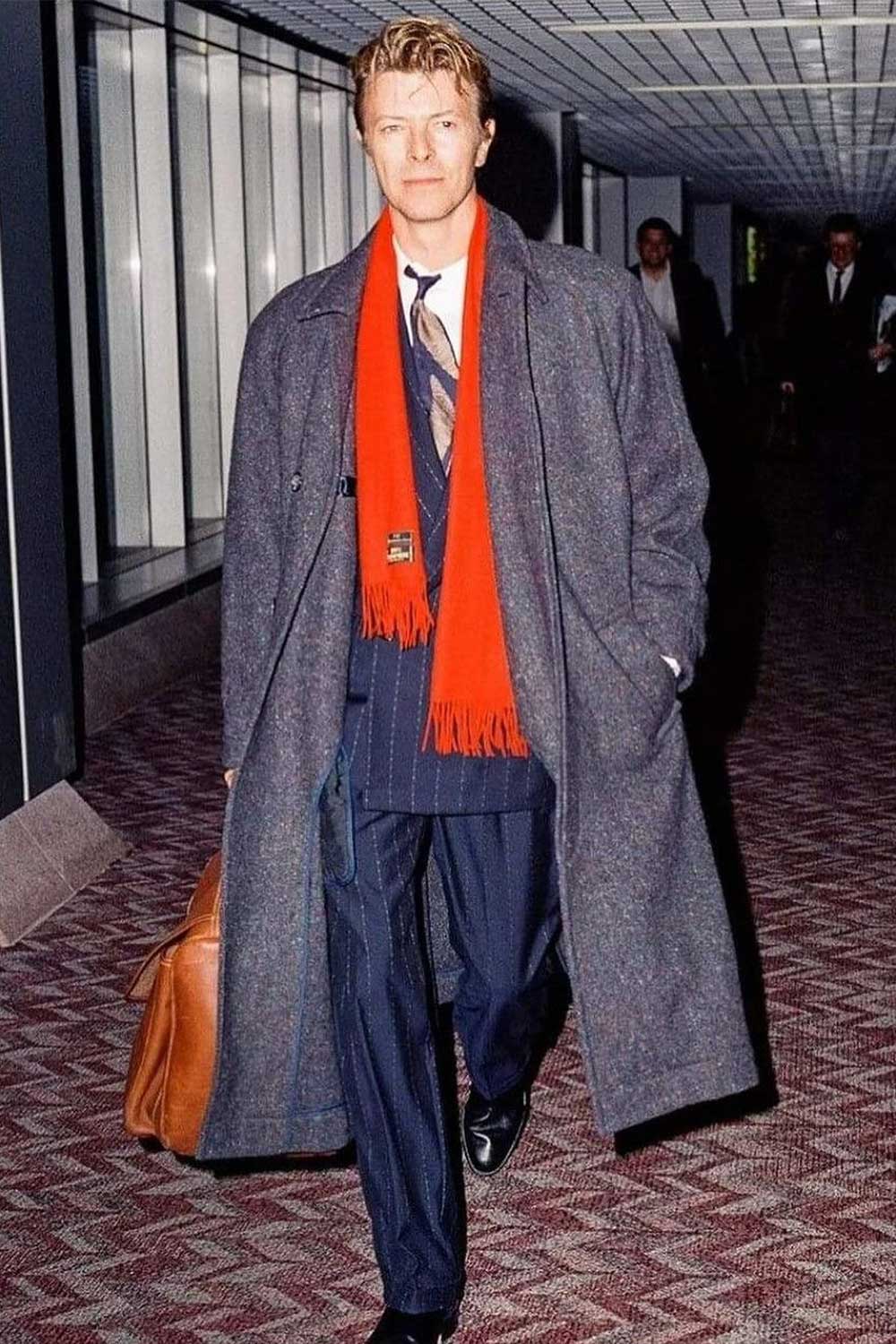
The photograph shows a long grey tweed overcoat over a navy pinstripe double-breasted suit, with a bright orange scarf and a patterned tie.
The lesson: one strong colour, such as a scarf, can lift an otherwise classic outfit.
Wear: a long grey tweed overcoat, a navy pinstripe suit, a white shirt, a patterned tie, a bright wool scarf and black leather shoes.
7. Marlon Brando
Workwear made famous on screen
Marlon Brando made the fitted T-shirt famous in A Streetcar Named Desire (1951), where his character wears it with work trousers, and the leather motorcycle jacket famous in The Wild One (1953).
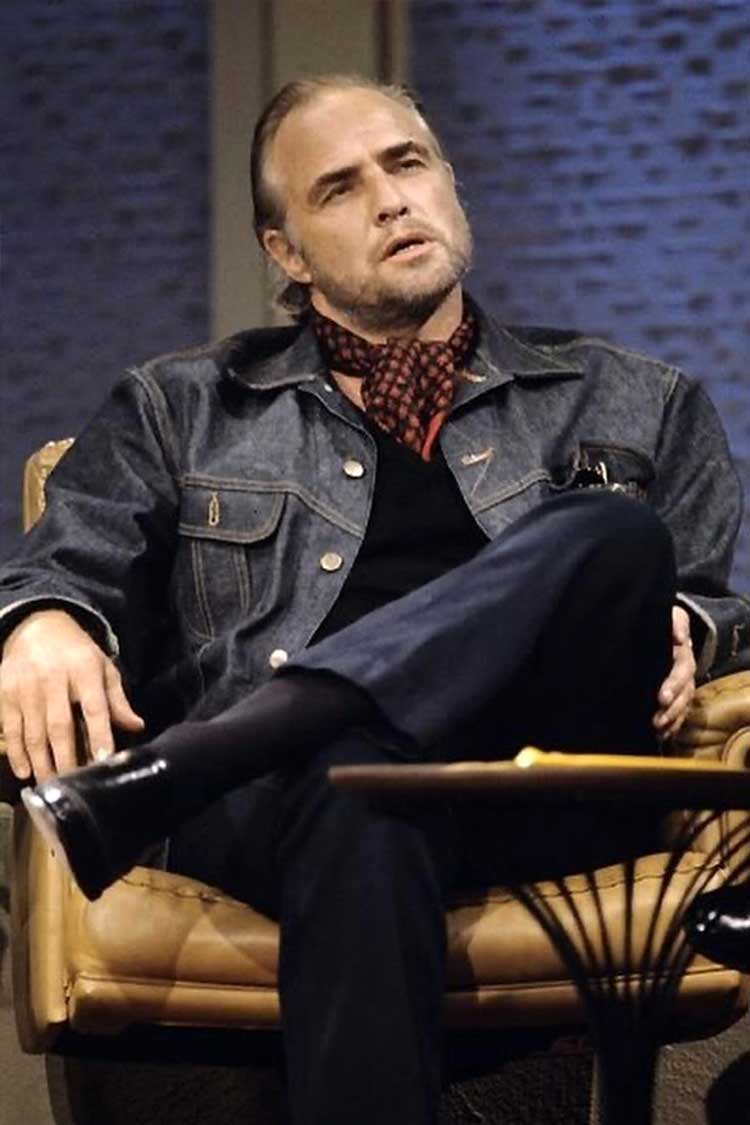
The photograph shows a later look: a dark denim jacket over a black top with a paisley neckerchief, dark trousers and black boots.
The lesson: simple workwear, such as a plain T-shirt, a denim jacket or a leather jacket, looks deliberate when it fits well.
Wear: a dark denim or black leather jacket, a white or black crew-neck T-shirt, dark straight jeans and black leather boots.
8. Fred Astaire
Tailoring that moves
Fred Astaire was a client of the Savile Row tailor Anderson & Sheppard, which says he would dance in the fitting room to check that his coat moved with him, as our guide to Anderson & Sheppard’s clients explains.
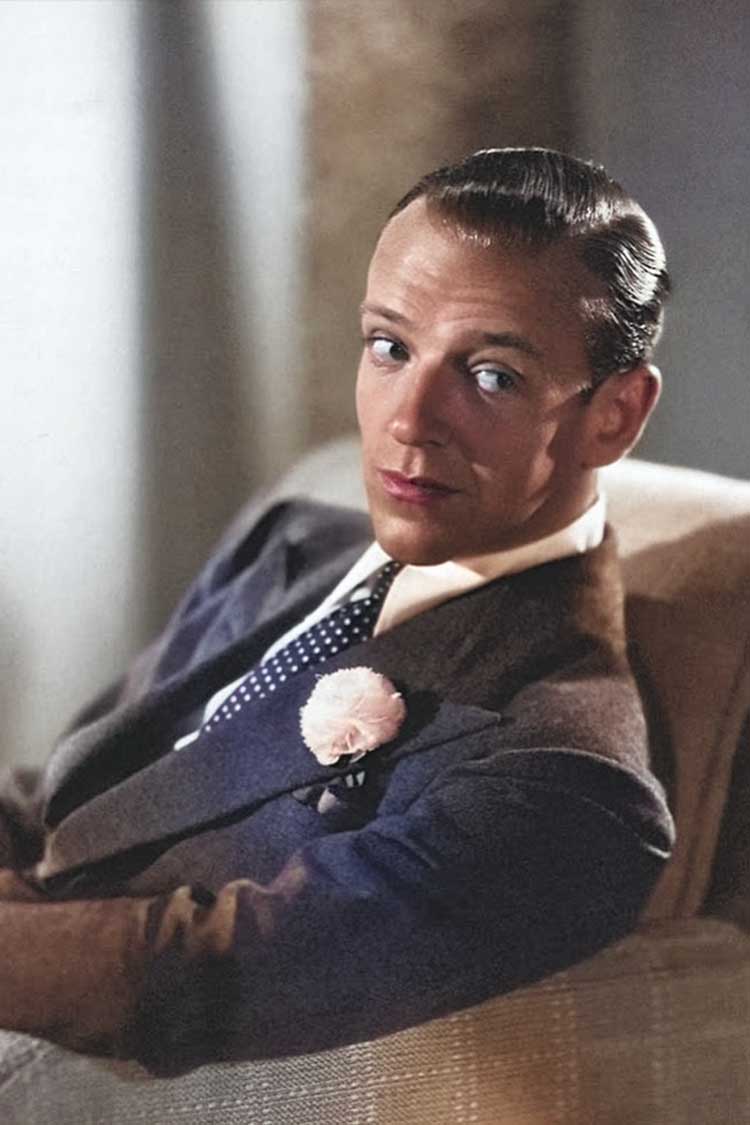
The photograph shows a brown jacket with a white shirt, a navy polka-dot tie and a carnation in the buttonhole.
The lesson: a jacket should let you move freely, and a small detail such as a buttonhole flower or a patterned tie adds personality.
Wear: a brown tweed or flannel jacket, a white shirt, a navy polka-dot silk tie, grey flannel trousers and brown suede shoes.
9. Sidney Poitier
Quiet, consistent tailoring
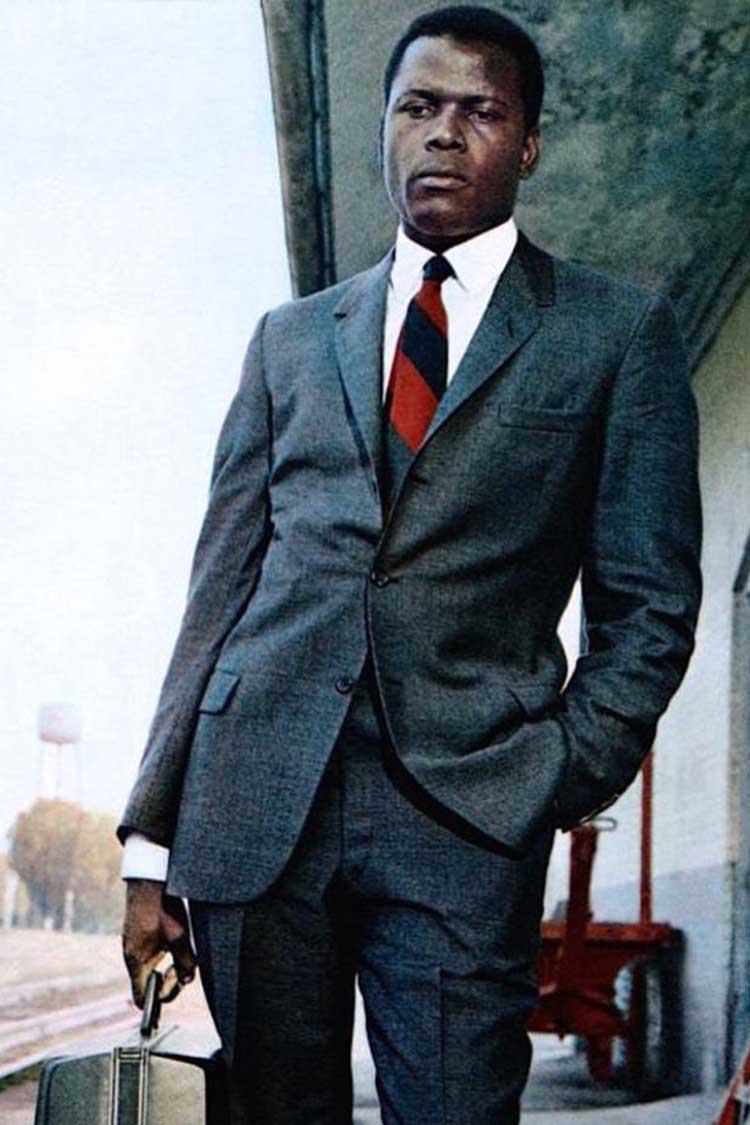
Sidney Poitier, the first Black actor to win the Academy Award for Best Actor, was often photographed in plain, well-cut suits, including as Virgil Tibbs in In the Heat of the Night (1967).
The photograph shows a grey suit with a white shirt and a red and navy striped tie.
The lesson: a plain grey suit with a white shirt and one coloured tie is simple, adaptable and quick to put together.
Wear: a mid-grey wool suit, a white shirt, a red and navy striped tie and black Oxford shoes.
10. King Charles III
Traditional British dress
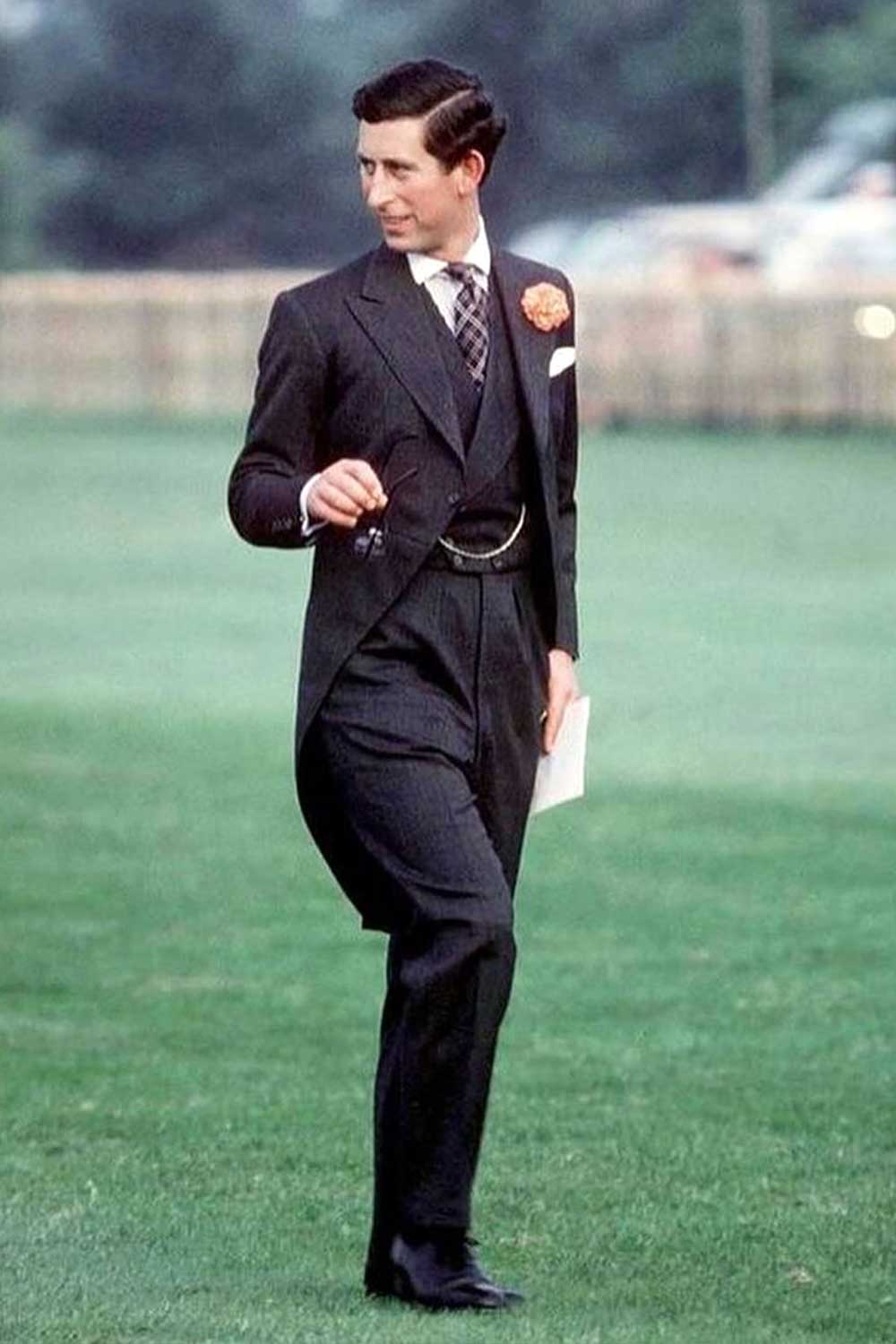
King Charles III is known for double-breasted suits, many from Anderson & Sheppard, and for country clothes in tweed.
He is the patron of the Campaign for Wool, established in 2010 to promote wool as a natural, renewable fibre.
The photograph shows morning dress: a black tailcoat, a grey waistcoat with a watch chain, grey striped trousers, a checked tie and a flower in the buttonhole.
The lesson: well-made clothes that are looked after and repaired can be worn for many years.
Wear: a grey or navy double-breasted wool suit, a pale blue shirt, a patterned silk tie, a white pocket square and dark brown leather shoes; our double-breasted suit guide has more ideas.
What These Ten Men Have in Common
Each one kept to a recognisable way of dressing rather than following every trend.
Most of their outfits use a small range of colours, such as navy, grey, white and brown, with one detail that stands out.
Fit matters more than price, and a high price does not prove higher quality.
For men dressing in a similar way today, see our guide to contemporary men who wear classic menswear.
Styling Beyond the Icons
Borrowing from style icons is a useful start, but your own wardrobe works best when it suits your build, your colouring and your plans.
Further reading: dressing for your body shape, seasonal colour palettes, garments, accessories, our list of luxury fashion brands and the old money style guide.
1. Check Your Body Shape
Start with our body shape quiz for men.
2. Find Your Seasonal Colours
Then take our seasonal colour quiz for men.
3. Take the Fashion Style Quiz
Then take our fashion style quiz for men, and read more about personal fashion style.
Personal Help From The VOU
After the three quizzes, if you would like personal help, you can book one of our paid consultations with The VOU’s image consultants and stylists.
To ask a question first, contact us.
Mandy Meyer’s focus at The VOU is men’s body-shape styling, garment fit and outfit proportions. Her coverage addresses the practical questions behind a wardrobe choice: how a jacket sits across the shoulders, how trousers fall and how different cuts change the silhouette a wearer wants to create.
Her subject areas include the triangle, inverted triangle, rectangle, oval, trapezoid, hourglass and diamond labels used in body-shape styling. These provide starting references for comparing visible proportions; they do not capture every body or prescribe one correct way to dress. The focus connects those observations with garment shape, construction, length and the relationship between the upper and lower parts of an outfit.
Mandy’s editorial coverage combines visual comparisons with fit checks for comfort and movement. Readers can consider whether a cut gives them the room they need, where clothing pulls or gathers and which changes might support their preferred look. The aim is to make menswear choices more understandable while keeping personal preferences and the wearer’s own styling goals central.