
Start here
What’s This About:
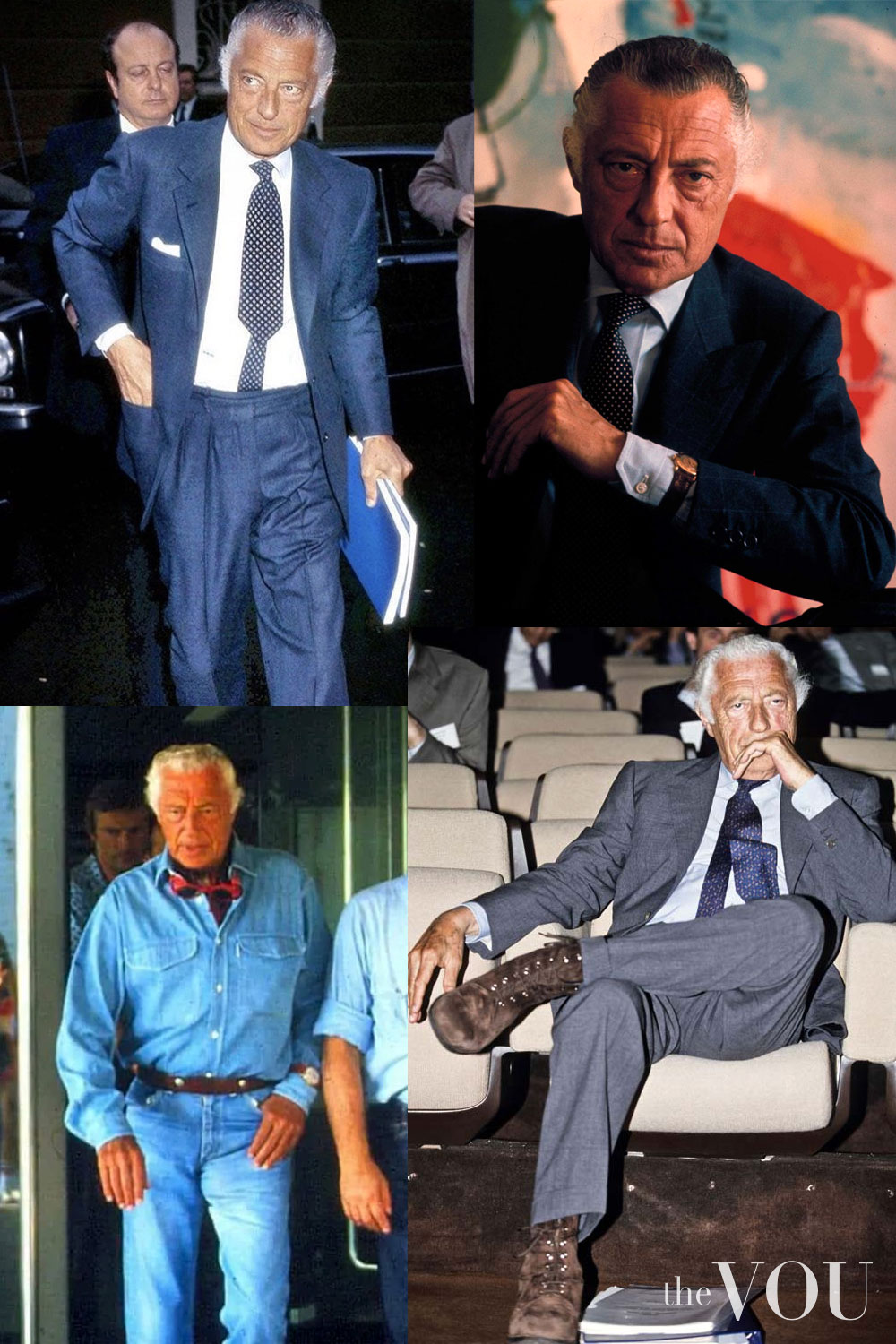
Gianni Agnelli’s style was classic Italian tailoring worn with a few personal habits, such as a watch over the shirt cuff and an unbuttoned button-down collar.
This guide explains the habits he was photographed with and how to borrow them in your own wardrobe, such as:
– Wearing a watch over the shirt cuff, or a quieter alternative
– Letting the back blade of a tie sit free
– Leaving a button-down collar unbuttoned under a soft jacket
– Wearing loafers or suede boots with a flannel suit
– Choosing a popover shirt for summer
and many more!
Borrow one habit at a time and keep the rest of the outfit simple, so the look stays yours.
Key Points:
01Agnelli led Fiat from 1966 and was known for wearing his watch over his shirt cuff.
02He was a client of the Caraceni tailors and was often photographed in grey flannel and double-breasted suits.
03Fit and fabric matter more than any brand when you borrow his ideas.
04Each habit works best on its own, in settings where a relaxed touch suits the occasion.
Gianni Agnelli, who led Fiat from 1966, is one of the men most often named when people discuss Old Money style and Italian tailoring.
He was born in Turin on 12 March 1921, the grandson of Giovanni Agnelli, a founder of Fiat, and the son of Edoardo Agnelli and Virginia Bourbon del Monte.
He became chairman of Fiat in 1966, and Italians called him L’Avvocato (“the Lawyer”) because he held a law degree, although he never practised.
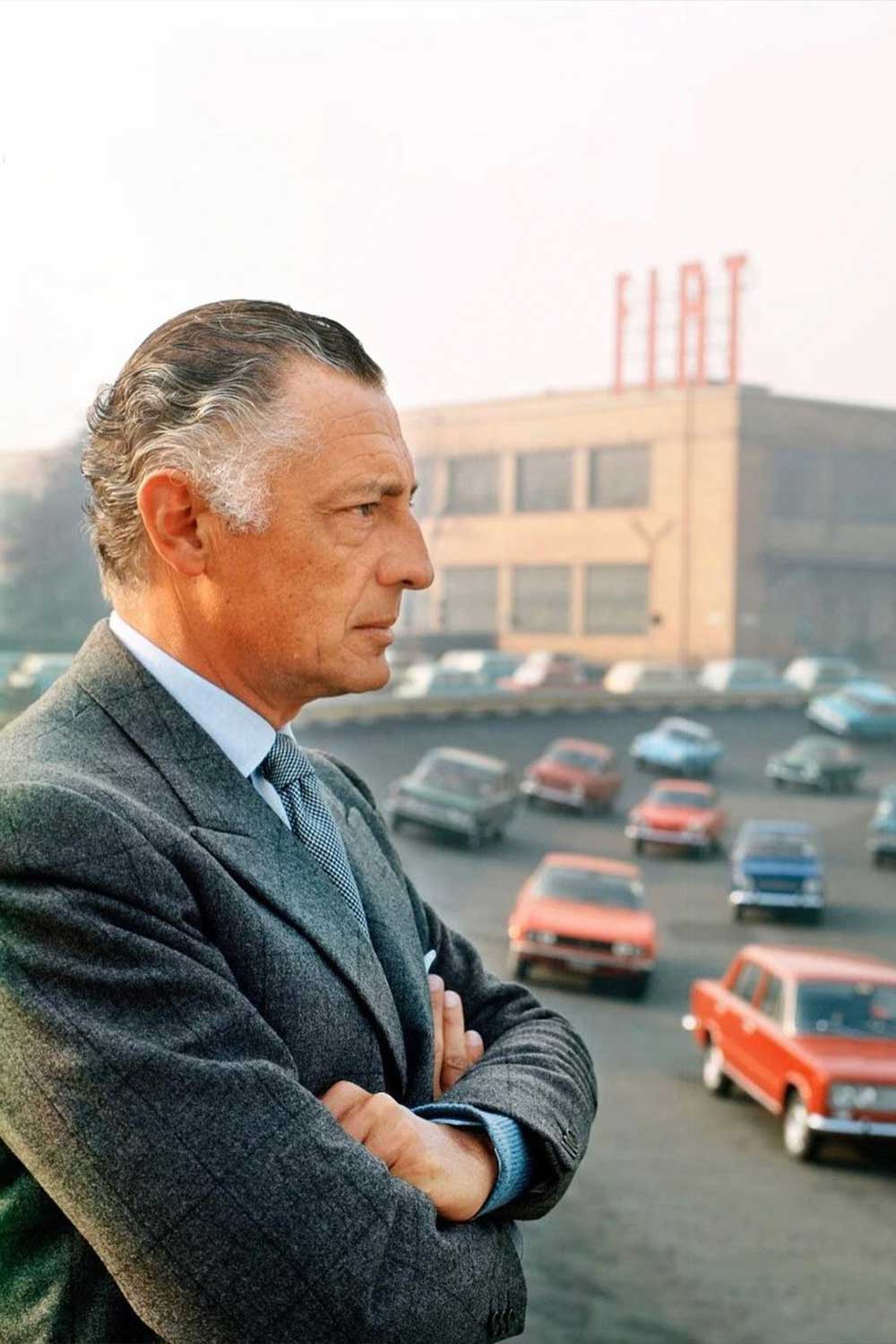
His clothes are remembered as much as his business career, because he wore classic tailoring in a personal, slightly irregular way.
His dressing drew on classic Italian tailoring, with habits of his own that photographers recorded for decades.
The best known are a wristwatch buckled over the shirt cuff, a button-down collar left unbuttoned and a tie worn slightly askew.
He was a client of the Caraceni family of tailors, whose first Rome workshop opened in 1913.
He is also associated with the A. Caraceni house in Milan.
Photographs show him in double-breasted suits in grey and navy, and in tweed and flannel jackets.

Ties, watches and pocket squares carried most of the personality in his outfits.
He was photographed with a tie worn under a knitted waistcoat, and his pocket square was chosen to harmonise with the shirt and tie rather than match them.
His watches included an Omega Seamaster PloProf diving watch and a Patek Philippe World Time, according to a 2023 profile in Time and Tide.

Agnelli was also known for cars, sailing and football, and he moved in international circles that were photographed often.
That public life is one reason he is a fixture of lists of men’s style icons.
Jacqueline Kennedy’s summer stay at Ravello on the Amalfi Coast in 1962, when she spent time with the Agnellis, was photographed by Mark Shaw.

His style is often described with the Italian word sprezzatura, a studied ease that hides the effort behind it.
You do not need to copy him to borrow from him.
The most useful approach is to start from well-fitting classic garments and add one Agnelli habit at a time if it suits you.
Gianni Agnelli’s style habits and how to borrow them
Each habit below is something Agnelli was photographed doing, followed by a practical way to adapt it.
Pick the ones that suit your wardrobe and the places you go.
The watch over the shirt cuff
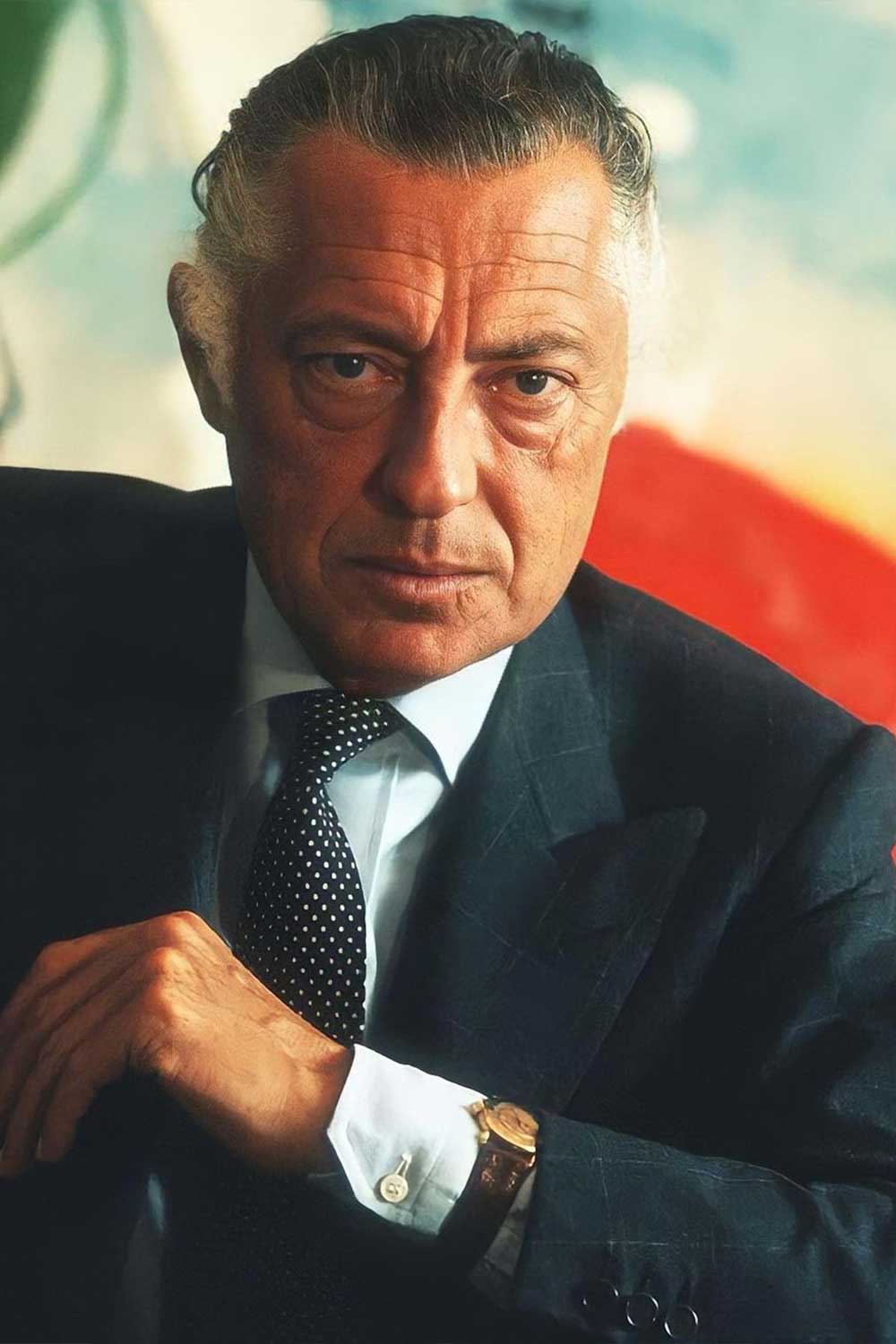
Agnelli buckled his watch over his shirt cuff, and the habit is now so closely tied to him that many people will think of him when they see it.
Writers have offered several explanations, from close-cut shirt cuffs to impatience, but none is confirmed.
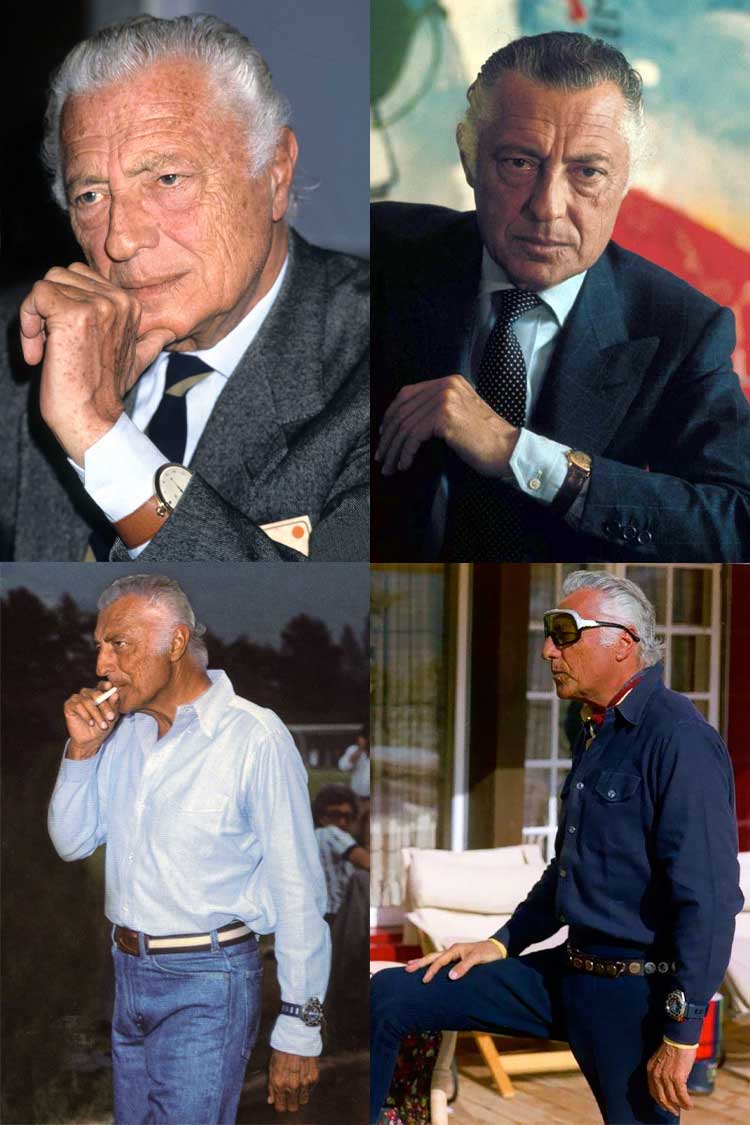
If you like the look, try it with a casual shirt and a simple watch on a leather or fabric strap, where it reads as relaxed rather than showy.
If you prefer something quieter, wear your watch under a barrel cuff that is loose enough to slide over it.
Any well-made watch with a clean dial works; the brand matters less than how it sits with the rest of the outfit.
A tie with a free back blade
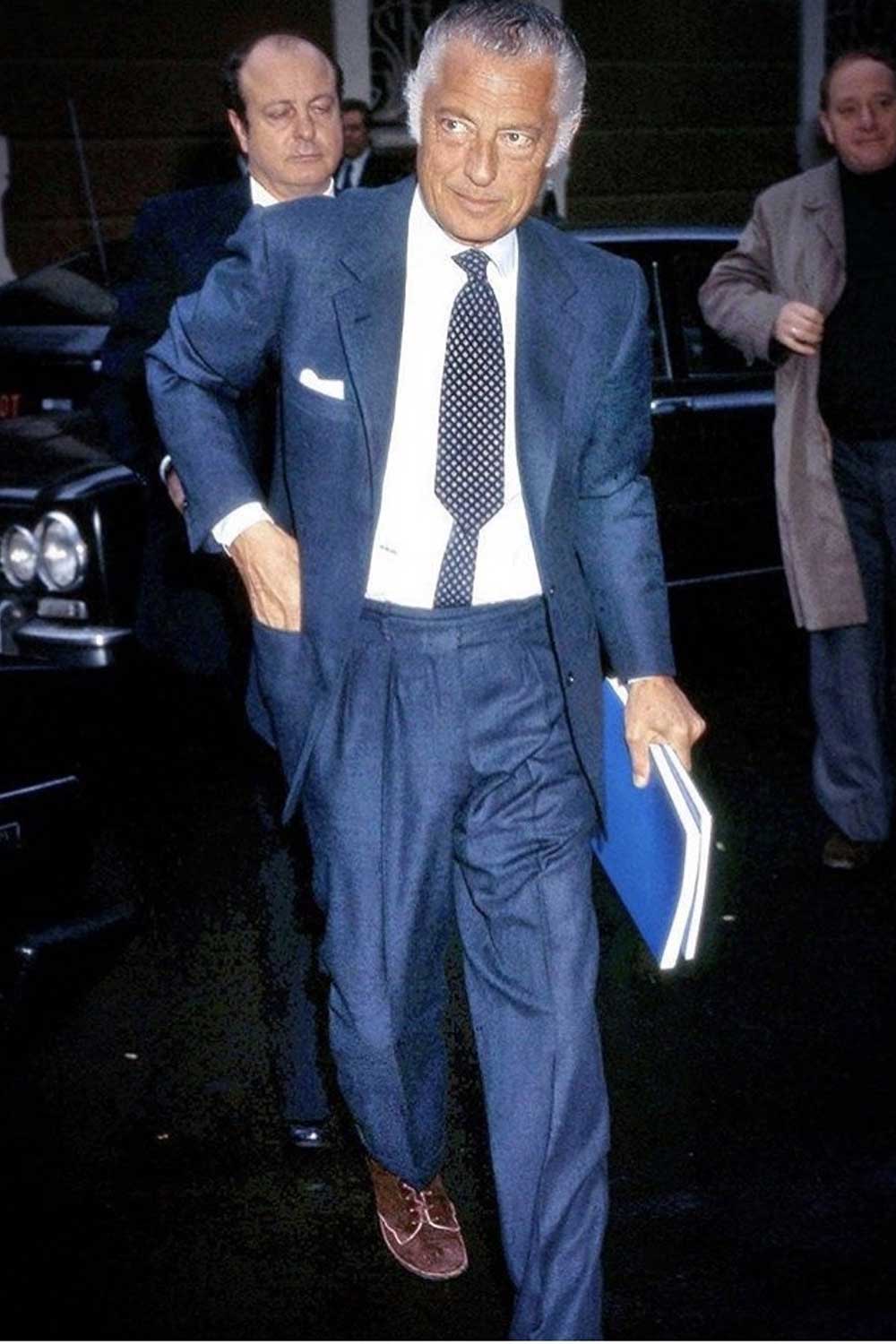
Agnelli often wore his tie slightly askew, with the narrow back blade left free of the keeper loop on the back of the tie.
In some photographs the back blade shows beside or below the front blade.

To borrow the idea, tie your tie so the front blade ends near your waistband and let the back blade sit loose rather than tucked away.
Keep the rest of the outfit neat, so the loose tie looks chosen rather than forgotten.
An off-centre tie and a soft dimple

Agnelli’s tie knot often sat a little off-centre, and the dimple under the knot was soft rather than sharply pressed.
A tie in a soft silk, wool or knitted fabric gives this look more easily than a stiff, heavily lined tie.
Many tie makers sell suitable ties, including Emma Willis, New & Lingwood and Drake’s; none is required.
A button-down collar left unbuttoned

Agnelli often left the buttons of his button-down collar undone, even with a tie, so the collar points sat freely.
With a soft flannel or tweed jacket the effect looks relaxed rather than untidy.
To try it, choose an Oxford cloth button-down with a collar that rolls well, and wear it with a soft jacket or a classic blazer.
Adopt one or two of these habits rather than all of them at once, so the outfit still looks like yours.
Cuffs and buttons worn loosely
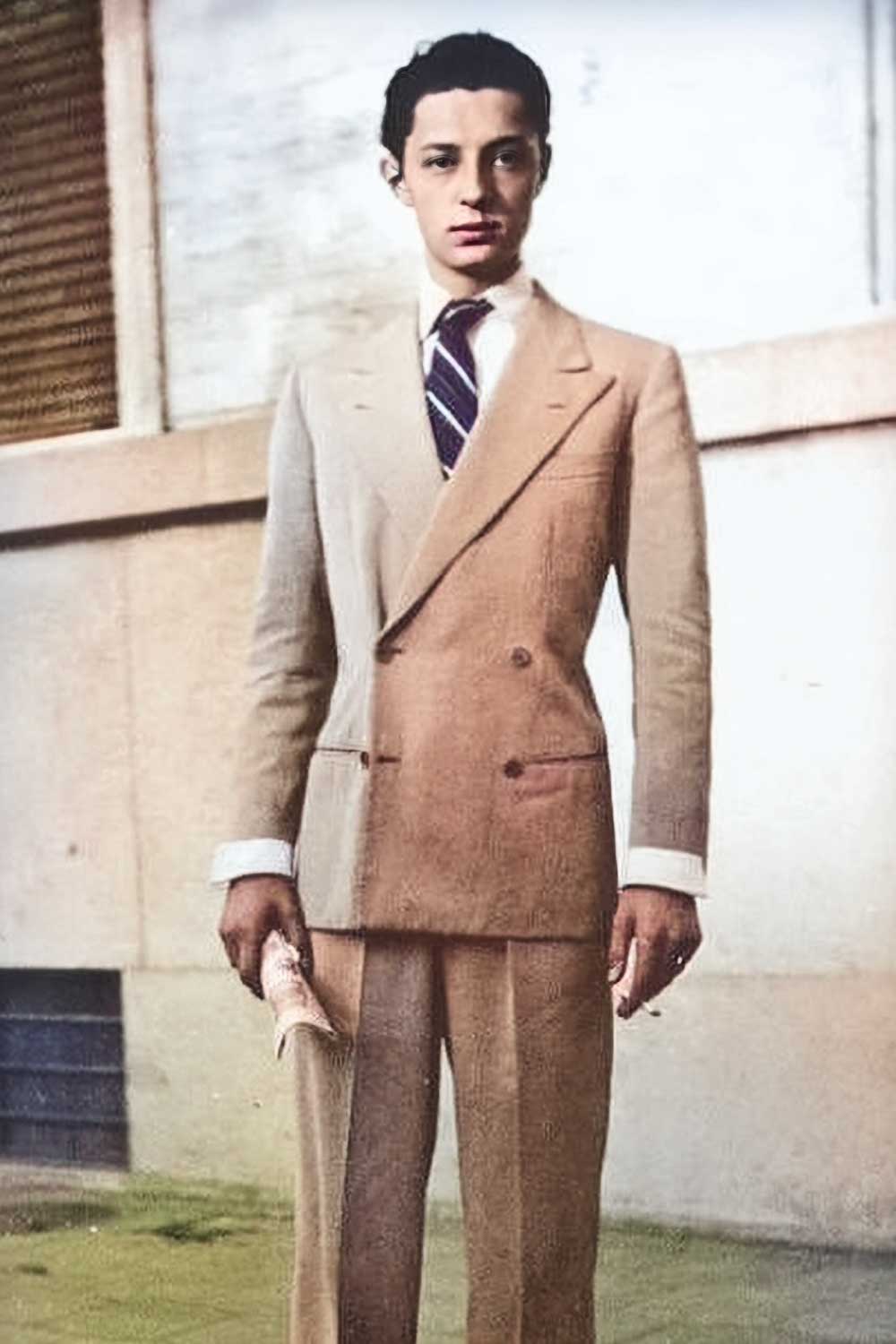
Agnelli was relaxed about buttons: he often left double-breasted jackets open, or fastened only the lower button.
If your jacket has working cuff buttons, fastening them is the usual choice; leaving one open is a matter of taste rather than a sign of quality.
A gentler way to get a similar ease is to leave an unbuttoned barrel shirt cuff showing under a casual jacket.
Loafers, moccasins and boots with suits

Agnelli wore moccasins and loafers with his suits, and in some photographs he wore hiking boots with tailoring.
Loafers with a grey flannel suit are an easy way to make a suit feel less formal.
Choose a shoe that suits the occasion: a sleek loafer or a suede chukka boot works with a flannel suit in a relaxed office, while a formal event usually calls for lace-ups.
Suede chukka boots such as Cheaney’s or Edward Green’s are examples of the style, not requirements.
The popover shirt and denim

Agnelli was photographed in a white popover shirt, which has a short buttoned placket and is pulled on over the head.
He also wore jeans with Western-style denim shirts and with pale shirts in his leisure time.
A popover shirt in white or pale blue cotton or linen is a practical summer shirt that looks neat with jeans or loafers.
Evening wear and grey flannel
Grey flannel suits appear again and again in photographs of Agnelli, and grey flannel remains one of the most useful suit cloths for cooler months.
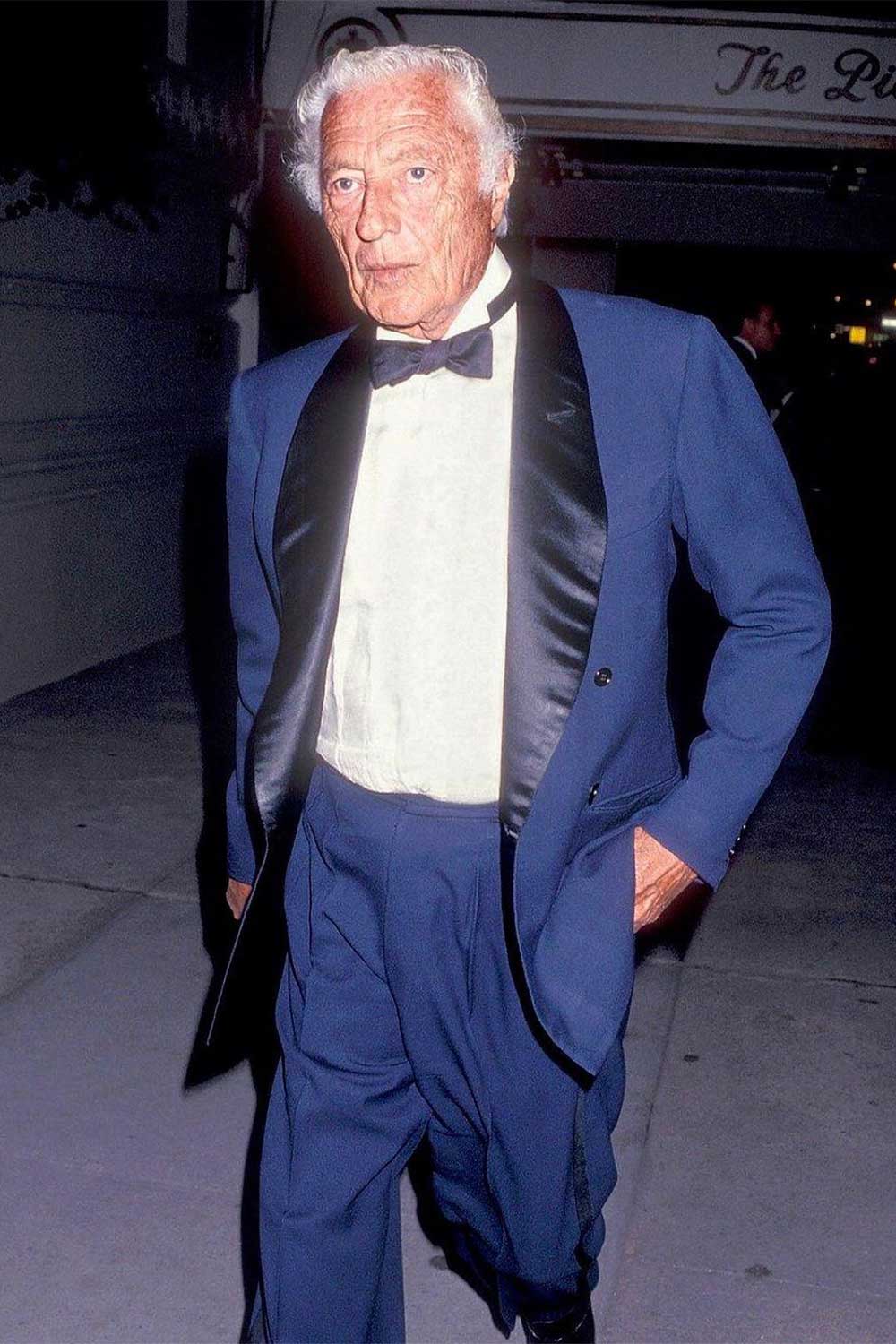
For evenings he was photographed in a blue dinner jacket with black satin lapels, worn open.
Midnight blue has long been accepted for black tie alongside black.
If you choose a coloured dinner jacket, keep the shirt, bow tie and shoes classic so the jacket is the only unusual detail.
Focus on fit, a few good fabrics and one or two personal touches, and use Agnelli as inspiration rather than a costume.
Gianni Agnelli’s life in brief
A short timeline helps place the photographs in context.
Family and war
His father, Edoardo, died in a plane accident in 1935, when Gianni was 14.
During the Second World War he served in the Italian army on the Eastern Front, where he was wounded.
Juventus, a crash and marriage
He was president of Juventus Football Club from 1947 to 1954, and his family remained closely linked with the club.
A serious car crash in 1952 badly injured his leg.
On 19 November 1953 he married Marella Caracciolo di Castagneto, who became well known in her own right for her style and taste.
Fiat
Agnelli became managing director of Fiat in 1963 and took control of the company as chairman in 1966.
Art and later life
In 2002 the Pinacoteca Giovanni e Marella Agnelli opened at the Lingotto in Turin, in a gallery designed by Renzo Piano, with 25 works from the couple’s collection, including paintings by Matisse, Renoir, Manet, Modigliani and Picasso.
Agnelli died in Turin on 24 January 2003, aged 81.
Agnelli-inspired outfits by occasion
These outfits borrow Agnelli’s habits for everyday settings.
Smart casual: wear a navy blazer, dark blue jeans, a blue Oxford button-down with the collar unbuttoned, brown suede loafers and a pocket square that picks up a colour from the shirt.
Formal day wear: wear a grey double-breasted suit, a white shirt, a patterned silk tie with a soft dimple and black or dark brown oxford shoes.
Business casual: wear a fine merino or cashmere crew-neck jumper over a shirt and knitted tie, grey flannel trousers and monk-strap shoes or loafers.
Each outfit can sit in a capsule wardrobe built from garments you already own.
Brands with a similar soft Italian feel
You can create these looks with many brands at different prices; the names below are examples rather than requirements.
Brunello Cucinelli makes soft tailored jackets, knitwear and trousers in a relaxed Italian style.
Loro Piana is known for cloth, knitwear and outerwear with little visible branding.
Tom Ford, Canali and Ermenegildo Zegna all make tailored suits and ties in classic cuts.
A well-fitted jacket from a local tailor or a mid-priced brand will serve these outfits just as well as any label.
Next steps with The VOU
If you would like help applying these ideas to your own wardrobe, take our three free quizzes, then book a consultation if you want personal help.
Our guide to styling by occasion, location, season and time of day explains how one wardrobe adapts to different settings, and you can read about The VOU’s image consultants.
You can also read about dressing for your body shape and your seasonal colour palette, and how to combine garments, footwear and accessories into a quiet, classic look.
A label alone does not make an outfit work, as our article on heritage fashion brands discusses, and dressing for the occasion matters as much as the clothes themselves.
1. Check your body shape
To check your body shape, take the free body shape quiz for men.
2. Find your seasonal colours
To find your seasonal colours, take our free seasonal colour quiz for men.
3. Take the fashion style quiz
Take the free fashion style quiz for men to see which personal fashion styles match your taste, with outfit ideas for each.
None of the quizzes is needed to wear the outfits in this guide.
Book a consultation
Our styling services for men are paid consultations; the shop page lists what each one includes.
You can read more about The VOU’s image consultants and fashion stylists.
You can also contact us with any questions.
Mandy Meyer’s focus at The VOU is men’s body-shape styling, garment fit and outfit proportions. Her coverage addresses the practical questions behind a wardrobe choice: how a jacket sits across the shoulders, how trousers fall and how different cuts change the silhouette a wearer wants to create.
Her subject areas include the triangle, inverted triangle, rectangle, oval, trapezoid, hourglass and diamond labels used in body-shape styling. These provide starting references for comparing visible proportions; they do not capture every body or prescribe one correct way to dress. The focus connects those observations with garment shape, construction, length and the relationship between the upper and lower parts of an outfit.
Mandy’s editorial coverage combines visual comparisons with fit checks for comfort and movement. Readers can consider whether a cut gives them the room they need, where clothing pulls or gathers and which changes might support their preferred look. The aim is to make menswear choices more understandable while keeping personal preferences and the wearer’s own styling goals central.