
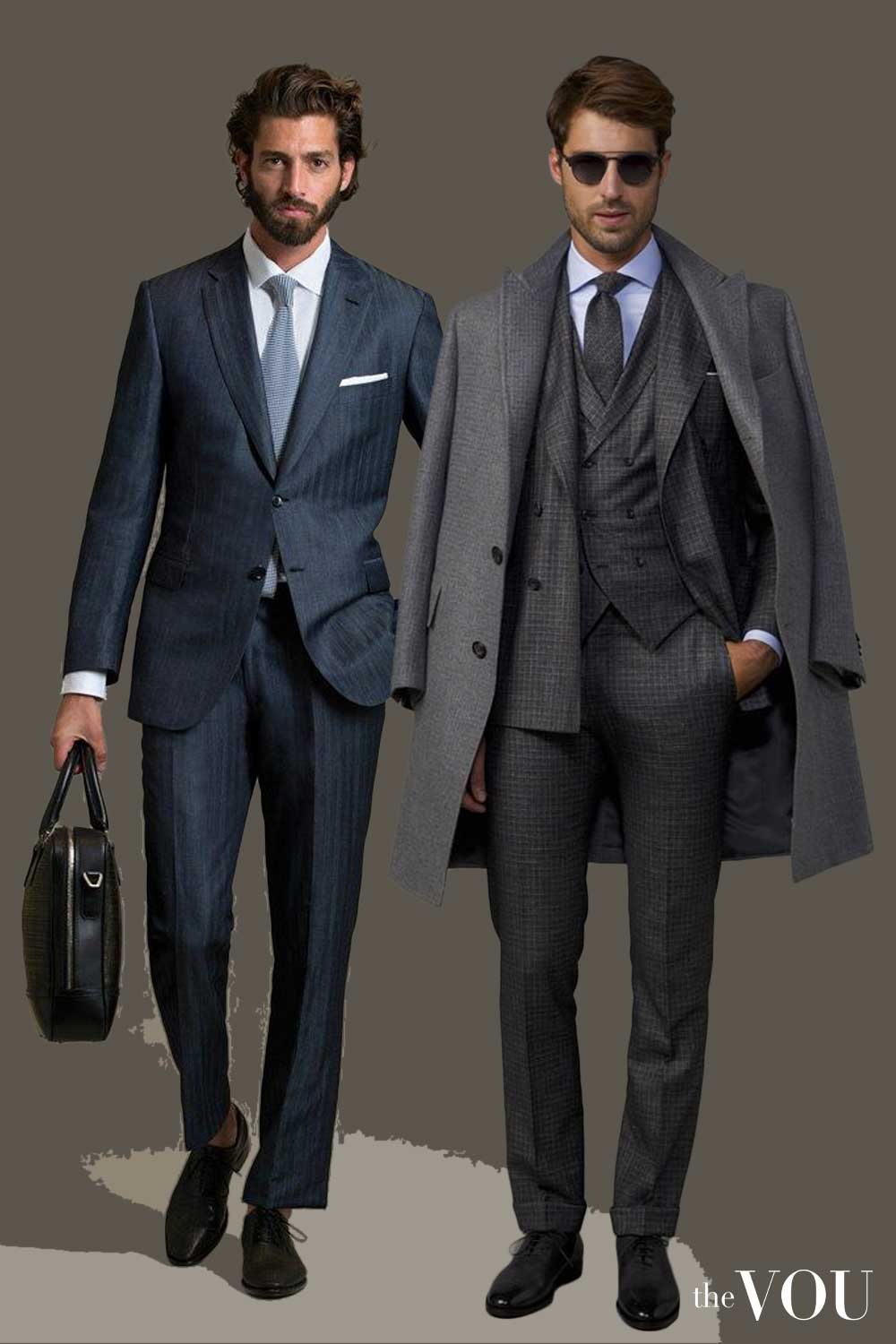
Start here
What’s This About
A business suit can be described in five separate ways, by how many garments it has, how the jacket fastens, how closely it is cut, what cloth it is made of and what pattern it has, and this guide covers ten common styles across those choices.
It explains each style and where it suits, such as
two-piece and three-piece suits
single-breasted and double-breasted jackets
slim and classic cuts
tweed and linen suits for different seasons and settings
chalk-stripe and pinstripe suits
and many more!
The styles combine rather than compete, so a single suit can be, for example, a two-piece, single-breasted, classic-cut navy chalk stripe.
Key Points
01The ten styles answer five different questions about how many garments (two- or three-piece), how the jacket fastens (single- or double-breasted), how it is cut (slim or classic), what cloth it uses (tweed or linen, besides the usual worsted) and what pattern it has (chalk stripe or pinstripe, besides plain).
02For most workplaces, a first suit in navy or charcoal, single-breasted, two-piece and in a cut you find comfortable is the most versatile choice.
03Fit matters more than the maker. A well-altered ready-to-wear suit can look better than an expensive one that does not fit.
04Workplace and occasion decide which styles are appropriate; your employer’s or host’s dress code comes first.
A well-fitting suit remains the core of business dress in many workplaces and for important occasions.
Knowing the main suit styles helps you choose one that suits your work, your climate and your taste.
This article explains ten suit styles a man may want to know, and in some cases own, in a working or curated wardrobe.
It also points out the details tailors discuss, such as the roll of the lapel, the height of the gorge (where collar meets lapel) and the button positions.
Tailoring traditions differ too, from the structured shoulders associated with Savile Row to the soft shoulders of Neapolitan tailoring.
How the Ten Styles Fit Together
The ten styles are not alternatives to choose between; each describes one feature of a suit.
Scroll horizontally to see all columns →
| Question | Styles in this guide |
|---|---|
| How many garments? | 1. Two-piece, 2. Three-piece |
| How does the jacket fasten? | 3. Single-breasted, 4. Double-breasted |
| How is it cut? | 5. Slim fit, 6. Classic fit |
| What cloth? | Smooth worsted wool (the usual default, not numbered here), 7. Tweed, 9. Linen |
| What pattern? | Plain (the most versatile), 8. Chalk stripe, 10. Pinstripe; herringbone and checks appear under tweed |
Answer each question to describe a complete suit; many suits are plain worsted wool, which is not one of the ten numbered styles.
1. Two-Piece Suit, The Business Foundation
The two-piece suit, a matching jacket and trousers, is the standard business suit and the most versatile.
It descends from the lounge suit, which began in mid-Victorian Britain as informal country and seaside wear and gradually became accepted for town and business wear in the early 20th century.
Tailoring traditions shape it differently. American cuts often favour a natural shoulder, Italian tailoring a lighter construction and British tailoring a more structured shoulder.
A common convention is that the jacket covers the seat of the trousers and the sleeve shows a little shirt cuff, adjusted to your arms and preference.
Business Suit Colours
Navy is the most common choice for a first business suit, from a deep navy to a slightly brighter French navy.
Charcoal grey is the other classic, serious without the evening associations of black.
Mid-grey suits are acceptable in most offices, and many people wear them in creative industries; in very traditional settings, darker colours are more usual.
Patterns
Plain cloth is the most versatile.
A fine birdseye weave, almost invisible at conversation distance, adds texture, and a subtle Prince of Wales check in navy and grey suits less conservative offices.
Notable Houses
At the top of the market, Anderson & Sheppard is known for its soft “drape cut”, Huntsman for a more structured, often one-button jacket, and Gieves & Hawkes for military heritage.
Ready-to-wear makers at many price levels offer suits in a Savile Row style, and some blend Italian sprezzatura with British tailoring; check current ranges, because collections change.
Styling Tips
With a spread-collar shirt and a silk tie, a two-piece suit is ready for formal business.
With a button-down Oxford shirt and a knitted tie, it suits a more relaxed office.
A textured suit jacket can sometimes be worn with other trousers, while a smooth worsted jacket usually looks best with its own trousers.
Super numbers such as 110s or 130s describe the fineness of the wool; finer cloths feel softer but are often less hard-wearing, so a mid-range cloth suits a suit you will wear often.
2. Three-Piece Suit With Jacket, Trousers and Waistcoat
The three-piece suit adds a matching waistcoat to the jacket and trousers and is one of the more formal options in classic business attire.
The waistcoat’s place in men’s dress is often traced to Charles II’s court in the 1660s, although the matching three-piece business suit came much later.
A well-fitted waistcoat covers the trouser waistband, which is easiest with higher-rise trousers, and its bottom button is traditionally left undone.
Colours
Mid-to-dark greys and navy are the most common colours for three-piece suits.
Deep brown worsted suits less conservative settings, especially in autumn and winter.
Very light colours make a three-piece suit look more like summer or wedding wear.
Patterns
Chalk stripes are a classic choice for three-piece suits.
Rope stripes, bolder than chalk stripes, have a traditional City feel, and subtle Prince of Wales checks and birdseye weaves are quieter options.
Notable Tailors
Henry Poole, which the firm credits with cutting an early dinner jacket for the future Edward VII, Anderson & Sheppard and Huntsman are among the Savile Row houses known for three-piece suits.
Many ready-to-wear makers also sell three-piece suits, or matching waistcoats you can add to a two-piece suit.
Styling Points
Waistcoats can have straight or pointed fronts, and a lapelled waistcoat adds formality.
Some wearers prefer a slightly shorter trouser break with a three-piece suit; this is a matter of taste.
A pocket watch on a chain is optional and can look like costume if overdone.
Seasonal Adaptations
Lighter cloths make three-piece suits more comfortable in warm weather, and heavier cloths or flannel suit winter.
Take the waistcoat off on hot days if the setting allows, or wear the jacket and trousers on their own.
3. Single-Breasted Suit, The Modern Classic
The single-breasted suit, with a single row of buttons, is the most widely worn business suit and suits almost any business occasion.
Two-button jackets are the most common today, while one-button and three-button jackets are also available.
On a two-button jacket the top button is fastened and the bottom left open; on a single-breasted jacket, unfasten when you sit.
Colours
Navy, mid-blue and grey are the most versatile single-breasted suit colours.
Charcoal suits evening business events as well as daytime work.
Brown or dark green suits look more relaxed and suit creative or less formal settings.
Patterns
Windowpane checks, shadow stripes, sharkskin weaves and herringbone all suit single-breasted suits, from the quietest (shadow stripe) to the more noticeable (windowpane).
Makers
Single-breasted suits are offered by almost every tailor and ready-to-wear maker, from Savile Row houses to high-street retailers.
Choose by fit, cloth and price rather than name, and check current ranges before buying.
Styling
For traditional offices, pair a single-breasted suit with a spread-collar shirt and a grenadine or other quiet tie.
In relaxed offices, a fine merino roll neck in winter can replace the shirt and tie.
A plain white linen pocket square adds a quiet finish.
4. Double-Breasted Suit, A Formal Statement
The double-breasted suit has overlapping fronts, two columns of buttons and usually peaked lapels.
It is often linked to naval reefer jackets, and a six-button front with two buttons that fasten is the most common arrangement.
A double-breasted jacket is usually kept fastened, including when seated, so it should close without pulling across the chest or hips.
Colours
Navy is the classic colour, and charcoal and mid-grey are strong alternatives for traditional business settings.
Midnight blue suits evening business functions.
Patterns
Rope and chalk stripes are traditional on double-breasted suits, and glen checks, shadow stripes and birdseye weaves are quieter options.
Makers
Many Savile Row houses, including Anderson & Sheppard, Huntsman and Gieves & Hawkes, make double-breasted suits, and many ready-to-wear makers offer them too.
Styling
Spread or cutaway collars sit well with the wide lapels of a double-breasted jacket.
A tie with some substance, such as heavy silk or grenadine, balances peaked lapels.
Black or dark-brown Oxfords suit the formality of the style.
Where It Suits
Double-breasted suits suit board meetings, formal functions and traditional industries where suits are common.
Fit and comfort decide whether the style works for you; a tailor can advise on button position and lapel width for your build.
5. Slim-Fit Suit, A Closer Cut
A slim-fit suit is cut closer to the body, with a narrower trouser leg and often a slightly shorter jacket.
It should follow the body without pulling, so you can sit, reach and raise your arms comfortably.
A slim cut is a preference, not a requirement of business dress; if it restricts movement, a classic cut or alterations may suit you better.
Colours
Navy, bright navy, mid-blue and steel grey are popular in slim cuts, and brown suits less formal settings.
Patterns
Small-scale patterns, such as micro-checks, pin dots, small glen checks and fine birdseye weaves, suit the cleaner lines of a slim cut.
Fit Points
Shoulder fit matters most, because a close cut leaves less room for alteration there.
Trousers should taper gently without clinging, and you should be able to sit comfortably.
Styling
Slim suits pair well with fitted shirts and moderate spread collars.
Tie width is often matched loosely to lapel width, and very narrow or very wide ties look dated in most offices.
Monk straps and Oxfords both suit slim suits.
Where It Suits
Slim cuts are common in creative, technology and many professional-services offices, and in less formal business events.
6. Classic-Fit Suit, Comfortable and Traditional
A classic-fit suit has more room through the chest, waist and leg than a slim fit, with a straighter trouser leg.
It is comfortable for long days and suits traditional settings, and many people prefer it at any age.
Colours
Navy, charcoal and mid-grey are the classic colours, with darker greens and subtle burgundy weaves for those who want variety.
Patterns
Glen checks, chalk stripes, Prince of Wales checks, muted houndstooth and herringbone all suit a classic cut.
Fit Points
The shoulder has light structure, the sleeves fall straight, the jacket conventionally covers the seat and the trouser leg is straight with little taper.
Makers
Traditional Savile Row houses such as Henry Poole and Huntsman cut classic suits, and many ready-to-wear makers offer classic or regular fits at lower prices.
Styling
Spread-collar shirts in white or pale blue, regimental-stripe or quietly patterned ties and black or dark-brown Oxfords are classic partners.
Where It Suits
Classic cuts suit traditional business settings, formal presentations and occasions where a conservative suit is expected.
7. Tweed Suit for Texture and Heritage
Tweed suits began as country and sporting wear and now appear in creative and relaxed business settings.
Lighter modern tweeds are more practical indoors than traditional heavy cloths, although tweed is still warmest in autumn and winter.
Colours
Grey, slate blue, olive and brown tweeds are common, and charcoal herringbone is usually the most conservative choice.
Patterns
Donegal tweed, with small flecks of colour, herringbone, barleycorn, district checks and small gun-club checks are common patterns.
Makers
Tweed suits are made by specialist tweed tailors, heritage outfitters and cloth merchants such as Holland & Sherry, who supply cloth to tailors.
Styling
A light-blue shirt and a knitted tie soften tweed’s rustic character, and brown suede Oxfords or monk straps suit the cloth.
Where It Suits
Tweed suits creative agencies, architecture practices, publishing and academic settings, and autumn and winter meetings in relaxed offices; in very formal settings, worsted suits are more usual.
8. Chalk-Stripe Suit, A Traditional City Look
A chalk-stripe suit has soft, widely spaced stripes that look as if drawn in tailor’s chalk, and it has a long association with banking and the City of London.
Chalk stripes are softer and usually wider apart than pinstripes.
Colours
Navy with grey stripes and charcoal with white stripes are the traditional combinations; grey with silver stripes is a softer alternative.
Stripe Variations
Stripe spacing and thickness vary from quiet to bold, and shadow stripes, woven tone-on-tone, are the subtlest option.
Styling
White or pale-blue spread-collar shirts, burgundy or navy ties and black Oxfords suit a chalk-stripe suit.
Where It Suits
Chalk stripes suit traditional financial and legal settings, board presentations and formal business events.
9. Linen Suit for Warm-Weather Comfort
Linen suits are cool and breathable, and they crease more than wool, which many people accept as a natural trait of the cloth.
Linen-wool and linen-cotton blends crease somewhat less.
Colours
Ivory, sand, pearl grey, pale blue and navy linen all suit summer; darker shades look more businesslike.
Construction
Linen jackets are often unlined or half-lined and softly constructed, which keeps them cool.
Makers
Cloth makers such as Loro Piana supply linen and linen-blend cloths, used in many tailored garments; Savile Row tailors such as Anderson & Sheppard also make linen suits, and many ready-to-wear makers sell them at lower prices.
Where It Suits
Linen suits suit summer business events, outdoor functions, warm climates and relaxed offices.
For formal meetings, darker linen or linen-wool blends with a crisp white shirt look most businesslike; check whether the occasion expects a wool suit.
10. Pinstripe Suit, Crisp and Traditional
A pinstripe suit has fine, closely spaced stripes, crisper and usually narrower than chalk stripes.
It is a traditional business pattern, especially in finance and law.
Colours
Navy with white pinstripes is the classic combination, with grey or charcoal grounds as alternatives.
Stripe Choices
Narrower spacing looks quieter and wider spacing bolder; choose a spacing that suits your office.
Modern Cuts
Modern pinstripe suits come in slim and classic silhouettes and are often less heavily structured than older versions.
Choosing Your Suits, a Conclusion
These ten styles describe different features of a suit, and most suits combine several of them.
A practical first suit for many workplaces is a navy or charcoal, two-piece, single-breasted suit in a cut you find comfortable.
Further suits might add a three-piece or chalk stripe for formal occasions, a double-breasted suit if you like the style, and a linen or tweed suit for the seasons and settings where they fit.
Fit matters across all ten styles, and good alterations can make a ready-to-wear suit look much better.
Check your workplace’s dress code and the occasion, then choose the suit that fits both and feels comfortable.
Go Further with Personal Styling
If you want to take your styling further, some people find it helpful to work with an image consultant; our guide to what image consultants do explains the service.
Image consultants often consider your body shape and seasonal colour palette when suggesting clothes, and some people use these as starting points, though neither is required to dress well.
Stylists also plan outfits by occasion, location, season and time of day, choosing garments, footwear and accessories, sometimes from heritage fashion brands.
If you would like to explore these tools yourself, The VOU offers quizzes.
1. Find Your Body Shape
Our body shape quiz for men describes your proportions, which some readers use when comparing suit cuts.
2. Find Your Seasonal Colours
Our seasonal colour quiz for men suggests a colour palette you can use when choosing colours for your outfits, if you find a colour system helpful.
3. Find Your Fashion Style
Our fashion style quiz for men suggests a personal fashion style with outfit ideas and brands to explore.
Our styling services for men are paid consultations; the shop page lists what each one includes.
Brand names alone do not make an outfit; fit, suitability and how you combine your clothes matter more, and our guide to logo-heavy luxury brands and how to wear them covers branded clothing in more detail.
You can also read about The VOU’s image consultants and stylists.