

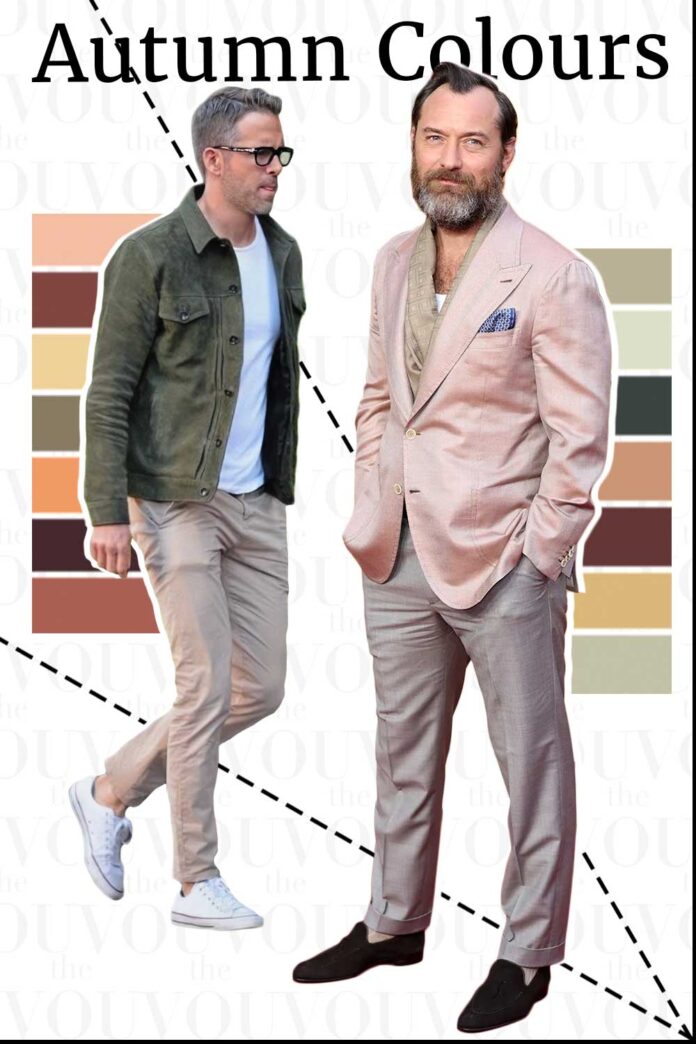
What’s This About:
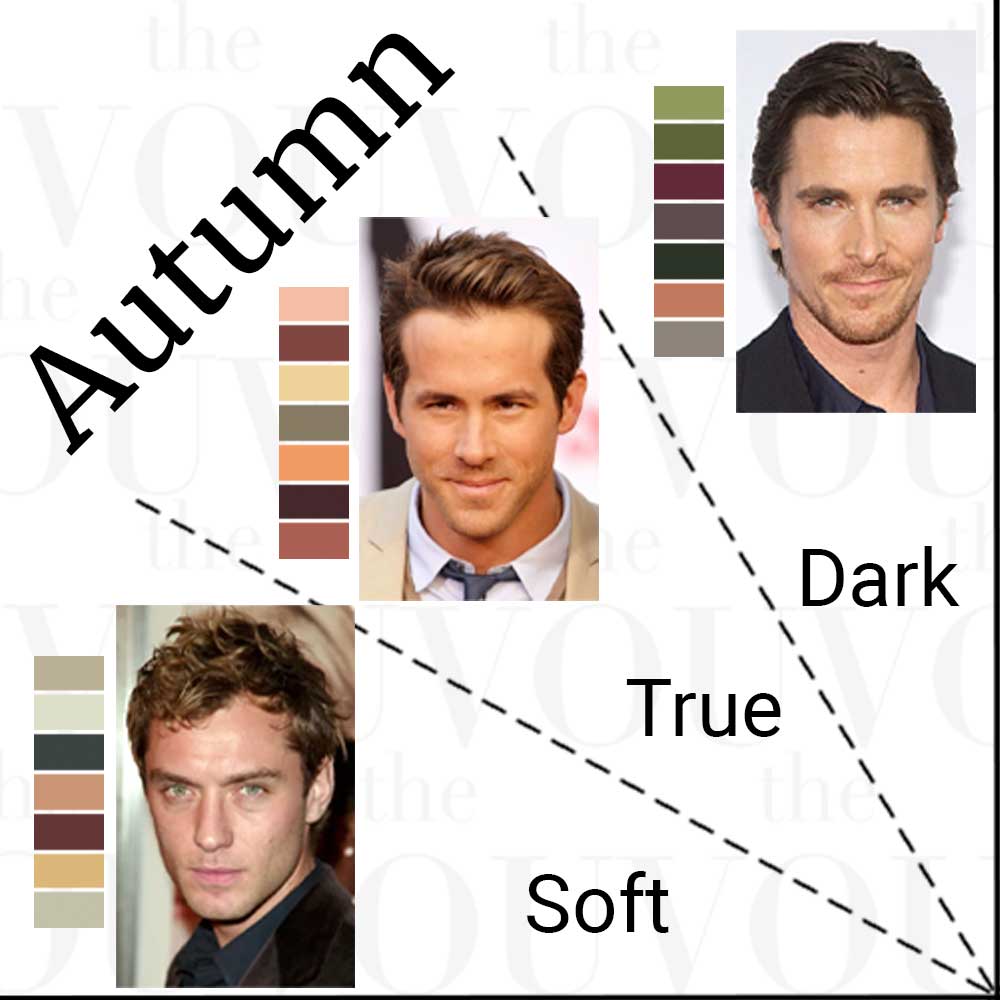
Autumn is the warm and muted family in seasonal colour analysis, and it is divided into three palettes: Soft Autumn, True/Warm Autumn and Deep/Dark Autumn.
This guide explains what the three have in common, what separates them, and which of the three detailed guides to read next, such as:
– how Autumn differs from Spring, Summer and Winter in plain terms
– a side-by-side table of the three Autumn palettes
– the key colours of each palette, with swatch pictures
– the garment comparisons that tell Soft, True and Deep apart
– how Autumn men handle black, navy and white
and many more!
The main guide to seasonal colour analysis for men gives an overview of all twelve palettes with celebrity examples and outfit ideas for each; this page is the Autumn chapter, and it explains the terms it uses.
Key Points:
- All three Autumn palettes lean warm. What separates them is which quality leads: in Soft Autumn it is mutedness, in True/Warm Autumn it is warmth, and in Deep/Dark Autumn it is depth.
- Soft Autumn is not a cool palette. An earlier version of this page described it as having slightly cool undertones; it is better described as muted colour with a gentle warm lean, sitting next to the cool-leaning Soft Summer.
- Golden skin, warm brown or auburn hair and hazel or amber eyes are common Autumn clues, but a checklist of features cannot settle a palette; a repeated garment comparison in daylight is better evidence, and it can still leave two palettes in play.
- Stark white, cool black and icy pastels are the colours Autumn guides usually list to avoid near the face. Cream, warm dark brown and a warm navy do the same jobs; black itself can still be worn away from the face.
- Celebrities named in this guide are described as Autumns by commentators, not by any assessment The VOU holds. Use their photographs as outfit references.
Want to learn more? Continue reading the full article below ↓
Seasonal colour analysis groups colours into four families named after the seasons, and then, in the twelve-season convention this site uses, divides each family into three palettes.
Spring and Autumn are the two warm-leaning families; Summer and Winter lean cool. Within each, the three palettes separate lighter from deeper and clearer from more muted colouring.
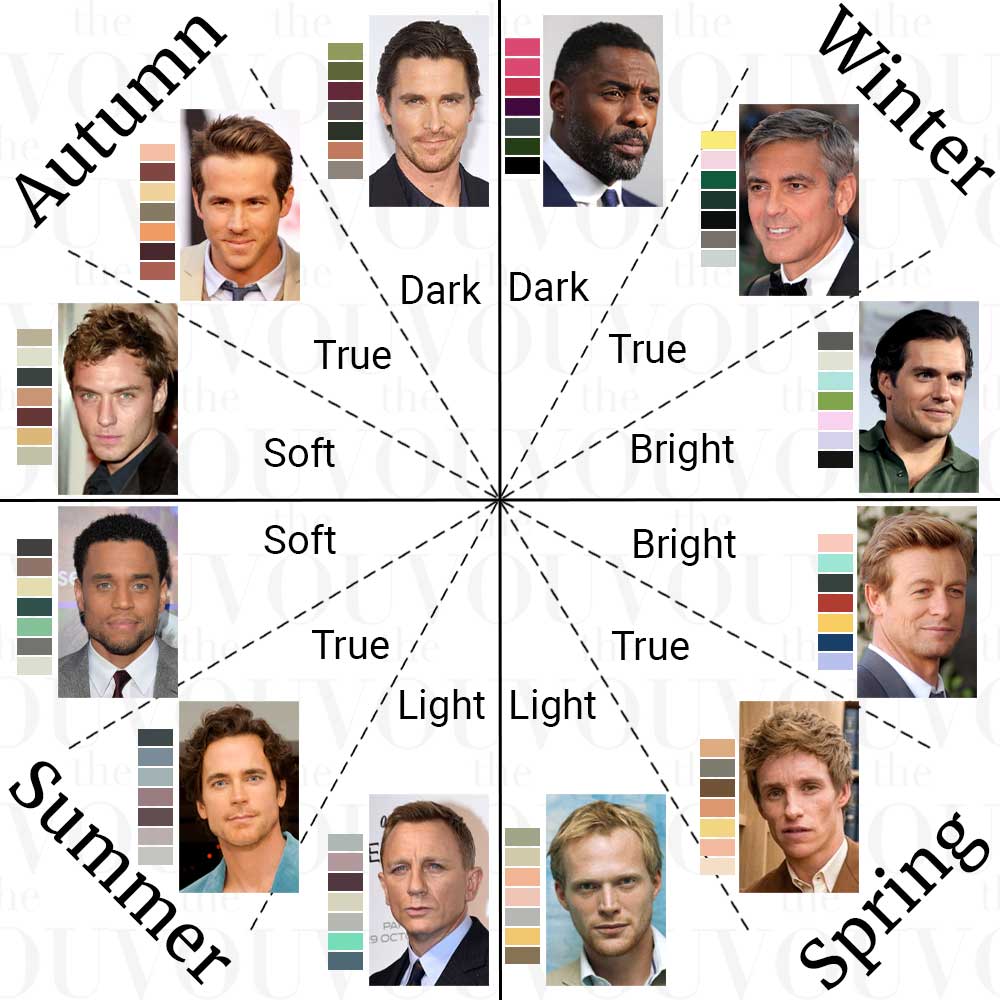
This page is about the Autumn family and its three palettes: Soft Autumn, True/Warm Autumn and Deep/Dark Autumn. Each has its own detailed guide; the job of this one is to help you see which of the three is worth reading first.
How Colour Analysis Reads Your Features
An analyst looks at three features together: the depth and visible cast of your skin, the depth and tone of your natural hair, and the colour and pattern of your irises. Between them they suggest how light or deep, warm or cool, and clear or blended your overall colouring looks.
Skin. Depth is how light or dark your skin appears; the cast is any golden, peach, olive, rosy or neutral-brown quality you can see across the face and neck. Temporary redness on one cheek, a tan or a tinted moisturiser change the surface for a while and should be noted as context rather than read as a result.
Hair. Record depth and tone separately, at the roots if your hair is coloured. “Medium brown with golden lights” is more useful than “brown”. Grey hair changes the contrast you see today and belongs in the record as it is now.
Eyes. Note the main iris colour and any secondary colour or pattern around the pupil, and whether the colours look distinct or blended.
An earlier version of this page stated that an undertone “remains constant regardless of tanning or skin conditions”. That is stronger than the evidence allows, and professional providers themselves disagree about whether a palette lasts a lifetime; some describe the label as permanent, others offer reassessment when hair goes grey. This guide describes your appearance as it is now.
The optional seasonal colour quiz for men is a separate tool on this site; it does not replace the garment comparisons described below.
What Makes a Palette Autumn
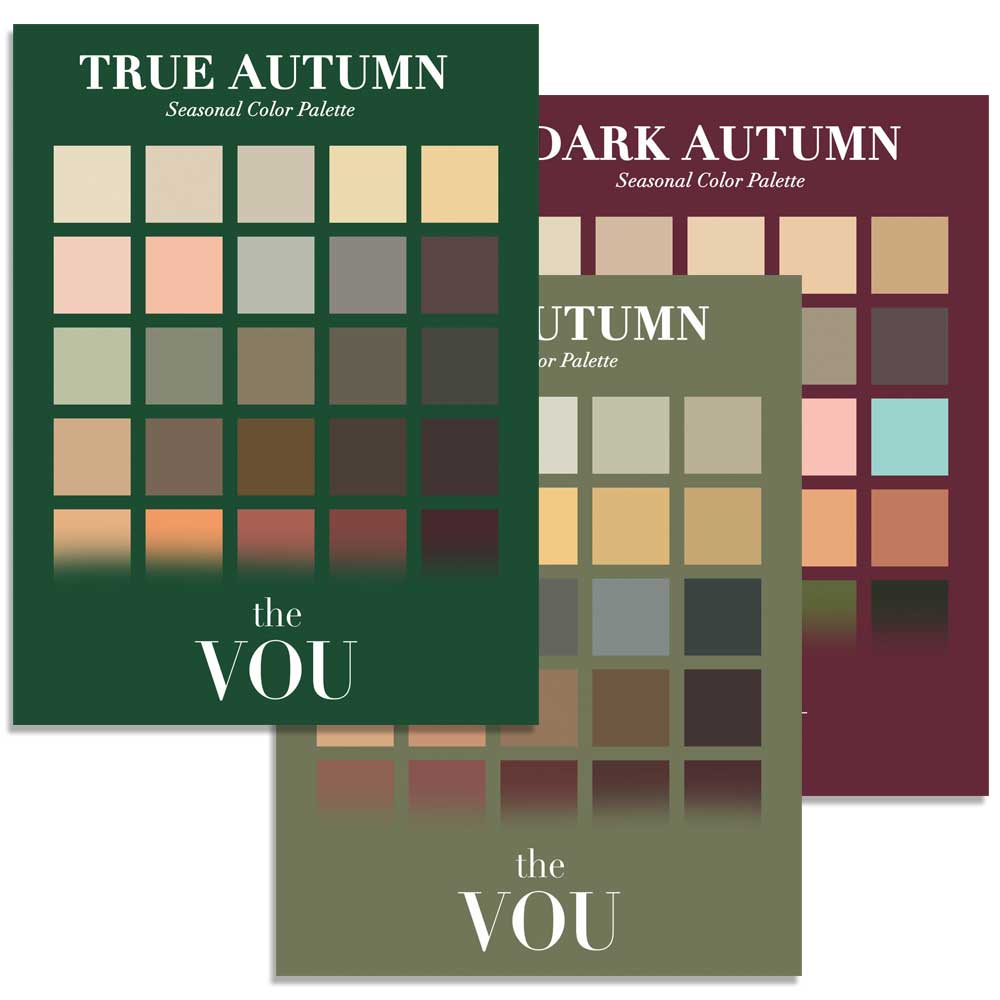
Autumn colours are warm and softened. Warm means the colours lean towards gold, orange and olive rather than blue, rose and grey; softened means they are earthy rather than clear and bright, never as vivid as Spring or Winter. Within that, Soft Autumn is the most greyed, True/Warm Autumn is fuller and richer while still earthy, and Deep/Dark Autumn is dark with a medium intensity.
Men whose natural colouring compares well with Autumn colours are described in the professional guides as having:
– a golden, peach, bronze or olive cast to the skin, at any depth from fair to deep
– hair from golden blonde through warm brown to auburn or dark brown with warm lights, or grey with a warm cast
– eyes in warm brown, amber, hazel, olive or a warm green, often with golden flecks
– an overall impression that is rich and earthy rather than fresh, cool or sharp
None of those is a requirement. The description tells you what to look for; the comparison with garments tells you whether the palette fits.
The easiest way to place Autumn is against its neighbours:
– Autumn against Spring. Both are warm. Spring is clear and fresh (coral, turquoise, sunny yellow); Autumn is muted and earthy (rust, teal, mustard). Compare a clear coral with an earthy rust at similar depth.
– Autumn against Summer. Both are muted. Summer is cool (greyed blue, dusty rose, cool taupe); Autumn is warm (olive, camel, terracotta). Compare a greyed blue with a muted olive.
– Autumn against Winter. Both can be deep. Winter is cool and clear (navy, black, true red); Autumn is warm and softer (espresso, forest green, brick). Compare a cool navy with a warm chocolate brown at similar depth.
The three Autumn palettes then differ from each other in a second quality, shown in the table.
| Soft Autumn | True/Warm Autumn | Deep/Dark Autumn | |
|---|---|---|---|
| Leading quality | Muted | Warm | Deep |
| Temperature | Warm lean | Warmth is the leading quality | Warm lean |
| Depth | Light to medium | Medium | Medium to deep |
| Intensity | Most greyed | Fuller and richer, not vivid | Medium: richer than Soft, less vivid than Winter |
| Typical contrast | Low to medium | Medium | Medium to high |
| Neighbour outside Autumn | Soft Summer (cool and muted) | True/Warm Spring (warm and clear) | Deep/Dark Winter (cool and deep) |
| First colours to test | Muted olive, soft camel, dusty coral | Rust, moss green, pumpkin | Forest green, burgundy, dark chocolate |
1) Soft Autumn
Soft Autumn is the palette on the border between Summer and Autumn: muted like Summer, warm-leaning like Autumn. Its colours are greyed and gentle; mutedness, not temperature, is what sets it apart from the other two Autumn palettes.
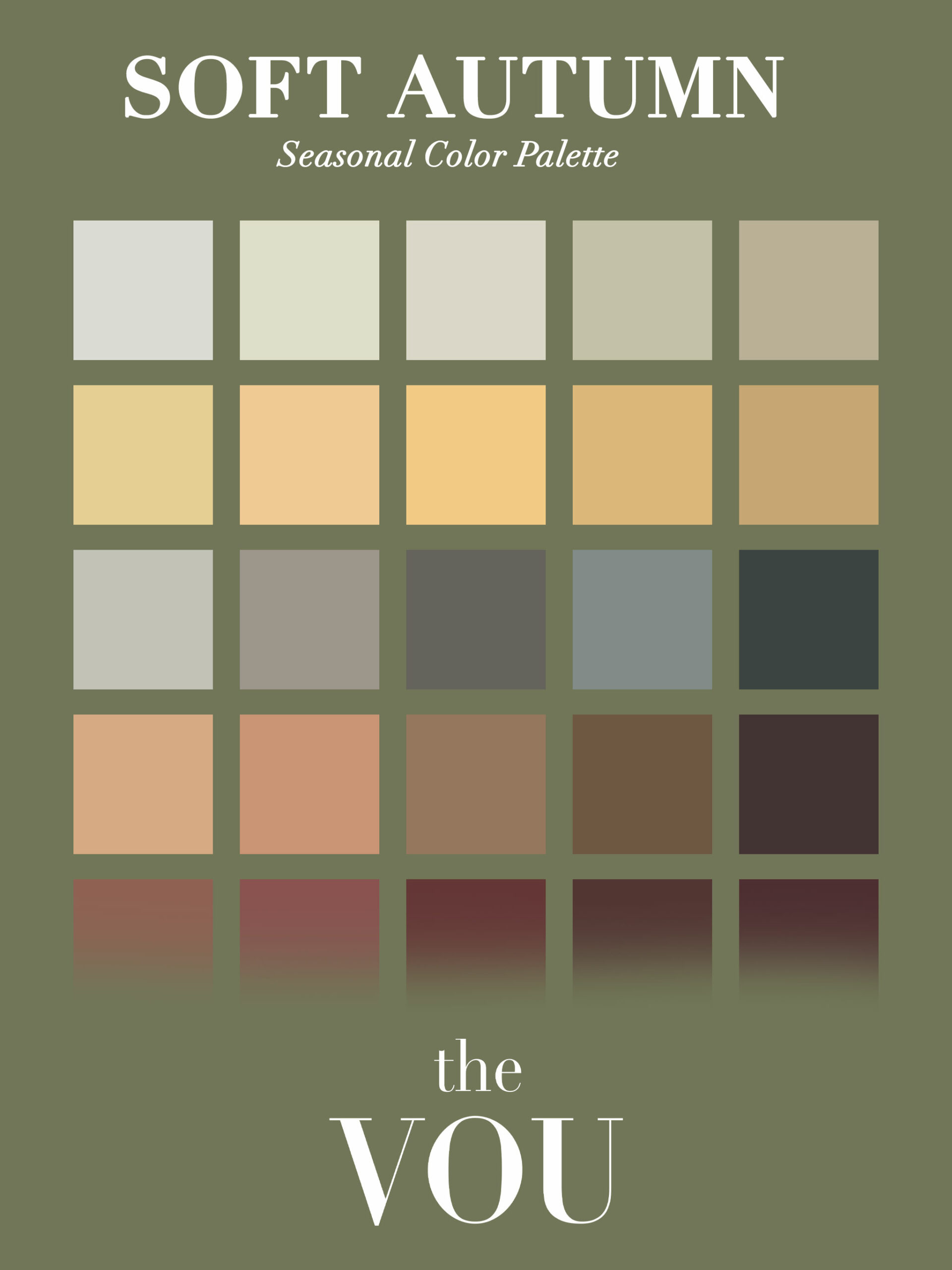
The Soft Autumn palette is made of muted, warm colours with a touch of grey in them. Key colours include:
– Warm taupe

– Warm brown

– Warm grey

– Soft olive green

– Dusty coral

– Muted teal

– Warm rose

– Soft gold

Men Often Described as Soft Autumn
– Jude Law, Josh Hartnett and Ewan McGregor were listed as Soft Autumns on the earlier version of this page.

The VOU holds no assessment for any of the three, a publicity photograph cannot show a palette, and no description of their colouring is offered here; the pictures are not described or assessed either.
Men whose colouring compares well with Soft Autumn are described in the professional guides as having:
– Skin with a neutral-warm cast, soft golden or peach rather than rosy, at any depth, with a gentle, blended quality
– Hair from dark blonde to light or medium brown, often looking slightly ashy because the colour is muted; grey hair is recorded as it is now, warm or steel, rather than predicted
– Eyes in hazel, soft green, olive or light brown, often with a greyed, misty quality
The quality that stands out is the blended, low-contrast look of the whole face, which is why muted colours sit so comfortably beside it.
Styling Suggestions for Soft Autumn Men

Suits. Muted warm brown, soft olive or a warm grey, worn with off-white or soft warm shirts from the palette.
Casual wear. A dusty coral polo shirt or warm taupe chinos give the palette its relaxed, refined look.
Accessories. Muted accents against neutral outfits: a soft olive tie, a warm taupe leather belt, a brushed rather than polished metal.
Patterns. Soft, blended patterns and textures in palette colours, such as a faded paisley or a muted check.
Colours to compare rather than wear near the face. Icy pastels, stark white and very bright cool colours tend to overwhelm muted colouring. Test them beside your face against their softer cousins before deciding.
Outfit Ideas for Soft Autumn Men
For the office, an off-white shirt with a warm taupe suit, a dusty coral tie and brushed gold cufflinks is polished without being loud.
Where the office expects navy or charcoal, choose a greyed, slightly warm navy or a warm charcoal and keep the muted colours in shirts, ties and knitwear; muted brown and olive suits are the softer alternatives where the room allows them.
The full Soft Autumn guide for men covers the palette, the comparisons with Soft Summer and True Autumn, and a capsule wardrobe.
2) True/Warm Autumn
True/Warm Autumn is the heart of the family: the palette where warmth leads, rich and earthy without being vivid.
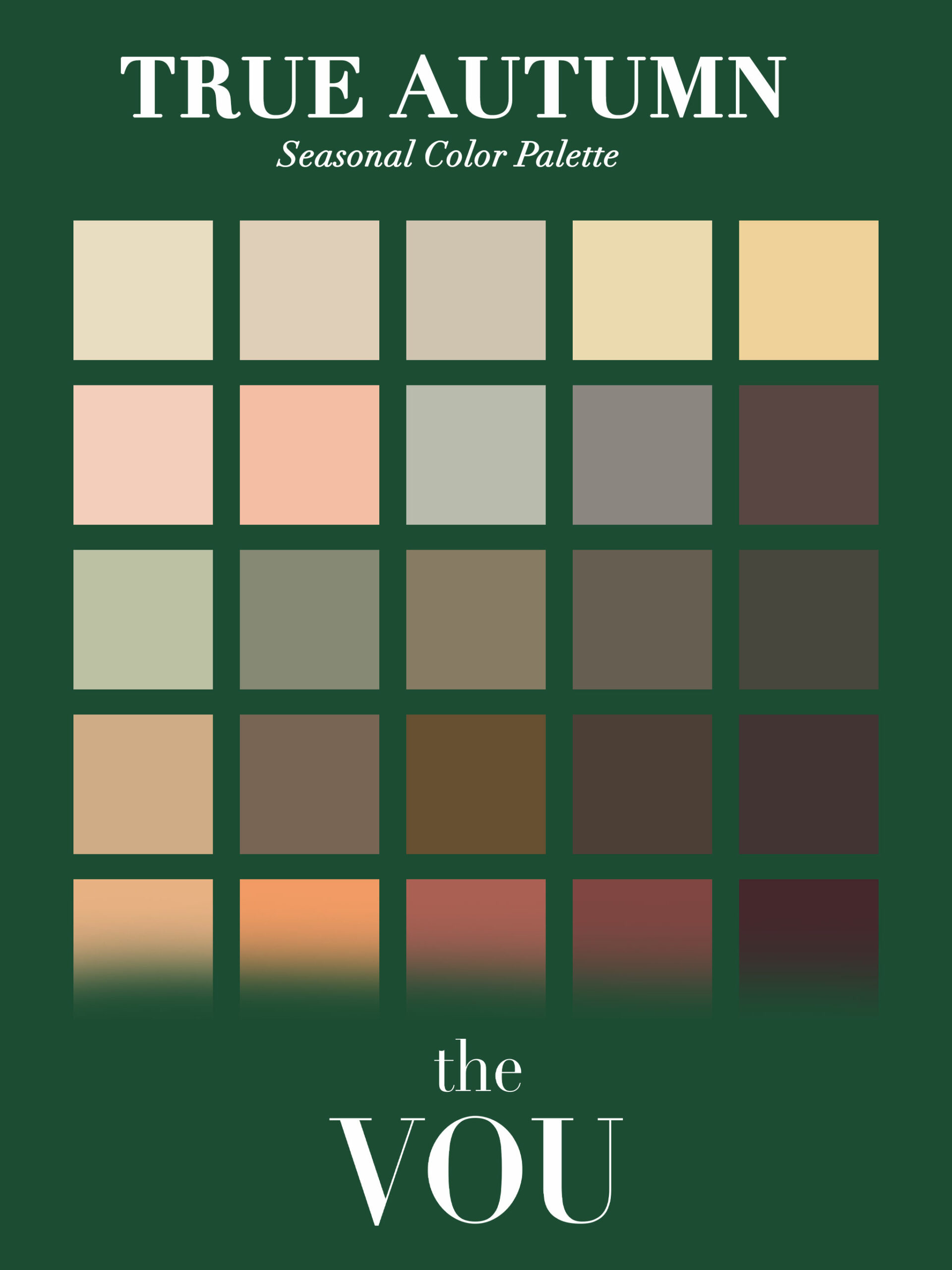
The True/Warm Autumn palette consists of warm, rich, earthy colours. They are saturated for Autumn but still keep an earthy softness. Key colours include:
– Rust

– Moss green

– Pumpkin orange

– Golden brown

– Terracotta

– Deep gold

– Warm charcoal

Men Often Described as True/Warm Autumn
– Ryan Reynolds, Christian Bale and Simon Baker were listed as True/Warm Autumns on the earlier version of this page.

The VOU has assessed none of them, and such lists differ between sites (thealignedlover’s men’s Light Spring page, March 2025, lists Simon Baker as a Light Spring); no description of their colouring is offered here, and the photographs are outfit references.
Men whose colouring compares well with True/Warm Autumn are described in the professional guides as having:
– Skin with a clearly warm, golden or coppery cast, at any depth
– Hair from golden brown to auburn, with natural warm lights that give it a multi-toned look
– Eyes in amber, warm brown or a rich green, often with golden or copper flecks
Styling Suggestions for True/Warm Autumn Men
Suits. Chocolate brown, moss green or warm charcoal, with ivory or warm palette-colour shirts.
Casual wear. A rust jumper or moss green chinos bring the palette into everyday clothes.
Layering. A golden brown jacket over a terracotta shirt shows how the palette’s own colours layer.
Accessories. Warm metals such as gold, brass and copper for watches and rings; leather in tan and cognac.
Colours to compare rather than wear near the face. Icy blues, cool pinks and stark white are the usual candidates; compare each with a warmer version (teal, coral, cream) before deciding.
Outfit Ideas for True/Warm Autumn Men
For smart-casual, warm brown trousers with a pumpkin orange shirt, a moss green blazer, cognac leather shoes and a gold watch.
For the office, a chocolate brown suit with an ivory shirt and a small-patterned tie in palette colours, with the warm neutrals (brown, deep olive, warm grey) doing most of the work.
The full True/Warm Autumn guide for men covers the palette, the comparisons with True Spring and the other Autumns, and a capsule wardrobe.
3) Deep/Dark Autumn
Deep/Dark Autumn is the palette on the border between Autumn and Winter: warm-leaning like Autumn, deep like Winter. Its colours are rich and dark, with enough light neutrals to create contrast.
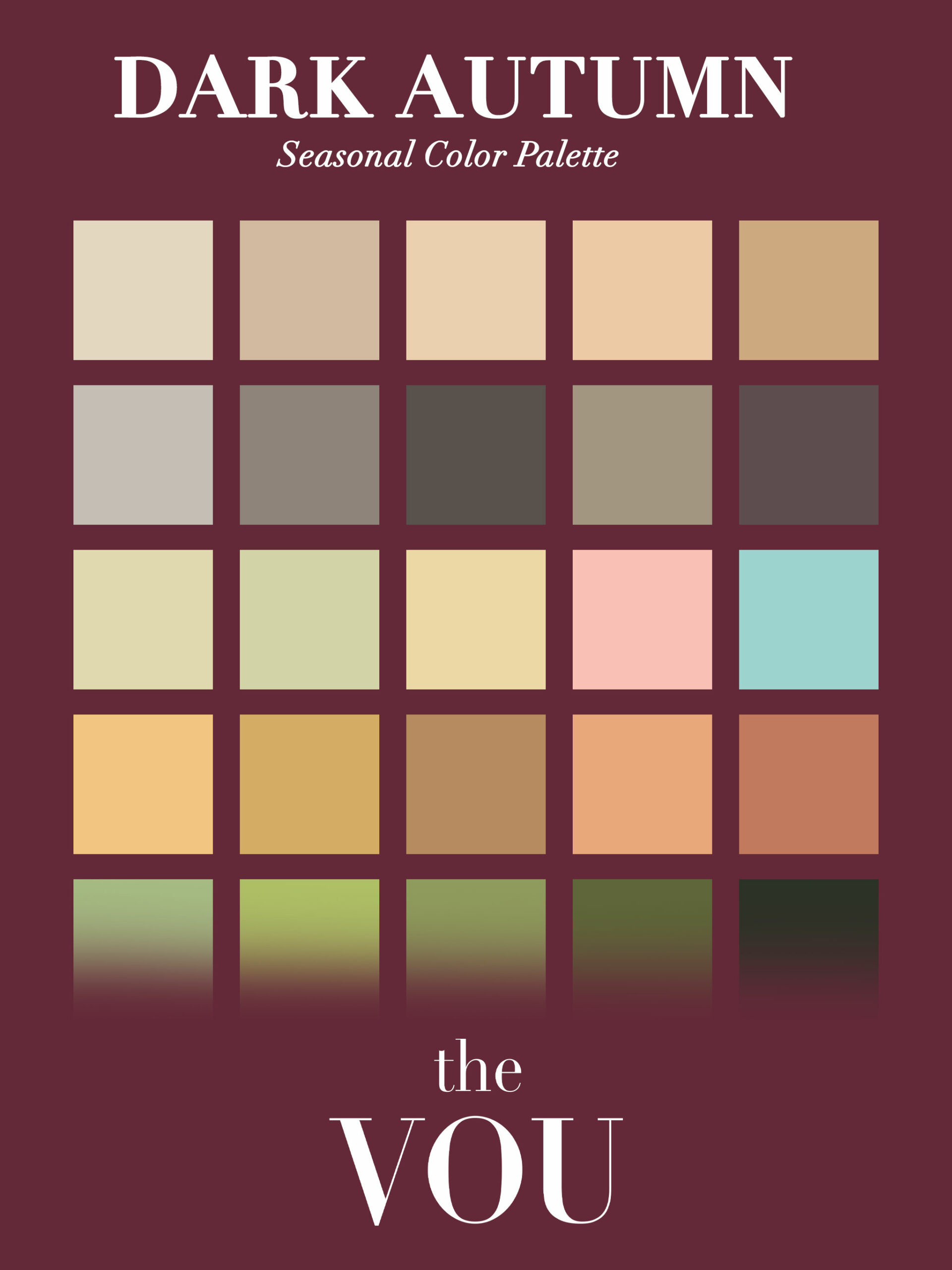
The Deep/Dark Autumn palette is made of deep, warm colours with a touch of the intensity found in Winter. Key colours include:
– Deep burgundy
– Forest green
– Warm, red-based plum
– Burnt orange
– Deep teal
– Dark chocolate
Men Often Described as Deep/Dark Autumn
– Kit Harington, Jamie Dornan and Gerard Butler were listed as Deep/Dark Autumns on the earlier version of this page.
As with the other two palettes, The VOU has assessed none of them and offers no description of their colouring.
Men whose colouring compares well with Deep/Dark Autumn are described in the professional guides as having:
– Skin with a warm cast and a deep or rich quality, golden-olive or bronzed, at any depth
– Hair from deep brown to black with warm lights; red hair in this palette tends towards a deep auburn
– Eyes in dark brown, deep green or a rich hazel, often with golden flecks
The quality that stands out is depth combined with warmth. Dark hair and dark eyes on their own do not settle it, because Deep/Dark Winter has the same depth with a cool lean; the comparison that matters is warm against cool at the same depth.
Styling Suggestions for Deep/Dark Autumn Men
Suits. Warm charcoal, deep olive or dark brown, with soft white or rich warm shirts.
Casual wear. A burgundy jumper or forest green trousers give a rich, understated look.
Accessories. Deep accents against neutral outfits: a deep teal tie, a warm plum pocket square.
Patterns. Rich, warm patterns and textures such as a deep check or a tonal tweed.
Colours to compare rather than wear near the face. Baby blue, light pink and icy pastels are the usual candidates; compare each with a deeper warm version before deciding.
Outfit Ideas for Deep/Dark Autumn Men
For the office, a soft white shirt with a deep olive suit, a burnt orange tie and dark gold cufflinks.
Where a dress code calls for navy or charcoal, choose the deeper, warmer version of each and keep a cream or ecru shirt next to the face.
The full Deep/Dark Autumn guide for men covers the palette, the comparison with Deep/Dark Winter, and a capsule wardrobe.
Which Autumn Guide to Read First
If you already know your colouring leans warm and muted rather than warm and clear, two comparisons with clothes you own will point you to the right detailed guide. Do them in indirect daylight, looking at your face and neck rather than the cloth, swap each pair back and forth more than once, and keep the garment area, position, finish and lighting similar. When comparing temperature or intensity, keep lightness reasonably close. When comparing depth, deliberately change lightness while keeping the other qualities as similar as you can. If a pair changes several qualities, treat it as a rough comparison and record that limit.
Muted or rich? Compare a soft, greyed olive with a rich moss green, or a dusty coral with a rust. If the softer colour leaves your features easier to see and the richer one takes over the face, start with Soft Autumn. If the richer one looks settled and the softer one looks flat, start with True/Warm Autumn.
Medium or deep? Compare a golden brown with a dark chocolate, or a terracotta with a deep burgundy. If the deeper colour holds its own beside your face and the medium one looks washed out, start with Deep/Dark Autumn.
Not sure it is Autumn at all? Compare across the border. Soft Autumn against Soft Summer is muted olive against greyed blue; True/Warm Autumn against True/Warm Spring is rust against clear coral; Deep/Dark Autumn against Deep/Dark Winter is chocolate brown against cool navy at the same depth. Keep both palettes in play; a comparison that repeats clearly on another day is evidence, and one that stays close is a result to record rather than a label to force.
If the comparisons stay close, that is a result too. Dress from colour names that appear in both neighbouring palettes’ lists, judging each garment rather than trusting the name, and revisit the comparison in different light or with different garments. A professional analyst with controlled drapes is a possible next step; the reading depends on the analyst’s framework and may still leave two palettes in play.
Black, Navy and White for Autumn Men
Almost every Autumn guide lists stark white, cool black and icy pastels among the colours to avoid, and the advice is easy to misread as a ban.
What the advice describes is a comparison near the face: beside warm, muted colouring, an optic white shirt or a black polo neck tends to look harsher than cream or dark brown would. It says nothing about trousers, shoes, a coat worn open, or a dress code.
Cream, ecru and oatmeal do the white shirt’s job. Espresso, dark chocolate and a warm charcoal do black’s job in tailoring. A warm, deep navy sits better than an inky blue-black one, and a cream or pale blue shirt underneath keeps the light colour by the face.
Where a dress code specifies black, wear black and put the effort into the shirt, the grooming and the fit. Black tie is black tie for every palette.
Where This Guide Stops
A palette is a description of colours that tend to sit well beside a kind of natural colouring. It is not a diagnosis and it does not make anyone more successful or more confident; earlier text on this page promising those effects has been removed, along with suggestions that fragrances should follow a colour palette, which nothing in colour analysis or perception research supports.
Professional providers also differ in their vocabulary. The twelve names used on this site are a common convention; Kettlewell uses sixteen types and lists True Autumn and Warm Autumn separately, so ask which framework produced any result before treating similar names as identical.
The VOU’s image consultants offer colour consultations, listed on the services page; contact us to ask how an assessment is run. Prepared palette references for Soft Autumn, True/Warm Autumn and Deep/Dark Autumn are also listed in the shop; at the time of writing all three listings are marked unavailable.
Related Guides
Colour is one of three facts worth knowing before you shop, alongside your proportions and the way you like to dress.
Men’s body shapes explains the seven proportion labels and what they can and cannot tell you; the optional body shape quiz is a separate tool on this site.
The personal style guide and the optional fashion style quiz cover what you want your clothes to say.
Styling by occasion, location, season and time of day is where colour, proportion and style meet a real invitation.
The old money style guide describes the restrained look this site is built around, and the guide to heritage brands lists houses that make the classic garments and accessories used in the outfit ideas above. Owning expensive clothes proves nothing by itself; choosing colour, cut and occasion well is what makes an outfit work.
The main seasonal colour guide for men covers all twelve palettes, and the guide to building a capsule wardrobe explains how to turn a palette into a build order.
With years of expertise in high-end fashion collabs and a PhD in Sustainable Fashion, Ru specialises in eco-luxe wardrobes for the modern gentleman seeking understated refinement.
A passionate advocate for inclusivity and diversity, Aidan is the driving force behind The VOU as its Editorial Manager. With a unique blend of editorial acumen and project management prowess, Aidan's insightful articles have graced the pages of The Verge, WWD, Forbes, and WTVOX, reflecting his deep interest in the dynamic intersection of styling with grooming for men and beyond.
With over twenty years of front-row fashion and styling events, collabs with haute-couture houses, and a PhD in Luxury Fashion, Laurenti is an expert in crafting personalised looks that depict old-money sophistication.