

A peacoat is a short, double-breasted wool coat with broad lapels, first worn by sailors. The US Navy’s own uniform rules still describe it as a hip-length coat of dark blue melton wool with a convertible collar.
This guide is for the man deciding whether to buy one and which. It explains what makes a coat a real peacoat, how heavy the cloth should be, how it should fit over a jumper, what to wear with it and what it costs, with prices checked on makers’ websites in October 2026.
Worn well, a navy peacoat is one of the quietest coats a man can own, which is why it suits silent luxury and the old money wardrobe.
What Makes a Peacoat
Many coats are sold as peacoats. Use the naval pattern as your reference, then decide how far from it you are happy to go.
Length and Cut
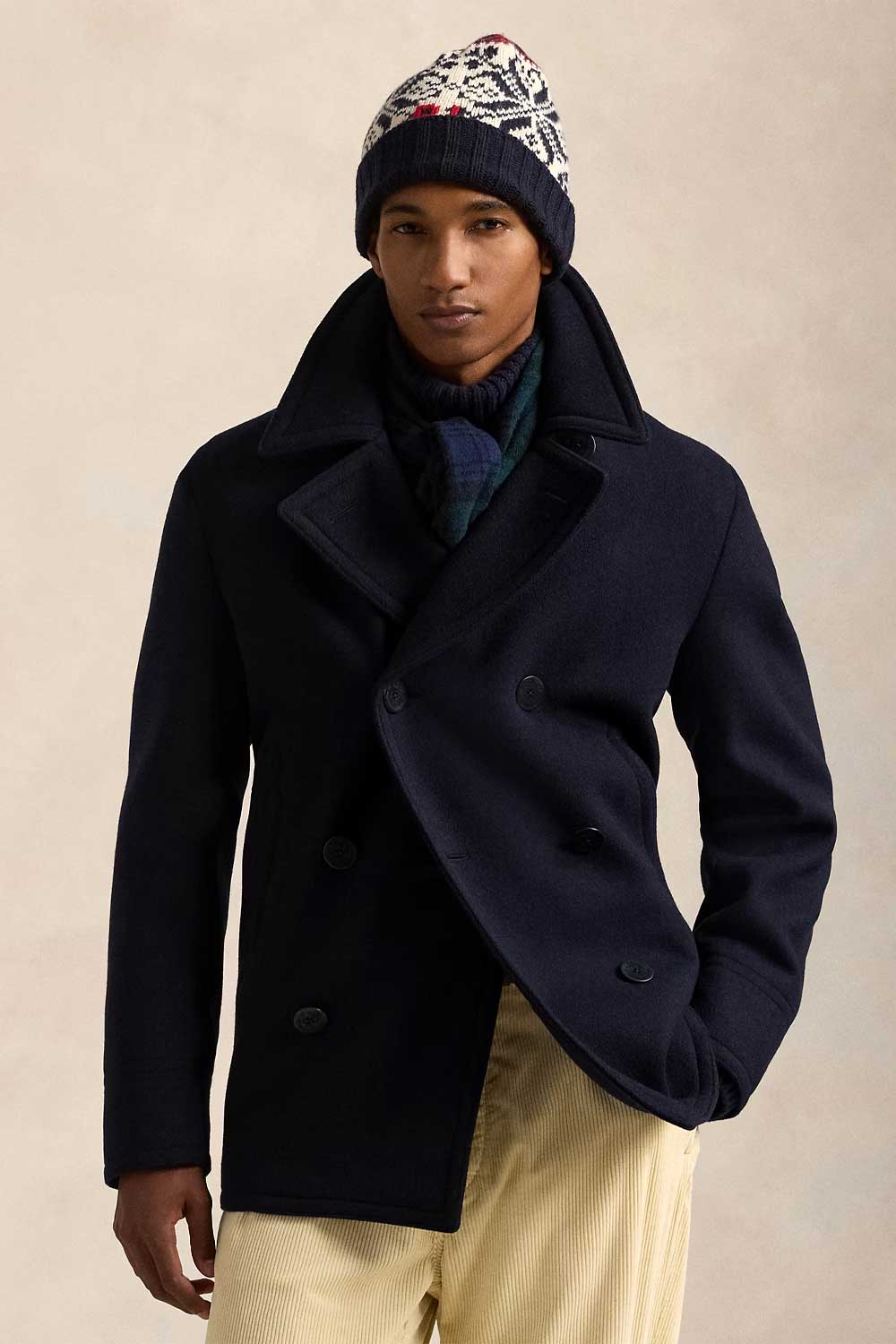
The Navy calls the coat hip length, well short of an overcoat. Schott’s 740, a version of the Navy coat made in the United States, is 32 inches long in regular sizes, and Gloverall’s Churchill measures 85 cm at the back in size medium. Schott also sells a knee-length version, the 714US, at 41 inches.
Front and Pockets
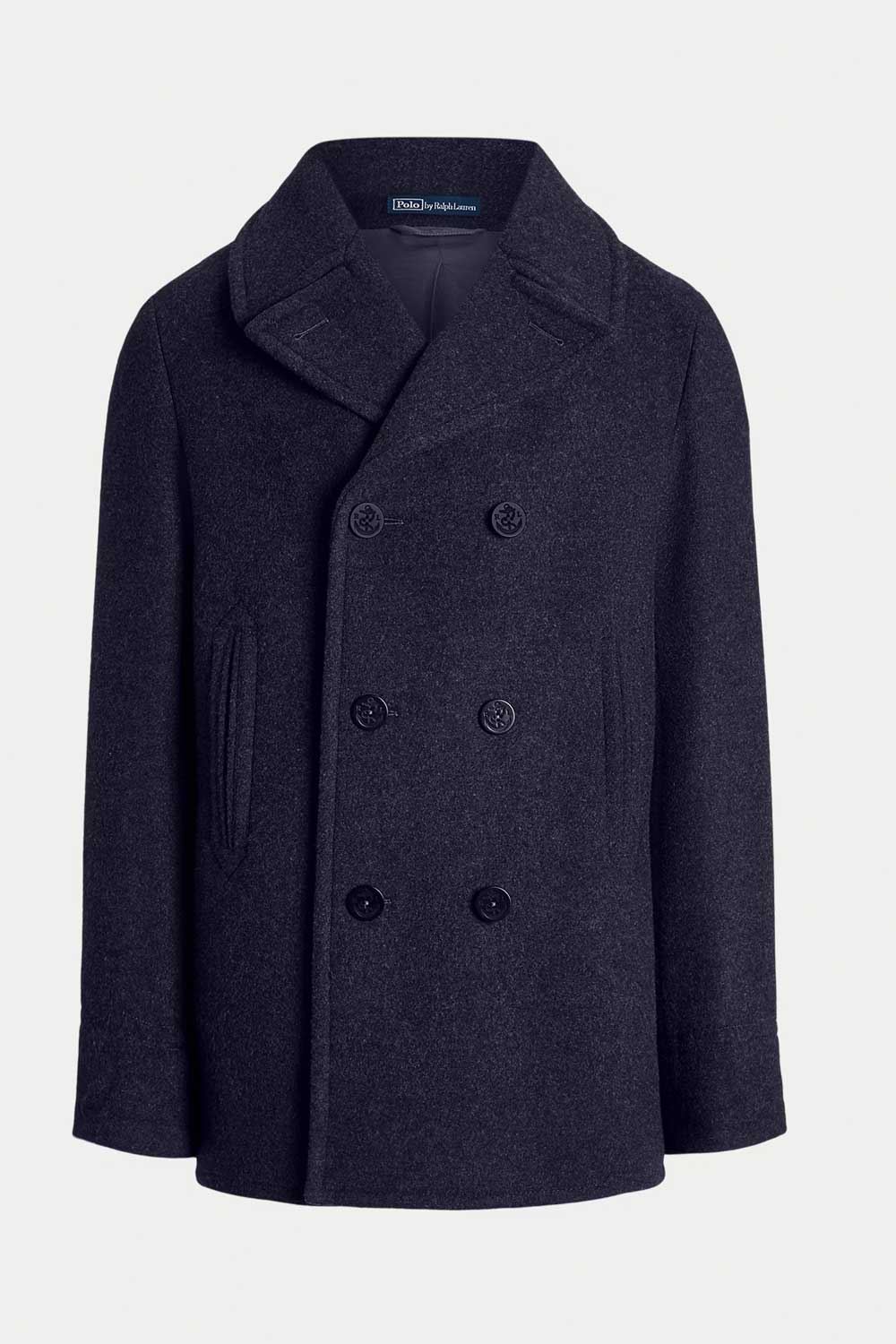
The front is double-breasted, with two rows of large buttons. The US Navy’s coat has four buttons on one side and three on the other, and its rules tell sailors to fasten every button except the one at the collar.
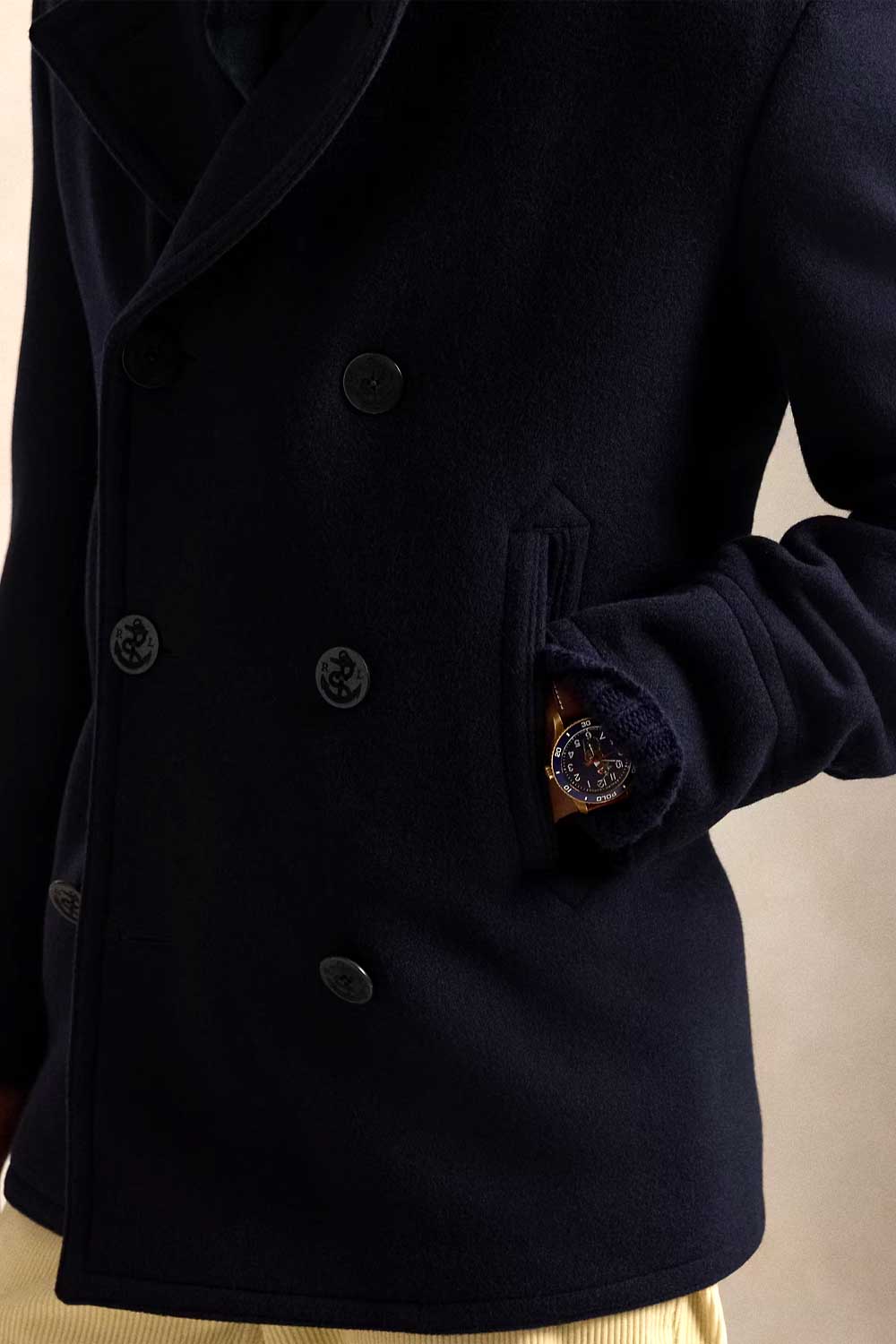
The hand-warmer pockets are vertical or slanted slits at the front, placed so that you can warm your hands with the coat buttoned. Some makers add flap or patch pockets lower down, which makes the coat look more like a civilian jacket.
Cloth
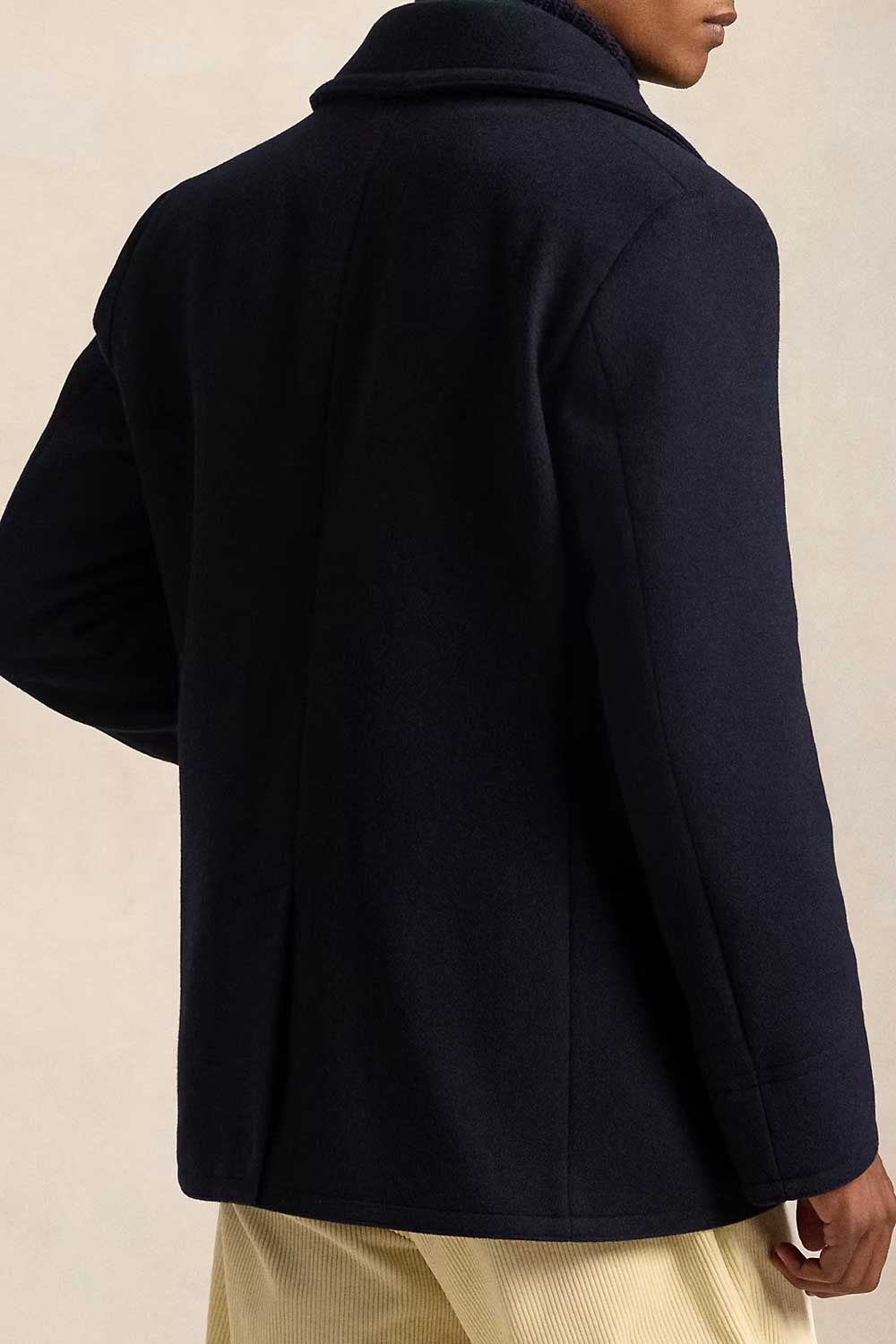
The traditional cloth is melton, a tightly woven wool that is heavily milled and finished with a short, dense nap. The Navy’s regulation calls for 100% melton wool. Many commercial coats use a blend instead, such as the 80% wool and 20% nylon of Schott’s 740.
Weight is the next decision. The federal specification for Navy melton lists a heavier grade at 22 ounces per linear yard, and civilian peacoats are sold at 24, 28 and 32 ounces. Heavier cloth can feel stiffer, but lining, construction, fit and layers also affect warmth. Makers quote weight in different ways, so compare figures only when the measurement basis is stated and the same.
A vintage-style or surplus coat is a good buy if the cloth is sound. Coats in cotton, nylon or corduroy borrow the shape, but they behave like jackets rather than winter coats.
Collar
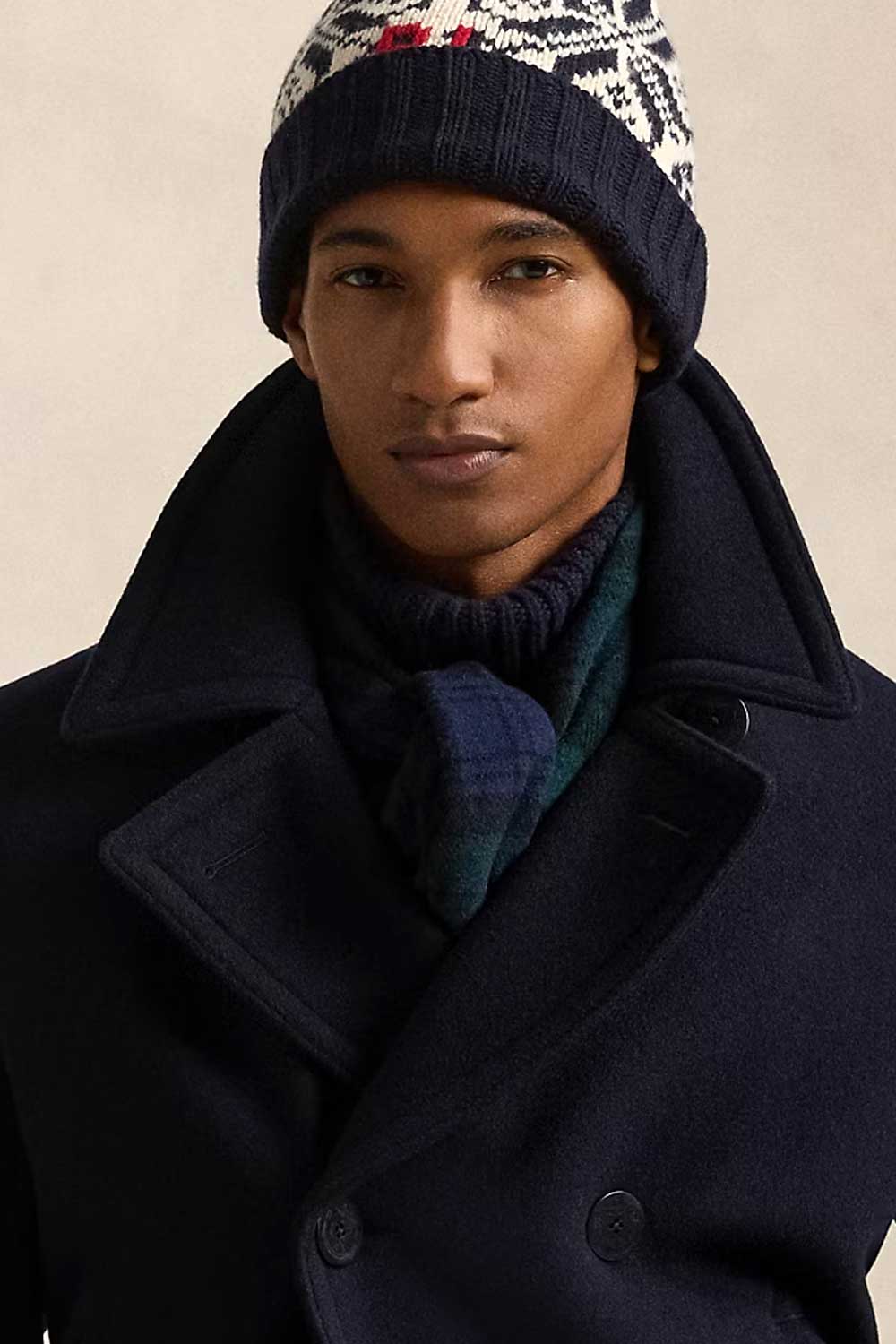
The collar is the most practical part of the coat. It is broad enough to turn up and button across the throat, much like the collar on an Ulster coat. The Navy wears it down, squarely on the shoulders, and allows the collar button to be fastened in bad weather.
Buttons
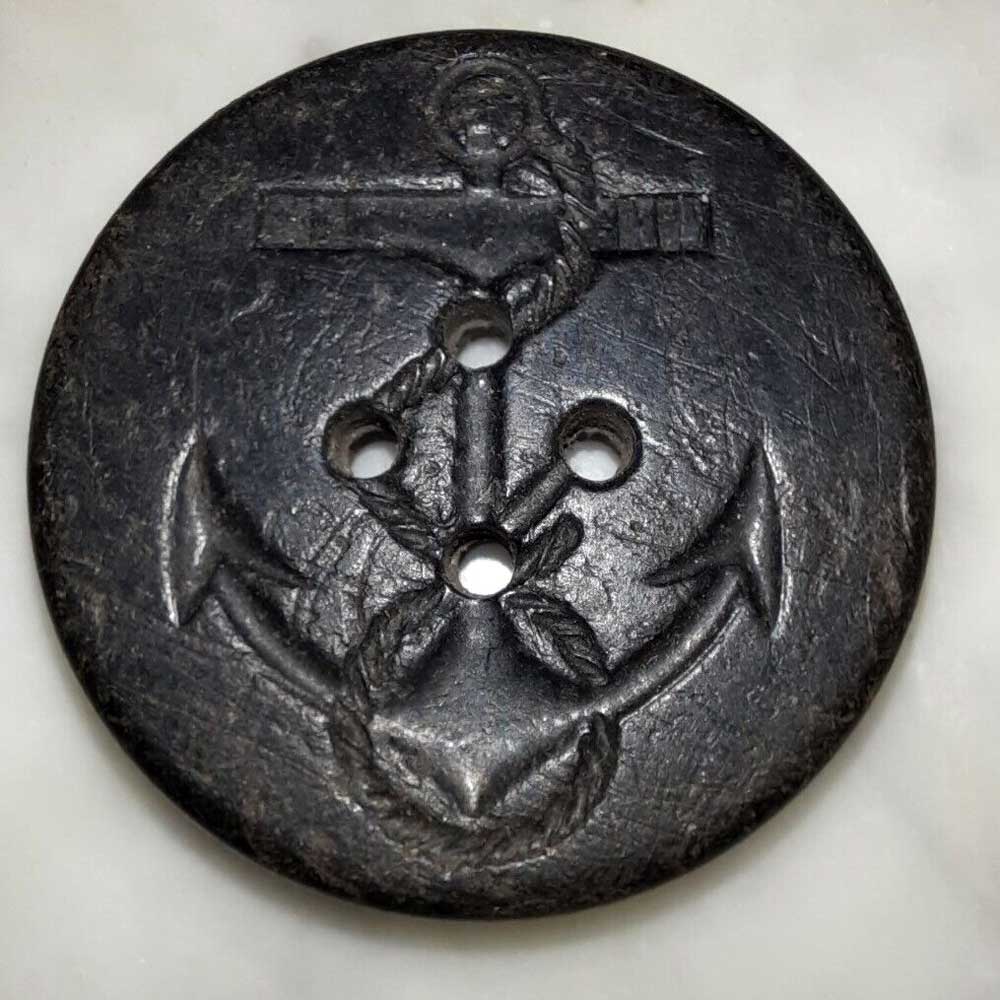
Navy coats use 35-line black plastic buttons with a fouled anchor, an anchor wrapped in rope. The US Navy traces the design to the seal of Lord Howard of Effingham, England’s Lord Admiral at the time of the Armada in 1588, although a paper on Royal Navy uniform history dates the earliest fouled anchor on an English admiral’s seal to 1601.
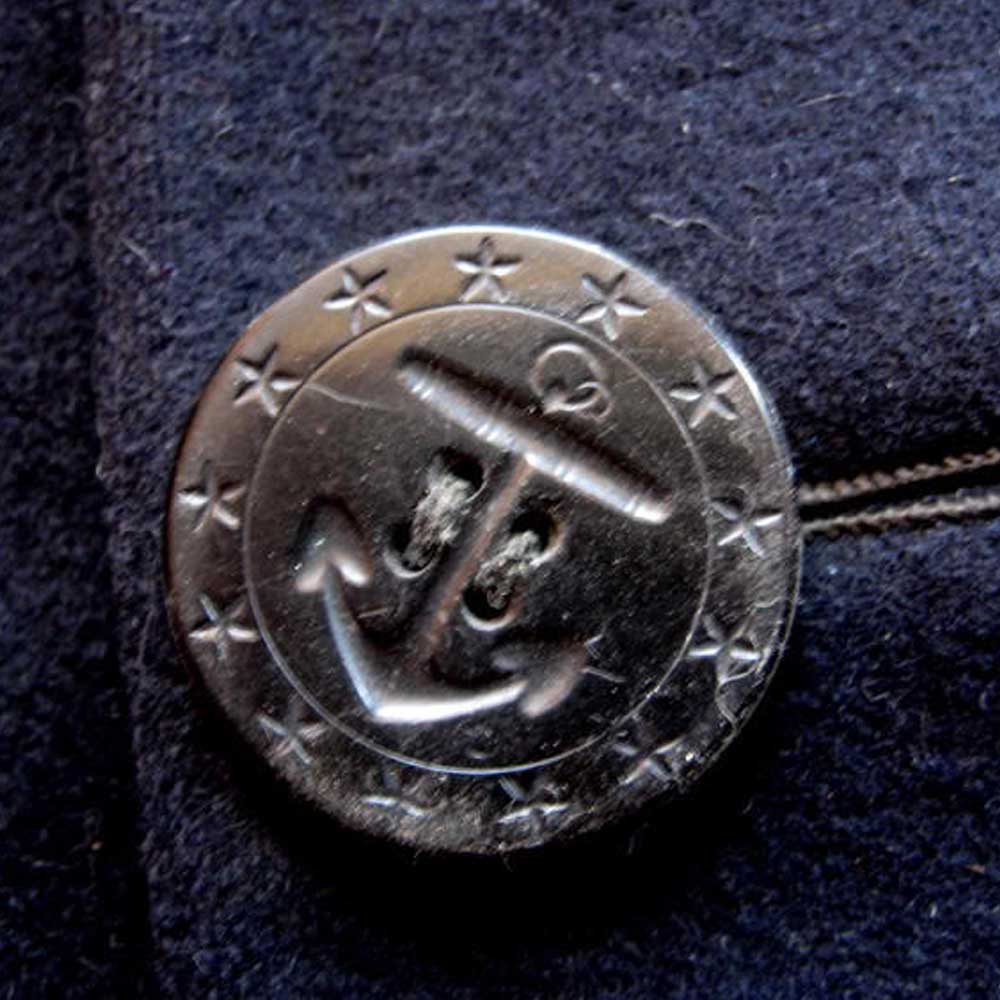
Navy buttons have not always looked the same, and collectors use the design to date old coats. The black anchor button is the one to look for if you want the naval look.
Gold buttons, like those below, make a civilian coat look dressier.
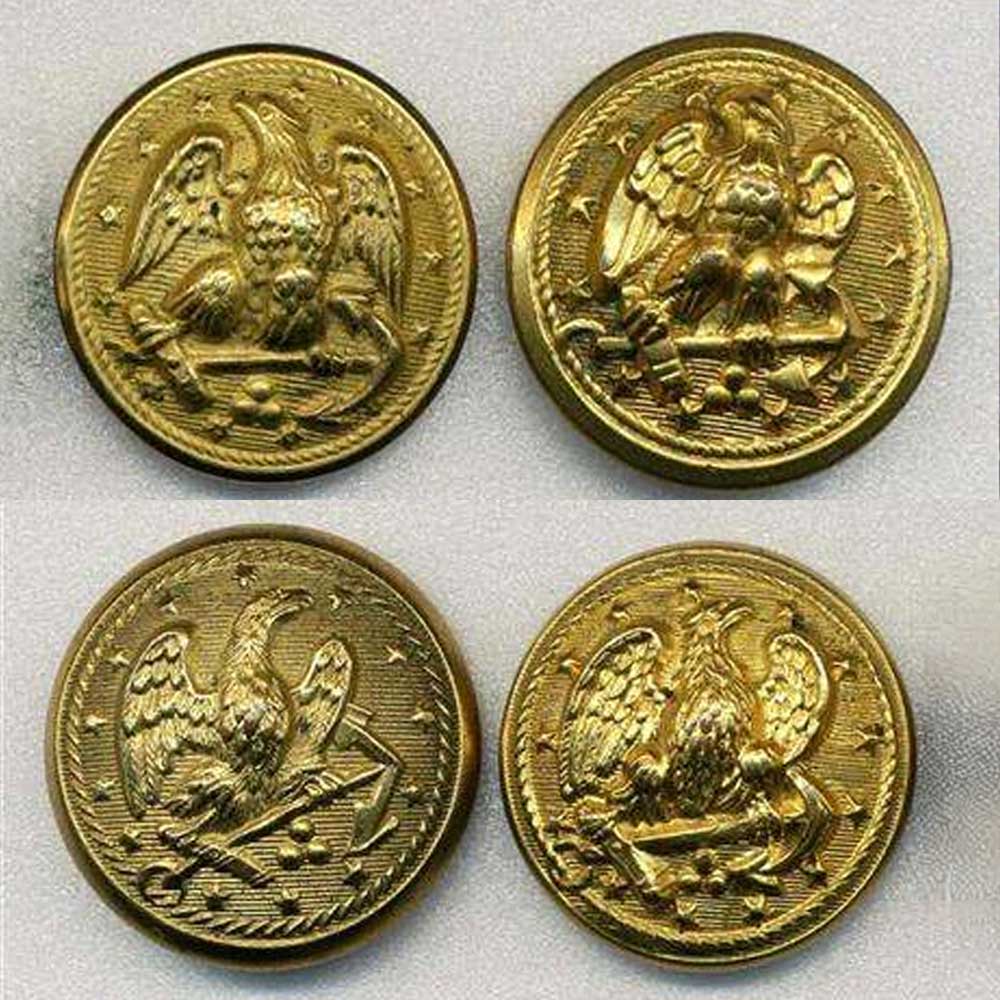
You do not have to follow uniform rules. Horn, pewter or brass buttons can replace plastic ones, and a tailor can change them for you.
How a Peacoat Should Fit
Buy the coat for what you will wear under it. Makers do not agree on how much room to leave, so read the brand’s own advice before you choose a size.
Gloverall says its coats are cut with room for a mid-layer, and its answer to whether you should size up for a jumper is usually not. It suggests the larger size only if you are between sizes and plan to wear knitwear underneath, prefer a longer sleeve or are buying a slim fit. It also lists each coat’s own measurements, taken flat, so you can compare them with yours. US Wings says its military-pattern Cooper peacoat is a true military fit and recommends one size larger. Schott sizes many of its coats by chest measurement in inches, taken just below the armpit, and in its table a 40 inch chest is a medium and 42 to 44 inches is a large.
Try any coat on over the thickest jumper you plan to wear, button it fully, and check four things. The buttons should close without the fronts pulling into creases. You should be able to reach forward without the back straining. The sleeves should end between the wrist and the base of the thumb, which is the Navy’s own rule. The hem should reach at least to your hip.
How to Wear a Peacoat
Over Tailoring

Pea coats look great styled over single-breasted suits when the coat is long enough to cover the jacket. A hip-length peacoat can end level with a suit jacket’s hem or above it, so check the length in a mirror before you rely on it for the office. If the jacket shows beneath the coat, choose a longer peacoat or a proper overcoat.
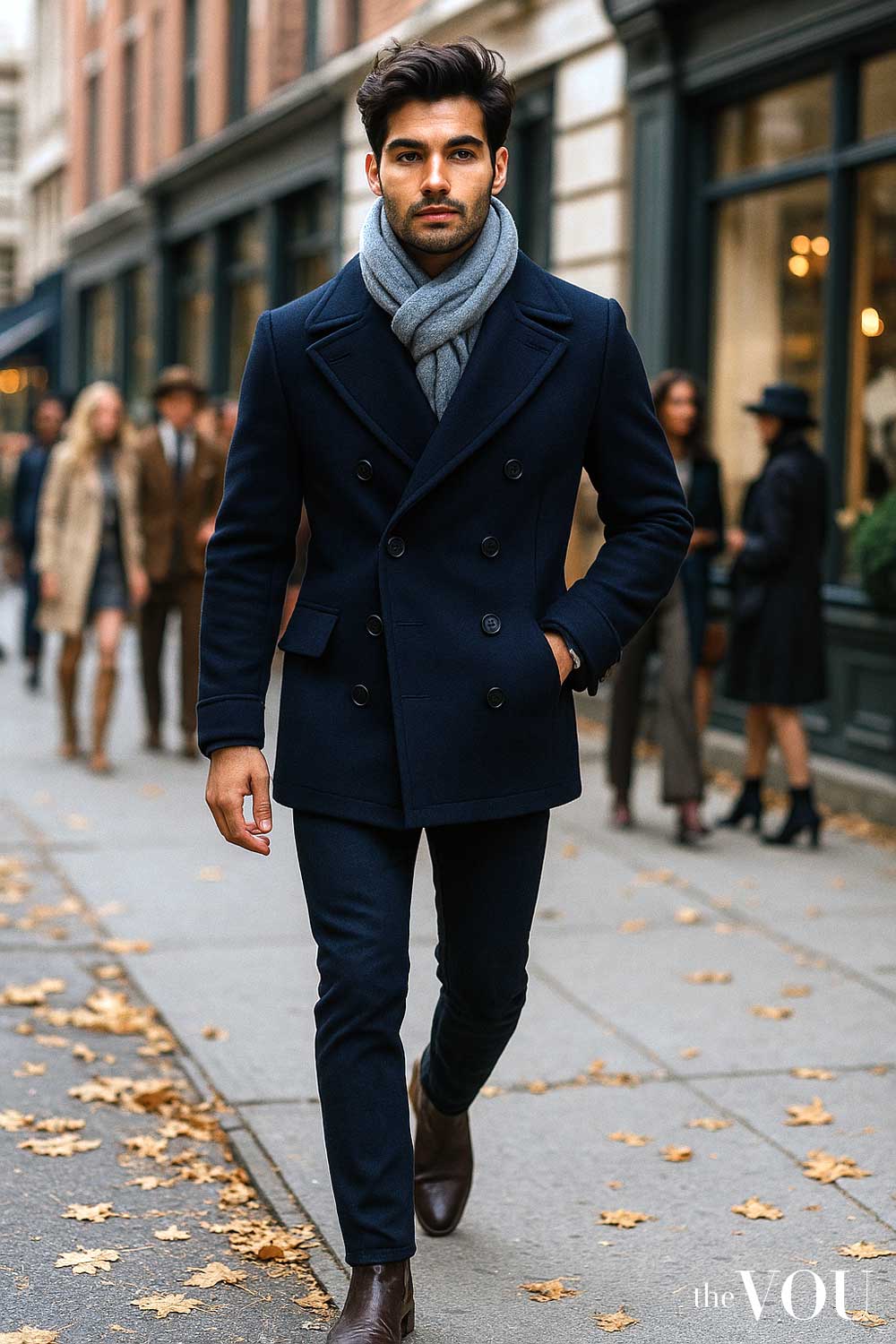
Inside the collar, a fine scarf works better than a bulky one. Wear it loose, or as a scarf tied in a knot, so that the coat’s collar still sits flat.
Fit Check in the Mirror
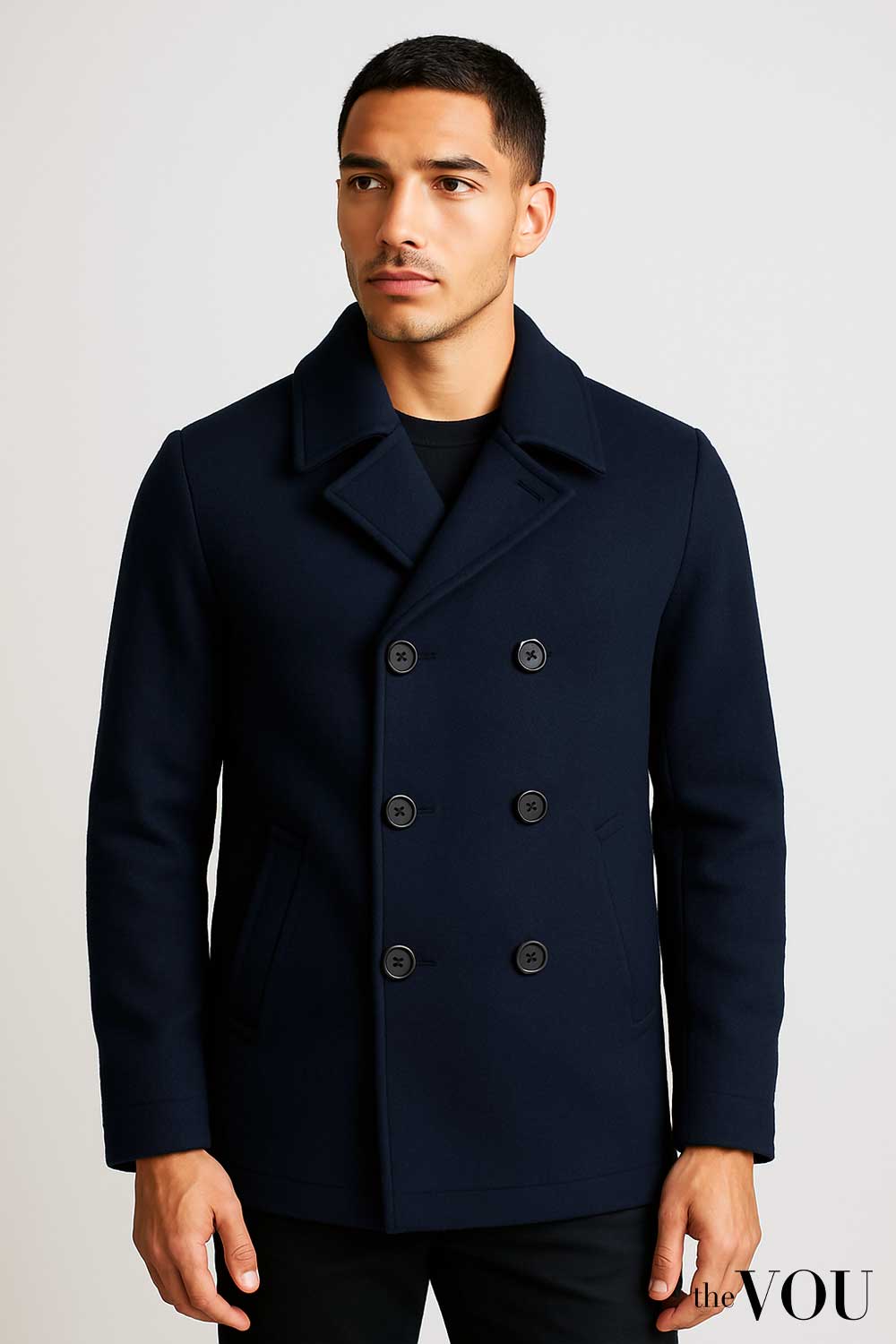
A good peacoat is close but not tight. The buttoned front should lie flat, and the shoulders should end at your own shoulders, with room for a jumper underneath.
Weekends

A navy peacoat over a grey or cream crew-neck jumper, dark jeans or chinos and brown leather boots is the classic casual outfit. In milder weather, swap the jumper for an oxford shirt and the boots for leather trainers. Add a navy or grey beanie in the cold.
Smart Outfits
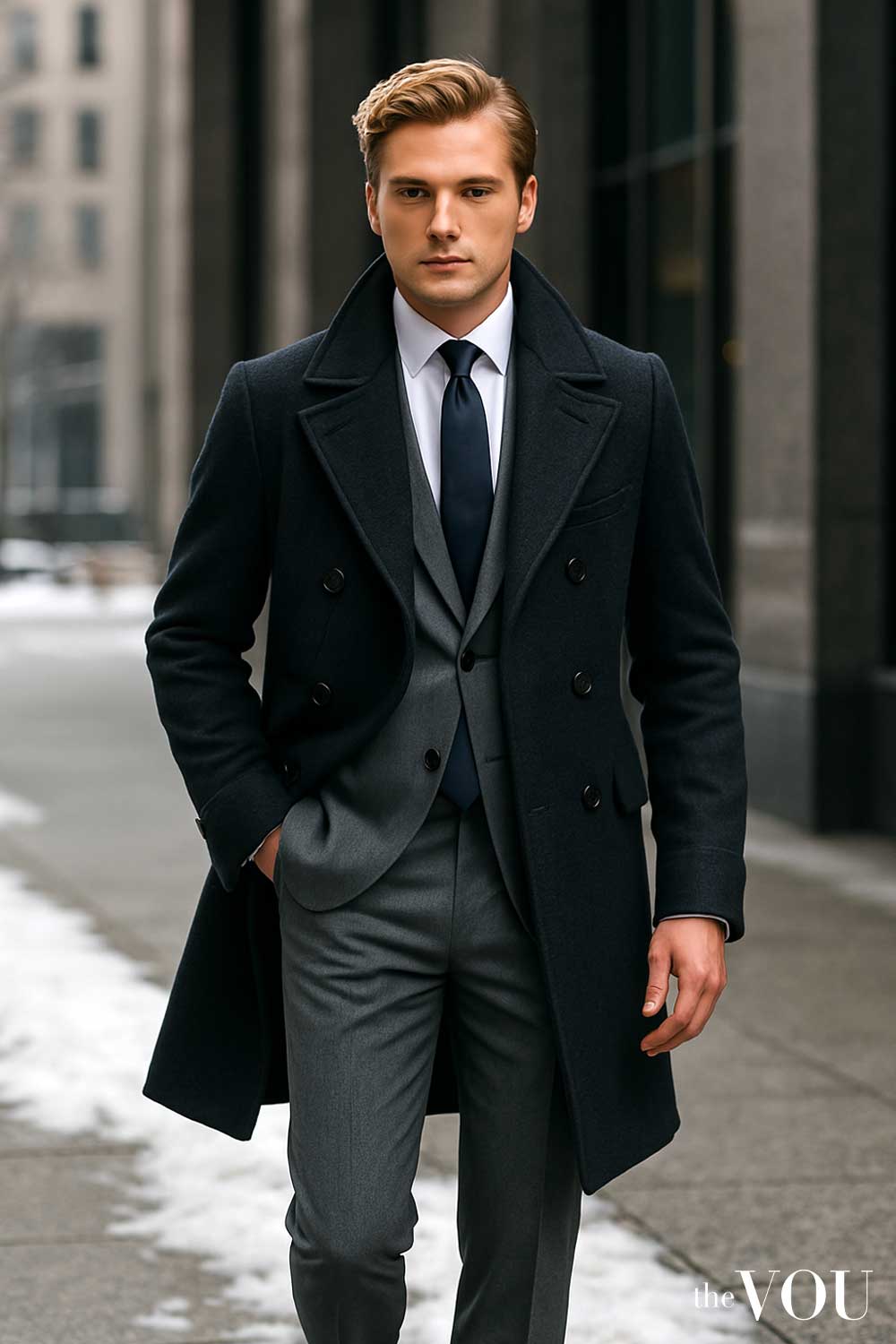
For a smarter look, wear the coat over a roll-neck or a fine merino jumper, grey flannel trousers and polished dress shoes or dark boots. A shirt and tie under a V-neck jumper also works for a business-casual office.
Collar Up
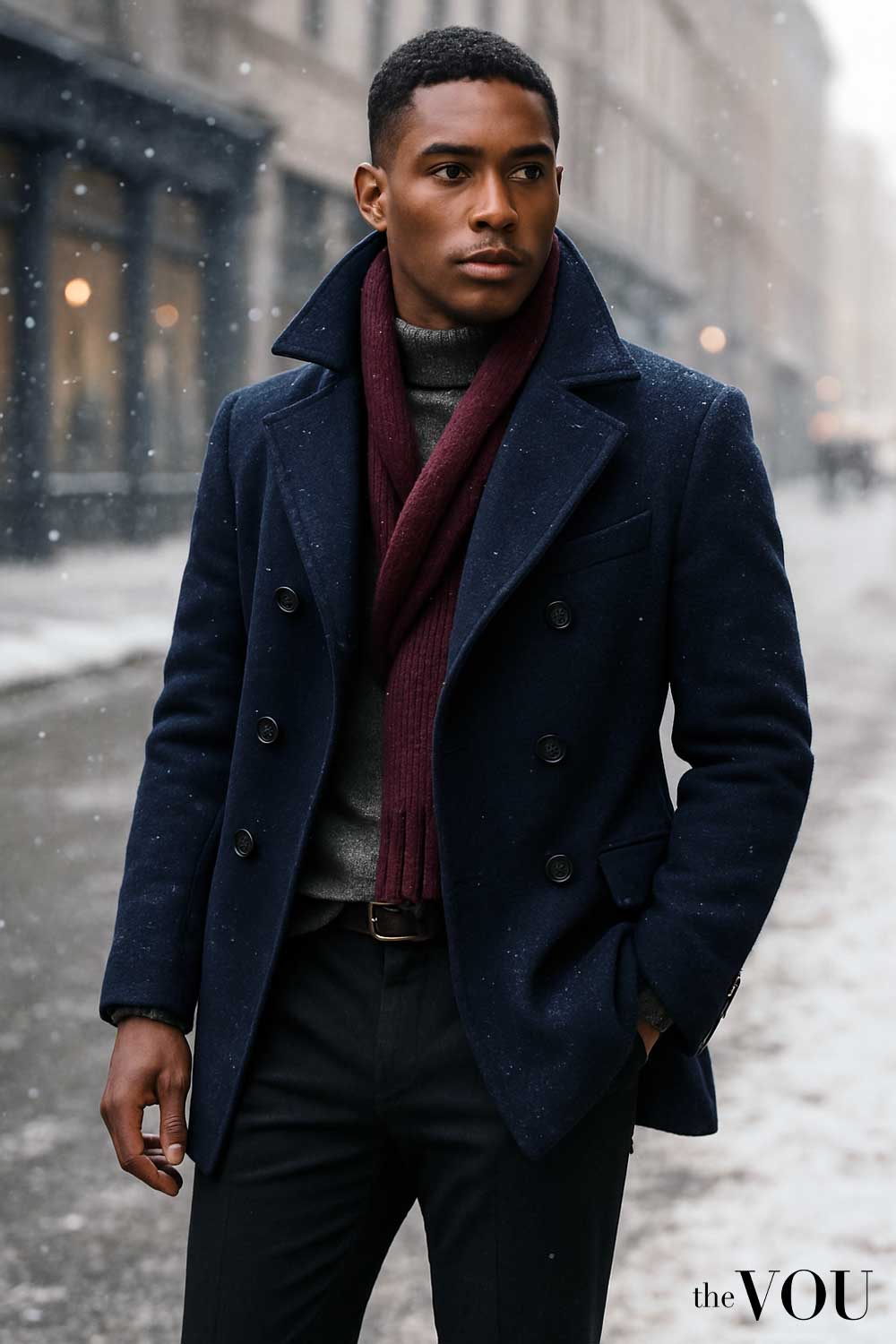
Turning the collar up is practical in wind and rain, and it gives the coat a Preppy vibe. Save it for genuinely cold days, when it looks natural rather than posed.
Outfits by Climate
Cold, dry winters. A heavy melton coat with a warm lining, a lambswool or merino roll-neck, flannel trousers and leather boots.
Wet, mild winters. A medium-weight coat, a cotton or merino jumper and leather boots. In heavy rain, a waxed or waterproof coat is the better choice.
Autumn and spring. A lighter wool-blend coat worn open over an oxford shirt, chinos and suede shoes.
What to Spend
Around $300 to $450. Navy-pattern coats made in the United States sit here. US Wings sells a Schott-made military-issue peacoat from $429 in a 32-ounce wool and nylon melton, and Schott’s own 740 costs $450.
Around $500 to $650. Schott’s 100% wool melton 764 costs $645, Suitsupply’s wool peacoat $499 and Cockpit USA lists its Admiral peacoat, made in the United States, at $560.
£360 to £495 in the UK. Gloverall makes its Churchill and Admiralty peacoats in England in 100% melton. The Churchill costs £495 and the Admiralty was reduced to £361.25 from £425 when we checked.
£895 and up. Private White V.C. makes its peacoat in Manchester from 30-ounce Yorkshire melton for £895, and Todd Snyder’s Italian wool and cashmere peacoat costs $998.
Prices change with the season. A surplus or second-hand Navy coat can cost less, provided the cloth is free of moth holes and the lining is intact.
Where the Peacoat Comes From
Several origin stories circulate. Only one is supported by dictionaries.
The Dutch name. Merriam-Webster and Etymonline derive pea jacket from the Dutch pijjekker, and both record the English word from 1721.
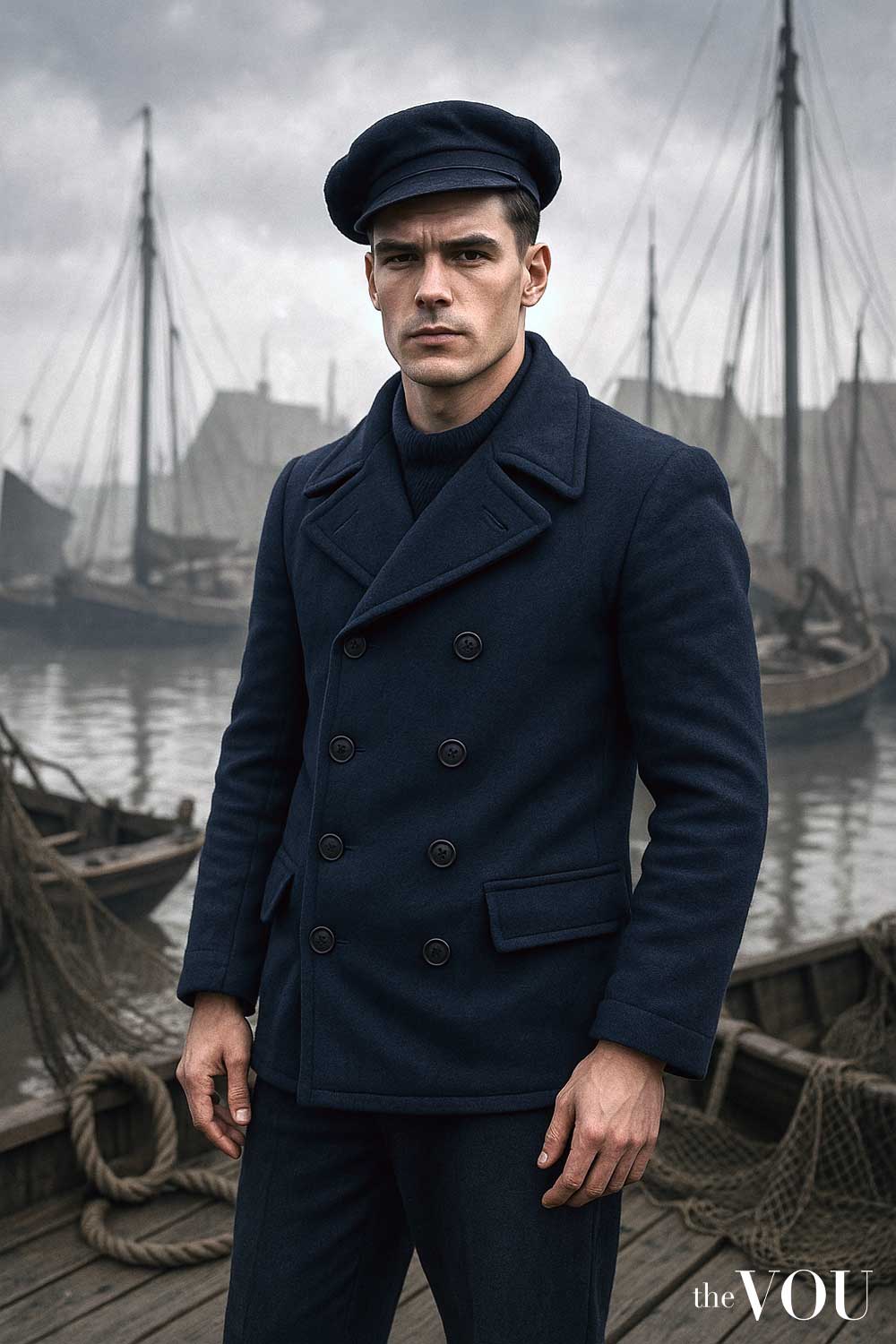
Sources disagree on what the Dutch pij meant, a kind of coarse cloth or a kind of coat, so the safest reading is that sailors borrowed the Dutch name for a short seaman’s coat.
The Camplin story. Camplin, an Italian company that sells its peacoats on a Royal Navy story, says a member of the Camplin family made the original peacoat for the Royal Navy at the end of the 19th century. Its site names Robert Camplin and the year 1893, while a retailer’s feature on the brand names Charles Camplin and 1888 and calls the coat the P. Coat. We found no record outside these accounts that supports either version, and the English word pea jacket was in use more than a century earlier.
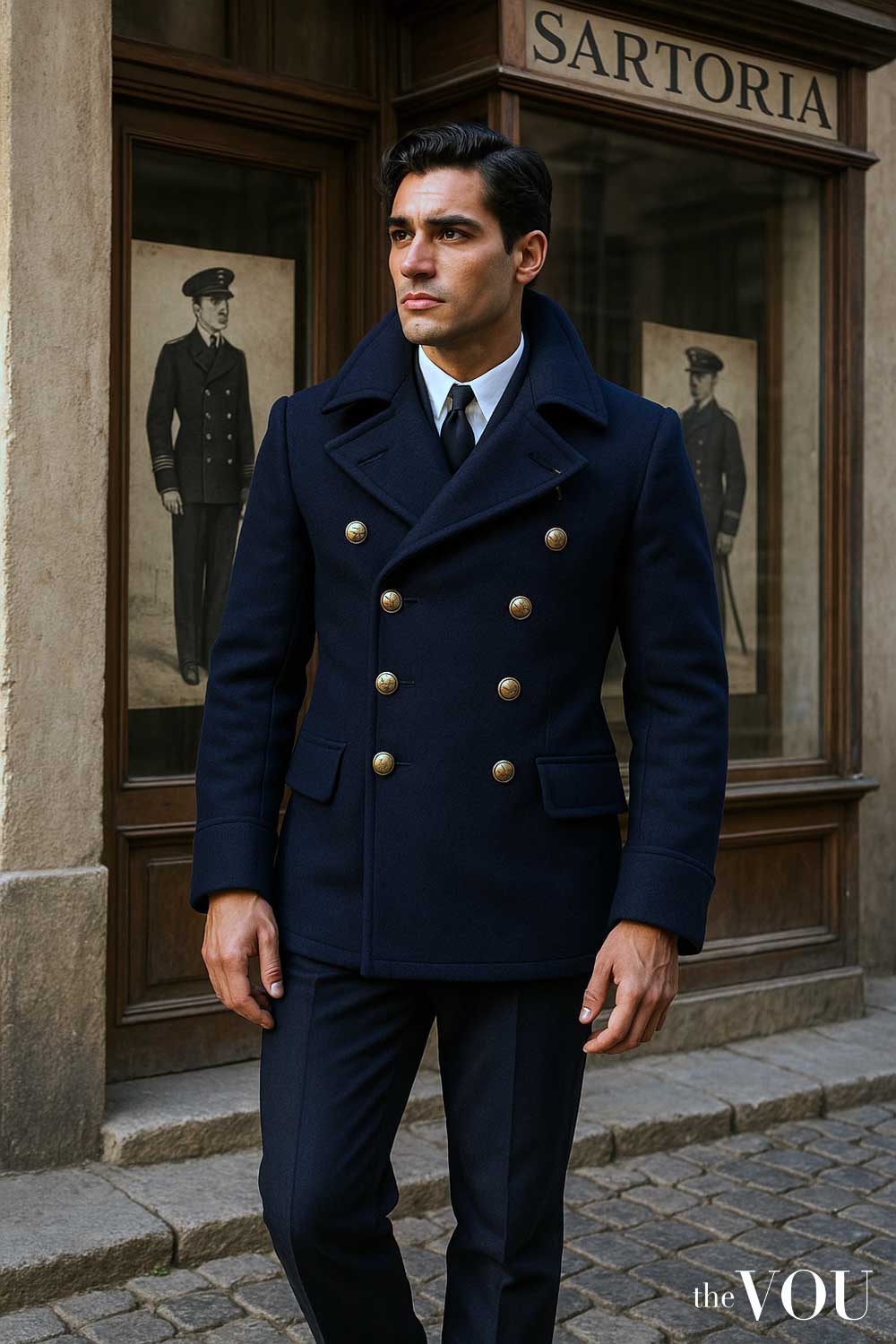
A Victorian tailoring story. Another account credits a Victorian tailoring trade journal with describing an early civilian pea jacket. We could not find the original issue, so treat it as unconfirmed.
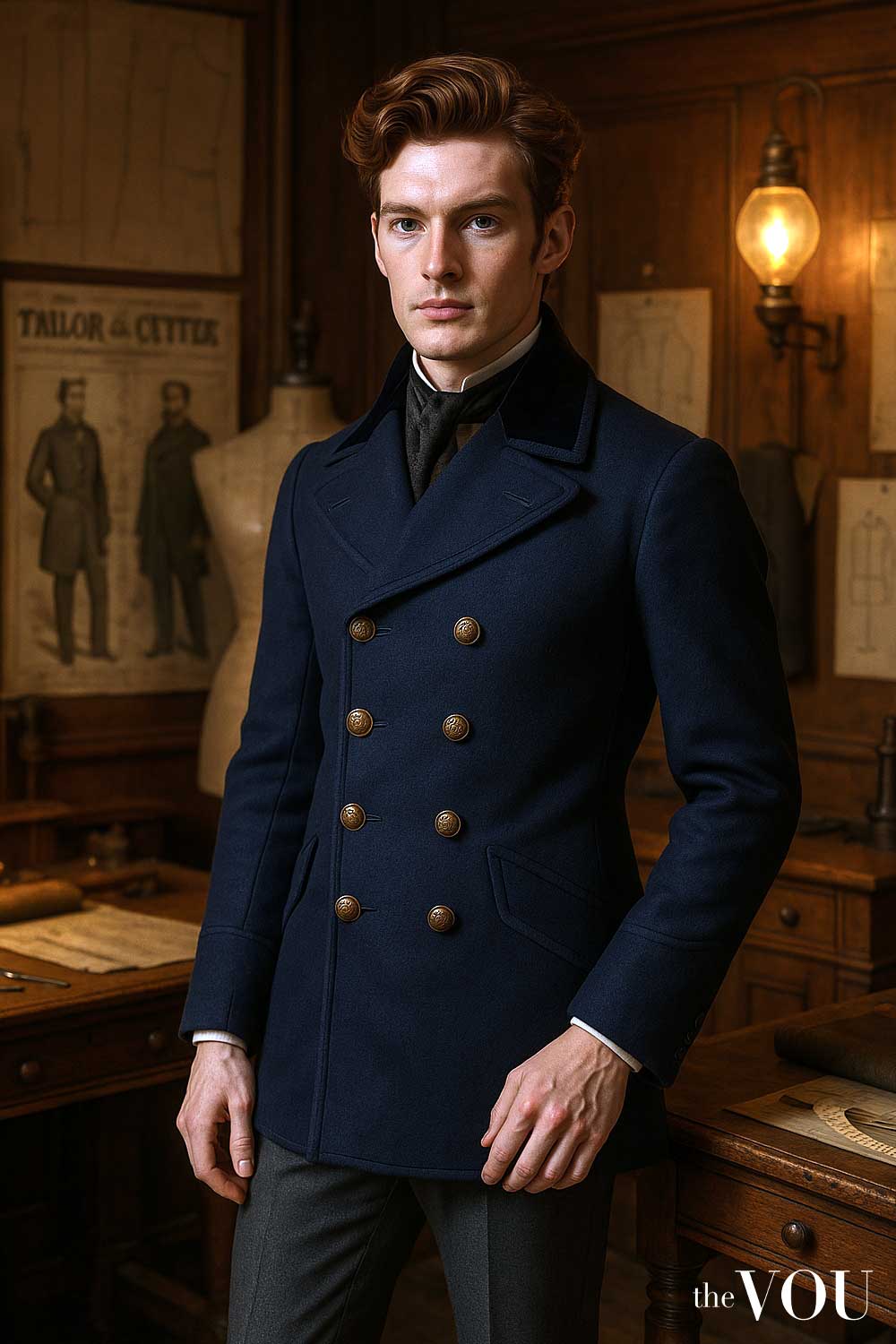
In Naval Service
Sailors of European and later American navies wore the coat, and in the US Navy it became regulation outerwear for enlisted sailors. Surplus coats still reach civilians, so a second-hand coat may be genuine Navy issue.
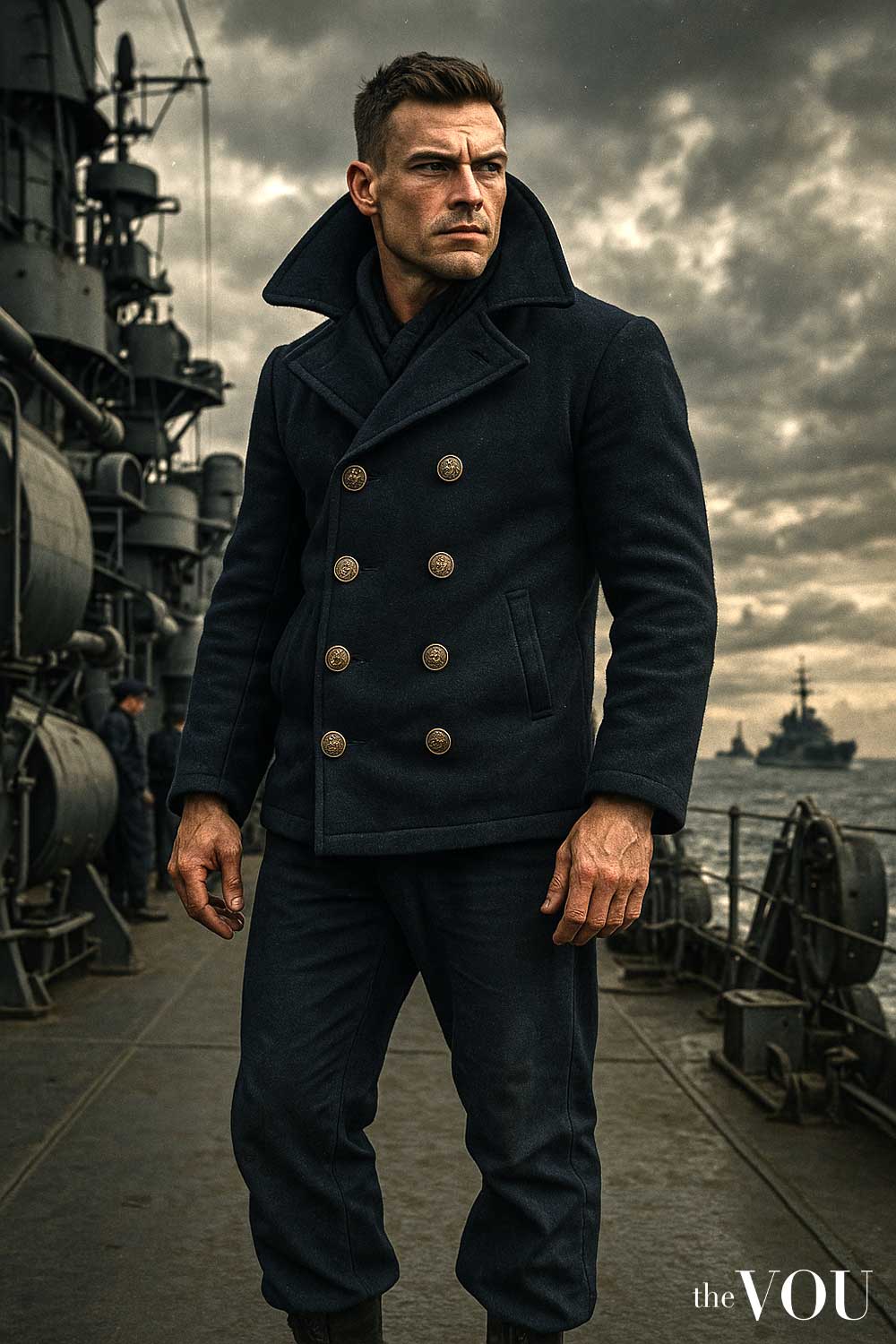
In August 2016 the US Navy announced that, from 1 October 2018, a black cold-weather parka would become its standard outerwear and the peacoat an optional garment. The parka became a required item in every sailor’s sea bag on 1 October 2020. The peacoat entry remains in the Navy’s uniform regulations.
In Civilian Wardrobes
Today, most peacoats worn on the street are civilian designs based on the uniform rather than Navy issue. For examples of how well-dressed men wear it, see our guide to stylish men of the old money style.
Where to Buy a Peacoat
For the naval pattern, start with the makers who still produce it in the United States or Britain. Schott NYC makes several peacoats in the United States. If you prefer a heritage British clothing brand, Gloverall makes its Churchill and Admiralty in England, and Private White V.C. makes its coat in Manchester. Camplin, now based in Italy, sells its Island and Bridge peacoats at €680 to €706.
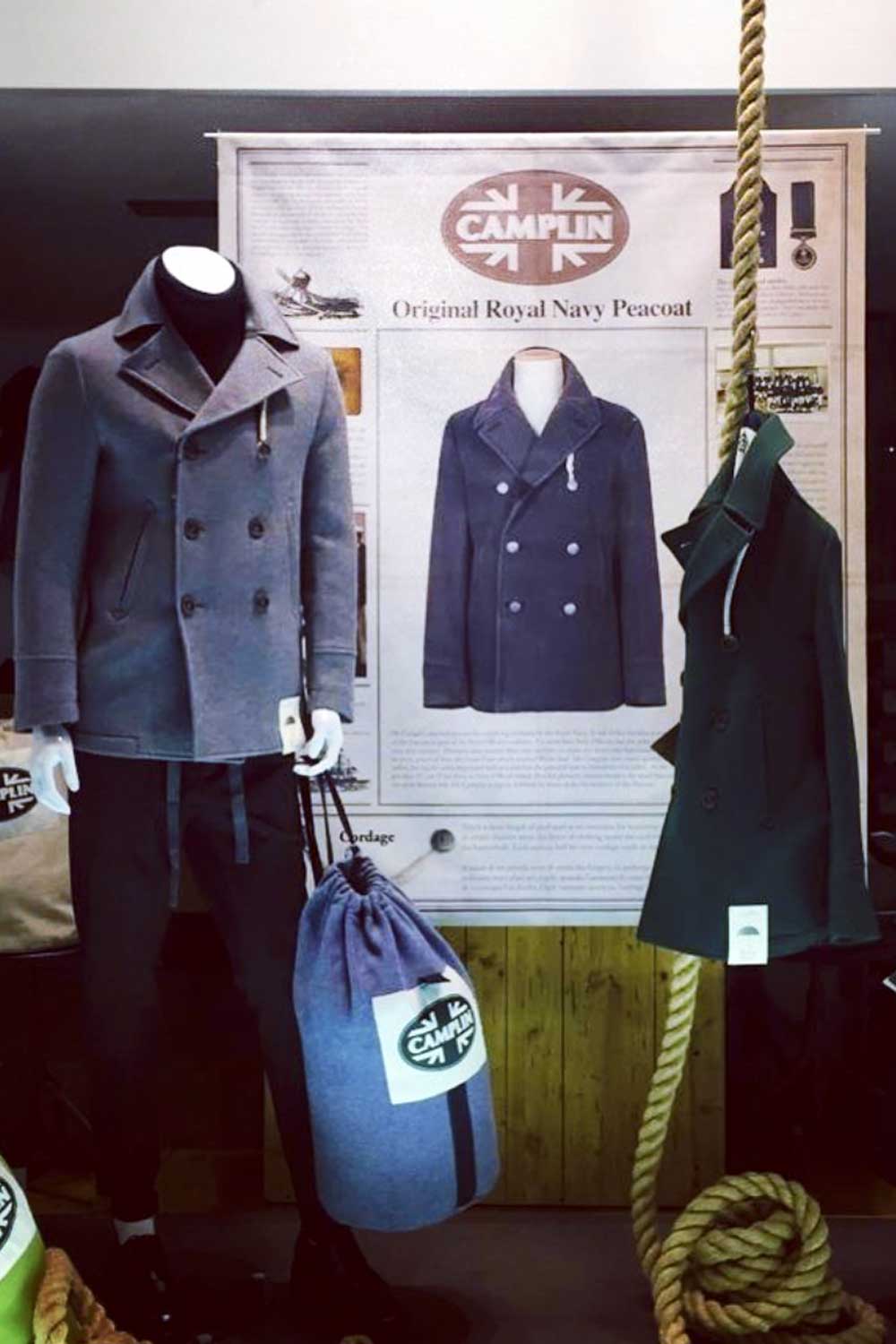
Fashion brands also sell coats inspired by the peacoat, often with flap pockets, cashmere blends or a slimmer cut. These coats can be excellent, but check the cloth, the weight and the length against your needs rather than the name. For more labels, see our list of authentic heritage brands.
Makers we checked in October 2026. Schott NYC, US Wings, Cockpit USA, Gloverall, Private White V.C., Camplin, Suitsupply, Todd Snyder and Billy Reid all listed men’s peacoats. Brooks Brothers listed a corduroy peacoat with a shearling collar.
Peacoat Care
Gloverall advises brushing a wool coat for about a minute after wearing it, in the direction of the nap, and airing it outside or near an open window when the weather is dry, instead of cleaning it. It suggests dry cleaning about once a season at most, storing the coat on a hanger wide enough for the shoulders, and using cedar and a cotton or linen cover, not plastic, against moths.
Peacoat Questions
Where does the name peacoat come from?
The name most likely comes from the Dutch pijjekker, recorded in English as pea jacket from 1721. The story that it stands for petty officer’s coat comes from one clothing company’s own accounts.
Can I wear a peacoat with a suit?
With a single-breasted suit, yes, if the coat covers the jacket. With a double-breasted suit, the two double-breasted fronts compete, and a single-breasted overcoat looks cleaner.
Should a peacoat be tight?
No. It should be close enough for the fronts to lie flat when buttoned, with room for a jumper. Some military-pattern coats run small, so read the maker’s sizing advice.
How heavy should the wool be?
The naval-style coats in this guide are sold in cloths of 24 to 32 ounces, but makers state weight on different bases, and lining and layers matter as much for warmth. For a cold winter, choose a dense melton with a warm lining. For milder climates, a lighter coat or a blend is easier to wear.
Should I wear it buttoned?
A double-breasted coat looks best buttoned. The Navy fastens every button except the collar button, and that is a good rule for civilians too, though you can leave it open on a mild day.
How do I keep the collar up?
Fasten the collar button or tab if the coat has one. If the collar still falls, a tailor can add a firmer interlining.
Take the First Step With The VOU’s Styling Quizzes
Start with our quizzes. First, take our Face Shape Quiz to see which face shape yours is closest to and get first styling suggestions.
Then, see which colours the seasonal colour approach suggests for you with our Seasonal Colour Analysis Quiz.
See which cuts are usually recommended for your build with our Body Shape Quiz, and explore the styles that suit your taste with our Fashion Style Quiz.
Transform Your Image with The VOU’s Professional Guidance
If you want help with choosing and styling a peacoat, The VOU’s stylists offer paid styling services, from single analyses to a complete package.
Our Professional Face Shape Analysis package provides you with a stylist’s assessment of your face shape from the photos and measurements you send, personalised hairstyle recommendations, customised facial hair styling guide, expert eyewear selection guidance, and detailed grooming recommendations tailored to your unique features.
For the most comprehensive transformation, consider our Complete Image Transformation Package.
The Complete Image Transformation Package includes our Fashion Style, Seasonal Colour, Body Shape and Face Shape analyses, a brand-specific shopping guide and two weeks of support.
The package brings the analyses together into one plan for your clothes, colours and grooming.