
Start here
What’s This About
Tonal dressing combines related shades of one colour family, and the useful choices are lightness, colour temperature and texture rather than a set number of shades.
This guide explains how to put a tonal outfit together and check it, such as:
starting from a colour you already wear
balancing smooth and textured surfaces
separating lightness from colour intensity
choosing shoes and accessories deliberately
three complete outfits to try
checking the overall effect without a body-shape formula
and many more!
Compare the garments in the light where you will wear them, and let the dress code come first.
Key Points
01Start with the largest garment you want to use, such as a coat, jacket or trousers, and check its companions in daylight and in the indoor light where you will wear them.
02A ribbed knit or brushed fabric beside smooth trousers gives the eye something to distinguish when the colours are close, so start with one textured garment.
03You do not need three shades or a darker-to-lighter order; black shoes with blue clothes, or a belt that does not match, are deliberate breaks rather than mistakes.
04Colour cannot correct a garment that does not fit, and you do not need a colour season or body label to try tonal outfits.
Tonal dressing combines related shades so an outfit reads as one colour family.
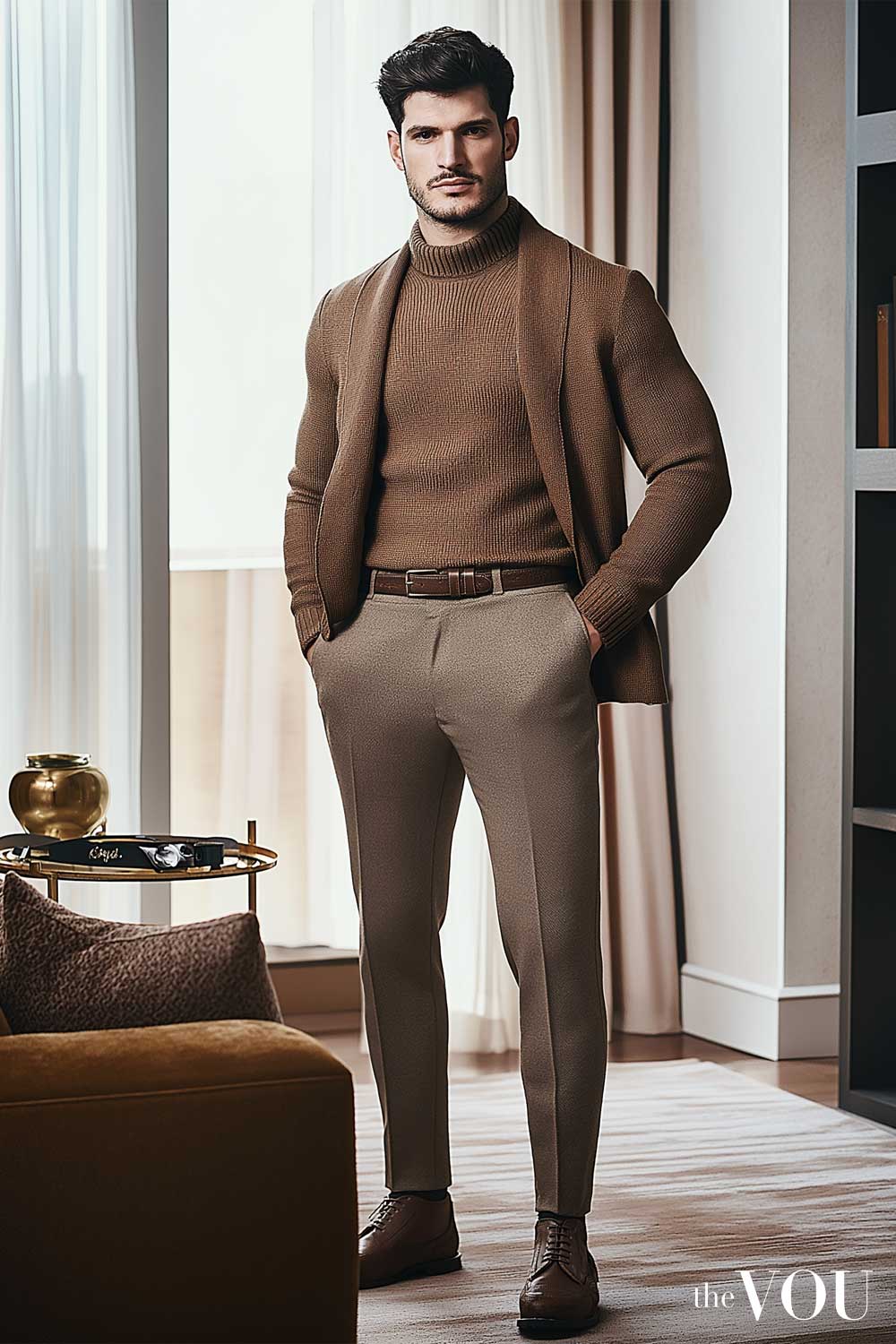
A navy jacket, blue shirt and darker blue trousers are one starting point; a camel coat, cream knit and tan trousers are another.
The useful choices are lightness, colour temperature and texture, not a compulsory number of shades or accessories.
This guide explains how to assemble and compare those garments.
For the broader definition of one-colour dressing, see the monochrome dressing principles; for finished examples, see seven complete monochrome looks.
Start with a colour you already wear
Choose the largest garment you want to use, such as a coat, jacket or trousers.
Place potential companions beside it in the same light.
Check the combination in daylight and in the indoor light where you expect to wear it, because a near match may look different in another setting.
A similar warm or cool lean can make coordination easier, but mixing the two is not inherently wrong.
A yellowish cream knit and a greyer beige trouser can work together if you like their contrast.
These are descriptions of the clothes; they do not diagnose your skin’s undertone.
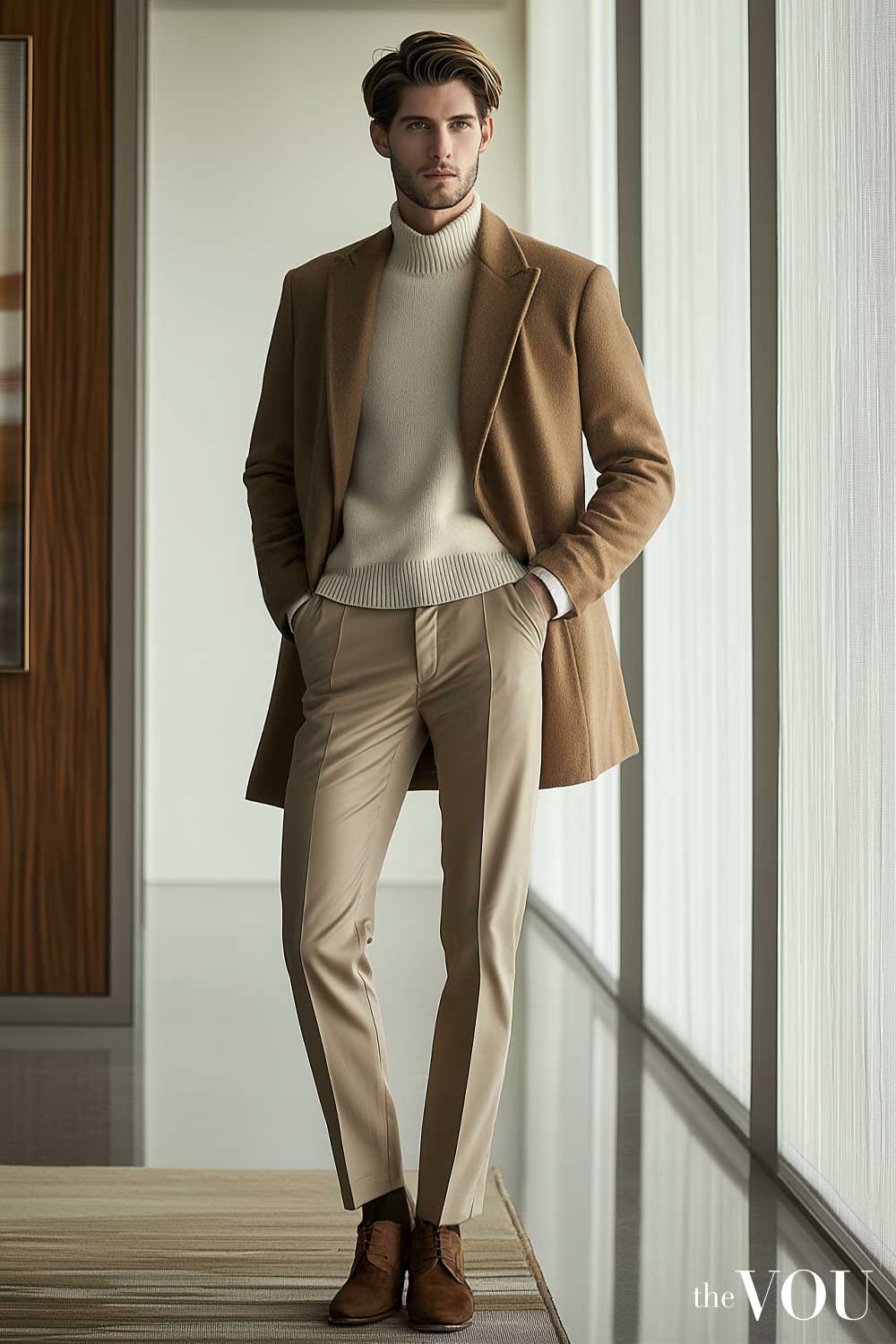
To adapt this combination for a cold-weather lunch, use a camel coat, cream rollneck, tan trousers, brown socks and brown lace-up boots.
The coat and shoes provide darker edges around the pale knit.
Choose the warmth and weight for the weather rather than buying a particular luxury label.
Balance smooth and textured surfaces
Incorporate different fabric textures while maintaining colour consistency.
A navy outfit might combine smooth trousers with a ribbed knit and polished shoes.
Texture gives the eye something to distinguish even when the colours are close.
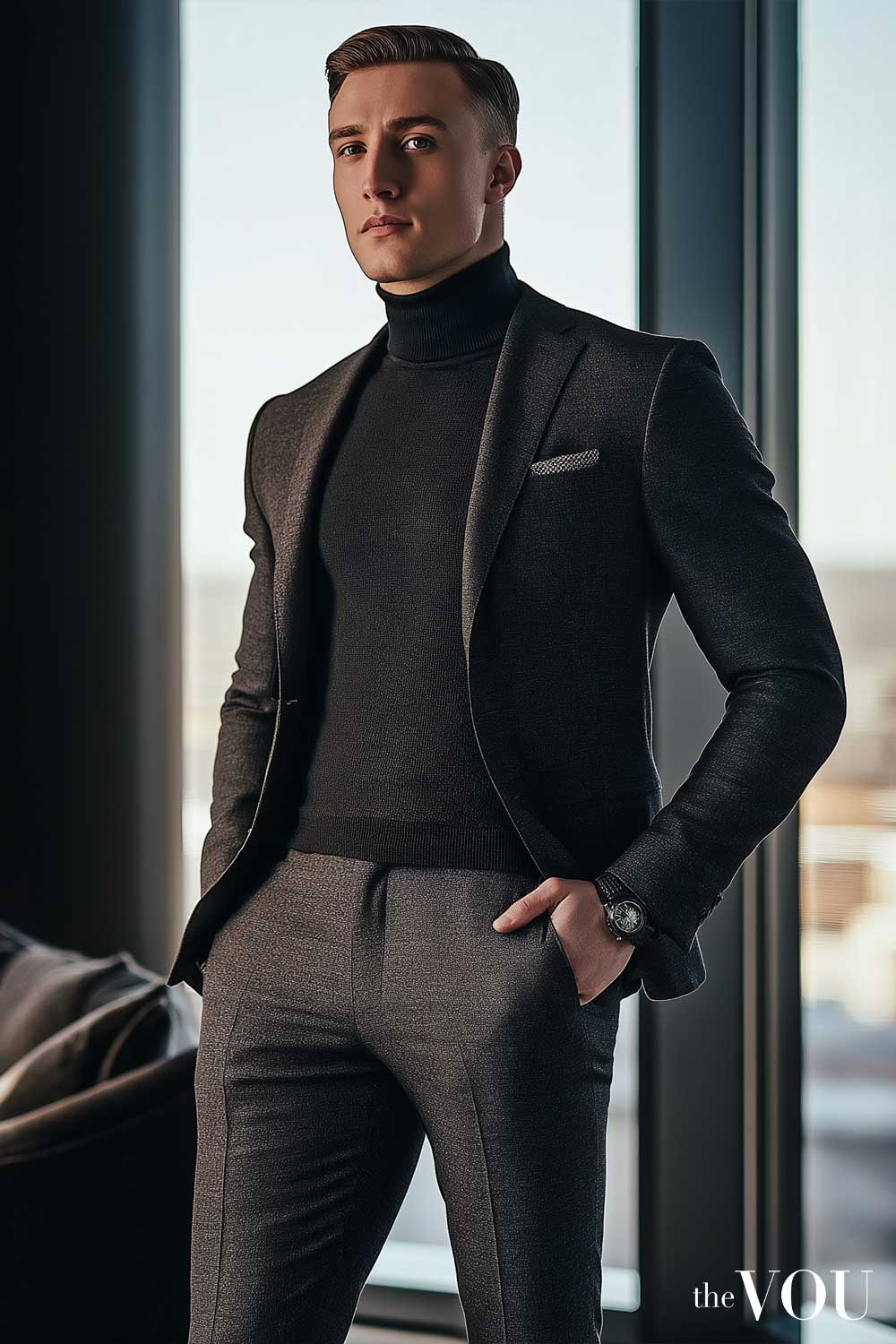
Start with one textured garment rather than counting a prescribed maximum.
If the knit, jacket and accessories all compete for attention, replace one with a smoother garment.
Add layers only when they serve comfort or the outfit: a coat is not necessary just to produce another texture.
Separate lightness from colour intensity
Lightness describes how light or dark a colour appears.
Here, intensity describes vivid versus muted colour.
A pale grey and charcoal differ mainly in lightness; a vivid blue and a greyed blue can differ in intensity even when they have similar lightness.
The CIE treats lightness and chroma as distinct attributes; these outfit descriptions are practical approximations, not measurements.
A gradual progression is one option.
Position darker shades at either the bottom or top, then see whether a medium shade helps connect them.
Alternatively, wear similar shades and use the differences in their surfaces to distinguish the layers.
You do not need three shades, and there is no requirement for every successive garment to be lighter.
Choose shoes and accessories deliberately
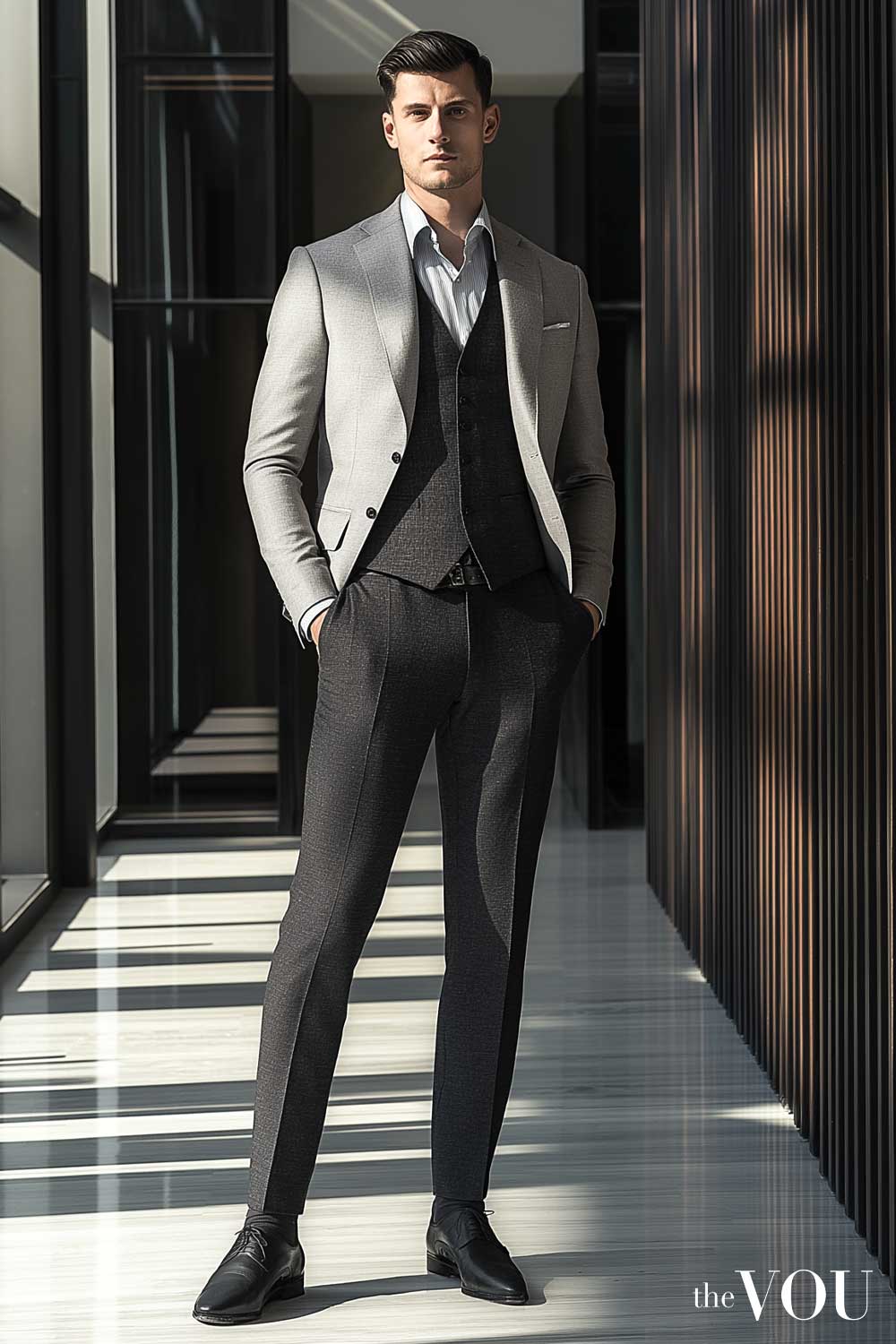
Shoes can stay in the colour family or make a small break.
Dark brown loafers with tan trousers preserve a brown direction; black shoes with blue clothes introduce another colour.
Both are useful options.
Keeping a belt close to the shoes is an easy starting method, not a requirement to buy a matching set.
Use the accessories you need.
A watch, belt and glasses need not be discarded to satisfy a three-accessory limit.
If a strong contrast distracts you, change its size, colour or finish.
The guide to adding a contrast colour explores that decision in more detail.
Three complete outfits to try
Scroll horizontally to see all columns →
| Setting | Suggested outfit | Why try it? |
|---|---|---|
| Office where suits and ties are expected | Navy suit, pale blue shirt, medium blue tie, navy socks and black lace-up shoes | The shirt separates from the jacket; the tie connects the blues. Black footwear is a practical deliberate break. |
| Casual weekend | Grey crew-neck knit, charcoal trousers, grey socks and grey trainers | Light-dark separation is easy to see without adding another hue. |
| Cold-weather lunch | Camel coat, cream rollneck, tan trousers, brown socks and brown boots | Related neutrals leave room for visible differences in depth and texture. |
These are suggested combinations, not exact products identified in the pictures.
Use the closest garments you own before adding anything.
If your workplace expects a white shirt, wear it; the colour exercise is less important than the actual dress code.
Check the overall effect without a body-shape formula
Look at the outfit standing, sitting and with the outer layer removed.
Decide where you want the strongest colour difference.
Try reversing the light and dark garments if you have alternatives.
This is an aesthetic comparison, not a promise that shade placement changes perceived body proportions by a particular percentage.
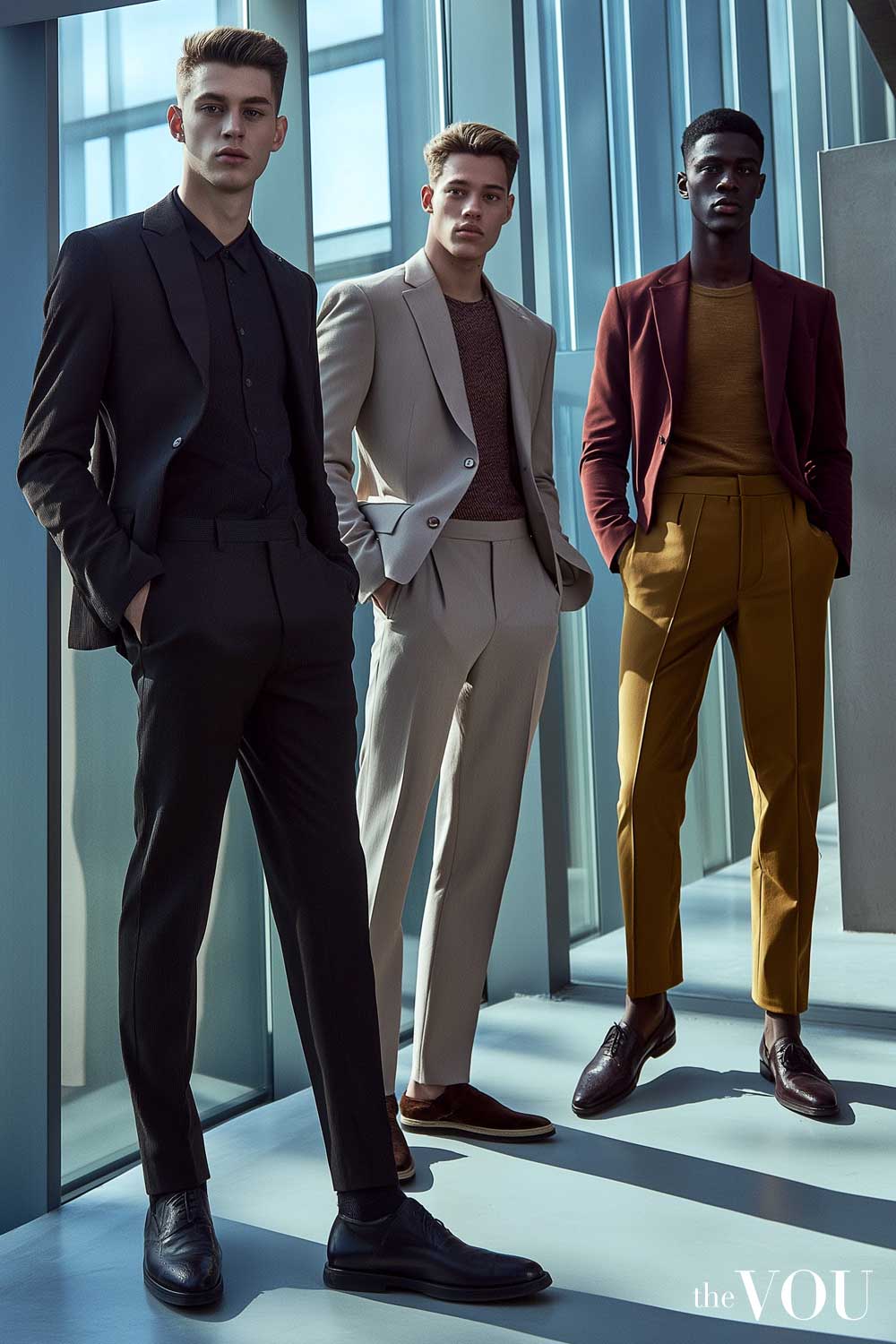
You do not need a body label to carry out that comparison.
Check whether the jacket closes comfortably, sleeves allow movement and trousers sit as intended.
Colour cannot correct a garment that does not fit.
Questions about tonal dressing
Q. Can patterns be part of a tonal outfit?
Yes.
A grey check jacket can sit with a plain grey shirt and trousers.
Start with one pattern so you can see what it contributes, then add another only if you prefer the result.
Q. Must I wear light colours in summer and dark ones in winter?
No. Choose fabric weight, coverage and layers for the conditions.
Cream can work in winter knitwear, and navy can work in lightweight summer clothing.
Q. How can brown or cream outfits look less flat?
Compare a smooth garment with a ribbed, brushed or visibly textured one.
Try a darker shoe or a different depth of knit before replacing the whole outfit.
Warm brown is not inherently dated, and greyer brown is not automatically more modern.
Q. Do I need to know my colour season first?
No. Start with clothes you like near your face and compare related versions.
Seasonal colour guidance is an optional way to organise those comparisons, not a prerequisite for wearing tonal outfits.
Related guides on The VOU:
How to Develop Your Personal Style
What Are Textiles in Fashion? Complete Guide
Deep/Dark Autumn Colour Palette for Men: How to Check It and Wear It
15 Critical Rules of Dressing Like a Sophisticated Man
Briefcase Styling Guide for Men by Occasion, Season, Body-Shape
Inverted Triangle Body Shape Explained
Rectangle Body Shape Explained
Navy Blazer Styling Guide for Gents
Business Formal Attire Styling Guide Masterclass for Modern Gentlemen
Old Money Colours (The Main 9) and How to Combine Them Best
Men’s Suit Styling and Wearing Rules for an Impeccable Look
Old Money Accessories Guide to Choose and Style By Occasion
What is a Fashion Season? Everything You Need to Know
Summer Seasonal Colour Palettes for Men
Winter Colour Palettes for Men: Bright, True and Deep Explained
The Secrets of Wearing a Blazer for a Perfect Gentleman Look
The Old Money Capsule Wardrobe: 16 Essentials for Men
These Trousers Flatter All Body Shapes (And Here’s How to Style Them)
Styling Principles Every Successful Man Must Master
Modern Old Money Style Guide for Men to Master the Art of Quiet Luxury
Style Like A True Gentleman
Before you go, here is a simple way to put this guide into practice, and when to ask an image consultant for help.
Professional styling starts with knowing your body shape and seasonal colour palette, which help you choose clothes that fit well, in colours that suit your skin, eyes and hair.
Our guides also cover styling by occasion, location, season and time of day, garments, footwear, accessories and heritage fashion brands.
Take our three quizzes to find your body shape, seasonal colour palette and fashion style, then book a consultation if you want personal help:
1. Find Your Body Shape
Different garments flatter different silhouettes, so knowing your body shape is the first step in dressing like a confident man.
To find out your unique body shape, take our body shape quiz for men.
Once you know your unique body shape, take the second quiz to discover your unique colour palette.
2. Find Your Seasonal Colours
The garments in your outfits come in many colours, so it helps to check which colours suit your natural colouring.
To do that, you have to find out your seasonal colour palette, and you can do it by taking our seasonal colour quiz for men.
3. Find Your Fashion Style
By now, you should already know your body shape and unique colour palette; the next step is to discover your personal fashion style.
To find it, take our fashion style quiz for men; it includes a suggested style, outfit ideas, relevant fashion brands, and much more.
Personal Help from The VOU
For personal help, you can book a consultation with our image consultants and fashion stylists.
Our styling services for men are paid consultations; the shop page lists what each one includes.
Wearing luxury brands is not enough on its own (see our guide to logo-heavy luxury brands and how to wear them); knowing your body shape, colour palette and personal style first makes styling by occasion, location, season and time of day easier.
Contact us to book a consultation once you have taken the three quizzes.