
Start here
What’s This About
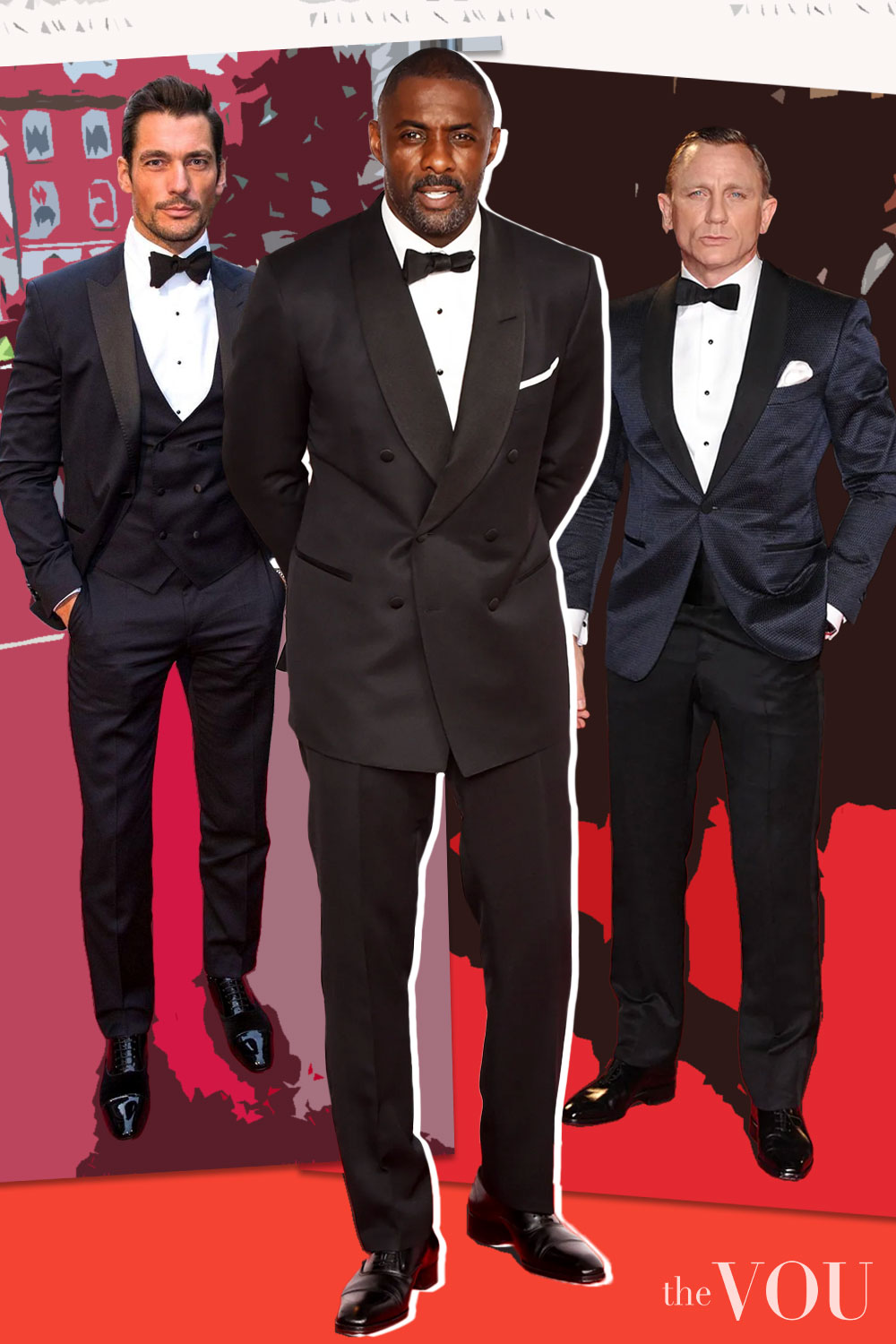
Black tie always starts from a dinner jacket with matching trousers, a white dress shirt and a black bow tie, but the invitation wording and the type of event decide how strictly you follow it.
This guide explains how black tie changes from one event to another, such as
What “black tie”, “black tie optional” and “creative black tie” each allow
What to wear as a black tie wedding guest
Outfits for galas, charity balls and formal dinners
Opera nights, awards ceremonies and cruise formal nights
Summer and winter versions of black tie
and many more!
Follow the invitation wording, and ask the host when it is unclear.
Key Points
01A business suit is not black tie; a dark suit is acceptable only when the invitation says black tie optional, preferred or invited.
02Black remains the traditional dinner jacket colour and is always correct for black tie.
03Creative black tie allows a velvet jacket or a patterned bow tie, but the dinner jacket structure stays intact.
04Our black tie guide explains every garment; this page shows how to adapt the outfit to the event.
Black tie is a formal evening dress code built around the dinner jacket, which Americans call a tuxedo.
The outfit itself barely changes, but the event does. An evening wedding, a gala, a formal dinner and a cruise each call for slightly different choices, and the wording on the invitation tells you how much room you have.
This guide explains how black tie varies by event type and invitation wording.
For every garment explained in detail, from lapels to shirt studs, see our guide to the black tie dress code.
For how black tie fits among the other codes, see our guide to all types of dress codes.
How to read a black tie invitation
The wording on the invitation tells you how much flexibility the host expects.
For “Black tie”, wear the full outfit
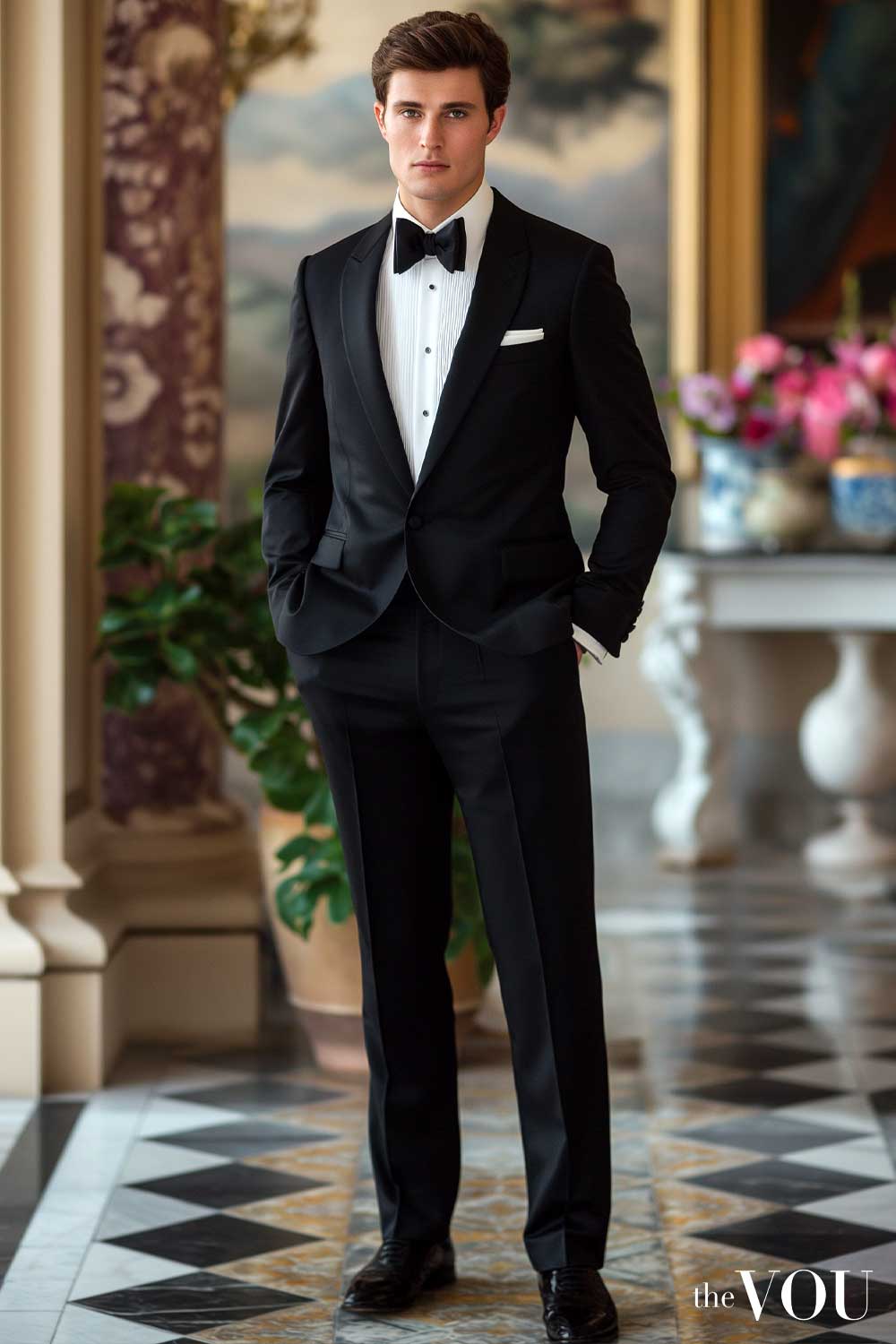
When an invitation says “black tie”, the host expects a dinner jacket with matching trousers, a white dress shirt, a black bow tie and black formal shoes.
A dark business suit is not standard black tie, so if you cannot buy or hire a dinner suit, ask the host rather than assume a suit will pass.
“Black tie optional”, “preferred” or “invited” means a dinner jacket is welcome
“Black tie optional” means a dinner suit is welcome, but a dark suit with a white dress shirt and a conservative tie is also acceptable, according to the Emily Post Institute.
“Black tie preferred” and “black tie invited” point the same way.
If you own or can hire a dinner suit, wear it; if not, a well-fitting dark suit is correct.
“Creative black tie” is the same foundation with a personal touch
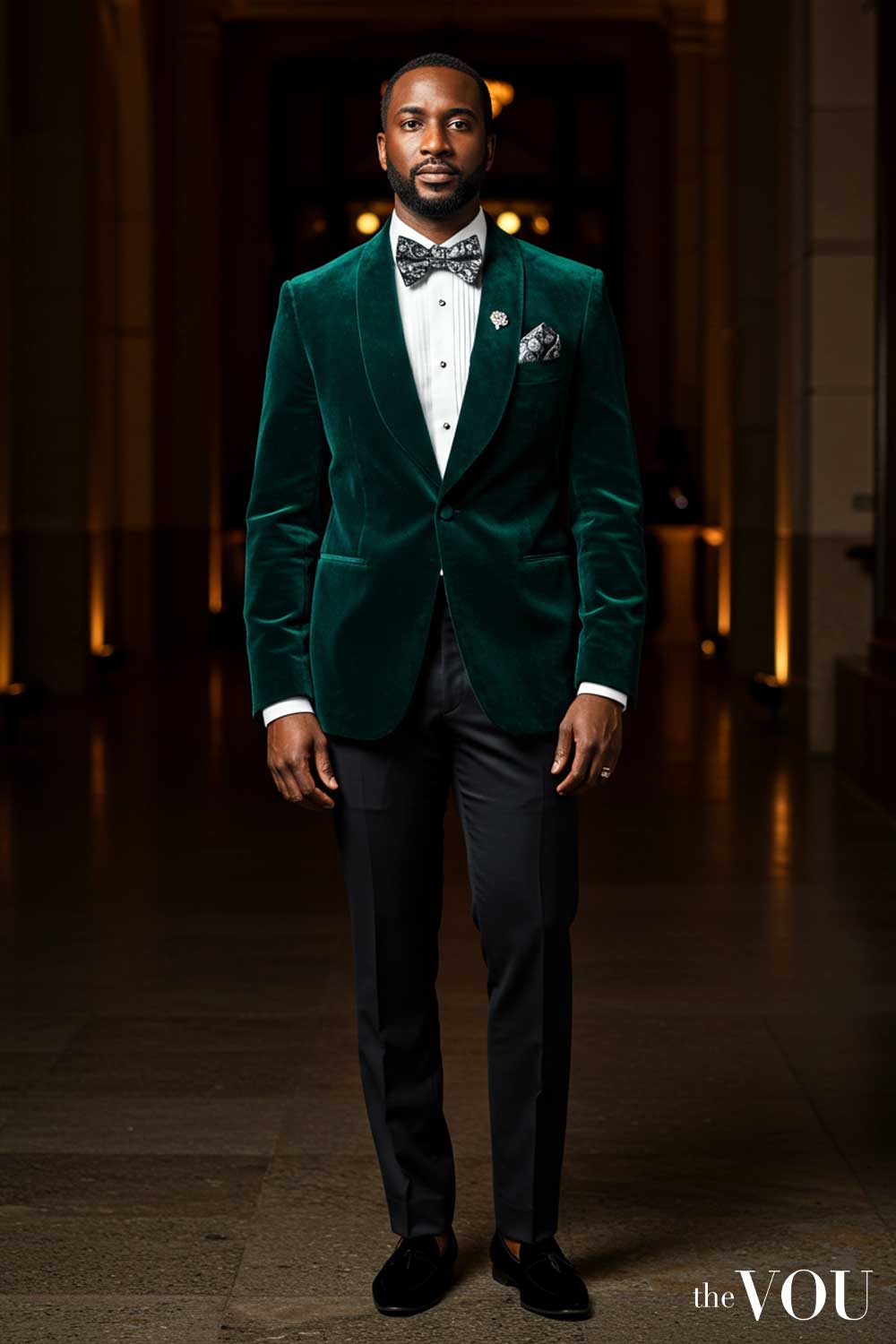
“Creative black tie” keeps the black tie foundation but leaves room for a personal touch, such as a coloured bow tie or a velvet jacket.
Check the invitation or ask the host how far that goes, because hosts use the term in different ways.
“Formal” with no named code
When an invitation just says “formal”, expect at least a dark suit and tie, and ask the host whether a dinner jacket is expected.
The black tie outfit in brief
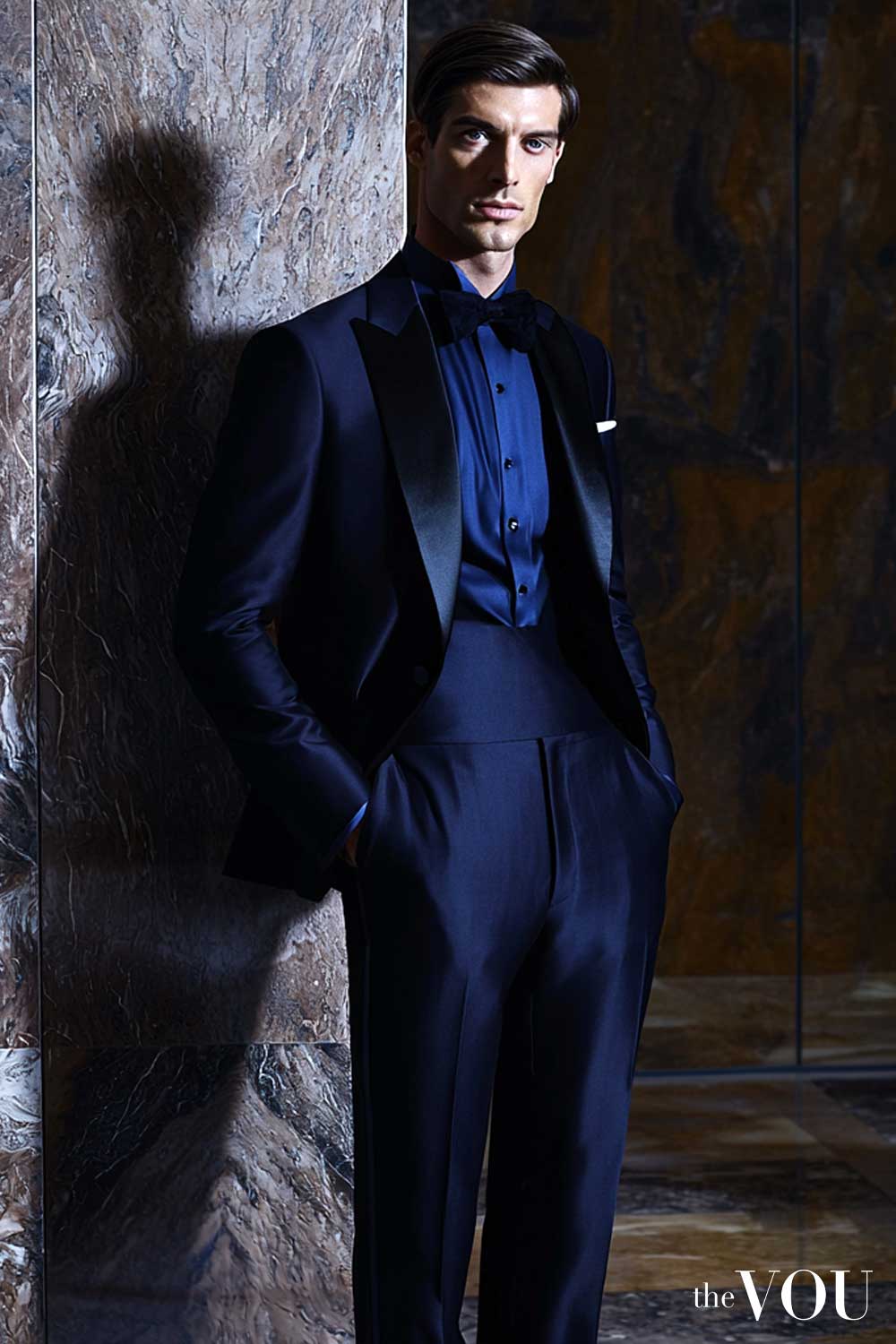
Every event below starts from the same outfit, a black or midnight blue dinner jacket with silk-faced lapels, matching trousers with a single stripe, a white dress shirt, a black bow tie, a cummerbund or an evening waistcoat, and black formal shoes.
Black remains the traditional dinner jacket colour and is always correct for black tie.
Our black tie guide explains each garment and what to check before you buy or hire; the photographs below show the main details at a glance.
Jacket, trousers and shirt
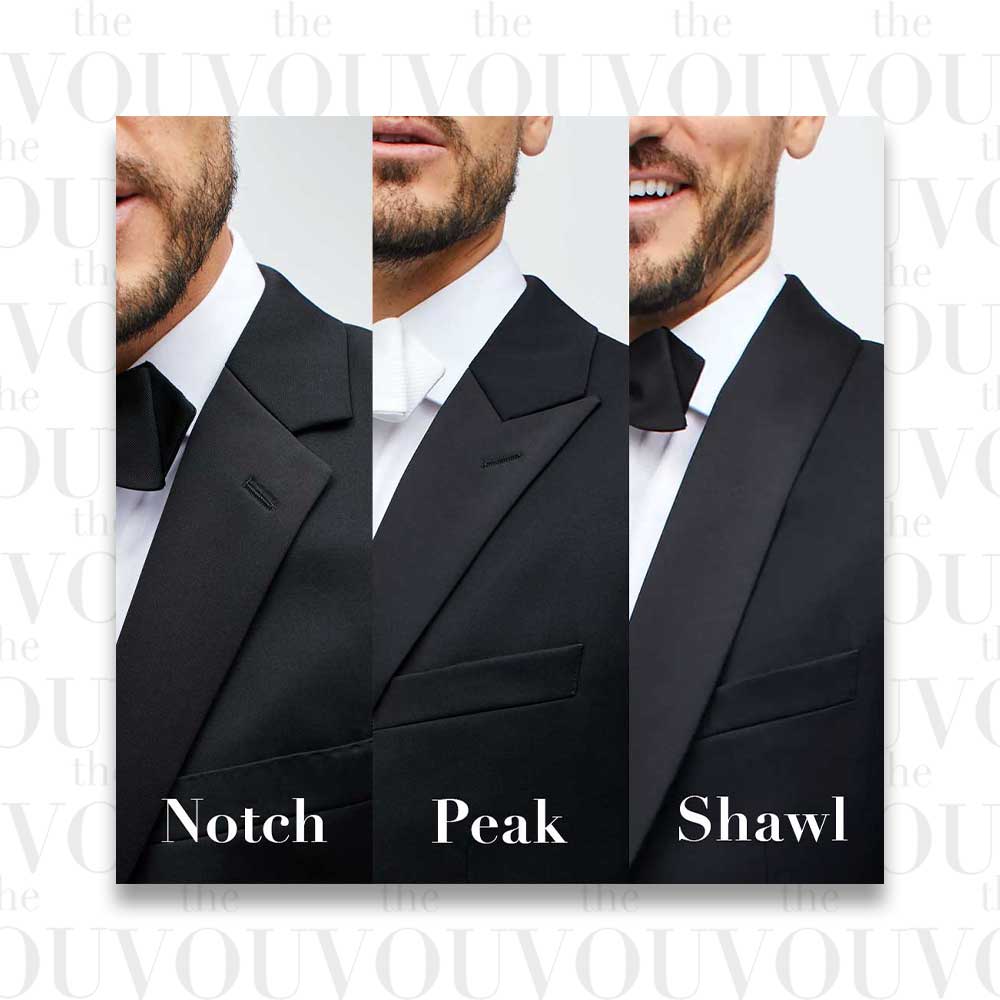
Peak lapels and the shawl collar are traditional; notch lapels are common but less formal.

The trousers match the jacket cloth and carry a single stripe down each outer seam.
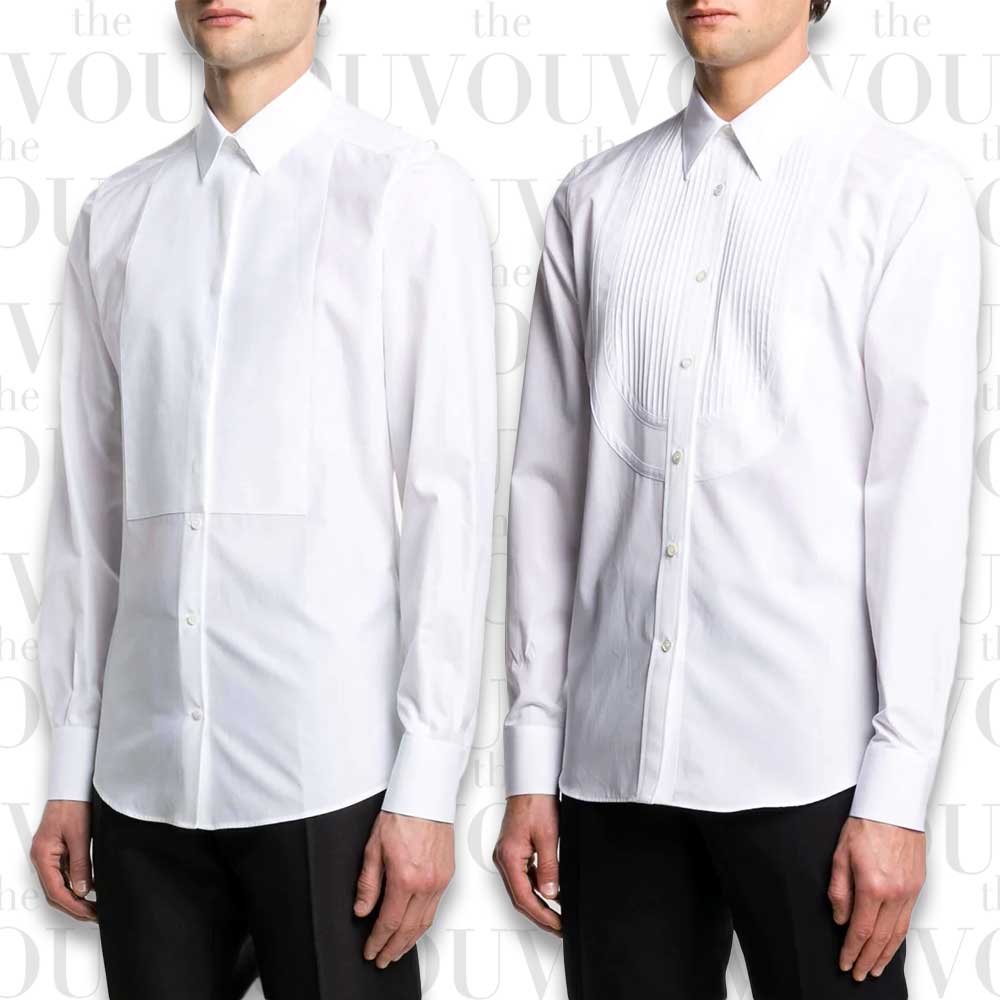
The white dress shirt has a pleated or marcella bib front, a turndown collar and double cuffs.
Bow tie and waist covering
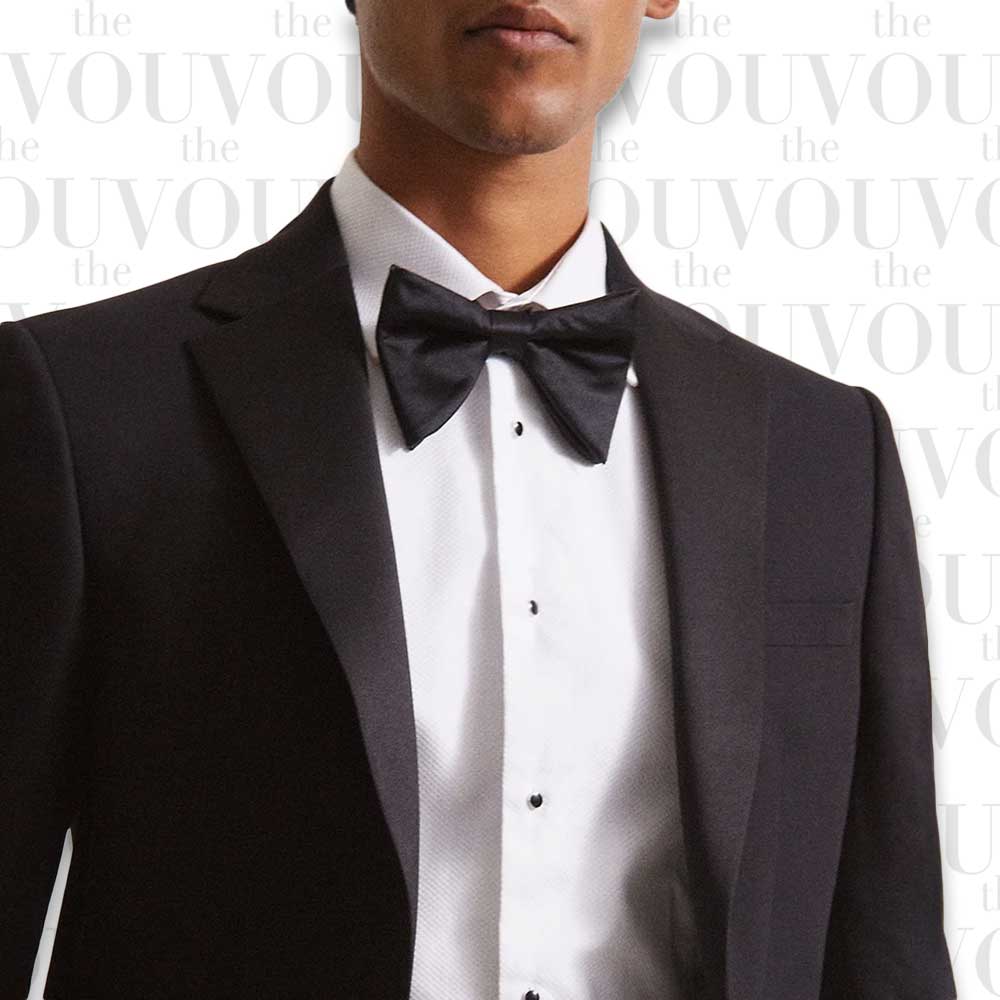
The bow tie is black silk, ideally matching the lapel facings.

A black cummerbund covers the waistband of the trousers.

A low-cut evening waistcoat does the same job, so wear one or the other, never both.
Shoes and accessories
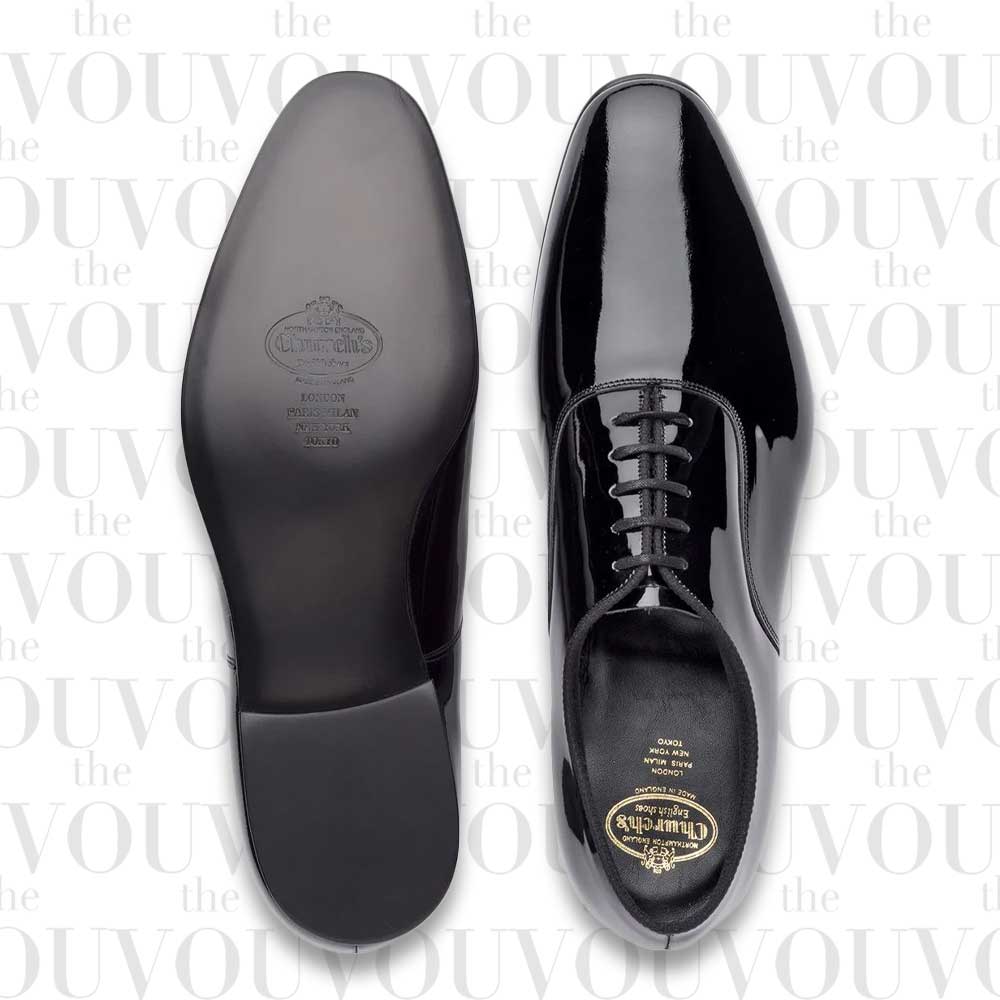
Shoes are black, either patent leather Oxfords or plain, highly polished black calf Oxfords.
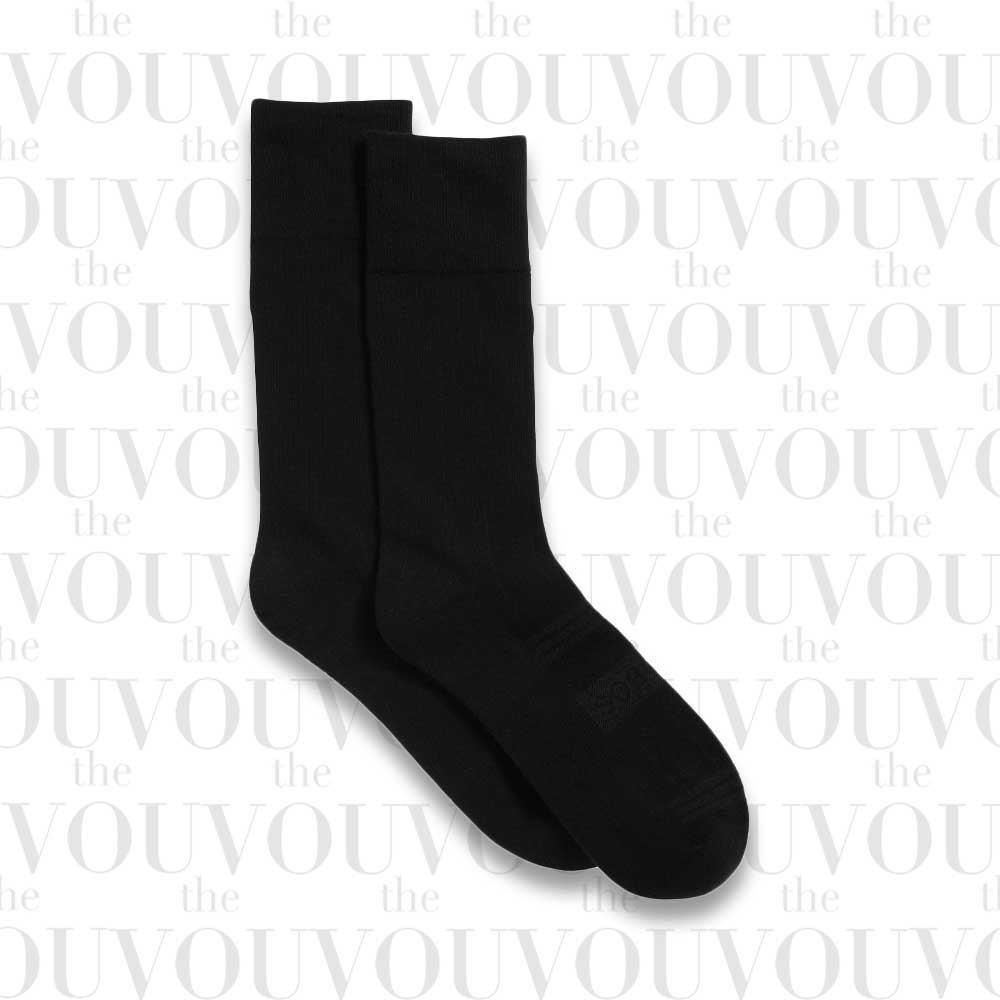
Socks are fine and black.

A white pocket square sits in the breast pocket.

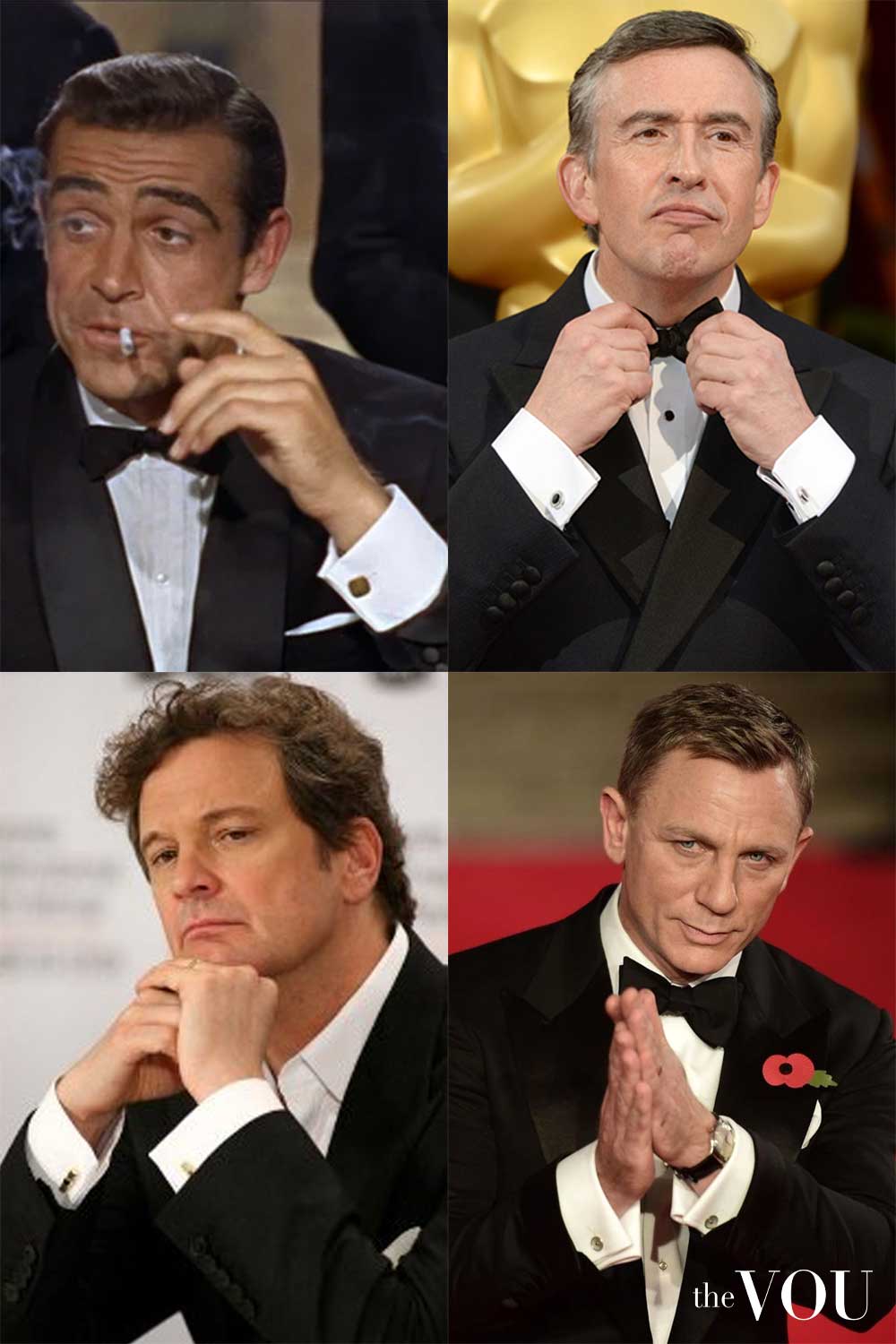
Studs and cufflinks match each other.

If you wear a watch, a slim dress watch on a black strap completes the outfit.
What not to wear to a black tie event
Casual clothes such as jeans, T-shirts, shorts, jumpers or trainers.
A regular business suit, even a black one, when the invitation says black tie rather than black tie optional.
A white bow tie, which belongs to white tie.
Patterned or brightly coloured shirts and long ties, unless the invitation says creative black tie and the host welcomes them.
A belt with dinner suit trousers.
Brown shoes.
If you do not own a dinner suit, hiring, buying ready-to-wear and having one made can all give a good result; fit matters more than price, and our black tie guide compares the options.
How far to go with creative black tie
Creative black tie lets you change one or two details while the dinner jacket structure stays intact.
A velvet dinner jacket in midnight blue, burgundy or bottle green is a common choice, worn with black dinner suit trousers.
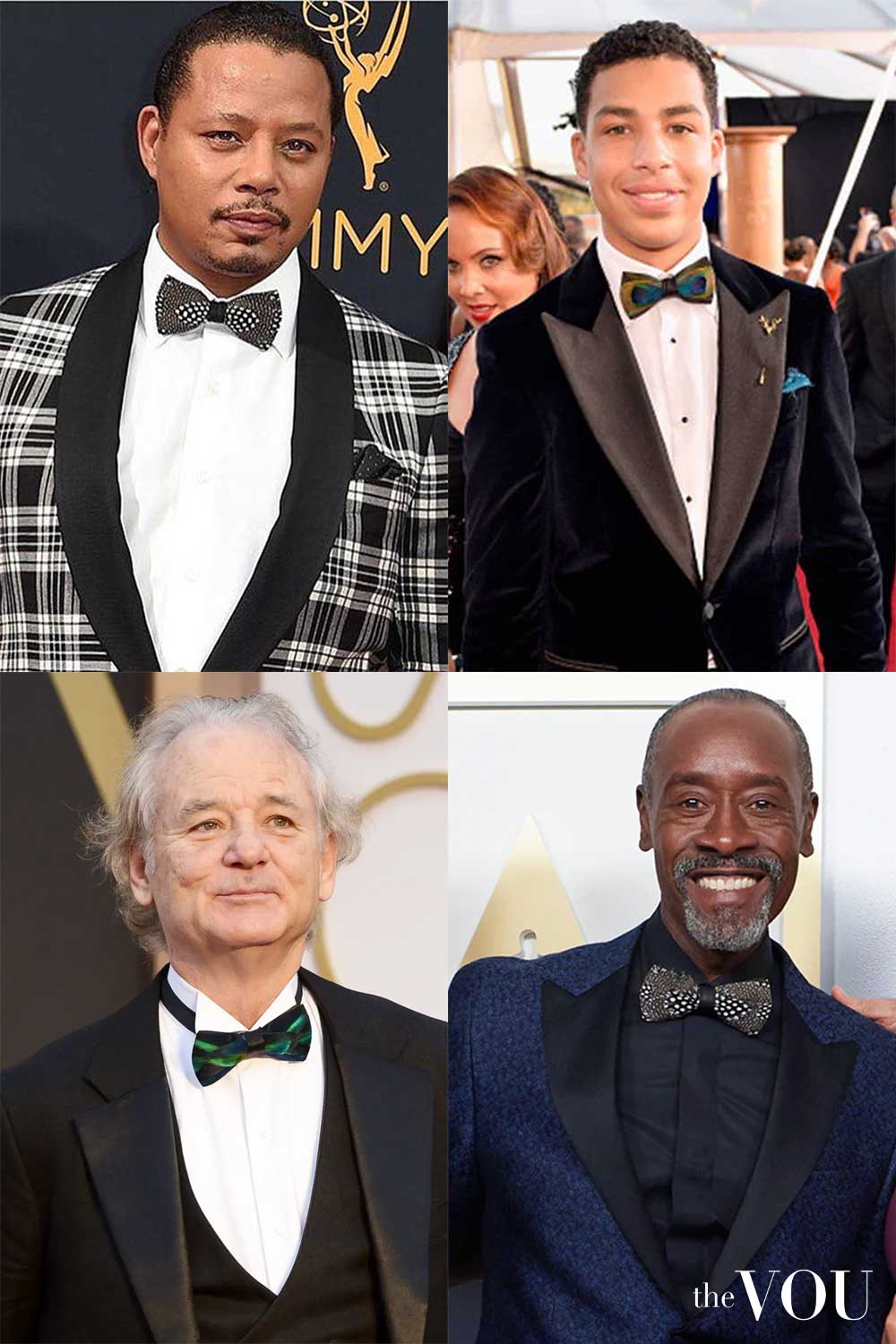
A bow tie in a subtle pattern, a velvet bow tie or a coloured bow tie with a matching cummerbund adds a personal note.
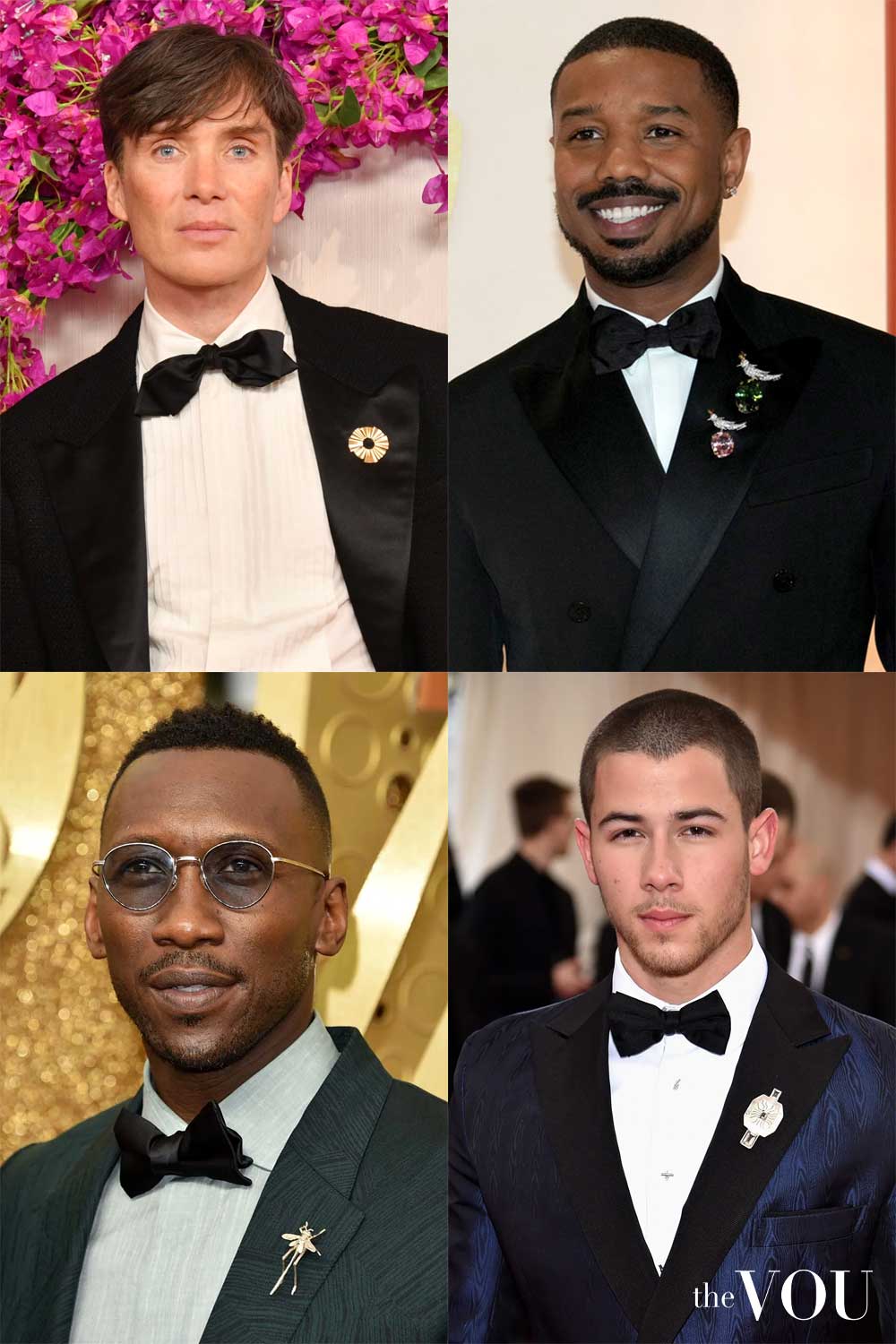
A small lapel pin, coloured studs or more personal cufflinks are quieter options.
A pocket square in a restrained colour or pattern can echo the bow tie without matching it exactly.
Black tie outfit ideas by event
The ideas below are The VOU’s suggestions within the dress code, not extra rules.
Opera or theatre opening night
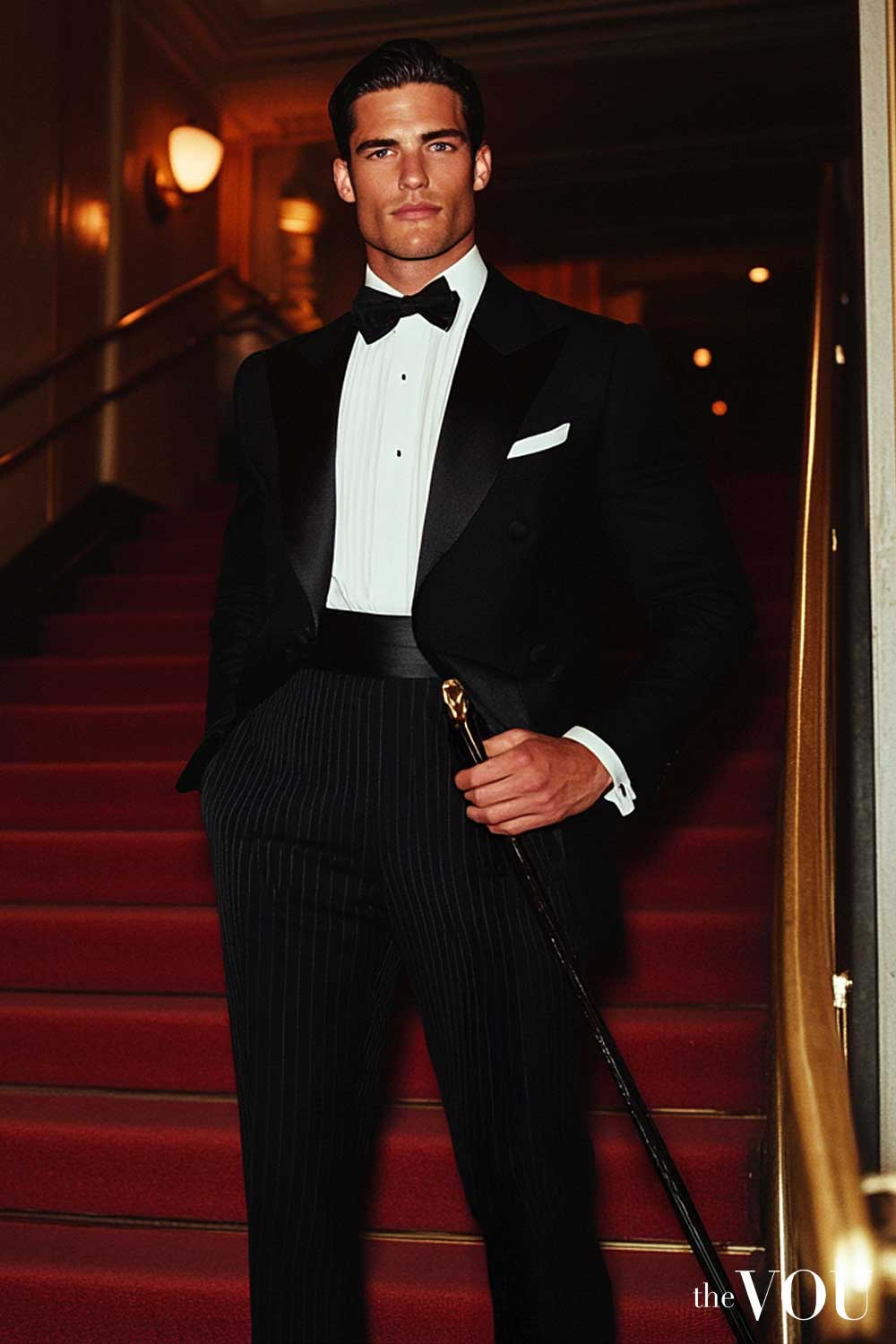
Wear a black dinner suit with peak lapels, a white marcella-front shirt, a black silk bow tie, a black cummerbund, black patent Oxfords or opera pumps, onyx studs and cufflinks, and a white linen pocket square in a straight fold.
The top hat belongs to white tie, so leave it out with a dinner jacket.
Gala dinner
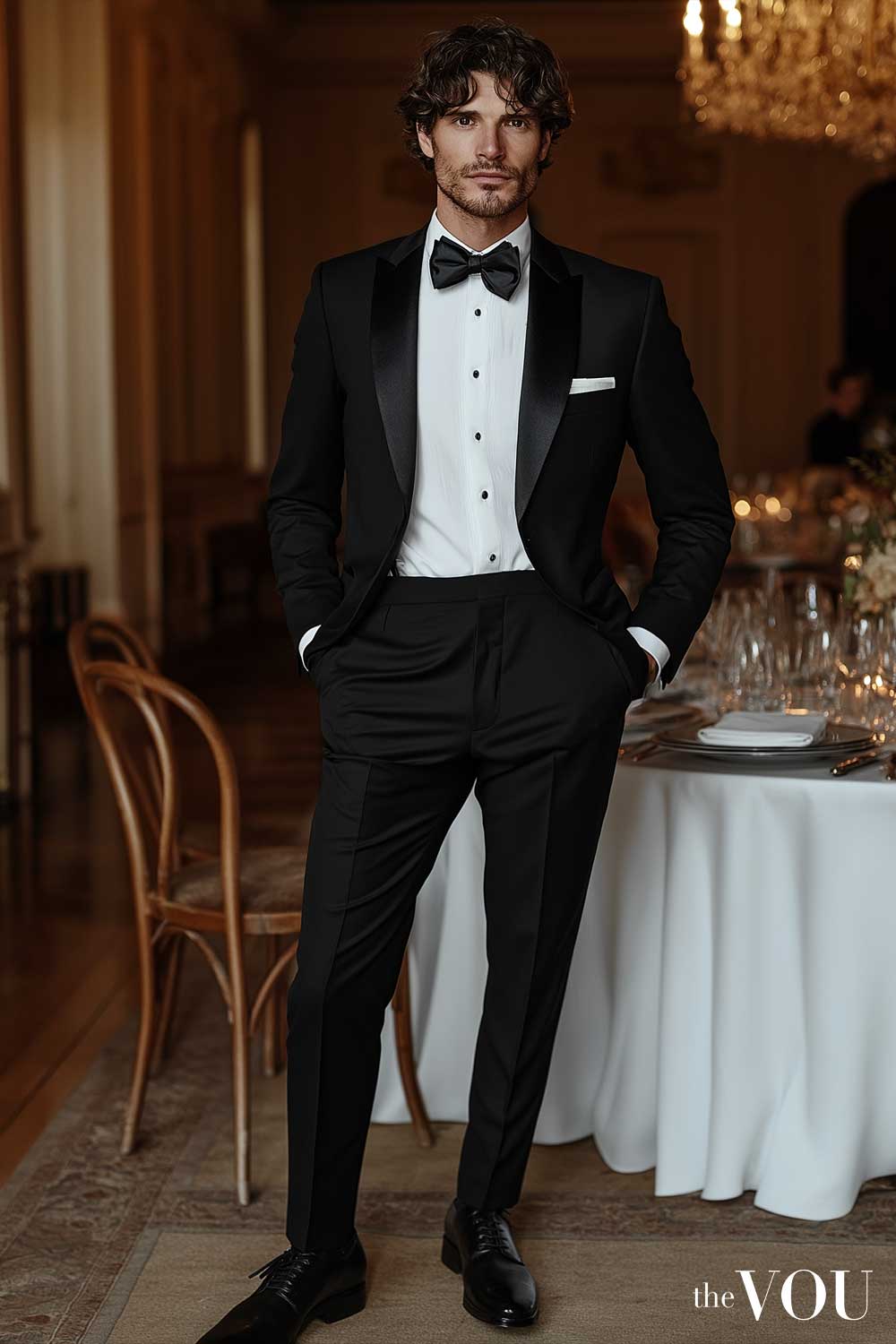
Wear a black dinner jacket with a shawl collar and matching trousers, a white pleated-front shirt, a black bow tie, a black evening waistcoat, black patent Oxfords, mother-of-pearl cufflinks and a white silk pocket square.
Formal club, corporate or holiday dinner
Choose a black or midnight blue dinner suit, a white dress shirt with a turndown collar, a black bow tie, a cummerbund or an evening waistcoat, black patent or polished calf Oxfords and a white pocket square.
Clubs and employers often have their own customs, so if you are unsure what is expected, ask the organiser.
Charity ball with creative black tie
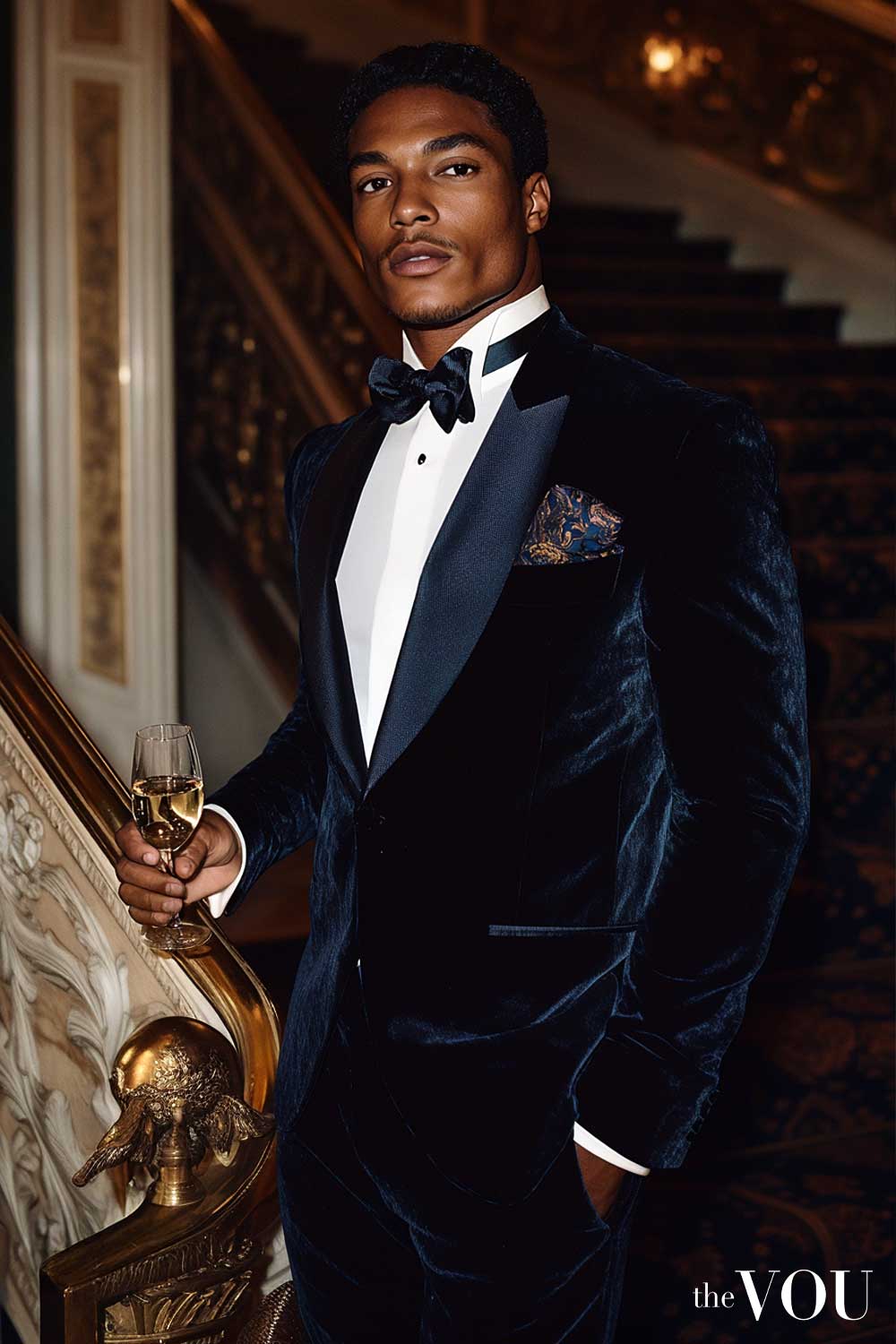
Wear a velvet dinner jacket in midnight blue or bottle green, black dinner suit trousers, a white dress shirt, a patterned silk bow tie, black patent Oxfords, and a pocket square that picks up one colour from the bow tie.
Velvet slippers suit the outfit if the host is happy with them.
Black tie wedding guest
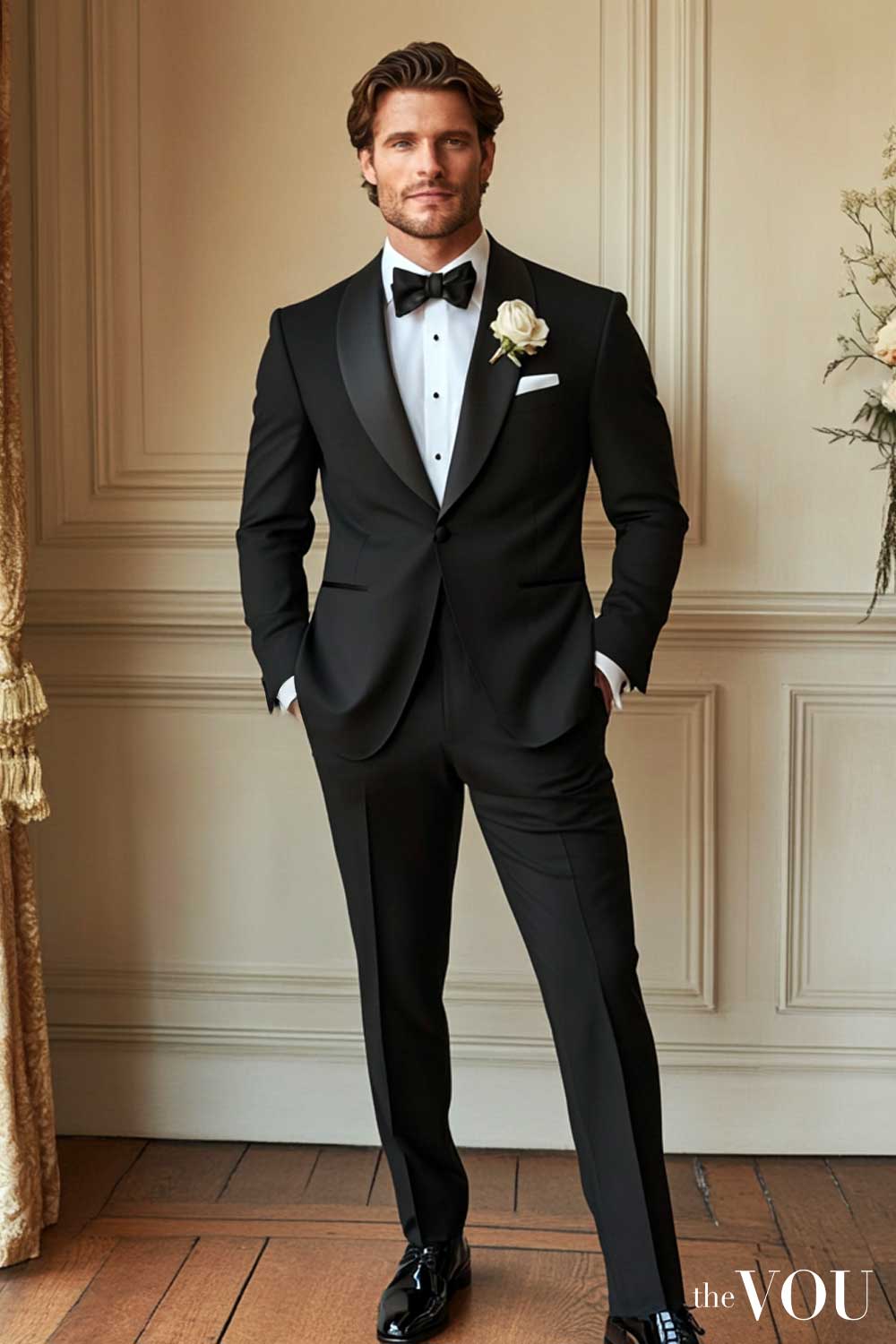
Wear a black or midnight blue dinner suit with peak lapels or a shawl collar, a white dress shirt, a black bow tie, a cummerbund, black patent or highly polished plain black Oxfords and a white pocket square.
Leave boutonnières to the wedding party unless the couple offers them to guests.
Discreet personal cufflinks are fine, but avoid anything that draws attention from the couple.
If the invitation says black tie optional, a dark suit with a white shirt and a conservative tie is correct for a guest.
Awards ceremony
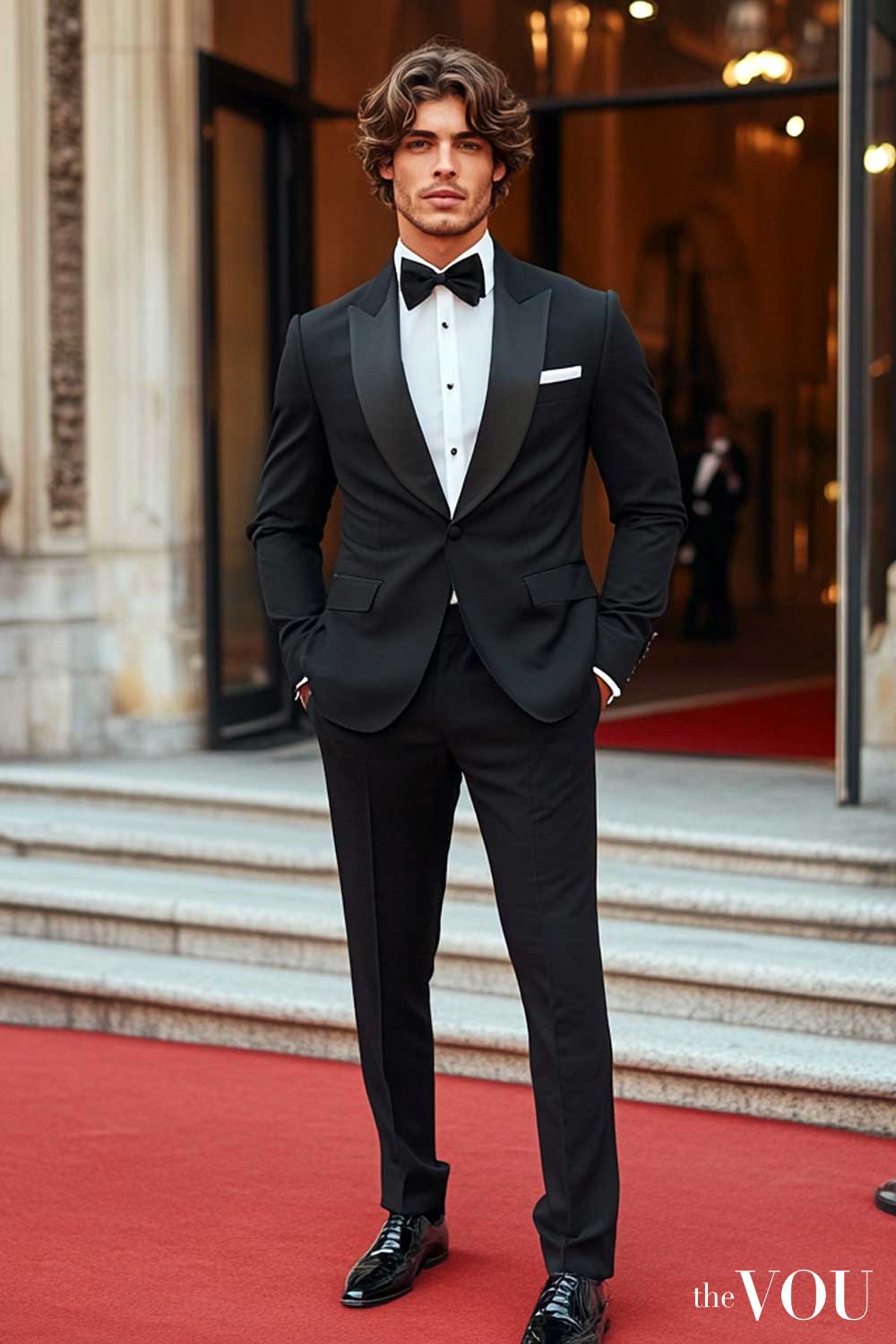
Choose a black dinner jacket with grosgrain-faced lapels and matching trousers, a white pleated-front shirt, a black grosgrain bow tie, a black cummerbund, black patent Oxfords and a white silk pocket square.
Choose a coloured dinner jacket only if the invitation says creative black tie.
Cruise formal night
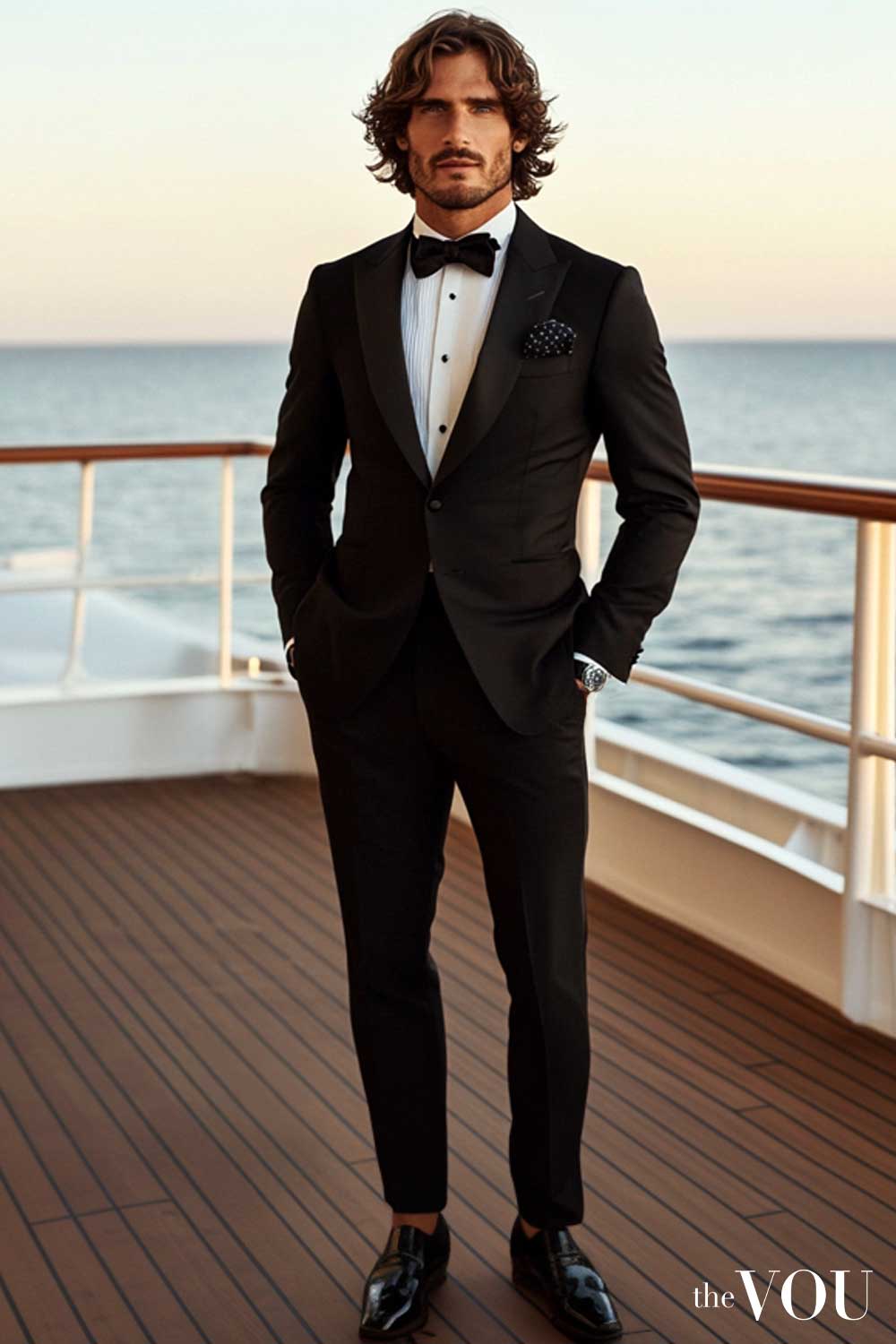
Wear a black dinner suit with peak lapels, a white dress shirt, a black bow tie, a cummerbund, black patent or polished calf Oxfords and a white pocket square.
Cruise lines set their own formal-night rules, and many accept a dark suit, so check what yours asks for before you pack.
New Year’s Eve party
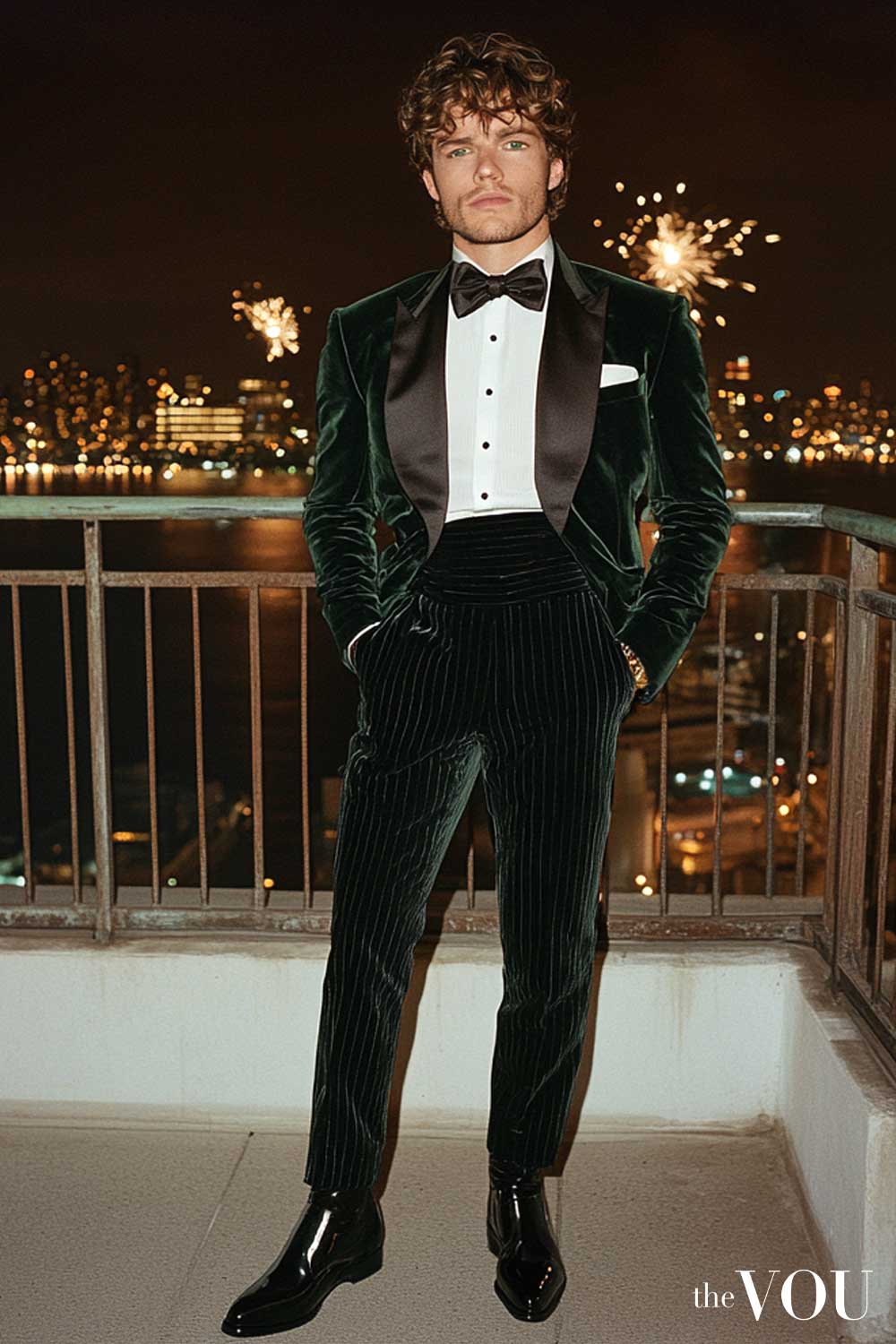
Wear a black dinner suit, a white dress shirt, a black silk bow tie, black patent Oxfords and a white pocket square.
If the invitation says creative black tie, a velvet dinner jacket in a deep jewel colour with the black dinner suit trousers is an alternative.
Black tie by season
Summer
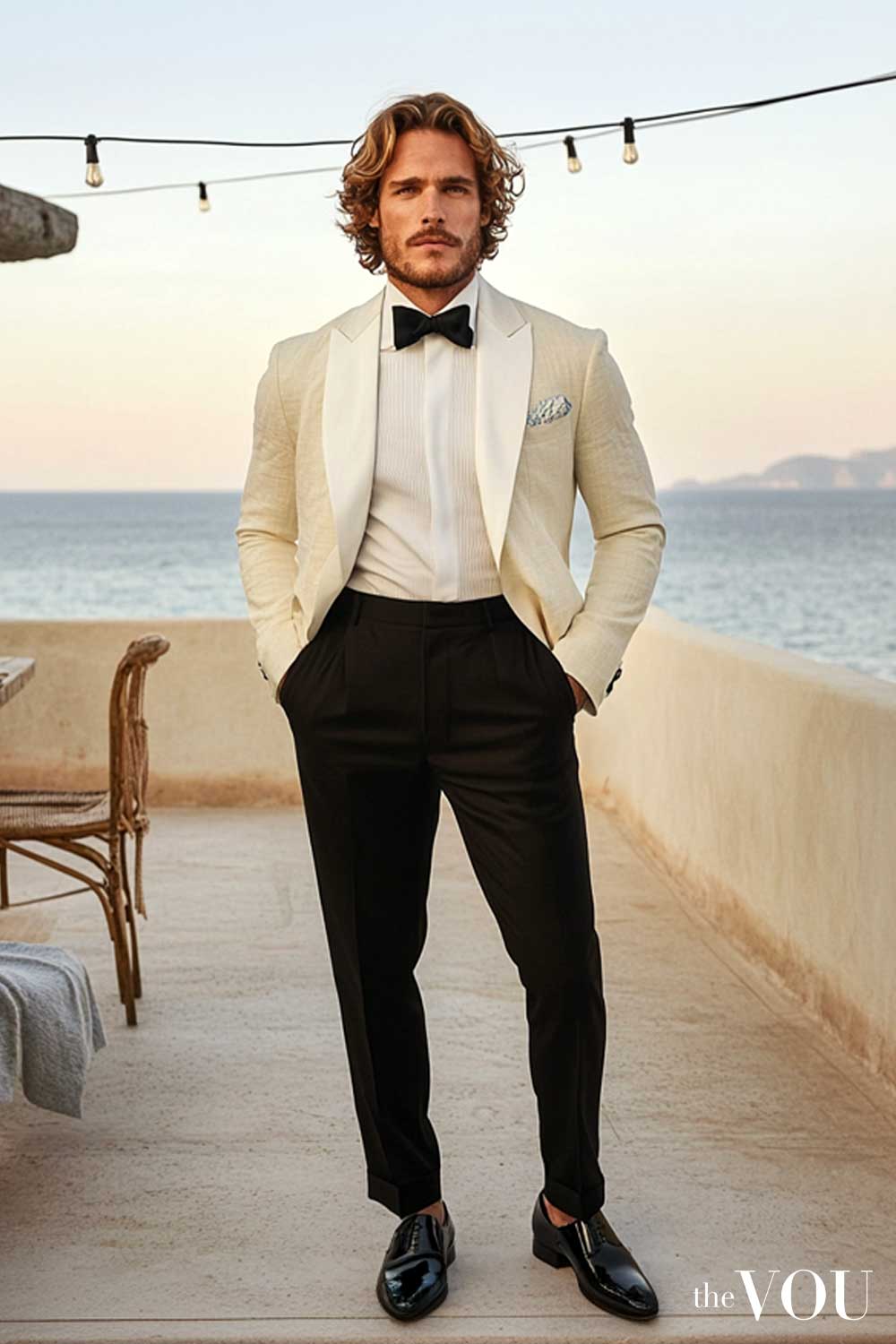
In hot weather, in the tropics or on a cruise, the Emily Post Institute notes that a white dinner jacket with black dinner suit trousers is accepted; ivory and cream are common, and a cummerbund is cooler than a waistcoat.
Keep the jacket on unless the host or the most senior guests take theirs off.
Winter

In cold weather, a heavier wool dinner suit with an evening waistcoat adds warmth, and a black or midnight blue velvet dinner jacket is a traditional choice for winter evenings indoors.
A burgundy velvet jacket like the one pictured suits an event with creative black tie.
For the journey, a dark overcoat long enough to cover the dinner jacket, a white silk or dark cashmere scarf and dark leather gloves keep the outfit intact.
Grooming for a black tie event
Have a haircut a few days before, and style your hair neatly.
Trim a beard or moustache to a clean outline.
Clean and trim your nails.
Keep fragrance light, so only people standing close to you notice it.
Black tie etiquette
Black tie events are formal, but the aim is usually to celebrate, so relax and enjoy the occasion.
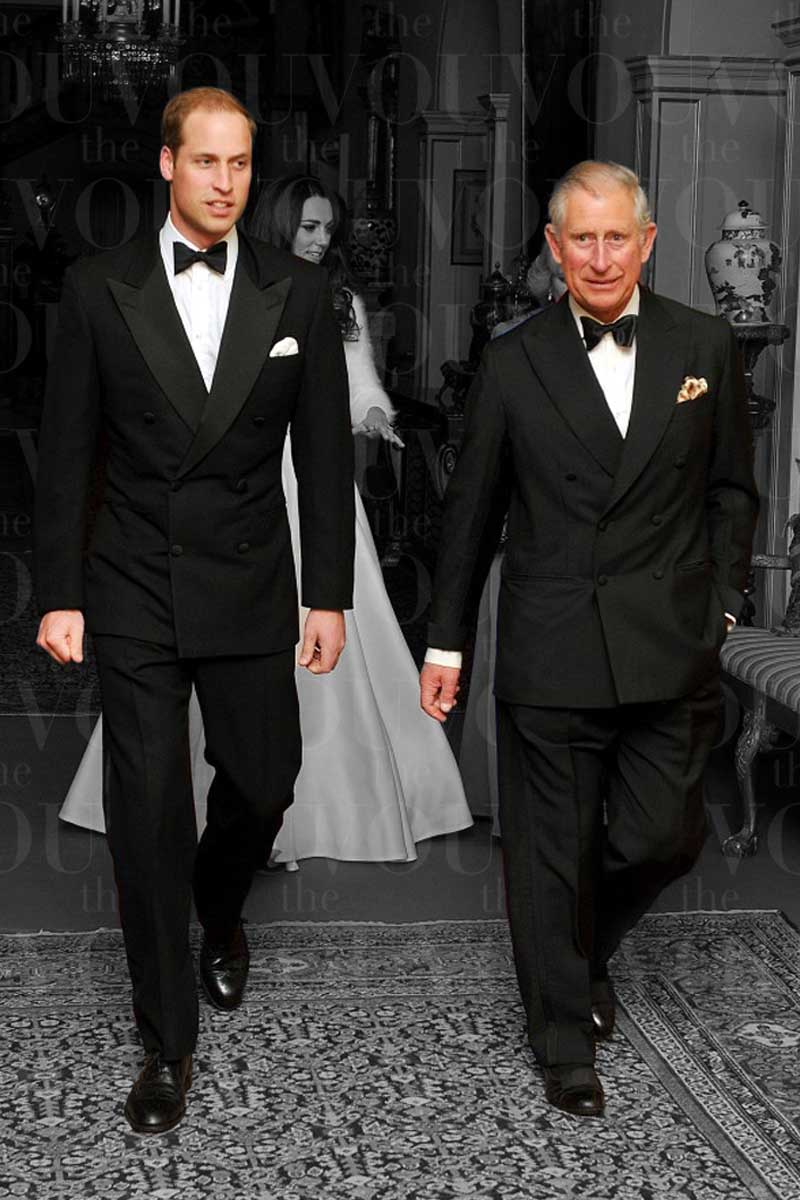
Arrive on time, greet your hosts, and keep the jacket on unless they suggest otherwise.
In Britain the jacket is usually called a dinner jacket, often shortened to DJ; in the United States it is a tuxedo or tux.
A short history of black tie
The dinner jacket began in England in the 1860s as informal evening wear, a shorter alternative to the evening tailcoat.
Henry Poole and Co’s ledgers record a blue silk smoking jacket made for the Prince of Wales, the future Edward VII, in 1865, often cited as an early prototype.

James Brown Potter is credited with bringing the style to Tuxedo Park, New York, in 1886, which is why Americans call it a tuxedo.

A popular story credits Griswold Lorillard with wearing the first tailless jacket at a Tuxedo Park ball, but Gentleman’s Gazette’s history of the dinner jacket treats that account as a misreading of a report on the 1886 ball.
Black tie and white tie compared
Black tie and white tie are both formal evening codes, but white tie is the more formal and is much rarer today.
White tie calls for a black evening tailcoat, a white waistcoat, a stiff-fronted white shirt with a wing collar and a white bow tie.
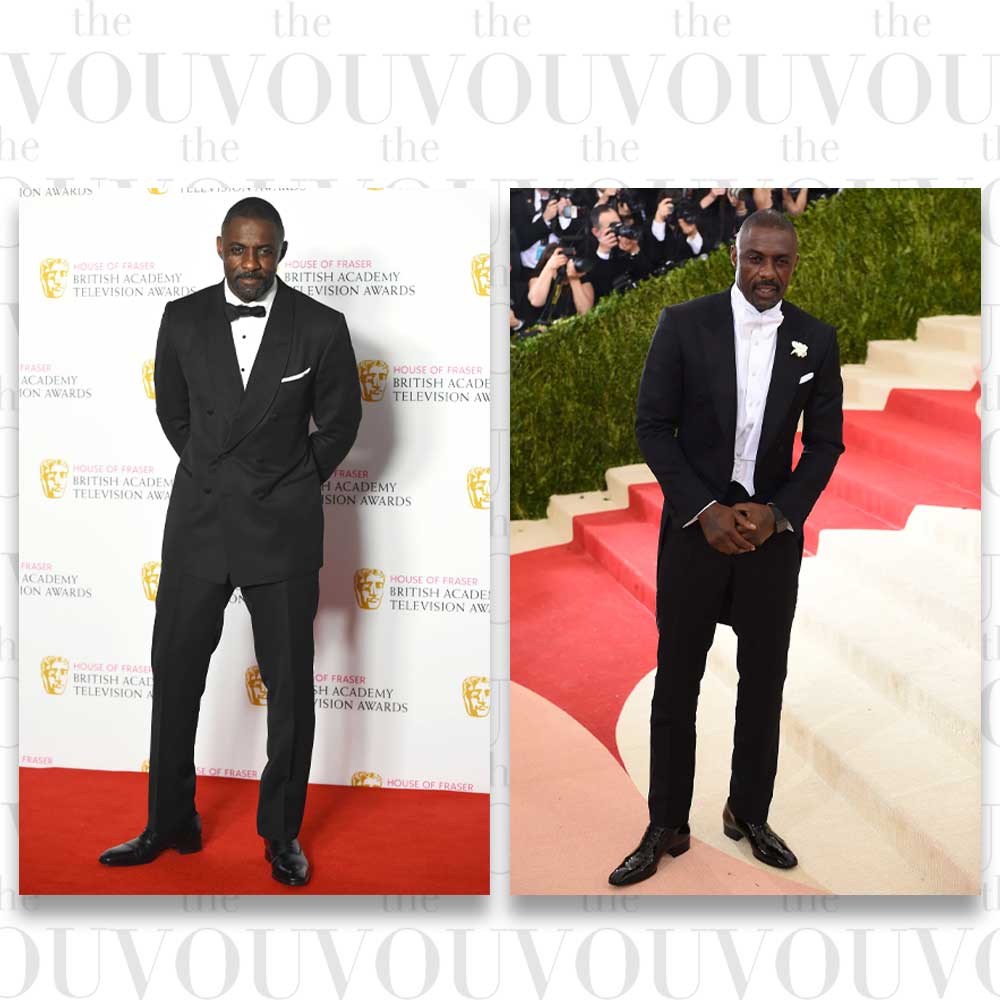
Black tie uses a black or midnight blue dinner jacket with matching trousers, a white dress shirt and a black bow tie.
You are far more likely to receive a black tie invitation than a white tie one.
Common questions about black tie for men
Q. Can I wear a black suit to a black tie event?
Not when the invitation says black tie.
A dinner suit has silk-faced lapels and a stripe on the trousers that a business suit lacks; a dark suit is acceptable only when the invitation says black tie optional, preferred or invited.
Q. Are coloured dinner jackets or bow ties acceptable?
For traditional black tie, the jacket is black or midnight blue and the bow tie is black.
When the invitation says creative black tie, a velvet or coloured jacket and a coloured or patterned bow tie are usually welcome.
Q. How do I know how strict the event is?
Read the exact wording, because “black tie”, “black tie optional”, “black tie preferred” and “creative black tie” each allow different amounts of flexibility.
If the invitation just says “formal”, or you are still unsure, ask the host.
If you cannot ask, the more formal reading is easier to adjust on the night.
Q. What if I do not own a dinner suit?
Hire one from a formalwear specialist, book early and ask for the sleeves and hems to be adjusted.
For a black tie optional event, a dark suit with a white shirt and a conservative tie is an accepted alternative.
Conclusion
Black tie is one of the few dress codes with a widely agreed outfit of a dinner jacket and matching trousers, a white dress shirt, a black bow tie, a cummerbund or waistcoat and black formal shoes.
Read the invitation wording carefully, match the outfit to the event, and add personal touches only where the host invites them.
Take the first step with The VOU’s styling quizzes
If you would like help with your wider wardrobe, start with our four quizzes, then book a consultation if you want personal help.
Take the fashion style quiz to see which styles suit your taste.
Find your seasonal colours with the seasonal colour analysis quiz.
Check your body shape with the body shape quiz, and check your face shape with the face shape quiz.
None of the quizzes is needed to follow the black tie dress code.
Paid consultations with The VOU
For personal help, The VOU offers paid consultations, such as the face shape analysis package, which covers hairstyle, facial hair, eyewear and grooming suggestions.
The complete image transformation package combines several analyses in one paid service.
The package combines the face shape, seasonal colour, body shape and fashion style analyses.
Our styling services for men are paid consultations; the shop page lists what each one includes.
Related guides
Casino theme party outfit ideas
What the formal dress code means for men
Tuxedo or suit, when to wear each