
Start here
What’s This About
Seven types of dress shoe suit the Old Money look, from the formal Oxford to the casual loafer, and each suits different outfits.
This guide explains how to recognise each type and when to wear it, such as:
oxfords versus derbies, and why closed lacing reads as more formal
five loafer styles, from penny to Belgian
single and double monk straps
full, semi, quarter and longwing brogues
dress boots and opera pumps, including what black tie expects
and many more!
Each section names a few makers to look at and the outfits to avoid.
Key Points
01A plain black Oxford is the most dependable choice when a dress code is formal; a Derby is less formal because of its open lacing.
02The more brogueing a shoe carries, the less formal it looks, so a full brogue is more relaxed than a plain-toe Oxford.
03For standard black tie, wear a plain black patent or highly polished Oxford; opera pumps are the traditional alternative.
04Construction, leather and fit matter more than a brand name, and black and brown leather stay useful whatever your colour palette.
Dress shoes are a staple in the wardrobes of gentlemen with refined taste.
This guide covers seven types of dress shoe that suit the Old Money style, with the main variations within each type.
Each section names a few makers to look at (our guide to Old Money clothing brands lists more) and says which outfits each shoe suits and which it does not.
All Dress Shoe Types
1. Oxford Shoes
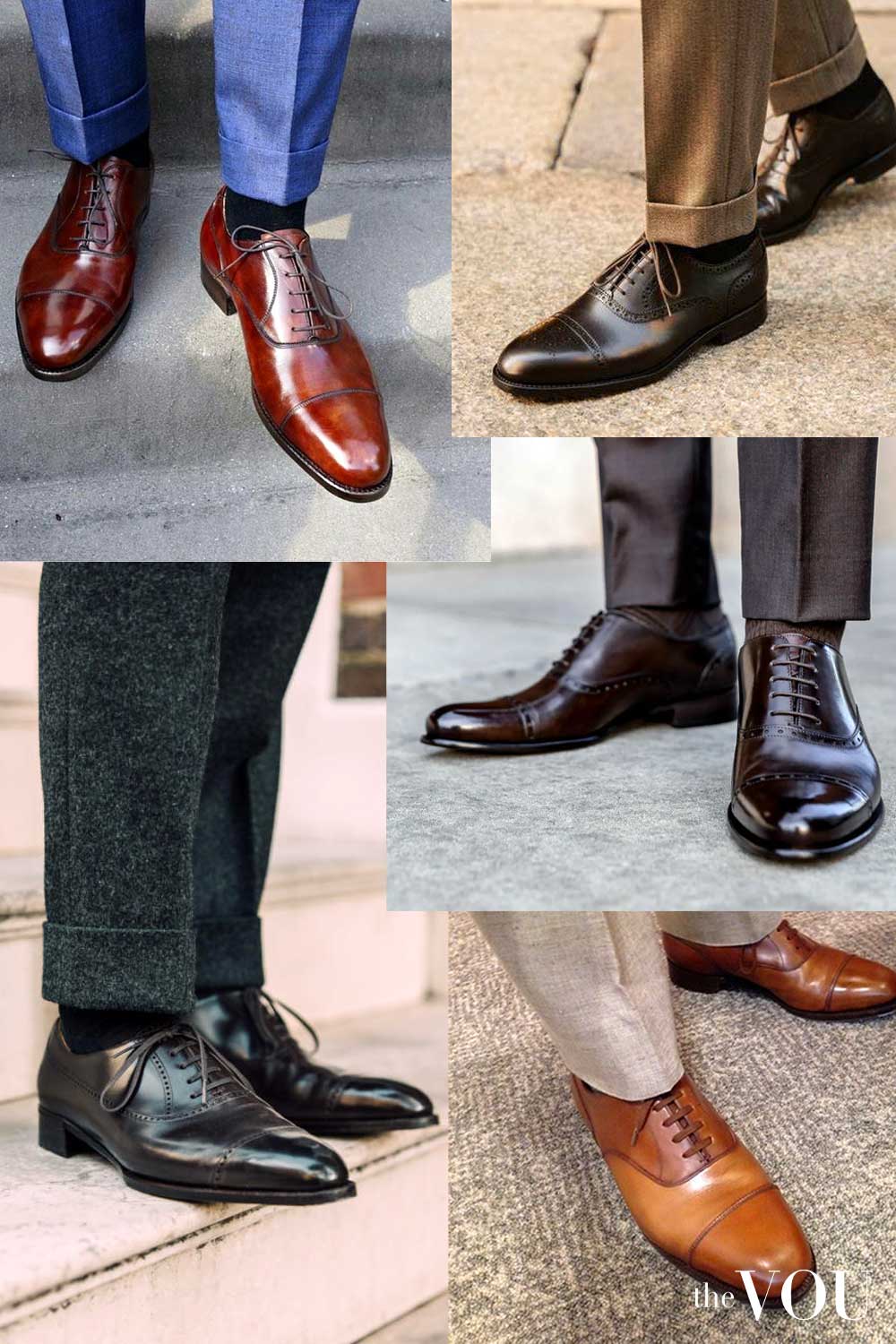
The Oxford is the most formal lace-up shoe and, in plain black or dark brown, the dress shoe many men buy first.
Oxfords have closed lacing: the eyelet tabs are sewn underneath the vamp.
A plain Oxford can be worn with double-breasted suits, and a brown Oxford can be dressed down with chinos.
Black is the more formal colour and the one evening dress codes expect; dark brown suits navy, grey and most daytime tailoring.
If you use a seasonal colour palette, it can guide the shade of brown, but black and brown leather remain useful whatever your palette.
Recommended Brands
John Lobb, Edward Green
Dos and Don’ts
- Pair Oxfords with suits for formal occasions
- Never wear Oxfords with shorts or gym outfits
2. Derby Shoes
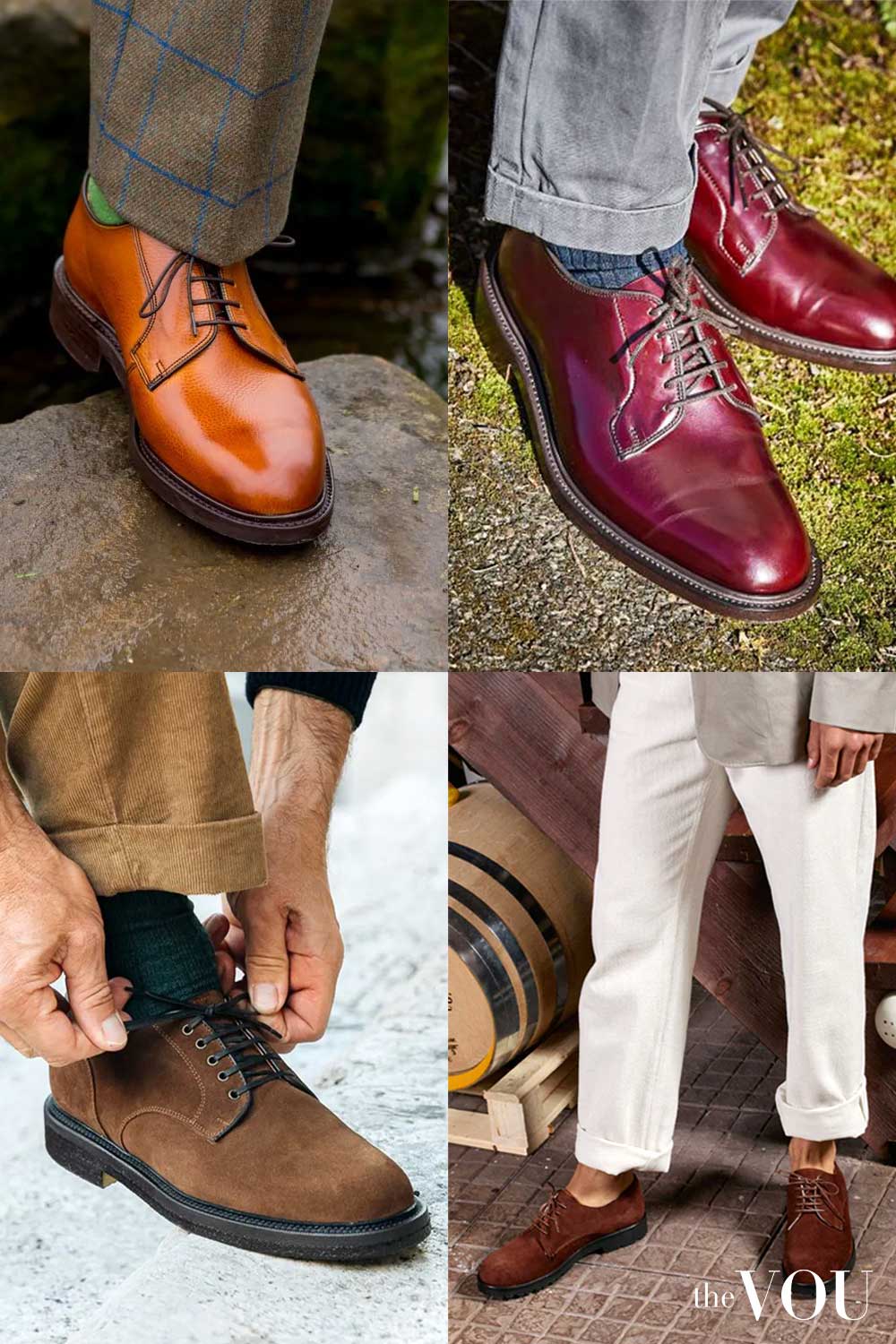
With an open lacing system, the Derby shoe offers a slightly more casual alternative to the traditional Oxford.
Derby shoes, often called bluchers in the US, have the eyelet tabs sewn on top of the vamp, which leaves the lacing open.
Derby shoes are less formal than Oxfords, so they suit business casual and smart casual settings.
Dark brown or burgundy Derby shoes go with a wide range of suit colours.
Recommended Brands
Crockett & Jones, Alden
Dos and Don’ts
- Wear Derby shoes with business casual attire or smart casual outfits
- Choose an Oxford rather than a Derby when the dress code is at its most formal; a sleek, plain Derby in dark leather still works with a business suit
3. Loafers
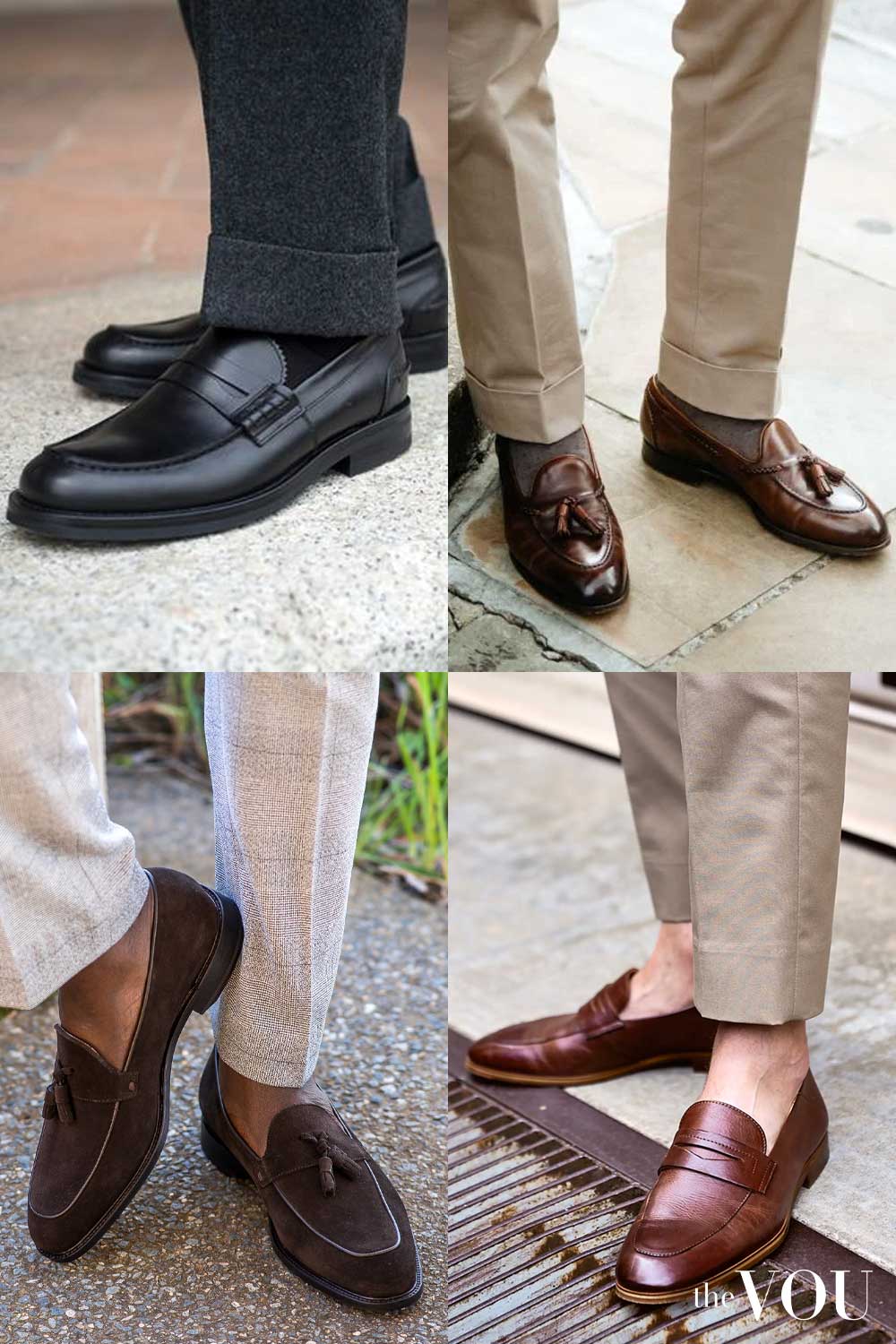
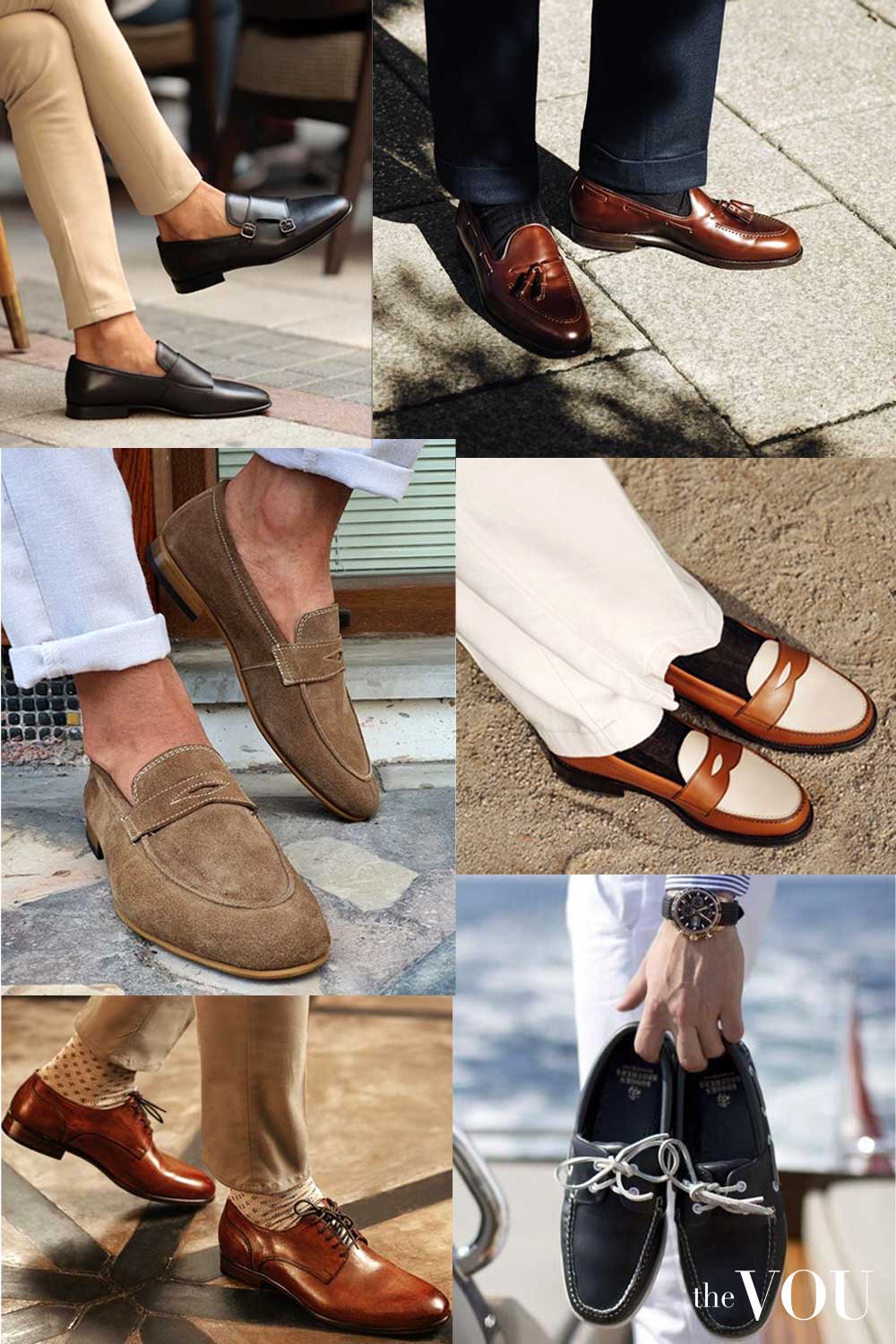
Loafers are slip-on shoes in various styles, each with unique features.
The loafer’s Preppy roots help explain why it sits between casual and formal, and why it is a common choice for business casual outfits and relaxed social occasions.
Five loafer styles suit the Old Money look: the penny, horsebit, tassel, kiltie and Belgian loafer.
3.1 Penny Loafers
Highly versatile, penny loafers can be dressed up or down.
Recommended Brands
G.H. Bass, Rancourt & Co.
Dos and Don’ts
- Do wear it with chinos or jeans for a smart casual look
- Don’t wear penny loafers with evening wear or at the most formal business occasions
3.2 Horsebit Loafers
A loafer with a metal horse bit across the vamp, a design closely associated with the Italian brand Gucci.
Recommended Brands
Gucci; Salvatore Ferragamo makes a similar bit loafer with its own Gancini ornament
Dos and Don’ts
- Do wear it with tailored trousers or suits for a sophisticated look
- Don’t pair it with athletic wear or overly casual outfits
3.3 Tassel Loafers
A loafer with decorative leather tassels on the vamp, slightly dressier than a penny loafer.
Recommended Brands
Alden, Allen Edmonds
Dos and Don’ts
- Do wear it with dress slacks or chinos for a polished look
- Don’t pair it with shorts or athletic wear
3.4 Kiltie Loafers
A loafer with a fringed leather flap, the kiltie, lying across the vamp.
Recommended Brands
Alden, Tricker’s
Dos and Don’ts
- Do wear it with casual suits or smart casual attire
- Don’t wear kiltie loafers with dark business suits or evening wear
3.5 Belgian Loafers
A soft, minimal slip-on with a small bow on the vamp, long worn by the Preppy set.
Recommended Brands
Rubinacci
Dos and Don’ts
- Do wear it with chinos or linen trousers for a laid-back, sophisticated look
- Don’t pair it with athletic wear or overly casual outfits
4. Monk Strap Shoes
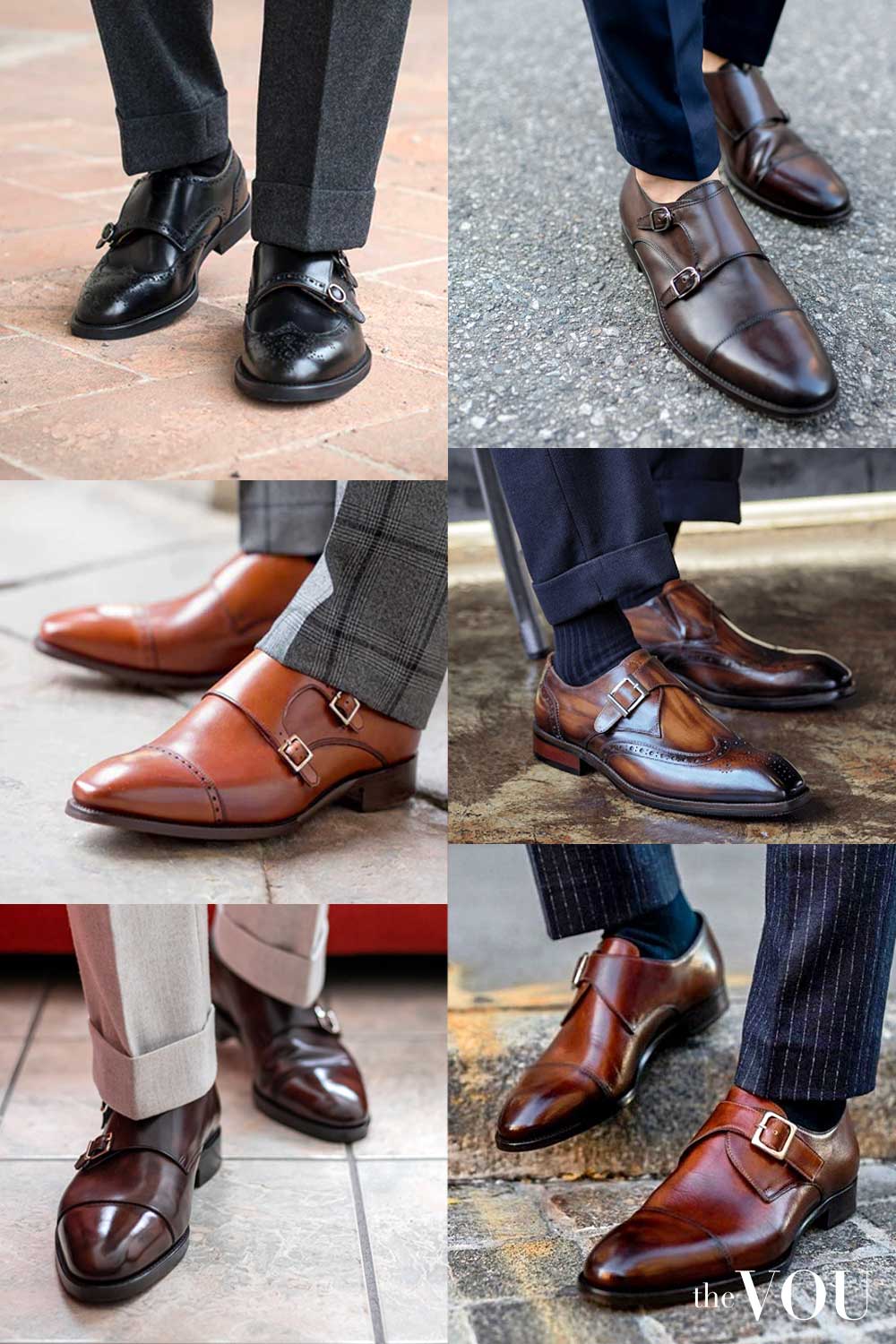
Monk strap shoes fasten with a buckled strap instead of laces, which makes them an alternative to a lace-up.
Monk strap shoes come in single-buckle and double-buckle versions.
For a sophisticated appearance, opt for a pair in rich, dark leather.
4.1 Single Monk Straps
Sleek and streamlined with one buckle.
Recommended Brands
Carmina, Santoni
Dos and Don’ts
- Do wear it with suits or dress slacks for a modern, stylish look
- Don’t pair it with shorts or overly casual outfits
4.2 Double Monk Straps
More intricate design with two buckles.
Recommended Brands
Crockett & Jones, Gaziano & Girling
Dos and Don’ts
- Do wear it with suits or tailored trousers for a fashion-forward look
- Don’t pair it with athletic wear or overly casual outfits
5. Brogue Shoes

Brogues are defined by decorative perforations along the edges of the leather panels; only the full brogue and the longwing have a wingtip toe cap.
A pair in rich, burnished brown leather is the easiest to wear with Old Money tailoring.
Brogues come in various styles:
5.1 Full Brogues (Wingtips)
A wing-shaped toe cap whose sides sweep back along the shoe, with broguing along the seams and a perforated medallion on the toe.
Recommended Brands
Church’s, Grenson
Dos and Don’ts
- Do wear it with suits or business casual attire for a classic look
- Don’t pair it with shorts or athletic wear
5.2 Semi-Brogues
A straight toe cap with broguing along its edge and a perforated medallion on the toe cap.
Recommended Brands
Tricker’s, Loake
Dos and Don’ts
- Do wear it with suits, dress slacks, or chinos for a versatile look
- Don’t pair it with overly casual outfits
5.3 Quarter Brogues
A straight toe cap with broguing only along its edge and no medallion on the toe cap.
Recommended Brands
Cheaney, Barker
Dos and Don’ts
- Do wear it with suits or dress slacks for a subtly detailed look
- Don’t pair it with shorts or athletic wear
5.4 Longwing Brogues
A wingtip whose wings run the full length of the shoe’s sides and meet at the heel; longwings are usually made as Derby shoes.
Recommended Brands
Alden, Allen Edmonds
Dos and Don’ts
- Do wear it with suits, dress slacks, or chinos for a bold, distinctive look
- Don’t pair it with shorts or overly casual outfits
6. Dress Boots
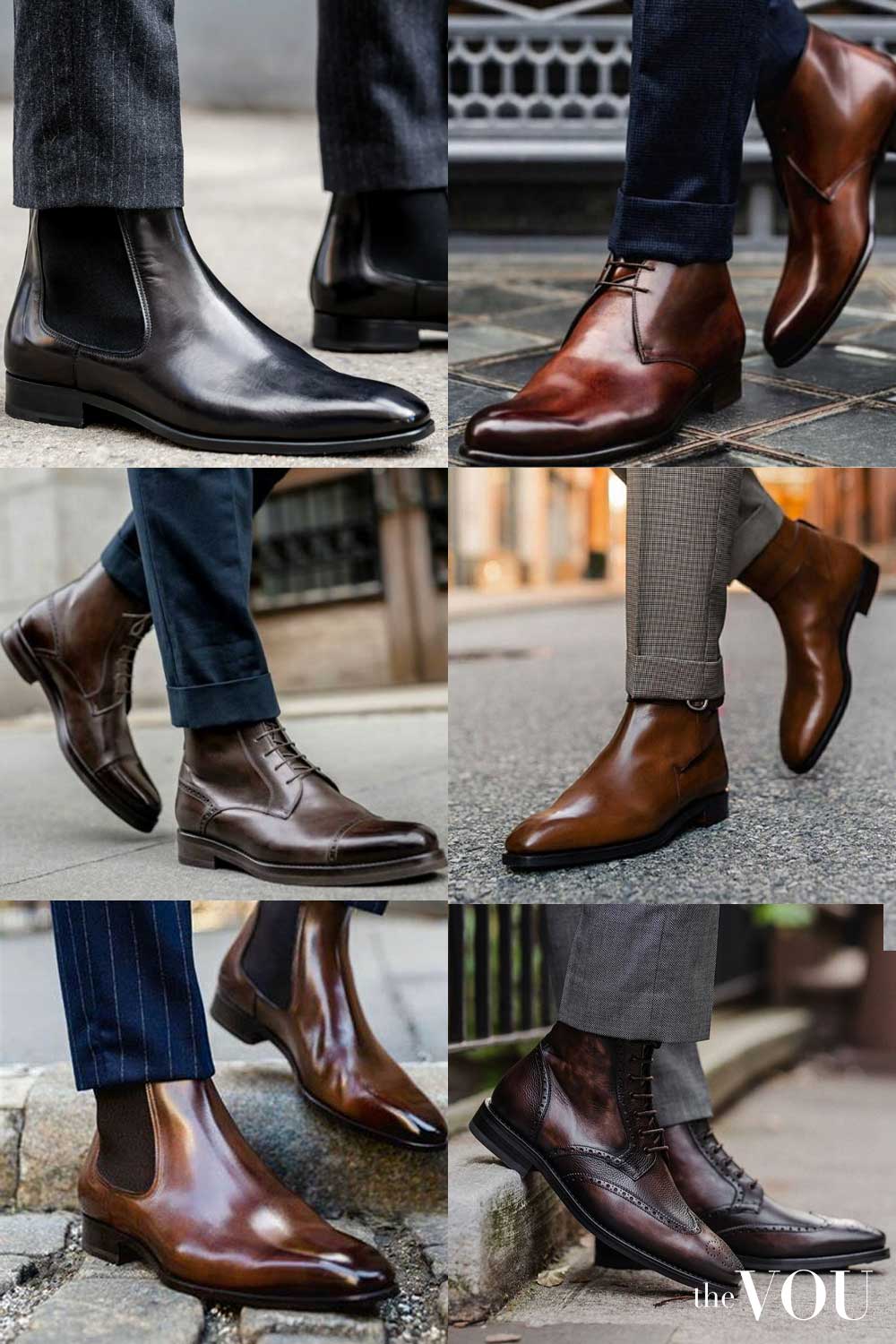
Dress boots are an alternative to dress shoes and a practical choice for colder, wetter months.
Chelsea boots and lace-up ankle boots are the two most common choices for an Old Money look.
6.1 Chelsea Boots
Ankle-high boots with elastic side panels, easy to put on and off.
Recommended Brands
R.M. Williams, Carmina
Dos and Don’ts
- Do wear slim, dark Chelsea boots with suits, dress trousers or jeans for a sleek, modern look
- Don’t pair it with shorts or athletic wear
6.2 Lace-up Ankle Boots
A more traditional style, offering a secure fit and a classic appearance.
Recommended Brands
Crockett & Jones, Edward Green
Dos and Don’ts
- Do wear it with suits, dress slacks, or chinos for a sophisticated look
- Don’t pair it with shorts or overly casual outfits
7. Opera Pumps
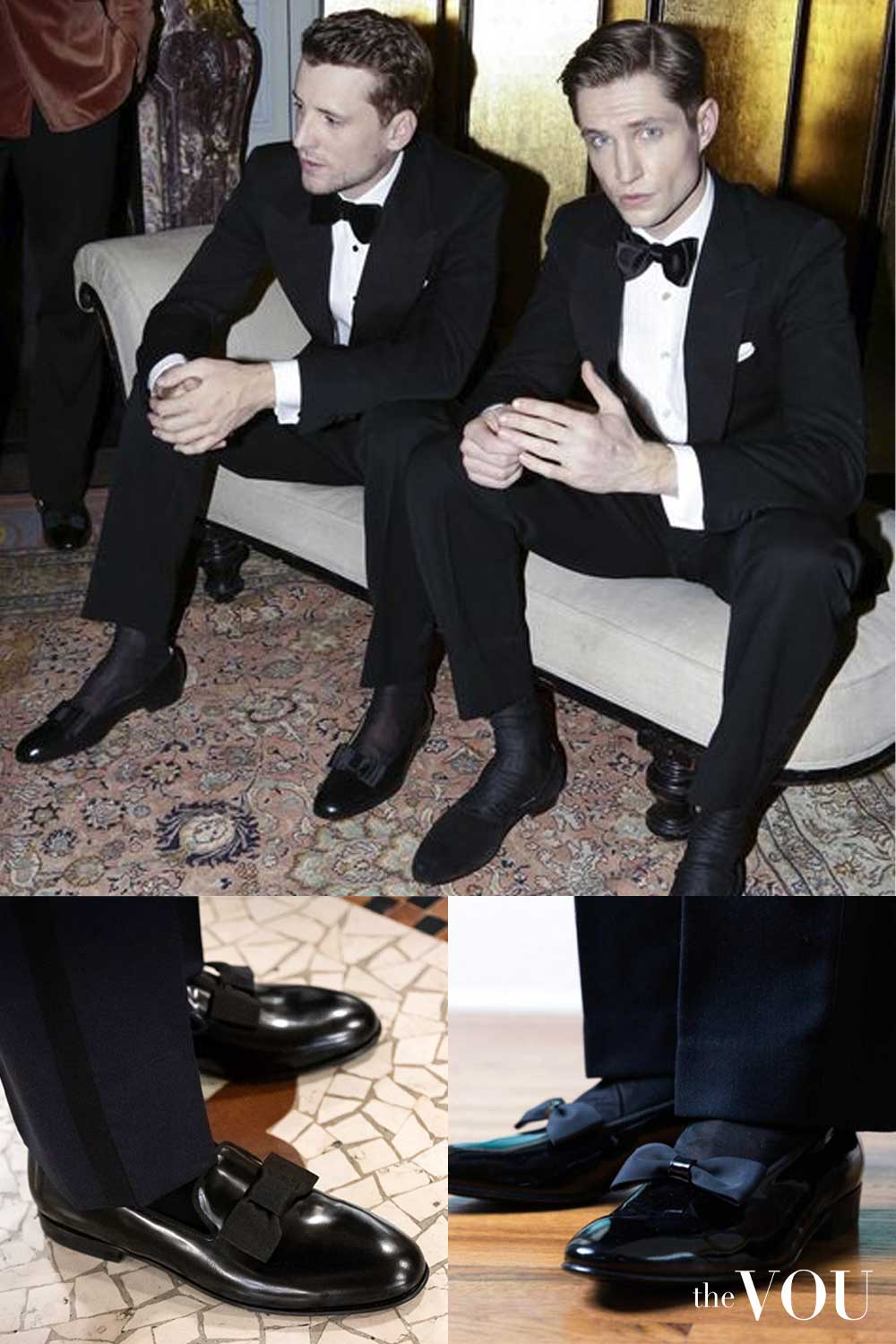
Opera pumps are low-cut slip-on shoes, usually in patent leather, with a grosgrain bow on the vamp, and they are traditionally the most formal men’s shoe.
Opera pumps suit white tie and black tie; for standard black tie, a plain black Oxford in patent or highly polished calf leather is the more common and safer choice.
Recommended Brands
Shipton & Heneage
Dos and Don’ts
- Do wear opera pumps with formal evening wear, such as a dinner suit (tuxedo) or a tailcoat
- Don’t pair it with business or casual attire
Brogueing and Toe Styles
Brogueing is the decorative perforation along the edges of a shoe’s leather panels.
Full brogues (wingtips) carry the most brogueing, semi-brogues less, and quarter brogues the least.
However, remember that the more extensive the brogueing, the less formal the shoe becomes.
Dress shoes for an Old Money look usually have classic toe styles, such as plain, cap and apron toes.
Square or sharply pointed toes tend to date quickly and sit outside this restrained look.
Dress Shoe Brands for a Classic Look
Long-established English shoemakers such as Church’s, Crockett & Jones and Edward Green are often associated with the Old Money style.
These heritage brands make the classic Oxford, Derby, brogue and loafer shapes described above.
Italian shoemakers such as Santoni and A. Testoni offer a sleeker, often softer Italian take on the same shoe styles.
Italian-made shoes can fit an Old Money wardrobe well, particularly if you like the relaxed Italian approach known as sprezzatura.
John Lobb and Gaziano & Girling are among the makers that offer bespoke shoes, made to your own last, if you want a fully personal fit.
Scroll horizontally to see all columns →
| Key Takeaways |
|---|
| Oxfords, Derbies, loafers, monk straps and brogues are the core dress shoe styles for this look. |
| Black, brown and oxblood are the classic leather colours; if you want a starting palette for choosing a shade of brown, find your seasonal colours. |
| Construction, leather quality and fit matter more than the name on the box. |
| Different dress shoes suit different occasions; check the dress code before you choose a pair. |
| Leather finish and the amount of decoration change how formal a shoe looks. |
| Chukka and desert boots are casual boots; keep them for weekends rather than tailoring. |
Styling Beyond Dress Shoes
Choosing dress shoes is one step in putting an outfit together.
Our guide to styling by occasion, location, season and time of day covers how the setting changes an outfit, and you can meet The VOU’s image consultants.
If you want to go further, start by knowing your body type and unique colour palette so you can select clothes for your build in colours that work with your own colouring.
It also helps to know which fashion brands to shop from and how to style these garments, footwear, and accessories to create a look of subtle luxury.
After learning to choose fashion from heritage fashion brands according to your build and colour palette, you can work on styling by occasion, location, season, and even time of day.
Take our three quizzes, then book a consultation if you want personal help:
1. Find Your Body Type
Different garments suit different builds, and our body shape quiz for men is a starting point.
The second quiz looks at colour.
2. Find Your Seasonal Colours
Some colours look better next to your face than others.
Take our seasonal colour quiz for men for a starting palette to compare garments against.
3. Find Your Fashion Style
The third quiz looks at your personal fashion style.
Our fashion style quiz for men suggests a style to explore, with outfit ideas and brands.
Paid Consultations with The VOU
For personal help, you can book a consultation with our image consultants and fashion stylists.
Our styling services for men are paid consultations; the shop page lists what each one includes.
Contact us if you have questions about the consultations.