

Start here
What’s This About
An all-white outfit looks polished when the whites sit close in shade, the fabrics stay opaque, and the fit leaves a little room.
This guide gives seven practical guidelines, such as
choosing whites that suit each other and your colouring
picking opaque fabrics, especially for trousers
keeping accents such as belts and shoes small
mixing matte textures for depth
and many more!
Treat the guidelines as starting points rather than fixed measurements.
Key Points
01Match white shades closely, such as an ivory shirt with winter white trousers
02Use opaque, heavier fabrics for trousers and check every white in daylight
03Choose matte finishes for most garments to avoid glare
04Mix two or three textures for depth
05Bright white suits clearer palettes; ivory, cream or soft white often suits warmer or softer colouring
All-white can feel like a daunting choice, with risks ranging from looking overdressed to see-through fabric.
But with the right knowledge, an all-white outfit can become a polished monochrome look.
In this guide, we cover the all-white outfit through seven practical guidelines, from fabric choice to fit details.
1. Keep Your Whites Close in Shade

A successful all-white outfit begins with colour matching.
A bright white shirt next to cream trousers can look like a near-miss rather than a choice.
Instead, choose whites close to each other in shade, such as an ivory dress shirt with winter white trousers or a bright white T-shirt with similarly bright white jeans.
Which white to wear nearest your face is a palette question. Winter palettes usually suit bright white, Summer palettes often look better in soft white, and Spring and Autumn palettes in ivory or cream.
Start with the shirt or knit closest to your face, then match the rest to it.
2. Choose Opaque Fabrics, Especially for Trousers

White fabric can become surprisingly transparent under certain conditions, particularly in direct sunlight.
Heavier materials, such as bull denim or a dense cotton twill, help trousers and shorts stay opaque and hold their shape.
Tops can be lighter, such as fine cotton or linen, but check them in daylight too; under a white shirt, an undershirt close to your skin tone usually shows less than a white one.
3. Leave a Little Room in the Fit

White clothing requires fit considerations to maintain its sophisticated appearance.
Avoid very tight cuts and check that white garments, particularly shirts and trousers, have a little room between the fabric and your skin; a slim or regular fit usually provides it.
Stretched fabric becomes thinner and more see-through, so a little room keeps the white opaque and crisp.
4. Limit Accent Colours
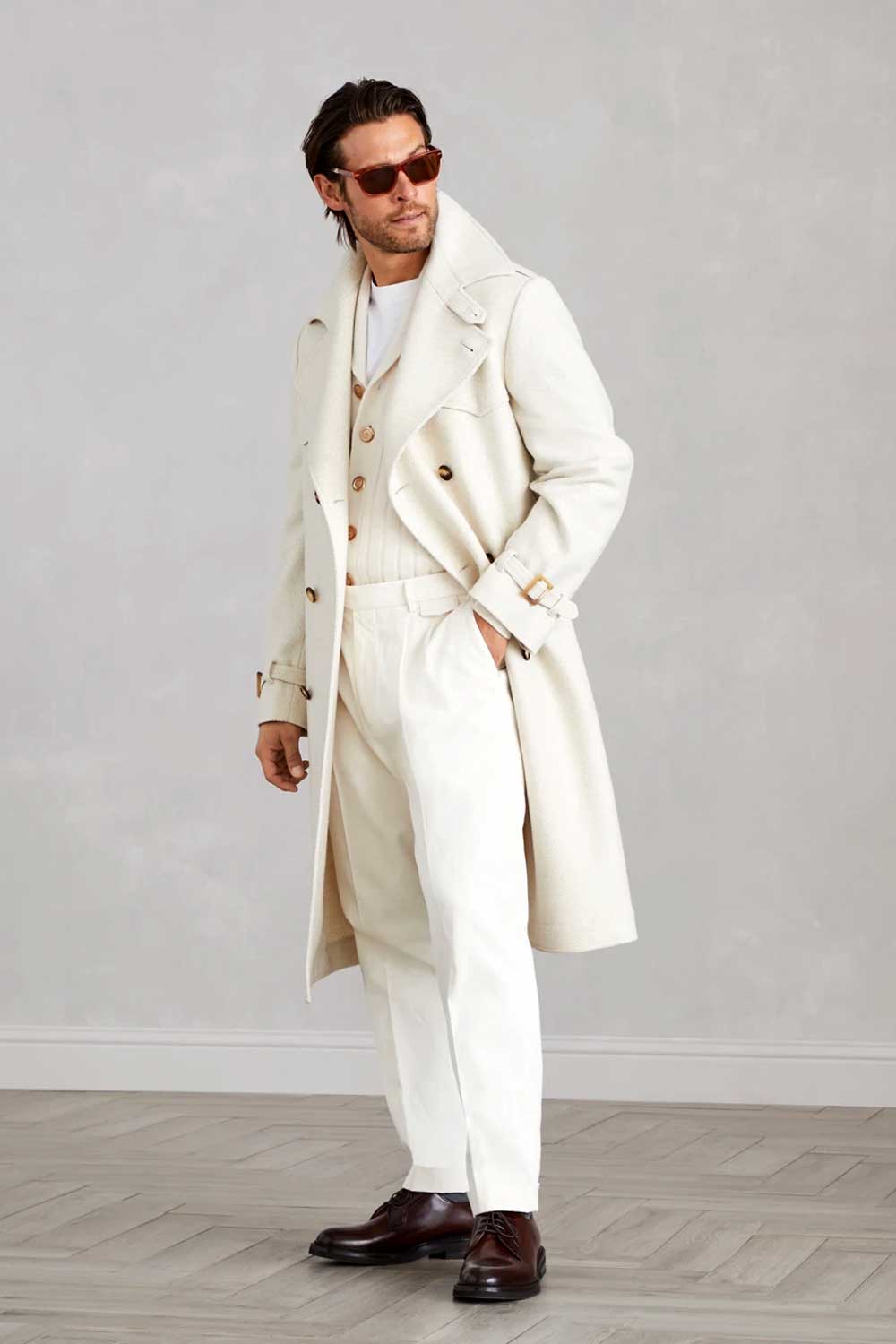
An all-white outfit can take some contrast, but too much breaks the effect.
Restrict accent colours, such as a tan leather belt or brown suede loafers, to small areas, such as the belt and shoes.
Keeping accents small preserves the monochromatic look.
5. Choose Matte Finishes for Most Whites to Prevent Glare

White reflects a lot of light, so shiny white fabric can look harsh in sunshine.
Choose matte finishes for most white garments, particularly larger ones such as jackets and trousers.
Reserve shinier materials, such as silk or sateen, for smaller areas, such as a pocket square or a dress shirt worn under a jacket.
6. Mix Textures for Depth

Texture keeps an all-white outfit from looking flat.
Combine two or three distinct textures, such as smooth cotton, textured linen, and ribbed knits, to create visual interest.
The mix of textures adds depth while keeping a clean, monochromatic palette.
7. Keep Shoulder Seams at Your Natural Shoulder Point

White shows fit issues clearly, particularly at the shoulder.
On tailored jackets and shirts, shoulder seams that sit at your natural shoulder point give the cleanest line; dropped-shoulder knits and casual shirts are cut differently.
A good shoulder fit prevents the billowing effect that can make white clothing appear oversized or sloppy.
Related Questions
Q. Can short men wear all-white outfits?
Yes, shorter men can wear all-white outfits.
A continuous line of white from top to bottom can make you look taller.
Keep contrast between garments low and avoid breaking up the outfit with bold belts or accessories.
Q. Do I need expensive materials for an all-white outfit to look good?
Quality matters for any clothing, but mid-range materials work well for white outfits.
The crucial factor is the weight and opacity of the fabric rather than its price point.
Even moderately priced cotton can look good if it’s substantial and properly fitted.
Q. What shoes work best with an all-white outfit?
White trainers, or loafers in light neutral tones such as tan, beige or light grey, are easy choices with all-white outfits.
The key is choosing shoes that don’t create too harsh a contrast, which would break the streamlined effect of the ensemble.
Q. Can I wear an all-white outfit to work?
Creative industries often welcome such bold choices, while traditional corporate environments might find it too casual or attention-grabbing.
When in doubt, save your all-white looks for casual Fridays or after-work events.
Q. Can I wear all-white to a wedding?
As a guest, usually not. Many people see white as the couple’s colour, so check the invitation, and keep all-white for events that ask for it, such as a white party.
Final Thoughts
Mastering the all-white outfit isn’t about following trends or making a bold statement; it’s about applying specific principles that ensure you look polished rather than problematic.
By following these guidelines for fit, fabric and styling, you can wear white-on-white, one of menswear’s more sophisticated looks, with confidence.
Remember that confidence comes from knowing you’ve got the details right.
Take time over the shade, fabric and fit of each garment, and an all-white outfit becomes an easy summer option.
Style Like A True Gentleman
Before you go, here is a simple way to put this guide into practice, and when to ask an image consultant for help.
Professional styling starts with knowing your body shape and seasonal colour palette, which help you choose clothes that fit well, in colours that suit your skin, eyes and hair.
Our guides also cover styling by occasion, location, season and time of day, garments, footwear, accessories and heritage fashion brands.
Take our three quizzes to find your body shape, seasonal colour palette and fashion style, then book a consultation if you want personal help.
1. Find Your Body Shape
Different garments flatter different silhouettes, so knowing your body shape is the first step in dressing like a confident man.
To find out your unique body shape, take our body shape quiz for men.
Once you know your unique body shape, take the second quiz to discover your unique colour palette.
2. Find Your Seasonal Colours
The garments in your outfits come in many colours, so it helps to check which colours suit your natural colouring.
To do that, you have to find out your seasonal colour palette, and you can do it by taking our seasonal colour quiz for men.
3. Find Your Fashion Style
By now, you should already know your body shape and unique colour palette; the next step is to discover your personal fashion style.
To find it, take our fashion style quiz for men; it includes a suggested style, outfit ideas, relevant fashion brands, and much more.
Personal Help from The VOU
For personal help, you can book a consultation with our image consultants and fashion stylists.
Our styling services for men are paid consultations; the shop page lists what each one includes.
Wearing luxury brands is not enough on its own (see our guide to logo-heavy luxury brands and how to wear them); knowing your body shape, colour palette and personal style first makes styling by occasion, location, season and time of day easier.
Contact us to book a consultation once you have taken the three quizzes.