Start here
What’s This About
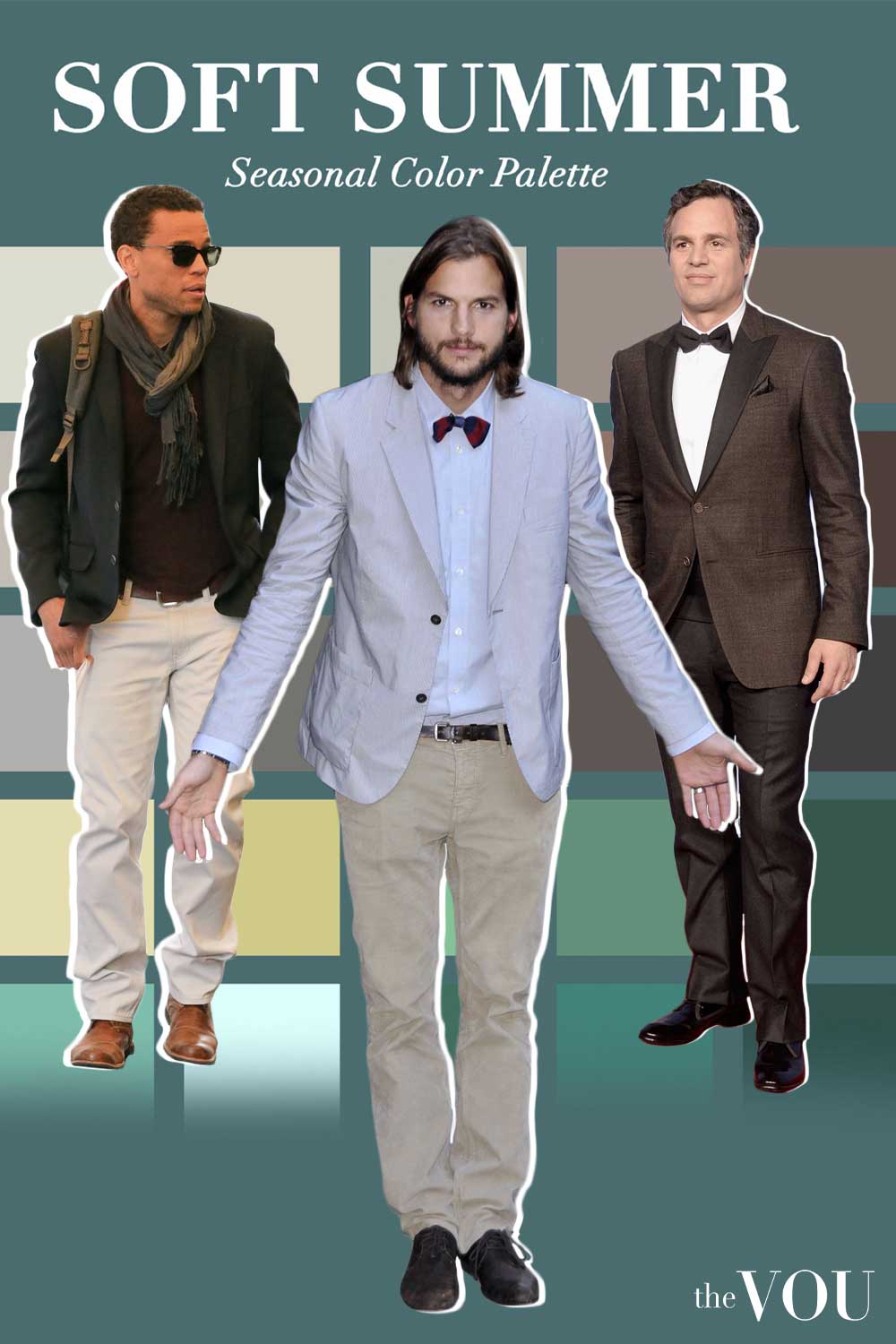
Soft Summer is the muted palette of the Summer family. Its colours are softened and greyed with a gentle cool lean, and it sits on the border with the warm-leaning Soft Autumn.
This guide explains how to compare the palette with your own colouring and wear the colours, such as
what Soft Summer means and how mutedness leads
feature clues that are not entry requirements
checking the palette against Soft Autumn and other Summer palettes
main colours, neutrals and accent colours
colours often listed to avoid and softer alternatives
what to buy first and outfit formulas through the year
and many more!
Treat the palette as a direction to compare against your own colouring, not a fixed label.
Key Points
01The test is a comparison, setting a greyed blue, cool taupe or dusty rose against a muted olive, soft camel or dusty terracotta of similar depth, in daylight, watching your face rather than the cloth. The Soft Autumn comparison is the one to repeat, and if it stays close, both palettes stay in play.
02Blended, low-contrast features are the usual clue, with hair, brows and skin close in depth and eyes with a greyed or misty quality. They are clues, not entry requirements, and no single feature establishes a palette.
03Black, stark white and bright or warm colours are the usual “avoid” list. Nothing is banned; you may prefer those colours away from the face, and soft white, dove grey and a greyed navy do their jobs near it.
04If the comparisons keep coming out close, keep Soft Summer and Soft Autumn both in play and dress from the muted mid-tones the two palettes share.
It sits inside the Summer colour family with Light Summer and True/Cool Summer, and it shares a border with Soft Autumn, a useful neighbouring palette to compare.
What Soft Summer Means
This guide follows The Concept Wardrobe’s twelve-season descriptions for the palette’s relative position.
Providers use different names and divisions, so treat a seasonal label as a styling convention rather than a measurement.
In the twelve-season convention every palette is described by three separate qualities, namely how light or deep its colours are, whether they lean warm or cool, and whether they are clear or muted.
Soft Summer is defined by mutedness first.
Its colours are greyed and softened, like a coastline seen through sea mist rather than in full sun, and there is nothing vivid in the palette.
Its temperature is a cool lean.
The palette contains blue-grey, rose, lavender and cool taupe rather than olive, camel and terracotta.
Coolness does not lead this palette; mutedness does, and Soft Summer sits at the Autumn end of Summer because Soft Autumn is the muted palette on the warm side of the border.
Its depth is medium.
There are lighter colours in the palette (soft white, dove grey, pale mauve) and darker ones (greyed navy, cool charcoal, muted plum), but the centre of it is mid-toned.
Soft Summer colours run through these families.
Blues from a greyed sky blue to a dusty steel blue.
Greens in cool sage and a greyed sea green.
Pinks and reds in dusty rose, mauve and a soft, greyed raspberry.
Purples in muted lavender and a soft plum.
Neutrals in cool taupe, dove grey, mushroom and a greyed navy.
The table below shows the same five colour families across the three Summer palettes, so you can see what changes.
Scroll horizontally to see all columns →
| Colour family | Soft Summer | True/Cool Summer | Light Summer |
|---|---|---|---|
| Blue | Dusty steel blue | Soft cornflower blue | Powder blue |
| Green | Greyed sage | Cool sage | Soft mint |
| Pink | Mauve | Cool rose | Baby pink |
| Purple | Dusty plum | Soft lavender | Light lilac |
| Neutral | Cool taupe | Cool grey | Pearl grey |
Read across a row and the coolness is shared; what changes is intensity from Soft to True/Cool, and lightness from True/Cool to Light.
Those two changes, and the temperature change across the border to Soft Autumn, are the comparisons you will make with your own clothes below.
What You Might Notice in Your Own Features
Record skin depth and any visible cast separately.
An olive-looking cast or deeper skin does not assign you to a palette; an unclear cast means the observation remains unresolved, not that you have proved a neutral undertone.
Warm or cool is the styling interpretation you are investigating.
Professional analysts describe the natural colouring that tends to go with each palette.
The descriptions are worth knowing as long as you treat them as clues rather than entry requirements.
Skin. Soft Summer skin is described in the professional guides as neutral to neutral-cool in cast, with a soft rose, beige or ashy quality rather than a golden one, at any depth from fair to deep, and with a gentle, blended look rather than a clear, bright one.
You can observe depth and a visible cast in a mirror; record what you see across the face and neck together.
Hair. The usual examples are ash blonde, mousy or ash brown and a cool medium to dark brown, always looking a little muted rather than saturated.
Check the roots if your hair is coloured, and record grey as it is now, steel or soft silver, rather than predicting how it will come in.
Eyes. Grey, grey-blue, grey-green, a greyed hazel and a soft, cool brown are the usual examples, often with a misty quality and colours that blend into one another rather than sitting in distinct rings.
Contrast. Low to medium.
Hair, brows and skin sit fairly close in depth, and no single feature jumps out.
Contrast is a difference between areas, so look at hair against skin and brow against forehead, not at one feature alone.
Feature descriptions are clues, not entry requirements.
Skin depth, ethnicity or one hair or eye colour does not establish a season.
Keep a palette available for comparison even when one of your features differs from its usual description.
If your hair, beard or visible skin colour changes, record the current appearance and compare your clothes again.
Do not assume that every change moves you to another palette or automatically improves your previous one.
Wrist-vein colour, tanning, burning and jewellery preference do not establish a seasonal palette on their own.
The sources reviewed do not establish their accuracy as standalone seasonal tests.
Record a tan as context for the appearance you are styling, and do not seek sun exposure to test your colours.
Record natural hair where you can see it and current hair separately, including dye, highlights and greying.
Do not guess an unavailable natural shade.
Brows and beard contribute to the appearance you are styling; if you are bald, compare with your visible skin, eyes, brows and any facial hair.
Note the iris’s main colour and any different centre or edge without requiring every feature to match.
How to Check Soft Summer With Clothes You Own
Start with two plain garments you already own.
This is an approximate comparison, not a calibrated test.
Keep the lighting and garment area similar and note when the clothes differ in more than one colour quality.
An unclear result can stay unresolved.
Set up. Stand in indirect daylight near a window, with no strong colour behind you and no tinted lighting.
Push your hair back, take your glasses off, and look at your face and neck rather than the garment.
Keep the garment area, position, finish and lighting similar.
When comparing temperature or intensity, keep lightness reasonably close.
When comparing depth, deliberately change lightness while keeping the other qualities as similar as you can.
If a pair changes several qualities, treat it as a rough comparison and record that limit.
Comparison one, Soft Summer against Soft Autumn. Keep both colours muted and change the temperature.
Hold a greyed blue, cool taupe or dusty rose under your chin, then swap it for a muted olive, soft camel or dusty terracotta of similar depth.
Watch for a colour cast appearing across the face or neck, for shadows beside the nose and under the eyes looking heavier, and for whether your features stay easy to see.
Swap at least twice.
This is the same comparison the Soft Autumn guide describes from the other side of the border.
Comparison two, Soft Summer against True/Cool Summer. Keep the coolness and change the intensity.
Compare a dusty steel blue with a clearer cornflower blue, or a mauve with a cool rose.
If the clearer colour takes over the face and the greyed one leaves your features easier to notice, that supports the Soft end of Summer.
Comparison three, Soft Summer against Light Summer. Keep the coolness and change the depth.
Compare a mid-toned dusty blue with a powder blue, or a mauve with a baby pink.
If the very light colour looks washed out beside your face and the mid-tone looks settled, that supports Soft rather than Light.
Read the result carefully. A useful result is a difference you can see again when you repeat the swap, ideally on another day.
Write “I prefer this colour” and “this colour leaves my face clearer” as two separate notes, because the first is taste and the second is what the palette describes.
If it stays close. Keep both palettes in your shortlist; a close result is a result.
Soft Summer and Soft Autumn share a great deal, and a wardrobe of muted mid-tones whose names appear in both palettes’ lists (greyed teal, taupe, soft khaki, mushroom grey, oatmeal) will serve you while you keep comparing, provided you remember that a name such as taupe covers warmer and cooler shades and the garment beside your face decides.
A professional analyst uses a larger set of controlled drapes and a trained eye, and may work in a different framework or reach a different reading from yours.
An appointment is a possible next step for a close call, not a guaranteed answer.
The Soft Summer Palette
Colour names are references.
Fabric, lighting and your screen all shift what you see, so use the names as a direction to shop in and judge the real garment beside your face.
Main Colours
Blues are the heart of the palette. Greyed sky blue, dusty denim, steel blue and a soft, greyed navy all have grey in them rather than the clarity of a Winter blue or the brightness of a Spring one.
A dusty blue shirt is an alternative to a pale-blue shirt.
Greens are cool and softened, from greyed sage to a muted sea green and a soft eucalyptus.
A sage sports jacket is a quietly distinguished choice for a summer event.
Pinks and reds are cool and muted, from a dusty rose through mauve to a soft, greyed raspberry and a muted, blue-based burgundy; none of them has the brightness of Spring reds or the depth of Winter ones.
A dusty rose tie with a grey suit, or a greyed raspberry polo shirt at the weekend, are typical uses.
Yellows are the smallest family, covering a soft, greyed lemon or a pale buttermilk rather than gold or mustard.
A pale lemon knit is the easiest way to wear one.
Neutrals
Neutrals are what most of a wardrobe is made of, and Soft Summer neutrals keep the same softness and gentle coolness as the accents.
Whites are soft white and a cool, slightly greyed off-white rather than optic white or a warm cream.
Greys run from dove grey through a mid pewter to a soft charcoal, kept soft even at the darker end.
A dove grey suit is one useful tailored option in this palette.
Taupes and browns are cool and greyed, taking in mushroom, cool taupe and a soft cocoa with grey in it.
A cool taupe overcoat is this guide’s first choice of coat for the palette.
Navy serves as a neutral in most wardrobes.
The version that works best here is a soft, greyed navy rather than an inky blue-black.
Accent Colours
Purples in muted lavender, dusty mauve and a soft plum.
A plum knit is an unexpected but reliable choice.
Teals from a soft seafoam to a greyed teal, without the brightness of Spring turquoise.
A greyed teal pocket square lifts a grey suit.
Rose-browns in a soft rosewood and a dusty mulberry bridge the pinks and the neutrals, and work well in a scarf or a knit.
Colours Often Listed to Avoid, and What to Do Instead
Most Soft Summer guides list golden yellow, bright orange, fiery red, terracotta, mustard, olive, electric blue, vivid green, fuchsia, royal purple, stark white and jet black as colours to avoid.
These are starting points for comparison, not a list of forbidden colours.
A retail name covers many shades, and you may enjoy a deliberate contrast.
Colours nearest the face are the most direct comparison for facial colour effects.
Trousers and shoes still contribute to the whole outfit, but they offer more freedom to use colours outside your usual palette.
Use position. Black trousers with a dusty blue knit, charcoal chinos with a soft white shirt, or a black overcoat over a dove grey scarf keep the strong colour away from the face while the soft colour does the work.
Use amount. A vivid colour that is too much as a shirt can be right as a stripe in a tie or the trim of a trainer.
Use the softer version. Where a garment has to be dark or warm, choose the greyed or cooled version, such as a greyed navy rather than an inky one, a soft charcoal rather than black, or a cool taupe rather than camel.
Black tie. Follow the invitation rather than changing formal clothes to match a palette.
Conventional choices include a black or midnight-blue dinner suit, a white evening shirt, a black bow tie and suitable black formal shoes.
Creative black tie and black tie optional are different instructions; consult the dress-code guidance and ask the host when the invitation is unclear.
The white shirt. Compare soft white, a brighter white and cream in similar cloth if you have them.
Keep whichever combination works for your outfit and dress code; a shirt you need for formal occasions need not be replaced to follow a palette.
What to Buy First
A Soft Summer wardrobe is built from cool, muted neutrals, with the accents carried by shirts, knitwear and accessories.
Suits and formal wear. Start from what your office expects. Where the code is navy or charcoal, a greyed navy or a soft charcoal suit meets it and keeps a soft white shirt by the face.
Where the room allows more, a dove grey suit and a cool taupe suit are this guide’s choices.
For occasions that allow it, a dusty blue or greyed sage suit is a refined standout.
The guides to tailored suits and Savile Row tailoring cover the cut and the making; colour, fit and cloth all matter.
Shirts. Soft white shirts first, then a dusty blue in a soft shade, and mauve, greyed sage and pale lavender for smart-casual days.
Knitwear and casual tops. Polo shirts and t-shirts in dusty blue, greyed sage and mauve; knitwear in soft plum, dove grey and a greyed teal.
Trousers. Chinos in cool taupe and dove grey; jeans in a medium wash with a hint of grey rather than a bright, clear blue or a warm, faded one.
Outerwear. A cool taupe overcoat, then a greyed navy or dove grey pea coat; for casual jackets, a dusty blue bomber or a greyed sage field jacket.
Accessories. Ties and pocket squares in dusty rose, muted lavender and greyed teal; belts and watch straps in a cool, greyed brown or a grey-taupe leather.
The old money accessories guide covers the accessories themselves.
Shoes. A cool medium brown or a grey-brown for the office, dusty blue suede loafers or soft white trainers for the weekend.
Sportswear and swimwear. Dusty blue, greyed sage and soft plum kit; swim shorts in greyed teal, dove grey or dusty lavender with a soft white linen shirt.
The table below is a small capsule to build from.
It is an example rather than a rule. The counts are example quantities, not minimums, and the colours were chosen so that most of the garments combine with most of the others.
Check your own combinations in a mirror, and start from the clothes you already own, the dress codes you meet and how often you wear each category.
Scroll horizontally to see all columns →
| Category | Example count | Example |
|---|---|---|
| Suits | 2 | 1 greyed navy wool suit, 1 dove grey wool suit |
| Blazers | 2 | 1 dusty blue wool-blend blazer, 1 cool taupe linen blazer |
| Trousers | 3 | pewter grey wool trousers, cool taupe chinos, medium-wash jeans with a hint of grey |
| Shirts | 5 | 2 soft white dress shirts, 1 dusty blue Oxford, 1 pale mauve linen shirt, 1 greyed sage cotton shirt |
| T-shirts | 5 | soft white, dusty blue, dove grey, dusty rose, greyed sage |
| Knitwear | 3 | dusty blue merino, soft plum cashmere, dove grey cotton |
| Outerwear | 2 | cool taupe wool overcoat, greyed navy wool pea coat |
| Shoes | 3 | cool medium brown brogues, soft white leather trainers, dusty blue suede loafers |
| Accessories | 5 | dusty blue tie, mauve tie, dusty rose pocket square, greyed teal pocket square, grey-taupe belt |
The guide to building a capsule wardrobe explains how to audit what you own and decide a build order, and the Old Money capsule wardrobe guide shows sixteen illustrated garments for that one style.
Two complete outfits to try
For work. Greyed navy suit, soft white shirt, dusty rose tie and black leather Oxfords.
The rose is a small muted accent within conventional tailoring; choosing a softer shirt colour does not require replacing the suit or shoes.
For a casual day. Dusty blue knit, cool taupe chinos and grey-brown suede loafers.
The blue and taupe stay subdued, while the knit and suede provide surface interest without a high-contrast pattern.
Outfit Formulas Through the Year
The palette does not change with the calendar, but the weight of the fabric and the balance between the lighter and deeper colours can.
Scroll horizontally to see all columns →
| Season | Casual | Business | Evening |
|---|---|---|---|
| Spring | Greyed sage polo, dove grey chinos, soft white trainers | Dusty blue suit, soft white shirt, mauve tie | Soft white shirt, pewter grey blazer, greyed navy trousers |
| Summer | Dusty blue t-shirt, cool taupe shorts, grey sandals | Dove grey suit, dusty blue shirt, dusty rose pocket square | Soft white linen shirt, dusty blue chinos, cool taupe loafers |
| Autumn | Mauve jumper, dove grey chinos, grey-brown boots | Greyed navy suit, soft white shirt, greyed sage tie | Dusty blue shirt, dove grey blazer, soft charcoal trousers |
| Winter | Greyed teal jumper, medium-wash jeans, soft white trainers | Soft charcoal suit, soft white shirt, dusty blue tie | Dove grey rollneck, greyed navy overcoat, pewter trousers |
In spring and summer, linen and light cotton in the lighter, softer colours (dusty blue, pale mauve, greyed sage, soft white) are at home.
In autumn, tweed, flannel and corduroy in soft plum, dove grey and greyed navy add weight without adding brightness.
In winter, heavy wool and cashmere in greyed navy, soft charcoal and cool taupe carry the outfit, with a mauve or dusty blue scarf doing the work near the face.
Availability varies by retailer and season.
Compare the actual garments rather than the colour name in a catalogue, and check the return policy when ordering online.
A useful colour can work in different weather when its fabric and construction suit the conditions.
Colour Combinations That Stay Soft
Use the examples below to try different amounts of contrast.
Similar-depth colours produce fewer light-dark breaks; a pale shirt under a dark jacket makes a stronger one.
Decide which effect you prefer rather than treating a feature description as a required outfit formula.
Scroll horizontally to see all columns →
| Type | Colour 1 | Colour 2 | Colour 3 | Outfit |
|---|---|---|---|---|
| One colour family | Dusty blue | Steel blue | Greyed navy | Dusty blue blazer, steel blue shirt, greyed navy trousers |
| Two-colour contrast | Dusty rose | Greyed sage | Soft white | Rose shirt, sage accessories, soft white trousers |
| Related colours | Mauve | Dusty blue | Soft lavender | Mauve jumper, dusty blue t-shirt, lavender scarf |
| Three-colour outfit | Soft plum | Greyed sage | Dusty blue | Plum shirt, sage tie, dusty blue pocket square |
| Neutral base | Dove grey | Soft white | Greyed teal | Dove grey coat, soft white shirt, teal scarf |
Combining several muted colours without looking flat is one way to vary this palette.
One option is a column of colour, meaning one muted colour on top and bottom, a dusty blue shirt with dusty blue trousers for instance, under a neutral jacket.
The other is to let one soft colour sit against a neutral and let texture (a cable knit, a linen weave, a suede shoe) supply the interest that contrast would otherwise provide.
The guide to one-colour outfits covers the first approach in detail.
Keep patterns soft and fairly small, for example a geometric tie in blue and grey, a fine stripe in soft white and dusty blue, or a muted check in palette colours.
Larger prints work when their colours stay muted.
Wearing the Palette With Your Body Shape
Colour and proportion are separate decisions, but they meet in where you put the lighter and darker colours.
The table offers four selected examples, not the full body-shape system.
These are The VOU’s colour-placement suggestions to compare in a mirror, not rules, and the men’s body shapes guide explains what the labels themselves can and cannot tell you.
Scroll horizontally to see all columns →
| Body shape | Usual description | Colour placement to try |
|---|---|---|
| Triangle | Narrower shoulders, wider hips and thighs | Softer accents (dusty blue, greyed sage) on top and near the face; the deeper neutral (greyed navy) in the trousers |
| Inverted triangle | Broad shoulders, narrower waist and hips | Lighter colours (dove grey, soft white) below; deeper or muted tones on top |
| Oval | Fuller midsection | One colour top and bottom for fewer contrasting breaks; optional accents in accessories |
| Rectangle | Similar width at shoulder, waist and hip | Two or three palette colours in one outfit to break the line |
Whatever your proportions, put the colours that compare best near your face, balance them with the palette’s neutrals, and get the fit right; the fitting guide explains what a well-fitting garment looks like and the guide to silhouettes explains the shapes clothes make.
The optional body shape quiz for men is a separate tool on this site, and a professional body shape analysis is listed among The VOU’s services.
Metals, Glasses and Small Details
Soft Summer guides usually recommend silver, white gold, pewter and brushed or matt finishes over bright yellow gold or polished copper.
Treat that as a comparison to make rather than a rule. Hold a silver-toned and a gold-toned watch against the inside of your wrist and the side of your face in daylight, and keep the one that blends rather than glares.
A matt or brushed gold often works where a mirror-polished one does not, and mixed metals can be deliberate.
For glasses and sunglasses, grey, smoke, soft blue and grey-tortoiseshell acetate, gunmetal and brushed silver frames tend to sit more quietly than glossy black or bright gold.
Fit, lens quality and a frame shape you like come first; the face-shape guide covers frame shape and proportion, which are separate from colour.
Leather in a cool, greyed brown or grey-taupe, and socks in palette colours, keep the palette consistent below the waist.
If the result remains unclear
Keep a shortlist rather than forcing one label.
Wear the combinations you prefer, repeat a specific unresolved comparison in consistent light, and note when a garment changes several qualities at once.
Personal preference can overrule a palette suggestion.
House of Colour describes a lasting seasonal label, while Colour Me Beautiful offers a tonal review when appearance changes.
You can reconsider the depth and contrast of your clothes without treating those systems as identical.
A consultation is optional; ask which framework is used and how the assessment works.
Where to go next
The seasonal colour overview explains the full system, and the Summer family guide compares its three palettes.
For a closer comparison, read Soft Autumn; True/Cool Summer; Light Summer.
Use the capsule wardrobe guide to work from clothes you own and the smart-casual guide for occasion-specific choices.
If you want help with a close comparison, ask The VOU how its colour consultations are run.
Framework note. The paired names in this collection refer to the same palette within its twelve-season convention.
Kettlewell’s sixteen-type descriptions use some familiar names differently.
Check the provider’s framework before equating two results.
Related guides on The VOU
Winter Colour Palettes for Men With Bright, True and Deep Winter Explained
Autumn Colour Palettes for Men and How Soft, True and Deep Autumn Differ
Preppy Style Clothing Brands for A Classic-Modern Blend
6 Sloane Ranger Outfits for Men, From a Barbour and Chelsea Boots to Henley Whites
Five BCBG Outfit Ideas for A Perfect Old Money French Style
True Summer Seasonal Colour Palette for Men
Style Like A True Gentleman
Before you go, here is a simple way to put this guide into practice, and when to ask an image consultant for help.
Professional styling starts with knowing your body shape and seasonal colour palette, which help you choose clothes that fit well, in colours that suit your skin, eyes and hair.
Our guides also cover styling by occasion, location, season and time of day, garments, footwear, accessories and heritage fashion brands.
Take our three quizzes to find your body shape, seasonal colour palette and fashion style, then book a consultation if you want personal help.
1. Find Your Body Shape
Different garments flatter different silhouettes, so knowing your body shape is the first step in dressing like a confident man.
To find out your unique body shape, take our body shape quiz for men.
Once you know your unique body shape, take the second quiz to discover your unique colour palette.
2. Find Your Seasonal Colours
The garments in your outfits come in many colours, so it helps to check which colours suit your natural colouring.
For that, you have to find out your seasonal colour palette, and you can do it by taking our seasonal colour quiz for men.
3. Find Your Fashion Style
By now, you should already know your body shape and unique colour palette; the next step is to discover your personal fashion style.
To find it, take our fashion style quiz for men; it includes a suggested style, outfit ideas, relevant fashion brands, and much more.
Personal Help from The VOU
For personal help, you can book a consultation with our image consultants and fashion stylists.
Our styling services for men are paid consultations; the shop page lists what each one includes.
Wearing luxury brands is not enough on its own (see our guide to logo-heavy luxury brands and how to wear them); knowing your body shape, colour palette and personal style first makes styling by occasion, location, season and time of day easier.
Contact us to book a consultation once you have taken the three quizzes.