
Start here
What’s This About
Edward Green shoes can be worth it if the last fits you and you will wear and resole them for years, but a high price alone does not prove they are better than similar English shoes for less.
This guide explains the brand and how to judge it, such as:
Edward Green’s history from 1890 in Northampton
How it compares with John Lobb, Crockett & Jones and Church’s
Dated prices and what they pay for
Which Edward Green shoes suit business, weekend and formal wear
Five versatile styles, from the Chelsea Oxford to the Galway boot
and many more!
Choose the shoe that fits your foot and your wardrobe first, and the brand second.
Key Points
01Edward Green was founded in Northampton in 1890 and makes Goodyear-welted shoes that can be resoled.
02Gentleman’s Gazette gave a typical price of about $1,250 to $1,750 a pair in April 2024.
03A black cap-toe Oxford, a suede penny loafer and a suede Derby cover most occasions.
04You do not need to know your colour season to wear any Edward Green shoe.
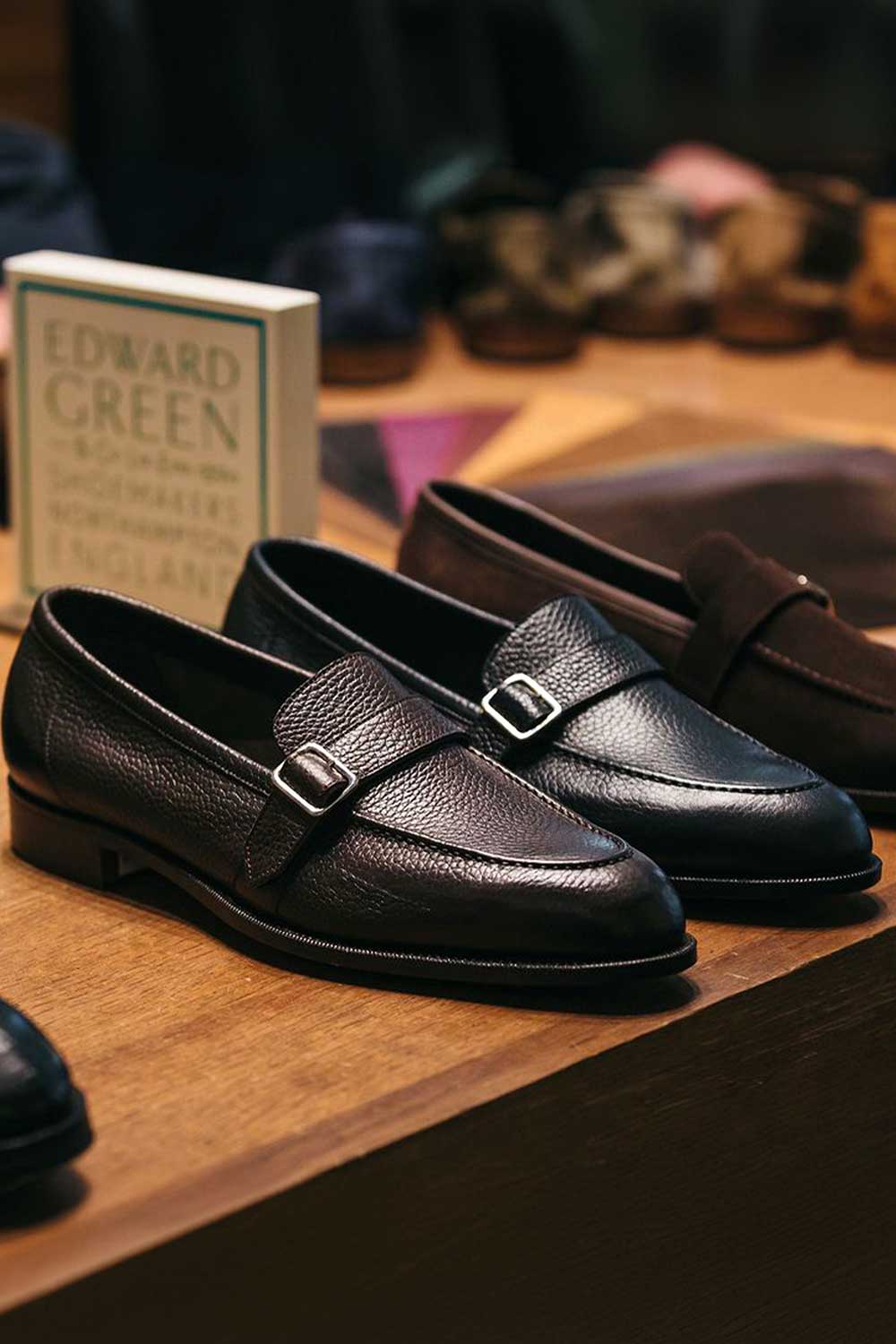
Edward Green is an English shoemaker based in Northampton, known for Goodyear-welted men’s shoes with refined shapes and hand-burnished leather.
At the April 2024 prices quoted below, its shoes cost well over a thousand dollars a pair, so the fair question is whether they are worth that much to you.
This guide gives the brand’s history, compares it with similar English makers, sets out clear criteria for the “worth it” question and shows how to wear its best-known shoes.
Many readers come to the brand through the old money aesthetic, a contemporary label for classic, understated dressing; the shoes suit that look, but they say nothing about anyone’s background.
Edward Green’s Origins and British Heritage
Edward Green was founded in Northampton in 1890, in the English county best known for welted shoemaking.
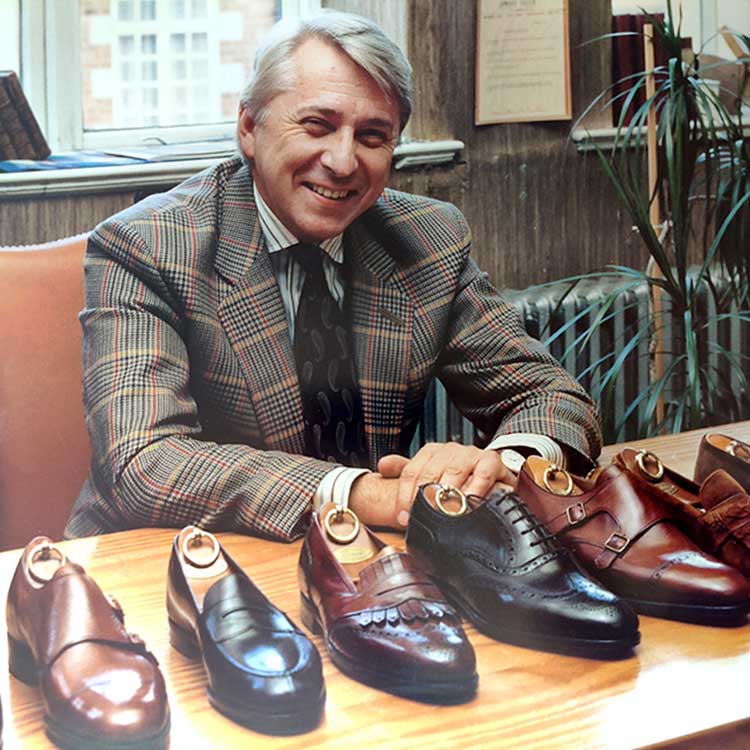
According to Gentleman’s Gazette (reviewed August 2022, updated April 2024), the company was sold in 1977 to Marley Hodgson and bought in 1982 by John Hlustik, a Czech-born shoemaker, for a symbolic one pound.
Hlustik is credited with the antiqued, hand-burnished finishes the brand is known for, and after his death in 2000 his partner Hilary Freeman continued the business.
The same review describes Goodyear-welted construction, uppers cut by hand to avoid flaws in the hide, oak-bark tanned leather soles and cork filling.
View this post on Instagram
A Goodyear-welted shoe can be resoled many times, which is one of the main reasons good shoes last longer than cemented ones.
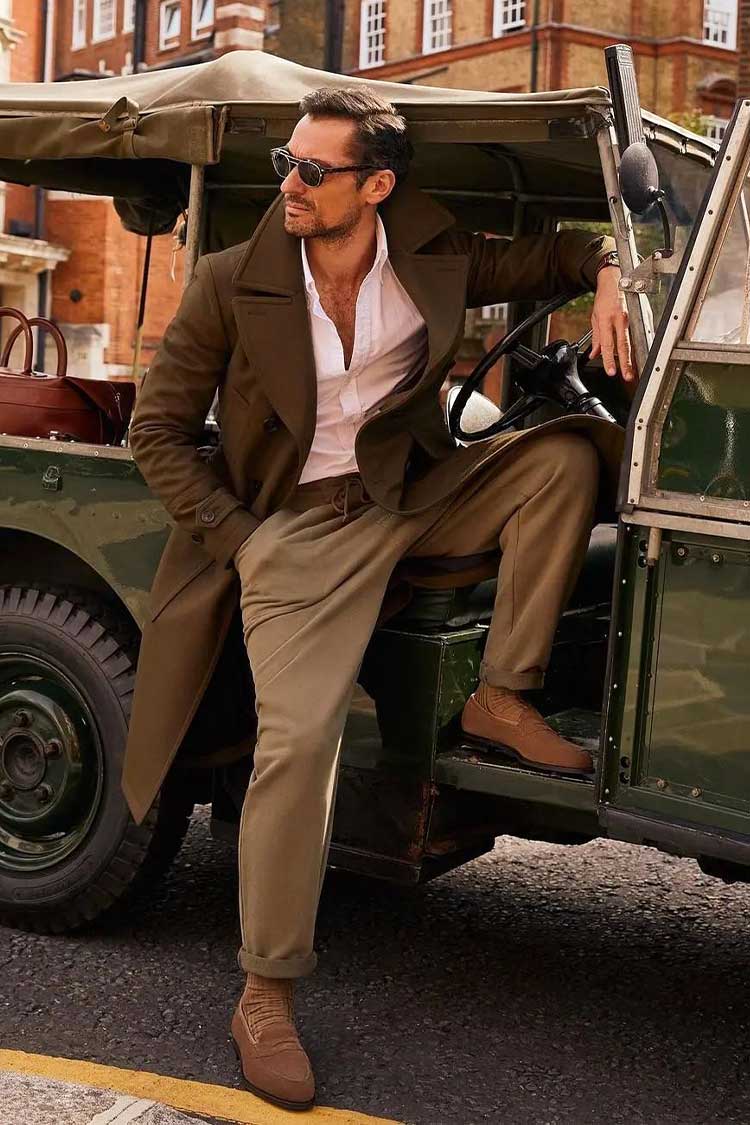
The photograph shows how brown suede shoes sit easily with a brown coat and trousers in a single colour family.
Wear: a brown double-breasted coat, a white open-collar shirt, brown cotton or wool trousers and brown suede Derby shoes.
Edward Green vs. Similar Heritage Footwear Brands (John Lobb, Crockett & Jones, Church’s)
Edward Green is usually compared with John Lobb, Crockett & Jones and Church’s, other makers of Goodyear-welted English shoes.
The comparison images below show UK prices in pounds as listed when the images were made, and they were added to this page in August 2024, so treat them as a dated snapshot rather than current prices.
John Lobb’s ready-to-wear shoes generally sit above Edward Green’s prices; see our guide to why John Lobb shoes are so expensive.
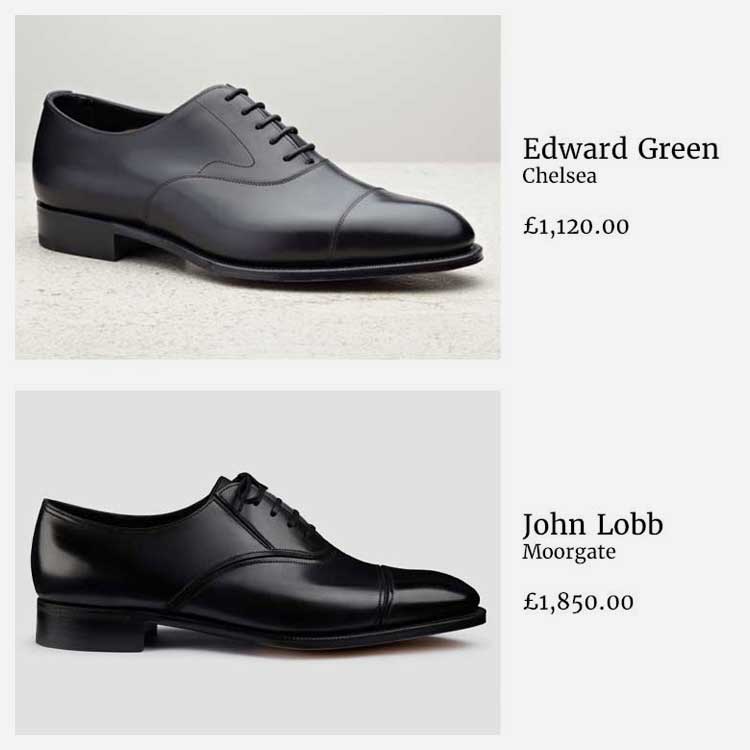
Crockett & Jones is closer in style and usually lower in price.
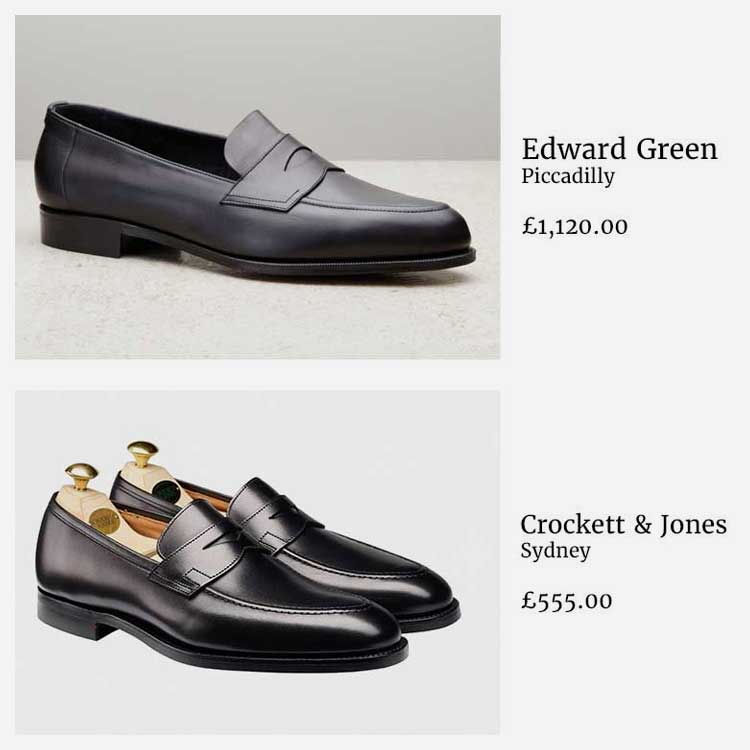
Church’s, owned by Prada, also makes Goodyear-welted shoes at lower prices than Edward Green.
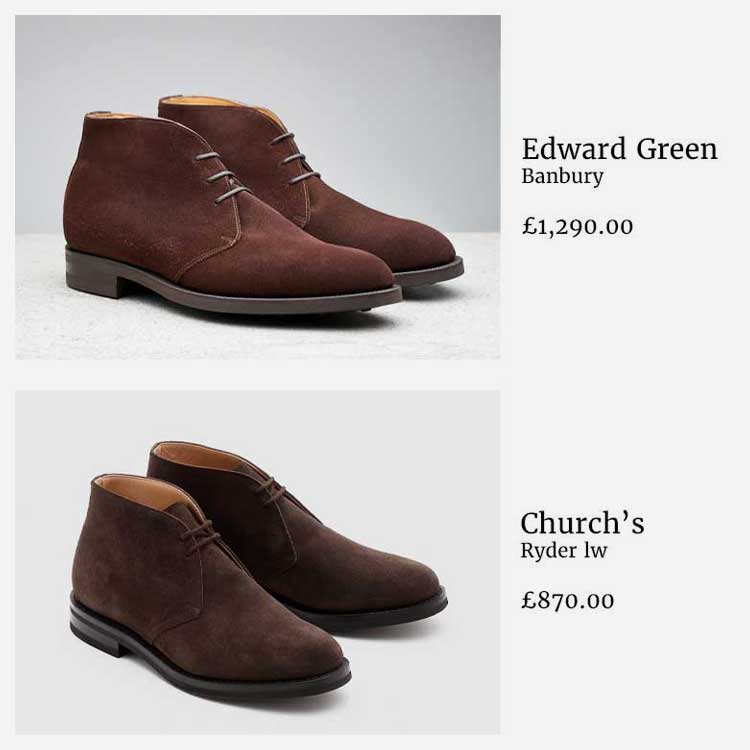
The differences between these makers lie mainly in last shapes, leather finishes and price, so compare the exact shoe you want, in your size, before deciding.
Gentleman’s Gazette, which also sells its own accessories, rated Edward Green’s styling above Crockett & Jones but concluded that the shoes were worth buying only on a steep sale.
Are Edward Green Shoes Worth It?
Judge them against these criteria rather than on the price alone.
Construction: Goodyear welting and leather soles mean the shoes can be resoled, which spreads the cost over many years.
Leather and finish: the brand is known for supple calf and hand-burnished colours, which matter most if you notice and enjoy those details.
Fit: a last that suits your foot is worth more than any label, so try the exact model and size, ideally in the afternoon when feet are slightly larger.
Price: Gentleman’s Gazette gave a typical range of about $1,250 to $1,750 a pair in its review updated in April 2024, and similar construction is available from other makers for less.
Use: a black or dark brown Oxford or a brown suede Derby that you wear every week repays its cost far faster than a shoe for rare occasions.
A high price does not prove higher quality.
On balance, Edward Green shoes can be worth it if the last fits you, you value the finish and you buy versatile styles you will wear often and resole; if price matters more than refinement, makers such as Crockett & Jones offer similar construction for less.
Edward Green’s Style
Edward Green is known for elegant last shapes, from slim chisel toes to rounder toes, and for restrained designs with little decoration.
Its colour range leans on black, dark brown, burgundy and lighter antiqued browns.
Those colours fit an understated aesthetic built on plain cloth and simple tailoring.
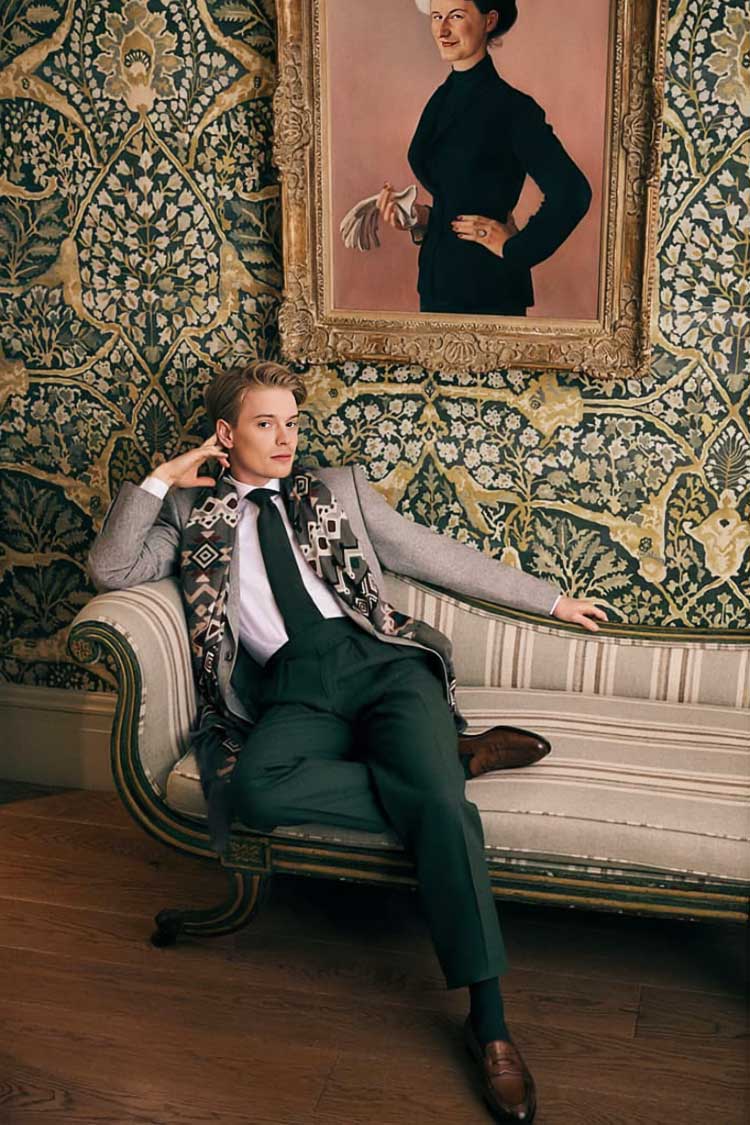
Plain leather shoes in dark brown sit easily with patterned or colourful tailoring because they do not compete with it.
Brown and two-tone shoes are traditional with lighter suits in warm weather, as the next photographs show.
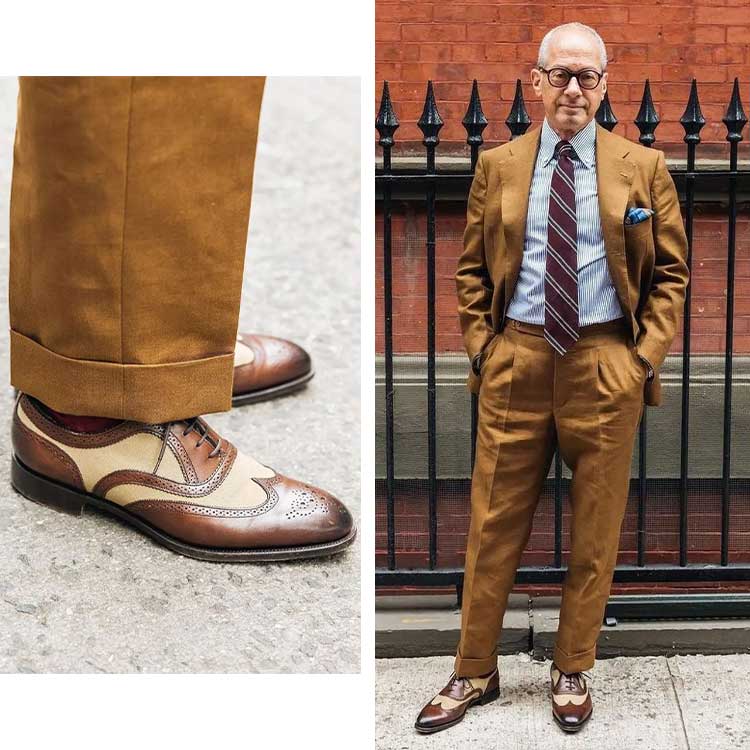
This look belongs to the old money style many readers want, which is a way of dressing anyone can borrow, not a sign of status.
Wear: a tan cotton or linen suit, a blue striped shirt, a striped tie and brown or two-tone brogues.
Outfits With Edward Green Shoes
Edward Green’s range covers formal Oxfords, loafers, Derby shoes and boots, so you can match a shoe to nearly any dress code.
Business
A plain black or dark brown cap-toe Oxford, such as the Chelsea, is the safest shoe for suits.
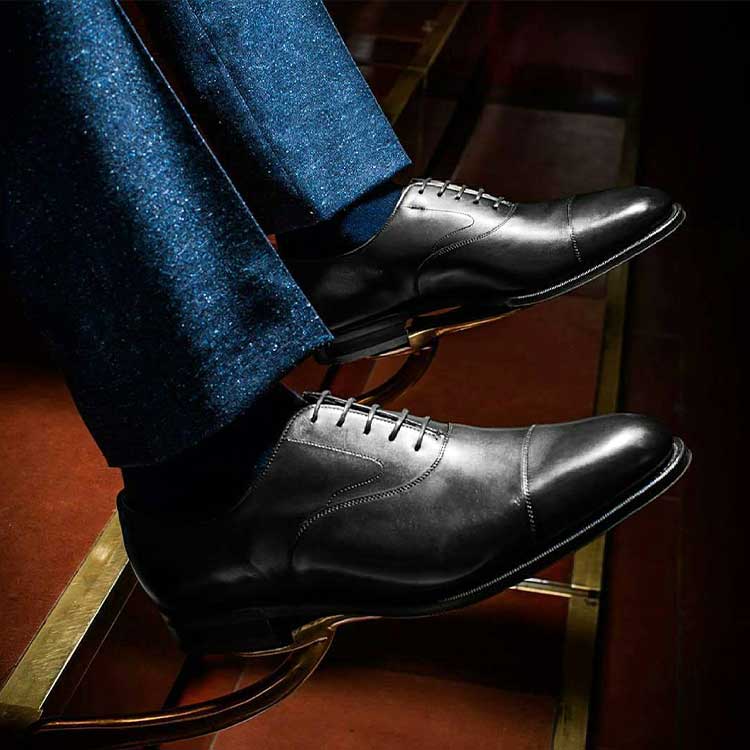
Wear: a navy or charcoal wool suit, a white shirt, a dark tie and black cap-toe Oxfords with dark socks.
A brown semi-brogue or monk-strap shoe is a slightly less formal option with grey, blue or brown suits.
Weekend
The Piccadilly is Edward Green’s penny loafer, and in suede it works with chinos and a blazer.
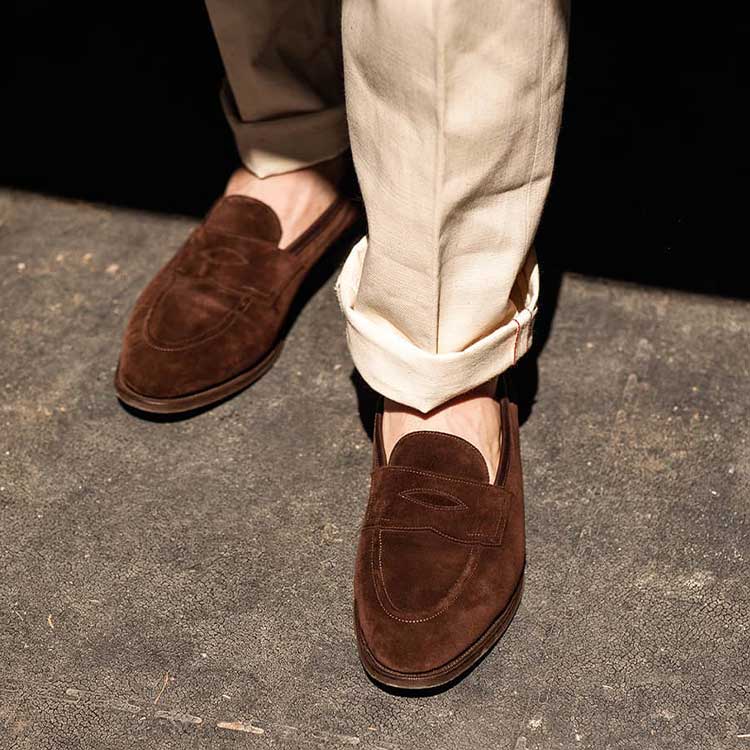
Wear: a navy blazer, a blue Oxford shirt, stone chinos with a short break and brown suede penny loafers.
For country club and summer events, a two-tone brogue with cream trousers and a navy blazer is a traditional choice.
The Dover is a split-toe Derby, and in suede it suits jeans and knitwear.
Wear: a grey or navy crew-neck jumper, dark straight jeans and brown suede split-toe Derby shoes.
Black Tie and Formal Events
For black tie, the traditional shoe is a plain black patent or highly polished calf Oxford.
For black-tie optional events and other formal events, a polished black or very dark Oxford is the safest choice, and a monk-strap shoe is better kept for lounge suits.
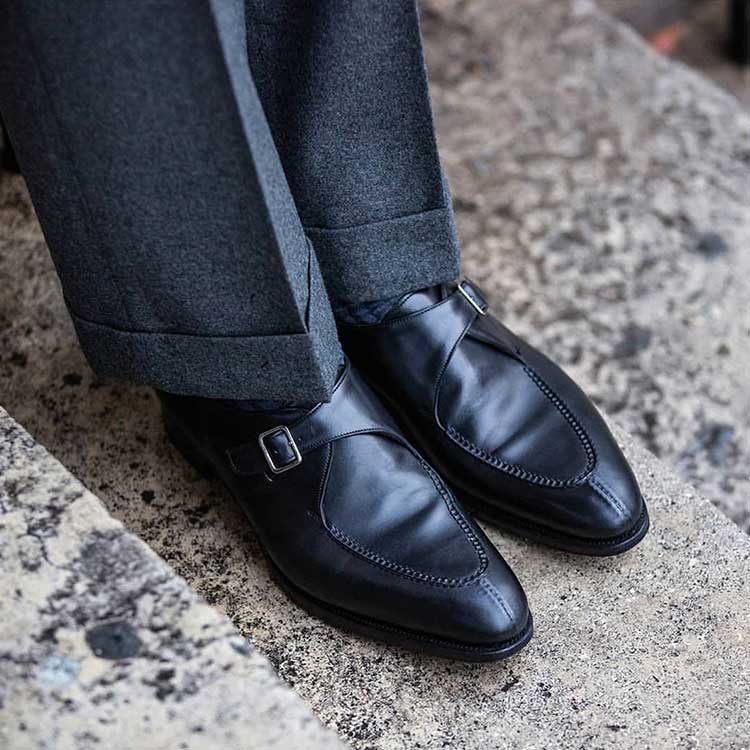
The Clapham is Edward Green’s split-toe single-buckle monk shoe, a good match for grey flannel and navy suits.
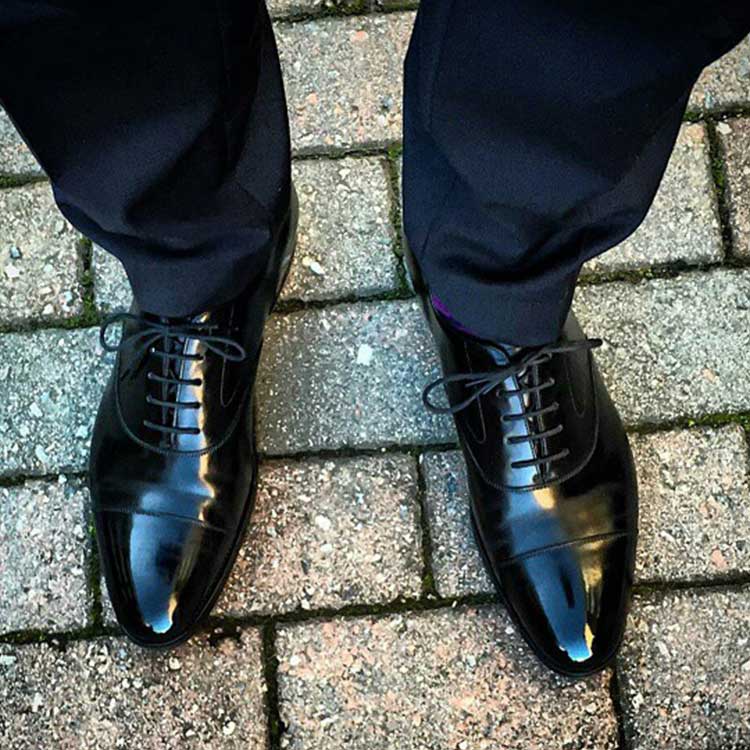
For white tie, the traditional shoes are black patent Oxfords or court shoes, so check the event’s guidance before you buy.
Edward Green’s Quiet Style
Edward Green shoes carry no visible logo, so they suit the quiet luxury way of dressing.
Their appeal lies in the shape of the last, the welting and the burnished colour, which a trained eye notices and most people do not.
That makes them a choice for your own enjoyment rather than a way to signal anything to others.
Edward Green Shoes: What Works and What to Avoid
Scroll horizontally to see all columns →
| Works well | Think twice |
|---|---|
| Black cap-toe Oxfords such as the Chelsea with suits for work and formal daytime events | Monk-strap shoes or loafers with a dinner suit |
| Split-toe Derbies such as the Dover with tailored separates or jeans | Patent leather with daytime business clothes |
| Suede Piccadilly loafers with chinos and a blazer at weekends | Brightly coloured socks with formal suits |
| Monk-strap shoes such as the Clapham in creative or relaxed offices | A belt in a very different colour or finish from your shoes |
| Brown plain cap-toe Oxfords with smart dark jeans or chinos for a dressed-up casual look | Very sleek formal Oxfords with heavy rugged clothes |
| Over-the-calf socks in plain colours or subtle patterns with suits | Trousers so long that they bunch over the shoe |
| A Galway boot with tweed and cord in the country | Thin-soled dress shoes for wet, muddy walks |
| Dark brown or burgundy shoes with grey and navy suits | Light brown shoes for evening formal events |
| Suede loafers with tailored shorts and a linen shirt in summer | Dress shoes with gym or athletic clothes |
Five Edward Green Shoes to Consider
If you are building a shoe wardrobe slowly, these five styles cover work, weekends, evenings and the country.
The colour notes below are optional suggestions; you do not need to know your colour season to wear any of them.
1. Chelsea Oxford in Dark Oak
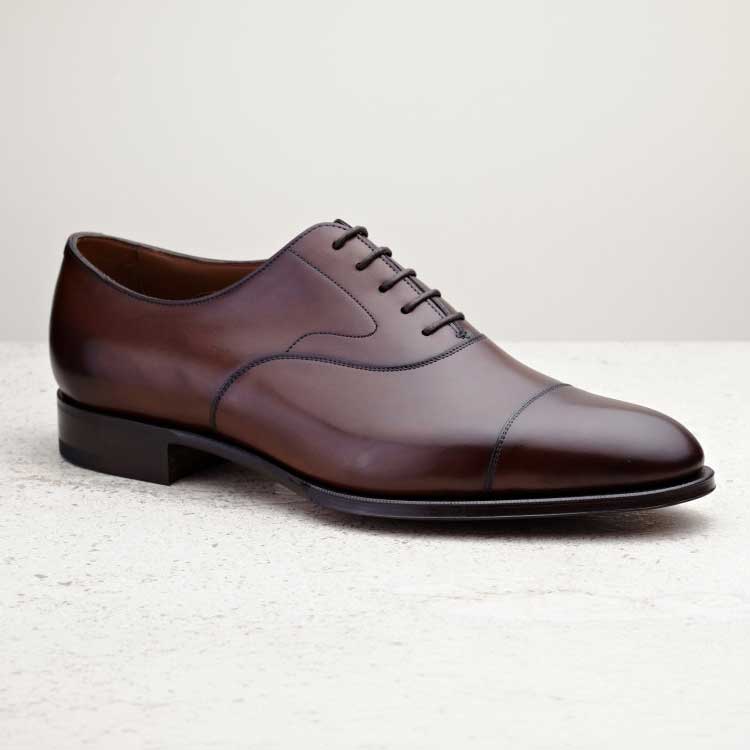
Style: classic formal wear, preppy, Parisian chic and Italian classic style.
When: office days and early evenings.
Colour note: a warm mid-to-dark brown that often suits warm and muted palettes such as Soft Autumn and Dark Autumn.
Wear: a grey or navy suit, a white or pale blue shirt and a navy tie.
2. Dover Split-Toe Derby in Brown Suede
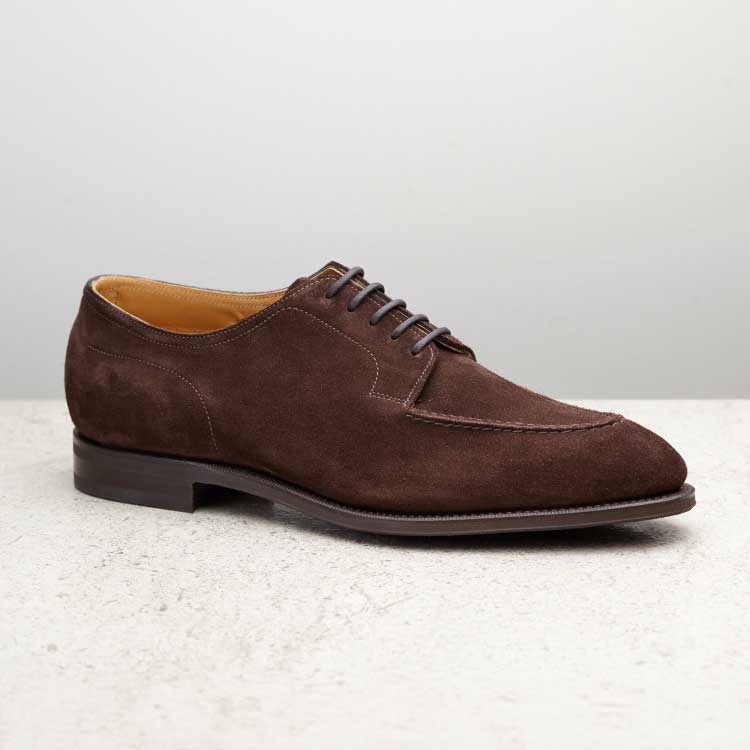
Style: smart casual, relaxed European dressing and Ivy style.
When: late morning to early evening.
Colour note: warm brown suede often sits well with warm palettes such as Warm Spring.
Wear: a navy unstructured jacket, a cream knitted polo shirt and stone or olive chinos.
3. Piccadilly Penny Loafer in Black Calf
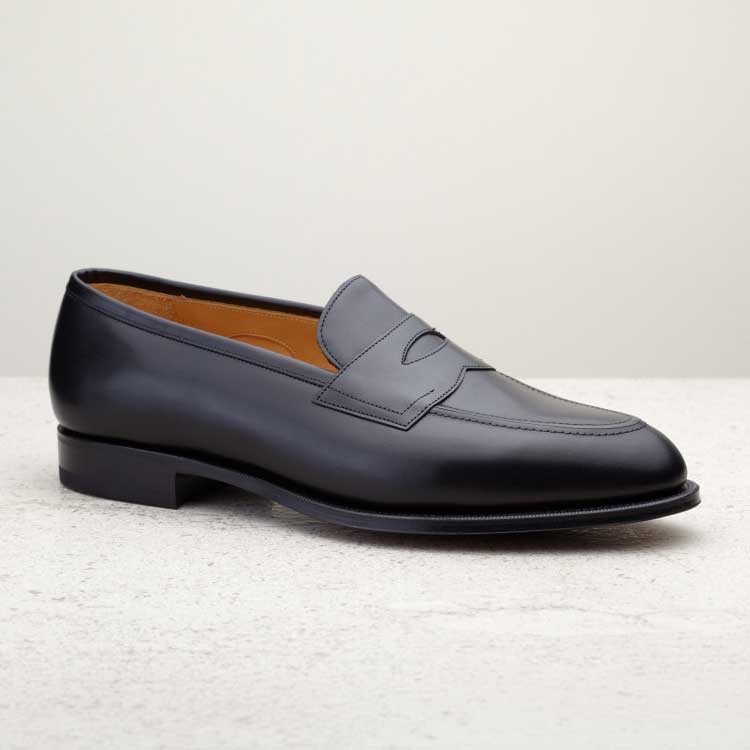
Style: business casual, yacht club style and Mediterranean summer dressing.
Where: city offices and summer resorts such as the Côte d’Azur.
Colour note: black is high in contrast, so it is often recommended for cool and deep palettes, but it works for most people with grey or navy.
Wear: a navy suit without a tie, or a white shirt with grey trousers and a navy knitted jumper.
4. Galway Boot in Utah Leather
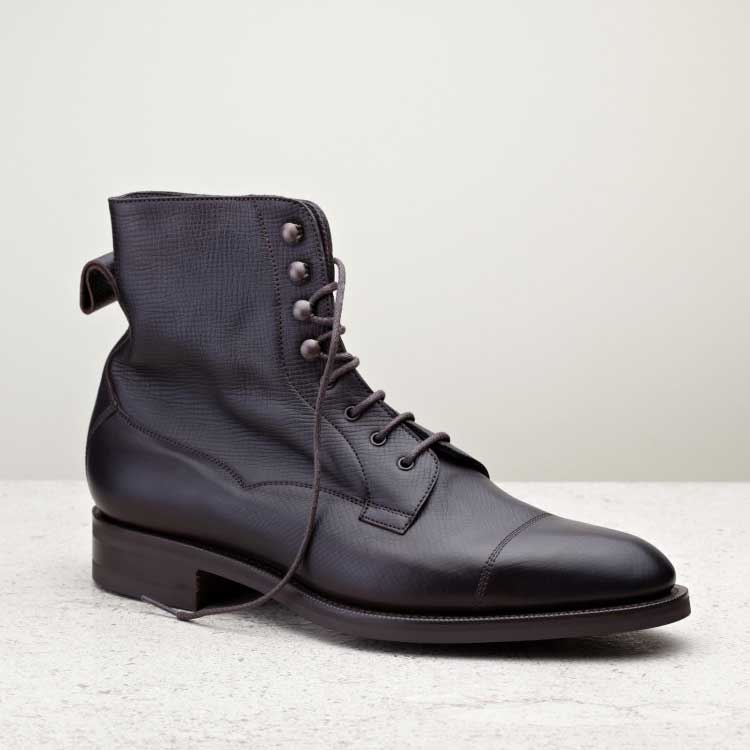
The Galway is a Derby boot that Edward Green has made since the 1930s, according to Gentleman’s Gazette.
Style: country clothing, outdoor weekends and casual city wear.
Where: the Scottish Highlands, the English countryside and cold-weather cities.
Colour note: dark brown grained leather suits autumn and winter wardrobes in browns, greens and greys.
Wear: a tweed jacket, a brown checked shirt, a green crew-neck jumper and brown cord trousers.
5. Whole-Cut Oxford in Burgundy Antique Calf
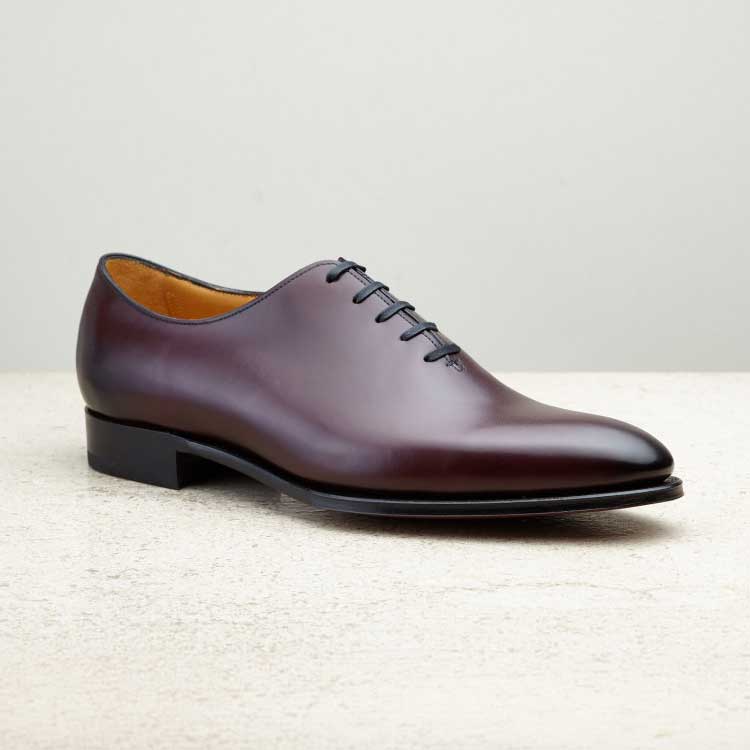
A whole-cut Oxford is cut from one seamless panel of leather, so it looks sleek and dressy.
Style: evening wear, the opera and smart dinners.
When: evening events.
Colour note: deep burgundy is often recommended for deep and cool palettes, and it is a softer alternative to black with navy or charcoal.
Wear: a charcoal or midnight blue suit, a white shirt and a burgundy or navy silk tie.
Edward Green and Famous Wearers
Edward Green does not publish a client list, and many online claims about famous wearers have no dated, reputable source.
What matters more is whether the shoe fits you and suits the clothes you wear.
Conclusion
Edward Green is a Northampton shoemaker, founded in 1890, known for Goodyear-welted shoes with elegant lasts and hand-burnished leather.
Its shoes are expensive, and the price pays for the brand and its finish as well as for construction that similar makers also offer for less.
They can be worth it if the last fits your foot, you value the finish and you choose versatile styles, such as a dark Oxford, a suede Derby or a penny loafer, that you will wear and resole for years.
Mandy Meyer’s focus at The VOU is men’s body-shape styling, garment fit and outfit proportions. Her coverage addresses the practical questions behind a wardrobe choice: how a jacket sits across the shoulders, how trousers fall and how different cuts change the silhouette a wearer wants to create.
Her subject areas include the triangle, inverted triangle, rectangle, oval, trapezoid, hourglass and diamond labels used in body-shape styling. These provide starting references for comparing visible proportions; they do not capture every body or prescribe one correct way to dress. The focus connects those observations with garment shape, construction, length and the relationship between the upper and lower parts of an outfit.
Mandy’s editorial coverage combines visual comparisons with fit checks for comfort and movement. Readers can consider whether a cut gives them the room they need, where clothing pulls or gathers and which changes might support their preferred look. The aim is to make menswear choices more understandable while keeping personal preferences and the wearer’s own styling goals central.