Start here
What’s This About
Young lawyers can look competent and current by combining a classic Old Money base with one modern New Money touch at a time.
This guide covers the legal wardrobe garment by garment, such as
What courts and firms may expect you to wear
Suits, shirts and ties, with mistakes to avoid
Shoes, outerwear and grooming for court and office
Accessories with a modern touch
A starter wardrobe for a modest budget
and many more!
Check your own court and firm first, then build gradually from a well-fitted navy suit.
Key Points
01Court and firm rules come first, so check local expectations before relying on any guide.
02A navy or charcoal suit, white and light blue shirts and black Oxfords cover most legal settings.
03Add one modern detail at a time, such as a double-breasted jacket or a bolder tie.
04Alterations make a modest suit look better than an expensive one that does not fit.
Whether you are a new associate or heading for partnership, clients, colleagues and judges see your clothes before they hear your argument.
Most young lawyers want to look competent and trustworthy without looking stiff or out of date.
One practical way to do that is to combine the restraint of the Old Money look with a few modern touches from the New Money look, which our guide to Old Money and New Money style compares in detail.
Both are clothing labels that describe ways of dressing, not where anyone’s money comes from, and you can use either whatever your background.
This guide covers suits, shirts, ties, shoes, outerwear, grooming and accessories for legal work, with common mistakes and a starter wardrobe for a modest budget.
Check your court and your firm first
Courts and firms set their own expectations, so check local rules and ask colleagues before relying on any general guide.
Many courts expect counsel in business dress. For example, a local rule of Clark County District Court in Washington asks male attorneys to wear coats and ties.
A courtroom attire page published on the US District Court for the Eastern District of Texas website accepts a suit, or a jacket and tie with tailored trousers or khakis, and rules out jeans.
Office dress is often more relaxed than court dress, and our guide to business attire for lawyers covers both settings garment by garment.
What the Old Money look brings
The Old Money look is a contemporary label for classic, quiet clothes, and its habits suit legal work well.
Clothes that last
Buy fewer, better-made garments that you can wear for years, such as a well-fitted navy suit or a leather briefcase, and look after them.
Small logos
Skip large logos and choose plain clothes, in the spirit of quiet luxury; a logo-free jumper or an unbranded leather bag does this at any price.
Knowing the classics
Learning a little about tailoring, cloth and classic menswear helps you buy well and spot a good fit.
Ignoring short-lived trends
Choose garments that will still look right in five years rather than this season’s fashion.
What the New Money look brings
The New Money look is bolder and more fashion-led, and in small doses it can keep a legal wardrobe from looking dated.
Personality in the details
A modern watch, a well-chosen pair of glasses, or a touch of sprezzatura in your tie or pocket square adds personality without hurting your credibility.
Modern, practical accessories
A sleek laptop bag or a smartwatch with a plain, classic design fits easily with tailoring.
Measured experiments
Try new patterns, textures or accessories one at a time, and keep them suited to the setting and to your personal style.
Pitfalls to avoid
Large logos, such as Gucci monogram belts, and very bright colours draw attention away from your work.
Too many accessories, such as stacked bracelets or heavy chains, sit awkwardly with conservative legal dress.
Streetwear such as a Supreme hoodie belongs outside the office, however expensive it is.
How to combine the two, garment by garment
The simplest approach is a classic base from the Old Money look with one modern touch from the New Money look, as our guide to blending Old Money and New Money style explains.
1. Suits
The tailored suit is the base of a lawyer’s wardrobe, and fit matters more than price.
The classic base
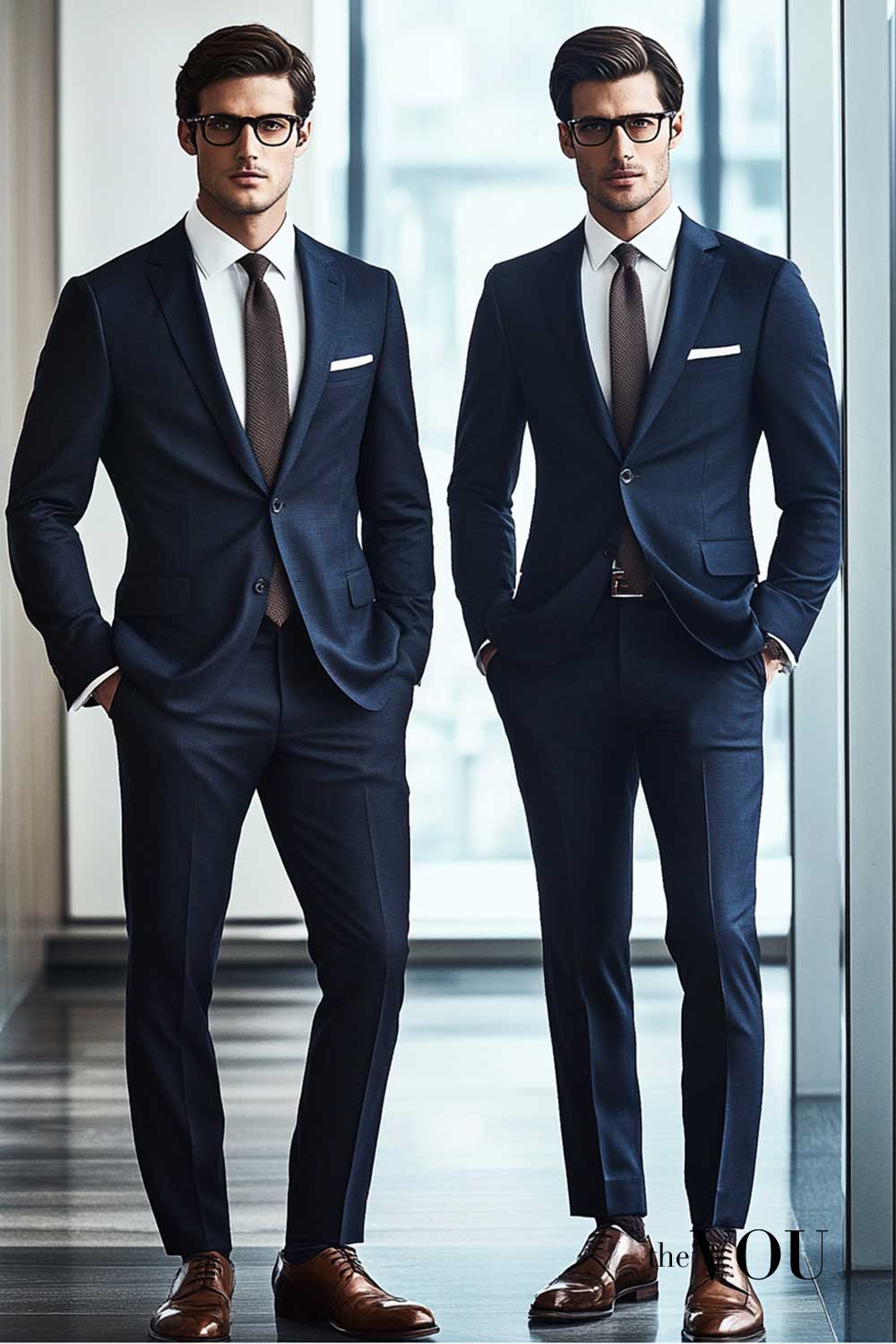
For cloth, choose worsted wool in navy or charcoal, or a quiet glen check for office days.
For a good fit, the shoulders should end at your shoulders and the jacket should button without pulling, so budget for alterations by a skilled tailor.
A two-button, single-breasted suit is the most versatile style, and a suit with a matching waistcoat adds formality.
Among retailers, Brooks Brothers, Suitsupply and Spier & Mackay offer ready-to-wear and made-to-measure suits at different prices, and a bespoke tailor is an option later in your career.
Avoid suits that do not fit, shiny or very fashion-led cloths, and loud patterns in court.
The modern touch
A slightly slimmer cut, a double-breasted jacket or peak lapels add a modern edge, as does a bolder tie or pocket square.
2. Shirts
Shirts sit closest to your face and frame your tie, so a clean, well-fitted collar matters.
The classic base
Pick cotton broadcloth, pinpoint or Oxford cloth, which are crisp and hard-wearing.
Wear white and light blue, which go with every suit.
A point or spread collar works with ties; keep button-down collars for office days.
Try Charles Tyrwhitt, T.M. Lewin and Eton, or Turnbull & Asser at a higher price.
Common mistakes are creased shirts, collars that gape or pinch, and linen shirts, which are better kept for casual days.
The modern touch
A semi-spread collar, or a faint check or stripe in a quiet colour such as pale grey, adds interest.
3. Ties
Ties are where you can show the most personality while staying within a conservative dress code.
The classic base
Look for silk with enough weight to tie a neat knot.
Go for plain Old Money colours such as navy, burgundy and charcoal, repp stripes or small geometric patterns.
The width should be close to your lapel width, usually about 3 to 3.5 inches.
You can buy from The Tie Bar, Drake’s, Hermès or Charvet, across a wide range of prices.
Steer clear of novelty ties, very fashion-led designs, and ties that end far above or below the belt.
The modern touch
A brighter colour or a bolder paisley or stripe can lift a navy or charcoal suit, as long as it works with the shirt.
4. Shoes
Clean, polished shoes show care for detail.
The classic base
Wear black Oxfords for court and formal meetings, brown or burgundy loafers for office days, and monk straps for both.
Choose smooth leather and keep it polished.
Look at Allen Edmonds, Meermin and Loake, or Edward Green at a higher price; shoes with stitched soles can be resoled.
Avoid scuffed shoes, square toes and trainers with a suit.
The modern touch
A sleek monk strap with light broguing, or a pair of Oxfords in a deep oxblood shade, looks modern while staying professional.
5. Outerwear
In cold months, your coat is the first garment people see.
The classic base
A navy or charcoal wool overcoat, a camel polo coat or a tweed overcoat sits over a suit and keeps you warm.
In hot climates, you may need little more than your suit jacket and an umbrella.
Puffer jackets over a suit and very bright colours are mistakes to avoid.
The modern touch
A slightly tapered overcoat in a deep, muted colour such as dark green looks current while staying conservative.
6. Grooming and hair
Neat grooming matters as much as your clothes.
The classic base
Ask for a classic Old Money haircut such as a side parting or a tapered crop.
Stay clean-shaven, or keep a neatly trimmed beard, moustache or stubble.
Good hygiene means clean nails, fresh breath and a simple skincare routine.
The modern touch
Keep a regular grooming routine and consider modern men’s hairstyles such as a textured crop with a fade, kept tidy enough for the office.
If you wear fragrance, keep it light, because you may spend hours in small meeting rooms.
With suits, shirts, ties, shoes, outerwear and grooming in place, accessories finish the outfit, and our guide to the modern Old Money aesthetic shows more ways the two looks meet.
7. Accessories
The classic base
Choose a simple watch with a plain dial, on a leather strap or a steel bracelet; brands such as Nomos, Omega and Rolex are often named, and many less expensive makers produce similar designs.
Your belt should be leather, matching your shoes in colour.
For double-cuff shirts, wear cufflinks in simple silver or gold designs.
Add a pocket square in white linen or a quiet colour, neatly folded.
For glasses, pick classic black or tortoiseshell frames, from makers such as Moscot.
Typical mistakes are very large watches, mismatched belts and shoes, and accessories that look worn out.
The modern touch
A watch with a coloured dial or a more modern case, a leather wallet in a deeper colour, or lightweight titanium frames add a modern note.
What the two looks share
Both looks value quality, meaning well-made garments, shoes and accessories that last, at a price that suits you.
Fit matters in both, so wear clothes that fit your shoulders, chest, waist and leg, whatever silhouette you choose.
Care shows in polished shoes, clean glasses, pressed shirts and a fresh haircut.
A starter wardrobe on a budget
You do not need a partner’s salary to dress well for legal work.
One navy wool suit, and later a charcoal one.
Two or three shirts in white and light blue, for example from Charles Tyrwhitt.
One pair of black leather Oxfords and, later, a pair of brown loafers.
Two silk ties, in navy and burgundy.
A simple watch, such as a plain Seiko.
Look for sales at Brooks Brothers or Spier & Mackay, buy good second-hand shoes, and set money aside for alterations, because a well-altered suit looks better than an expensive one that does not fit.
Carrying yourself
Good posture helps any outfit hang as it should, so stand and sit upright with relaxed shoulders.
The bottom line
Start with a classic, well-fitted base, add one modern touch at a time, and keep everything clean and pressed.
Your clothes will then support your work rather than distract from it.
Quizzes and personal help from The VOU
None of these tools is needed to dress well for legal work, but some readers like extra help when choosing clothes.
You can read about choosing an image consultant and what an image consultant does, and our guides to dressing for your body shape and seasonal colour palettes explain two optional frameworks for thinking about proportion and colour.
For more on dressing for the setting, see styling by occasion, location, season and time of day.
For the vocabulary behind this guide, see our explainers on clothing, garments, fashion accessories, menswear silhouettes and outfits.
We also cover heritage fashion brands and how logo-heavy luxury designs come across, and our fashion style guide explains personal and historic styles.
1. Check your body shape
Check your body shape with the body shape quiz for men.
2. Find your seasonal colours
Find your seasonal colours with the seasonal colour quiz for men.
3. Take the fashion style quiz
Take the fashion style quiz for men to see which personal styles and outfit ideas match what you like wearing.
Book a consultation for personal help
If you would like personal help after the three quizzes, you can book one of our paid consultations with The VOU’s image consultants and stylists through our styling services for men, or contact us with questions.